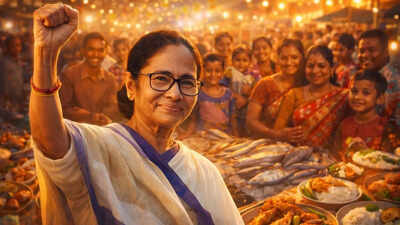
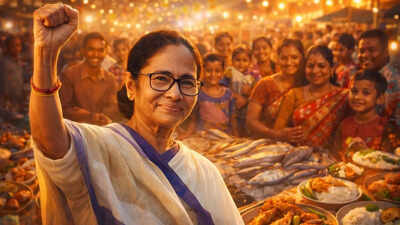
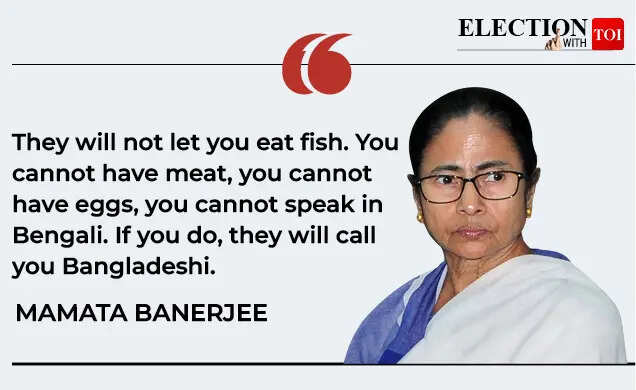
New Delhi: As West Bengal gears up for the 2026 assembly elections, ‘Mache Bhate Bengali’, a common phrase that used to dominate every Bengali’s household, has now moved into the political arena.With this, it has become a symbol of identity, culture and pride, shaping the narrative of the high-stakes electoral battle. Chief Minister Mamata Banerjee enhanced this sentiment by taking aim at a rally in Purulia. BJP. He said, “They won’t let you eat fish. You can’t eat meat, can’t eat eggs, you can’t talk in Bengali. If you do that they will call you Bangladeshi.”
.
Fish, long considered the lifeline of West Bengal, is now at the center of this story. It is a staple of almost every Bengali’s thali, but now it has gone beyond cuisine and become a symbol of cultural connection.The phrase ‘Mache Bhate Bangla’ which means Bengali is defined by fish and rice, has crossed over from the kitchen to the political arena, showing how everyday traditions are now shaping the state’s election campaign framework.
fish on promotional menu
In the election season of West Bengal, the fish has gone from the dinner plate to the center of the political web.Trinamool Congress (TMC) is using it to tap into Bengali pride, while the BJP is struggling not to get caught on the wrong side of the ‘Machhale Bhate Bengali’ sentiment.From Katla fish being prominent in road shows to Ilish, Pabda and Chingri getting a prominent place in speeches, fish has emerged as a powerful metaphor. It is now a symbol of identity, culture and the question of who actually represents the “real” Bengali.The TMC has weaponized this sentiment, arguing that the BJP, associated with the Hindi-speaking, vegetarian-first politics of North India, is culturally alien to Bengal.
.
Mamata Banerjee made this point at a rally: “If BJP comes to power, they will ban meat and fish in Bengal. I saw the Deputy CM of Bihar saying that fish and meat cannot be sold in open markets. Only those who have a license can sell meat indoors. So, will everyone sell meat and fish in shopping malls? Only a few have the economic strength to do so. Most fish sellers sell fresh fish on the streets here. They sell it and earn their living from this. I condemn this politics.”By building the campaign around Bengali identity, TMC has shifted its focus towards cultural nationalism. Thus, fish is no longer just a dish served in every household; It is a symbol of Bengali pride.
Pak nationalism and social media
TMC’s social media has amplified this narrative by posting pictures of Ilish Bhapa, Pabda Jhal, Chingri Malai Curry, Kosha Mangsho and other dishes.Ahead of Union Home Minister Amit Shah’s 15-day visit to Bengal, the party tweeted: “Bengal welcomes tourists. Don’t miss our dishes. We highly recommend: Muri Ghonto, Pabda Macher Jhal, Ilish Bhapa, Chingri Malai Curry, Bhetki Paturi, Kosha Mangsho. Have a pleasant stay!”Political analyst Maidul Islam said, “Within that Bengali project, eating fish is an important element. When fish markets elsewhere are attacked, or Hindi-speaking leaders turn up their noses at fish, it becomes a campaign issue. TMC is saying that it is an organic party of Bengalis and hence it is associated with Bengali food habits.
Fish as culture, ritual and identity
In West Bengal, fish is more than food. It marks life events: from a child’s first eating of rice, to gifts at weddings, to meals after bereavement.According to PTI, World Bank data shows that West Bengal consumes 8.36 lakh tonnes of fish annually, almost double the national average and fish and meat together account for about one-fifth of household food expenditure.For many, attempts to impose vegetarian or homophobic food habits from outside the state raise fears of cultural invasion.A Kolkata-based Indologist said, “For Bengalis, fish is not just food. It is memory, ritual and identity. To challenge it is to make West Bengal look foreign.”Kaushik Maiti of Bengali nationalist organization Bangla Pokkho said: “Fish is part of the Bengali identity. But the BJP wants to impose the vegetarian food culture of North India, we oppose it.”
BJP’s fish dilemma
BJP says that TMC is creating fear. Leaders say there is no proposal to ban fish or meat in West Bengal. Nevertheless, the perception is quite strong that BJP candidates are now campaigning with fish in hand.Bidhannagar BJP candidate Sharadwat Mukherjee walked around the neighborhood carrying five kilos of Katla fish with him and assured voters that the BJP would never interfere in Bengali food habits.In Pandaveshwar, BJP candidate Jitendra Nath Tiwari filed nomination papers with a “fish procession”, with supporters walking with baskets while they held bigger baskets in their hands. He said, “If promoting the culture of West Bengal is a drama, then I am proud of this drama.”Political analyst Suman Bhattacharya said, “The perception that the BJP is against fish and non-vegetarian food has become so strong that party leaders now have to eat fish in public and campaign with it. This shows how their vegetarian politics did not work elsewhere in West Bengal.”State BJP president Samik Bhattacharya stressed: “There is no question of banning fishing. Bengalis will eat fish and Biharis will eat mutton. If anyone tries to stop me, I will protest.”TMC’s story gets strengthened by incidents in BJP ruled states. Earlier, Bihar Deputy CM’s comment Vijay Kumar Sinha Bans on meat near schools and places of worship and prior controversies over meat shops and fish markets add to fears that a North Indian vegetarian-first cultural model may be imposed in Bengal.In January, a vendor was allegedly attacked for selling chicken patties near a religious congregation in Kolkata. The controversy deepened due to this incident.
voting
What is the thing that influences voters the most in elections?
Elections as a cultural battle
As the elections are heating up, the West Bengal Assembly elections are not just about seats, governance or development, they are also about identity, culture and cuisine.The simple fish, a culinary staple, has emerged as a political symbol, showing that in Bengal, thali and politics are inextricably linked.As TMC spokesperson Tanmay Ghosh said: “Meat and fish eaters can be Nobel laureates, scholars, entrepreneurs and rebels who change history with the pen, not violence… Linking eating habits to ‘violent tendencies’ is a moral imposition. India’s strength lies in pluralism, diversity and constitutional freedoms – not in controlling plates.”Elections for 294 seats in West Bengal will be held in two phases: April 23 (152 constituencies) and April 29 (142), and the results will be declared on May 4.