





Sport
News


Recent
Posts

Asian Para Games 2026 schedule for October 20: Full list of events, medal matches and timings
Nishad Kumar, Deepthi Jeevanji and India’s para athletes in athletics and powerlifting headline the medal opportunities on Day 5 of the 2026 Asian Para Games on Tuesday, October 20, as the Indian contingent prepares for a packed day of competition.
Nishad is scheduled to compete in the men’s high jump T45/T46/T47 final, while Deepthi will feature in the women’s 400m T20 final. India’s athletics medal hopes will also include Ajeet Singh and Rinku in the men’s javelin throw F46 final, along with several other Indian athletes competing in field and track events.
Powerlifting will offer further opportunities, with Jaspreet Kaur, Ashok and Jhandu Kumar among the Indians listed for finals. In swimming, Indian athletes will contest multiple finals, including the men’s 400m freestyle S11 and the men’s 200m individual medley SM7.
Table tennis will also be a key focus, with Bhavina Patel, Sonalben Patel, Prachi Pandey and Baby Sahana Ravi scheduled for semifinal or medal-round action, depending on qualification.
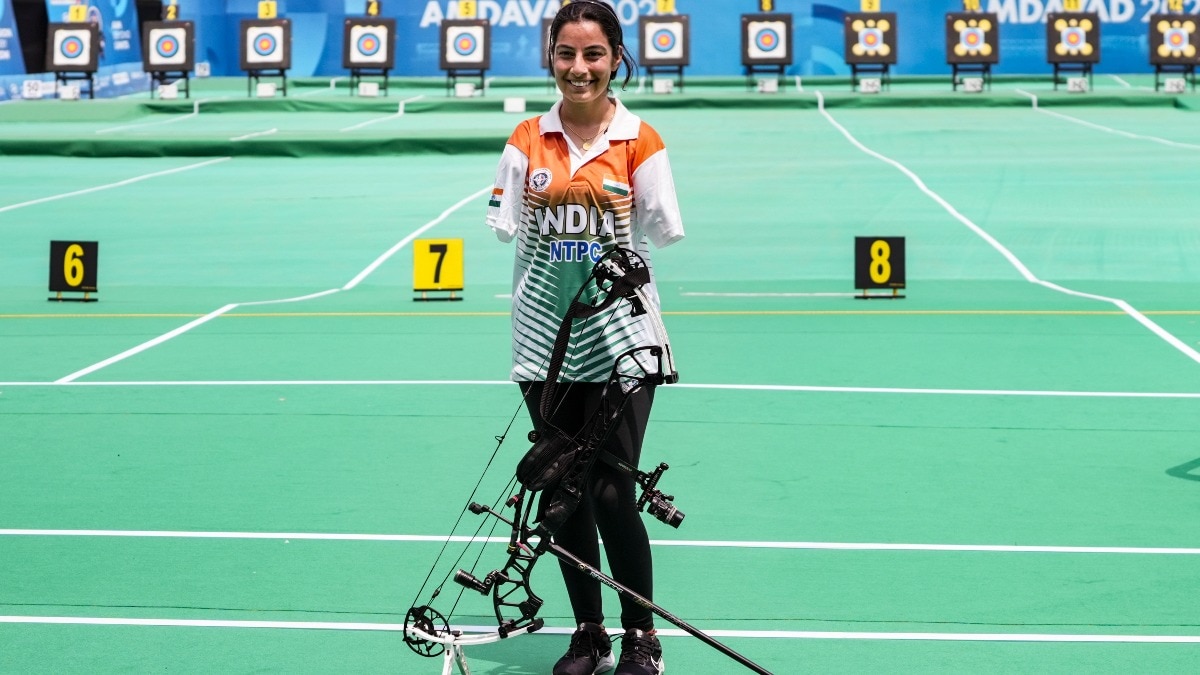
India’s para archers, including Sheetal Devi, Harvinder Singh, Vijay Sundi and Swati Chaudhary, will be involved in elimination rounds and team events. The schedule also features para badminton, judo, cycling, boccia and blind football.
Here is India’s full schedule for Tuesday, October 20, at the Asian Para Games 2026:
- 4:45 AM IST: Para Archery — Para Recurve Men Individual (Round of 16 (Elimination Round 1/8 – 3)): Harvinder Singh vs Bing-yu Li (Chinese Taipei).
- 4:45 AM IST: Para Archery — Para Recurve Men Individual (Round of 16 (Elimination Round 1/8 – 7)): Vijay Sundi vs Lung-hui Tsang (Chinese Taipei).
- 4:45 AM IST: Para Archery — Para Recurve Women Individual (Round of 16 (Elimination Round 1/8 – 2)): Pooja vs Chi Hui Loh (Malaysia).
- 4:45 AM IST: Para Archery — Para Recurve Women Individual (Round of 16 (Elimination Round 1/8 – 8)): Bhawna vs Marzhan Sabit (Kazakhstan).
- 4:45 AM IST: Para Archery — Para Compound Men Individual (Round of 16 (Elimination Round 1/8 – 5)): Toman Kumar vs Arif Firmansyah (Indonesia).
- 4:45 AM IST: Para Archery — Para Compound Men Individual (Round of 16 (Elimination Round 1/8 – 7)): Shyam Sunder Swami vs Yuya Oe (Japan).
- 4:45 AM IST: Para Archery — Para Compound Women Individual (Round of 16 (Elimination Round 1/8 – 1)): Sheetal Devi vs Yuen Wah Chen (Hong Kong).
- 4:45 AM IST: Para Archery — Para Compound Women Individual (Round of 16 (Elimination Round 1/8 – 3)): Payal Nag vs I-fen Chang (Chinese Taipei).
- 5:30 AM IST: Para Badminton — Mixed Doubles SL3-SU5 (Quarterfinal (Court ST-2) Match 1): Manisha Ramadass & Pramod Bhagat vs Chanida Srinavakul & Siripong Teamarrom (Thailand).
- 5:30 AM IST: Para Archery — W1 Men Individual (Quaterfinal): Adil Mohamed Nazir Ansari vs Tianxin Zhang (China).
- 5:30 AM IST: Para Archery — Para Recurve Men Individual (Quarterfinal (subject to Qualification)): Harvinder Singh.
- 5:30 AM IST: Para Archery — Para Recurve Men Individual (Quarterfinal (subject to Qualification)): Vijay Sundi.
- 5:30 AM IST: Para Archery — Para Recurve Women Individual (Quarterfinal (subject to Qualification)): Bhawna.
- 5:30 AM IST: Para Archery — Para Recurve Women Individual (Quarterfinal (subject to Qualification)): Pooja.
- 5:30 AM IST: Para Archery — Para Compound Men Individual (Quarterfinal (subject to Qualification)): Toman Kumar.
- 5:30 AM IST: Para Archery — Para Compound Men Individual (Quarterfinal (subject to Qualification)): Shyam Sunder Swami.
- 5:30 AM IST: Para Archery — Para Compound Women Individual (Quarterfinal (subject to Qualification)): Sheetal Devi.
- 5:30 AM IST: Para Archery — Para Compound Women Individual (Quarterfinal (subject to Qualification)): Payal Nag.
- 5:40 AM IST: Para Athletics — Men’s Javelin Throw F53/F54 (Final): Ayush Verma. (Medal event)
- 5:40 AM IST: Para Athletics — Men’s Javelin Throw F53/F54 (Final): Pradeep Kumar. (Medal event)
- 5:45 AM IST: Para Athletics — Men’s Long Jump T37/T38 (Final): Rakesh Bhai Bhatt. (Medal event)
- 6:00 AM IST: Para Table Tennis — Women’s Singles Class 4-5 (Semifinal Table 4): Bhavinaben Patel vs Bian Zhang (China). (Medal event)
- 6:10 AM IST: Para Badminton — Mixed Doubles SH6 (Group A (Court ST-2) Match 2): Krishna Nagar & Nithya Sre Sumathy Sivan vs Yu-yen Wu and Jia-Siang Lin (Chinese Taipei).
- 6:10 AM IST: Para Badminton — Men’s Singles WH2 (Round of 16 (Court WH-5) Match 2): Haris Mythili Srikumar vs Jianpeng Mai (China).
- 6:15 AM IST: Para Athletics — Women’s 200m T11 (Final): Ravanni Valasanaini. (Medal event)
- 6:15 AM IST: Para Archery — W1 Men Individual (Semifinal (subject to Qualification)): Adil Mohamed Nazir Ansari.
- 6:15 AM IST: Para Archery — W1 Women Individual (Semifinal (direct entry as top seed)): Swati Chaudhary.
- 6:15 AM IST: Para Archery — Para Recurve Men Individual (Semifinal (subject to Qualification)): Harvinder Singh.
- 6:15 AM IST: Para Archery — Para Recurve Men Individual (Semifinal (subject to Qualification)): Vijay Sundi.
- 6:15 AM IST: Para Archery — Para Recurve Women Individual (Semifinal (subject to Qualification)): Bhawna.
- 6:15 AM IST: Para Archery — Para Recurve Women Individual (Semifinal (subject to Qualification)): Pooja.
- 6:15 AM IST: Para Archery — Para Compound Men Individual (Semifinal (subject to Qualification)): Toman Kumar.
- 6:15 AM IST: Para Archery — Para Compound Men Individual (Semifinal (subject to Qualification)): Shyam Sunder Swami.
- 6:15 AM IST: Para Archery — Para Compound Women Individual (Semifinal (subject to Qualification)): Sheetal Devi.
- 6:15 AM IST: Para Archery — Para Compound Women Individual (Semifinal (subject to Qualification)): Payal Nag.
- 6:20 AM IST: Para Badminton — Women’s Singles WH1 (Group B (Court WH- 1) Match 3): Pallavi K.M. vs Guang-Chiou Hu (Chinese Taipei).
- 6:30 AM IST: Para Athletics — Men’s Shot Put F11 (Final): Praveen Sharma. (Medal event)
- 6:30 AM IST: Para Judo — Women’s J1 -70kg (Quarterfinal Mat 2): Renuka Narayan Salve vs Atsumi Nishimura (Japan).
- 6:30 AM IST: Para Judo — Men’s J1 -70kg (Repechage (Subject to Qualification)): Renuka Narayan Salve.
- 6:30 AM IST: Para Judo — Men’s J1 -70kg (Final of Repechage (Subject to Qualification)): Renuka Narayan Salve.
- 6:30 AM IST: Para Judo — Men’s J1 -70kg (Semifinal (Subject to Qualification)): Renuka Narayan Salve.
- 6:30 AM IST: Para Shooting — P1 10m Air Pistol SH1 Men (Qualification): Manish Narwal, Nihal Singh, Rudransh Khandelwal.
- 6:30 AM IST: Para Shooting — P210m Air Pistol SH1 Women (Qualification): Bhakti Sharma, Rubina Francis, Srishti Arora, Sumedha Pathak.
- 6:35 AM IST: Para Athletics — Men’s Discus Throw F57 (Final): Parveen Kumar. (Medal event)
- 6:45 AM IST: Para Table Tennis — Women’s Singles Class 3 (Semifinal Table 2): Sonalben Patel vs Jiyu Yoon (Korea). (Medal event)
- 6:53 AM IST: Para Athletics — Women’s 400m T20 (Final): Deepthi Jeevanji. (Medal event)
- 7:05 AM IST: Para Swimming — Men’s 50m Butterfly S5 (Heats – Heat 2): Abdul Quadir Indori.
- 7:09 AM IST: Para Swimming — Men’s 100m Breaststroke SB13 (Heats – Heat 1/2): Ravi Veera Venkata Bhavan Budigina.
- 7:30 AM IST: Para Badminton — Men’s Singles SL3 (Quarterfinal (Court ST-3) Match 4): Umesh Vikram Kumar vs Nitesh Kumar.
- 7:30 AM IST: Para Badminton — Men’s Singles SL3 (Quarterfinal (Court ST-3) Match 4): Nitesh Kumar vs Umesh Vikram Kumar.
- 7:30 AM IST: Para Table Tennis — Women’s Singles Class 6 (Semifinal Table 3): Prachi Pandey vs Najlah Al-Dayyeni (Iraq). (Medal event)
- 7:30 AM IST: Para Table Tennis — Women’s Singles Class 9 (Semifinal Table 10): Baby Sahana Ravi vs Jingdian Mao (China). (Medal event)
- 7:38 AM IST: Para Swimming — Men’s 100m Freestyle S6 (Heats – Heat 2): Chaitanya Vishwas Kulkarni.
- 8:10 AM IST: Para Athletics — Women’s 200m T12 (Round1 – Heats): Simran. (Medal event)
- 8:10 AM IST: Para Athletics — Women’s 200m T12 (Round1 – Heats): Tejalben Amraji Damor. (Medal event)
- 8:10 AM IST: Para Badminton — Men’s Singles SL3 (Quarterfinal (Court ST-2) Match 5): Pramod Bhagat vs Daisuke Fujihara (Japan).
- 8:10 AM IST: Para Badminton — Men’s Singles SL4 (Round of 16 (Court ST-3) Match 5): Abhijeet Sakhuja vs Pengfei Chen (China).
- 8:10 AM IST: Boccia — Individual BC3 Women (Pool A Match 7): Anjali Devi vs Mohammad Nurulasyiqah (Singapore).
- 8:15 AM IST: Para Table Tennis — Womens Singles – Class 1 (Group A Table 4): Ekta Bhyan vs Lin Mao (China).
- 8:15 AM IST: Para Table Tennis — Men’s Singles Class 1 (Group A Table 11): Sandeep Dangi vs Ardak Nurmagambetov (Kazakhstan).
- 8:30 AM IST: Para Powerlifting — Men’s Up to 65kg (Final): Ashok. (Medal event)
- 8:30 AM IST: Para Cycling — Men’s 1000m Time Trial (Qualifying): Arshad Shaik.
- 8:40 AM IST: Para Shooting — P1 10m Air Pistol SH1 Men (Final (Subject to Qualification)): Manish Narwal, Nihal Singh, Rudransh Khandelwal. (Medal event)
- 8:45 AM IST: Para Archery — Para Compound Mixed Team (Quarterfinal): Sheetal Devi & Toman Kumar.
- 8:45 AM IST: Para Archery — Para Recurve Mixed Team (Quarterfinal): Harvinder Singh & Bhawna vs Thailand (Thailand).
- 9:30 AM IST: Para Badminton — Men’s Singles SL4 (Round of 16 (Court ST-3) Match 7): Suhas Lalinakere Yathiraj vs Siripong Teamarrom (Thailand).
- 10:10 AM IST: Para Badminton — Mixed Doubles WH1-WH2 (Quarterfinal (Court WH- 1) Match 8): Alphia James Prem Kumar Ale vs Menglu Yin & Jianpeng Mai (China).
- 10:30 AM IST: Para Shooting — P210m Air Pistol SH1 Women (Final (Subject to Qualification)): Bhakti Sharma, Rubina Francis, Srishti Arora, Sumedha Pathak. (Medal event)
- 10:50 AM IST: Para Badminton — Men’s Singles SU5 (Round of 16 (Court ST-3) Match 9): Hardik Makkar vs Suryo Nugroho (Indonesia).
- 11:15 AM IST: Para Archery — W1 Men Doubles (Quarterfinal): Adil Mohamed Nazir Ansari & Vinayak Anmol Breed.
- 11:15 AM IST: Para Archery — Para Recurve Men Doubles (Quarterfinal): Harvinder Singh & Vijay Sundi.
- 11:15 AM IST: Para Archery — Para Compound Men Doubles (Quarterfinal): Shyam Sunder Swami & Toman Kumar.
- 11:20 AM IST: Para Badminton — Women’s Singles WH2 (Group B (Court WH-5) Match 3): Alphia James vs I-Chen Yang (Chinese Taipei).
- 11:30 AM IST: Blind Football — Men Team (Preliminary Round): Boje Marbom Klingson Marak Pradeep Patel Sahil Shivam Singh Sovendra Singh Tushar Kumar Vishnubhatejubha Vaghela Aditya Sajwan (GK) Sujith Puthankattunikkarathsasi(GK) vs Men Team (Iran).
- 11:30 AM IST: Para Badminton — Women’s Singles SL3 (Quarterfinal (Court ST-2) Match 10): Sanjana Kumari vs Yuemei Liu (China).
- 11:30 AM IST: Para Table Tennis — Women’s Singles Class 3 (Gold Medal Match (Subject to Qualification)): Sonalben Patel. (Medal event)
- 11:30 AM IST: Para Table Tennis — Women’s Singles Class 4-5 (Gold Medal Match (Subject to Qualification)): Bhavinaben Patel. (Medal event)
- 11:30 AM IST: Para Table Tennis — Women’s Singles Class 6 (Gold Medal Match (Subject to Qualification)): Prachi Pandey. (Medal event)
- 11:30 AM IST: Para Table Tennis — Women’s Singles Class 9 (Gold Medal Match (Subject to Qualification)): Baby Sahana Ravi. (Medal event)
- 11:45 AM IST: Para Archery — Para Compound Women Doubles (Semifinal (direct entry as top seed)): Sheetal Devi & Payal Nag.
- 11:45 AM IST: Para Archery — Para Recurve Men Doubles (Semifinal (subject to Qualification)): Harvinder Singh & Vijay Sundi.
- 11:45 AM IST: Para Archery — Para Recurve Women Doubles (Semifinal (direct entry)): Bhawna & Pooja.
- 11:45 AM IST: Para Archery — Para Compound Men Doubles (Semifinal (subject to Qualification)): Shyam Sunder Swami & Toman Kumar.
- 12:10 PM IST: Para Badminton — Women’s Singles SL4 (Group B (Court ST-2) Match 11): Kanak Singh Jadaun vs Suzu Nakamura (Japan).
- 12:26 PM IST: Para Cycling — Men’s 1000m Time Trial (Final (Subject to Qualification)): Arshad Shaik. (Medal event)
- 12:30 PM IST: Para Judo — Men’s J1 -70kg (Bronze Medal Match (Subject to Qualification)): Renuka Narayan Salve. (Medal event)
- 12:30 PM IST: Para Judo — Men’s J1 -70kg (Final (Subject to Qualification)): Renuka Narayan Salve. (Medal event)
- 12:30 PM IST: Para Archery — W1 Mixed Team (Quarterfinal): Adil Mohamed Nazir Ansari & Swati Chaudhary.
- 12:50 PM IST: Para Badminton — Men’s Doubles WH1-WH2 (Quarterfinal (Court WH- 1) Match 12): Prem Kumar Ale & Abu Hubaida vs Mohd. Ikhwan Bin Ramli and Noor Azwan Bin Noorlan (Malaysia).
- 1:00 PM IST: Para Powerlifting — Men’s Up to 72kg (Final): Jhandu Kumar. (Medal event)
- 1:30 PM IST: Para Swimming — Men’s 400m Freestyle S13 (Final): Ravi Veera Venkata Bhavan Budigina. (Medal event)
- 1:30 PM IST: Para Badminton — Women’s Doubles WH1-WH2 (Group B (Court TBA) Match TBA): Pallavi KM & Alphia James vs Jiaqi Li and Hongyan Li (China).
- 1:30 PM IST: Para Badminton — Men’s Singles SH6 (Quarterfinal (Court ST-2) Match 13): Krishna Nagar vs Natthapong Meechai (Thailand).
- 1:30 PM IST: Para Badminton — Men’s Singles SH6 (Quarterfinal (Court ST-3) Match 13): Sivarajan Solaimalai vs Qingtao Zeng (China).
- 1:35 PM IST: Para Athletics — Women’s Javelin Throw F55/F56 (Final): Suchitra Parida. (Medal event)
- 1:39 PM IST: Para Swimming — Men’s 400m Freestyle S11 (Final): Himanshu Nandal. (Medal event)
- 1:40 PM IST: Para Athletics — Men’s Discus Throw F51/F52/F53 (Final): Pranav Soorma. (Medal event)
- 1:40 PM IST: Para Athletics — Men’s Discus Throw F51/F52/F53 (Final): Ram Ratan Singh. (Medal event)
- 2:15 PM IST: Boccia — Individual BC3 Women (Pool A Match 10): Anjali Devi vs Beibei Yang (China).
- 2:24 PM IST: Para Athletics — Men’s 100m T13 (Final): Sujith Mandalamkunnath. (Medal event)
- 2:30 PM IST: Para Powerlifting — Women’s Up to 61kg (Final): Suman Devi. (Medal event)
- 2:30 PM IST: Para Powerlifting — Women’s Up to 61kg (Final): Seema Rani. (Medal event)
- 2:38 PM IST: Para Athletics — Men’s 100m T45/T46/T47 (Round1): Dilip Gavit. (Medal event)
- 2:38 PM IST: Para Athletics — Men’s 100m T45/T46/T47 (Round1): Mohammed Basil Morssinganakath. (Medal event)
- 3:15 PM IST: Para Athletics — Women’s 200m T12 (Final (Subject to Qualitication)): Simran. (Medal event)
- 3:15 PM IST: Para Athletics — Women’s 200m T12 (Final (Subject to Qualitication)): Tejalben Amraji Damor. (Medal event)
- 3:23 PM IST: Para Athletics — Women’s 200m T35 (Final): Preeti Pal. (Medal event)
- 3:32 PM IST: Para Swimming — Men’s 200m Individual Medley SM7 (Final): Suyash Narayan Jadhav. (Medal event)
- 3:32 PM IST: Para Swimming — Men’s 200m Individual Medley SM7 (Final): Niranjan Mukundan. (Medal event)
- 3:35 PM IST: Para Athletics — Men’s Shot Put F56/F57 (Final): Hokato Sema Hokato. (Medal event)
- 3:35 PM IST: Para Athletics — Men’s Shot Put F56/F57 (Final): Soman Rana. (Medal event)
- 4:05 PM IST: Para Athletics — Men’s High Jump T45/T46/T47 (Final): Nishad Kumar. (Medal event)
- 4:06 PM IST: Para Swimming — Women’s 100m Backstroke S10 (Final): Devanshi Satija. (Medal event)
- 4:17 PM IST: Para Athletics — Men’s Discus Throw F43/F44/F62/F64 (Final): Devender Kumar. (Medal event)
- 4:17 PM IST: Para Athletics — Men’s Discus Throw F43/F44/F62/F64 (Final): Pardeep Kumar. (Medal event)
- 4:17 PM IST: Para Athletics — Men’s Discus Throw F43/F44/F62/F64 (Final): Rakesh. (Medal event)
- 4:37 PM IST: Para Athletics — Women’s 200m T45/T46/T47 (Final): Anjanaben Rohit Bumbadiya. (Medal event)
- 4:37 PM IST: Para Athletics — Women’s 200m T45/T46/T47 (Final): Jayanti Behera. (Medal event)
– Ends
Asian Games 2026: Meet Fariba Hashimi, the Afghan cyclist who overcame odds to win cycling silver
Faryab Province in Afghanistan has long been known for its place along the ancient Silk Road, its carpets and the legendary horseback sport of Buzkashi. But from this remote and conservative corner of Afghanistan has emerged a very different sporting story. One written with courage, sacrifice, heartbreak and an unbreakable dream.
Fariba Hashimi dared to chase that dream in a country where women have been denied the freedom to play sport under Taliban rule. Somewhere along the way, her bicycle became more than a means of competition. It became her way of holding on to freedom that her homeland could no longer give her.
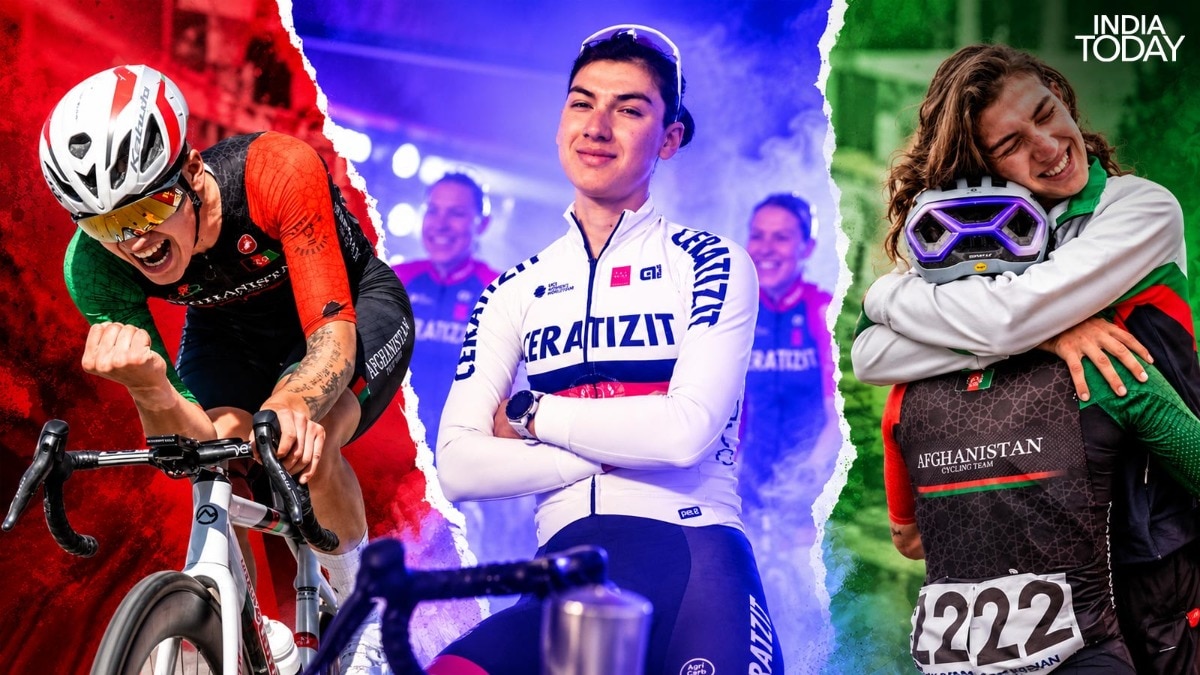
Born in Maimana, the capital of Faryab, Fariba has travelled a long way from the restrictions of her homeland to the biggest stages in sport. At the Asian Games in Aichi-Nagoya, she won silver in the women’s road race, finishing behind China’s Guo Li.
24 years earlier, Roia Zamani had won Afghanistan a taekwondo bronze at the Asian Games in Busan. She too had lived through Taliban rule, fleeing Afghanistan in 1996 before returning in 2002 as an English teacher in Kabul. Now, more than two decades later, Fariba had put her hands up and said, in her own way: I am still here.
When Fariba crossed the finish line in Japan, perhaps all the years of fear, uncertainty and longing disappeared for a moment. She celebrated with her Afghan teammates before taking her place on the podium, the silver medal around her neck and the Afghan flag beside her.
5 years after fleeing her country as a teenager, she had reached a place she had once only dared to imagine. And at that moment, the silver medal seemed to carry every tear she had shed along the way.
“Every athlete dreams of performing at their best and achieving a good result. But coming from a country that is one of the worst in the world for women, this was a dream come true for me. That podium was more than a medal. It was the voice of millions of women living in the dark and facing the same situation, not only in Afghanistan,” Fariba told India Today in an exclusive interview.
“When you come from such a place with a difficult history for women and reach that level, it is unbelievable.”
She had not always been able to ride like this.
At one point, Fariba had to dress as a man simply to get on a bicycle and ride outside.
A BORROWED BICYCLE
Cycling entered Fariba’s life almost by accident. In 2017, when she was around 14, she and her elder sister Yulduz saw an advertisement for a local race in Faryab. Neither of them knew how to ride properly. They borrowed a neighbour’s bicycle and had only a few hours to prepare.
They lined up anyway.
Fariba won. Yulduz finished second.
It should have been an ordinary local sporting moment. Instead, it opened a door that neither of the sisters knew existed. Cycling was barely considered an acceptable pursuit for girls in their conservative part of Afghanistan, but the sisters had discovered something that felt intoxicating: movement.
For Fariba, she felt “like a bird who could fly.”
But freedom came with a price.
The sisters trained secretly. They covered their faces, concealed their identities and tried to avoid attention. Stones and bottles were thrown at them. People insulted them. At times, motorists tried to force them off the road. Yulduz once suffered a broken wrist after a rickshaw driver rammed into her.
Still, they kept riding.
Fariba explained how she had watched her brother enjoy freedoms that were unavailable to her.
“I remember my brother would go outside with his bicycle and nobody would say anything to him. So I thought, ‘If I wear men’s clothes and go outside, will people still recognise me?’ At first, it almost felt like a game. I would wear my brother’s clothes, ride my bicycle and try to experience the same freedom he had,” Fariba said.
The game did not remain for long.
“But when people recognised me, I had really difficult moments. Sometimes they would stop me and say terrible things, even threatening to kill me.”
FREEDOM ON TWO WHEELS
Fariba was not alone in feeling trapped by the boundaries around her.
“When you live in a country where there is no support for women, you are always thinking about how you can go outside without anyone hurting you. Many Afghan women were living the same way. I was not the only one,” Fariba said.
She had watched women leave their homes dressed as men because their families had no man who could go outside to buy food or take care of basic responsibilities.
“When I was riding my bike, I would see women leaving their homes to get food. They would wear men’s clothes because there were families without a man in the house, so the women had to go outside and take care of things themselves.”
For Fariba, the bicycle became a small act of defiance. It gave her something that was otherwise being denied to her: the ability to decide where she wanted to go.
“I always hoped that one day the situation would change. At least we could ride our bikes freely and choose our own freedom instead of having other people choose it for us,” Fariba said.
That hope would eventually take her far beyond Faryab.
HERO OF THE STORY
Yulduz was more than Fariba’s elder sister. She was the person who had entered the sport first, the first teammate, the training partner and the one person who understood exactly what every kilometre meant.
The sisters trained and suffered together and pushed each other when the roads became dangerous. Their relationship was tested by competition too. At the 2022 Afghan Road Championships, staged in Switzerland because athletes could no longer safely compete inside Afghanistan, they rode together for much of the 57km race before Fariba edged Yulduz in the sprint. Fariba herself had expected her sister to win.
In 2024, the sisters reached another historic milestone when they competed at the Paris Olympics. They were no longer two girls hiding their faces on the roads of Faryab. They were Olympic cyclists representing Afghanistan.
Yet even at the Asian Games, when Fariba stood among athletes from some of the biggest cycling nations in Asia, Yulduz remained the person she needed most.
“I think my sister is the hero of this story. If she wasn’t there, winning this silver medal would not have been possible,” Fariba said.
THE NIGHT BEFORE SILVER
The night before the race, Yulduz reminded her that they needed to work together.
“She believed in me and trusted that I could do something special. She was my only teammate, but she was also my sister and a part of my family. She was racing alongside me and sharing the same dream. We also had another Afghan woman, Zahra Rezayee, who shared the same belief,” Fariba said.
That belief mattered because Fariba knew she was arriving at the start line with fewer resources than many of her rivals.
The night before the race, she washed her own bicycle while larger teams prepared theirs.
“There were big teams from Japan, China, Hong Kong, the UAE and Kazakhstan preparing their bikes for the next day. Some of them laughed at me and asked, ‘You’re a rider? Why are you washing your own bike?'”
Her answer was simple.
“I don’t trust anyone with my bike. I want to fix it myself so I know it will be ready tomorrow.”
Later, she told Yulduz what had happened.
“She spoke to me and gave me more motivation. She reminded me, ‘You are not alone. We are three or four athletes from the same country and in the same situation.'”
Fariba pauses when she speaks about what her sister has meant to her.
“Having her beside me helped me so much. I don’t know how to put into words how grateful I am for everything my sister has done for me. There are no words big enough to thank her,” Fariba added.
WHEN HOME BECAME DANGEROUS
The Taliban’s return to power in August 2021 changed the meaning of the bicycle once again.
Before that, cycling had represented freedom. Suddenly, continuing to cycle meant that the sisters’ lives were at risk.
“When I escaped my country, I left in a situation that I would not wish on any human being. You are scared, you are being attacked, and you are constantly afraid that someone will stop you or even kill you,” Fariba said.
The Taliban has maintained restrictions on women and girls participating in sport, with the wider restrictions extending to sporting facilities and public spaces. Afghan women athletes living abroad were able to continue competing internationally, including at the Paris Olympics and Paralympics.
Fariba remembers what it was like when cycling itself could make her vulnerable.
“I remember when I started cycling in 2017. When I went to training, I had to wear men’s clothes so that people would not recognise me. I was afraid that if they realised I was a woman, they might attack or hurt me. It happened many times,” Fariba said.
She has also watched restrictions on women become a much larger part of everyday life.
“Throughout Afghanistan’s history, women have faced the same problems. Many governments have come and gone, but the situation for women did not change.”
For Fariba, sport was never simply about winning races.
It was about whether women could be allowed to dream.
THE ESCAPE FROM KABUL
When the Taliban returned, the sisters went into hiding. Their involvement in women’s cycling had made them vulnerable, and remaining in Afghanistan was no longer a viable option.
Help eventually came from Alessandra Cappellotto, the former Italian world champion who founded Road to Equality and worked to help Afghan women cyclists escape. Fariba’s teammates Nooria Mohammadi, Zahra Rezayee and Arezo Sarwari also escaped alongside the Hashimi sisters.
Fariba still remembers how uncertain everything felt.
“When the Taliban came, the first thing they did was close all activities for women. When I wore men’s clothes and going outside to train, I always thought, ‘What if they recognise me? What if something happens to me?’ I had a dream I wanted to make come true, but under the Taliban government, that was impossible,” Fariba said.
“From 2021 until now, nothing has changed for women. In many ways, it has become even worse. The only choice we had was to escape the country in any way we could.”
The journey out was frightening. The sisters travelled towards Kabul airport, were stopped and forced to continue on foot. They spent days trying to find a way into the airport compound amid the chaos surrounding the evacuation.
They made it through to safety just five minutes before a massive suicide bomb tore through the crowd at the airport’s Abbey Gate. The attack, claimed by the Islamic State affiliate in Afghanistan, killed almost 200 Afghans and 13 US troops.
“I remember spending three days outside the airport, trying to get inside and reach the people who were supposed to pick us up from the gate. We spent three or four days in dirty clothes and terrible conditions before we finally found the right people who helped us leave the country,” Fariba said.
Cappellotto was among those who helped connect the cyclists with the Italian evacuation effort. Italy’s Aquila Omnia operation evacuated thousands of people from Afghanistan during the 2021 airlift.
For Fariba, however, the flight was only the beginning of another uncertain journey.
“That was when Alessandra found us. Sometimes, when you are in a dark place, someone comes to support and help you. Alessandra was one of those people. She found me in a very difficult situation and helped me.”
“At the beginning, I didn’t know where I was going or which country I would go to. I had never even heard of Italy. It was a completely different culture and a completely different situation,” Fariba said
Then she arrived.
“Finally, we arrived in Italy. When you come to a country where you don’t know the language or culture, everything is new. On my first day, I saw women working outside freely and nobody was saying anything to them. It was completely different.”
“For me, it felt like being somewhere I had only ever imagined in my dreams.”
THE FAMILY SHE LEFT BEHIND
Leaving Afghanistan gave Fariba a future in cycling, but it took away something she still aches for: ordinary family life.
Her parents, siblings and relatives remained behind. The family has had to move repeatedly for safety, while Fariba built her life thousands of kilometres away.
“Since 2021, I have been living far from my family. They are still in Afghanistan, living in a very difficult situation. Whenever I speak about my family, I become very emotional because I cannot control my feelings,” Fariba said.
She was still only a teenager when she left.
“At 17, children are usually with their families, taking care of each other, joking around and simply enjoying being kids. For me, it was different. I have always missed my family.”
Her mother’s words have become a source of strength.
“I think this is the sacrifice we are making today, with the hope that one day we can live freely. I want to be able to see my family freely. When I speak to my mother, she always tells me, ‘Think about tomorrow, not only today. Today’s situation is like this, but think about how many things can change tomorrow.'”
And then there is her father.
“I have a wonderful family, and they have supported me throughout everything I have done. I have an incredible father who has stood by me every day. He gives me new ideas and motivation,” Fariba said.
“I wish every child could have a father like mine — someone who believes in their children and supports them. The situation for women in our country has been very difficult, and I believe the culture needs to change from within the home. My father was the person who started that change in our home.”
A DREAM BEYOND HERSELF
Fariba’s family story becomes more painful when she talks about the sisters who remain in Afghanistan.
“At the moment, women are not allowed to take part in any activities inside the country. My family lives in one of the more remote parts of Afghanistan, where even going to a supermarket can be difficult. My mother and sisters cannot go outside freely, and they are still afraid of what is happening inside the country,” Fariba said.
She has three sisters and four brothers. One sister calls her with a question that is almost impossible for Fariba to answer.
“My sister calls me all the time and asks, ‘Fariba, when can I go outside like you? When can I live freely in Italy? At least I want to go to school.’ That hurts me.”
That sentence explains why the Asian Games medal means so much to her.
“But it is not only about my family. Millions of women are suffering and facing the same situation. That is why my victory at the Asian Games was not just a victory for me. It was a dream for millions of women in my country who are fighting for their basic freedom — a freedom they cannot even have today,” Fariba said.
Fariba does not talk about herself as someone who has escaped and moved on.
“I want to represent my country and, hopefully, create something that can make a difference, not only for my generation but for the next generation as well.”
FROM EXILE TO CARRYING AFGHANISTAN’S FLAG
Once in Europe, Fariba had to learn how to be a professional cyclist while simultaneously learning how to build a new life.
Her 2022 Afghan national road race championship title, won in Switzerland, was an important breakthrough. She subsequently moved into professional European cycling, racing for teams including Israel Premier Tech Roland Development and the WCC Team before joining Ceratizit Pro Cycling Team in 2025.
Her results steadily reflected her growth. In 2024, she won a stage of the Tour Cycliste Fminin International de l’Ardche, finished eighth overall at the Tour de l’Avenir Femmes and was 10th overall at the Giro Mediterraneo Rosa.
That year also brought another defining moment when she represented Afghanistan at the Paris Olympics alongside Yulduz. Fariba was one of Afghanistan’s two flag bearers at the Opening Ceremony, carrying the country’s pre-Taliban tricolour flag alongside sprinter Sha Mahmood Noor Zahi.
Those achievements matter because Fariba’s story cannot be reduced to what happened to her.
She is not only a refugee athlete. She is not only an Afghan woman who escaped the Taliban. She is a professional cyclist who has spent years building the ability to compete at the highest level.
And then came Aichi-Nagoya.
The silver medal did not erase her past. It gave that past a new meaning.
OTHERS WHO KEPT RIDING
Fariba’s story exists within a much larger story of Afghan women athletes rebuilding their lives outside their homeland.
Zakia Khudadadi was evacuated from Kabul to France in August 2021 and went on to compete at the Tokyo Paralympics. At Paris 2024, competing for the Refugee Paralympic Team, she won bronze in para-taekwondo, becoming the team’s first Paralympic medallist. In 2026, she won gold at the European Para Taekwondo Championships while representing France.
Cyclist Masomah Ali Zada fled Afghanistan in 2016 after facing hostility over cycling. She competed for the Refugee Olympic Team at Tokyo 2020 and returned to Paris 2024 as Chef de Mission of the Refugee Olympic Team.
Cricketer Firooza Amiri fled Afghanistan after the Taliban takeover and rebuilt her career in Australia. Nilofar Bayat, captain of Afghanistan’s women’s wheelchair basketball team, escaped Kabul and eventually established herself in Spanish wheelchair basketball.
Footballer Fatima Yousufi and her Afghan teammates have also continued their sporting lives abroad after fleeing Afghanistan.
Their paths are different, but the common thread is unmistakable: the athletes were forced to leave home to continue doing something that should never have required them to leave it.
For Fariba, the dream is that future generations will not have to make the same choice.
A VOICE FOR AFGHAN WOMEN
Fariba knows that winning a medal will not suddenly change Afghanistan.
She knows that the women in her family are still living with restrictions. She knows that millions of Afghan women remain unable to experience the freedom she now has in Italy.
She also knows that a sporting moment can carry a message beyond the race itself.
“I’m really hoping this can change something inside the country. There are millions of women with the same dream, and I hope they can fight for their dreams and create a better future for the next generation — not only in Afghanistan, but all over the world,” Fariba said.
Her message is rooted in memory.
“I don’t want the next generation to live in fear the way I did. Every day, I faced different risks. I was afraid that someone might stop me or hurt me. I don’t want them to experience that.”
And then comes the philosophy that has carried her through every stage of her journey.
“I want them to understand that you have to fight for your dreams. Nothing comes as a gift; you have to fight for what you want.”
She does not want the next generation to repeat her escape.
“I would never wish for anyone to leave their homeland simply because they have a dream, or to escape because they are afraid of being attacked by people in their own country,” Fariba added.
STILL RIDING FORWARD
Perhaps that is why the Asian Games medal means so much to Fariba and her sister.
Fariba holds the silver medal, and she deserves every bit of recognition for what she achieved. But behind that medal is a journey the sisters have shared for years. They trained together, travelled together, struggled together, fell, got back up, cried, laughed and told each other to keep going when one of them had no strength left.
They knew many of the problems they had before the race would still be there after it.
Yet they still stood on the start line and fought — for themselves, for the dreams they had carried for years, for Afghanistan and for Afghan women.
The words Fariba used after the race were simple: “We did it. We did not do it alone.”
The road was never straight. It was never safe. But she kept moving.
In Aichi-Nagoya, Fariba stood on a podium as herself.
The medal belongs to Fariba. The journey belongs to both sisters.
And perhaps, years from now, when the noise around the silver has faded, what will remain is not simply the colour of the medal, but what it represented: two Afghan sisters who kept riding when the road told them to stop — and showed that the story of their dreams was not over yet.
– Ends
Virat Kohli tattoos: How India’s cricket stars turn ink into identity
“My body is my journal and my tattoos are my story.” – Johnny Depp.
One of the first things that comes to mind when you think of Virat Kohli is his strokeplay. Then comes the aggression, the animated celebrations and that almost infectious passion for the game.
The runs and records followed soon enough. Kohli became the poster boy of Indian cricket, and for a generation growing up watching him, being like Kohli was the dream.
Many tried to copy his shots in the nets. Some borrowed his aggression and celebrations. Beyond the cricket field, Kohli brought something else to the table: style.
The signature beard. The rockstar hairstyles. The swagger.
Many tried to copy those too. Myself included.
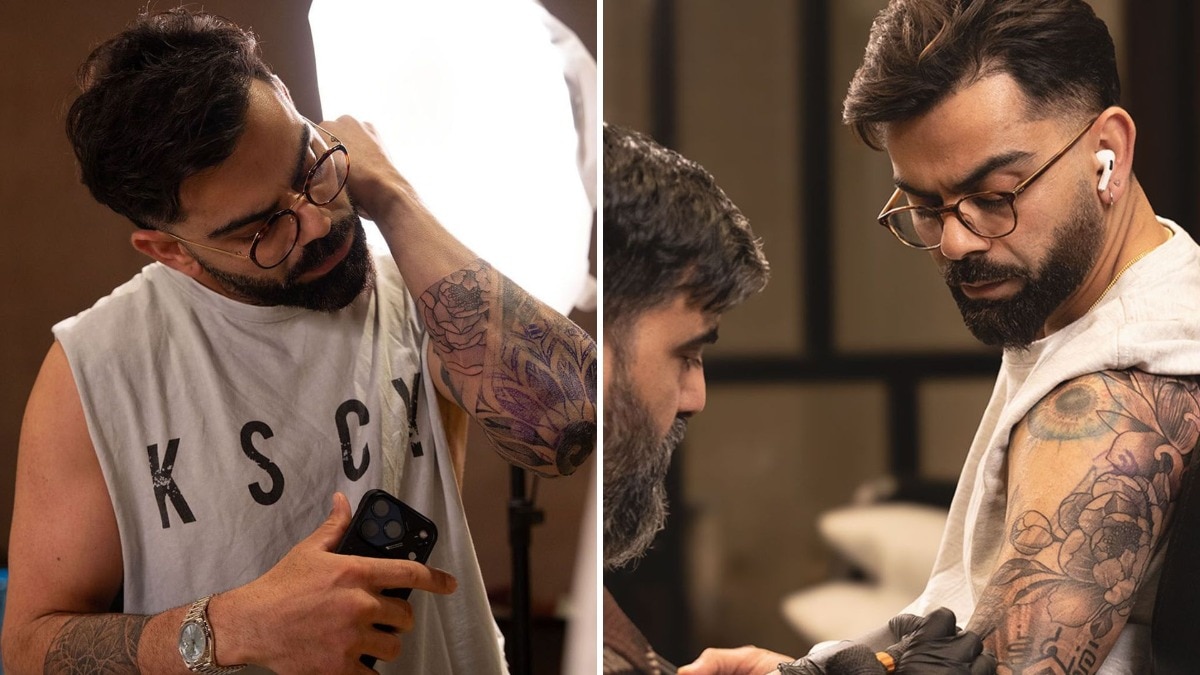
But there was one thing about Kohli that perhaps stood out more than anything else: his tattoos.
Covering both his arms is a collection of tattoos that have become as recognisable as some of his trademark celebrations. You would imagine someone with a larger-than-life personality like Kohli to have gone down the classic rockstar route. Skulls. Bones. Fire. Something loud.
Instead, Kohli’s collection is surprisingly grounded.
There is the God’s-eye tattoo, or the all-seeing eye as Kohli has described it. It symbolises the belief that everything you do is being watched and that someone is always keeping track of your actions.
Then there is the Japanese samurai, a symbol from which Kohli believes he draws strength and values such as loyalty, self-discipline and ethical behaviour.
His ODI and Test cap numbers find space on his left arm, along with the names of his father and mother. A worshipper of Lord Shiva, Kohli also has a tattoo of the deity meditating on Mount Kailash.
There is a monastery image, too, along with Scorpio, Om and tribal tattoos.
And the collection has continued to grow.
Kohli has been adding to his left-arm sleeve, one that was intentionally left incomplete. And there is a rather fitting reason for that.
For Kohli, a tattoo is unlikely to ever be a finished chapter. It remains a work in progress, growing alongside his journey through life. Every major chapter, personal change and significant achievement could bring a new addition, turning the artwork into an evolving reflection of his experiences rather than a permanent reminder of just one moment.
Then came the latest one, which appears to depict ripples spreading across a water surface after a single drop falls into it.
Taken together, Kohli’s tattoos reveal a different side to the man we see charging around on a cricket field. There is calmness. Reflection. Spirituality. A sense of looking inward.
And Kohli is far from alone.
Hardik Pandya got one to celebrate his relationship with girlfriend Mahieka Sharma. Tilak Varma has shown his devotion to Lord Shiva and love for his parents through tattoos depicting their faces on his body. Smriti Mandhana decided to celebrate the Women’s World Cup win with a cute tattoo on her right hand.
The latest star to join the growing list was Arshdeep Singh, who got inked alongside his girlfriend Samreen Kaur.
And the list keeps growing.
Which got me thinking.
What exactly goes into creating a tattoo? Where does the idea begin? How much creativity do the cricketers themselves bring to the table? And, perhaps most importantly, what makes them keep coming back for more?
Luckily enough, the people behind Kohli’s latest tattoos were willing to take us behind the scenes.
Aliens Tattoo CEO Sunny Bhanushali and lead artists Allan Gois and Devendra Palav spoke about the stories behind the ink and what appears to be a growing tattoo revolution in Indian cricket.
VIRAT, THE TATTOO ENTHUSIAST
The conversation wasn’t supposed to be a long one.
It eventually went on for almost an hour.
There were stories about emotions, relationships, spirituality, recovery, creativity and the strange pull of the tattoo chair. But at the centre of it all, there was always going to be one man.
Virat Kohli.
Almost like the centrepiece of a much larger work of art.
Kohli keeps a relatively low profile these days and largely stays away from the glitz and glamour of the media. So what is it actually like working with one of the biggest stars in world cricket?
“It’s always good to work with Virat. We always have fun — me, Deva, and the entire team. It’s never like working with Virat. It’s more like he’s a friend now. Nobody gets access to him. It’s he who decides who can,” said Allan.
Allan has worked closely with Kohli on his latest tattoo and said the Indian star is far more involved in the creative process than one might imagine.
Kohli, according to Allan, doesn’t simply sit back and let the artists do all the thinking. He asks questions. Plenty of them. And occasionally, he challenges them too.
“Virat is a very intelligent guy. He is not just a sportsman, he is a businessman as well. And he takes like collective decisions when it comes to anything he does in his life,” said Allan.
“That is what we feel. He is actively involved throughout the design process. He tries to understand the technical process of tattooing end to end, why we are doing what we are doing, and how we are going to do it.”
“And he basically also challenges your decisions, not just goes with the flow. So he also challenges our decisions, like why this element or why this design, why this angle.”
“So that is the kind of experience that we have had working alongside Virat.”
It perhaps explains why Kohli’s tattoos are so personal.
On the outside, they may appear mellow when compared to the aggression and intensity he brings to the cricket field. But Sunny believes that is exactly where the story lies.
“For you, as an outsider, it’s not bold or the elements are mellow. But for Virat, all the elements are bold because that’s the reflection of himself. So his tattoo is nothing but an expression of the emotions and all the feelings inside of one, right?”
“And whatever he believes in, whatever he feels and whatever his philosophies are about life and his career and everything, the design is reflecting all of that.”
“He is always involved in designing his piece and he is into every bit of it. And a reason for that is because what he is trying to achieve more than the aesthetics of the design is the story of his life, is what he is trying to portray through tattoos,” said Sunny.
And Kohli’s involvement does not stop once he leaves the tattoo studio.
Allan revealed that despite now being based in London, Kohli remains only a message away when it comes to discussing ideas, designs and the next chapter of his sleeve.
“For us working with Virat, it is the opposite time. He lives in London; we are sitting here in India. But anytime we message him, late night, early morning- he will reply. I don’t know how he does that, but he’s actively involved; he’ll ask so many questions. And then we come to a final decision that this is what we want to go with,” said Allan.
MAKING A TATTOO FOR A CRICKETER
So, is designing a tattoo for a cricketer any different from doing one for the rest of us?
Yes and no.
The process itself remains largely the same. But according to Sunny, the conversations can take you down very different paths.
For a cricketer, it usually starts with a basic idea. A name. A milestone. A relationship. A belief. And then the real work begins.
“The process is basically same for everyone. The conversations are different, but the process of designing is the same for every person,” said Sunny.
“It starts with a very basic idea where they know what they want vaguely. Maybe they want to name off their partner or maybe they want to talk about some milestone or there is some base story to it. And from that point in time, we start asking deeper questions.”
“What’s the story behind it? What’s the emotion behind it? Is there any belief system connected to it? There are so many childhood stories that come out, so many emotionally loaded things from their past, from the present come out. People cry, people laugh.”
That is where a tattoo begins to move beyond simply looking good.
Once the stories and emotions are on the table, the artists move to the design process. Options are presented, ideas are discussed and changes are made. The aim is to create something that the person won’t grow tired of looking at years later.
A tattoo, after all, does not come with an undo button.
“We start with one design, we might present them with maybe two, three, or four options. They might have some time to think over it come back. And then that’s how we develop and we go towards closure.”
“We make sure that the tattoo is not a very transactional item. It has to be a timeless piece for that person. Now for an outsider, writing just a name of a partner or a dog or a pet or making wings and flowers and this and that to signify something, for an outsider it is just an element, surface level element,” said Sunny.
Then comes the part most people dread.
The needle.
Depending on the size and complexity of the artwork, getting a tattoo can mean spending several hours in the chair. For a professional athlete, there is another factor to consider: recovery.
What happens if there is a match in a couple of days?
Sunny said the artists offer recommendations and schedules, but elite athletes also know their own bodies and recovery systems remarkably well.
“When they come for a tattoo, we know that they will have their matches and stuff. But then, Hardik and Virat, both are very spontaneous with their decisions.”
“And while we have our recommendations, they know their forte and their healing strength and you know. So, they take a call. So, we don’t have much say in that way, in that sense.”
“So, Virat has got a tattoo couple of days prior to the match and still did great in matches, following matches. Hardik has done the same and he has done really well. We have seen time and again them getting tattoos in the midst of the ongoing series and they do great,” said Sunny.
“Their vitals are different than our regular people. So, when you talk about Virat Kohli and even talk about Hardik Pandya, they are not normal people. Their bodies are different.”
“They have different kind of strength, and they are not like regular people. So, you can’t compare their physical strengths and performance to regular people because they are meant for that. If you talk about Virat, he is a top-10 athlete at the world level. You can’t say that there is no stark difference from a normal person. There is a difference. So, their willingness to heal is very strong.”
“They are on a great diet. They have doctors and people around all the time. They know every bit of it, you know, what recovery is, what healing is. All their life they have spent in doing that. Normal people don’t do that. Normal people next day go to job.”
And sometimes, the process itself can take years.
Kohli’s tattoo collection is perhaps the perfect example.
Allan said the work on the Indian star has been going on for more than three years and the story is still unfolding.
“In Virat’s case, we have been working on his piece for more than 3 years now, and it is still taking shape. It is still, like unfolding basically,” said Allan.
“The right piece is still pending. The left sleeve, we got some time this year. So, we could finish most of the piece, like 90 percent of the piece this time.”
“But the right piece is still pending. So, that is how it is. It takes months, sometimes years to develop the entire piece, depending on how much time the customer has.”
For Kohli, the tattoo is not just a piece of artwork.
It is, quite literally, still a work in progress.
HOW CRICKETERS CHANGED THE WAY INDIA LOOKS AT TATTOOS
There was a time, especially in India, when tattoos came with plenty of stereotypes.
Getting inked wasn’t always seen as something the mainstream would embrace. Tattoos were often linked to rebellion, rough personalities or someone who perhaps had a bit of a mean streak.
Look back at some of India’s biggest cricket stars from an earlier generation and the contrast is striking.
Sachin Tendulkar. Rahul Dravid.
Tattoos simply weren’t a major part of their public identity.
The current generation is different.
Kohli, Hardik and others have made tattoos part of their personalities without it ever taking away from their sporting success. If anything, the artwork has become another way for fans to understand them.
“Tattoos have always existed in Indian culture. Now, it has been modernised, and celebrities have started getting it, like Virat and Hardik. So, for me, I think that tattoos had this negative notion or stereotype or taboo attached because of the people who were getting it,” said Allan.
“People who have achieved something significant in their life started getting tattoos and the tattoos that had actual deep meaning of something they have achieved in their life, that is when the artwork started gaining more attention and importance, is what I feel.”
Devendra believes the evolution has not just been about the people getting tattoos. The perception of tattoo artists has changed too.
“In the olden days, that whatever we used to think about tattoos, the personality and mentality were different. When we used to talk about tattoos as a career point of view, the mentality was different, but eventually, everything kept changing, kept evolving, so the mentality and the aspect of looking at it changed.”
“So, same thing happened with other people’s mentality. Tattoos are not just about style and fashion, it is a reflection of emotions,” said Devendra.
And perhaps that is why so many cricketers keep returning to the chair.
The final question of the conversation was a simple one.
Why come back again and again?
Sunny believes the answer lies in commitment.
The same kind of commitment, perhaps, that these athletes show when they step onto the field.
“I think it is about how committed you are towards that emotion or whatever you believe in. So the people who actually come to get a tattoo, they are committed enough to get that,” said Sunny.
“And they don’t think like it’s going to take three years, five years. It is about that one session.”
“And that is what they will plan. This session will try to complete this part of the piece. And then we move ahead. So there’s no special force, that is trying to help them to sit along. It’s not suffering. This is an experience. It’s a beautiful experience to get a tattoo. You would want to come back and sit on that chair and do it again and again. It’s fun.”
“It’s not physical. It’s emotional. There’s a lot of emotional load on the neurological level. And what tattoo does it, when you get a tattoo of that particular emotion, there is a massive release of energy from the neurological self. And you feel lighter, better, happier. There is an elevated feeling inside of it. And you crave for that feeling again and again.”
“And also it affects your mental state. So there is a scientific psychological term, which is known as identity refreshment. Your identity is elevated every time. But every time you get a tattoo, it heals you a little bit.”
“And once you get a tattoo, your body craves for it. You want to do it again. You wait for that moment that you’re going to sit in that chair and get a tattoo again. You start dreaming about it.”
And maybe that is what makes tattoos such an interesting part of modern cricket.
For fans, they can be another element of a cricketer’s style. Something to admire. Something to copy.
But for the players themselves, the ink appears to mean something far more personal.
A parent. A partner. A childhood memory. A World Cup. A belief. A god. A moment that changed everything.
Or simply a reminder of how far they have come.
Which brings us back to Kohli.
A few years ago, while speaking to National Geographic, the former India captain perhaps summed up the relationship between tattoos and his life better than anyone else could.
“I don’t need to look any further than both my arms to understand where I was and where I’ve come now,” said Kohli.
For a man whose cricketing journey has been documented through runs, records and trophies, perhaps there is another journal sitting in plain sight all along.
It is written across both his arms.
– Ends
Arun Kumar out of Commonwealth Games 2026: Indian judo player thrown out after failing doping test
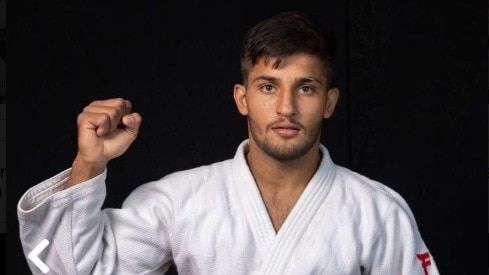
India suffered a major blow just hours before the start of the Commonwealth Games in Glasgow when judoka Arun Kumar was ruled out of the competition after an adverse analytical finding (AAF) was reported following a doping test.
As a result, Arun has been ruled out of the men’s 73 kg event at this year’s judo competition after being deemed ineligible.
The National Anti-Doping Agency (NADA) served a notice on Wednesday, following which Arun’s name was removed from the sports entry system of the 2026 Commonwealth Games. After the AAF was informed, the International Judo Federation (IJF) informed the organisers, while the Indian Olympic Association (IOA) was also informed about the development.
“Glasgow 2026 has received confirmation from the International Judo Federation that Arun Kumar is not eligible to compete at Glasgow 2026. As a result, he will be removed from the sport entry system,” Alice Anderson wrote on behalf of organisers.
No replacement for Arun
Judo Federation of India president Mukesh Kumar said he had high expectations from Arun during the Games and added that he would not be able to name a replacement before the start of the competition on Thursday, as the medal competitions would begin on Friday.
Kumar told The Tribune on Thursday, “His notice has come only yesterday which says he has to send his reply in 15 days. We will give him time but as per the rules, he cannot compete. We cannot replace anyone in such a short time. It is unfortunate because we had big expectations from Arun.”
– ends
IPL investment later, The Hundred remains a family affair cricket news
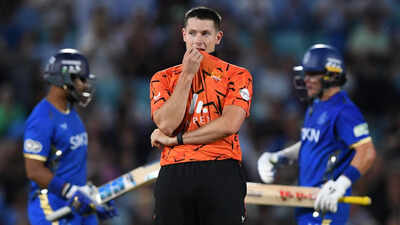
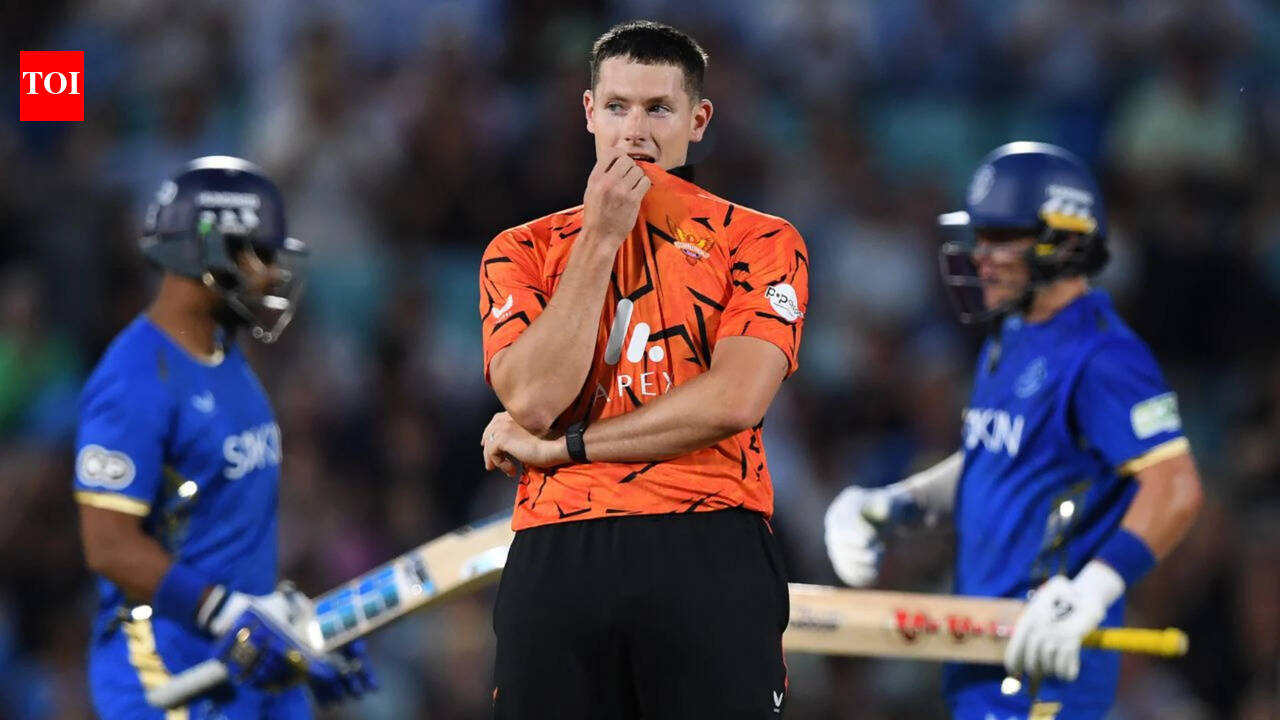
Matthew Potts of Sunrisers Leeds reacts after MI London wins the Hundred men’s match between MI London and Sunrisers Leeds at The Kia Oval on July 21, 2026 in London, England.
TimesofIndia.com in London: Cricket summer continues in England. The men played three Tests against New Zealand and five T20Is and three ODIs against India. As far as the women were concerned, it was the T20 World Cup and the one-off Test between India and England. And now, it’s the turn of The Hundred, which started on July 21.The unique 100-ball innings tournament The Hundred is back with its sixth edition. A lot has changed, yet a lot has not changed. It still has eight teams, still features 100-ball innings where bowlers can bowl consecutive spells of five or 10 balls, and it still aims to speed up the game and feature double headers – men’s and women’s – on the same day.On the first day, defending men’s champions MI London defeated Sunrisers Leeds at The Oval. In the first game of the day, Sunrisers defeated MI London by 7 wickets in the women’s competition. A day later, in Southampton, Southern Brave Women won by a narrow margin over Welsh Fire. And later in the day the result of the men’s match was reversed.What has changed is the ownership, team names and kit designs. Following a £520 million influx into The Hundred, the Ambani family acquired the Oval Invincibles (now renamed MI London), the Sun Group bought Northern Superchargers (now Sunrisers Leeds), and the RPSG Group bought Manchester Originals (now Manchester Super Giants). Delhi Capitals co-owner GMR Group has picked up a 49% stake in Southern Brave.On the opening day of the season at the Oval, the mood was as relaxed as could be expected at this time of year. The sun was out, and it was a pleasant day, far from the scorching heat that this country had seen in the past few months. Even though it was a weekday, families were out in droves, allowing you to make the most of the many entry points to this cricket stadium in Kennington.A venue which has seen the hosts suffer three consecutive Test defeats. Exactly a month ago, it was here that New Zealand had defeated England by 253 runs. And about a year ago, it was here that Mohammad Siraj bowled brilliantly and helped India win the series by just 6 runs.But now, on Tuesday, The Hundred begins, and the discussion was equally about cricket, family and entertainment. A father walked around holding the hands of his two children and asked a manager for assistance in finding the “family section.” Unlike international cricket, where tickets sell for £100 or more, The Hundred hopes to attract the masses with reasonable prices.Tickets for children under two are free, tickets for children aged 3-15 cost £5, and tickets for adults start at £14. So, an entire young family can watch two consecutive cricket matches of about five hours or more for £30-40.To unwind after a long day at work, numerous food carts, kiosks and beverage stalls came to the rescue. From Middle Eastern to fast food to Indian, everything was available to suit the customers’ tastes. To mitigate this there are soft drinks, beer, cocktails and a range of other non-alcoholic beverages. Most importantly, perhaps, ice creams in different flavors and styles are what the youth ask for.There is a huge difference in the quality of the atmosphere between the Indian Premier League, a mature cricket league, and The Hundred, which is still finding its feet. Now that The Hundred has been invested in by IPL franchises and Indian conglomerates, the way forward is only way forward, helped largely by a family-oriented approach.
Novak Djokovic and Serbia’s student protests: when he stood behind the Novi Sad movement
As student protests gain momentum in New Delhi, Novak Djokovic’s support for Serbia’s student movement has once again come into focus. The 24-time Grand Slam champion was one of the most prominent public figures to stand with Serbian students since nationwide demonstrations following the deadly Novi Sad railway station tragedy in November 2024.
The movement began after a concrete canopy collapsed on the newly renovated Novi Sad railway station on November 1, 2024, killing 16 people. The incident sparked public outrage and students accused the government of corruption, negligence and lack of transparency. What began as anger over the tragedy soon turned into a nationwide movement demanding accountability, and Djokovic emerged as one of its most recognizable supporters.
Speaking for the first time in December 2024, he said that Serbia’s educated youth represent the country’s greatest strength and deserve to be heard.
A month later, during the Australian Open, Djokovic again put his weight behind the movement. After one of her wins, she wrote “For Sonja” on the camera lens in support of student Sonja Ponjavić, who was seriously injured after being hit by a car during a protest. Making his sentiment clear, Djokovic said that he stands with the students fighting for a better future and cannot remain silent about what is happening in his country.
His support did not stop here. In the months that followed, Djokovic attended a basketball derby in Belgrade wearing a hoodie bearing the slogan “Students are champions”, a phrase closely linked to the protests. In March, he and his wife Jelena led a student rally described as “historic” that was attended by more than 100,000 people, giving further strength to a movement that had been gaining momentum.
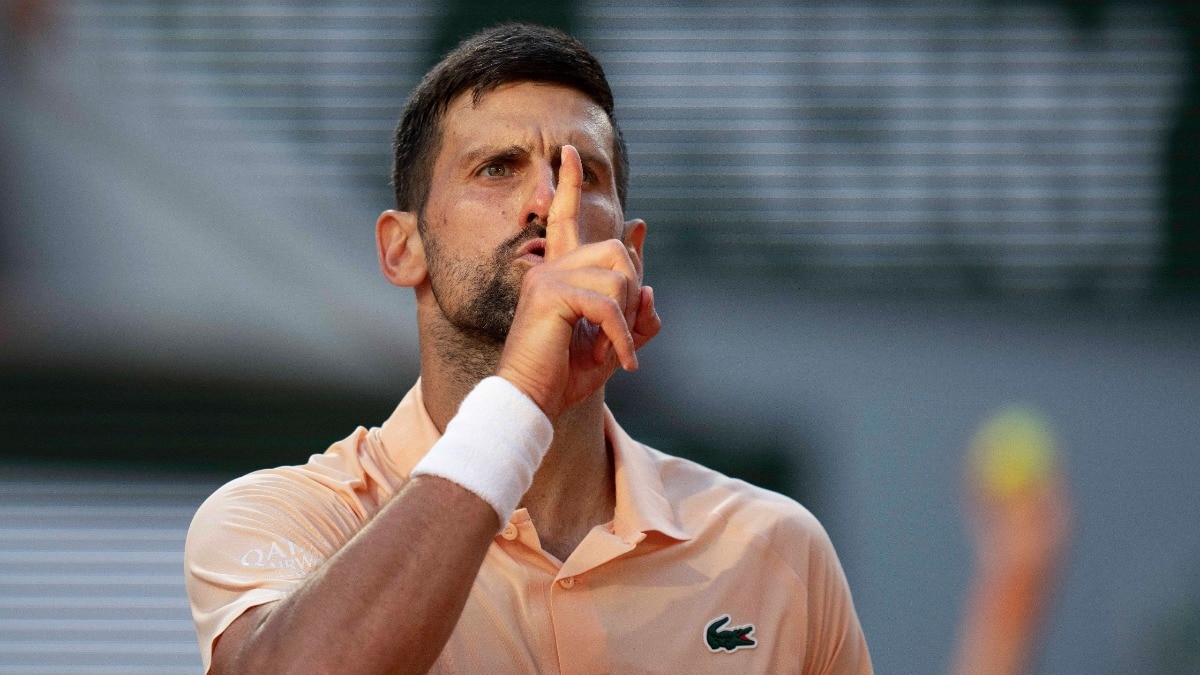
Djokovic also found himself at the center of conversation during Wimbledon 2025. His now-famous goal celebration was widely interpreted as an allusion to the protesters’ “Pampaz” slogan, although he later insisted that it was merely a celebration he shared with his children and was not intended as a political message. However, his comments ahead of the US Open left no room for doubt.
Warning that Serbia is “literally on the brink of civil war”, Djokovic spoke openly about rising political tensions in the country. Later that year, she also expressed support for Dijana Hrka, whose son died in the Novi Sad station collapse, after she began a hunger strike outside parliament demanding accountability.
His repeated support for the student movement came at a cost. Pro-government tabloids and media outlets, many of which had once celebrated him as Serbia’s greatest sporting icon, turned against him.
A mural of Djokovic was vandalized in Belgrade, while he later moved his family to Greece amid rising political tensions and continued criticism from pro-government media. Despite the criticism, Djokovic never distanced himself from the students or their calls for accountability.
Throughout the protests, Djokovic was careful to avoid associating himself with any political party. Instead, he consistently said that students have every right to protest peacefully and demand answers from those in power.
His comments and actions have drawn renewed attention as India sees its own wave of student protests. Thousands of people have taken to the streets in New Delhi demanding the resignation of Education Minister Dharmendra Pradhan over exam paper leaks and concerns over the evaluation system.
The protests began last month following allegations of leaks in the medical entrance exam, an issue that affected nearly two million candidates. Protests intensified this week as thousands of students marched towards Parliament in New Delhi. Police used tear gas and batons to disperse the protesters, leaving several people injured.
The movement has since spread beyond the national capital. Students have also protested in Mumbai, Bengaluru, Kolkata, Goa, Guwahati, Thiruvananthapuram, Jammu and Ahmedabad to maintain pressure on the government as demands for accountability continue to grow.
– ends