Breaking News
US-Iran war: How the LPG cylinder has become the face of Middle East mayhem’s impact on India
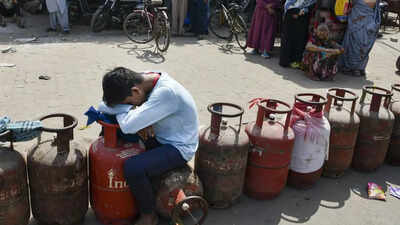
US-Iran war: How the LPG cylinder has become the face of Middle East mayhem's impact on India

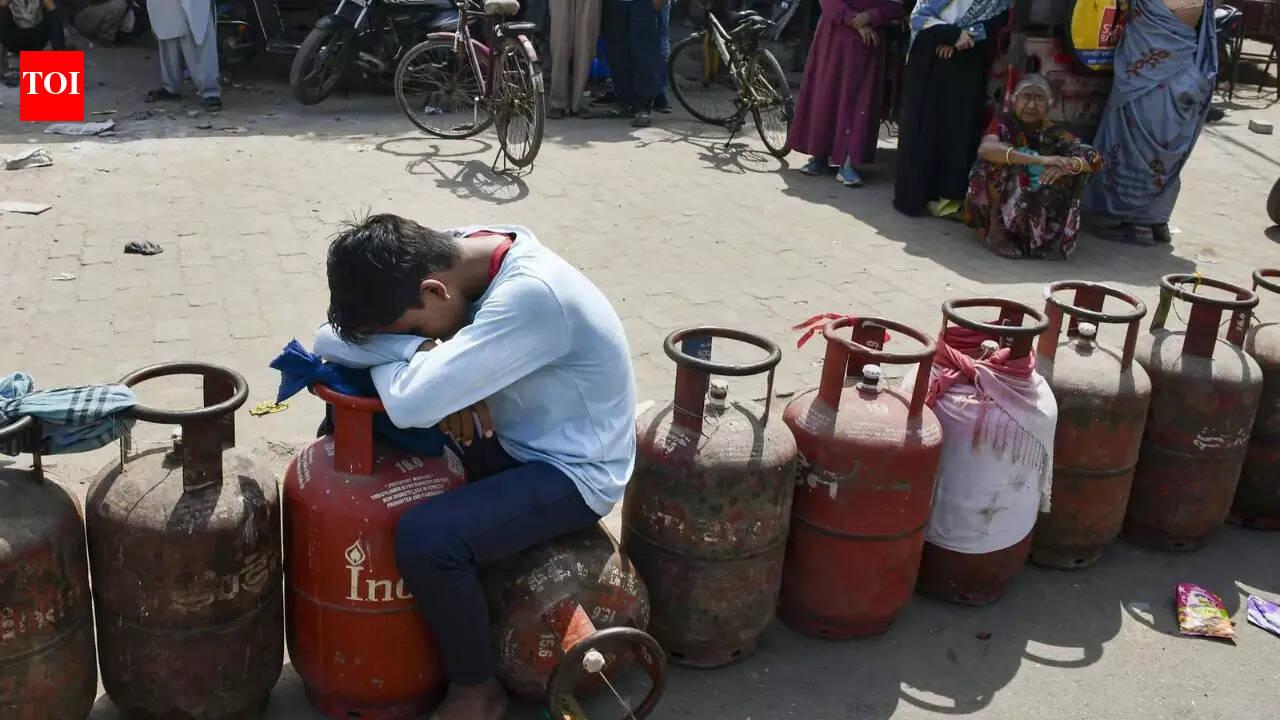
“The tea is 15 rupees,” said the tea stall vendor outside Noida Sector 16A metro station, apologetically handing over a cup of tea that had suddenly become more expensive.When asked why the price had increased, the vendor offered a brief explanation with tired eyes, the “cylinder has gone very costly.” Even the samosas and pakoras at nearby stalls were being served cold. Cooking gas had become scarce, forcing many vendors to cut back on preparation. The scene reflects a broader reality unfolding across India as the ongoing Middle East conflict begins to affect everyday life thousands of kilometres away.Disruptions in energy shipments and rising global oil prices are now spilling into Indian households, factories, hostels and restaurants. Liquefied Petroleum Gas (LPG), a key fuel for cooking and several industries, has become increasingly difficult to obtain in many places, triggering panic bookings, long queues outside gas agencies and reports of black marketing.While the government maintains that supplies remain adequate, the situation on the ground tells a more complex story!
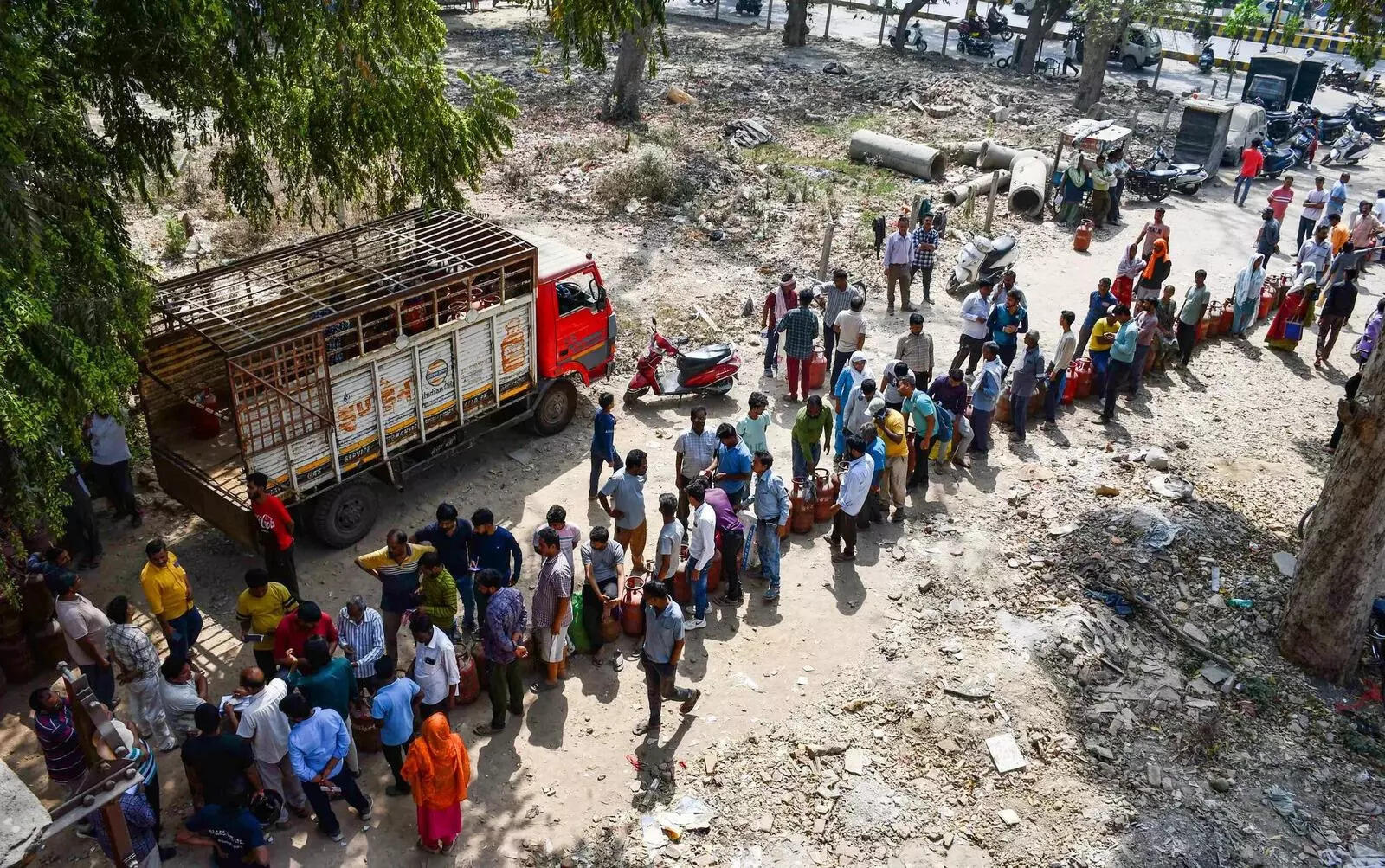
Prayagraj, Mar 17 (ANI)_ People wait in a long queue to refill their LPG cylinde....

People wait in a long queue to refill their LPG in UP (Photo: ANI)

How global tensions triggered the LPG disruption

The current crisis has been linked to the widening conflict in the Middle East involving Iran, the United States and Israel. The situation has disrupted vessel movement through the Strait of Hormuz, one of the world’s most critical maritime energy routes.The narrow waterway carries roughly one-fifth of global oil supplies and a large portion of the world’s LPG shipments. Any instability in the region sends shockwaves through global energy markets.The resulting volatility has quickly translated into higher LPG costs and supply uncertainties in India, which depends heavily on imports for its cooking gas needs.
,

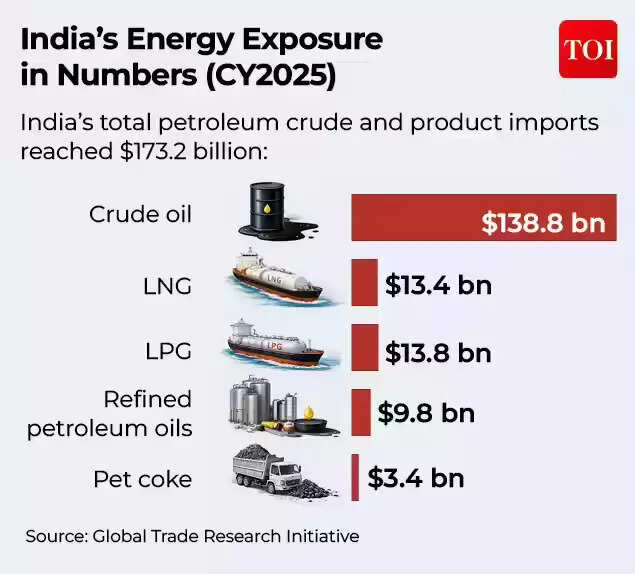
As per reports, India imports nearly 60% of its LPG requirement, and about 90% of those shipments pass through the Strait of Hormuz. This concentration of supply routes means geopolitical disruptions in the Gulf region can directly affect LPG availability in any country.

How India became highly dependent on LPG imports

India’s dependence on LPG imports has grown sharply over the years, mainly due to rising domestic demand that has outpaced production.LPG is produced as a byproduct during crude oil refining or natural gas processing. While India has increased imports of both crude oil and liquefied natural gas (LNG), LPG imports have risen even more dramatically.Between 2011–12 and 2024–25, crude oil imports increased by about 40% in volume, while LNG imports doubled during the same period.
,

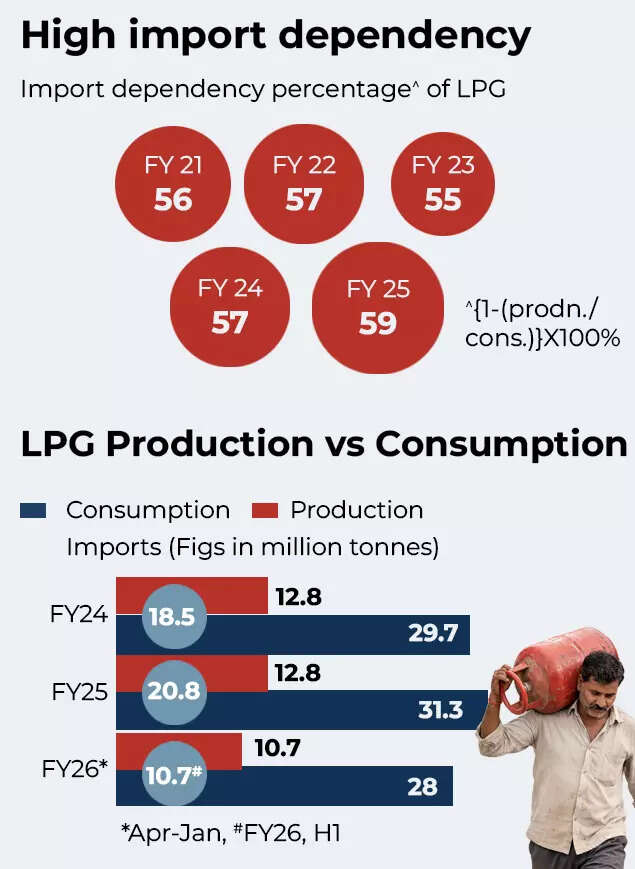
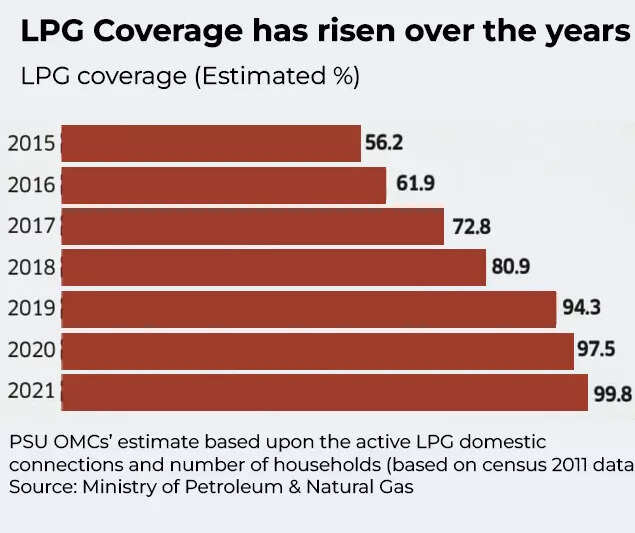
However, direct LPG imports have seen the steepest rise. They surged from just 1,722 thousand metric tonnes (TMT) in 1998–99 to 20,667 TMT in 2024–25, marking a nearly 12-fold increase over 27 years.This trend highlights a key shift in India’s energy basket. In 1998–99, LPG made up only 7.2% of total petroleum product imports. By 2024–25, LPG’s share had jumped to around 40%, making it the largest imported petroleum product by volume.But why? The gap between domestic production and consumption further explains this dependence. In FY24, India consumed 29.7 million tonnes of LPG, while domestic production stood at just 12.8 million tonnes, with the rest met through imports. In FY25, consumption rose to 31.3 million tonnes, while production remained unchanged at 12.8 million tonnes. Early estimates for FY26 show consumption at around 28 million tonnes, with production at about 10.7 million tonnes, again indicating heavy reliance on imports.Overall, India’s growing demand for cooking gas driven by rising household usage and policy push for cleaner fuels has made LPG one of the most import-dependent energy products in the country.
,

Rising prices add pressure on households

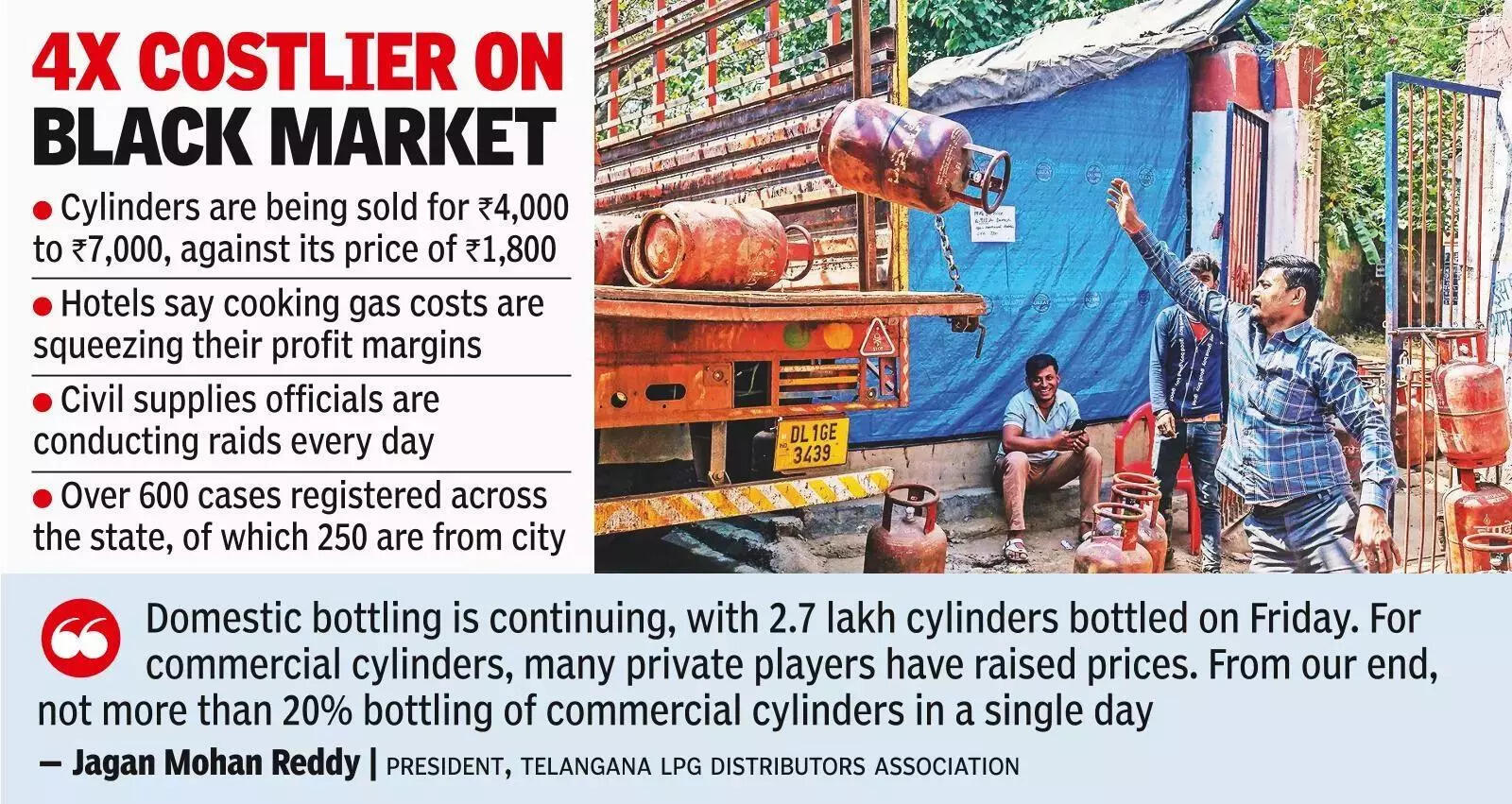
As of March 16, 2026, the price of a domestic 14.2 kg LPG cylinder in New Delhi is Rs 913. This has recently been hiked from Rs 853 earlier. Prices vary across major cities in India, reflecting regional transportation costs and local taxes. The rate currently stands at Rs 939 per cylinder in Kolkata, Rs 912.50 in Mumbai, and Rs 928.50 in Chennai. In Bengaluru, the price is Rs 915.50, while Bhubaneswar records a rate of Rs 939 per cylinder. The cost is relatively lower in Chandigarh at Rs 862.50, whereas consumers in Gurgaon pay Rs 921.50. The highest among these major cities is in Hyderabad, where the price has reached Rs 965 per cylinder.These rates apply to domestic cylinders used for household cooking. However, consumers say the bigger problem is availability. In several places, commercial LPG cylinders are reportedly being sold on the black market for nearly double the normal price. Cylinders that typically cost around Rs 1,400 are being sold for as much as Rs 3,000.The scarcity has pushed many small businesses to the brink.

Restaurants shut, street vendors struggle

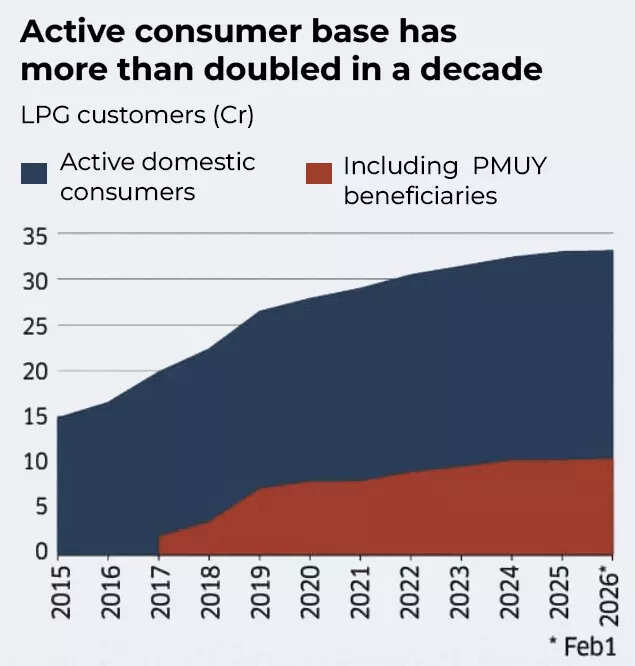
Hotels, restaurants and food stalls that rely heavily on commercial LPG have been among the hardest hit.Several eateries have either reduced operations or temporarily shut down due to the shortage. For smaller vendors such as tea stalls and snack shops, cooking gas shortages mean cutting back on production or raising prices.This has had a negative impact on livelihoods. Workers in the hospitality sector face reduced wages or job losses as businesses struggle to stay open.Manufacturers are also beginning to feel the strain. Industrial facilities that use LPG for certain processes and for staff canteens report growing difficulty maintaining operations.
,

Factories revive firewood stoves

In several industrial areas, companies are experimenting with alternative cooking arrangements for workers. Factory canteens have begun reviving firewood stoves, a practice largely abandoned years ago.Some companies are switching to electric cooking devices such as induction cooktops, electric rice cookers and electric roti makers.Menus have also been simplified. Meals requiring significant gas consumption have been removed, while packaged foods, sandwiches and ready-to-eat items are being served instead.In some facilities, even tea supplies have been cut back to conserve fuel.The shortage is also beginning to affect labour mobility. The Automotive Component Manufacturers Association of India warned that the situation could push migrant workers to return to their hometowns if cooking facilities remain unavailable.“Workers shifted to small gas-enabled burners for cooking purposes as usage of wood was discouraged due to air pollution. Now, with LPG cylinder shortage, they are finding it difficult to cook at home, and also some of the factory canteens are shut, forcing them to leave for their native places,” said Vinnie Mehta, Director General of the association.“Currently, the situation is not like the COVID pandemic, but the situation can escalate if not resolved,” Mehta added.

Panic bookings overwhelm LPG systems

The shortage has also triggered panic buying across several cities. Consumers have rushed to book cylinders through mobile apps, websites and IVRS numbers, overwhelming booking systems and causing technical failures.Many people reported that online platforms crashed or displayed “server down” messages. As a result, thousands of customers have been forced to visit gas agency offices in person.Outside LPG outlets in cities such as Delhi, Gurgaon, Mumbai, Kolkata, Lucknow and Chennai, long queues have become a common sight.Women carrying empty cylinders, elderly residents and office workers who had taken time off from work have been waiting for hours outside distribution centres.Shashi Kant Sharma, vice-president of Federation of LPG Distributors of India, said the system was not built to handle such heavy traffic.“Bookings have risen tenfold, so the system has slowed. We are working on it at the backend,” he said. Even those who successfully placed orders have reported cancellation alerts or delays in delivery.The shortage is affecting vulnerable households most severely.Radha Rani, a 60-year-old resident of Delhi’s Ajmeri Gate area, was seen standing in a queue outside a gas agency with her grandson in her arms.“My three sons work. My daughter-in-law had a baby 15 days ago, and I have been coming here three days in a row,” she told TOI.According to her, the agency claims the supply runs out before her turn arrives. Others complain that phone calls to gas agencies go unanswered.A tea vendor in Noida said, “I tried calling the agency a lot many times but they didn’t pick or return my calls.”At some locations, police personnel have been deployed outside gas agencies to manage crowds.
,

Hostels and PG residents hit hard

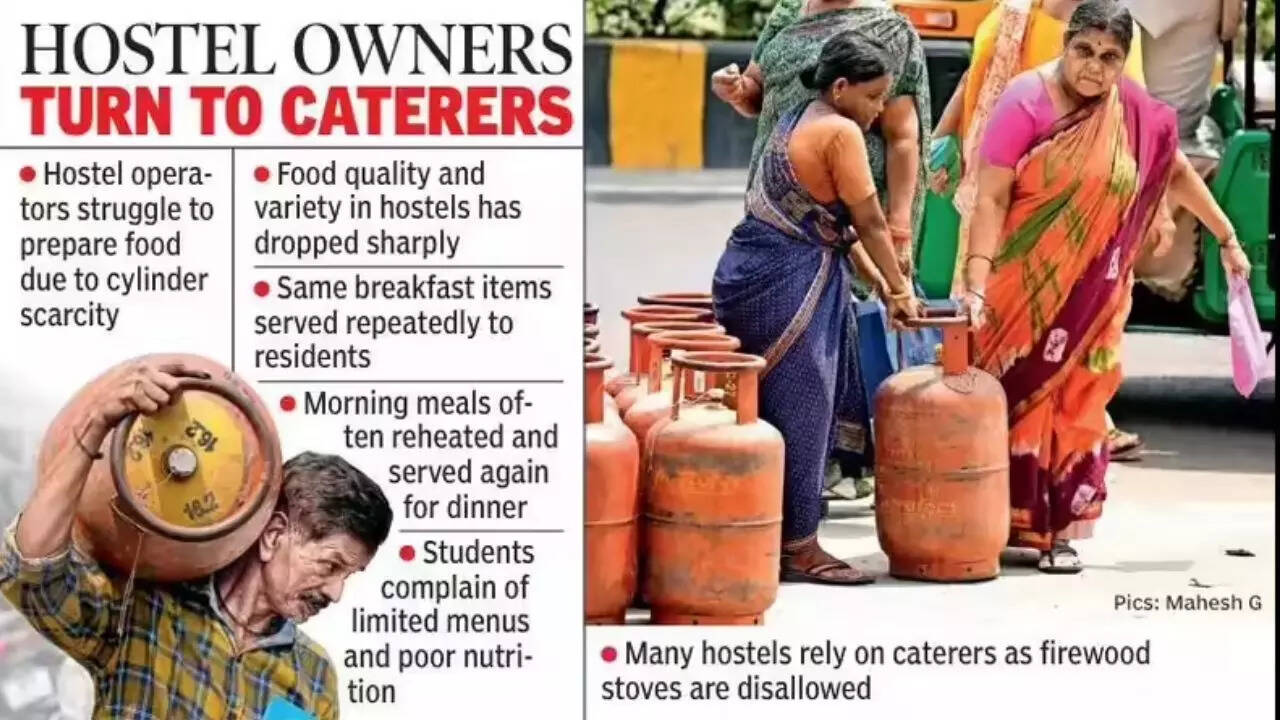
The LPG shortage is also affecting students and working professionals living in paying guest hostels across the country.Hostel operators say they are struggling to maintain food services due to the scarcity of cylinders. Residents report that food quality has declined and meal options have been reduced.Many said the same breakfast dishes are repeated every day, while food cooked in the morning is sometimes reheated and served again for dinner.PG hostel owner in Vijayawada, K Deva Rani said operators were facing immense pressure. “Gas cylinders are not easily available, and in some cases we must arrange alternative cooking methods. Costs increased sharply, and we request students to cooperate until normal supplies are restored,” she told TOI.

Ready-to-cook foods trend back

As cooking gas becomes scarce, many households are turning to ready-to-cook or ready-to-eat food products. Retailers report that sales of frozen snacks, instant noodles and packaged meals have surged by nearly 20% month-on-month.“Categories such as ready meals, frozen snacks, instant noodles and ready-to-cook products have seen strong traction, leading to about a 10-12% rise in this segment. While the surge appears temporary, we are proactively stocking these categories to ensure adequate availability,” said Karan Ahuja, spokesperson at premium grocery retailer Le Marche.Food delivery companies and retailers have also begun promoting induction-friendly cookware and electric cooking appliances.Analysts say the shift toward convenience foods, which surged during the Covid-19 lockdowns, may once again become a lasting trend.

Black marketing and ghost deliveries surge

Alongside shortages, reports of black marketing and fraudulent deliveries have surfaced in several cities. In various cities, residents have complained that LPG cylinders are being marked as delivered in official records without actually reaching consumers.Abdus Salam, a resident of Patna’s Bhagwanpur, said his mother’s LPG account showed a refill delivered even though no cylinder had been received.“The gas agency sent a message showing a refill delivered on Feb 24, with the next booking allowed only on April 11, 2026. We did not take any cylinders in the last one year. We didn’t even book the gas, someone took it away. This is black-marketing by the gas agency. I’m really troubled by this,” he wrote on social media.Another resident said he paid for a refill but never received the cylinder. These complaints have raised concerns that some cylinders may be diverted to the black market while digital records are manipulated to show deliveries.
,

Government says supplies remain adequate

Despite the widespread concerns, government officials say there is no major shortage of fuel in the country. Sujata Sharma, joint secretary at the ministry of petroleum and natural gas, said crude oil inventories remain sufficient and refineries are operating at full capacity.During an inter-ministerial briefing on Tuesday, Sujata Sharma advised judicious consumption of LPG and also advised using alternate sources for cooking.“I would like to reiterate that the situation still remains a matter of concern. However, no LPG distributor is facing a dry-out situation at present. In addition, LPG supplies and cylinder deliveries for all domestic consumers are continuing as usual,” she said.“With regard to online booking, I would like to inform you that there has been significant improvement, and as of today, nearly 94% of cylinder bookings are being made online. There has also been improvement in the delivery authentication code system, which has now reached 76%. As far as commercial LPG supplies are concerned, these were initially completely halted but were later partially restored,” she added.The government has also said that supplies of PNG and CNG for transport and domestic use are being maintained fully.Authorities say domestic LPG supply is being prioritised, even as commercial LPG availability remains restricted. State governments have begun conducting raids to prevent hoarding and black marketing of cylinders.

Alternative fuels and policy measures

To ease pressure on LPG supplies, authorities have activated alternative fuels such as kerosene and coal for certain sectors including restaurants and hospitality businesses.Commercial LPG sales, which had earlier been curtailed, have now been partially restored.Consumers in cities with piped natural gas infrastructure are being encouraged to shift to PNG connections. Gas distribution companies have begun offering incentives to promote the transition.Financial analysts warn that if the Middle East conflict continues, the consequences could extend beyond LPG shortages.A report by Morgan Stanley said supply disruptions from the region could affect several industries across Asia, including manufacturing, agriculture and transport.“The rise in oil prices, if sustained, will take Asia’s oil burden to above its 10-year average. But beyond the rise in oil prices, we are more concerned about potential disruption risks to supply in the case of LNG,” the report said.Countries such as India, Thailand, South Korea and Taiwan are considered particularly exposed to such risks. The Middle East is also a major supplier of industrial materials such as fertilisers, sulphur, aluminium, helium and petrochemicals, which are critical inputs for several sectors.

Shipping routes remain under watch

In a small relief for India, two LPG carriers have recently crossed the Strait of Hormuz safely, with more to be back hopefully.Reports indicate that Iran allowed Indian-flagged LPG tankers to transit the region despite rising tensions. Currently, around 28 Indian vessels are operating in the Persian Gulf, with authorities closely monitoring their movement to ensure safety.For now, the effects of the Middle East conflict continue to ripple through India’s kitchens, factories and markets.What began as a geopolitical confrontation thousands of kilometres away has quickly turned into an everyday struggle for millions of people trying to cook meals, run businesses or keep factories running.Until energy shipments stabilise and supply chains return to normal, the humble LPG cylinder has become one of the most visible reminders of how global conflicts can reshape daily life at worst.(With inputs from Khushi Bhuta, Venu Lanka)
Source link

Preparations to remove President Murmu’s glasses from monkeys, cutouts of monkeys installed in Vrindavan, the market enjoyed

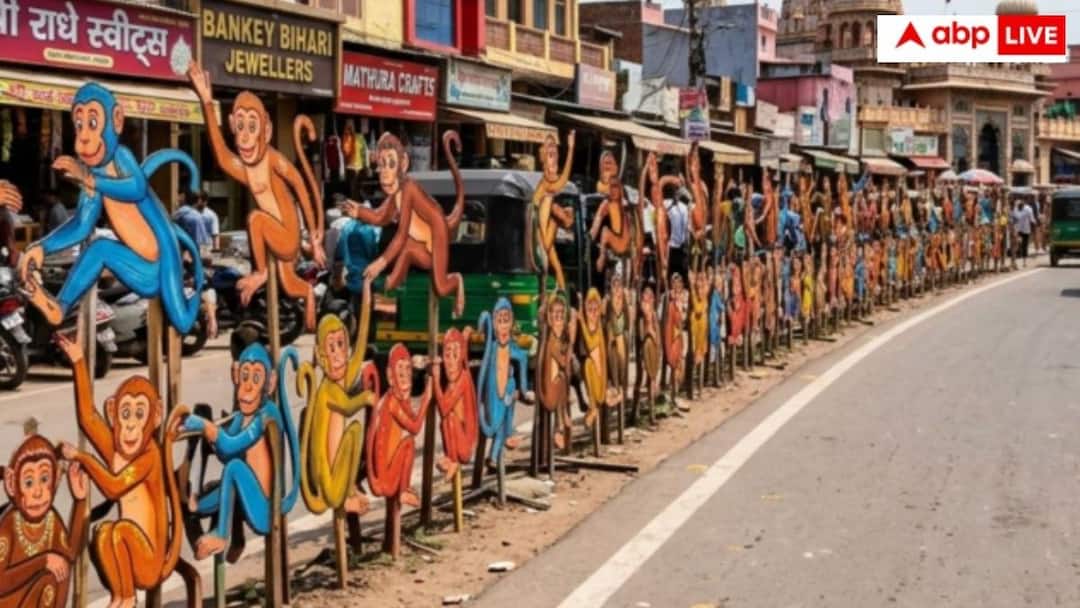
The security of the President of the country is a serious matter and the government administration is always alert about it. But just imagine, what if the President is in danger not from a human but from a monkey? Yes, these days a news is going viral on social media in which it is being said that in view of the President’s visit to Vrindavan on March 19, the administration has installed cutouts of monkeys in the streets of Vrindavan, so that the President along with his spectacles can also remain safe from monkeys.

Cutouts for President’s glasses installed in Vrindavan

In fact, the biggest thing that came before the administration before the visit of Draupadi Murmu on March 19 are the famous ‘Chashma Chor’ monkeys made here. These monkeys are very smart in snatching people’s glasses and in return of returning them they replace them with fake ones or make new ones like food and drink, some mini barter system is going on! Now that the President’s program has been decided, which includes the important places of Vrindavan, Oriya Baba Ashram, Ramakrishna Mission Hospital and Govardhan Jwalamukhi, the administration does not want this ‘Natkhat Gang’ to create any kind of disturbance.

President visits Mathura-Vrindavan on March 19

The administration is preparing to install cutouts of monkeys to get rid of the ‘Chashma Chor’ monkeys of Mathura-Vrinda. tell you that the President Draupadi Murmu Monkeys have become a bigger challenge for the administration on the 3-day tour proposed on March 19. To deal with this problem, the administration has planned a new solution. Now this matter is becoming increasingly viral on social media and consumers are also having fun with it.

Also read: This is love…Demand for medical bill for sick wife, 78 year old man becomes 78 year old man, story goes viral

User made funny comments

As soon as this matter went viral on social media, a fun discussion started among the consumers about it. Another celebrity wrote… When he has been cut out, then what is the role of Aadarsh. Another passenger wrote… Do anything, if the monkeys come to know that the President is there again, then theft of glasses and decorations will also be big. So another demon wrote… Kadar is a demon.

Also read: Nepal also has its own UPI… Indian tourist shared the video, it went viral


Source link

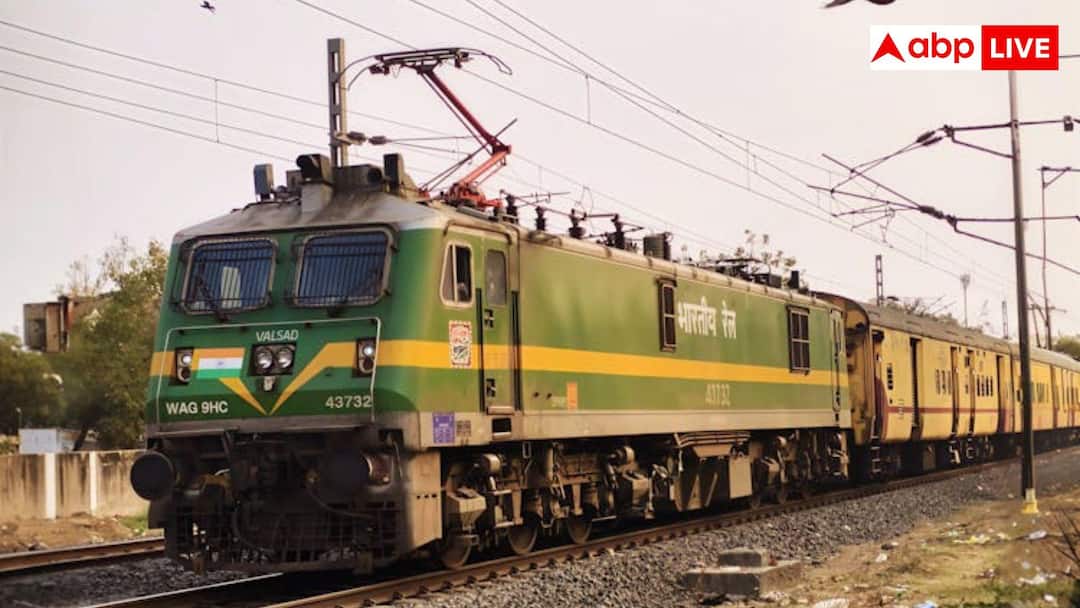
Notification released for recruitment of more than 11 thousand major loco pilots in Railways, know when you can apply

Education Loan Information:
Calculate Education Loan EMI

Source link

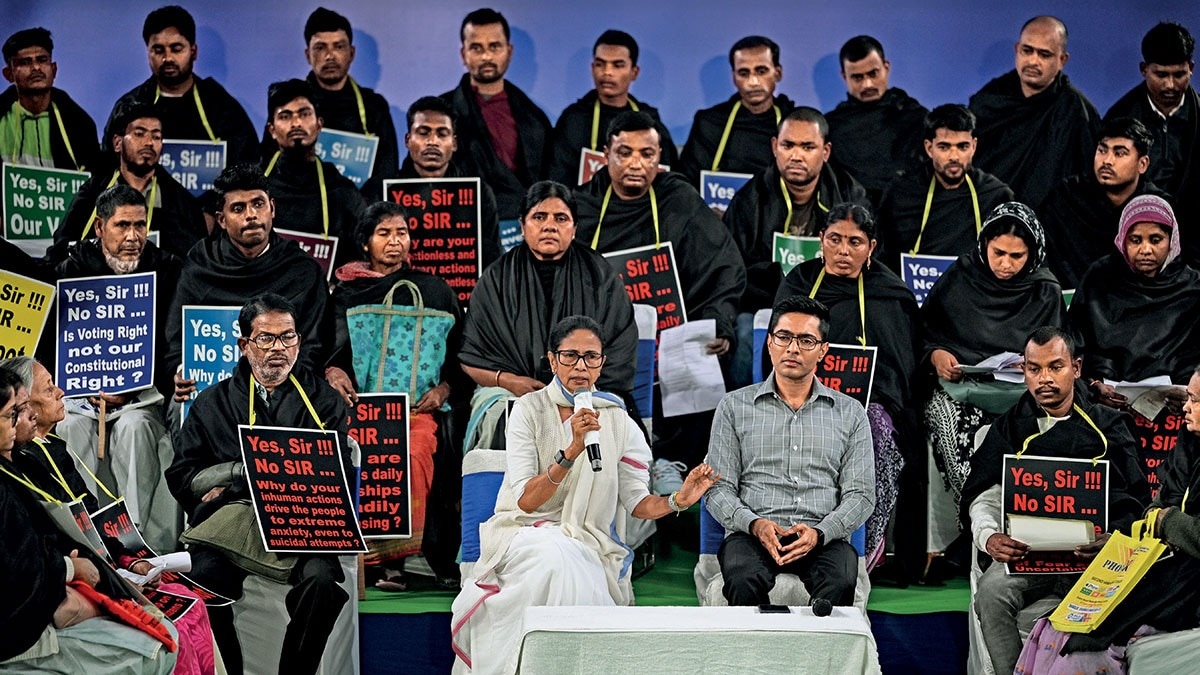
Special Intensive Review Voters are waiting for the decision

heyOn February 28, the revised voter list of West Bengal was published after four grueling months of Special Intensive Revision (SIR) exercise of the Election Commission of India (ECI). Chief Electoral Officer (CEO) Manoj Kumar Agarwal pegged the number of voters after the SIR at 70.46 million, after 6.18 million deletions (see The Great Purge), which is 8.06 per cent less than 76.64 million before the exercise began. But the real headline was the asterisk: another 6 million voters were listed as ‘pending’, with their voting rights put on hold until judicial officials could decide their fate.

Source link

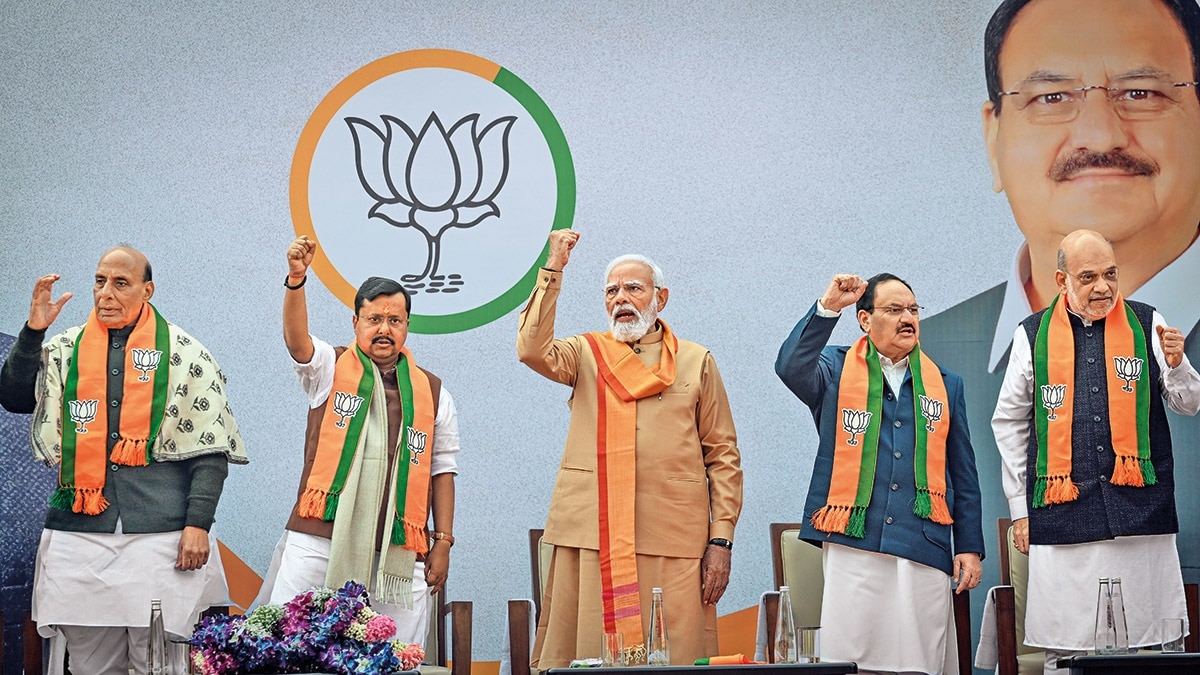
BJP states of anxiety

TeaDuring the winter of 2025, all the news coming from the Bharatiya Janata Party organization was about the long-delayed election of a new party president. That season ended in the last week of December, when the BJP leadership announced that Bihar minister and five-time MLA Nitin Nabin would replace JP Nadda. As per party bylaws, 50 per cent quorum is required from the 36 state units (including Union Territories) to elect the national president. The party had a quorum: 31 state units had already been elected. This problem still persists in the remaining five states.

Source link

Ultraviolette to launch F77 on Thursday; Funding comes from Qualcomm Ventures, Lingotto, ETAuto


<p>Ultraviolette, an innovator in sustainable mobility, has received investment from Qualcomm Ventures and Lingotto to expand its Series D round. </p>
<p>“/><figcaption class=UltraViolet, an innovator in sustainable mobility, has received investment from Qualcomm Ventures and Lingotto to expand its Series D round.

New Delhi : Ultraviolette Automotive Pvt. Ltd. will launch it electric two wheeler Ultraviolet F77 on 24 November. The company started its pre-orders on October 23 and the product will be introduced in a phased manner, with the first batch of motorcycles being delivered in Bengaluru. The company said in a media release that the IDC range of the F77 is 307 km on a single charge.

Ultraviolette, an innovator in sustainable mobility, has received investment From Qualcomm Ventures And Lingotto To expand Series D round. in investment From Qualcomm Ventures And Lingotto Will be deployed later to expand company’s presence in India Expansion in international markets, and strengthening the brand’s technical capabilities and skills. The release said.

Qualcomm Ventures invests in companies focused on 5G, Artificial Intelligence, Automotive, IoT, Enterprise & Cloud, and XR/Metaverse. Qualcomm Ventures has more than 150 companies in its portfolio and manages over US$2 billion of assets in the US, China, India, Israel, Europe, Latin America and Korea.

Lingotto (formerly Exor Capital) is a wholly owned subsidiary of EXOR NV, with the largest or controlling stake in the companies. sports car manufacturer ferrari (RACE.MI), Stellantis (STLA.MI) CNH Industrial (CNHI.MI), Iveco Group (IVG.MI), The Economist Group, Via, and soccer team Juventus (JUVE.MI).

Narayan Subramaniam, Co-Founder and CEO, UltraViolet, said, “As we count down to the commercial launch of the F77 in India, this investment is testament to the fact that we have been able to create a distinct identity for UltraViolet and the F77 and create aspiration for the product among a global audience. We look forward to the support of Qualcomm Ventures and Lingotto in our vision to redefine the future of electric mobility and take the F77 global.” Thrilled.” Event.”

Qualcomm Technologies, Inc. “Qualcomm Ventures is proud to support Ultraviolette, which is committed to raising the performance and safety standards of electric two-wheelers with best-in-class technologies, design and engineering,” said Quinn Lee, senior vice president and global head of Qualcomm Ventures.

“We look forward to enabling companies like UltraViolet to accelerate the transformation already underway in the automotive industry, providing not only access to capital, but also the opportunity to potentially leverage Qualcomm’s world-class technology innovations,” he said.

Nikhil Bava Srinivasan, Managing Partner of Lingotto, said, “Our continued support for UltraViolet is based on what it hopes to be a market-defining product.”

“While we are focused on the commercial availability of the F77 in India, we are also actively building a roadmap for our next generation,” said Neeraj Rajmohan, Co-Founder and CTO, Ultraviolette. Expansion in international markets, and this capital investment will be integral in expanding our efforts in some of these markets.

Also read:

European car sales increased in October: ACEA

The European Automobile Manufacturers Association (ACEA) said the number of new vehicles registered in the EU, Britain and the European Free Trade Association (EFTA) rose 14.1% to 910,753 units.

  • Published on November 22, 2022 at 01:07 PM IST

Join a community of 2M+ industry professionals.

Subscribe to the newsletter to get the latest information and analysis delivered to your inbox.

Everything about the ETAuto industry straight to your smartphone!


Source link

‘We were surprised’: Trump reacts to Iran attacking US Gulf allies – Was there any warning beforehand?

'We were surprised': Trump reacts to Iran attacking US Gulf allies - Was there any warning beforehand?

US President Donald Trump said on Monday he was “shocked” by Iran’s decision to attack US allies in the Gulf region, while US officials and intelligence sources indicated that such retaliation was expected before the conflict began, according to Reuters. The comments come as the US-Israeli war over Iran enters its third week, with hostilities expanding beyond the initial target to engulf major parts of the Middle East. Iranian drone and missile attacks have increasingly targeted US military bases and allied infrastructure across the Gulf, raising concerns of escalating broader regional tensions.

Trump declares ‘victory’ in Iran conflict as US military faces risky path to end war

“They (Iran) should not have gone after all these countries in the Middle East,” Trump said. “Nobody expected this. We were surprised.” He later repeated the claim, saying: “No one, no one, no, no, no. The biggest experts, no one thought they were going to be hit.” His comments come amid growing scrutiny over whether Washington adequately assessed the risks of retaliation before Israel launched the strikes on Iran on February 28. The growing scope of attacks, including civilian and energy infrastructure, has raised questions over the trajectory of the conflict and its global impacts.

voting

What is your biggest concern regarding the escalation of the conflict?

Intelligence had flagged the risk of widespread retaliation

However, a US official and multiple sources familiar with the intelligence assessment told Reuters that an Iranian response, including attacks on countries such as the United Arab Emirates, Qatar, Saudi Arabia, Bahrain and Kuwait, was considered a likely outcome.Pre-war assessments did not say retaliation was certain, but it was “on the list of possible outcomes”, one source said. Officials also said Trump was told that attacking Iran could trigger a broader regional conflict, especially if Tehran perceives Gulf states as supporting US operations.He further indicated that Washington had been warned that Iran might attempt to close the Strait of Hormuz. Rockets and at least five drones targeted the US embassy in Baghdad early Tuesday in what Iraqi sources described as the most intense attack since the war began. No injuries were reported by US officials.Iran also launched missile attacks on Israel overnight, while the Israeli military said it was targeting “Iranian regime infrastructure” in Tehran and Hezbollah-linked sites in Beirut.

disruption in the strait of hormuz impact on global markets

The conflict has severely disrupted shipping through the Strait of Hormuz, which carries about 20% of global oil and liquefied natural gas supplies. Iran has effectively blocked most traffic through the route using drones and naval mines. Oil prices rose more than 5% on Tuesday amid supply concerns, with the market reacting to prolonged disruptions and rising geopolitical risks. Analysts warned of potential inflationary pressures and slower global growth.

Debate on the propriety of war

The intelligence revelations have also raised questions about the propriety of US involvement in Israel’s military operation against Iran on February 28. Some Democratic lawmakers said the briefing provided no evidence of an imminent threat that would require immediate military action.The White House and the Office of the Director of National Intelligence did not immediately comment on the intelligence assessment, Reuters reported.

war toll grows

According to Iranian Foreign Minister Abbas Aragachi, at least 2,000 people have been killed across the region in the conflict, including more than 200 Iranian children.

Source link

‘For free and fair elections’: Puducherry government bans ‘defacement’ of properties during assembly elections. india news

'For free and fair elections': Puducherry government bans 'defacement' of properties during assembly elections

New Delhi: Ahead of the upcoming assembly elections, the Puducherry government has banned defacing of public and private properties. According to a notification issued by the Revenue and Disaster Management Department on behalf of the Lieutenant Governor of Puducherry, no political party, candidate or supporter is allowed to paste posters, write slogans, paint symbols or put up banners, hoardings or arches in public places or on private properties visible to the public.The Lieutenant Governor is the constitutional head of the union territory. Following the directions of the Election Commission, the purpose of the order is to ensure free and fair elections while maintaining law and order. The restrictions will continue till the elections are over, although voter awareness programs have been exempted under the SVEEP initiative. Voting for all 30 assembly seats in Puducherry is scheduled to take place on April 9 and counting of votes will take place on May 4.

Source link

New Zealand vs South Africa 2nd T20 match: Devon Conway’s brilliant performance helps New Zealand beat South Africa by 68 runs

Devon Conway scored consecutive 60 runs as New Zealand bowlers defeated South Africa by 68 runs in the second T20 match on Tuesday to level the five-match series 1-1.

New Zealand vs South Africa, 2nd T20I: highlight | Achievement:

Asked to bat at Seddon Park, New Zealand scored 175 for 6 on a surface that became increasingly difficult as the game progressed. South Africa were never able to chase the target and were all out for 107 runs in 15.3 overs.

Conway provided the backbone of the innings, determining the square of the wicket and holding things together when conditions became tough. Tom Latham used the ramp shot to create the early momentum by hitting a six and a four as New Zealand reached 43 without loss in the powerplay.

But scoring runs became difficult in the middle overs. Latham fell for 11, while Nick Kelly (21 off 12) and Mitchell Santner (20 off 14) started without converting them. Conway, who opened the innings, eventually fell trying to accelerate.

A late cameo from Josh Clarkson, who scored 26 off just nine balls, gave New Zealand a strong finish, with 24 coming in the final over.

South Africa’s goal never progressed. The pitch had variable bounce and pace and New Zealand’s fast bowlers took full advantage of this. With wickets falling regularly, Ben Sears (3-14) and Lockie Ferguson (3-16) took charge.

All ten of South Africa’s wickets came via catches, highlighting their struggle to time the ball. The visiting team lost six wickets for 40 runs and the innings ended soon.

George Linde provided brief resistance, scoring 33 runs from 12 balls with three fours and three sixes, but Ferguson dismissed him to end any hope of a fight.

South Africa captain Keshav Maharaj said his team expected dew to make batting conditions easier but misjudged the pitch.

“I thought we bowled really well up to a point and then lost our way with the bat,” he said. “We thought dew would be a big factor… but the wicket got a bit rough.”

The third T20 match will be played in Auckland on Friday.

– ends

published by:

Amar Panikkar

Published on:

March 17, 2026 16:13 IST

Source link