Breaking News
‘Horrifyingly wonderful president, why is he so bloomin’ hard to talk to?’: Starmer’s awkward call with Trump on Iran war mocked in SNL UK debut

'Horrifyingly wonderful president, why is he so bloomin' hard to talk to?': Starmer's awkward call with Trump on Iran war mocked in SNL UK debut

UK version of Saturday night Live Its first episode began in classic style with political cool, imagining Prime Minister Keir Starmer awkwardly trying to tell the US President donald trump That Britain would not get involved in the war with Iran.Played by a well-disguised George Foracres, Starmer nervously sat down at his desk, a framed photo of Trump behind him, as the dial tone rang. “Oh, you idiot! What if Donald yells at me? What do I say?” he said to a consultant played by Hammad Animashon. “Just be yourself, Prime Minister! You’re the one everyone likes.”Trump answered the phone with a blunt “Hello” and Starmer immediately hung up, saying: “Oh, he’s a scary, scary wonderful president. Why is it so difficult to talk to him?”Starmer spoke to his adviser as if Trump were his toxic ex. “I just want her to be happy. You don’t understand her like I do. I can change her!” he said as quoted by Variety.The meeting is then interrupted by Starmer’s new Gen Z mentor, played by Jack Shepp, who calls him “Stormzy”, a play on UK rapper Stormzy. The Gen Z consultant said he’s perfect for the job because “I’m an expert at dirty drama, I’ve been in three gangs and I’m currently gay.”The Gen Z consultant told Starmer that instead of breaking up with Trump over the phone, he should send him a voice note. Starmer replied: “I’ll try anything, I’ll do anything. Except take a stand.”“Hi, Donald. I’m afraid I can’t go to war with you, but that doesn’t mean we can’t be friends,” Starmer said with a concerned look on his face. “There’s a long, proud tradition of cooperation between America and Britain and no one can end that. Remember the good times. Remember D-Day? Remember Live Aid? Remember Iraq? The first week and then no one else. Remember Helen Baxterdale on ‘Friends’? Remember Hugh Laurie on ‘Friends’? Remember the episode of ‘Friends’ where they all came to London?”He continued: “But most importantly, remember the one where Ross and Rachel were on break? I think maybe that’s what we need. Not forever, just until you get all this war out of your system. We want different things. I know how badly you want to start World War III, and that’s great. You absolutely do but we can’t be a part of it. However, you can use the naval bases whenever you want.Starmer’s adviser then congratulated him, saying: “Good job, sir. You did the minimum, and that’s what people expect from you.”Starmer broke the fourth-wall, responding: “It just shows that, although we may not agree with everything America does, we can still be civilized and embrace their wonderful, problem-free culture.”Fouracres, AnimaShawn and Shep then gathered together to say the iconic words: “Live from London, it’s Saturday Night!”

Source link

Russian oil tanker MT Aqua Tita reached Mangaluru port amid Middle East tension. india news

Russian oil tanker MT Aqua Tita reaches Mangaluru port amid tensions in Middle East

A Russian oil tanker chartered by Mangalore Refinery and Petrochemicals Ltd (MRPL) arrived off the Indian coast on Sunday, underscoring ongoing concerns over global energy supplies amid rising tensions in the Middle East. The ship, MT Aqua Titan, is currently anchored in the Arabian Sea about 10 nautical miles off the coast of Mangaluru, after being expected a day earlier.The arrival comes at a time when international energy markets remain volatile, with supply chains disrupted by the escalating conflict in the region, now in its fourth week. Key sea routes, particularly through the Strait of Hormuz, are facing uncertainty, affecting the steady flow of crude oil and liquefied gas.Earlier today, a cargo ship transporting liquefied petroleum gas (LPG) from Texas in the United States arrived at New Mangalore Port, giving a further boost to India’s energy imports. With a view to facilitate smooth operations, the Shipping Ministry recently announced waiver of cargo-related charges for crude oil and LPG shipments at the port between March 14 and 31. Officials have also confirmed that at present there is no congestion at any Indian port.Providing an operational update, Shipping Ministry Special Secretary Rajesh Kumar Sinha said all 22 Indian ships and 611 sailors operating in the Persian Gulf region are safe. He said authorities were closely monitoring the developments and no maritime incidents were reported in the last 24 hours.Meanwhile, India’s broader energy logistics continues to adapt to the evolving situation. Indian-flagged tanker *Jag Ladki* recently arrived at Mundra port in Gujarat, while LPG carriers *MT Shivalik* and *MT Nanda Devi* safely transited the Strait of Hormuz earlier this month, delivering over 92,000 metric tonnes of LPG.Domestically, officials have tried to reassure the public on fuel availability. The Ministry of Petroleum and Natural Gas has noted a significant decline in panic LPG bookings, which were recorded at 5.5 million on Thursday, indicating stabilization of consumer sentiment. Officials say despite growing concerns and a 25 per cent rise in industrial diesel prices, there is adequate stock level available across the country.Elsewhere, Prime Minister Narendra Modi on Sunday chaired a high-level review meeting that focused on ensuring uninterrupted supply, stable logistics and efficient distribution of critical energy resources across the country.

Source link

मुजफ्फरनगर में भाईचारे की मिसाल बनी ईद: पूरे शहर में शांति, सुरक्षा और सौहार्द के बीच नमाज अदा की गई

🌙 मुजफ्फरनगर जिले में आपसी सौहार्द, शांति एवं हर्षोल्लास के माहौल में ईद मनाई गयी. रमजान माह की समाप्ति के बाद शामली रोड स्थित ईदगाह सहित जिले के विभिन्न स्थानों पर ईद-उल-फितर की नमाज अदा की गई। नमाज के बाद लोगों ने एक दूसरे के गले मिलकर ईद की मुबारकबाद दी और भाईचारे का संदेश दिया.

जिले में प्रशासन और पुलिस की पुख्ता व्यवस्था के बीच यह त्योहार पूरी तरह शांतिपूर्ण माहौल में संपन्न हुआ, जिससे पूरे शहर में उत्सव जैसा माहौल देखा गया.


शामली रोड ईदगाह समेत कई स्थानों पर नमाज अदा की गई

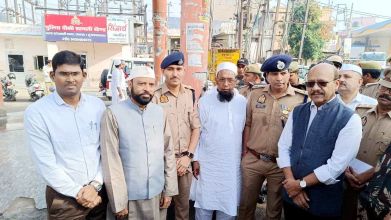
🕌शामली रोड ईदगाह मुख्य केंद्र रहा, जहां बड़ी संख्या में लोगों ने नमाज अदा की। नमाज के समय प्रशासनिक अधिकारी मौके पर पहुंचे और व्यवस्थाओं का जायजा लिया।इस दौरान उमेश मिश्रा, संजय वर्मा, संजय सिंह, गजेंद्र कुमार, सत्यनारायण प्रजापत, पंकज प्रकाश राठौड़ और सिद्धार्थ कुमार मिश्रा सहित अन्य अधिकारी मौजूद रहे।

अधिकारियों ने मौके पर सुरक्षा व्यवस्था का निरीक्षण किया और लोगों को ईद की शुभकामनाएं भी दीं.


जनप्रतिनिधियों व अधिकारियों ने दी ईद की मुबारकबाद

🤝 मुजफ्फरनगर ईद का जश्न इस अवसर पर जिले के जन प्रतिनिधियों एवं प्रशासनिक अधिकारियों ने लोगों को शुभकामनाएं दीं. इस दौरान हरेंद्र मलिक और राकेश शर्मा उन्होंने नागरिकों को ईद की बधाई देते हुए आपसी भाईचारा बनाए रखने की भी अपील की.

अधिकारियों ने कहा कि त्योहार समाज को एकजुट करने का माध्यम हैं और इन्हें सौहार्दपूर्ण वातावरण में मनाना सभी की जिम्मेदारी है।


खालापार और फक्कर शाह चौक पर ईद का मेला लगा

🎡 मुजफ्फरनगर ईद का जश्न इस दौरान खालापार स्थित फक्करशाह चौक पर पारंपरिक मेले का भी आयोजन किया गया। यहां झूले, खिलौनों की दुकानें और चाट-पकौड़े के ठेले लोगों के आकर्षण का केंद्र बने रहे।

मेले में-

👉 बच्चों ने झूलों का आनंद लिया
👉परिवार खरीदारी करने गए
👉स्थानीय दुकानों पर भीड़ थी

पर्व की भव्यता से पूरे क्षेत्र में उत्साह का माहौल दिख रहा था.


शहर के कई इलाकों में दिखी खास हलचल

🌆 ईद के मौके पर शहर के खालापार, फक्कर शाह चौक, मदीना चौक, किदवई नगर, रहमत नगर, सरवट और सुजडू आदि इलाकों में खास रौनक देखने को मिली. बाजारों में लोगों की आवाजाही बढ़ गयी और मिठाइयों और पारंपरिक व्यंजनों की खूब खरीदारी हुई.

त्योहार के चलते शहर को कई जोन में बांटकर सुरक्षा व्यवस्था सुनिश्चित की गई। सभी थाना प्रभारी अपने-अपने क्षेत्र में पुलिस बल के साथ सक्रिय रहे।


डीएम व एसएसपी ने शहर का भ्रमण कर सुरक्षा व्यवस्था का जायजा लियामुज़फ्फरनगर समाचार

🚔 मुजफ्फरनगर ईद का जश्न कार्यक्रम को शांतिपूर्ण ढंग से संपन्न कराने के लिए जिलाधिकारी और वरिष्ठ पुलिस अधीक्षक क्षेत्र का भ्रमण करते रहे।

इस दौरान उमेश मिश्रा और संजय कुमार वर्मा उन्होंने विभिन्न ईदगाहों और संवेदनशील इलाकों का निरीक्षण कर सुरक्षा व्यवस्था का जायजा लिया.

उन्होंने धार्मिक नेताओं और स्थानीय नागरिकों से भी मुलाकात की और आपसी सौहार्द बनाए रखने की अपील की.


ड्रोन कैमरे से निगरानी, ​​पुलिस बल की व्यापक तैनाती

📡 मुजफ्फरनगर ईद का जश्न सुरक्षा व्यवस्था को मजबूत बनाए रखने के लिए जिले भर में पर्याप्त पुलिस बल तैनात किया गया था। संवेदनशील स्थानों पर विशेष सतर्कता बरती गई और ड्रोन कैमरे से भी निगरानी की गई।

ड्यूटी प्वाइंट पर तैनात पुलिसकर्मियों को एसएसपी ने दिए निर्देश:

👉 सावधानी से ड्यूटी करें
👉 असामाजिक तत्वों पर तुरंत कार्रवाई करें
👉यातायात व्यवस्था सुचारू बनाये रखें

इन व्यवस्थाओं के चलते पूरे जिले में शांतिपूर्ण माहौल में नमाज संपन्न हुई.


अफवाहों से बचने और भाईचारा बनाए रखने की अपील

📢 प्रशासन ने नागरिकों से सोशल मीडिया पर भ्रामक या आपत्तिजनक पोस्ट शेयर न करने की भी अपील की. लोगों से यह भी कहा गया कि अगर उन्हें कोई असामाजिक गतिविधि दिखे तो तुरंत पुलिस को सूचित करें।

प्रशासन ने स्पष्ट किया कि कानून-व्यवस्था बनाए रखना सभी की साझा जिम्मेदारी है.


महोत्सव ने सामाजिक एकता का संदेश दिया

🌙 मुजफ्फरनगर ईद का जश्न इससे एक बार फिर साबित हो गया कि जिले की गंगा-जमुनी तहजीब आज भी कायम है. नमाज के बाद लोगों ने एक-दूसरे के गले मिलकर भाईचारे और एकता का संदेश दिया, जिससे पूरे शहर में सकारात्मक माहौल बन गया.


मुज़फ्फरनगर में ईद-उल-फितर का त्यौहार जिस शांतिपूर्ण एवं सौहार्दपूर्ण वातावरण में मनाया गया, उसने सामाजिक एकता एवं आपसी सम्मान की मजबूत परंपरा को पुनर्जीवित कर दिया। प्रशासनिक चौकसी और नागरिक सहयोग से मनाया जाने वाला यह त्योहार जिले में भाईचारे की मिसाल बनकर उभरा.

Source link

‘Pop a pill and carry on’: The workplace silence on India’s menstrual leave debate | India News

'Pop a pill and carry on': The workplace silence on India's menstrual leave debate

Is it that time of the month? No issues. Pop a pill and get to work with a hot water bag! It sounds casual, almost harmless. But behind this everyday remark lies a deeper reality, one that millions of women silently go through every month.Modern work life is designed around a predictable, almost mechanical rhythm, but a woman’s body doesn’t follow the clock.A typical day for a man begins with waking up, moving through structured hours of productivity, peaking somewhere in the middle, and gradually winding down before sleep. The cycle repeats, day after day, with little room for deviation.But for women, the body does not always comply with this uniform pattern.Instead, it operates on a hormonal cycle that fluctuates across the month with energy levels rising and falling. Physical strength and emotional resilience ebb and flow. And yet, the expectation remains unchanged.Show up, perform, deliver. There is no pause button!Fatigue, mood shifts, and slight discomfort during menstruation are often considered natural. But intense, debilitating pain? That is not supposed to be “so normal.”And yet, it has become so common that it is often dismissed. Still, the response society expects is remarkably simple. Pretend nothing is happening!

What is menstruation?

Menstruation is a biological process in which the inner lining of the uterus sheds when an egg released during ovulation is not fertilised. This leads to the discharge of blood and tissue through the cervix and vagina, typically at monthly intervals.The first menstrual cycle, known as menarche, usually occurs between the ages of 8 and 15. On average, cycles repeat every 28 days, though variations are common.For some women, menstruation is not just a few days of discomfort, but also conditions like PCOD (Polycystic Ovarian Disease) or PCOS (Polycystic Ovary Syndrome) can lead to severe cramps, irregular cycles, prolonged bleeding, and hormonal imbalances.As Sneha Srivastava noted, “Every woman’s body is different. While some may experience minimal discomfort, others go through intense pain, nausea, and fatigue.” On a personal note, she added, “I have experienced significant discomfort due to PCOS. My periods can last for more than three weeks… managing this while working can be extremely challenging.”Tithi Pramanik from Odisha echoes the reality saying, “I have PCOD and experience severe cramps during my periods.” Yet workplaces rarely accommodate this spectrum of experience.

The menstrual leave debate in India

Most working women already know the unspoken rules.You go to work despite cramps that make it difficult to sit upright. You continue meetings through waves of nausea. You push through fatigue that clouds your concentration.Because acknowledging the pain feels risky.Ask for leave, and you may be seen as unreliable. Take time off, and you might miss opportunities. Speak openly about menstrual symptoms, and you risk being labelled “difficult.” So the safer option becomes silence.The idea of menstrual leave, time off granted to women during their periods has increasingly entered discussions around workplace rights, gender equality, and employee welfare.But India still does not have a nationwide law mandating menstrual leave.On March 13, the Supreme Court of India declined to entertain a public interest litigation seeking a uniform policy for menstrual leave across workplaces and educational institutions.The court did not dismiss the issue outright but raised concerns about potential unintended consequences.The bench observed that making menstrual leave compulsory could discourage employers from hiring women. As Chief Justice Surya Kant noted during the hearing, “Voluntarily given is excellent. The moment you make it compulsory in law, nobody will give them jobs.”The court also warned that such a policy might reinforce stereotypes, portraying women as less productive or less reliable.Another point raised was that such decisions fall within the domain of policymakers, not the judiciary. The court suggested that the government should examine the issue after consulting stakeholders.

Will such a policy make employers hesitant?

For some, the solution may not lie in a strict leave policy.Ranjit, a Delhi-based entrepreneur, suggests flexibility saying, “I do not fully agree with the Supreme Court’s decision. Companies should at least be made to offer options like work from home and flexible working hours.”Ajit, a college professor from Gujarat, questions the logic of making such support optional. “How can a legal right be optional? Does that make sense? Women should have a choice whether to take the leave or work.”“Discrimination comes in all forms and sizes in society. Some employers might hesitate to hire women, at least initially, but I believe it’d quickly become clearer to them that better employee care translates into better output,” he added.Raveena Newatia, a communications manager from Gurugram, said, “There might be a widespread belief that this would affect work so employers might,” acknowledging the hesitation that often surrounds such policies.“Although on the basis of right judgements and awareness, this could be changed in the longer run,” she added, suggesting that mindset shifts, not just policies, will shape the future of workplace inclusion.Recalling her own experience and discomfort, Raveena said, “I have faced discomfort working and sitting on a chair in the office, and not being able to lay my back on a hot water bag even when desperately needed.” “I still believe that Work from Home norms or mobility flexibilities could be considered by the Supreme court in issuing some mid-solution law so that even the work doesn’t compromise and the females also don’t have to suffer at least physically,” she added.Further addressing concerns that such policies might discourage employers from hiring women, Biswarupa Das, a PhD scholar in HR studies pushed back firmly, saying “honestly, in a time when organisations are implementing measures towards sustainable workplaces and acknowledging diverse needs, this shouldn’t even be a question.”“The focus should shift from seeing this as a ‘cost’ to responding with empathy and understanding. Women already take leave when the pain becomes physically and mentally overwhelming, it was just not always acknowledged openly.”“I don’t believe employers will hesitate, because an employee’s calibre cannot be judged on the days she is struggling with something she hasn’t chosen, it’s simply a part of biology,” she added.But. Not everyone is convinced that menstrual leave as a labelled policy is the right approach.Pankaj Jha, senior manager at an insurance firm said, “I think the idea of menstrual leave sounds progressive on the surface, but it’s worth asking why it hasn’t been widely adopted in developed countries like the US, UK, or Germany.”He points to a deeper issue: privacy. He said, “There is still significant stigma around menstruation, especially in smaller towns and cities. In such an environment, formally labeling a leave as “menstrual leave” could unintentionally expose women to judgment or ridicule.”“I’ve personally observed situations where women taking such leave became the subject of insensitive remarks by male colleagues behind their backs,” he added.Jha also noted that there are practical challenges in the implementation of such laws. “How do you define eligibility? What about women who have reached menopause, or those who experience only mild discomfort?” he said.He suggested a more nuanced approach by integrating menstrual leave within existing sick leave policies rather than creating a separate category.“Instead of introducing a separate, labeled category, I believe a more inclusive and respectful approach would be to incorporate it within existing sick leave policies, give women a couple of extra sick leaves per month,” he added.But on the ground, the reality is different. For many women, the debate is not theoretical, It is physical!As Tithi Pramanik said, “In my previous company, my manager said he would not hire women because of these issues.”“That’s why I feel making menstrual leave mandatory could increase bias and discourage employers from hiring women,” she added.While, Sneha Srivastava argued that leaving menstrual leave optional often defeats its purpose. “When something is optional, many women hesitate to avail it, often fearing judgment or being perceived as less committed at work,” she said.

A medical perspective: Do women really need leave?

Adding another layer to the debate, obstetrician and gynaecologist Nimmi Rastogi offers a clinical viewpoint.“Menstruation is a normal biological process. It is not a disease. It is not even a period of incapacitation. It is simply a reflection of how a woman’s physiology works,” Dr Nimmi said.While acknowledging that some women experience severe symptoms, she cautions against generalising, saying “It is true that some women experience PMS, pain, dysmenorrhea, clotting or heavy bleeding, but this is not the case for everyone. So, I don’t think it is a good idea to mandate menstrual leave.”Her advice is counterintuitive to many: stay active!“Medically, staying active actually helps ease most symptoms. We usually encourage patients to remain active and not refrain from work, school or studies. Even simple movements like walking can reduce pain,” she said. “If you lie down or remain sedentary during periods, it can be counterproductive for your health,” she added.For her, work itself can help. “Working is a good distraction. Symptoms like mood swings, PMS and irritability can be relieved through physical activity and engagement,” she said.

What most men think?

Iqbal Singh said, “Leave must be there because I have seen my wife bearing lots of pain and cramps. The story is different for every girl, but also seen some people are not cooperating towards it, when women really need a policy decision like this.”Hadi Khan echoes the same sentiment and said, “I’ll be honest, I do think menstrual leave is necessary. For women, periods aren’t just a minor inconvenience. They can be physically draining, sometimes even debilitating.”Yet, he also acknowledges the dilemma saying, “Yes, I do think that’s a real possibility that employers might hesitate to hire women if such a policy is enforced.”“Even if it’s not openly admitted, some employers might quietly factor it into their hiring decisions. In competitive or cost-sensitive industries, there’s often a tendency to view anything that could affect productivity or increase compliance requirements as a drawback,” he added.Shubhanshu Dwivedi frames it more sharply saying, “Menstrual leave is a basic workplace support measure and not a privilege.”“The argument that such a policy may discourage hiring rests on accepting discrimination as a given. That is a slippery position,” he added.

The cultural silence and stigma

The challenge is not just policy, it is also cultural. But how can one go and seek menstrual leave when we don’t even speak about menstruation in the open!In many parts of India, menstruation remains a taboo subject. Women are often discouraged from speaking about it openly. In some households, restrictions still exist.Pari (name changed) from Assam describes her reality, “On the three days of my period, I sit and sleep on the floor. I eat on a separate plate as I am not allowed to enter the kitchen or touch any utensil or other furniture. I do not touch any male member be it my father, brother or husband. These customs have been followed for a very long time in my household and me, my mother and sister have applied the same in our lives.”Yash Sonkar further points to a lack of awareness, saying, “Menstruation isn’t even properly explained in our school curriculum… teachers skip the chapters at times.”Even basic products like sanitary napkins are often wrapped discreetly, reinforcing the idea that menstruation is something to hide.Interestingly, menstruation was not always viewed this way.In ancient India, it was often associated with fertility, renewal, and the cycles of nature. Some traditions even treated it as a time for rest and reflection.Over time, however, colonial influences, patriarchal interpretations, and cultural shifts transformed this perception into one of impurity and shame.What was once a period of care became a period of silence.

Global and Indian policy landscape

Globally, countries like Japan, Spain, South Korea, and Indonesia have menstrual leave policies.But even there, challenges remain.As Pankaj Jha points out, “Even in places like Japan, menstrual leave is often unpaid, which raises questions about how effective or empowering it truly is.” In India, efforts are scattered. Some states and companies have introduced policies, but there is no unified national framework.

The productivity paradox

There is a growing body of research suggesting that workplaces with better gender inclusion perform better overall. Companies with more diverse leadership often show stronger financial and governance outcomes.In simple terms, when women are supported, they deliver. So the real question is not whether menstrual leave reduces productivity.It is whether ignoring biological realities is sustainable in the long run.

Rethinking the workplace?

Imagine a different system. A workplace that acknowledges biological differences instead of ignoring them. One where women can align tasks with their natural energy cycles, high-focus work during peak phases, lighter tasks during physically demanding days.A system where taking care of health is not seen as a weakness, but as part of being human. Biswarupa captures this sentiment saying, “Menstrual leave is absolutely necessary. Such leaves would be a meaningful step towards acknowledging what all the women go through silently.” The debate on menstrual leave is not just about policy. It is about recognition. Recognition that biology is not uniform.Recognition that equality does not always mean sameness. Recognition that support systems need to reflect real human experiences.For now, the Supreme Court of India has left the matter to policymakers. But the conversation is far from over.Because every month, across offices, classrooms, factories, and homes, millions of women continue to work through pain, quietly, invisibly, and without acknowledgment. And perhaps the real question is not whether menstrual leave should exist.It is why, even today, it still needs to be debated!


Source link

Will Trump’s 48-hour ultimatum to Iran embarrass him again?

Will Trump's 48-hour ultimatum to Iran embarrass him again?

As President Donald Trump’s 48-hour deadline approaches, Tehran has responded to his threat to “destroy” Iranian power plants with a threat of its own – and shows no signs of backing down. Iran’s Revolutionary Guards have now declared that energy facilities in countries hosting US bases will be “legitimate targets” if Trump does so.Writing on Truth Social, Trump warned that if Tehran did not fully reopen the Strait of Hormuz by 23:44 GMT on Monday, he would destroy Iran’s power plants “starting with the largest plant first.” About 20% of the world’s oil passes through the narrow waterway, which has been effectively blocked since the US and Israel launched attacks on Iran on February 28.Iran showed no signs of backing down on Sunday as Colonel Ibrahim Zolfkari, spokesman for Iran’s Khatam al-Anbiya military command, warned, “If Iran’s fuel and energy infrastructure is attacked, the fuel, energy, information technology systems and desalination infrastructure used by the regime in the US and in the region will be attacked.”Parliament Speaker Mohammad Bagher Ghalibaf threatened to irreversibly destroy critical infrastructure across the region.“Immediately after power plants and infrastructure in our country are targeted, critical infrastructure, energy infrastructure and oil facilities throughout the region will be considered legitimate targets and destroyed irreversibly, and the price of oil will remain high for a long time,” he posted on X.The war, now in its fourth week, has already spread beyond Iran’s borders. Iran on Saturday targeted a UK-US joint base in the Indian Ocean, while nuclear sites in both Iran and Israel were attacked. The death toll has risen to more than 1,500 in Iran, 1,000 in Lebanon, 15 in Israel and 13 US military members, while millions have been displaced across the region.Now, with time running out, the question is whether Trump’s ultimatum will stick – or give Tehran a victory. For a president who came to power vowing to avoid “stupid” wars, the conflict he helped start is now in danger of spiraling out of control. His administration’s messaging has been openly contradictory — calling for de-escalation by deploying three more amphibious assault ships and about 2,500 additional Marines to the region. The US again attacked Iran’s Natanz nuclear facility, while Tehran explicitly warned against any attack on its energy infrastructure.Trump has repeatedly called on China, Japan and NATO to help clear the strait. No one has moved.The financial pressures at home are real. Gas prices have increased 93 cents a gallon since the beginning of the year and the price of U.S. crude oil is up more than 70%. In a contradiction, the Trump administration has quietly begun to ease sanctions on Iranian crude, allowing allies to buy the same oil that finances Tehran – the very resource it is trying to cut off as well.Iran’s top diplomat has made clear that any path to peace will require “guarantees” that the US and Israel will not attack the Islamic Republic again, and assurances that its “sovereignty and national security will not be violated.” The comments came in a phone call with External Affairs Minister Jaishankar on Saturday.

Source link

कोटद्वार: डीजे बजाने से रोकने पर आम पड़ाव क्षेत्र में हंगामा, दो भाइयों ने पुलिस टीम पर हमला किया, एक गिरफ्तार – कोटद्वार क्राइम डीजे बजाने से रोकने पर आम पड़ाव क्षेत्र में हंगामा, दो भाइयों ने पुलिस टीम पर हमला, एक गिरफ्तार

संवाद न्यूज एजेंसी, कोटद्वार

द्वारा प्रकाशित: अलका त्यागी

अद्यतन रविवार, 22 मार्च 2026 11:09 पूर्वाह्न IST

कोटद्वार में डीजे बजाने से रोकने पर आम पड़ाव क्षेत्र में हंगामा, पुलिस टीम पर हमला, एक गिरफ्तार

पुलिस
– फोटो: प्रतीकात्मक


कोटद्वार के आमपड़ाव क्षेत्र में देर रात डीजे बजाने से रोकने पर हंगामा हो गया. दो भाइयों ने पुलिस टीम पर हमला कर दिया. इस दौरान पुलिसकर्मी बाल-बाल बच गये. वहीं, पुलिस वाहन भी आंशिक रूप से क्षतिग्रस्त हो गया. मामले में पुलिस ने एक आरोपी को गिरफ्तार कर लिया है, दूसरा फरार है. पुलिस ने दोनों के खिलाफ मामला दर्ज कर लिया है और फरार आरोपियों की तलाश कर रही है.

ट्रेंडिंग वीडियो

Source link

Preparations begin for flag hoisting at 6 sub-temples in the Ram Janmabhoomi complex. india news

Preparations begin for flag hoisting at 6 sub-temples in Ram Janmabhoomi complex

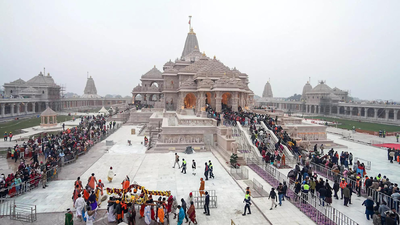
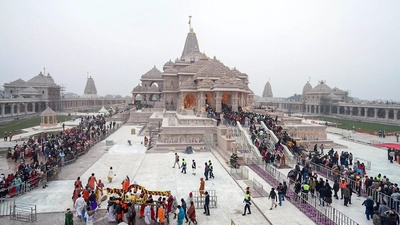
Ayodhya (UP): Shri Ram Janmabhoomi Teerth Kshetra Trust said that after the flag hoisting on the main peak of the Ram temple and other main temples in the Ram Janmabhoomi complex, preparations have begun for similar ceremonies in the remaining six sub-temples.After the meeting held on Saturday, Trust General Secretary Champat Rai said that the temples where the flag hoisting will take place are dedicated to Surya, Bhagwati, Shivling, Ganapati, Sheshavatar and Hanuman.Rai said the flag hoisting ceremony for the Hanuman temple will take place on Hanuman Jayanti, which is on April 2 this year.He said the ceremonies for the other five sub-temples will be held in a phased manner over eight days – March 22, 23, 24, 25, 29, 30 and 31.He emphasized that these events will be held without large public gatherings, with participation limited to a small number of attendees. Each ceremony will be attended by about 50 monks and about 200 attendees, including engineers and staff involved in the project.The Trust also noted that the flag hoisting on the main peak was first done by the Prime Minister on November 25, 2025. Narendra Modi.

Source link

Iran’s missile map decoded: Who falls within its extended strike range?

Iran's missile map decoded: Who falls within its extended strike range?
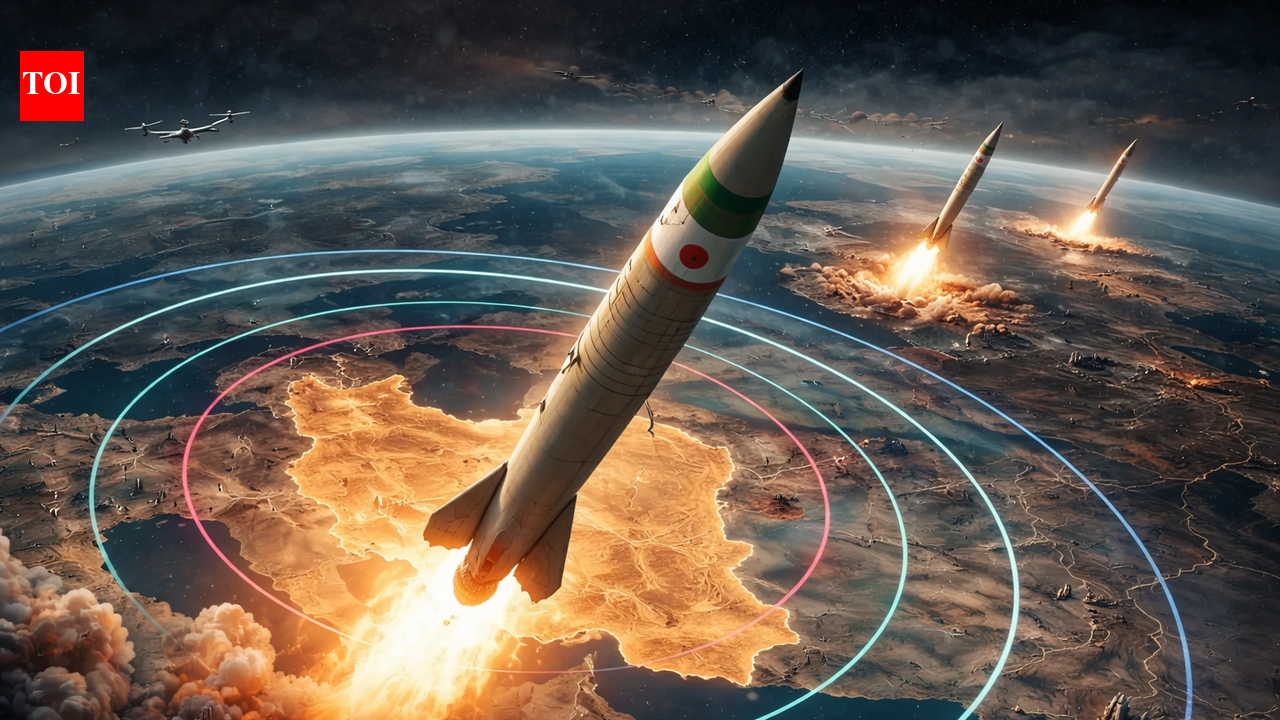
Representative Image (AI Generated)

New Delhi: Iran’s missile arsenal has emerged as a cornerstone of its military doctrine, giving Tehran the ability to project power across the Middle East and shape the trajectory of any conflict. Built steadily over the past three decades, the program spans short-range tactical systems to long-range ballistic and cruise missiles, creating a layered strike capability that complements the country’s aging air force.The range of these missiles is not just a technical detail. It defines the geography of the conflict, sets out potential targets and outlines Iran’s strategy of deterrence. From nearby Gulf bases to Israel and beyond, the range of Iranian missile reach continues to influence military calculations throughout the region.

Short-range missiles: immediate battlefield dominance

At the lower end of the spectrum are short-range ballistic missiles, which typically have ranges between 300 km and 800 km. These systems form the first layer of Iran’s strike capability and are designed for rapid deployment against nearby targets.Missiles like Fateh-110, Zolfagher, Qiyam-1 and Shahab-1 and Shahab-2 fall in this category. Their relatively short range provides a tactical advantage. They can be launched quickly, often in large numbers, reducing warning time for adversaries and increasing the possibility of overwhelming air defense systems.This class of missiles is particularly suitable for targeting US military bases, naval assets, and regional infrastructure in the Gulf. Their role is to deliver the “first punch” in any stress situation, giving a signal while causing immediate damage.Iran demonstrated this approach in January 2020, when it launched ballistic missiles at Iraq’s Ain al-Asad airbase following the assassination of General Qassem Soleimani. The attack caused significant damage and injuries, demonstrating Iran’s ability to deliver precise strikes without relying on conventional air power.

Medium-range missiles: expansion of the strategic map

The second layer of Iran’s missile arsenal consists of medium-range ballistic missiles, which typically have a range between 1,000 km and 2,000 km. This category marks the shift from tactical warfare to strategic deterrence.Major systems include Shahab-3, Imad, Ghadar, Sejjil and Khorramshahr. These missiles significantly expand Iran’s strike range, bringing a wide network of military facilities linked to Israel and the US within reach. All bases in Qatar, Bahrain, Kuwait, Saudi Arabia and United Arab Emirates come under this scope.Among these, the Sejjil missile stands out due to its solid-fuel propulsion. Unlike liquid-fuel missiles, which require more time to prepare, solid-fuel systems can be launched more quickly, increasing survivability in a conflict where pre-emptive attacks are a constant threat.This layer effectively turns any conflict with Iran into a regional issue. This ensures that escalation cannot be limited to a single battlefield, as multiple countries fall within the range of retaliation.

Long distance systems: outer limits of reach

Iran’s longest-range missiles are estimated to reach between 2,000 km and 2,500 km, forming the outer limits of its publicly known capabilities. Advanced versions of the Shahab series, systems such as the Sejjil and Khorramshahr operate in this range band.Apart from ballistic missiles, Iran has developed cruise missiles like Soumar, which can cover a range of up to 2,500 km while flying at low altitude. These missiles are difficult to detect and intercept, especially when used in conjunction with drones or ballistic systems.The geographical implications of this category are very deep. The 2,000 km radius from Iran covers not only Israel and the Gulf but also parts of Southeastern Europe, Central Asia and North Africa. This allows Tehran to put at risk a broad spectrum of military and economic targets, including ports, energy infrastructure and airbases.However, despite reach, Iran’s missile capability does not extend to the continental United States. This limitation underlines that Tehran’s strategy focuses on regional dominance rather than global strike capability.

Attempt to attack Diego Garcia: testing the limits

However, a recent development has raised questions about the upper limit of Iran’s missile reach. Reports of an attempted attack on Diego Garcia – a remote island in the Indian Ocean that is home to a major US-UK military base – suggest that Tehran may be experimenting with long-range capabilities.Located approximately 4,000 km from Iran, Diego Garcia is well beyond the established range of Iran’s missile systems. According to available information, two missiles were reportedly fired towards the island, although neither successfully hit the target.Although this effort was not successful, its implications are important. This points to either an experimental expansion of Iran’s missile technology or a strategic signaling effort aimed at deterring Western forces by demonstrating intent rather than proven capability.If Iran develops reliable systems capable of reaching such distances, it would fundamentally alter the strategic balance, giving it access to the Indian Ocean and potentially parts of Europe and the Indo-Pacific.

Geography of Threat: A Layered Coverage

Image of Iran’s missile range shows a layered pattern of concentrated reach. Short-range systems dominate the near-neighborhood, covering the Persian Gulf and adjacent states. Medium-range missiles extend this reach to Israel and deep into West Asia, while long-range systems push the range outward to cover an even wider arc.This layered structure ensures that Iran can respond simultaneously at multiple ranges. It also complicates defense planning for adversaries, who must account for threats coming at different ranges, trajectories, and speeds.In practical terms, this means that no major US military installation in the Gulf region is beyond Iran’s reach. Energy infrastructure, shipping lanes and urban centers are also at great distances throughout the region.

Volume and Survival: Beyond Limits

While range defines reach, Iran’s missile strategy is equally dependent on quantity and survivability. The country has invested heavily in underground facilities, often referred to as “missile cities”, where weapons are stored and prepared for launch away from surveillance.Mobile launch platforms further increase flexibility, allowing missiles to be fired from multiple locations. This dispersion makes it difficult for adversaries to neutralize Iran’s arsenal in a single preemptive strike.Joint tactics—the use of ballistic missiles, cruise missiles and drones—adds another layer of complexity. Drones can be used to satiate air defenses, while cruise missiles fly low to avoid detection, and ballistic missiles strike at high speed.This integrated approach increases the likelihood that at least some weapons will penetrate defensive systems, thereby ensuring that Iran will retain a credible retaliatory capability.

Strategic Implications: Resistance and Escalation

Iran’s missile range is central to its deterrence strategy. By demonstrating the ability to strike across a wide geographic area, Tehran wants to discourage adversaries from launching attacks or escalating conflicts.Additionally, this capability increases the risk of any collision. The broader the scope, the wider the pool of potential targets, increasing the risk of a regional conflict escalating into a major war.The attempted attack on Diego Garcia, although unsuccessful, underscores this dynamic. This indicates that Iran may be willing to expand the geographic scope of its operations, challenging perceptions about the limits of its reach.Iran’s missile program is not just about weapons – it is about shaping the battlefield. From short-range systems designed for immediate impact to long-range missiles that define regional power projection, the extent of Iran’s arsenal determines how conflicts unfold.As tensions persist, this limit ensures that any military involvement involving Iran will not remain limited. Instead, it would apply across a vast and interconnected region, where distance offers little protection and escalation has far-reaching consequences.

Source link

रोते हुए बेटे से आखिरी बात…जेई ने फिर लगाई फांसी, रामपुर सुसाइड केस ने झकझोर दिया

उत्तर प्रदेश समाचार: उत्तर प्रदेश के रामपुर जिले से एक बेहद दर्दनाक घटना सामने आई है, जहां बिजली विभाग के जूनियर इंजीनियर (जेई) रवींद्र मिश्रा ने फांसी लगाकर आत्महत्या कर ली. घटना से पहले उन्होंने अपने 12 साल के बेटे से वीडियो कॉल पर रोते हुए बात की थी, जिससे घटना और भी भावुक हो गई. जब तक उसके साथी मौके पर पहुंचे तब तक काफी देर हो चुकी थी। उन्हें तुरंत अस्पताल ले जाया गया, लेकिन डॉक्टरों ने उन्हें मृत घोषित कर दिया। इस घटना के बाद पूरे इलाके में शोक का माहौल है.

रवीन्द्र किराये के कमरे में अकेला रहता था।
जानकारी के मुताबिक, रवींद्र मिश्रा मूल रूप से शाहजहाँपुर के रहने वाले थे और वर्तमान में रामपुर के शाहाबाद में तैनात थे। वह शाहबाद थाना क्षेत्र में बिलारी मार्ग पर किराए के कमरे में अकेला रहता था। उनका अपनी पत्नी से पिछले 10 साल से विवाद चल रहा था, जो अब तलाक तक पहुंच गया था. यह मामला फिलहाल कोर्ट में विचाराधीन है. उनका 12 साल का बेटा अथर्व अपने चाचा प्रभात मिश्रा के साथ रहता है।

बेटे से आखिरी बातचीत के बाद उठाया कदम
शनिवार रात करीब 11:20 बजे रवींद्र ने अपने बड़े भाई को वीडियो कॉल कर अपने बेटे से बात कराने को कहा. भाई ने बेटे अथर्व को फोन दिया। कुछ देर बाद बेटा घबराया हुआ अपने चाचा के पास आया और बताया कि उसके पिता रो रहे हैं और फांसी लगाने की कोशिश कर रहे हैं. यह सुनते ही परिवार में हड़कंप मच गया और तुरंत सहकर्मियों को सूचना दी गई।

सहकर्मी दरवाजा तोड़कर अंदर घुसे
सहकर्मी जब रवींद्र के कमरे में पहुंचे तो दरवाजा अंदर से बंद था। कई बार आवाज देने के बाद भी कोई जवाब नहीं मिला तो उन्होंने दरवाजा तोड़ दिया. अंदर का नजारा देखकर हर कोई हैरान रह गया। रवीन्द्र फंदे से लटका हुआ था। उसे तुरंत शाहाबाद सामुदायिक स्वास्थ्य केंद्र ले जाया गया, जहां डॉक्टरों ने उसे मृत घोषित कर दिया।

पारिवारिक विवाद और तनाव बना वजह
परिजनों के मुताबिक, रवींद्र का अपनी पत्नी से काफी समय से विवाद चल रहा था. बेटे अथर्व ने अपनी मां पर पिता को प्रताड़ित करने का आरोप लगाया है. उन्होंने कहा कि मां अलग रहती थीं और अक्सर पैसों को लेकर झगड़ा करती थीं। बेटे ने भी अपनी मां के खिलाफ मामला दर्ज करने की मांग की है. पुलिस ने शव को पोस्टमार्टम के लिए भेज दिया है। थाना प्रभारी के मुताबिक, अभी तक कोई लिखित शिकायत नहीं मिली है, लेकिन शिकायत मिलने पर आगे की कार्रवाई की जाएगी. शुरुआती जांच में पारिवारिक विवाद और मानसिक तनाव को आत्महत्या का कारण माना जा रहा है.

Source link

IPL 2026: MS Dhoni headlines CSK reunion, honors Sanju Samson, Shivam Dubey

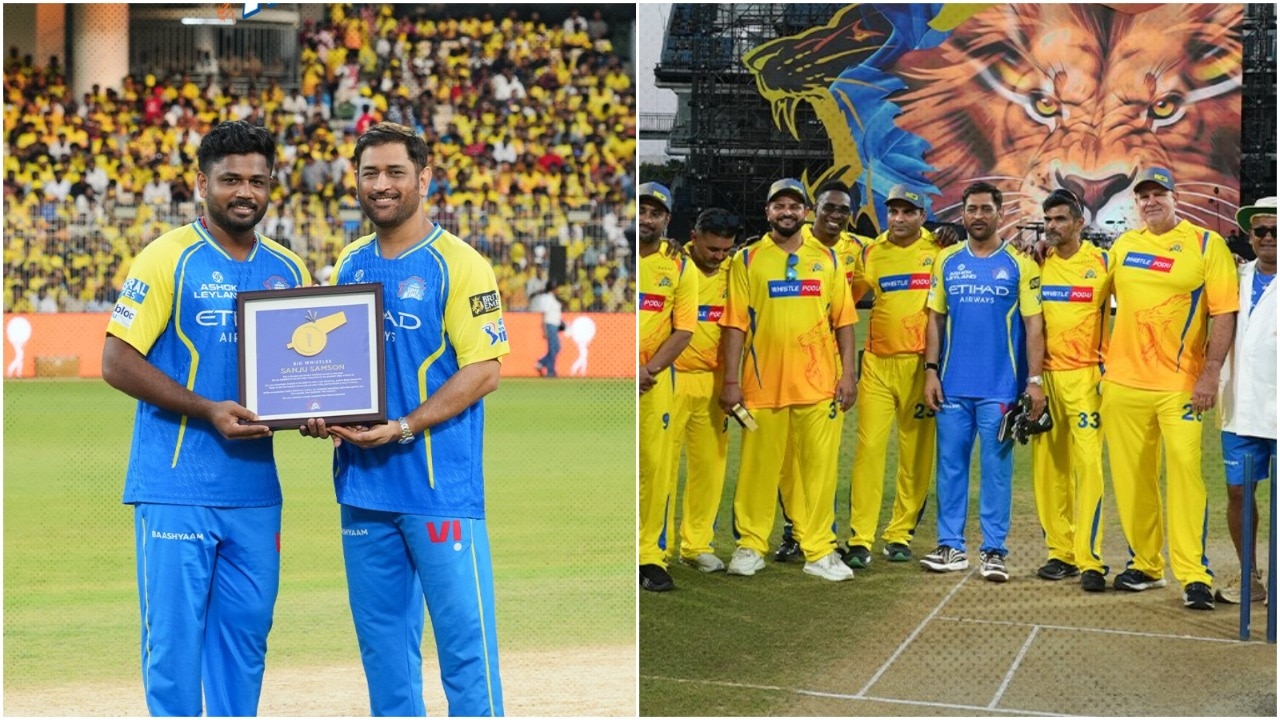
There was a festive atmosphere at the MA Chidambaram Stadium ahead of Chennai Super Kings’ IPL 2026 home game in the city. On Sunday, the five-time champions hosted a special event for their fans, bringing together their former players – the OGs – under one roof. It was a day that brought back memories when players like Matthew Hayden, Michael Hussey, Dwayne Bravo, Muttiah Muralitharan, Murali Vijay, Parthiv Patel, S Badrinath and Suresh Raina once again donned the yellow jersey and walked on the iconic Chepauk.

As expected, MS Dhoni stole the show. The 44-year-old took to the field on Sunday afternoon with a thunderous background score, much to the delight of fans who had bought tickets for the special event, which will be followed by a concert by Academy Award winner AR Rahman.

A fan was seen crying as he saw Dhoni walk onto the field to begin the fun-filled training session. Titled ‘Roar 26’, CSK hosted the special evening to honor its former cricketers as well as the World Cup winners from the current team.

While the loudest cheer was reserved for Dhoni, Suresh Raina, one of CSK’s greatest players, was welcomed with a huge roar by the crowd. Sanju Samson, who will join the CSK squad in IPL 2026 after his departure from Rajasthan Royals, also got a warm welcome.

Dhoni appeared to be enjoying while getting wickets to some of his former teammates. He saw Michael Hussey dancing on the track and sending captain Ruturaj Gaikwad’s part-time off-spin into the stands.

When Samson came back and hit a six off Muttiah Muralitharan, Dhoni was also behind the stumps.

As usual, Dhoni and Dwayne Bravo were engaged in a light banter on the field. When Dhoni had a chance to stump Bravo, who was dancing on the track and missed a big shot, he decided not to do so. Later in the evening, Bravo entertained the Chepauk crowd by singing a song before walking up to Dhoni and sharing a warm embrace with his former captain.

Dhoni honored Samson

MS Dhoni with Sanju Samson in Chepauk (Courtesy: @ChennaiIPL/X)

Dhoni then honored India’s T20 World Cup heroes – Shivam Dubey and Sanju Samson with special mementos. Dhoni also honored Ayush Mhatre, who led India’s Under-19 team to win the World Cup earlier this year.

Dhoni later attended the felicitation ceremony along with CSK OGs and the current team of players and thanked the fans who came in large numbers. He was also seen hitting tennis balls into the stands, ensuring that supporters went home with special memories.

This was the first time CSK hosted a ticketed event for fans at the start of the IPL season. The franchise ensured the presence of many former superstars. Despite their commitments with other IPL teams, Bravo (KKR mentor), Hayden and Parthiv (Gujarat Titans coach) attended the event in Chennai.

All eyes were on Dhoni amid speculations that the event, featuring many CSK greats, could signal the beginning of his final season as a player. However, there were no signs of a farewell as the 44-year-old donned the gloves and enjoyed his time on the field.

While Ruturaj Gaikwad will continue to lead CSK, it remains to be seen how involved Dhoni will be this season. There is a school of thought that he may limit himself to playing as an impact player. However, if indications from the training sessions are anything to go by, Dhoni may take over the wicketkeeping duties ahead of Samson.

Dhoni’s performance with the bat in IPL 2025 was not good and he scored 196 runs in 14 matches at a strike rate of 135.17. It was a tough campaign for the team as Dhoni took over the captaincy after Ruturaj was injured midway through the season, leading to CSK finishing at the bottom of the points table for the first time in IPL history.

However, Dhoni is training hard for IPL 2026 starting from March 28. After starting his preparations in Ranchi in early February, he joined the CSK camp in Chennai in the first week of March and has been training intensively since then.

CSK will start their campaign on Monday, March 30 against Rajasthan Royals in Guwahati. They will play their first home match on Friday, April 3 against Punjab Kings.

– ends

published by:

Akshay Ramesh

Published on:

March 22, 2026 19:37 IST

Source link