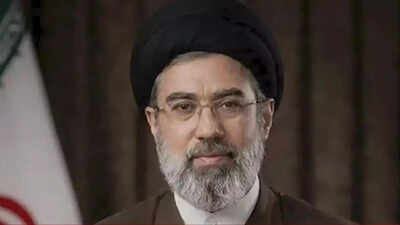

Iran’s supreme leader in the shadows: CIA is looking for signs of Mojtaba Khamenei
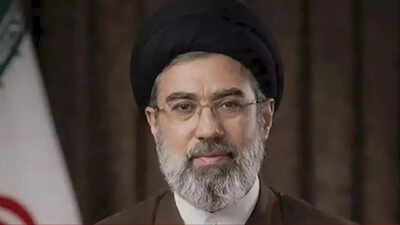
The mystery surrounding Iran’s new Supreme Leader Mojtaba Khamenei is deepening. This also includes global intelligence agencies cia And the Mossad is closely monitoring his whereabouts and role in the ongoing conflict in Tehran.Since assuming power on March 9 following the assassination of his father Ali Khamenei, Mojtaba has largely remained out of the public eye. Apart from a written statement from Nowruz and a recently released video showing him teaching religious studies, he has avoided any personal or pre-recorded appearances.In his Nowruz message on Telegram, Mojtaba called for national unity and claimed that Iran had defeated the enemy, saying: “At this moment, because of the special unity formed among you, our compatriots – despite all differences in religious, intellectual, cultural and political origins – the enemy has been defeated. The US and Israeli attacks were based on the illusion that by assassinating top leaders they could overthrow the government.“He further described the attacks in Turkey and Oman as part of the “plan of the Zionist enemy” and emphasized Iran’s regional ties: “We share with neighboring countries the confrontation against the forces of sectarianism, interests and global egoism.”According to a report by Axios, the CIA is reportedly working to determine whether Mojtaba is alive, injured or fully exercising authority, especially after reports that he was injured in the attack that killed his father. Evidence such as failed attempts by Iranian officials to schedule personal meetings with him suggest that Mojtaba is alive but under tight security.A senior US official said, “We have no evidence that he is actually giving orders. It’s very strange. We don’t think the Iranians would have elected a dead person as supreme leader, but at the same time, we have no evidence that he is taking power.”Recent targeted attacks on Iran’s senior leadership, including the assassination of security chief Ali Larijani, have raised concerns in US intelligence circles. US and Israeli officials highlighted that the Islamic Revolutionary Guard Corps (IRGC) is now effectively managing the country, mitigating power cuts.CIA Director John Ratcliffe and Defense Intelligence Agency Director General James Adams testified before the House Intelligence Committee that Iran is facing a deep command and control crisis. Israeli officials have also warned that Iran’s top leaders are acting like fugitives, moving between safe houses and avoiding digital communications.Raz Zimmat, director of the Iran program at the Institute for National Security Studies in Tel Aviv, said Mojtaba could still work, but injuries or security concerns might prevent him from appearing in public or releasing recorded messages.Zimmt said, “Under the current extraordinary circumstances, one should not expect him to appear in public, and it is possible that his injury does not even allow him to release the recorded video so as not to expose the seriousness of his condition to the public.”During Nowruz celebrations on Friday, American and Israeli intelligence closely monitored signs of public attendance. Instead, Mojtaba released a written message via Telegram along with a video showing him teaching religious studies to students. The CIA is reportedly analyzing these materials to determine whether they are recent and to gain information about their current status.A senior US official described Mojtaba’s absence as a “significant threat”. “We expected to see Mojtaba in some capacity as well. He did not take advantage of the opportunity and tradition,” the official said.Mojtaba’s continued silence leaves open the question of who is really in command in Tehran. President Donald Trump’s national security team has repeatedly raised concerns over leadership authority in the Iranian capital.Trump said, “All their leaders are gone. The next group of leaders is also gone. And the next group of leaders is also mostly gone. And now, nobody wants to be the leader there. We’re having a tough time. We want to talk to them but there’s no one to talk to. You know, we like it that way.” Israel has also indicated that regime change may be an objective of its ongoing operations.