Breaking News
Neil Armstrong’s 1966 Gemini 8 mission caught on camera: Newly released photos show astronauts’ life-or-death struggle in space

Neil Armstrong's 1966 Gemini 8 mission caught on camera: Newly released photos show astronauts' life-or-death struggle in space

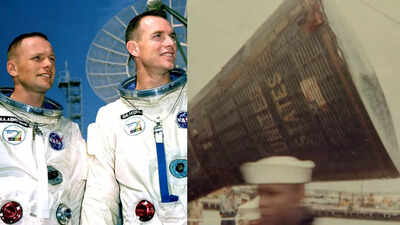
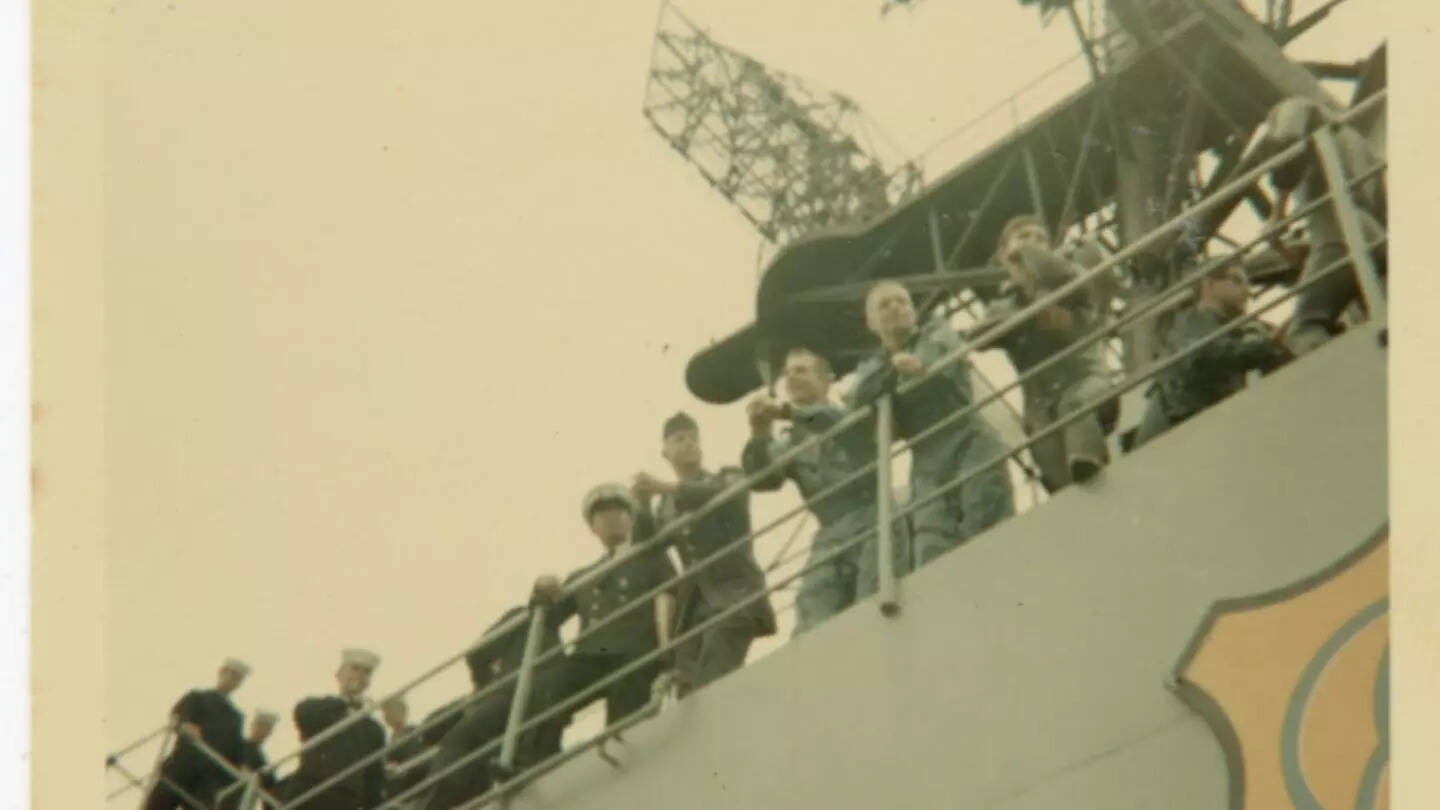
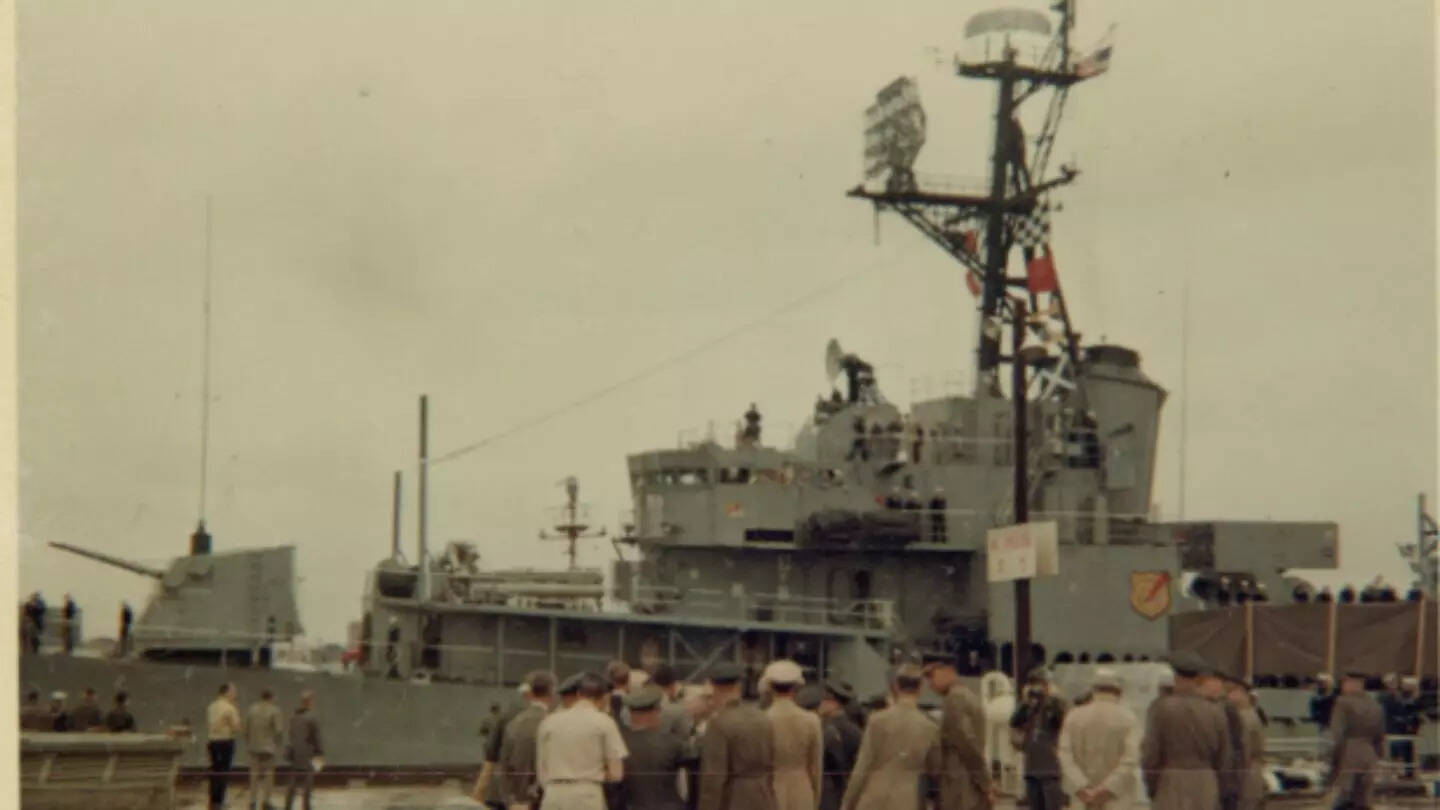
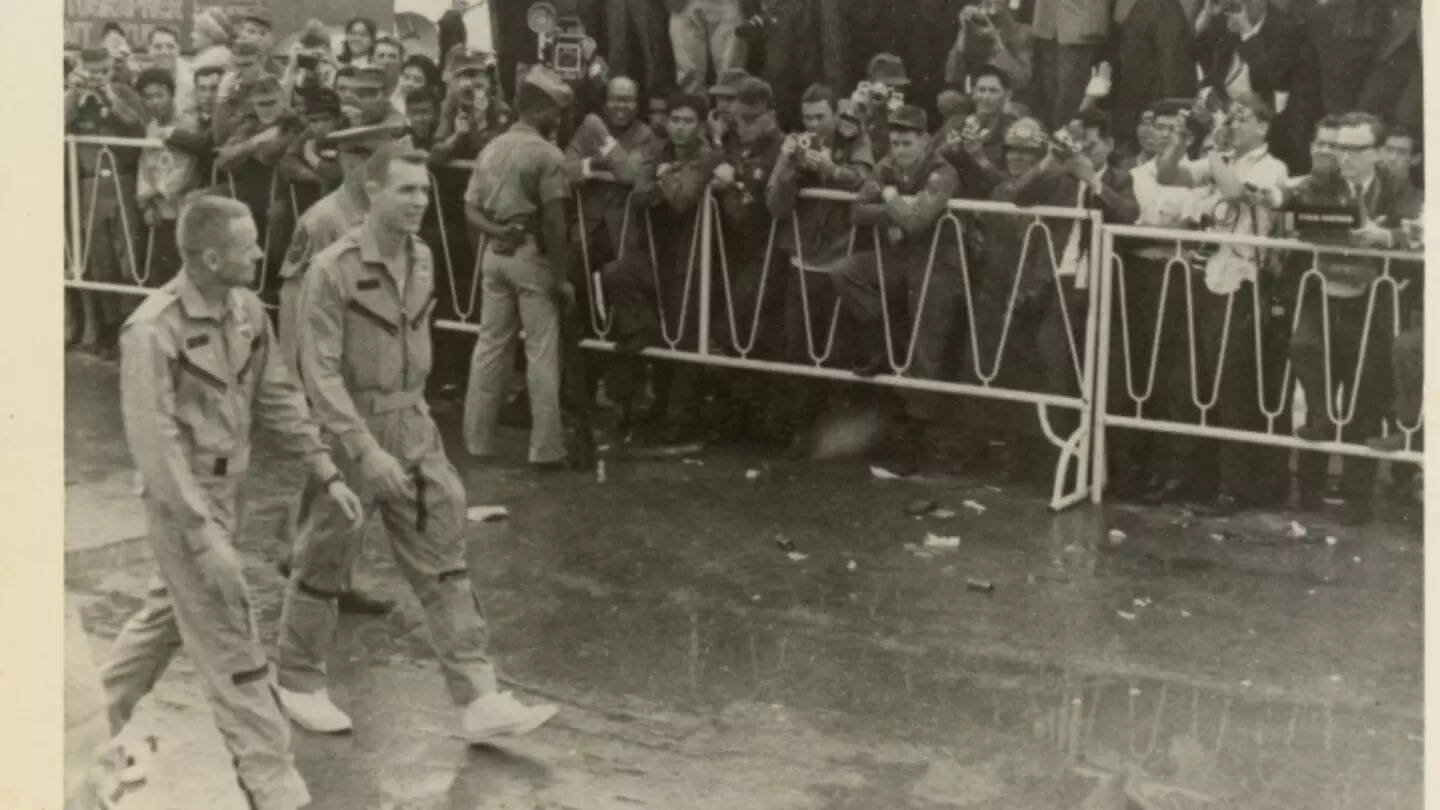
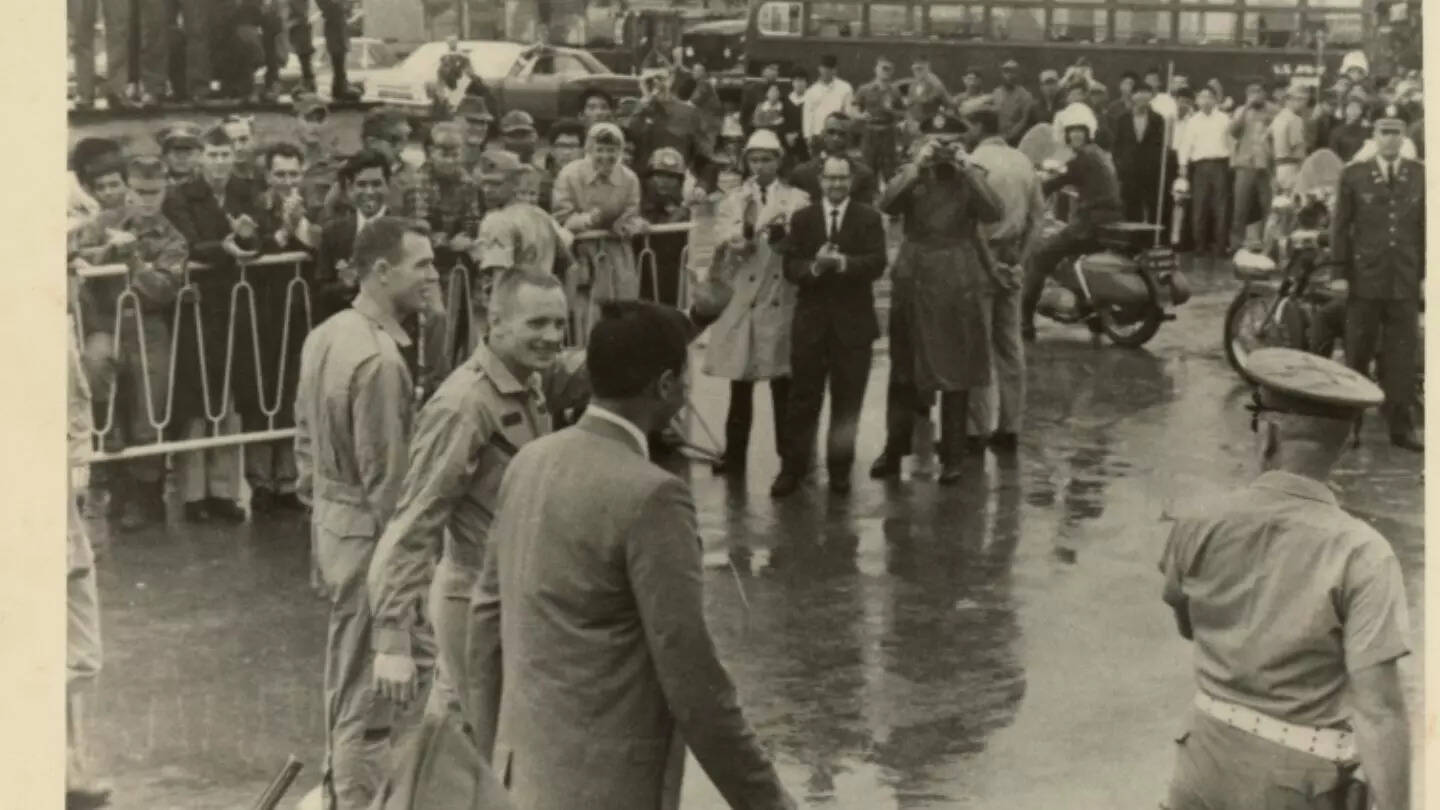
Newly released photos from NASA’s Gemini 8 mission show Neil Armstrong and David Scott after their emergency return to Earth in 1966. The photos were reportedly taken by Ron McSweeney and have been donated to the Armstrong Air & Space Museum in Wapakoneta, Ohio by McSweeney’s widow. They capture astronauts on the deck of a US Navy ship and at Naha Air Base in Okinawa, Japan, after a mission that was cut short due to a spacecraft malfunction.Gemini 8 launched on March 16, 1966, and achieved the first successful docking of two spacecraft in orbit, AP news reports. The mission became critical when the docked vehicle began spinning uncontrollably, reportedly completing one full revolution per second. Armstrong activated the spacecraft’s thrusters to stabilize the spin, using reserve fuel for the remainder of the mission. Both astronauts were in danger of losing consciousness due to the rapid rotation.

Neil Armstrong’s Gemini 8 splashdown captured in rare recovery photos

As reported, the astronauts splashed down near Okinawa, Japan, about 10 hours after launch. He was assigned to the USS Leonard F. Recovered by Mason and taken to Naha Air Base. Photos showed Armstrong and Scott walking through a crowd of American service members and standing on the deck of the ship. Images also include Gemini 8 being lifted for transport after splashdown.McSweeney, an Army veteran, was called in to document the astronauts immediately after their recovery. Few media outlets attended the event at the time, as the initial mission termination was unplanned. These photographs are one of the few visual records of the astronauts’ post-mission condition following a near-catastrophic event in orbit.

Neil Armstrong's Gemini 8 Splashdown

PC:AP

Neil Armstrong's Gemini 8 Splashdown

PC:AP

Main docking and emergency procedures

The Gemini 8 mission is considered an important test of orbital docking procedures and astronaut performance under emergency conditions. Armstrong’s reaction to uncontrolled spin is often cited as evidence of his composure and technical skill, which contributed to his selection for the Apollo 11 mission in 1969.Historians say the mission’s success in safely returning the crew despite the malfunction provided valuable data for future manned space missions. Armstrong and Scott’s ability to manage fuel reserves and stabilize the spacecraft in emergency situations informed NASA’s protocols for the later Gemini and Apollo missions.

Neil Armstrong's Gemini 8 Splashdown

PC:AP

Neil Armstrong's Gemini 8 Splashdown

PC:AP

Historic Gemini 8 photos show Armstrong and Scott’s post-mission recovery

The Armstrong Air & Space Museum plans to display the photographs as part of its permanent collection. Dante Centuri, executive director of the museum, said the images provide a clear record of the mission and the astronauts’ recovery process. They also serve as historical records of US naval support operations in post-mission recovery.

Source link

Radhika Iyer Talati Cancer Story: Hot water fasting, yoga and mental peace: How Radhika Iyer Talati beat cancer twice and turned it into a success story

Hot water fasting, yoga and mental peace: How Radhika Iyer Talati beat cancer twice and turned it into a success story

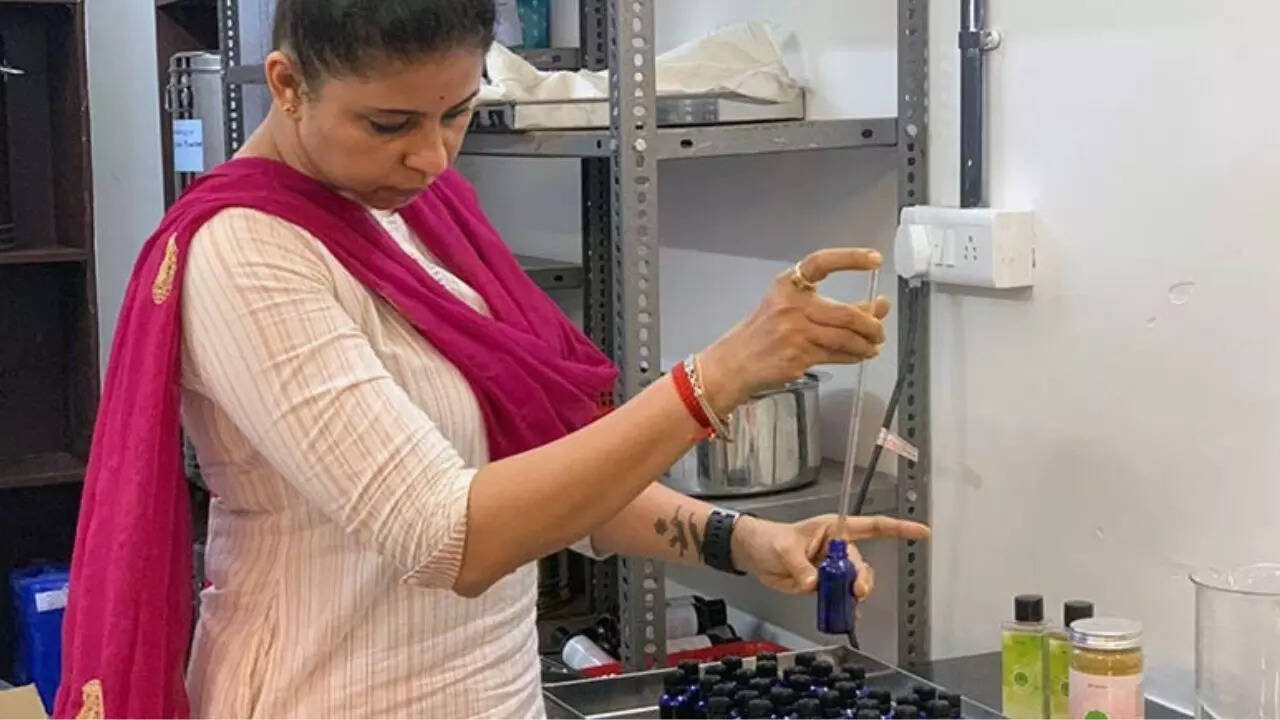
When Radhika Iyer Talati was 29 years old, she was diagnosed with cancer. It was uterine cancer in the early stages, and it was managed. However, doctors told her that she might have cancer in other reproductive organs, such as the breasts or ovaries, and that she had to be careful about it. Then why did he get cancer? Who is Radhika?Radhika Iyer was born in an orthodox Tamil Brahmin family. While her family emphasized the girls’ education and encouraged independence, there were still many things they were not allowed to do. His father was in the Military Accounts Service, and the family was transferred to various places across India. This gave Radhika the opportunity to try her hand at many small jobs while studying. “We were encouraged to do our own work and earn our own pocket money during the summer holidays. I did everything from modeling to selling newspapers and even going door-to-door selling washing powder.”

Image:Radhika Iyer Talati

However, one thing that was not acceptable was marrying outside one’s community. But at the age of 19, she fell in love with Amit Talati and got married into a rich Gujarati family. “I had always learned to earn my own money, so the life of a housewife was not easy for me. Although there was no shortage of money, women in my family were expected to take care of the house, men and children. I wanted to be a good daughter-in-law and learn the tricks of the trade, but I felt stifled and always tried to do my own thing.I didn’t want my husband to ever feel like he had made a wrong choice, so I gave up my pride and took on my role as a daughter-in-law. However, gradually I started taking things into my own hands. Thankfully, I was allowed to do small tasks like writing articles and organizing a small fashion exhibition. This gave me enough financial freedom to seek help and think about starting something bigger. I started organizing celebrity birthdays, founded my own wedding design company and earned a good income while raising my three children.All this time, I was adjusting to my new family, raising kids, and dealing with a number of health issues — like eczema that wouldn’t go away, gut problems, and conditions that even landed me in the ICU. Then came the final blow: cancer, at a time when my children were still very young. I was diagnosed in 2004, and thankfully it was in the early stages, so it was manageable – but with a caveat that it could return. Meanwhile, I struggled with eczema for years, until I met Dr., an Ayurvedic doctor in Ahmedabad. Pankaj Dabi. My trust in him and naturopathy deepened when he cured my long-standing eczema in just one week. All they did was change my diet – started eating seasonally, on time – and that discipline cured me.

Image:Radhika Iyer Talati

But as fate would have it, I was diagnosed with cancer for the second time in 2009 – this time in my breasts. My mother-in-law also had cancer, so when the lumps appeared, I immediately went to the doctor. However, he dismissed it and asked me to wait and see.Within a few days, I felt that the lumps were increasing, so I went back again. This time, they discovered that I had multiple lumps. He advised me to have a biopsy and this confirmed the diagnosis. I went straight to my Ayurvedic doctor, Dr. Pankaj Dabi. The cancer was in the early stages and he was confident that with proper Ayurvedic treatment the tumors would dissolve. While my family was incredulous about this bold step and my husband was completely reluctant, I wanted to try it and assured him that if it didn’t work, I would resort to regular treatments.Ayurvedic treatment was not easy. Every day, I would go to the clinic at 9 in the morning – a small clinic and return home late in the evening. This included fasting for long periods of time, drinking bitter juices, eating in a copper plate, getting massages, and more. Ultimately, at the end of 18-19 days, my hand turned blue, and all the lumps disappeared.

Image:Radhika Iyer Talati

Despite the pain, I felt very good and during this period my weight reduced by 10 kg. It was extremely difficult treatment, but my faith and determination helped me carry on. I rested for 3-4 days, during which I ate only light food. The doctor did not allow me to get a mammogram, the doctor said that it could jeopardize the entire treatment. My family was not ready to accept my decision, but I moved forward with my faith. I finally got a mammogram three years later and everything became clear. But the story did not end here. After a month, Dr. Dabi told me that I needed to replenish my life energy, which had become weak during the treatment. He suggested that I should go to either Kerala or the Himalayas.“I got permission from my husband and explained everything to both of my children – my daughter was 8 years old and my son was only 5 – and then decided to go on this trip. Before leaving, I wrote a very emotional message to all my female friends, but it came as a shock to me – and a lesson – that I did not get a single response. The reality of the world had opened up before my eyes. I went to Rishikesh and spent six months there, extending my stay month by month each time after taking permission from my children. There I learned yoga from an Aghori Baba named Baba Dhuni Nath. I didn’t spend a single rupee, yet I learned things I couldn’t have learned anywhere else. I had a profound spiritual experience and a deep awakening. I learned about Lord Shiva and his philosophy. This became a turning point in my life. When I returned five months later, my husband didn’t recognize me—I was completely changed.”

Image:Radhika Iyer Talati

Why did cancer happen?I realized that cancer developed due to a combination of many factors: eating out, exposure to chemical-laden cosmetics, and the constant stress of trying to fit into the role of “daughter-in-law”, as well as the many unspoken emotions that come with it.After my healing journey, I deeply embraced yoga and started practicing regularly. I also included hot water fasting in my lifestyle. Dr. Pankaj believed that hot water fasting could help cure many diseases and it gradually became a part of my daily routine. Today, I’m able to fast for multiple days—but of course, this has come with consistent practice and discipline. Eventually I started my own yoga studio, and slowly Anahata Organics was born when I realized that practicing yoga was not enough unless it was paired with clean eating. Radhika ensured that she brought to the people the traditional foods and practices that are missing from our modern tables.Radhika Iyer Talati is a yogini, philanthropist and a deep believer in naturopathy. She is a living example of strength and resilience and of the belief that ancient Indian science and mindful practice can help cure many modern ailments, including serious illnesses. Radhika’s life is a testament to transformation, faith and inner strength.

Watch

‘After surviving cancer, how yoga helped me reclaim my life’

Source link

Kashmiri separatist Andrabi gets life imprisonment, two associates sentenced to 30 years. india news

Kashmiri separatist Andrabi gets life imprisonment, two associates sentenced to 30 years

New Delhi: A Delhi court on Tuesday sentenced Kashmiri separatist and Dukhtaran-e-Millat chief Asiya Andrabi to life imprisonment for conspiring to commit crimes against the state.Additional Sessions Judge Chander Jeet Singh also sentenced Andrabi’s two associates Sophie Fehmida and Nahida Nasreen to 30 years in prison in the case. The court sentenced Andrabi to life imprisonment under section 18 of the UAPA (punishment for conspiracy) and sections 120B (criminal conspiracy) and 121A of the erstwhile IPC. Section 18 of UAPA says, The court said that the sentences will run concurrently. The trio were sentenced on January 14, after which the NIA had sought life imprisonment for Andrabi, saying he had waged war against India, and needed to send a strong message that conspiring against the state would be punished with the harshest punishment. In its 286-page order, the court said that Andrabi and his associates conspired to separate Kashmir from India. Rejecting the defense arguments, the court said, “Treating the culprits leniently would be like injecting a new life and vigor into the spirit of the culprits, whose aim is to alienate an integral part of India.”

Source link

दिल्ली विधानसभा को बम से उड़ाने की धमकी, बजट सत्र के दौरान मची अफरा-तफरी

दिल्ली में उस वक्त हड़कंप मच गया जब बजट सत्र के दौरान दिल्ली विधानसभा को बम से उड़ाने की धमकी मिली. यह धमकी विधानसभा अध्यक्ष विजेंद्र गुप्ता को एक ईमेल के जरिए भेजी गई थी. ईमेल में न सिर्फ विधानसभा बल्कि दिल्ली मेट्रो स्टेशन को भी निशाना बनाने की बात कही गई थी. धमकी में कई बड़े नेताओं के नाम भी बताए गए हैं, जिससे सुरक्षा एजेंसियां ​​अलर्ट हो गई हैं. पुलिस और सुरक्षा एजेंसियों ने तुरंत जांच शुरू कर दी है और पूरे इलाके में सुरक्षा कड़ी कर दी गई है.

ईमेल में दी गई गंभीर धमकी
मिली जानकारी के मुताबिक धमकी भरा ईमेल सीधे विधानसभा अध्यक्ष विजेंद्र गुप्ता को भेजा गया था. इसमें साफ लिखा था कि दिल्ली विधानसभा और मेट्रो स्टेशन को बम से उड़ा दिया जाएगा. इसके साथ ही ”दिल्ली बनेगी खालिस्तान” जैसे संवेदनशील शब्दों का भी इस्तेमाल किया गया, जिससे मामले की गंभीरता और बढ़ गई है.

कई बड़े नेताओं के नाम का जिक्र
इस ईमेल में कई बड़े नेताओं के नाम भी शामिल हैं. इनमें उपराज्यपाल तरणजीत सिंह संधू, प्रधानमंत्री नरेंद्र मोदी, मुख्यमंत्री रेखा गुप्ता और मंत्री मनजिंदर सिंह सिरसा का नाम लिया गया है. इन नामों के सामने आने से सुरक्षा एजेंसियों की चिंता बढ़ गई है और पूरे मामले को गंभीरता से लिया जा रहा है.

सुरक्षा एजेंसियां ​​अलर्ट, जांच शुरू!
धमकी मिलते ही पुलिस और अन्य सुरक्षा एजेंसियां ​​सक्रिय हो गईं। विधानसभा परिसर और आसपास के इलाकों में सुरक्षा बढ़ा दी गई है. मेट्रो स्टेशनों पर भी सतर्कता बढ़ा दी गई है. पुलिस ईमेल भेजने वाले की पहचान करने की कोशिश कर रही है और साइबर टीम भी जांच में जुटी है.

बजट सत्र के बीच बढ़ी चिंता
यह धमकी ऐसे वक्त आई है जब दिल्ली विधानसभा में बजट सत्र चल रहा है. ऐसे में सुरक्षा को लेकर अतिरिक्त सावधानी बरती जा रही है. अधिकारियों का कहना है कि किसी भी तरह की लापरवाही बर्दाश्त नहीं की जाएगी और दोषियों के खिलाफ सख्त कार्रवाई की जाएगी.

(रिपोर्ट: संदीप शुक्ला, लखनऊ)

Source link

What makes RCB one of the most valuable brands in IPL history? cricket news

What makes RCB one of the most valuable brands in IPL history
Royal Challengers Bangalore (RCB) finally won their first Indian Premier League (IPL) title.

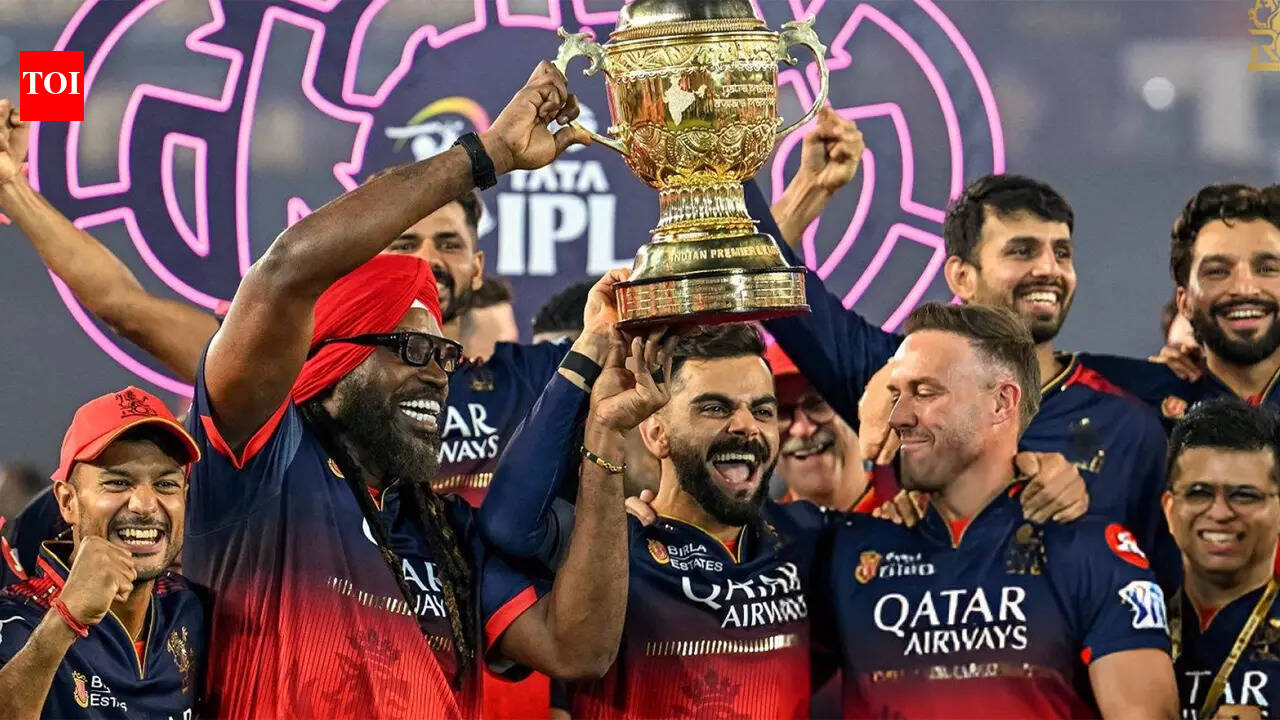
Royal Challengers Bangalore reach the top IPLThe brand valuation chart, according to the 2025 Houlihan Lokey Report, is the culmination of sporting success, strategic clarity and unmatched fan engagement.After years of near misses, RCB’s maiden IPL title win ended a 17-year wait, turning the franchise’s story from perennial underachievers to instant champions. That long-awaited win not only provided silverware but also boosted their brand value to a league-leading US$269 million.

Watch

Big changes in RCB before IPL: New rules, tribute and team update

A major factor behind this surge has been RCB’s ability to strike the right balance between continuity and rebuilding. appointment of Rajat Patidar As the captain signaled a transition to new leadership, his presence continued Virat Kohli Stability, experience and global appeal ensured.Kohli’s journey with the franchise – from the early years to lifting the trophy – added an emotional dimension that connected deeply with the fans.On the field, RCB fielded a strong and good team. Retaining key players and adding match-winners like Krunal Pandya, Liam Livingstone, Phil Salt and Josh Hazlewood created depth and flexibility. This resulted in consistently good performances, with eight wins from their first 11 matches and a dominant performance in the playoffs leading to a historic title win.RCB’s progress off the field has been equally impressive. Strategic partnerships along with enhanced match-day experiences and grassroots initiatives across Karnataka strengthened their engagement with fans. Their digital presence – already one of the strongest in the IPL – has reached new heights, boosted by Kohli’s enduring star power.Kohli’s retirement from Test cricket in 2025 puts his focus on the IPL, increasing both performance and marketability.With IPL titles and smart brand-building, RCB has evolved into much more than just a cricket team – they are now the IPL’s most valuable and influential franchise.

Source link

Global Financial Crisis: ‘Maybe they’ll see worse’: 2008 crisis expert names four risks that could bring down global financial system | World News

'Maybe they'll see worse': 2008 crisis expert names four risks that could bring down global financial system
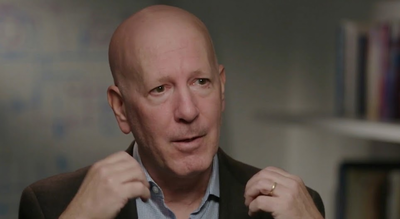
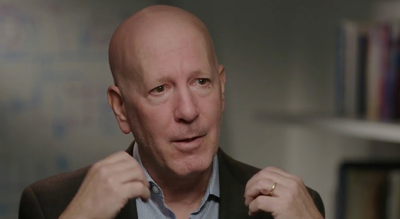
Richard Bookstaber, author of A Demon of Our Own Design, warns today’s financial system faces dangers even greater than 2008./ Image: Institute for New Economic Thinking

Richard Bookstaber, the financial analyst and author who spent decades working inside hedge funds and the US Treasury before writing the book that foreshadowed the 2008 financial crisis, says the conditions he sees today, across private credit, artificial intelligence, stock markets, and geopolitical instability, are more dangerous than anything that preceded that collapse. This time, he warns, the system has no way to see it coming.In 2007, Richard Bookstaber published a book called A Demon of Our Own Design. It was not a work of prophecy so much as a structural diagnosis, an argument that the financial system had been built in a way that made catastrophic failure not merely possible but, eventually, inevitable. A year later, the global economy collapsed in the worst financial crisis since the Great Depression. Bookstaber, who by then had moved from a hedge fund to the US Treasury, watched it unfold from the inside. He told the younger colleagues around him, people for whom the drama of 2008 was the defining event of their professional lives, to pay attention. “Remember what’s happening,” he said. “You’ll never see anything like this again.”

​Richard Bookstaber (born 1950) American author of A Demon Of Our Own Design.

Richard Bookstaber (born 1950) is an American financial writer who is the author of A Demon Of Our Own Design. The book is noted for its foreshadowing of the 2008 financial crisis.

Writing in the New York Times on 16 March 2026, Bookstaber said he is no longer confident that is true. “Maybe they’ll see worse,” he wrote. The risks he sees now span artificial intelligence, a roughly two-trillion-dollar private credit industry, stock market concentration, Iran, and Taiwan, each being tracked by its own set of analysts, each generating its own news cycle, each treated as a self-contained problem with a self-contained solution. The trouble, as Bookstaber sees it, is that this tidy separation is an illusion. These are, in his words, “different entry points into the same underlying structure, a complex and tightly coupled system where the specific source of stress matters less than how quickly that stress can spread.”

What actually caused 2008, and why it matters now

The 2008 financial crisis is most commonly remembered as a story about irresponsible borrowing, millions of Americans taking out mortgages they could not afford, a housing bubble inflated by speculation and greed that eventually burst. When it did, the damage spread well beyond the property market, resulting in the collapse or near-collapse of some of the world’s largest financial institutions, emergency government bailouts running into the hundreds of billions of dollars, a stock market crash, and unemployment hitting record highs across the United States and Europe. The world entered what economists came to call the Great Recession, a downturn so severe its effects lingered for the better part of a decade, and so dramatic in its human detail that Hollywood spent the better part of the following decade trying to explain it, most memorably enlisting Margot Robbie to sit in a bubble bath sipping champagne and break down subprime mortgages for cinephiles. The popular memory of 2008 is a story of excess and its punishment. What it tends to obscure is how a collapsing property market became a near-total collapse of the global financial system, the result not of a single failure but of a domino effect across interconnected institutions whose exposure to each other had gone largely unmonitored until it was too late. It is that same dynamic that Bookstaber sees taking shape today.The housing bubble alone, he writes, was not the reason the crisis became so destructive. What turned a collapsing property market into a near-total collapse of the global financial system was the architecture that had been constructed around it. In the years before 2008, Wall Street had developed a series of novel and extraordinarily complex financial instruments, mortgage-backed securities, collateralised debt obligations, credit default swaps, that bundled and repackaged mortgage debt and sold it across the financial system in ways that obscured where the risk actually sat. Banks, hedge funds, insurance companies, and pension funds around the world held exposure to American mortgage debt without fully understanding what they owned or how much it was worth. When the housing market fell,these instruments proved unable to absorb the shock and transmitted it instantly and simultaneously across every institution that held them. As the buffers that once existed between one part of the financial system and another had been removed, there was nowhere for the damage to stop.Bookstaber warns now that almost that similar logic has returned in a different form and in another part of the economy, with risks arising from physical sources, making them fundamentally harder to detect before it is too late.

Private credit: The $2 trillion market nobody can see inside

The first warning sign Bookstaber identifies is the private credit industry, which he values at roughly two trillion dollars, a figure that some analysts, including those at NPR, place closer to three trillion. Private credit refers to loans made not by traditional banks but by institutional investors: private equity firms, asset managers, hedge funds. In the years following the 2008 financial crisis, traditional banks pulled back from certain kinds of lending under tighter regulation, and companies, particularly in the technology and software sectors, turned increasingly to these institutional lenders to fill the gap. The problem, Bookstaber writes, is opacity. Unlike publicly traded bonds or stocks, these loans “rarely exchange hands,” leaving investors uncertain about what they are actually worth or how easily they could be converted to cash if conditions deteriorated. There is no organised exchange, no transparent pricing mechanism, no daily market signal telling investors what their holdings are worth. In normal times, this is manageable. In a crisis, it is not. Signs of strain are already visible. Investors, already unsettled by the effect of higher interest rates on borrowing costs, have begun withdrawing money from the private credit funds of major firms including Blue Owl, BlackRock, and Blackstone. Blue Owl announced it would sell 1.4 billion dollars in assets to reimburse investors, a move that triggered a sharp fall in its share price and raised fresh questions about how closely investors had been examining where their money was going. Bookstaber’s warning is that because this market has no organised exchange and limited information flow, investor withdrawals can trigger the kind of wholesale run that in the past has turned financial stress into full-blown crisis.

AI and private credit: The same money, going in circles

The second risk Bookstaber identifies compounds the first in ways that are not immediately obvious. A significant portion of the companies borrowing through private credit markets are software and technology businesses, precisely the kinds of companies whose services are most vulnerable to being replaced or disrupted by artificial intelligence. If the businesses underpinning the private credit market are rendered obsolete by the very technology that investors are simultaneously pouring money into, the loans extended to those businesses begin to look considerably less secure.
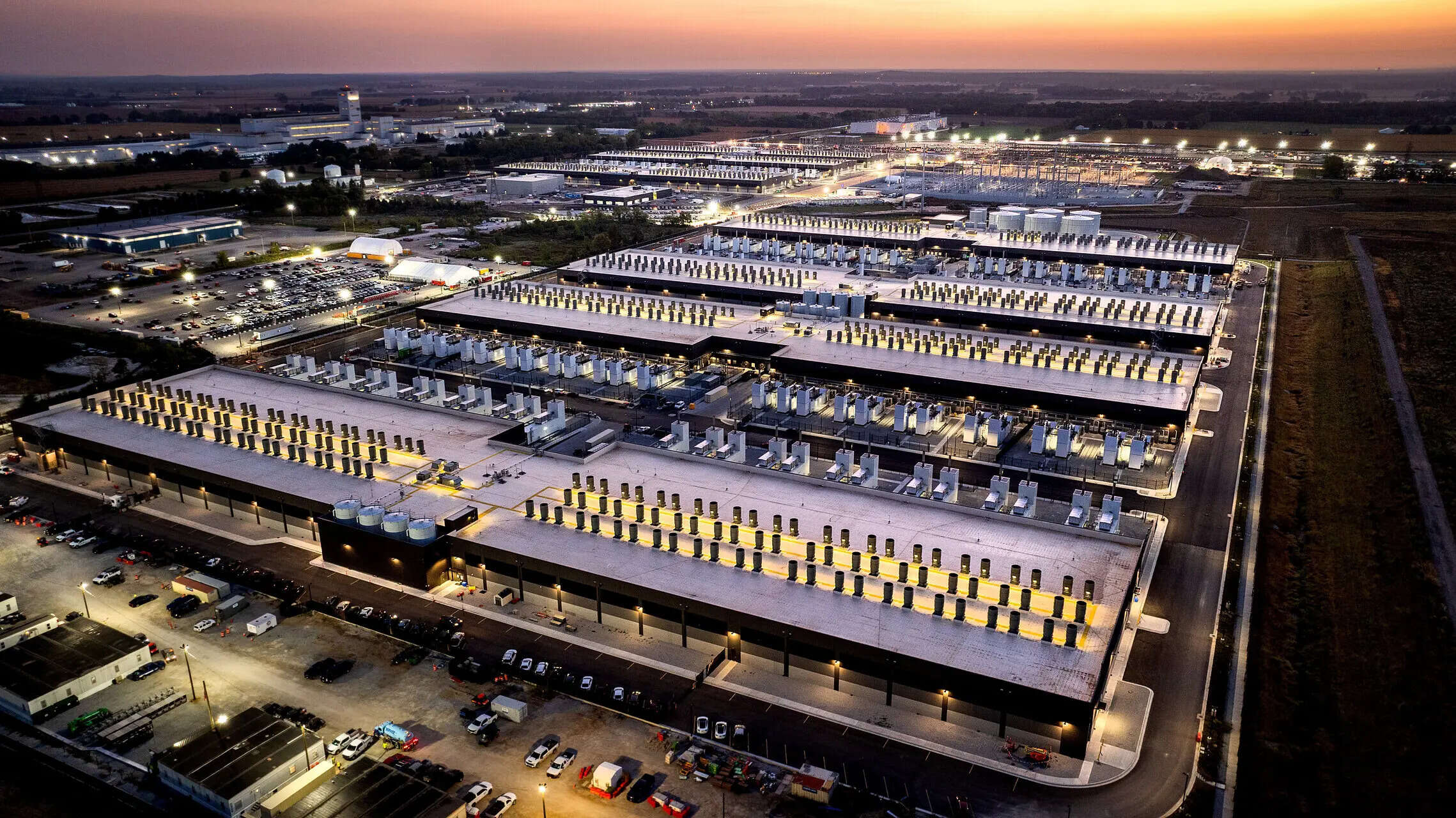
AWS Data Center

IMAGE DISTRIBUTED FOR AWS – An Amazon Web Services AI data center is pictured in New Carlisle, Ind., on Friday, Oct. 3, 2025. (Noah Berger/Amazon Web Services via AP Images)

But the connection runs deeper than that. Private credit is not only financing companies that might be displaced by AI, it is also financing the infrastructure that AI depends on. The data centres, the semiconductor supply chains, the physical computing architecture that makes large-scale AI possible have been built largely on private loans. The companies doing that building, Google, Microsoft, and a handful of others, are the same companies that now dominate the public stock market. Bookstaber describes it as a single network of money and expectations, approached from different directions at the same time. “The weakening of private credit,” he writes, “strains the AI investments of the tech Goliaths, which in turn threatens the stock portfolios, the retirements and the pensions of tens of millions of people.”

Stock market concentration: When ten competing companies hold a third of everything

The third risk concerns the structure of the stock market itself. The AI boom has driven extraordinary investment into a small group of dominant technology companies, inflating their valuations to a degree that has produced a level of market concentration that Bookstaber describes as historically unprecedented. Ten competing companies’ stocks in the same industry now account for more than a third of the total value of the S&P 500. the index tracking the five hundred largest publicly listed companies in the United States, which serves as the primary benchmark for the health of the American stock market and the basis for the retirement savings and pension funds of tens of millions of people.

US Tech Companies

The biggest US tech and AI companies in the S&P 500, often dubbed the “Magnificent Seven.”

“That level of concentration is unprecedented, and dangerous,” Bookstaber writes, “because it means a shock to any one of these companies can ripple across the entire market rather than be absorbed by it.” In a more distributed market, a single company’s difficulties are absorbed by the diversification of the index around it. In a market where ten companies represent a third of all value, a serious shock to any one of them spreads through the entire system.
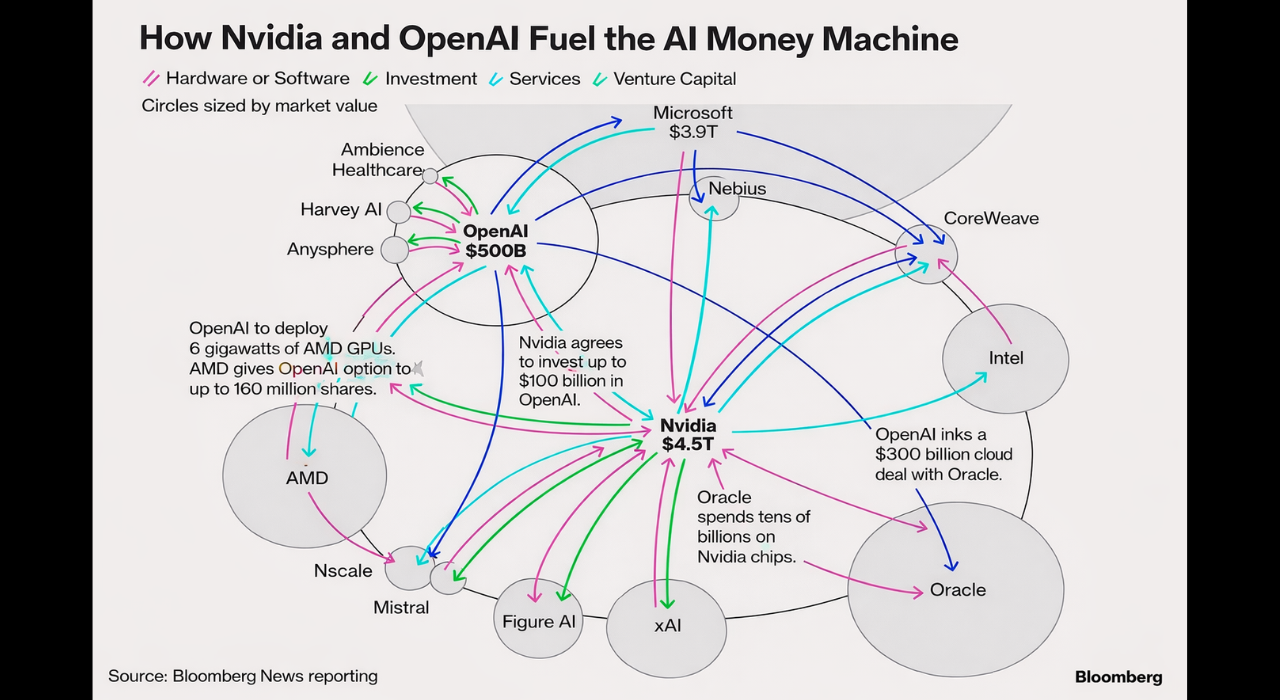
AI Boom Circular Economy

Source: Bloomberg News, “OpenAI, Nvidia Fuel $1 Trillion AI Market With Web of Circular Deals”

Bookstaber also describes a specific mechanism that is worth understanding. If conditions deteriorate and investors in private credit funds need to raise cash quickly, to meet redemptions, to cover losses elsewhere, they will attempt to sell their private credit holdings. But because those holdings are illiquid and difficult to sell, they will instead sell what they can sell easily: large, publicly traded technology stocks. The very stocks that dominate the S&P 500. The act of raising cash in one part of the system triggers a sell-off in another, and the market falls not because anything has gone wrong with the technology companies themselves but because they happen to be the most liquid assets available when someone elsewhere needs money fast. This is precisely the mechanism that made 2008 so destructive, the forced selling of assets not because they were necessary bad but because they were sellable.

Geopolitical disruption: When the physical world enters the financial system

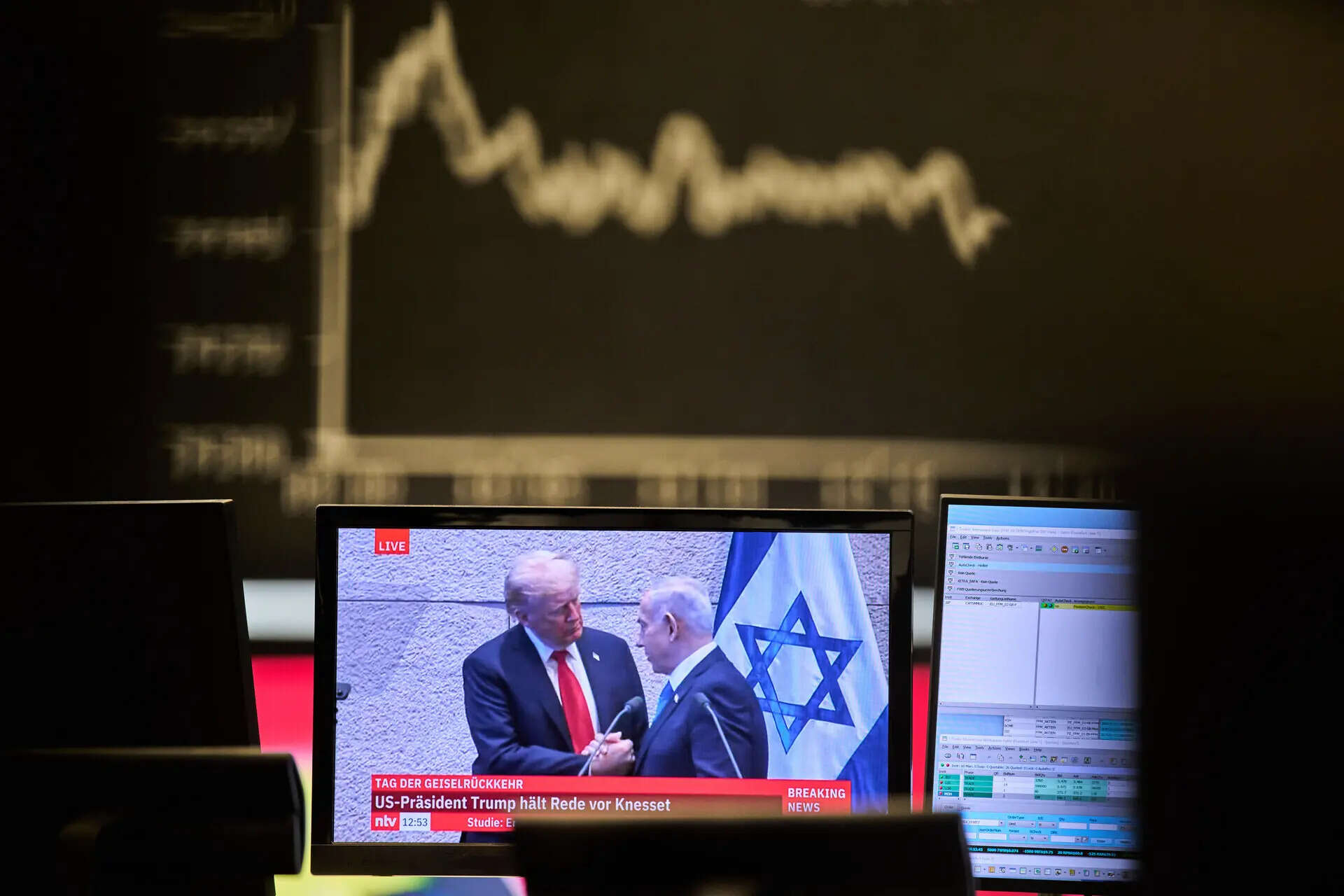
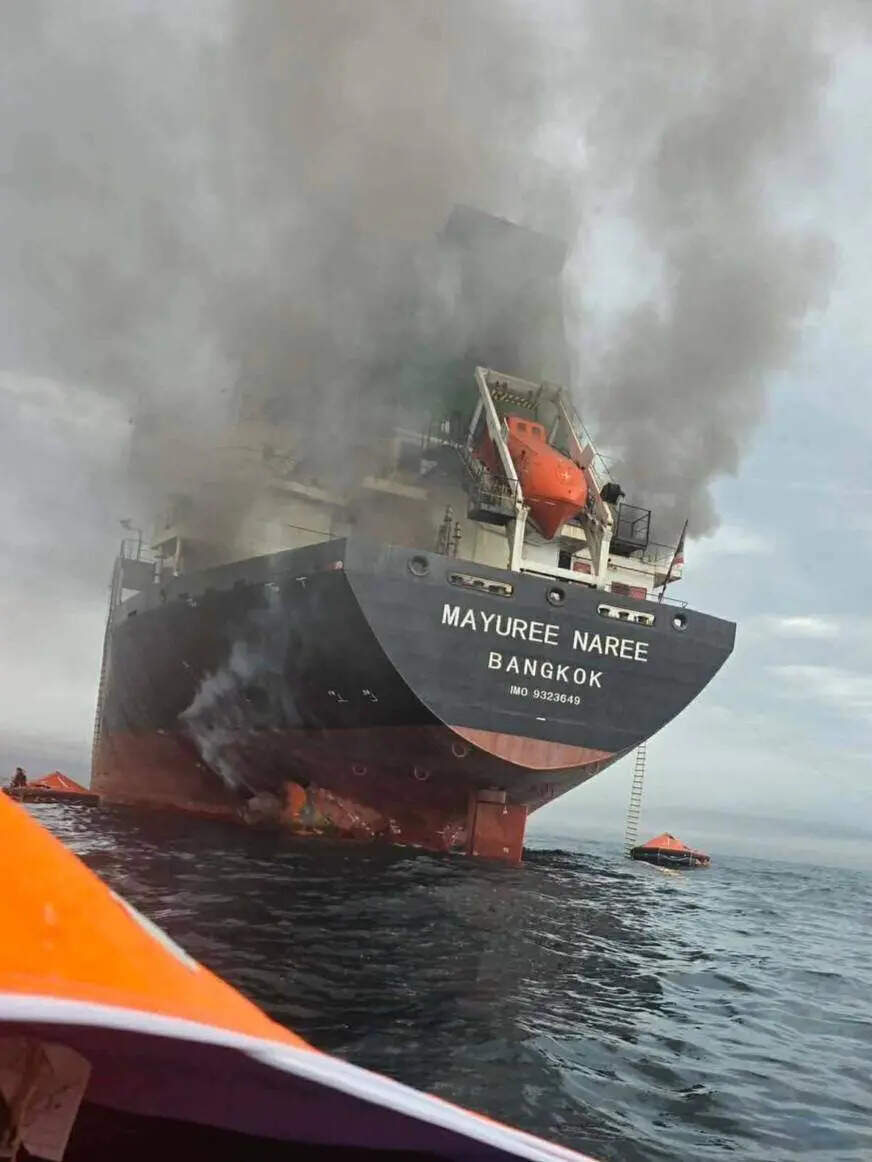
The fourth risk is where Bookstaber’s argument moves furthest, and where he believes the current moment is most distinct from 2008. He argues that the risks this time stem primarily from the physical world rather than finance, and markets lack reliable tools to read those risks before they cause damage. Iran is the immediate example. The conflict involving the United States and Israel has already spiked energy prices. For most industries, higher energy costs are a manageable burden. For AI, they are a structural vulnerability, data centres consume electricity at enormous scale, and any sustained disruption to energy supply or a significant increase in its cost directly raises the operating expenses of the technology companies at the centre of the market. Those costs then flow through into private credit and stock market valuations. A military conflict in the Middle East becomes, through this chain, a risk to the retirement savings of Americans who have never thought about the connection.
Trump Mideast Wars Gaza

A television screen shows US President Donald Trump and Israel’s President Benjamin Netanyahu shaking hands at the Knesset, in front of the German stock index DAX at the stock market in Frankfurt, Germany, Monday, Oct. 13, 2025 (AP Photo/Michael Probst)

Taiwan represents a different but related exposure. The island is responsible for manufacturing the most advanced semiconductor chips in the world, the physical hardware without which frontier AI cannot function. If China were to invade or blockade Taiwan, Bookstaber writes, “America’s access to semiconductors would be severely limited. That would immediately slow deployment of AI, weakening the companies driving the AI boom, with the inevitable knock-on effects.” The entire AI-driven stock market boom rests, at its physical base, on a supply chain running through a strait that two of the world’s largest militaries are actively contesting.
What to know about the Strait of Hormuz, a key passageway essential for global energy supply

This image released by the Royal Thai Navy shows Thai cargo ship, Mayuree Naree, that was struck and set ablaze in the Strait of Hormuz Wednesday, March 11, 2026. (Royal Thai Navy via AP)

Bookstaber writes that “this time, the danger isn’t financial engineering. It’s that our financial system has attached itself to the vulnerabilities of our physical world — power grids, water, land, supply chains and created hazards that markets have no framework to analyze.” The models that financial institutions use to assess and manage risk, focus on prices, volatility, and correlations between assets, he argues, offer no instruments for reading a grid failure, a drought, or a severed supply chain. “By the time warning signs show up in market data,” he writes, “the damage will already have been done.”

Why this time could be worse

In 2008, the danger lived inside the financial system. It was painful, it was destructive, and it required massive government intervention to contain, but it was ultimately a financial problem, and financial tools existed to address it. What Bookstaber is describing now is different. The risks are physical. AI’s dependence on energy and semiconductors, Iran’s proximity to critical supply chains, Taiwan’s chokehold on the chips the entire technology industry runs on, none of these can be resolved by a central bank or a bailout package. “Our current financial system fails not because any one thing goes wrong,” he writes. “It fails because different shocks propagate through the same structure and in ways that are hard to anticipate. When something eventually goes wrong, it spreads faster than it can be contained.” “I’d take financial risk any day,” he concludes. “Financial risk moves prices. Physical risk moves the world.”

Source link

उत्तराखंड: कैबिनेट विस्तार के बाद पहली कैबिनेट बैठक आज, कई प्रमुख प्रस्तावों पर लिए जाएंगे फैसले

अमर उजाला ब्यूरो, देहरादून

द्वारा प्रकाशित: अलका त्यागी

अद्यतन बुधवार, 25 मार्च 2026 05:56 पूर्वाह्न IST

कैबिनेट बैठक में शिक्षा, स्वास्थ्य, शहरी विकास, उद्योग और कर्मचारियों से जुड़े प्रस्तावों पर चर्चा होगी.


विस्तार के बाद उत्तराखंड की पहली कैबिनेट बैठक आज, कई प्रमुख प्रस्तावों पर होंगे फैसले

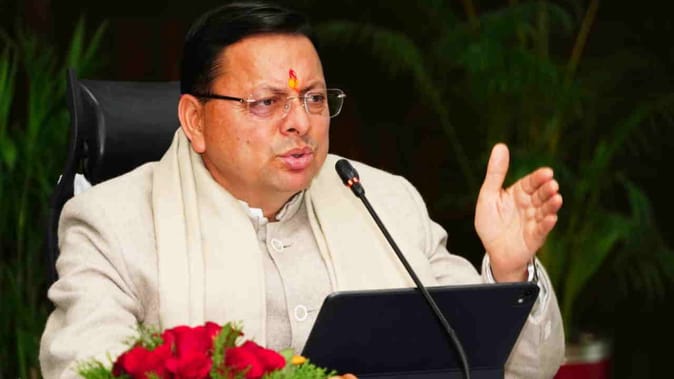
सीएम धामी
– फोटो: जानकारी


विस्तार

कैबिनेट विस्तार के बाद बुधवार को मुख्यमंत्री पुष्कर सिंह धामी की अध्यक्षता में पहली कैबिनेट बैठक होगी. चर्चा के बाद कैबिनेट में कई अहम फैसले लिए जाएंगे. बैठक सचिवालय में सुबह 10 बजे शुरू होगी, जिसमें शिक्षा, स्वास्थ्य, शहरी विकास, उद्योग और कर्मचारियों से जुड़े प्रस्तावों पर चर्चा होगी.

ट्रेंडिंग वीडियो

देहरादून: सीएम ने रेस्टोरेंट पहुंचकर लिया गैस आपूर्ति का जायजा, कहा- एकजुटता से करना होगा चुनौती का मुकाबला


Source link

‘They’re doing the sensible thing’: Trump says Iran has ‘agreed not to have nuclear weapons’

'They're doing the sensible thing': Trump says Iran has 'agreed not to have nuclear weapons'

US President Donald Trump said Iran has agreed it will “never have a nuclear weapon”, while fighting continues in the region and Tehran has publicly denied that formal talks are underway.Speaking to reporters in the Oval Office on Tuesday, Trump expressed confidence that diplomatic efforts were gaining momentum after nearly a month of war. He said, “The fact is that they are talking to us and they are talking intelligently. It all starts with this: They can’t have nuclear weapons. They said, what are the top 10? I said, No. 1, 2 and 3 is that they can’t have nuclear weapons… They have agreed that they will never have nuclear weapons.”

Watch

Iran Quagmire explained: Trump’s 3 options have been exhausted – only insults await? | Watch

Trump also claimed that Iran had sent a “huge gift” linked to the Strait of Hormuz, calling it a sign that the US was “dealing with the right people”. He did not elaborate on the nature of the move, but linked it to broader efforts to reopen the vital oil shipping route that has been disrupted during the conflict.The President said that America is in a strong position for negotiations. He said, “We’ll have control over whatever we want. If we can end this without any more lives being lost… I would like to be able to do that. They can’t have some things. It starts with no nuclear weapons and they’ve agreed to that.”Despite Trump’s optimism, Iranian officials have rejected claims that talks are taking place. Tehran has instead struck a defiant tone, saying it will continue fighting “until complete victory”, even as international mediation efforts are gaining momentum.Pakistan has emerged as a potential mediator, with Prime Minister Shehbaz Sharif offering to host the talks. Trump acknowledged that several senior figures were involved in the outreach efforts, including Vice President J.D. Vance, Secretary of State Marco Rubio, envoy Steve Witkoff and advisor Jared Kushner.Reports suggest Washington has presented a 15-point proposal that would impose strict limits on Iran’s nuclear program, including ending uranium enrichment and transferring enriched material. In return, sanctions relief and assistance to civilian nuclear energy projects could be offered, as well as guarantees to keep the Strait of Hormuz open.There are also indications that a temporary ceasefire could be considered to make room for negotiations, although no formal agreement has been confirmed.

Even when talks are discussed, war intensifies

On the ground, the conflict shows no signs of abating. Israeli strikes have targeted allied targets throughout Iran and the region, while Iranian missiles and drones have attacked Israel and neighboring countries.The United States is also increasing its military footprint, with the 82nd Airborne Division expected to deploy about 1,000 troops to join the thousands of Marines already headed to the Middle East. The build-up has fueled speculation that Washington is preparing contingency plans even as it pursues diplomacy.At the same time, the Strait of Hormuz remains a focal point of talks, with the disruption sending global oil prices soaring and raising concerns about macroeconomic consequences.

Source link

HC rejects Lalu’s plea to cancel FIR regarding land in exchange for job. india news

HC rejects Lalu's plea to cancel FIR regarding land in exchange for job

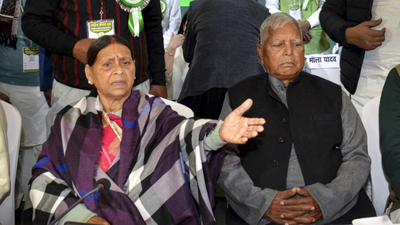
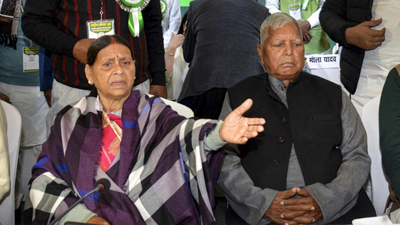
New Delhi: A blow to RJD Chief and former Railway Minister Lalu According to Prasad, the Delhi High Court on Tuesday refused to quash the CBI case in the alleged railways-for-jobs land scam involving him and his family.Justice Ravinder Dudeja rejected Lalu’s argument that the FIR under Section 17A of the Prevention of Corruption Act was not sustainable as the law was introduced in 2018 while the allegations date back to 2004-2009.The case pertains to the alleged transfer of land parcels at cheap rates to Lalu and his family in exchange for appointments in the Railways when he was the Railway Minister. news network

Source link

पहले चाकू से गोदा, फिर गोली मारकर किया अंजाम…मुजफ्फरनगर में युवक की खौफनाक हत्या.

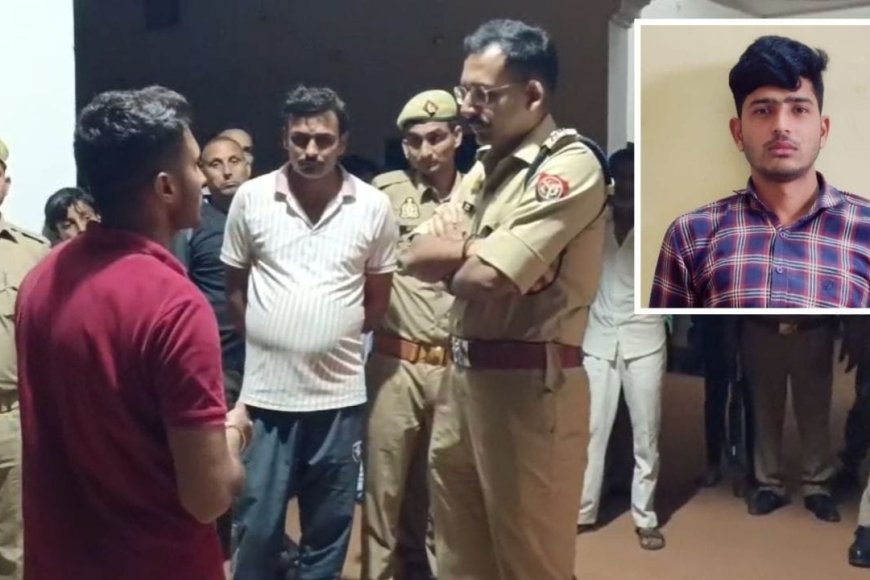
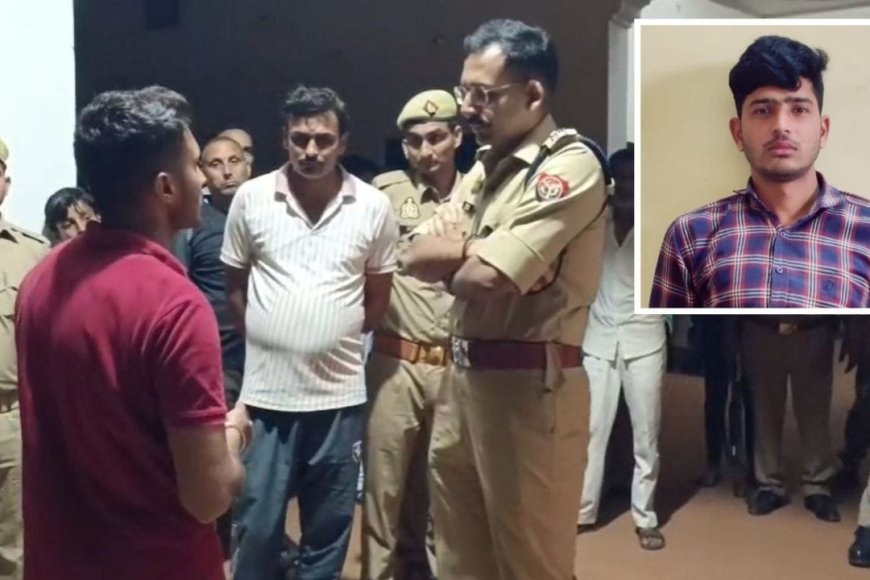
उत्तर प्रदेश समाचार: उत्तर प्रदेश के मुजफ्फरनगर में एक दिल दहला देने वाली घटना सामने आई है, जहां 27 साल के एक युवक की बेरहमी से हत्या कर दी गई. बताया जा रहा है कि युवक का एक शादीशुदा महिला से अफेयर था, जिसके चलते महिला के परिवार वालों ने उस पर हमला कर दिया. घटना के बाद इलाके में सनसनी फैल गई है. सूचना मिलते ही पुलिस मौके पर पहुंची और फोरेंसिक टीम के साथ जांच शुरू की। शव को कब्जे में लेकर पोस्टमार्टम के लिए भेज दिया गया है, वहीं परिवार में मातम छा गया है.

धारदार हथियार से हमला किया, फिर गोली मार दी
यह घटना भोपा थाना क्षेत्र के गांव शाहदरा बांगर की है. सोमवार की रात युवक अक्षय खेत से घर लौट रहा था, तभी गांव के ही मनोज, युवांक और वरद ने उसे घेर लिया. आरोप है कि पहले उस पर धारदार हथियार से हमला किया गया और जब उसने भागने की कोशिश की तो आरोपियों ने उसे गोली मार दी. घटना को अंजाम देने के बाद सभी आरोपी मौके से फरार हो गये.

प्रेम प्रसंग बना विवाद का कारण
मिली जानकारी के अनुसार मृतक अक्षय का गांव की एक शादीशुदा महिला से प्रेम प्रसंग था. जब इस बात की जानकारी महिला के परिवार को हुई तो घर में तनाव बढ़ गया. बताया जा रहा है कि कुछ महीने पहले महिला ने जहरीला पदार्थ खाकर आत्महत्या कर ली थी. तभी से महिला के घरवाले अक्षय से नाराज थे और उसे नुकसान पहुंचाने की योजना बना रहे थे.

परिजनों ने पूरी घटना बताई
मृतक के भाई ने बताया कि उसका भाई खेत से गन्ना लेकर घर लौट रहा था, तभी रास्ते में घेरकर उस पर हमला किया गया. पहले उस पर धारदार हथियार से हमला किया गया और जब उसने जान बचाकर भागने की कोशिश की तो उसे गोली मार दी गई. परिवार ने आरोपियों के खिलाफ कड़ी कार्रवाई की मांग की है और कहा है कि उन्हें कड़ी सजा दी जानी चाहिए.

जांच में जुटी पुलिस, आरोपियों की तलाश जारी
घटना की जानकारी मिलते ही पुलिस और वरिष्ठ अधिकारी मौके पर पहुंचे और जांच शुरू की. एसपी ग्रामीण आदित्य बंसल ने बताया कि यह मामला पारिवारिक विवाद और प्रेम प्रसंग से जुड़ा है. पुलिस ने आरोपियों की गिरफ्तारी के लिए टीम गठित कर दी है और जल्द ही सभी को गिरफ्तार करने का दावा कर रही है.

Source link