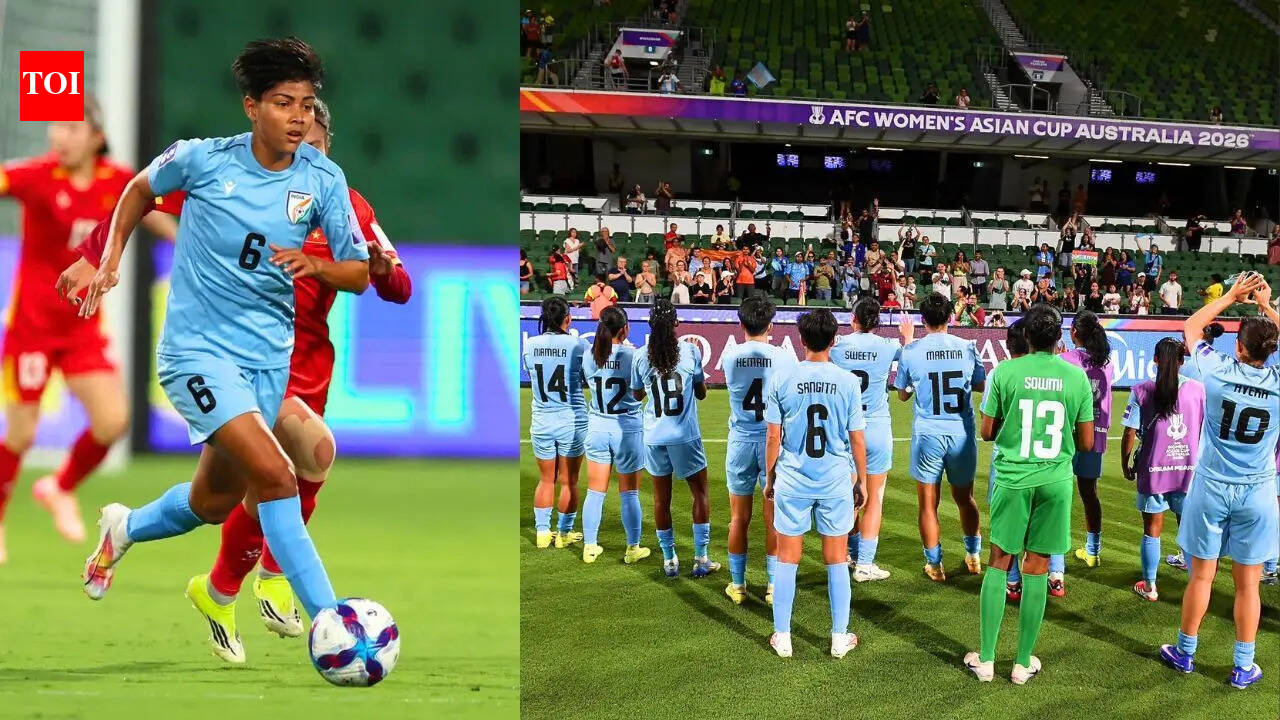
New Delhi: The road to the 2026 AFC Women’s Asian Cup in Australia was supposed to be the moment when Indian women’s football would finally come out of the shadows and take the much-awaited leap forward. With six World Cup spots at stake, the Blue Tigresses felt the pulse of history beneath their studs. Instead, the campaign, with three defeats in three games, could be described as a sequence of administrative gambles followed by heartbreak on the field, leaving players to pick up the pieces of a shattered dream.Sangeeta Basfour, a midfield general who saw the nightmare up close while playing all three matches in the tournament earlier this month, tries to hide the deep collective grief behind the rhetoric of professional development.
Watch
EXCLUSIVE: Where did India go wrong in the Women’s Asia Cup? Aditi Chauhan decodes
“None of us are satisfied with our performance because the results did not go our way,” he said in an exclusive interview with TimesofIndia.com. “The coach had a lot of expectations from me. But personally, I feel I couldn’t give my best or support the team the way I should have… but to play on such a big stage against top players. That in itself was a big achievement for us.”
An approach that left more questions than answers
The unrest in Perth began long before the opening whistle. In a move that surprised many observers, the All India Football Federation (AIFF) opted for the overseas-better approach just weeks before the tournament. He demoted home coach Crispin Chhetri, who had orchestrated the famous qualification win over Thailand, to an assistant role. In his place came Costa Rican tactician Amelia Valverde, who had two World Cup qualifications on her resume, and signed a frantic, short-term two-month contract.On paper the preparations looked seamless as the team spent nearly 40 days in Antalya, Turkey to test themselves against European clubs.
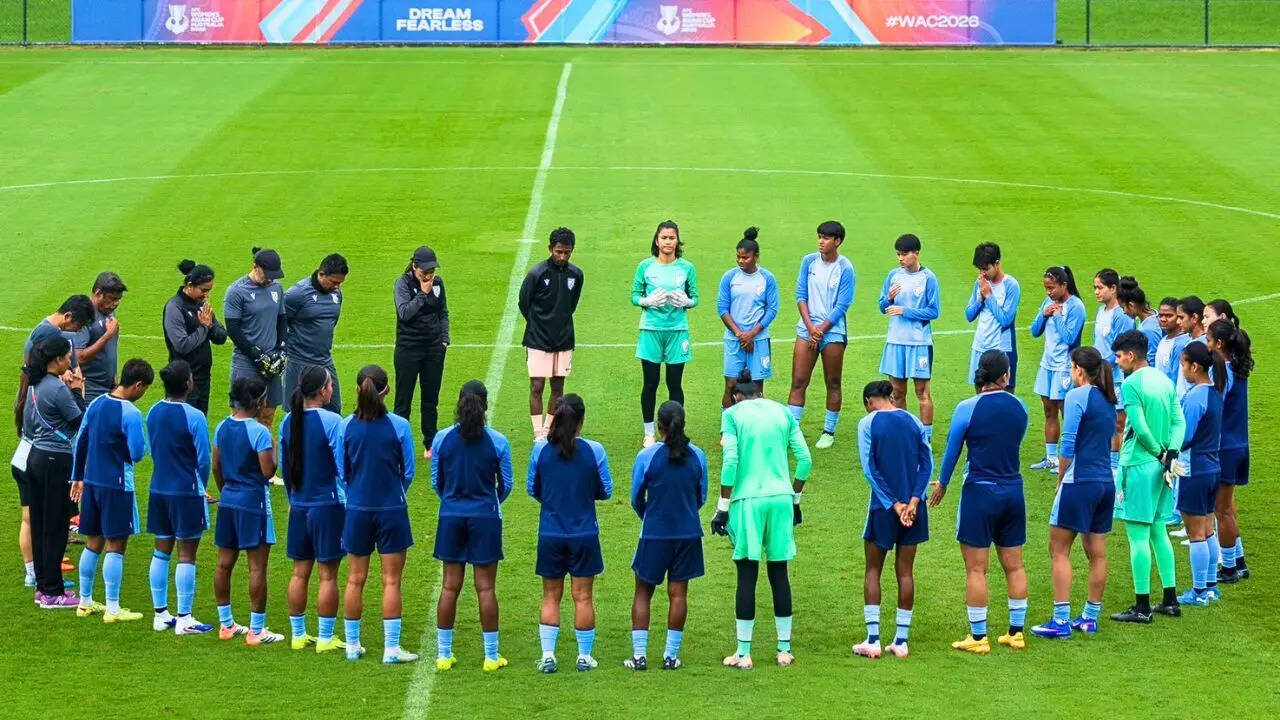
Team India in the crowd (Photo by @IndianFootball on X)
Basfour recalled, “Honestly, our preparation was very good.” “We played against teams from Ukraine and Russia… against Champions League-level club teams. We won almost every match.” But as the team moved from the Mediterranean air of Türkiye to the high-pressure pressure of Australia, cracks began to appear.“As the matches were getting closer, we were getting more excited but also a little nervous. Until we played the first match, we couldn’t really predict how our performance would be. No matter how much you prepare, there is always uncertainty on such a big stage,” the 29-year-old admitted. “We became more serious after the first match. We still regret that we feel like our World Cup opportunity was taken away from us.”
a coaching carousel
The AIFF have confirmed that they will not be extending Valverde’s contract, showing that their stop-gap solution to success has become useless.According to several reports, his short-lived tenure was marred by tactical instability, with the AIFF Technical Committee recently describing his tenure as “disappointing”. He cycled through three different formations in three group games. The results on the field were disastrous, including three defeats, zero points and a crushing 11–0 defeat at the hands of eventual champions Japan.
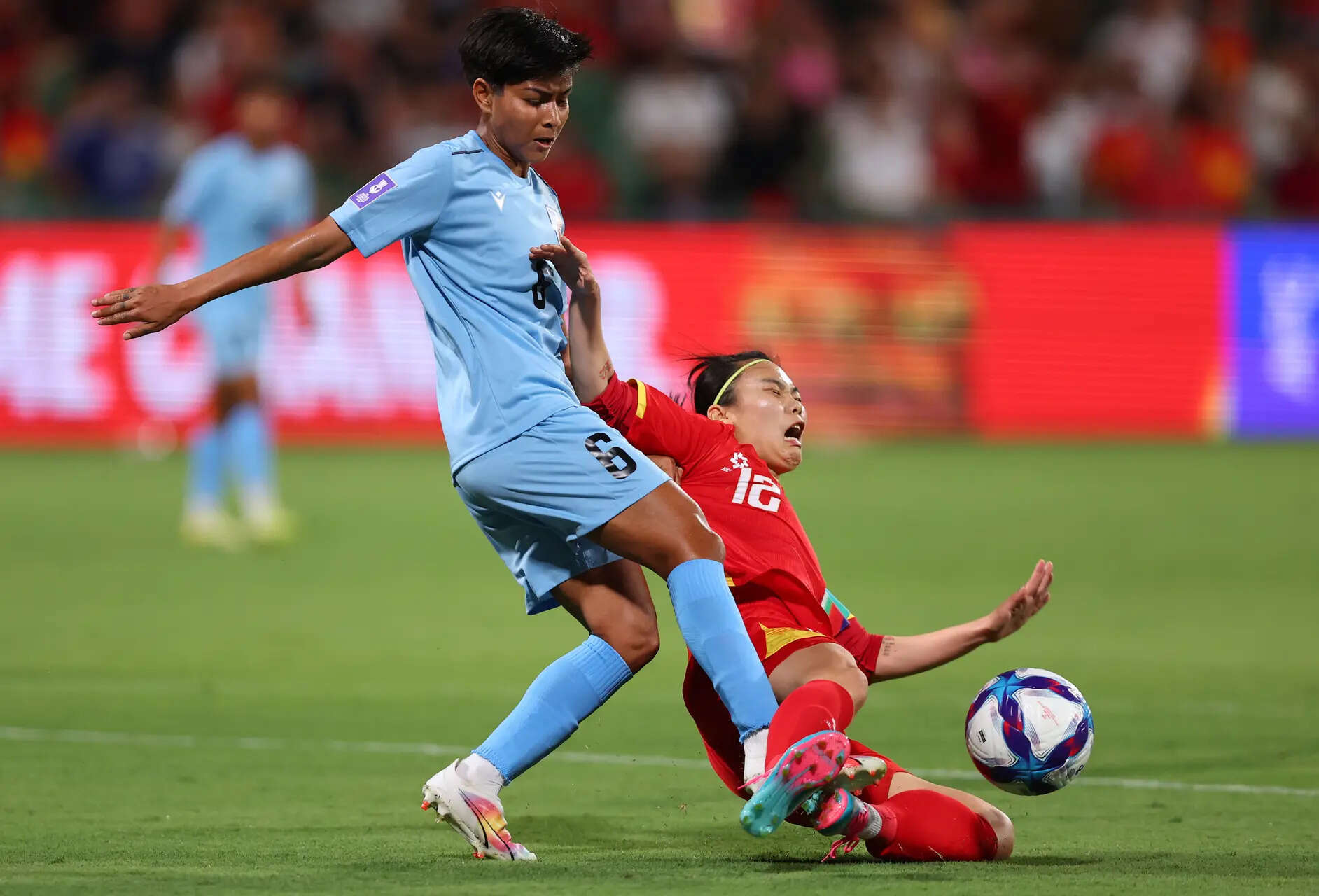
Sangeeta Basfour of India (Photo by Paul Kane/Getty Images)
Basfour feels there was little time for Valverde. “She’s a very good coach. “If she had more time with us, she would have understood us even better,” the West Bengal-born midfielder told this website. But he still tried and talked to everyone, motivating us both on and off the field. There wasn’t really any problem.”Despite the 11–0 scoreline against Japan, Basfour refused to accept that the margin was too big for Indian football. Looking at her other opponents, Vietnam and Chinese Taipei, she insists the difference was not quality, but execution and perhaps a little luck. “If you look at teams like Vietnam or Chinese Taipei, there is no big difference. We could have done better. We fought hard as a team. We were also unlucky, many of our shots hit the post,” he admitted.“If we had a longer camp and played more friendly matches, it would have helped.”
What’s next?
The road to salvation now leads to Nairobi. In April 2026, the Blue Tigresses will take part in the FIFA series, facing hosts Kenya at the Nyayo National Stadium. It is a chance to overcome various opposition including Malawi and the Australian side which recently hosted the continental crisis.
It would have helped if we had a longer camp and played more friendly matches.
Sangeeta Basfour, India women’s national team midfielder
There is optimism, however, tempered by appeals for structural change. For Basfour, the nightmare in Australia was not just about tactical formations or foreign versus domestic coaches; It was about the daily reality of Indian sports. Also read: $256K, what’s next for Nepal? Competitive cricket, infrastructure boost and a helping hand from India“Improving grassroots development and extending the duration of the women’s league will help a lot,” she said.“When players go back home, they don’t always get proper training or facilities. If the league runs longer, the players will improve and the national team will perform better.”