National Maritime Day: India’s oil lifeline churns through conflict waters | India News
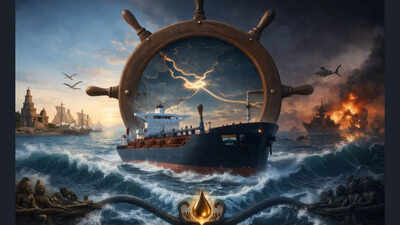
National Maritime Day: India's oil lifeline churns through conflict waters

On National Maritime Day, when India pauses to mark the historic voyage of its first modern merchant ship and celebrate a legacy that stretches back to ancient seafarers, the focus is usually on pride. This year, however, it may also be a moment to look harder at the seas that sustain it. In many ways, the turbulence in global sea lanes resembles a modern samudra manthan, a churning of the oceans where both risk (poison) and opportunity (nectar) surface together, testing how nations respond.

Watch

Indian Navy Boosts Nuclear Deterrence With INS Aridhaman Submarine, Enforces Undersea Strike Power

The churn is no longer distant as the circumstances are edged with urgency. Far from ceremonial speeches and commemorative events, India’s maritime reality is unfolding in some of the world’s most volatile waters, where tankers and cargo ships navigate not just distance but danger! The challenge is not only to shield these lifelines, but to turn this churn into advantage, extracting strategic and economic gains from a crisis that cannot be wished away.On most days, India’s economic heartbeat is invisible. It does not pulse through stock exchanges or policy corridors but across vast, restless waters where ships move quietly between continents. Yet, when conflict erupts in narrow choke points like the Strait of Hormuz, that invisible system becomes the country’s most visible vulnerability.
Five Pillars & Subcategories of the Sagarmala Programme6

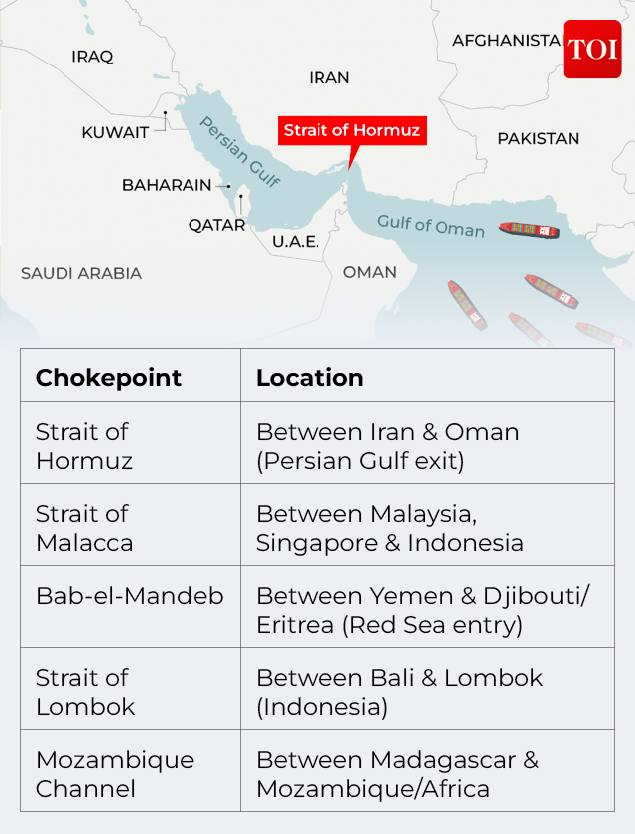
Major chokepoints

The ongoing tensions have done exactly that, forcing India to confront a reality it has long managed but rarely foregrounded.Its growth, its energy security and its strategic autonomy are all tied to sea lanes that run through some of the most volatile regions on the Earth.A narrow strait that powers a giant economyThe Strait of Hormuz is not just another maritime passage. It is the artery through which nearly a fifth of the world’s oil flows, and for India, its importance is even more acute. Around 80 per cent of India’s energy imports pass through this corridor, making it a single point of failure for a country that is among the world’s largest energy consumers. The recent escalation involving Iran, Israel and the United States has demonstrated how quickly this artery can constrict.
Five Pillars & Subcategories of the Sagarmala Programme5

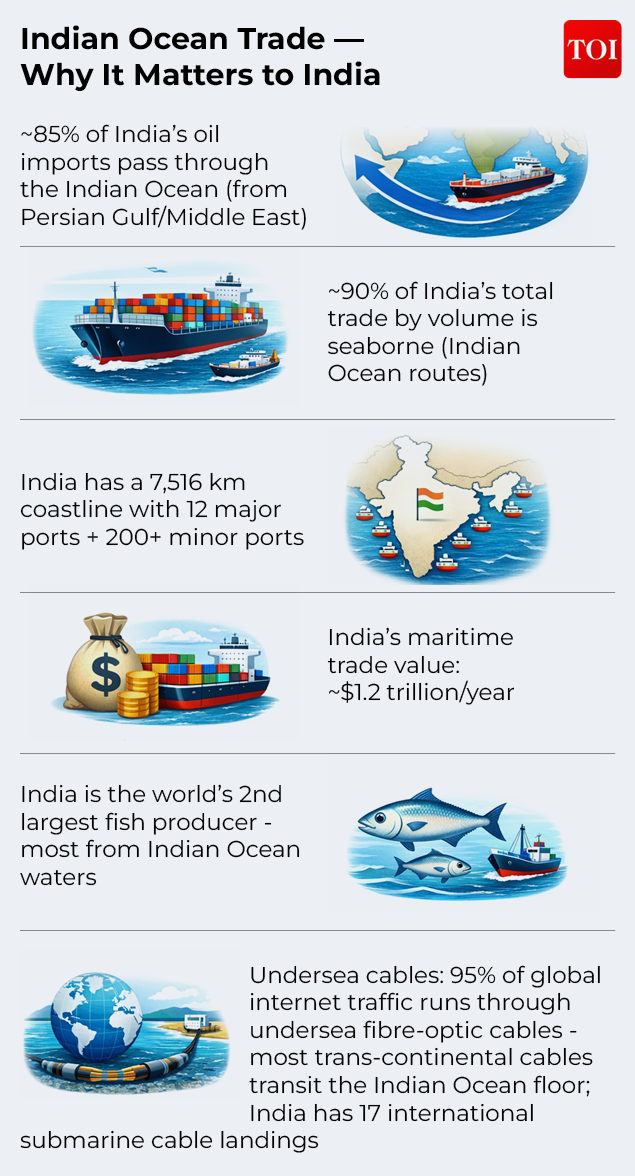
Importance of Indian ocean

Tanker traffic has slowed, vessels have been stranded and insurance costs have surged. For India, this has translated into immediate concerns over supply disruptions, rising crude prices and broader macroeconomic stress.The numbers strikingly reflect the scale of exposure. India imports more than 85 per cent of its crude oil and a significant share of its natural gas. Nearly half of that crude and over 60 per cent of LNG and LPG have historically moved through Hormuz. This is not just an energy issue but a systemic one. When oil flows are disrupted, inflation rises, the rupee weakens and industrial costs climb.Operation Sankalp and the navy’s silent watchAs tensions escalated, India responded not just through diplomacy but through deployment. Under Operation Sankalp, Indian naval warships have been maintaining a constant vigil in the Gulf region, escorting merchant vessels and ensuring safe passage through high-risk waters.At any given moment, dozens of Indian seafarers and vessels operate in and around the Persian Gulf. During the current crisis, several India-bound ships carrying crude oil and LPG were stranded or forced to alter routes. The navy’s role has been to provide a security umbrella, deterring threats ranging from missile strikes to drone attacks.The deployment of advanced warships such as INS Surat reflects a broader shift in India’s maritime posture. The navy is no longer confined to coastal defence. It is increasingly tasked with protecting sea lines of communication that stretch from the Gulf of Aden to the western Pacific.Trade rides the wavesEnergy is only one part of the story. Nearly 95 per cent of India’s trade by volume moves by sea. From crude oil and LNG to coal, fertilisers and electronics, the country’s economic lifeline is maritime.The Strait of Hormuz is central to this network, but it is not the only chokepoint. The Red Sea and the Suez Canal form another critical corridor linking India to Europe. Disruptions in these regions create a double vulnerability, forcing ships to take longer routes around the Cape of Good Hope, increasing costs and delays.
Five Pillars & Subcategories of the Sagarmala Programme8

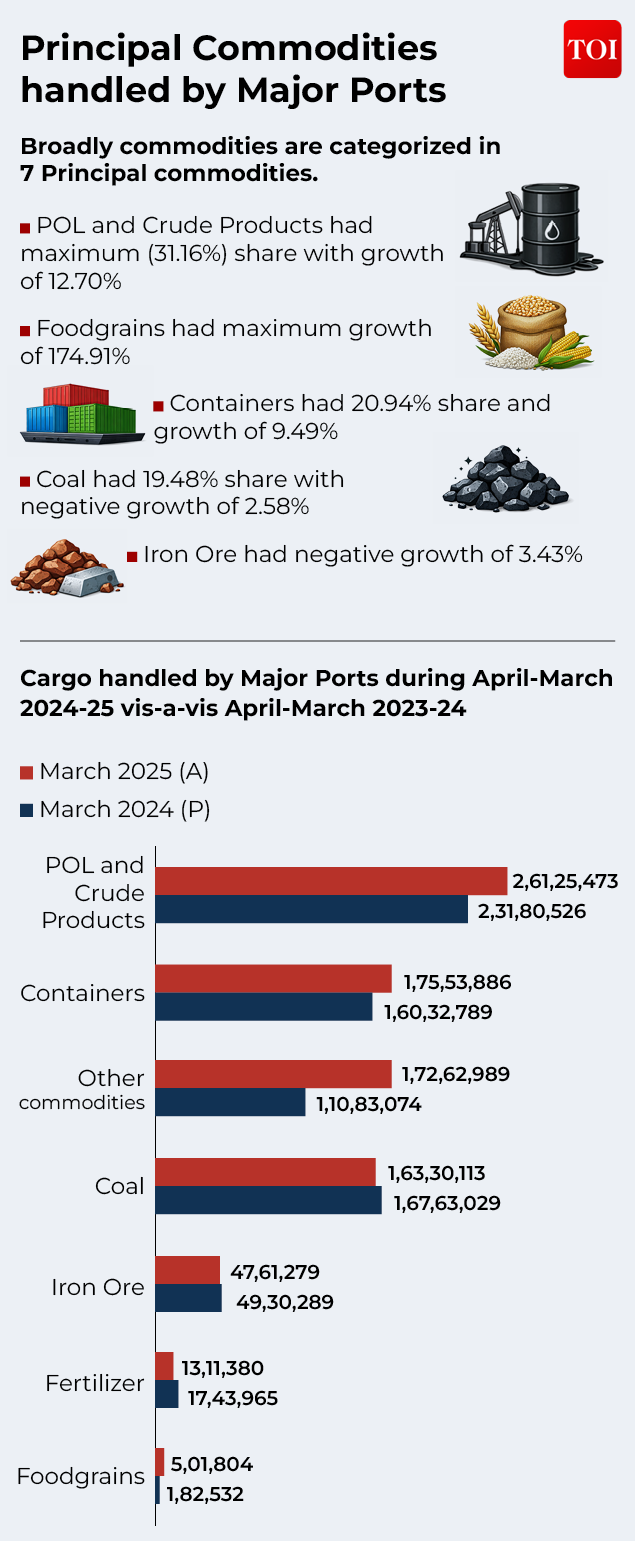
Principal commodities handled by major ports

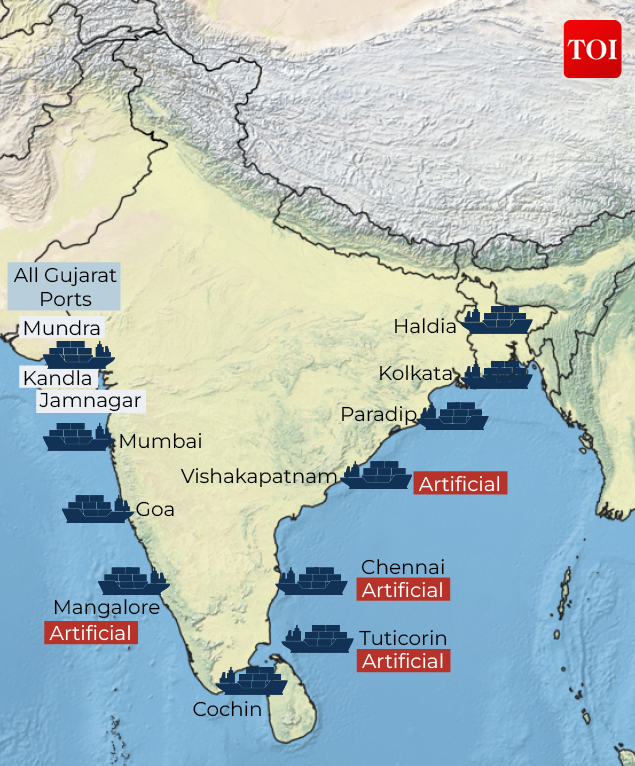
India’s trade exposure to Gulf economies is also significant. About 16 per cent of its total trade is linked to this region, making any disruption not just an energy crisis but a broader economic challenge.Ports as gateways to prosperityIndia’s coastline stretches over 7,500 kilometres and hosts a network of major and minor ports that serve as gateways to global trade. Ports such as Mumbai, Kandla, Visakhapatnam, Chennai and Kochi handle millions of tonnes of cargo every year.
Five Pillars & Subcategories of the Sagarmala Programme2

Ports in India

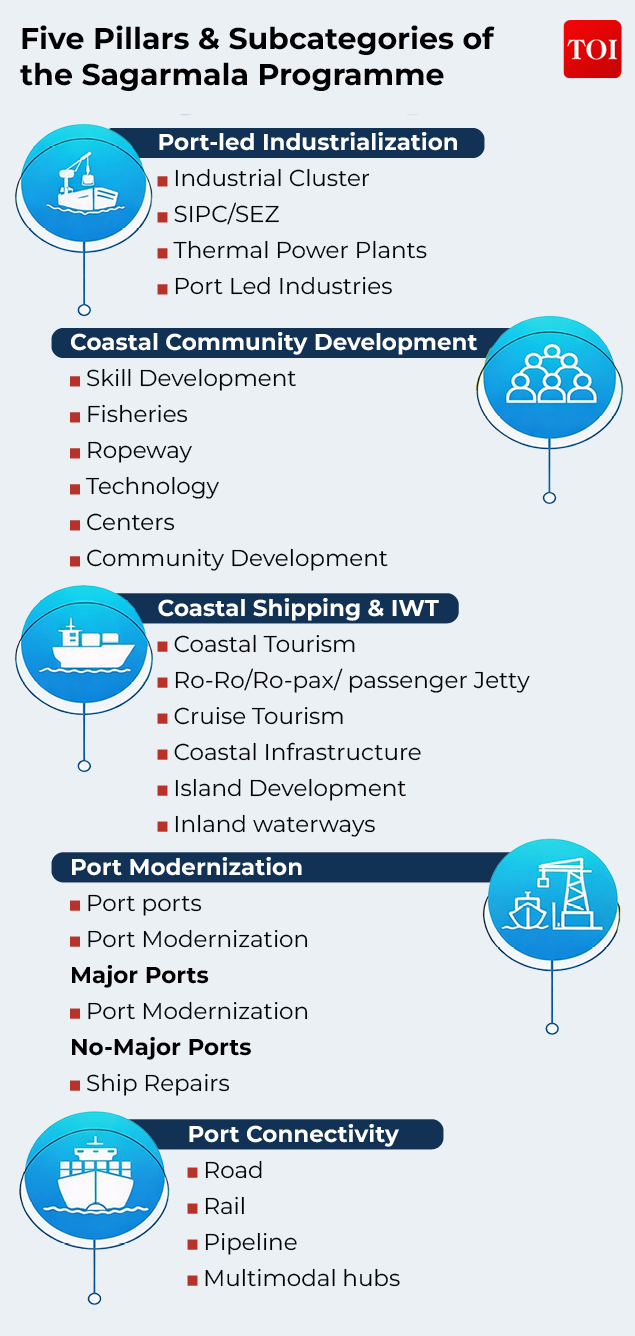
Each port has its own specialisation. Western ports like Kandla and Mumbai handle large volumes of crude oil and petroleum products due to their proximity to the Gulf. Eastern ports such as Paradip and Visakhapatnam are crucial for coal and mineral exports. Southern ports like Chennai and Tuticorin play a key role in container traffic and industrial goods.The principal commodities moving through these ports reflect the structure of India’s economy. Crude oil, LNG, coal, iron ore, fertilisers and containerised goods dominate the cargo mix. This heavy reliance on imported energy and raw materials further amplifies the importance of secure maritime routes.Government initiatives such as Sagarmala aim to modernise ports, improve connectivity and reduce logistics costs. While these efforts enhance efficiency, they do not eliminate the risks posed by external chokepoints like Hormuz.
Five Pillars & Subcategories of the Sagarmala Programme

Sagarmala Programme

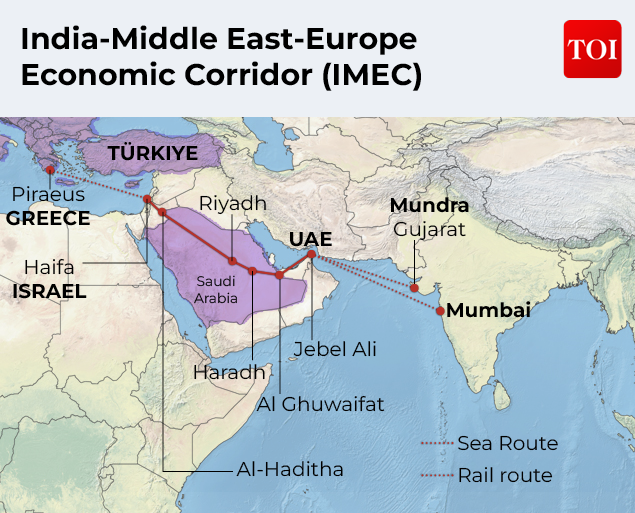
The IMEC factor and the search for alternativesThe India-Middle-East-Europe Corridor (IMEC) has emerged as a strategic response to some of these vulnerabilities. By combining maritime and overland routes, it aims to create an alternative pathway linking India to Europe through the Middle East.The corridor is significant not just for trade but for geopolitics. It reduces dependence on traditional routes and offers a framework for deeper economic integration with Gulf and European partners. However, it is not a complete substitute for existing sea lanes. Maritime routes will continue to dominate due to their scale and cost efficiency.
Five Pillars & Subcategories of the Sagarmala Programme3

IMEC

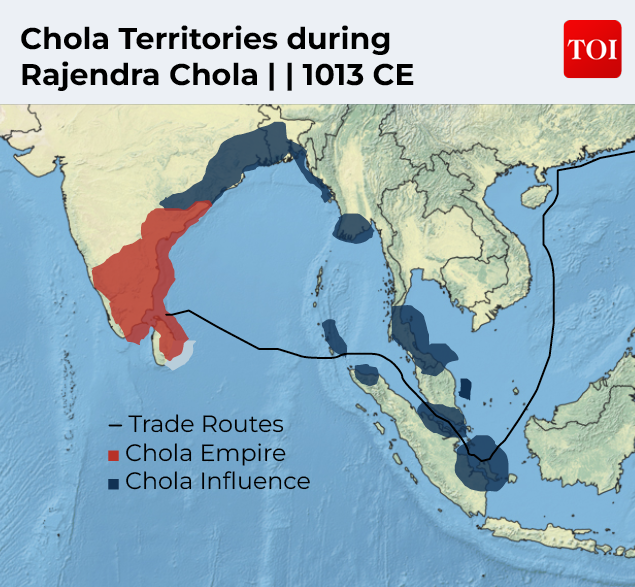
What IMEC does offer is redundancy. In a world where chokepoints can be disrupted by conflict, having multiple pathways becomes a strategic necessity rather than a luxury.A legacy written in the wavesIndia’s maritime story did not begin with modern trade or globalisation. It stretches back thousands of years to the Harappan civilisation, where ports like Lothal served as hubs of international commerce.Archaeological evidence shows that Harappan traders navigated the Arabian Sea, exporting goods such as carnelian beads to Mesopotamia. The construction of a sophisticated dockyard at Lothal demonstrates an advanced understanding of tides and maritime engineering.Ancient texts further reinforce this legacy. The Rigveda contains references to ocean voyages and ships with multiple oars. The Arthashastra describes administrative structures for managing maritime trade, including officials responsible for overseeing navigation and taxation.Prime Minister Narendra Modi on Sunday highlighted India’s maritime heritage and lauded the contribution of those associated with the sector on National Maritime Day.In a post on X, Modi said the dedication of people linked to the maritime sector plays a vital role in strengthening the country’s economy, trade and connectivity.“On National Maritime Day, we recall India’s maritime heritage and the invaluable contribution of all those associated with this sector. Their dedication strengthens our economy, trade and connectivity,” he said.Empires that ruled the seasIndia’s maritime prowess continued through successive empires. The Mauryas maintained a structured naval administration, while the Satavahanas facilitated trade with the Roman world. Roman coins found in India testify to the scale of this exchange.The Cholas represent the high point of India’s naval power. Their fleets dominated the Bay of Bengal and extended influence into Southeast Asia, conducting expeditions that were both military and commercial. Their maritime networks connected India to China and beyond, shaping trade and cultural exchange across the region.
Five Pillars & Subcategories of the Sagarmala Programme4 (1)

Chola Territories during Rajendra Chola

This long history signifies a crucial point. Maritime activity has always been central to India’s economic and strategic identity. The oceans were not barriers but bridges.From decline to resurgenceIndia’s maritime power declined during the colonial period, as European powers established control over sea routes. Indigenous shipbuilding and naval capabilities were gradually eroded, and India became dependent on foreign-controlled maritime systems.The post-independence period marked a slow but steady resurgence. The Indian Navy evolved into a modern force capable of operating across the Indian Ocean. Anti-piracy missions in the Gulf of Aden and humanitarian operations have reinforced its role as a net security provider in the region.Today, initiatives such as SAGAR and MAHASAGAR reflect a broader strategic vision. They emphasise security, cooperation and sustainable development across the Indian Ocean region, positioning India as a key maritime actor.The new age of maritime riskThe Hormuz crisis has highlighted a fundamental shift in the nature of maritime threats. Unlike piracy, which involves non-state actors, the current risks stem from state-level conflicts involving advanced weaponry such as missiles and drones.This changes the calculus of maritime security. Protecting sea lanes now requires not just naval presence but also intelligence, coordination and international cooperation. It also demands integration with economic and diplomatic strategies.India’s response has already begun to reflect this shift. Enhanced monitoring systems, regulatory measures and multi-agency coordination have been put in place to manage the crisis.Building resilience in uncertain watersThe immediate response to the Hormuz disruption has been diversification. India has expanded its pool of energy suppliers, reducing reliance on a single region. This is a necessary but not sufficient step.Long-term resilience requires a broader strategy. Expanding strategic petroleum reserves can provide a buffer against short-term disruptions. Investing in alternative routes and infrastructure can reduce dependence on chokepoints. Strengthening naval capabilities can enhance the ability to secure sea lanes.Equally important is integrating maritime considerations into economic planning. Energy security, trade policy and foreign relations must all account for the risks associated with maritime routes.National Maritime Day is often seen as a celebration of India’s seafaring heritage. This year, it carries a more urgent message. The seas that have enabled India’s rise are also its most significant vulnerability.The Hormuz crisis is not an isolated event but a glimpse into a future where maritime disruptions may become more frequent. In such a world, the security of sea lanes is not just a naval concern but a national priority.India’s journey from the docks of Lothal to the modern ports of Mumbai and Visakhapatnam reflects a continuity of maritime engagement. The challenge now is to adapt that legacy to a new era of uncertainty.When the oceans are secure, India’s economy flows smoothly. When they are disrupted, the consequences ripple across every sector.In the end, the story of India’s maritime lifeline is not just about ships and routes. It is about resilience, strategy and the ability to navigate a world where the calmest waters can suddenly turn turbulent.
Source link

Bangladesh cricket in turmoil: Four directors resign in one day, BCB chief says he will ‘go last’ cricket news

Bangladesh cricket in turmoil: Four directors resign in one day, BCB chief says he will 'go last'
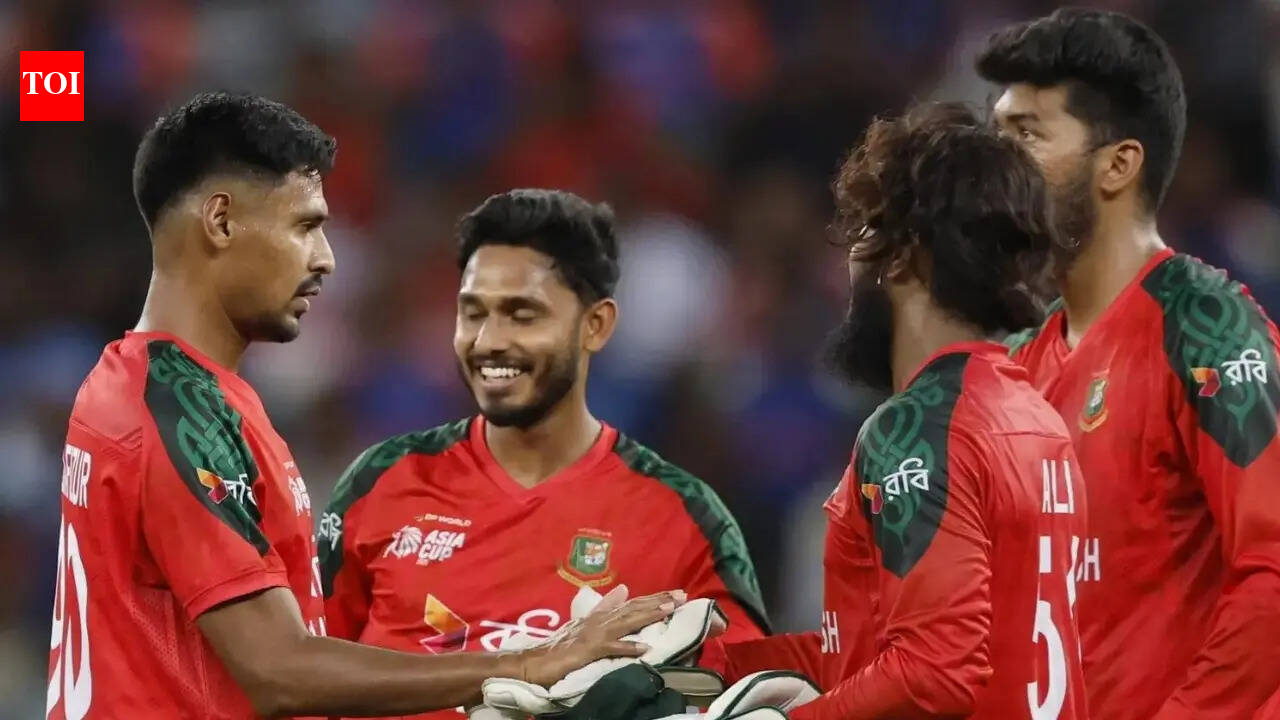
Bangladesh cricket team players

The crisis within the Bangladesh Cricket Board has deepened, with several people resigning from the board even before completing six months in office, raising questions over its stability.Seven of the 25 directors have already resigned, including four who resigned after Saturday’s board meeting. The exit has increased uncertainty over the future of the current administration.

Watch

Stephen Fleming on CSK’s improvement, bowling pressure and impact player rule

Despite the situation, BCB President aminul islam Said on Sunday that he would not step down. His comments came as the investigation into alleged malpractices and abuse of power in last year’s elections submitted its report to the Bangladesh government.The board is facing pressure from the Sports Ministry, which has raised questions over the validity of the election, Bangladesh’s absence from the T20 World Cup co-hosted by India and Sri Lanka and allegations of political interference and favoritism within the BCB.The four directors who resigned on April 4 are Saniyan Tanim, Mehrab Alam, Faiyazur Rahman and Manjurul Alam.“I will sit in my chair, what else can I do? I will be the last one to go,” Aminul told Jamuna TV on Saturday, as quoted by ESPN Cricinfo. “I have a very good, dedicated and honest team [in the BCB]. I want to serve Bangladesh cricket with this team.”“No one is indispensable. I was alone.” [Bangladeshi] To work in ICC. I am not saying that I am a big person, but I am sitting here because of my experience. I left everything to come here to support my country. If it is no longer mine then I will look for another way. But I want to support my country.”“Our team (board of directors) is good and they are dedicated and honest so I want to work with this team and serve Bangladesh cricket,” he said. “We could not work with freedom even for a day because an external force was always troubling us and is still troubling us. Our cricket is stagnant and I have said many times that an external force is troubling us and because of that the pace of our cricket has slowed down.”Aminul said he could not appear before the inquiry committee due to schedule conflicts and instead submitted a written reply.“I did not face the committee. I was busy with two different meetings, so the dates clashed with their schedule for me. I gave them my response in writing,” he said, adding, “I was not involved in anything [in the board elections]. I was involved in an area which is now under investigation. I will not go into details, but I can say that as per our constitution, an ad-hoc committee runs the district sports organization. It is clearly stated that the name [of councillors] “Must come from within the ad-hoc committee.”“When only three names came from within those ad-hoc committees, we were forced to rewrite them. We said please send names from within your ad-hoc committee. It’s the only thing I was involved in,” he said.Aminul was appointed BCB president in May 2025 after replacing Farooq Ahmed as a government-backed director on the board. He later contested elections in October and was elected President.Former Bangladesh captain Tamim Iqbal had alleged misconduct and abuse of power against Aminul and withdrew from the election race.

Source link

जब पत्नी ने पति को गर्लफ्रेंड के साथ देखा तो भड़क गया…बीच सड़क पर जमकर हंगामा, मामला पहुंचा थाने

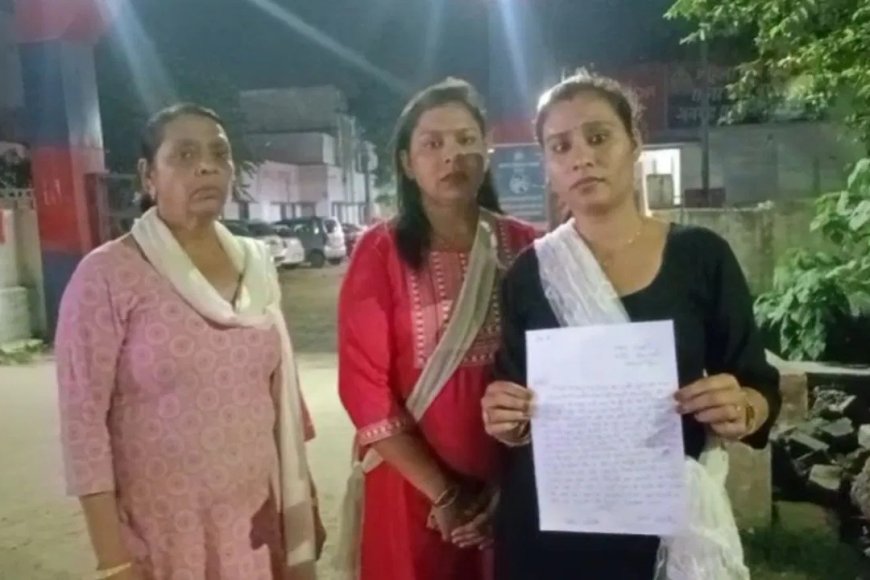
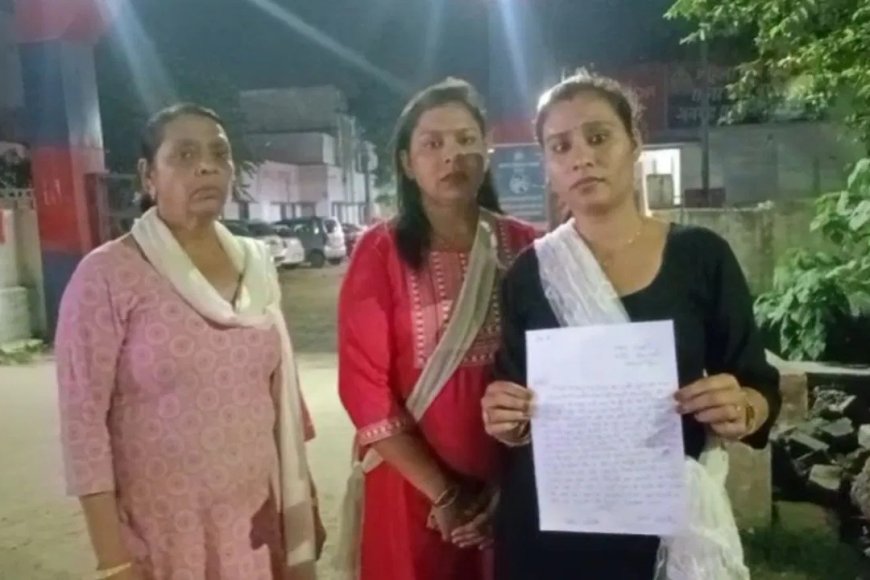
सहारनपुर समाचार: उत्तर प्रदेश के सहारनपुर जिले में कल देर रात उस वक्त हाई वोल्टेज ड्रामा देखने को मिला जब एक पत्नी ने कथित तौर पर अपने पति को दूसरी महिला के साथ रंगे हाथों पकड़ लिया. इसके बाद मौके पर जमकर हंगामा हुआ और हालात इतने बिगड़ गए कि दोनों पक्षों के बीच हाथापाई की नौबत आ गई. इस पूरी घटना का वीडियो सोशल मीडिया पर तेजी से वायरल हो रहा है, जिससे इलाके में चर्चा का माहौल बना हुआ है. पुलिस को मौके पर पहुंचकर स्थिति को संभालना पड़ा.

उनके मौके पर पहुंचते ही विवाद हो गया
जानकारी के मुताबिक, यह मामला सदर थाना क्षेत्र के पेपर मिल रोड का है. पूजा जैन नाम की महिला को देर रात सूचना मिली थी कि उसका पति गौरव जैन किसी अन्य महिला के साथ मौजूद है. सूचना मिलते ही वह तुरंत मौके पर पहुंची। वहां पहुंचने पर उसने कथित तौर पर अपने पति को किसी अन्य महिला के साथ आपत्तिजनक स्थिति में देखा। यह देख महिला नाराज हो गई और वहीं हंगामा करने लगी।

सड़क पर हंगामा और हाथापाई होने लगी
स्थानीय लोगों के मुताबिक, कुछ देर के लिए सड़क पर अफरा-तफरी का माहौल हो गया. पति-पत्नी के बीच तीखी नोकझोंक हुई, जो धीरे-धीरे हाथापाई में बदल गई। शोर सुनकर आसपास के लोग भी वहां जमा हो गए। मामला बिगड़ता देख किसी ने पुलिस को सूचना दे दी. मौके पर पहुंची पुलिस ने दोनों पक्षों को शांत कराया और थाने ले गई।

पत्नी ने लगाए गंभीर आरोप
पीड़िता पूजा जैन ने थाने में दी गई शिकायत में बताया कि उसकी शादी साल 2015 में गौरव जैन से हुई थी. उसने आरोप लगाया कि शादी के बाद से ही उसका पति उसके साथ मारपीट करता था और कई बार उसे घर से बाहर भी निकाल चुका था. महिला का यह भी कहना है कि उसके पति का किसी अन्य महिला के साथ काफी समय से अवैध संबंध है और वह उसी के साथ रह रहा है.

सट्टेबाजी और दबाव का आरोप, जांच जारी
महिला ने गंभीर आरोप लगाते हुए कहा कि उसका पति आईपीएल में सट्टेबाज का काम करता है और उसके गहने भी किसी दूसरी महिला को दे दिए गए हैं. उसने यह भी आरोप लगाया कि उसका पति उस पर वेश्यावृत्ति के लिए दबाव बना रहा था। वहीं, पति गौरव जैन ने इन सभी आरोपों को गलत बताया है। पुलिस का कहना है कि शिकायत के आधार पर जांच की जा रही है और रिपोर्ट आने के बाद आगे की कार्रवाई की जाएगी.

Source link

‘Malicious actor, not whistleblower’: Indian-origin founder Karun Kaushik reacts to ‘fraud’ allegations against startup

'Malicious actor, not whistleblower': Indian-origin founder Karun Kaushik reacts to 'fraud' allegations against startup

Delve’s Indian-origin co-founder and CEO Karun Kaushik has responded to allegations that his company has misled customers on regulatory compliance, saying rapid growth led to internal shortcomings, while also claiming the controversy is linked to a targeted cyberattack.Delve is a compliance technology startup that helps companies assess and manage their security, privacy, and regulatory compliance. Its headquarters is located in San Francisco, California.In a video statement, Karun Kaushik said the company “grew too fast”, which created gaps in processes and oversight. He acknowledged that systems could not keep up with the expansion, leading to issues that are now under investigation. The company also issued a public statement apologizing to customers for “falling short” in its own standards.Additionally, Delve strongly disputed the substance of the allegations. The company said that these claims are from an anonymous actor and not from a legitimate whistleblower. According to Delvey, the person behind the post conducted a “targeted cyberattack”, gained access to internal data under false pretenses, and then used that content to launch what was described as a coordinated smear campaign.Delvey said the company’s internal data was stolen and then used with fabricated claims and “cherry-picked” screenshots to make the company look bad. The company said their public response has been delayed due to ongoing cybersecurity and forensic investigations.The allegations, reported by TechCrunch and based on anonymous posts, claim that Delve misled customers about its compliance with key regulatory frameworks. These include the Health Insurance Portability and Accountability Act and the General Data Protection Regulation.The claims further allege that Delve provided audit-related materials described as “bogus evidence” to clients and facilitated compliance certificates without completing full audit processes. If true, such actions could expose customers to legal and financial risks by failing to meet required standards.Delve has disputed these characterizations. The company said any materials referenced were taken out of context and, in some cases, were templates to help clients prepare documents rather than final audit evidence.In response to the situation, Kaushik said the company has introduced changes, including a new auditor network, free re-audits for clients and greater transparency in penetration testing and audit communications. He said Delve is reviewing its past work, strengthening internal controls and working to rebuild trust.Despite the controversy, Kaushik said the company remains committed to its compliance business and is “not going anywhere.”Kaushik studied artificial intelligence at MIT, previously founded a health tech venture, and led scientific research before launching Delve in late 2023. He oversees product, audit delivery and client operations.

Source link

‘Open Hormuz or you will live in hell’: Trump abuses Iran, threatens attack on Tuesday

'होर्मुज खोलो नहीं तो नरक में रहोगे': ईरान पर ट्रंप का अपशब्द, मंगलवार को हमले की धमकी

Donald Trump (file photo)

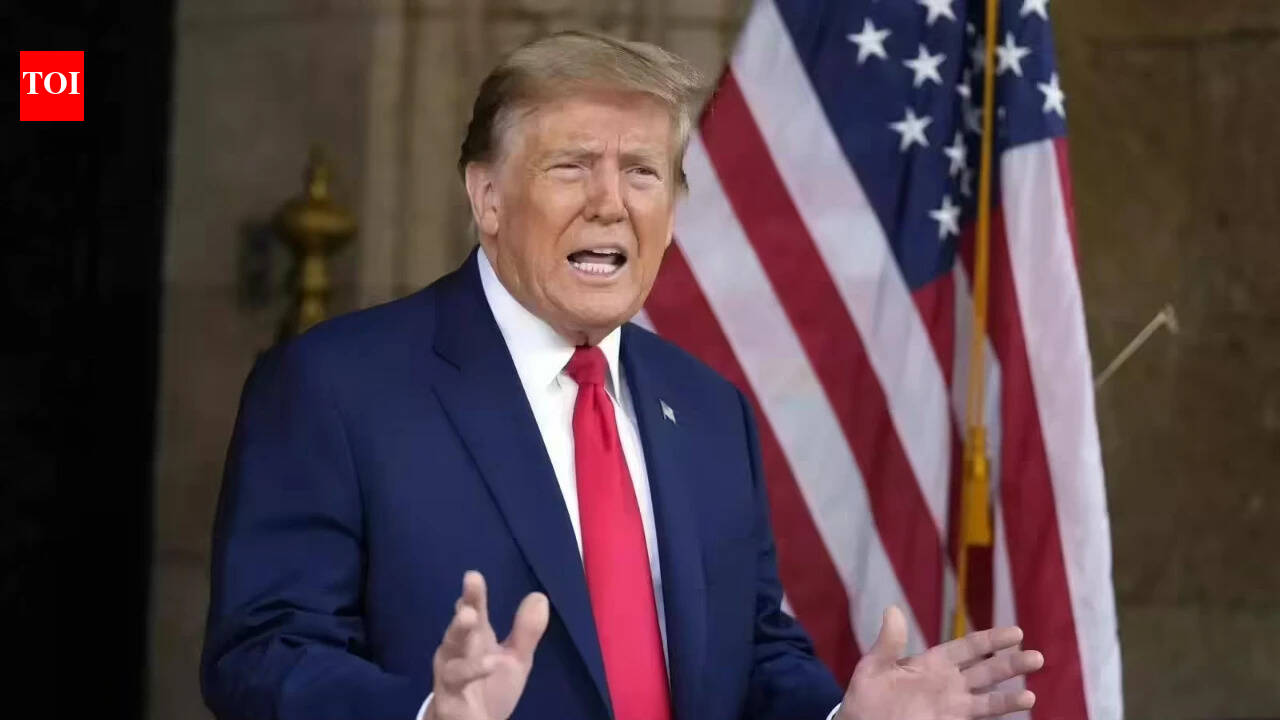
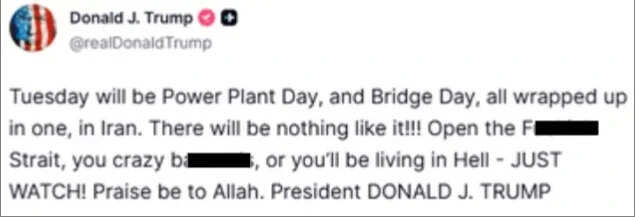
US President Donald Trump issued a profanity-laden warning to Iran on Sunday, demanding that it reopen the Strait of Hormuz. He threatened serious military action, saying Tuesday would be “Power Plant Day and Bridge Day.”“Tuesday will be Power Plant Day and Bridge Day in Iran, all wrapped into one. Nothing like it will happen!!! Open the f*****’ strait, maniacs, or you’ll be in hell – just stay tuned! Praise Allah.” Said the US President on Truth Social.

Articles (92)

Trump’s post on Truth Social

This comes after Trump on Saturday gave Iran another 48-hour ultimatum to open the strait. “Remember when I gave Iran ten days to make a deal or open the Strait of Hormuz. Time is running out–48 hours before it rains heavily on them. glory be to God! President Donald J. Trump,” he said.However, Iran rejected Trump’s threats and Tehran’s central military command issued a sharp rebuke. General Ali Abdullahi Aliabadi of the Khatam al-Anbiya central headquarters described the US president’s remarks as “a helpless, panicked, unbalanced and foolish action.”According to Agence France-Presse, echoing the tone of Trump’s warning, he said that “the simple meaning of this message is that the gates of hell will open for you.”Meanwhile, in another post shared just minutes before the above threat, Trump talked about rescuing a pilot whose jet had gone down over Iranian territory. “We have rescued a seriously injured, and truly brave, F-15 crew member/officer deep in the mountains of Iran. Iranian forces were coming hard in large numbers, and closing in. He is a highly respected colonel. These types of raids are rarely attempted due to the danger to “person and equipment”.“That just doesn’t happen!” He said.Giving more details about the operation and announcing a press conference for Monday, he said, “The first raid was followed by a second raid, where we rescued the pilot in broad daylight, this is also unusual, spent seven hours in Iran. An amazing display of bravery and ingenuity by all! I will hold a news conference with the military in the Oval Office on Monday at 1:00 pm, God bless our great military warriors!”This comes in connection with a US F-15 fighter jet that was shot down by Iranian air defense earlier this week, prompting a rescue operation to save its two crew members. One airman was recovered early, while the other was rescued later.

Source link

Evening News Wrap: Donald Trump threatens Iran in fiery post; Andhra Police busts suspected ISIS-linked terror module and more. india news

शाम का समाचार रैप: डोनाल्ड ट्रम्प ने उग्र पोस्ट में ईरान को धमकी दी; आंध्र पुलिस ने आईएसआईएस से जुड़े संदिग्ध आतंकी मॉड्यूल और अन्य का भंडाफोड़ किया
  • donald trump issued a lewd threat to iran Israeli and Iranian attacks escalated the regional conflict.
  • CM of Assam Himanta Biswa Sarma He was threatened with legal action after Congress alleged that his wife held multiple foreign passports.
  • a suspect ISIS linked terrorist module was busted, Andhra Pradesh Police conducted raids in several states.
  • In Cooch Behar, PM Modi said Bengal elections will end “fear” and urged support for women’s reservation.
  • Iran claimed the US suffered a “bitter defeat” in Isfahan, while Trump described the pilot rescue operation as a success.

Watch

‘Hormuz is still closed’: Iran challenges Trump to ‘forever war’, mocks 48-hour Hormuz deadline

Here are the top news stories of the day:

Trump threatens Iran in fiery post as regional attacks intensify

US President Donald Trump escalated his rhetoric against Iran and posted a profanity-laden warning on social media that hinted at possible major attacks on Iranian power plants and bridges. His comments came as violence spread across the region, with an Israeli attack near a hospital in south Beirut and Iranian drone strikes in Kuwait causing “severe” damage to oil and petrochemical facilities. Follow live updates

Assam passport controversy erupts as Pawan Kheda targets Himanta’s wife, CM threatens legal action

Congress leader Pawan Khera alleged that Chief Minister Himanta Biswa Sarma’s wife holds three foreign passports, including those of Antigua and Barbuda, Egypt and a UAE Golden Card, triggering a political storm in Assam. Sarma strongly denied the claims, calling them “malicious” and “fabricated”, and said he and his wife would file a criminal and civil defamation case within 48 hours. Read the full story

Suspected terrorist module linked to ISIS busted, Andhra teams conducted raids in many states

A suspected terror module with alleged links to foreign masters and extremist groups including ISIS and AQIS has been busted, with investigators saying it was radicalizing youth in India through online propaganda. Andhra Pradesh Police conducted raids in several states and detained about a dozen suspects. Read the full story

PM Modi says Bengal elections will end ‘fear’, urges support for women’s reservation

Prime Minister Narendra Modi, addressing a rally in Cooch Behar, said the Bengal elections will take away “fear” and accused the TMC of intimidation, corruption and infiltration. He asked voters to trust the law and claimed that action would be taken against “hooligans” after the results on May 4. PM Modi also urged all political parties to support the Women’s Reservation Bill, calling it a national issue and asked the women of Bengal to put pressure on parties to support it in Parliament. Follow live updates

Iran claims ‘bitter defeat’ for US after Isfahan rescue operation

Iran claimed it dealt a “bitter defeat” to the United States in southern Isfahan after rescuing the second missing F-15 crew member, and said the incident exposed US military weakness. Tehran said Iranian forces also shot down the aircraft during the operation. Read the full story

Source link

Uttarakhand: Government releases second list of responsibilities, seven more leaders entrusted with responsibilities – Uttarakhand Government Releases Second List Seven More Leaders Entrusted With Responsibilities

Dhami government has also released the second list of responsibility holders in the state. On Sunday, the government distributed responsibilities to seven more people. Earlier on Friday itself, 14 people were appointed and responsibilities were distributed in various commissions, councils and committees.


Trending Videos

They got the responsibility

Rao Khale Khan – Member, Farmers Commission


Yogesh Rajwar – Member, Child Protection Commission


Deep Prakash Nevaliya – Member, Social Welfare Monitoring Committee


Manoj Gautam – Member, Scheduled Caste Commission


Premlata – Member, Women’s Commission


Ruchi Giri – Member, Other Backward Classes Commission


Rajpal Kashyap – Member, Other Backward Classes Welfare Council


Heartbreaking: 19 year old daughter’s funeral pyre was unsuccessful and she bid her last farewell by burning dry wood, diesel and tyres.

Source link

World’s unhappiest countries in 2026: Afghanistan, Zimbabwe and Lebanon among least happy countries world News

World's unhappiest countries in 2026: Afghanistan, Zimbabwe and Lebanon among least happy countries

The latest global happiness rankings paint a difficult picture, especially at the lower end of the list. It appears that countries like Afghanistan, Zimbabwe and Lebanon are facing deep-rooted challenges that go beyond simple economic concerns. The data, which measures overall life satisfaction along with several social indicators, shows scores falling below 4 for many countries. Afghanistan, in particular, stands out with an exceptionally low score. Experts say happiness rankings often reflect actual reality more than policy claims. And here, the reality appears uneven. Some countries show little resilience and others continue to struggle, with no signs of quick recovery.Check out the list of top 10 unhappiest countries in the world below, as per the World Happiness Report (WHR) 2026 report.

list of most unhappy country in the world 2026

Rank as per WHR 2026 Country score
147 afghanistan 1.446
146 Sierra Leone 3.251
145 malawi 3.284
144 zimbabwe 3.346
143 botswana 3.464
142 yemen 3.532
141 lebanon 3.723
140 DR Congo 3.761
139 egypt 3.862
138 tanzania 3.902

Source: World Happiness Report 2026

Least happy countries 2026

afghanistanAfghanistan is ranked last at 147th position with a score of only 1.446. That number appears immediately. The decline of −2.594 is also the steepest of this group, indicating a rapid decline rather than a slow decline. Life on the ground reportedly remains extremely difficult due to economic collapse, political uncertainty and limited access to basic services. Even measuring happiness here can be complicated, given the gaps in reliable data. Sierra Leone Sierra Leone, ranked 146, recorded a score of 3.251, a decline of -1.067. That decline is quite noticeable. The country has spent years trying to recover from past crises, yet progress appears uneven. Public systems, particularly healthcare and infrastructure, are often under pressure. malawi Malawi is ranked 145th with a score of 3.284 and a decline of −0.829. This is not the steepest decline, but it indicates underlying stress. The reports often mention economic limitations, climate-related disruptions, and resource constraints. The pressure would be felt especially in rural areas. There are signs of development efforts, although they appear slowly. zimbabweZimbabwe, ranked 144th, has seen a steep decline of −1.481. This is one of the bigger downfalls on the list. Economic instability and currency instability have been a recurring concern over the years. Daily life can reportedly seem unpredictable. Prices fluctuate, jobs remain uncertain. These factors can determine how people perceive their overall quality of life. botswana Botswana is ranked 143rd with a score of 3.464 and a decline of −0.506. Here it is often seen as relatively stable compared to others. That’s what makes this decline interesting. This may not be a sign of a crisis, but of emerging pressure points. Analysts sometimes highlight inequality and economic changes. The fundamentals appear to be intact, although small cracks may be forming beneath the surface.yemenYemen, at 142, recorded a score of 3.532, a decline of -0.522. Most of the detailed data is missing, which in itself seems important. Ongoing conflicts and humanitarian issues dominate the situation. The numbers probably represent only a fraction of the lived reality. Reports often describe widespread hardship, which may explain the declining trend.lebanonLebanon is ranked 141st with a score of 3.723 and a decline of −1.208. This is a huge decline. In recent years the country has suffered financial collapse, political instability and public despair. Everyday services have reportedly struggled. Confidence too. This decline represents more than a temporary disruption but points to deeper, ongoing uncertainty.DR Congo DRC, which is ranked number 140, receives a score of 3.761 and shows a decline of −0.817. This country is considered one of the countries that has abundant natural resources but unbalanced development. Conflict issues and poor governance in some areas are contributing to the situation there.egypt Egypt ranks 139th with an index of 3.862, a decrease of -0.411. Although this represents a smaller percentage than others, it still indicates some pressure. Inflation and cost of living are common issues that can be found in the causes of dissatisfaction. Despite continued growth in various economic sectors, this inequality can also affect the general mood.tanzania Tanzania, which ranked 138th, is unique to this group in that it is the only nation to show improvement (+0.132). Its score still shows some weakness at 3.902, yet its progress appears to be noticeable.

voting

Should countries facing political instability focus more on improving happiness or address their political issues first?

Source link

भाई को नहीं मिली इज्जत तो दूल्हे को आया गुस्सा…शादी के बाद भी बिना दुल्हन के लौटा बैरंग, जानिए पूरा मामला

मोरादाबाद समाचार: उत्तर प्रदेश के मुरादाबाद से एक अजीब और चौंकाने वाला मामला सामने आया है। ठाकुरद्वारा कोतवाली क्षेत्र के एक गांव में शादी की खुशी का माहौल अचानक तनाव और विवाद में बदल गया। 2 अप्रैल को दूल्हा पूरी उम्मीदों के साथ बारात लेकर पहुंचा। स्वागत-सत्कार हुआ, दावतें हुईं और शादी भी पूरे धार्मिक रीति-रिवाजों के साथ संपन्न हुई। लेकिन विदाई के वक्त एक छोटी सी रस्म को लेकर ऐसा विवाद हो गया कि दुल्हन की विदाई नहीं हो सकी और दूल्हा बिना दुल्हन के ही वापस लौट गया.

सलामी की रस्म बनी विवाद का कारण
निकाह के बाद जब विदाई की तैयारी चल रही थी तो सलामी की रस्म शुरू हो गई। इस बीच दूल्हे ने आरोप लगाया कि उसके बड़े भाई को उचित सम्मान नहीं दिया गया. इस बात पर दूल्हा अड़ गया और दुल्हन को साथ ले जाने से इनकार कर दिया. दुल्हन पक्ष के लोगों ने समझाने की कोशिश की और माफी भी मांगी, लेकिन दूल्हा अपनी जिद पर अड़ा रहा.

विदाई के वक्त हुआ हाईवोल्टेज ड्रामा
देखते ही देखते माहौल बिगड़ गया और खुशी-खुशी का माहौल मारपीट में बदल गया. दूल्हे के व्यवहार से नाराज दुल्हन पक्ष ने भी सख्त रुख अपनाया. उन्होंने साफ कहा कि उनकी बेटी ऐसे लड़के के साथ खुश नहीं रहेगी जो इतनी सी बात पर हंगामा खड़ा कर दे. इसके बाद दुल्हन के पिता और भाइयों ने विदाई से साफ इनकार कर दिया। कई घंटों तक पंचायत और स्थानीय लोगों ने समझौते का प्रयास किया, लेकिन मामला नहीं सुलझ सका.

मामला पहुंचा थाने, शुरू हुई जांच
इस विवाद के बाद मामला पुलिस तक पहुंच गया है. दूल्हे के पिता ने ठाकुरद्वारा थाने में शिकायत दर्ज कराई है। उन्होंने आरोप लगाया कि या तो उनकी बहू को विदा किया जाए या फिर शादी में खर्च की गई रकम वापस की जाए। उनका कहना है कि इस घटना से उनकी सामाजिक प्रतिष्ठा को नुकसान पहुंचा है. पुलिस ने दोनों पक्षों को बुलाकर जांच शुरू कर दी है और कहा है कि तथ्यों के आधार पर आगे की कार्रवाई की जाएगी.

पूरा मामला चर्चा का विषय बन गया
यह घटना पूरे इलाके में चर्चा का विषय बनी हुई है. लोग इस बात से हैरान हैं कि एक छोटी सी रस्म की वजह से इतना बड़ा विवाद हो गया. शादी के बावजूद दुल्हन मायके में ही रह गई और दूल्हा कुंवारा ही लौट आया। यह मामला रिश्तों में आपसी समझ और सम्मान के महत्व को भी दर्शाता है।

Source link

‘Jihad module linked to foreign masters’: Andhra Pradesh Police busts suspected ISIS-linked network with multi-state links | india news

'विदेशी आकाओं से जुड़े जिहादी मॉड्यूल': आंध्र प्रदेश पुलिस ने बहु-राज्य लिंक वाले संदिग्ध आईएसआईएस से जुड़े नेटवर्क का भंडाफोड़ कियाISIShas been exposed, investigators have claimed that the network was involved in radicalizing youth in India.The development comes after Andhra Pradesh Police sent teams to several states, including Bihar, Delhi, Karnataka, Maharashtra, West Bengal, Telangana and Rajasthan, to arrest nearly a dozen suspects, including three from Andhra Pradesh, in connection with the case.According to an intelligence source quoted by news agency PTI, the group had links with foreign-based operatives and was actively spreading jihadist propaganda online.“A jihadi module linked to foreign masters and extremist organizations such as the Islamic State of Iraq and Syria (ISIS) and Al-Qaeda in the Indian Subcontinent (AQIS) has been uncovered, which was engaged in radicalization of youth in India,” an intelligence official said.

The main accused and associates allegedly used online propaganda to target youth

The investigators have identified the main accused Rahmatullah Sharif as a key figure in the network. Police said Sharif and his associates were in touch with operatives allegedly involved in circulating jihadi material and indoctrinating youth through online videos.The accused were allegedly sharing extremist content and keeping in touch with foreign handlers through social media.The group is accused of circulating videos featuring Osama bin Laden, Israr Ahmed Sheikh, Zakir Naik and Anwar al-Awlaki in an attempt to influence Muslim youth towards jihad and extremist ideology.Police also suspect that the network was trying to expand by attracting women through a separate ‘Khwateen’ wing.

Links detected with Pakistan, Afghanistan, Syria and Bangladesh

According to investigators, the group had established contacts with operators based in Pakistan, Afghanistan, Syria and Bangladesh through more than 40 social media accounts.The agencies believe that the network was working towards facilitating ‘Hijrat’ and ultimately establishing an Islamic state or ‘Khilafat’ in India.The operators, identified as al-Hakim Shukoor, Mohammed Huzaifa, Ninja, Hemroxy, Abu Muharib and Abu Balushi, allegedly guided the group on terrorist training and the use of weapons, including sniper rifles. He also reportedly assured the group that weapons could be supplied.Investigators also suspect that some radicalized individuals associated with the module were already undergoing jihadi training in madrassas abroad, while efforts were reportedly being made to recruit more people into the network.According to PTI report, one of the accused, Saeeda Begum, was allegedly in touch with operatives in Pakistan as well as Jammu and Kashmir and was planning to coordinate jihadi activities.

The investigation also includes cyber terrorism, IED material and anti-India material.

Investigators said the group was not limited to ideological propaganda and could also share material related to cyber terrorism and bomb making.The accused allegedly circulated material promoting cyber attacks, including plans to hack official websites. The agencies are also investigating possible foreign funding channels linked to the network.The police further claimed that the members uploaded material related to preparing black powder and improvised explosive devices (IEDs), while also claiming that the firearms would be obtained from Pakistan and Afghanistan.The group reportedly posted photos of members wearing masks, displaying ISIS flags and shouting slogans such as “One Ummah” to signal their commitment to the idea of ​​an Islamic State in India.Investigators also alleged that the accused shared provocative videos, sang the Indian national anthem in an insulting manner using foul language and circulated material insulting and burning the national flag.

Source link