


Israel says Hamas military chief involved in planning October 7 attacks killed in Gaza

Izz al-Din al-Haddad (Image credit: x@idf)
Israeli forces killed Izz al-Din al-Haddad, the head of Hamas’s military wing and one of the last senior commanders linked to planning the October 7 attacks on Israel, in a targeted airstrike in Gaza City, according to the Israel Defense Forces (IDF).In a post on Saturday.Israel said Haddad had taken over the role after Mohammed Sinwar was killed. The forces also said, “Haddad was involved in holding a number of Israeli hostages in Hamas captivity and managed Hamas’s hostage capture system by surrounding himself with hostages in an effort to prevent their elimination.”Israeli forces also said they killed two Hamas activists, Hamer Iyad Muhammad Almatuq and Khaled Muhammad Salem Joudeh, in separate operations. The IDF accused both men of infiltrating Israel during the October 7 attacks and said they had recently attempted to carry out attacks against Israeli troops operating in the area.According to the Israeli Security Agency (ISA), cited by AP, Haddad was one of Hamas’s longest-serving commanders and joined the organization during its initial founding in the 1980s.He maintained close ties to the Hamas leadership and held several senior positions, including commander of the Gaza City Brigade and other units. He was also a member of Hamas’s Military Council, one of the group’s top command bodies, which played a key role in planning the October 7, 2023 attacks on Israel.According to Israeli data, the October 7 attacks killed about 1,200 people in Israel, while more than 250 were taken hostage in Gaza.At least seven Palestinians, including Haddad, were killed and dozens injured in two Israeli airstrikes that targeted a residential building and a civilian vehicle in Gaza City on Friday. Israel’s military chief described the killing as an “important operation” and said the country would continue to pursue its enemies to hold them accountable.Haddad’s death joins a growing list of senior Hamas military commanders killed during the Israeli offensive in Gaza. Israel’s retaliatory attacks have killed more than 72,700 people, according to Gaza’s health ministry. The ministry is part of Gaza’s Hamas-run government, but is staffed by medical professionals who maintain and publish detailed records that are generally considered credible by the international community.The killing comes at a time when the ceasefire between Israel and Hamas remains fragile, with key issues such as Hamas’ disarmament preventing progress in talks. Despite a ceasefire that took effect in October, there have been almost daily Israeli attacks on Gaza, with more than 850 people reported killed since then, according to Gaza’s health ministry.Both Israel and Hamas have accused each other of repeated violations since the ceasefire began.
Dismiss Education Minister for NEET irregularities: Congress
 Congress President Mallikarjun Kharge said in the context of the annual “Pariksha pe charcha” that PM Narendra Modi should “discuss paper leaks”.Rahul criticized Pradhan for his alleged comment that he did not heed the recommendation of the Parliamentary Committee on Education regarding NTA. Jairam Ramesh said that Pradhan’s comments show that he is not suitable for the post of minister.Kharge said that “Amrit Kaal” is proving to be “dead period” for the students.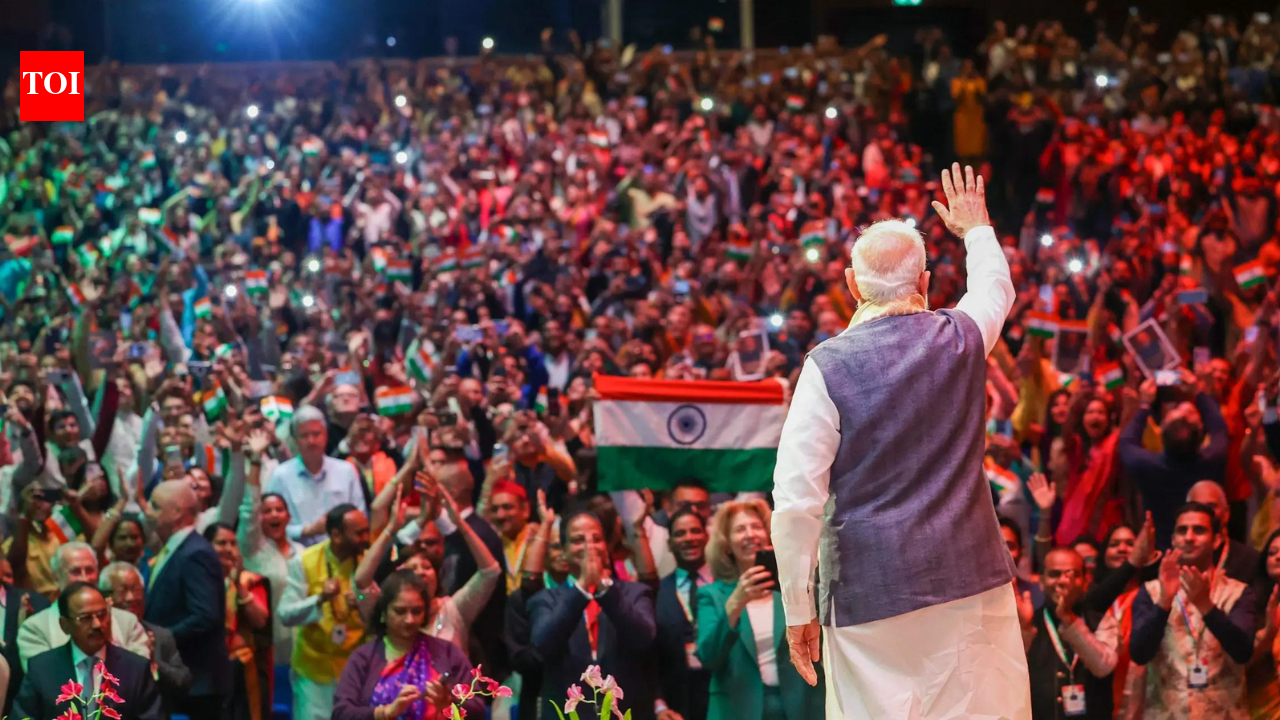
PM Modi in Netherlands
The Prime Minister told the Indian diaspora in The Hague that India is now a land of technology-driven opportunities and urged them to reconnect with the country.
PM Modi He warned that the challenges facing the world could undo the successes of past decades and, if not addressed, could push a large section of the global population into poverty, while lauding India’s “phenomenal” transformation during his tenure.Addressing the Indian diaspora in The Hague, he said, “We are seeing how the world is grappling with new challenges one after the other. First came the coronavirus pandemic, then wars broke out and now the world is facing an energy crisis. This decade is turning into a decade of disasters for the world. We can all see that if these conditions are not changed rapidly, a very large section of the world’s population may once again be pushed into the quagmire of poverty.”“PM: Join India’s journey towards becoming a developed nationHowever, Modi’s speech largely focused on India’s many achievements since taking office 12 years ago, the Indian diaspora and relations between India and the Netherlands.He talked about the huge turnout in recent elections and its boundless aspirations, which are reflected in its aim of hosting the Olympics and becoming a global manufacturing hub. He said, “From that day till today, the trust that crores of Indians have placed in me neither lets me stop nor let me get tired.”India is now a land of opportunities and is both technology-driven and humanity-driven. The PM said India is as modern as it is ancient, and urged NRIs to reconnect with the country and take part in its journey towards becoming a developed nation.“This will strengthen India’s capabilities and also give you higher returns on your investment. This is Modi’s guarantee,” he said amid applause from the audience.
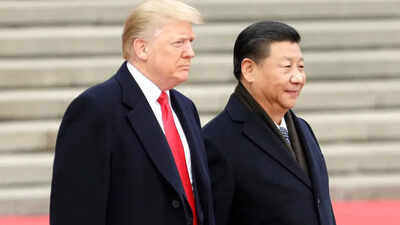
Trump is facing sharp questions on Taiwan and trade
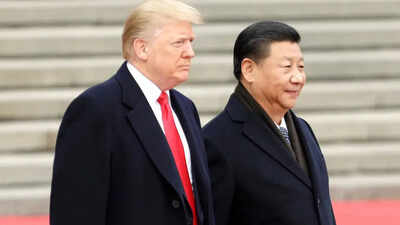 TOI correspondent from Washington: US President Donald Trump returned to the White House on Friday and, despite claims to the contrary, brought with him the seeds of discord from Beijing. Xi Jinping’s promise of Chinese rose seeds for the White House Rose Garden, meant to be a diplomatic bouquet, instead highlighted the increasingly prickly relationship between the world’s two biggest powers, as their 36-hour summit was dominated not by trade or tariffs, but the explosive question of Taiwan.Although Trump declared his visit to Beijing a “tremendous success” and a “historic moment” in brief comments to reporters (in contrast to his normally staid engagement), the US foreign-policy establishment is concluding that the summit has exposed the changing balance of power in which Taiwan has become the central fault line. US-China relations. In the podcast, Trump’s former communications director Anthony Scaramucci bluntly said that Trump had “given up his hand” in Beijing, and former US Ambassador Chas Freeman, who as a young diplomat served as a translator during Richard Nixon’s successful visit to China, said that Americans are underestimating Beijing’s growing influence and regime change. Now it turns out that the trip that was ostensibly focused on trade, Iran and economic stabilization quickly turned into an intense conversation on Taiwan, with Xi reportedly warning Trump that mishandling the “Taiwan question” could jeopardize “the entire relationship” between Beijing and Washington.Trump went home from the summit with far more ambiguity than many Taiwan supporters in Washington expected. Speaking aboard Air Force One, he repeatedly declined to say whether the US would defend Taiwan militarily in the event of a Chinese attack. In an interview on Fox News, he was even more frank about his reluctance to become involved in the conflict on the island.“I will say this: I don’t want anyone to become independent,” Trump said, referring to Taiwan. “And, you know, we have to travel 9,500 miles to fight a war. I’m not looking for that. I want them to calm down. I want China to calm down.”The remarks sparked concern among supporters of both parties in Taiwan, who fear Trump is moving away from Washington’s long-standing posture of “strategic ambiguity,” what some critics call strategic capitulation. The US President also revealed that he discussed arms sales to Taiwan “at length” with Xi and declined to commit to a pending $14 billion arms package for Taipei. Critics said discussing a potential Taiwan arms transfer with Beijing risked undermining one of President Reagan’s “Six Assurances” to Taiwan, which promised that Washington would not consult China on such matters.The summit also underlined why Taiwan has become the center of global geopolitics. The island dominates advanced semiconductor manufacturing, producing many of the world’s most sophisticated chips needed for artificial intelligence, military systems and global technology supply chains. Trump himself highlighted the issue and urged Taiwanese companies to make chips in the US. Xi, meanwhile, appeared to use the summit to reinforce Beijing’s long-standing position that Taiwan represents China’s last red line, while disdainful of the US offer to sell Nvidia H-200 chips. US analysts from across the ideological spectrum described a US president who appeared eager for deliverables while Xi calmly set the terms.The optics of the summit ultimately reinforced the perception in Washington that China now holds the stronger hand. Trump nevertheless insisted he had won a major business victory. “We made very good deals. We made very good trade deals,” he declared, despite skepticism about the benefits of the trip in Washington, where prominent people outside the MAGosphere trust what comes from Beijing and Tehran more than what comes from the White House. Trump claimed that China would order 200 Boeing planes, with the purchase eventually reaching 750 planes. Yet Beijing issued no formal confirmation, and Boeing shares fell sharply as investors expected a large immediate order of more than 500 planes. Similarly vague were Trump’s claims that China would buy large quantities of American soybeans, corn and agricultural products. Analysts said there were few specifics, no signed agreement and no detailed outline on the tariffs. Notably, Trump acknowledged that tariffs “did not come up” in talks with Xi despite trade tensions being at the center of the visit.Trump also appeared unable to secure Chinese cooperation on Iran or extract concessions from jailed Hong Kong media tycoon Jimmy Lai. During the 2024 campaign, Trump claimed that it would be “easy” to secure Lai’s release, in the same spirit as he claimed that he would end the Russia–Ukraine war on day one. “I raised Jimmy Lai (with Xi). I will say the reaction to that was not positive,” Trump said in a rare admission of failure.Even the final fantasy of the trip reflects the deep distrust underlying the diplomatic choreography. As the US delegation boarded Air Force One, White House security personnel reportedly threw Chinese-issued phones, commemorative gifts, pins and souvenirs into a bin near the plane’s stairs amid spying fears.
NTA gets 2 new joint secretaries, 2 joint directors

New Delhi: The government on Saturday appointed two joint secretaries and two joint directors in the National Testing Agency (NTA), which is facing criticism over the NEET-UG paper leak.According to orders issued by the Department of Personnel, 1998 batch Indian Statistical Service officer Anuja Bapat and 2004 batch Indian Revenue Service officer Ruchita Vij were appointed joint secretaries. It said that two vacant posts at the Deputy Secretary/Director level were upgraded to Joint Secretary level for two years for this purpose.Indian Revenue Service officer Akash Jain and Indian Audit and Accounts Service officer Aditya Rajendra Bhojgadhia have been named joint directors in the NTA, a separate order said.On Friday, Education Minister Dharmendra Pradhan had said that more reforms are needed in NTA.
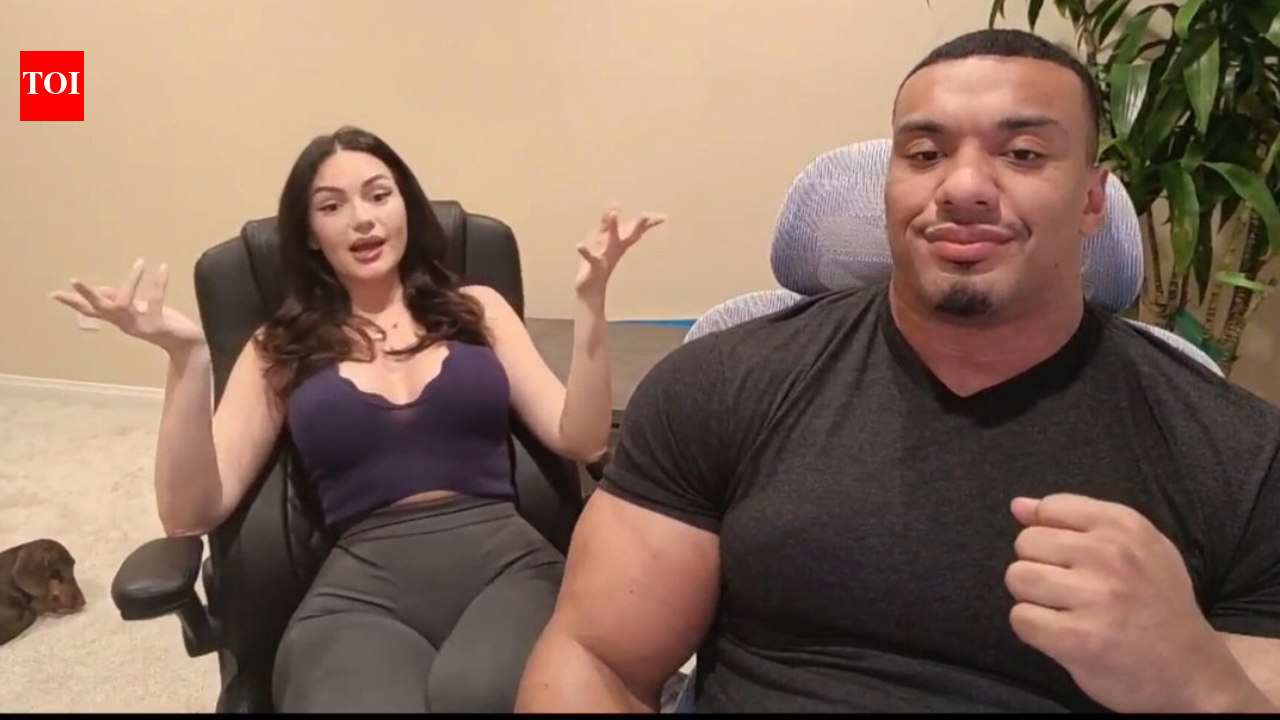
What happened between Larry Wheels and Sheila? Larry Wheels reveals painful split as old prenup clip resurfaces
What happened between Larry Wheels and Sheila? Larry Wheels reveals painful split as old prenup clip resurfaces (Image via Getty)
Kik streamer and fitness influencer Larry Wheels shocked fans this week by confirming that he and his wife, Cezla Kakovac, also known as Sheila online, have separated. The news came during a livestream with UFC cutman Brad Tate on May 15, 2026, when Tate asked why Sheila was not part of the broadcast. Larry Wheels responded directly and said the two had “parted ways.” He also shared that even after the separation, he still wanted to make sure that she was doing well financially.The moment quickly spread throughout X, where fans began talking about the couple’s relationship and Larry Wheels’ previous comments about not signing a prenuptial agreement. Many social media users linked the breakup to their first livestream from February 2026, where he said that he trusted his wife so much that she did not move forward with a prenup. Then the online conversation shifted from the breakup to money, property, and what might happen next.
Larry Wheels says relationship with Sejla Kakovac is “beyond repair” as prenup comments return online
During the livestream clip that later went viral, Brad Tate asked Larry Wheels why Sheila was missing from the stream. Larry replied:“That’s life. We broke up. It’s true. I’m good, man. I mean, we broke up, that’s all. I mean, we broke up, but I’m still happy to take care of her. So, I’ll get her something nice to make sure she’s good.”Brad Tate then took it further and asked if the relationship could still be saved. He said:“What happened?! I mean, can we… you can let the current flow between us? You must have been real… you know, I want you to fix it… why don’t you fix it? There’s nothing beyond repair. You just have to want to fix it. You just have to fix it. Is it worth fixing, or are you cool with just being you?”Larry Wheels then replied that the situation was “beyond repair”.Soon after the clip spread online, fans began reacting to X. Some users focused on Larry Wheels, saying he would continue to help Sheila financially after the separation. Others brought up her old livestream comments about not signing a prenup before marriage.On February 3, 2026, a short clip from Larry Wheels’ “Just Chatting” Kick stream also went viral. In that video, he explained that he thought about signing a prenuptial agreement earlier in the relationship but later changed his mind. He said:“The funny thing is, I brought up the issue of it (signing the prenup) a few times in the beginning, but I decided not to go ahead with it. I trust her.”Because of that earlier statement, many online users mentioned prenups when reacting to news of the breakup. Many posts raised the question whether Larry Wheels now regrets this decision. Others defended him and said that relationships sometimes break down over time. Neither Larry Wheels nor Cezla Kakovac have publicly shared much information about the separation so far.
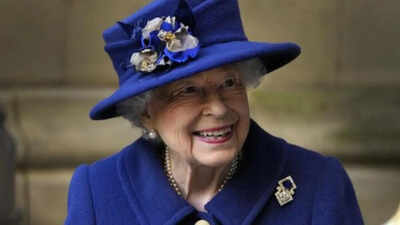
“Over the years, the people who have seemed to me the most happy, fulfilled, and fulfilled have always been the people who lived the most friendly and selfless lives.”
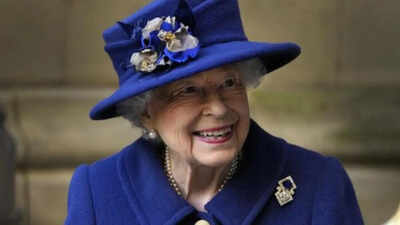 This quote from Queen Elizabeth II sounds exactly the same.At first glance these words seem benign. Almost the same advice that an elder person in the family might give after observing people for decades. But then you realize something interesting. After a few years of experience, Queen Elizabeth was not speaking. He spent more than seventy years on the throne, met thousands of people from different countries, cultures, backgrounds and professions and saw many generations grow and change.This gives the quote a slightly different significance.Because these are not words based on a moment or an emotional reaction. They seem like observations collected gradually over a lifetime.And perhaps this is the reason why people are still connected to it.
Quote of the Day by Queen Elizabeth
“Over the years, the people who have seemed to me the most happy, fulfilled, and fulfilled have always been the people who lived the most friendly and selfless lives.”
An idea that came from observing people for decades
What makes this quote interesting is that Queen Elizabeth did not say that the happiest people are necessarily the richest, most famous, or most successful. He did not even mention power.Instead, he focused on something more serene.Selflessness.This choice is obvious because modern life often sends very different messages to people. Success today is often measured in visible things. Wealth. Topic. Follower. Attention. Achievements people can display publicly.Of course, none of these things are automatically bad. Yet, many people eventually discover that external success and personal satisfaction do not always go together.A person may appear successful and still feel cut off or unhappy.Another person may live a relatively normal life and seem really content.Queen Elizabeth appears to be talking about that difference.She seems to suggest that satisfaction often increases through connecting with others rather than a constant focus on the self.
Why does this quote feel surprisingly relevant today?
Interestingly, the words spoken by someone born in 1926 can still be felt closely related to modern life.Today’s world often feels extremely individual-centered. Social media in particular encourages people to constantly think about personal image and visibility. People create online identities, count followers, compare achievements and sometimes feel pressure to present the perfect version of themselves.After a while, it can get tiring.There’s always another milestone. Another comparison. Another goal.Queen Elizabeth’s quote quietly takes a different turn.She’s not talking about accumulating more things or becoming more important than everyone else. She is talking about people who live “selfless and unselfish lives”. There is something almost refreshing about that wording because it shifts the focus outward.“What am I getting?” not towards“What am I giving up?” more towardsIt may seem simple, but the difference can be surprisingly big.
The Meaning Behind “Outgoing and Selfless”
People sometimes misunderstand the word “outgoing” and immediately think of extroverts or highly social personalities.This does not appear to be necessarily the meaning of the quote.Being outgoing here seems to be closer to engagement with life. Pay attention to other people. Be curious about the world. Being willing to participate rather than completely withdrawing into personal concerns.This does not require one to be the loudest person in every room.Quiet people can also live deeply connected and generous lives.Then comes the second word: selfless. That part probably reflects the real heart of the quote.Selflessness does not mean completely ignoring personal needs. It’s about recognizing that life becomes greater when people care about others too. Sometimes it means helping someone. Sometimes this means listening properly. Sometimes it means giving time, support, or kindness without expecting an immediate reward.Many people have experienced such small moments.Helping someone unexpectedly.Checking on a friend.To do something deliberately for no real reason other than that it feels right.The strange thing is that people often remember those moments for years.
Queen Elizabeth spent most of her life around service
This quote becomes more interesting when viewed alongside Queen Elizabeth’s own life.Elizabeth II spent decades talking about service and duty. During public speeches and national addresses, those views appeared again and again. His role brought great attention to him personally, yet much of his public messaging focused on service to communities and responsibilities beyond himself.People sometimes considered that approach traditional or old-fashioned.Nevertheless, many individuals respected the continuity.Throughout the changing decades, political changes and social changes, the language of Seva remained present in most of his public life.This does not mean that people agreed with everything related to the monarchy. Public opinion about institutions can vary widely.Yet many people still view Queen Elizabeth as a woman strongly attached to personal duty and stability.His quote clearly reflects those values.
Why do people often pursue happiness in difficult places?
One reason this quote continues to resonate may be that people often look for fulfillment in places where it never quite lasts.People say things like this to themselves:“I will feel happy when I earn more money.”“I will feel accomplished after reaching the next goal.”“I’ll finally rest after achieving one more thing.”Then they reach those moments.Sometimes satisfaction comes for a while.Then another goal appears.And then one more.Many people recognize that bicycle.Queen Elizabeth’s observation appears to be moving from an endless chase to something stable. Rather than directly telling people to seek happiness, she seems to suggest living generously and letting satisfaction grow naturally from it.There’s something interesting about that idea because happiness often seems hard to capture when people pursue it so aggressively.
Why kindness still matters more than people care about
Modern culture sometimes softens or subordinates kindness to ambition and competition. Yet people usually remember kindnesses long after other details have disappeared.Think about ordinary life for a moment.People remember the teacher who encouraged them. The neighbor who helped in difficult times. The friend who stayed. The person who appeared unexpectedly.Very few people look back years later and think, “I wish someone had been more influential.”They often remember how someone made them feel.Perhaps Queen Elizabeth reflected on this repeatedly during her lifetime.
Other famous quotes from Elizabeth II
- “Suffering is the price we pay for love.”
- “It has always been easy to hate and destroy. It is much more difficult to build and cherish.”
- “We all need to strike the right balance between action and reflection.”
- “Small steps taken with faith and hope can overcome long-standing differences.”
- “Each day is a new beginning.”
- “The lessons from the peace process are clear; whatever life throws at us, our individual responses will be stronger when we work together.”
Why do these words persist among people?
Some quotes survive because they sound clever. Others survive because people continue to recognize the truth within themselves.Queen Elizabeth’s words feel like sober advice gleaned from years of observing human life closely. She does not claim that happiness comes from wealth, position or recognition. Instead, she points to something smaller and more human: paying attention to others and being generous.Perhaps it seems worthwhile because many people eventually discover something similar themselves.Life often becomes complete when it ceases to revolve entirely around our own desires and concerns.And maybe that’s why this quote still feels relevant. Decades change. Technology changes. The world becomes fast and noisy.People, in many ways, remain remarkably similar.
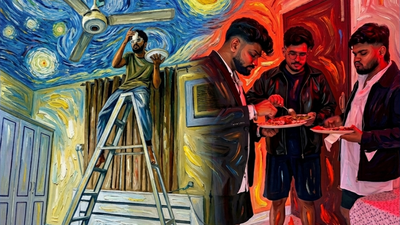
Nietzsche said free will is a lie but in 2026 it is a vibe
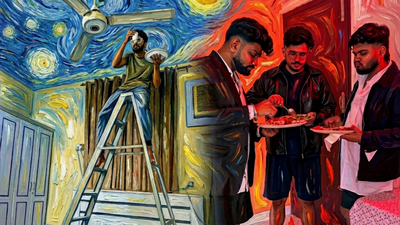
What does it mean to have free will in 2026?Why are young people across the world filming themselves eating lunch on ladders, rearranging their homes into fake hotel suites, or doing completely irrational everyday activities simply because they can?And how did a 19th-century philosopher who believed human beings were never truly free become strangely relevant to a generation raised by algorithms, lockdowns, surveillance and social media?Across social media, thousands of young users are posting videos under captions such as “POV: You suddenly realise you have free will”. The intent is to carry out the daily mundane activities in deliberately impractical but harmless waysVideos of people climbing the maintenance ladder while having lunch just to finish the meal in the air or other laying out buffets of the same meal just to recreate a wedding vibe have become a well-participated trend.What looks like unserious internet humour has almost become an emotional reaction to a world that feels increasingly controlled by economics, technology, politics and invisible systems.In a time when algorithms predict behaviour, governments shape consumption habits during crises and social media constantly influences thought patterns, free will is no longer viewed as a stable philosophical truth. For the new generation, it has become a feeling, a performance and, in many ways, a vibe.
From philosophy to TikTok rebellion
Long before social media transformed rebellion into short-form content, German philosopher Friedrich Nietzsche had already questioned whether free will existed at all.In his 1886 work Beyond Good and Evil, Nietzsche argued that human beings do not make choices in the pure, independent way they imagine. Instead, he believed people are shaped by instincts, conditioning, emotions, physiology and social structures that operate beneath conscious awareness. According to Nietzsche, free will was less a spiritual truth and more a psychological sensation.“The will is not only a complex of feeling and thinking, but it is above all an emotion, and in fact the emotion of the command,” Nietzsche wrote.In simple terms, Nietzsche believed people experience freedom when one desire inside them defeats another. A person feels powerful not because they escaped cause and effect, but because they managed to overpower competing impulses within themselves.That framework unexpectedly mirrors the current internet trend.A person eating lunch on a ladder is not operating outside social conditioning. Rather, they are experiencing the thrill of temporarily defeating the instinct to behave normally. The action itself may be meaningless, but the feeling attached to it is emotionally real.
A generation shaped by crises and control
This modern obsession with “performative autonomy” is emerging at a time when many young people feel their actual control over life has sharply decreased.The Covid-19 pandemic left a lasting psychological mark on an entire generation. Lockdowns suddenly restricted movement, social gatherings and everyday behaviour. Basic actions such as travelling, meeting friends, or simply being outside became matters of public regulation. As trainee clinical psychologist Yukta Sharma puts it, “Free will feels less like “I can do anything I want” and more like: “With all the limitations that the world is placing on me, what are things that I can still choose to do happily and not feel guilty or ashamed or wrong about doing and find satisfaction and joy, without offending anybody in?”,” as she adds that these were the very things that shaped the generation’s response to the Covid-19 lockdown.And while many accepted these measures as necessary for public health, Suyog Shetti, 26, recalls resisting social pressure during the Covid pandemic.“I think people still have free will,” Shetti maintains. “People’s own fear and self-consciousness are what hold their free will back. Like during Covid, I didn’t take the vaccine. Although everyone was telling me to, I felt some scam was happening and thought the whole situation was a tool being used to push the vaccine on us.”
Pop culture and collapse of certainty
Popular culture has started reflecting this anxiety in increasingly direct ways.Indian comedian Kenny Sebastian has repeatedly explored the absurdity of human behaviour through observational comedy. His routines often focus on how people unconsciously follow social scripts in relationships, public spaces and daily interactions.Fantasy-comedy series Good Omens also explores similar philosophical territory. Based on the novel by Neil Gaiman and Terry Pratchett, the show questions whether human beings genuinely possess agency or merely act within systems controlled by larger cosmic structures. Throughout the story, characters constantly struggle between obedience, fear and moral independence.Meanwhile, neuroscientist and author Sam Harris has become one of the most influential contemporary voices arguing that free will does not exist at all.Harris believes human thoughts arise from prior neurological and environmental causes that individuals never consciously chose. According to his framework, understanding the illusion of free will can actually become liberating. Instead of obsessively blaming themselves for every impulse, mistake or emotional reaction, people can develop greater self-awareness and compassion.For many young adults overwhelmed by the constant self-improvement culture, this perspective feels strangely comforting.The modern economy constantly tells people they are fully responsible for their success, productivity and happiness. At the same time, those same individuals are navigating unstable job markets, impossible housing costs, digital addiction and algorithmic manipulation. The contradiction creates emotional exhaustion.As a result, the idea that “free will is limited” no longer sounds depressing to many young people. Instead, it feels realistic.
What young people think free will means today
That realism becomes clearer when listening to how young adults themselves describe freedom.
The pragmatic view
For 26-year-old Kamal Mishra, free will exists, but only within practical limitations.“Free will is not absolute independence, but maximum ownership of one’s choices,” Mishra explains. “Free will is like having your own shop, where you are not bound by anyone else’s control, order, or dependency and you make your own decisions. But yes, you will have to open that shop to earn a living.”Mishra’s comparison reflects a broader generational compromise. Young adults may desire independence, but they also recognise that survival still depends on participating in economic systems they cannot fully escape.
The sceptical view
Others are far more sceptical.Aanshi Kanaujia, 25, believes modern information culture has deeply compromised individual thought.“I believe free will is a golden cage,” she says. “Most of our will is influenced by people, and rarely do individuals have their own mind. Yes, it is polarised to a great extent, especially in this era of unstoppable information consumption, where our will and thinking are systematically borrowed from someone else. Yes, there are some doing their own mind, but that’s not a big number. The question is: Is your thought of free will truly yours?”Her argument reflects growing concerns around algorithmic influence.Social media platforms increasingly curate what users watch, buy, believe and discuss. Recommendation systems shape political opinions, aesthetics, humour and even emotional reactions. As these systems become more sophisticated, distinguishing personal desire from manufactured preference becomes increasingly difficult.
The fatalist view
For some, this has produced outright fatalism.“Free will does not exist; it’s just an illusion,” says 26-year-old Sumant Singh. “Everything depends entirely on the situation, and that same situation decides our will. Overall, nothing is ‘free.’ My thoughts might sound a bit extreme, but I feel this is the ultimate reality.”Singh’s view reflects a generation raised amid repeated crises.Many people currently in their mid-to-late twenties entered adulthood during economic uncertainty, climate anxiety, political polarisation and a global pandemic. The belief that individuals fully control their destinies feels increasingly disconnected from lived reality.
The restrained view
Yet not everyone believes freedom has disappeared entirely.Some young adults argue that free will survives in smaller forms.Chirag Thakur, 27, describes free will as the pause between impulse and action.“I think free will is like any other power or impulse that you have, which is often restrained by your mind which is, of course, a necessity,” Thakur states. “Without the mind as the charioteer, it would be like an aimless chariot, which can be chaotic and quickly turn into a disaster. In any ‘free will’ decision, the pause that makes you think about whether to do it or not is the real free will. And of course, this can change with changes in region, society, and circumstances.”His interpretation aligns closely with modern mindfulness practices, where awareness itself becomes a form of agency.Rather than viewing freedom as unlimited action, many younger people now define it as conscious interruption. In a world designed to trigger instant reactions, the ability to stop, reflect and resist impulse feels increasingly valuable.
The structuralist view
At the same time, conversations around free will are also becoming deeply political.Srabastee Biswas, 25, argues that freedom is unevenly distributed and shaped heavily by class, gender and social privilege.“Free will is not absolute, total independence,” Biswas argues. “It is more like what one creates out of the given resources and only where access is allowed to choose for themselves. If we take a feminist point of view, that space has never been equal. Gender roles, safety concerns, and economic gaps, especially for women and marginalized people, have always created a narrower lane of acceptable choices.”Biswas believes recent years have exposed just how fragile autonomy can be.“When we look at our generation, we’ve witnessed massive backtracks of individual rights, from the stripping away of bodily autonomy and reproductive freedom to economic crises and a massive surge in digital surveillance. This reveals how incredibly fragile it truly is. When the state deprives people of basic rights and autonomy, so-called free will becomes a luxury accessible only to the privileged class. For many of us, practicing free will isn’t just picking what we want, it’s questioning the central belief of what we were told to want.”Her comments reflect a broader shift in how younger generations discuss freedom.For previous generations, free will was often framed as personal ambition or individual achievement. For many Gen Z adults, however, freedom is increasingly understood through systems of power. Access to safety, money, healthcare, privacy and rights now determines how much autonomy someone can realistically exercise.
The commercial view
The role of technology in shaping behaviour remains one of the strongest recurring concerns.Riddhi Jain, 25, believes modern consumer culture actively narrows independent thought.“We don’t move by free will,” Jain reflects. “In my opinion, it’s like the more choices we are presented with, the more our actual free will is limited. We are not just influenced; we are rather controlled by brands and conditioned to think about things in a very specific, curated way.”Her observation reflects what psychologists often call the paradox of choice.While digital platforms offer endless options, many users ultimately end up following highly predictable patterns shaped by advertising, trends and algorithmic recommendations.Ironically, this has also made small acts of irrationality feel emotionally significant.Choosing to behave inefficiently, absurdly or unpredictably becomes a way of resisting optimisation culture. In a world obsessed with productivity, branding and measurable outcomes, doing something pointless simply because it feels amusing can feel deeply personal.
The subversive view
At the opposite end of the spectrum, some young adults believe the greatest act of autonomy today may simply be disengagement.“Our generation grew up with algorithms, lockdowns, trends, and constant chaos deciding things for us,” says 25-year-old Anurag Krishna. “So honestly, maybe real free will today is me choosing not to answer this question at all… which I almost did out of pure freedom.”That quiet refusal captures the exhaustion sitting beneath many contemporary conversations about agency.Young adults today are constantly asked to perform opinions, maintain online identities, produce content, optimise careers and remain permanently visible. In such an environment, withdrawal itself can feel rebellious.
The rise of micro-rebellions
This is precisely why the internet’s strange “free will” trend resonates so strongly.The videos are not revolutionary in any traditional political sense. Nobody is overthrowing governments by eating noodles on ladders or pretending their bedroom is a five-star resort.Yet these acts matter symbolically because they interrupt predictability.Algorithms thrive on patterns. Modern institutions thrive on compliance. Consumer economies thrive on habit. Absurd behaviour momentarily breaks those systems, even if only emotionally.In that sense, Nietzsche’s philosophy has accidentally found new life online.He believed free will was never pure freedom. It was merely the sensation of command, the emotional experience of asserting one desire over another.Today’s generation appears to have transformed that insight into cultural practice.They may fully understand that algorithms influence them, capitalism constrains them and crises shape their futures. They may even agree that absolute autonomy is impossible.But instead of responding with complete despair, many are choosing irony, absurdity and micro-rebellion.The result is a generation that no longer treats free will as a grand philosophical certainty.Instead, free will has become something smaller, stranger and more emotional.It is the pause before reacting.It is the decision to log off.It is refusing to optimise every second of existence.It is questioning inherited desires.And sometimes, it is climbing halfway up a maintenance ladder with a plate of lunch in hand simply to remind yourself that, despite everything, you can still choose to do something completely pointless.For Nietzsche, free will may have been an illusion.For Gen Z, the illusion itself has become the experience.
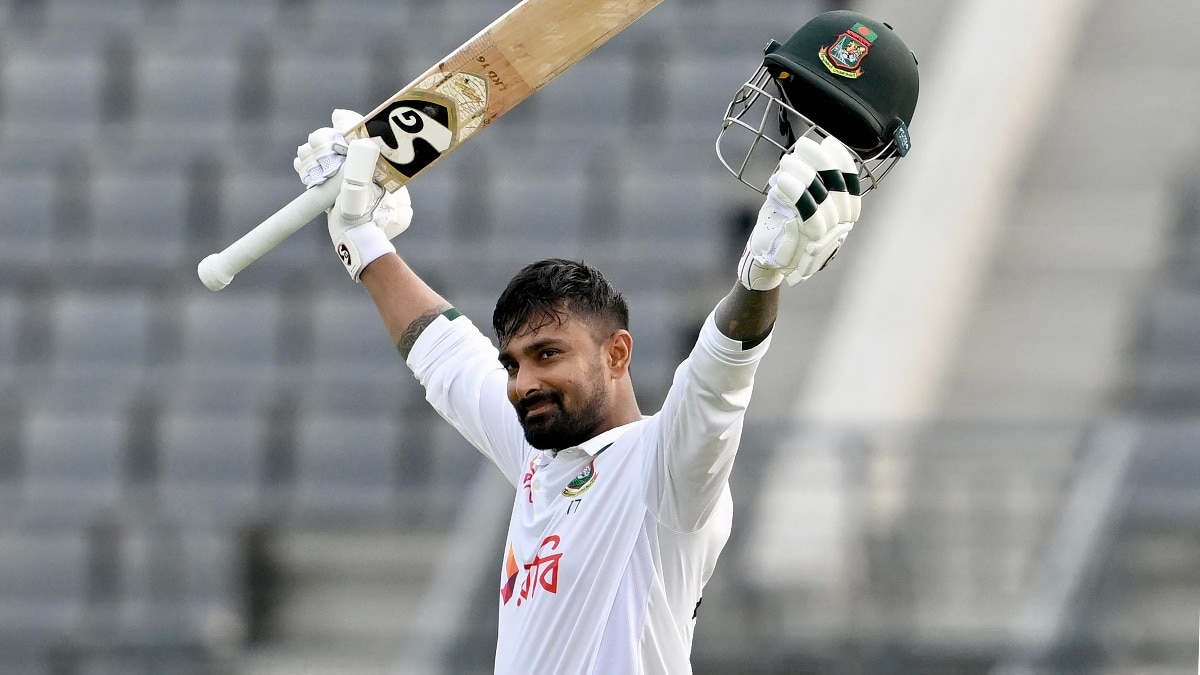
BAN vs PAK, 2nd Test, Day 1 Report: Liton Das’ century saves Bangladesh after Pakistan’s pace attack rattles the top order
Bangladesh national cricket team wicketkeeper-batsman Liton Das scored a brilliant counterattack century to rescue his team after being dismissed early on the opening day of the second and final Test against Pakistan national cricket team on Saturday.
Liton scored 126 runs off just 159 balls with 16 fours and two sixes, as Bangladesh were bowled out for 278 after a poor start in their first innings.
Pakistan then negotiated safely six overs before stumps, scoring 21 runs without loss and trailing by 257 runs at the end of play.
Apart from Liton, no Bangladesh batsman managed to cross the 30-run mark, underscoring the pressure created by Pakistan’s disciplined pace attack throughout the day.
Bain vs Pak. Second Test: Highlights from day one
Khurram Shahzad, who was brought into the team in place of Shaheen Shah Afridi, bowled brilliantly for Pakistan and took 4 wickets for 81 runs. Experienced fast bowler Mohammad Abbas provided excellent support and took 3 wickets for 45 runs.
Hasan Ali, who suffered an injury early in the innings after falling awkwardly in his opening over, later returned to the field and took 2 for 49, including the prized wicket of Liton Das.
Pakistan got off to a great start after captain Shan Masood won the toss and decided to bowl first. Abbas dismissed Mahmudul Hasan for zero on the second ball of the innings.
Debutant Tanzeed Hasan coped with the pressure briefly with a lively innings of 26 runs. The left-handed batsman played some attractive strokes, including a cover drive off Abbas, before also defeating Khurram Shahzad.
However, Tanjeed gave a return catch to Hasan Ali in the eighth over. While completing the catch, Pakistan’s fast bowler got injured and had to be immediately taken off the field.
Tanzeed’s dismissal ended a 44-run partnership with Mominul Haq, who was bowled by Shehzad for 22, leaving Bangladesh at 63 for 3.
Bangladesh captain Nazmul Hossain Shanto, who came into the match after scores of 101 and 87 in the first Test, tried to stabilize the innings along with the experienced Mushfiqur Rahim. But Abbas broke the stand by dismissing Shanto for 29 runs.
Khurram Shahzad then started another collapse by dismissing Mushfiqur Rahim for 23 and Mehdi Hasan in quick succession, reducing Bangladesh to 116 for 6.
At that stage, Liton Das launched a remarkable rescue effort.
The wicketkeeper-batsman stitched a valuable 60-run partnership with Taijul Islam for the seventh wicket and gradually shifted the momentum back in favor of Bangladesh.
Liton completed his half-century in 93 balls before accelerating brilliantly. He brought up his sixth Test century off 135 balls with a brilliant backfoot punch through cover and received applause from the crowd.
His aggressive approach ensured that Bangladesh remained competitive despite frequent setbacks.
After this, Pakistan openers Azan Awais and Abdullah Fazal performed safely in the last overs of the day and remained unbeaten on 13 and 8 runs respectively.
Pakistan’s leading batsman Babar Azam has also returned to the team for the second Test after missing the opening match due to a left knee injury.
– ends

Dwyane Wade’s wife Gabrielle Union breaks silence on losing opportunities in Hollywood despite huge success

Dwyane Wade’s wife Gabrielle Union breaks silence on missing out on opportunities in Hollywood despite huge success.
(Image via Getty Images)
Dwyane Wade, NBA legend, and his wife, gabrielle unionThey have been married to each other for over a decade now after their first marriage ended.While Dwyane Wade and Gabrielle Union live quite a comfortable and lavish life with their daughter, Kaavia Wade, they remain completely private about her.
Dwyane Wade’s wife Gabrielle Union reveals how she survived after working in Hollywood, as she stands by him.
Over the past few years, the NBA legend’s wife, renowned actress Gabrielle Union, has often spoken out about the discrimination she has faced in Hollywood.In 2023, in a heartfelt interview with Who What Were, Gabrielle Union reflected on her career, saying, “In the beginning, I had a strong belief that if your movies were number one at the box office, your career would change, and you would have all these opportunities. The world would be your oyster…”The ‘Bring It On’ actress further added, ‘And then every film of mine started at number one, yet somehow my life became difficult. You could be on all the it-girl lists and be labeled as a genius at getting fucked up fast, and you’re worse off than before.The “Being Mary Jane” alum continued, “Many people in this industry feel like we are somehow interchangeable. And one’s career cannot move slowly in the direction that feeds their creative souls. I saw it firsthand and don’t need to see it again.”While Gabrielle Union has been actively working for over two decades, she has often spoken about how she has lost many roles due to discrimination.Despite everything she has faced in her career, the popular actress has inspired billions of people as she has made her mark in Hollywood through her hard work.Interestingly, a few months ago, when Gabrielle Union’s late father was in memory care, she had also spoken about how she did not have the option of doing independent films due to some financial issues.For now, Gabrielle Union recently headed to the Met Gala as she continues to process grief after losing her father to dementia last month.