Breaking News
गैस बुकिंग में क्यों आ रही है दिक्कत? नोएडा में सिलेंडर को लेकर फैली अफवाहों पर प्रशासन की प्रतिक्रिया

उत्तर प्रदेश समाचार: गौतमबुद्धनगर जिले में इन दिनों कई उपभोक्ताओं को एलपीजी गैस सिलेंडर की बुकिंग को लेकर दिक्कतों का सामना करना पड़ रहा है। कई लोगों की शिकायत होती है कि जब वे गैस बुकिंग के लिए दिए गए मोबाइल नंबर पर कॉल करते हैं तो नंबर लगातार व्यस्त आ रहा है या कॉल कनेक्ट नहीं हो रही है। कुछ लोगों को अन्य तकनीकी दिक्कतों का भी सामना करना पड़ रहा है. इन समस्याओं के कारण कई उपभोक्ताओं में यह भ्रम फैल गया है कि क्या जिले में गैस सिलेंडर की आपूर्ति में कोई कमी हो गयी है. हालांकि, प्रशासन ने ऐसी आशंकाओं को सिरे से खारिज कर दिया है.

जिला आपूर्ति पदाधिकारी ने दी सफाई
इस मामले में जिला आपूर्ति पदाधिकारी स्मृति गौतम ने स्पष्ट किया है कि जिले में एलपीजी गैस की आपूर्ति सामान्य रूप से जारी है और किसी प्रकार की कोई कमी नहीं है. उन्होंने बताया कि सर्वर पर दबाव अधिक होने के कारण कई बार बुकिंग नंबर व्यस्त हो जाता है या कॉल कनेक्ट नहीं हो पाती है. इस कारण उपभोक्ताओं को गैस बुकिंग कराने में परेशानी हो रही है. उन्होंने लोगों से अपील की है कि वे घबराएं नहीं और गैस बुकिंग के लिए उपलब्ध वैकल्पिक डिजिटल साधनों का उपयोग करें।

बुकिंग डिजिटल माध्यम से भी की जा सकती है
जिला आपूर्ति पदाधिकारी के अनुसार गैस कंपनियों ने उपभोक्ताओं की सुविधा के लिए कई स्मार्ट बुकिंग विकल्प उपलब्ध कराये हैं. उपभोक्ता व्हाट्सएप, मिस्ड कॉल, एसएमएस और आईवीआरएस सिस्टम के जरिए भी आसानी से गैस सिलेंडर बुक कर सकते हैं। इसके अलावा मोबाइल ऐप और ऑनलाइन पोर्टल के जरिए भी गैस बुकिंग की सुविधा उपलब्ध है। इन माध्यमों का उपयोग करके लोग घर बैठे गैस बुक कर सकते हैं और एजेंसी पर अनावश्यक भीड़ से बच सकते हैं।

आप इन नंबरों पर बुकिंग करा सकते हैं
प्रशासन के अनुसार गैस बुकिंग के लिए उपभोक्ता का व्हाट्सएप नंबर 7588888824मिस्ड कॉल नंबर 8454955555 और एसएमएस या आईवीआरएस नंबर 7718955555 उपयोग कर सकते हैं. इन नंबरों के माध्यम से उपभोक्ता अपनी गैस बुकिंग का पंजीकरण करा सकते हैं और बुकिंग से संबंधित जानकारी भी प्राप्त कर सकते हैं। यह सेवा राष्ट्रीय स्तर पर संचालित होकर उपभोक्ताओं को सुविधा प्रदान करती है।

नोएडा में एजेंसियों के बाहर भीड़, हंगामा
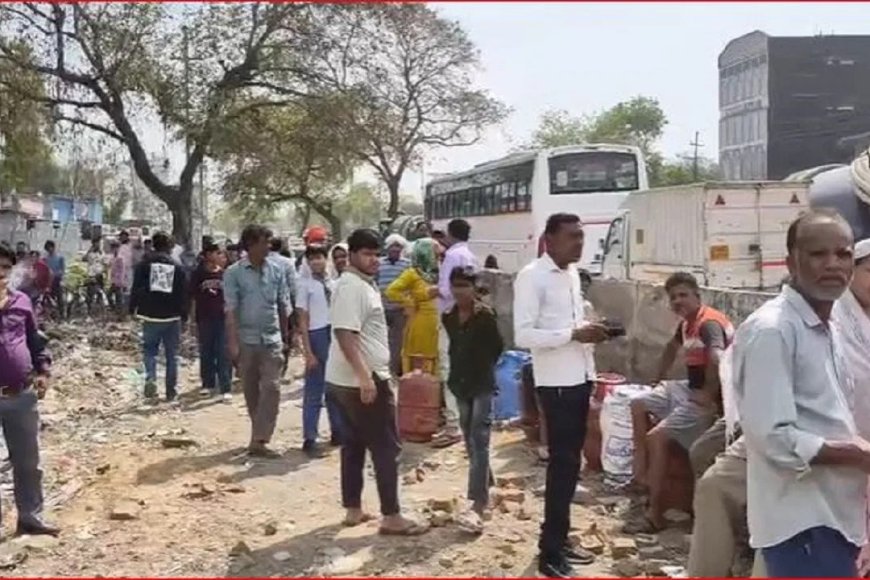
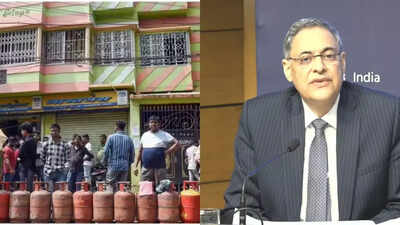
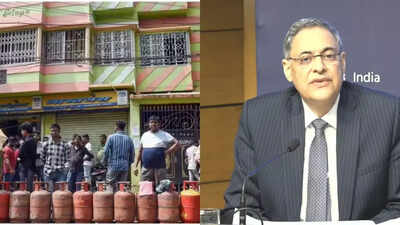
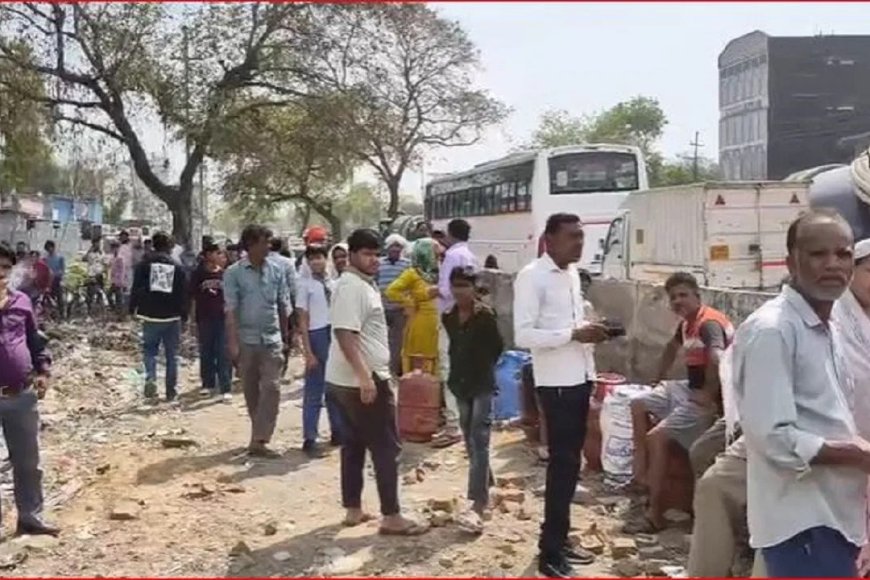
इधर, पिछले दो दिनों से गौतमबुद्ध नगर के कई गैस गोदामों और एजेंसियों के बाहर लंबी कतारें देखी जा रही हैं. कई जगहों पर लोग बड़ी संख्या में सिलेंडर लेने के लिए पहुंच रहे हैं. नोएडा के सेक्टर-18 में भी सिलेंडर न मिलने पर लोगों ने गैस एजेंसी और गोदाम के बाहर हंगामा किया और सड़क जाम कर दी. सूचना मिलने पर पुलिस मौके पर पहुंची और लोगों को शांत कराया। गैस एजेंसी संचालकों का कहना है कि कई ऐसे लोग सिलेंडर लेने आ रहे हैं जिनका उस एजेंसी से कनेक्शन तक नहीं है। प्रशासन का कहना है कि स्थिति पर लगातार नजर रखी जा रही है और अगले दो दिनों में स्थिति सामान्य होने की उम्मीद है. अधिकारियों ने लोगों से अपील की है कि वे अफवाहों पर ध्यान न दें और गैस बुकिंग के लिए केवल डिजिटल माध्यमों का उपयोग करें।

Source link

Shivam Dubey, who had to travel by train after T20 World Cup title, posted emotional social media. cricket news

Shivam Dubey, who traveled by train after T20 World Cup title, made an emotional social media post

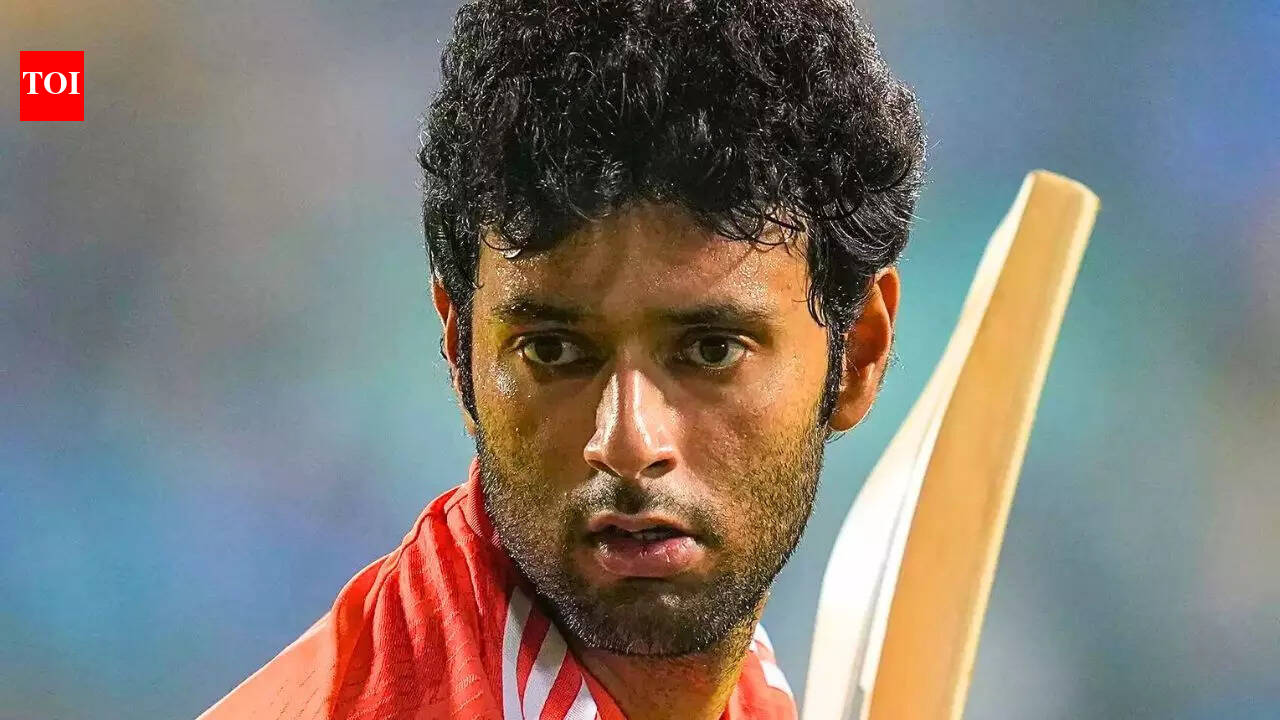
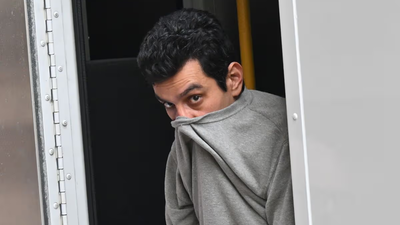
New Delhi: India all-rounder Shivam Dubey went viral on social media after sharing an emotional moment with his father following India’s victory in the ICC Men’s T20 World Cup 2026. In an emotional Instagram post, Dubey shared pictures and a video of him putting his winner’s medal around his father’s neck. His father, wearing the Indian jersey, looked very proud while holding the medal. Dubey captioned the post, “The real hero of my life,” which instantly resonated with fans online.

Exclusive: Rahul Dravid on Eden Gardens’ historic win against Australia in 2001

Dubey played a key role in India’s title-winning campaign, especially in the final against the New Zealand national cricket team, where he scored 26 runs off just eight balls. Throughout the tournament, he contributed with both bat and ball and led India to their third T20 World Cup title.After the celebrations, Dubey’s journey home was unusual. Unlike most international cricketers, who travel by chartered or business-class flights, he had to take a third AC train from Ahmedabad to Mumbai as all the flights were fully booked. Speaking about the experience, he revealed that he had tried to arrange flights for himself and his family, but could not find any seats.Dubey told The Indian Express, “There were no flights available, so I decided to take an early morning train from Ahmedabad to Mumbai. We could have gone by road, but the train was faster.”To avoid attention at the station, he was wearing a cap, mask and full-sleeved T-shirt. He also planned his time carefully to avoid crowds. Dubey said, “I told my wife that I will wait in the car till five minutes before the train departs, then board the train.”Soon after reaching Mumbai, he celebrated the historic win with his family, sharing that special moment with the person he calls his biggest inspiration.

insert banner

Source link

British man went to gym after killing his wife, held mysterious voices responsible for the murder. world News

In Britain, a man went to the gym after killing his wife, held mysterious voices responsible for the murder

A man in Britain murdered his estranged wife before she went to take a shower at a leisure center and later claimed mysterious voices in his head had ordered the murder, a court has heard. The victim, 37-year-old Pariya Vessey, was stabbed multiple times at her husband Alireza Askari’s home in Cardiff after the couple had separated and she had moved out less than two weeks earlier. Prosecutors said the attack appeared to have been planned, with Askari having purchased kitchen knives earlier that day. After the murder, she allegedly attempted to conceal the crime with the help of a relative, burying Vesey’s body in a makeshift grave in the garden and sending messages from her phone to make it appear that she had left the country.Cardiff Crown Court heard that Vesey went to Askari’s home on Foster Drive in Penylan on April 12, 2025, following a phone call between the pair. Soon after her arrival, Ascari stabbed her multiple times in the neck and upper chest inside the home’s conservatory, prosecutors said.A witness sitting in a car outside the property at the time told investigators that they heard a scream that sounded “like something out of a horror movie.” Prosecutors believe Vesey screamed at the moment she was attacked.Vessey, originally from Iran, had recently left home and started renting a new property in Cardiff while working as a hairdresser at a salon in Canton.Instead of immediately reporting the incident, the court heard Askari left the property immediately after the attack and headed towards the David Lloyd leisure center in Cardiff. There, he reportedly took a bath while a man who was with him earlier waited nearby.During that time, Askari also called a woman in Iran who prosecutors believe was his girlfriend. The unusual sequence of events, including going to the gym immediately after the murder, became a key detail in the prosecution’s case.Prosecutors said Askari then contacted his aunt, Mary Delawari, who flew from London to Cardiff to help him clean the house and dispose of the body.The pair used bleach and cleaning materials to remove blood from the conservatory floor before digging a hole in the backyard garden. Vesey’s body was buried in a makeshift grave in an area that was previously a pond. Soil, concrete patio slabs, and newly purchased flowers were placed over the burial site to conceal it.To create the impression that Vessey had gone voluntarily, Askari reportedly sent messages from his phone claiming that he had traveled to Iran for medical reasons. His car was also removed from its usual place.Concerned friends eventually reported Vesey missing, prompting a police investigation. Officers later searched the Foster Drive property and found her body buried in the garden.Askari was arrested while returning from a trip to Birmingham, where he had purchased caustic soda, a highly corrosive chemical prosecutors say he planned to use to destroy the remains.Delawari was arrested separately in London for his role in helping to conceal the crime.During police interrogation, Askari claimed to suffer from schizophrenia and said that voices in his head had told him what actions to take. He also told investigators that an unknown person named “Hassan” had instructed him to take steps that would conceal the crime.Prosecutors rejected the explanation, arguing that the evidence showed planning and deliberate efforts to conceal the murder.Ascari later admitted to murdering Vesey, while DeLavery pleaded guilty to perverting the course of justice. It is expected that the court will pronounce the sentence after hearing further arguments.

Source link

Evening News Wrap: Government urges calm on LPG supplies; 2 Indians killed, 10 injured and more in Oman attack. india news

Evening News Wrap: Government urges calm on LPG supplies; 2 Indians killed, 10 injured and many others in Oman attack
  • The government has urged citizens not to panic buy LPG as tensions in West Asia are disrupting global energy routes and increasing supply concerns.
  • US President Donald Trump claimed Iran is “about to surrender”, ramping up the rhetoric as the Middle East conflict intensifies.
  • The Ministry of External Affairs confirmed that two Indian nationals were killed and 10 others were injured in an attack in Sohar, Oman.
  • A US KC-135 refueling plane has crashed in western Iraq during the ongoing conflict in the Middle East, killing four crew members.
  • After Sunrisers signed Pakistan spinner Abrar Ahmed for The Hundred, the BCCI said it had no right to interfere.

Here are the top 5 stories of the day

Government urges peace on LPG supply amid tension in Hormuz

The government has asked consumers not to stand in queues outside LPG distributors or make panic purchases despite concerns over supply disruptions linked to the Strait of Hormuz crisis. Officials said domestic LPG production has increased by 30 per cent since March 5 and so far no distributor has reported supply stoppage. Officials said refineries were operating at full capacity, while action was being taken against hoarding and black marketing. Read the full story

Amidst the panic over LPG shortage, the Center has urged citizens not to hoard cylinders and opt for PNG.

Trump claims Iran ‘about to surrender’ amid escalating conflict

US President Donald Trump told G7 leaders that Iran is “about to surrender”, according to reports citing officials familiar with the talks. The comments came as Washington continued its military campaign against Iran and missile and drone attacks heightened tensions across the region. The US military also said the USS Abraham Lincoln Carrier Strike Group will continue to support ongoing operations in the conflict area. Read the full story

Two Indians killed, 10 injured in attack in Oman’s Sohar city

Two Indian nationals were killed and 10 others injured in an attack in Oman’s Sohar city, the Ministry of External Affairs said. Additional Secretary (Gulf) Asim R Mahajan confirmed that five injured Indians have been discharged, while five others are undergoing treatment in local hospitals. The Indian Mission in Oman is coordinating with local authorities and the company concerned to assist the affected people. Read the full story

Four US crew members killed as refueling plane crashes in Iraq

Four of the six crew members aboard a US KC-135 refueling aircraft have died when the plane crashed in western Iraq, US Central Command confirmed. The US military said the circumstances of the crash were being investigated but ruled out hostile or friendly fire. The incident marks another aircraft loss during the ongoing conflict in the Middle East. Read the full story

BCCI says it can’t interfere after Sunrisers sign Abrar Ahmed

The BCCI has made it clear that it cannot interfere in the controversy over Sunrisers’ signing of Pakistan spinner Abrar Ahmed in The Hundred. Vice-president Rajiv Shukla said that the league is played abroad and hence it is outside the jurisdiction of the board. The signing has sparked criticism on social media, but the franchise has not yet issued any formal statement. Read the full story

Source link

गोरखपुर हुक्का बार मामले में नया मोड़, पीड़िता और उसकी बहन के अपहरण का आरोप

गोरखपुर के चर्चित होटल-हुक्का बार गैंग रेप मामले में नया और सनसनीखेज मोड़ सामने आया है. इस मामले की पीड़िता की मां का आरोप है कि आरोपियों ने उनकी बेटी का अपहरण कर लिया है. इतना ही नहीं उस पर पीड़िता की छोटी बहन को भी अपने साथ ले जाने का आरोप लगाया गया है. घटना के बाद परिवार में दहशत और चिंता का माहौल है. पुलिस ने शिकायत के आधार पर मामला दर्ज कर जांच शुरू कर दी है और आरोपियों की तलाश की जा रही है.

जनवरी 2025 में हुक्का बार कांड सामने आया था
यह मामला जनवरी 2025 में सामने आया था, जब पुलिस ने शाहपुर थाना क्षेत्र स्थित एक हुक्का बार में छापेमारी की थी. छापेमारी के दौरान कई युवक-युवतियां पकड़ी गईं, जिनमें दो नाबालिग लड़कियां भी शामिल थीं. इनमें से एक लड़की ने आरोप लगाया था कि हुक्का बार संचालकों ने उसके साथ बार-बार बलात्कार किया। पीड़िता की मां की शिकायत पर पुलिस ने मामला दर्ज कर कार्रवाई की. इस मामले में करीब 18 लोगों को गिरफ्तार किया गया और शहर के कई हुक्का बारों पर छापेमारी कर उन्हें बंद करा दिया गया.

पीड़िता की मां ने लगाया अपहरण का आरोप
अब इस मामले में एक नया आरोप सामने आया है. रामगढ़ थाना क्षेत्र की रहने वाली पीड़िता की मां ने गुरुवार को पुलिस में शिकायत दर्ज कराई है. उनका कहना है कि बुधवार सुबह पड़ोस में रहने वाली तीन-चार महिलाएं उनकी दो बेटियों को अपने साथ ले गईं। शाम तक जब दोनों बेटियां घर नहीं लौटीं तो उन्होंने आसपास काफी तलाश की, लेकिन उनका कोई पता नहीं चल सका। मां को शक है कि उसकी बेटियों का अपहरण कर लिया गया है.

पड़ोस में महिलाएं किराये पर रहती थीं
पीड़िता की मां ने यह भी आरोप लगाया कि पूरी घटना किसी पूर्व नियोजित योजना का हिस्सा हो सकती है. उनके मुताबिक, करीब तीन-चार महीने पहले उनके पड़ोस में तीन महिलाएं किराए पर रहने आई थीं। धीरे-धीरे उनका परिवार से मेलजोल बढ़ा और बेटियों से दोस्ती हो गई। बुधवार को वही महिलाएं दोनों बच्चियों को घुमाने के बहाने अपने साथ ले गईं और वापस नहीं लौटीं।

समझौते के लिए दबाव बनाने का भी आरोप लगाया
मां का यह भी कहना है कि रेप मामले में आरोपी पहले से ही उन पर और उनकी बेटी पर समझौता करने का दबाव बना रहे थे. लेकिन पीड़िता ने समझौता करने से साफ इनकार कर दिया. मां को शक है कि इसी बात से नाराज होकर आरोपियों ने बदला लेने के लिए उसकी बेटियों का अपहरण कर लिया है.

पुलिस मामले की जांच कर रही है
इस मामले में अभिनव त्यागी ने कहा कि महिला की शिकायत के आधार पर पुलिस जांच कर रही है. इलाके के सीसीटीवी फुटेज की भी जांच की जा रही है ताकि घटना की सही जानकारी मिल सके. पुलिस का कहना है कि जल्द ही आरोपी महिलाओं को गिरफ्तार कर पूरे मामले का खुलासा किया जाएगा.

Source link

Michigan synagogue shooter Ayman Mohammed Ghazali shared photos of relatives killed in Israeli attacks before carrying out the attack

Michigan synagogue shooter Ayman Mohammed Ghazali shared photos of relatives killed in Israeli attacks before carrying out the attack

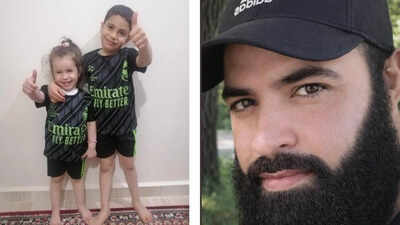
A man who attacked a synagogue in Michigan was shot after the incident. Investigators said he had shared photos of children killed in Israeli air strikes moments before the attack.The attacker was identified as Ayman Mohammed Ghazali, who drove a vehicle into the grounds of Temple Israel on Thursday. When he attempted to carry out the attack, security personnel at the synagogue confronted him and opened fire. Ghazali died on the spot.Officials said there is a preschool on the synagogue complex and there were about 140 children and staff members inside the building at the time. No child was injured during the incident.Investigators later examined Ghazali’s phone and online activity and found that he had shared photos of children killed in Israeli attacks shortly before the attack. The post was shared widely on messaging platforms and referenced casualties in recent Israeli military operations in the Middle East.Ayman Mohammed Ghazali was from Mashghara, a town in the Beqaa Valley of Lebanon. The official said his two adult brothers, as well as his niece and nephew, were killed in the Israeli strikes, Sky News reported.Law enforcement officials also said that Ghazali had recently lost several of his relatives in an Israeli airstrike in Lebanon. According to investigators, those deaths may have contributed to his actions, although officials said the full motive is still under investigation.Police secured the synagogue complex after the incident and searched Ghazali’s residence as part of the investigation.Following the attack, security was increased at Jewish institutions in parts of Michigan. The presence of security personnel at the venue prevented the situation from becoming more serious.Ghazali was a naturalized American citizen born in Lebanon who entered the United States on May 20, 2011, on an IR‑1 immigrant visa as the spouse of an American citizen. He applied for citizenship in October 2015 and was granted citizenship in February 2016. Ghazali lived in Dearborn Heights, Michigan and worked locally, including in the restaurant industry.

Source link

Iran-Israel-US ‘triangle trap’: Decoding India’s stance amid rising Middle East tensions | India News

Iran-Israel-US 'triangle trap': Decoding India's stance amid rising Middle East tensions

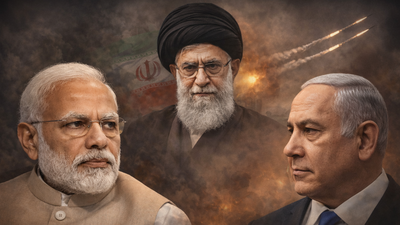
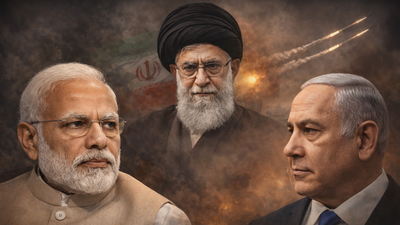
Is New Delhi recalibrating its approach to West Asia? The question has resurfaced after India’s notably cautious response to the latest escalation involving Iran. When the United States and Israel launched strikes on Iran on February 28, triggering retaliatory missile attacks across the region, several global powers reacted swiftly. India, however, avoided taking a clear position on Tehran.In the crucial hours after the escalation, Prime Minister Narendra Modi did not directly comment on Iran. His first response came nearly a day later and focused instead on attacks on the United Arab Emirates. Subsequent conversations with leaders across the Gulf emphasised respect for their territorial integrity and the need for de-escalation, but again avoided directly naming Iran. Even after the death of Iran’s Supreme Leader Ali Khamenei was confirmed, New Delhi stopped short of condemning the killing, offering only a condolence gesture days later.Experts describe this cautious approach as deliberate and calculated. “India’s policy has been very careful. Its interests are far more aligned with the US than Iran. That explains why it condoled and did not condemn Khamenei’s killing, even though it was a clear violation of international law,” said JNU professor Rajan Kumar. He noted that even though both India and Iran are BRICS members, New Delhi chose restraint over confrontation, highlighting the delicate balancing act in play.

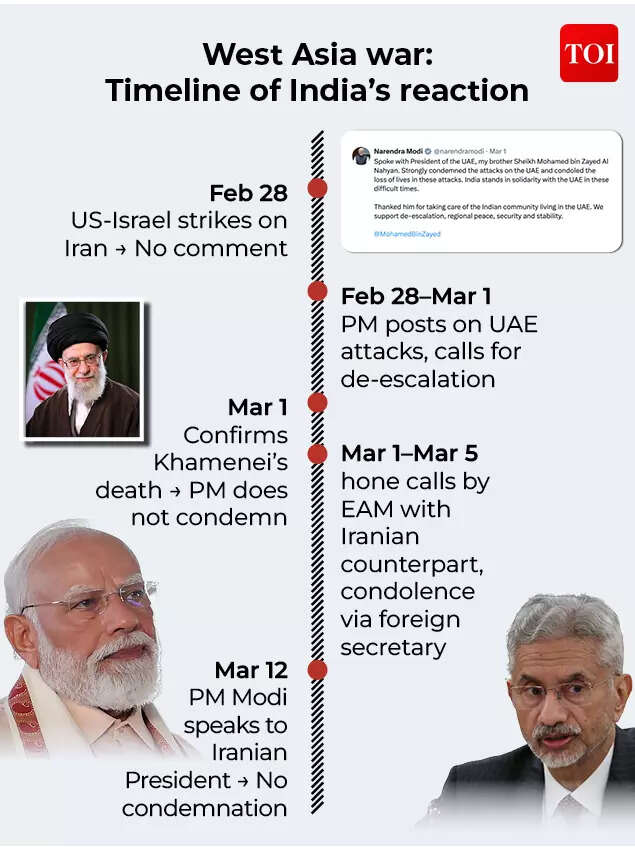
How (When) India reacted on Iran war

28 Feb: US-Israel attack Iran

The United States and Israel launch strikes on Iran amid negotiations between Washington and Tehran over its nuclear programme.Iran retaliates with missile and air attacks across the region, targeting military sites in Israel as well as US bases in Bahrain, Saudi Arabia, Qatar, the United Arab Emirates and Iraq.Prime Minister Narendra Modi makes over 15 posts on his social media X after the news of the war breaks out, but none of it on Iran situation.

March 1: Khamenei’s death confirmed

By midnight early March 1, the news that Iran Supreme Leader Ayatollah Khamenei is killed in the strikes gets confirmed.India, again, sees no reaction on breach of Iran’s sovereignty or the killing of its Supreme Leader Khamenei, even as its long-standing friend Russia is quick to condemn it in strong words, with President Vladimir Putin calling it a “cynical violation of law”.The first post by PM Modi comes on March 1, his 25th on his X account, at 11.26pm. The post condemns “attack” on the UAE. The Prime Minister was referring to Iran’s retaliatory strikes on US military bases in UAE, which had led to one death. However, he did not directly name Iran in his post.By midnight, PM Modi makes another post where he informs that he had a conversation with Israeli PM Benjamin Netanyahu, whom he had two days before the war broke out. In the post, the PM again makes no mention of Iran, but calls for “early cessation of hostilities”.In a series of posts by the next day, PM Modi speaks to the leaders of Bahrain, Saudi Arabia, Jordan, Oman, Kuwait, Qatar, condemning any violation of their territorial integrity. The PM was again referring to the strikes on US military bases in these nations by Iran in retaliation. India’s reaction to Khamenei’s death came five days after the incident. Foreign secretary Vikram Misri signed the “condolence” book in the Iranian embassy on behalf of the government. MEA dismissed this “delay” argument saying that the book was signed by India the first day it was opened, which was on March 5. However, MEA’s clarification failed to explain why the government itself took five days after the incident to formally convey its condolences.PM Modi’s reaction to Iran came only on March 12 when he spoke to Iranian president. The wording of the post was clear: “The safety and security of Indian nationals, along with the need for unhindered transit of goods and energy, remain India’s top priorities.” No condemnation or solidarity.

-

India did not condemn the death, neither did the PM or EAM make any direct comments on the killing. Then what explains this refusal to condemn the killing?Experts have termed it a “very cautious and very careful” move.“India’s policy has been very cautious and very careful. Its interests are much more aligned with US than Iran. Maybe that’s why it condoled and not condemned Khameinei’s death, while it was Khamenei’s death which was actually a violation of international law, said JNU professor Rajan Kumar, an international relations expert.“In fact, both Iran and India are members of Brics, still India chose not to condemn the attack,” he said.

Why historical Iran ties make current restraint notable

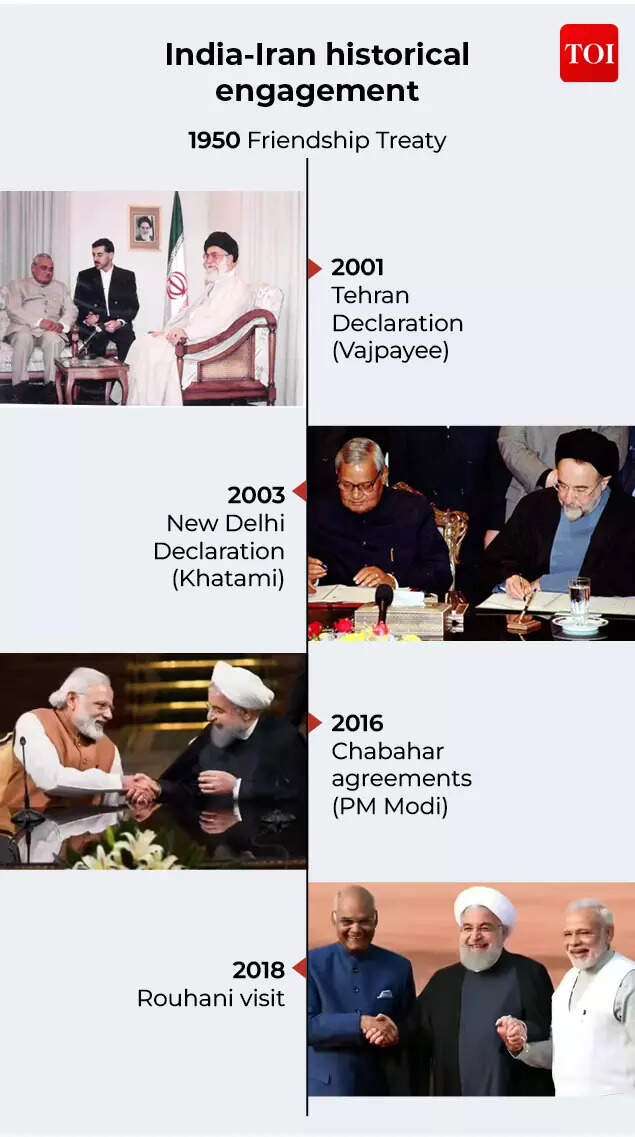
India’s historically close engagement with Iran makes this caution notable. The two countries share civilisational links stretching back centuries, which have shaped a modern partnership built on trade, culture and strategic cooperation. Diplomatic ties were formalised with a Friendship Treaty in 1950, and successive governments in New Delhi invested in maintaining strong political engagement with Tehran.Leaders from the Bharatiya Janata Party (BJP) were also central to strengthening these ties in the past. Prime Minister Atal Bihari Vajpayee’s visit to Iran in 2001 led to the signing of the Tehran Declaration, marking a new phase of strategic cooperation. This was followed by Iranian President Seyyed Mohammad Khatami’s visit to India in 2003 and the New Delhi Declaration, which expanded political and economic engagement between the two countries.Under Prime Minister Narendra Modi, the relationship continued to see high-level outreach. Modi’s 2016 visit to Iran resulted in multiple agreements and the trilateral transit pact with Afghanistan centred on the development of Chabahar Port, a project seen as strategically important for India’s connectivity to Central Asia. Iranian President Hassan Rouhani’s visit to India in 2018 further reinforced cooperation in connectivity and trade.

-

So, what explains this shift away from Iran?

Analysts point to a mix of immediate security concerns and long-term economic dependencies that have pushed New Delhi to adopt a more cautious posture in the current West Asia crisis.A major factor is the safety of the large Indian diaspora across the Gulf. References to the Indian community appeared consistently in Prime Minister Modi’s statements on the unfolding conflict. There are over one crore Indians who work and live in Gulf nations, external affairs minister S Jaishankar informed the Parliament on Monday. This, he said, makes the West Asia war even more concerning for India. He informed that India has already lost two of its mariners, with one missing in the current situation. “We are committed to supporting the Indian community at this time,” Jaishankar said in the Parliament.Moreover, India is significantly dependent on Gulf supplies, especially in energy sector. The key economic concerns include:Oil: India exports nearly 40% of crude oil from Gulf. In 2025, it sourced around $70 billion crude oil and petroleum products from West Asia.LNG needs: The country is heavily dependent on West Asia for LNG requirements. It sourced liquefied natural gas or LNG worth $9.2 billion from West Asia, which is around 68.4% of its total LNG imports.LPG: LPG imports from West Asia were $13.9 billion in 2025, making up 46.9 % of India’s total LPG purchases. Cities such as Bengaluru, Mumbai and Chennai are seeing disruptions in commercial LPG supplies as authorities prioritise domestic cooking gas for households.

Recent closeness towards Israel

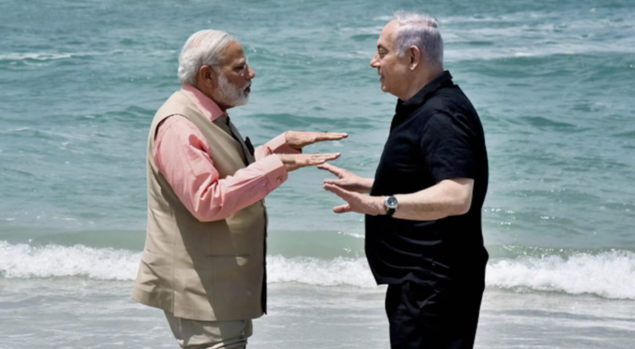
For decades after independence, India’s policy on Israel and Palestine was cautious. New Delhi supported the Palestinian cause and often voted with Arab countries in international forums, even voting against Israel’s admission to the United Nations. At the same time, India recognised Israel in 1950 and maintained limited contact while presenting itself as neutral. India later became the first non-Arab country to recognise the State of Palestine in 1988 and established diplomatic relations with Israel in 1992 after consultations with Yasser Arafat, leader of the Palestine Liberation Organization.Relations with Israel began expanding gradually after the Cold War, particularly in defence and trade. However, earlier governments often kept the relationship relatively low-key to avoid upsetting Arab partners or appearing to move away from India’s traditional support for the Palestinian cause.A more visible shift came after Narendra Modi became prime minister in 2014. Under his government, India’s ties with Israel grew more open and politically prominent. Defence cooperation increased and bilateral trade expanded, with both countries emphasising shared security concerns and technological cooperation.In 2017, PM Modi became the first Indian prime minister to visit Israel, marking a symbolic turning point in the relationship. During the trip, he was warmly received by Israeli prime minister Benjamin Netanyahu, and images of the two leaders walking together on Ogla beach became widely circulated, highlighting the new warmth in ties.

-

PM Modi’s 2017 Israel visit: PM with Israeli counterpart at Ogla beachThe closeness between the two governments has continued in recent years to a point where PM Modi was in Israel merely two days before Israel attacked Iran with the US.Referring to Israel as the “fatherland” and India as the “motherland”, PM Modi’s visit came at a time when Israel faced intense international criticism over its military campaign in Gaza, which has killed more than 60,000 Palestinians according to various estimates. “The timing of it was clearly wrong. The policy makers did not expect that to happen very soon. That sent a very wrong optics from a balanced policy perspective,” professor Rajan said.The war has also drawn renewed scrutiny of Netanyahu’s leadership, with critics and some international legal bodies describing him as responsible for alleged war crimes.The shift under PM Modi reflects both ideological and strategic factors. The Bharatiya Janata Party has long been seen as more openly supportive of Israel than previous governments. At the same time, India sees Israel as a key partner in defence technology, intelligence cooperation and innovation. As a result, India’s West Asia policy today attempts to balance closer ties with Israel while continuing to express support for Palestinian statehood.

-

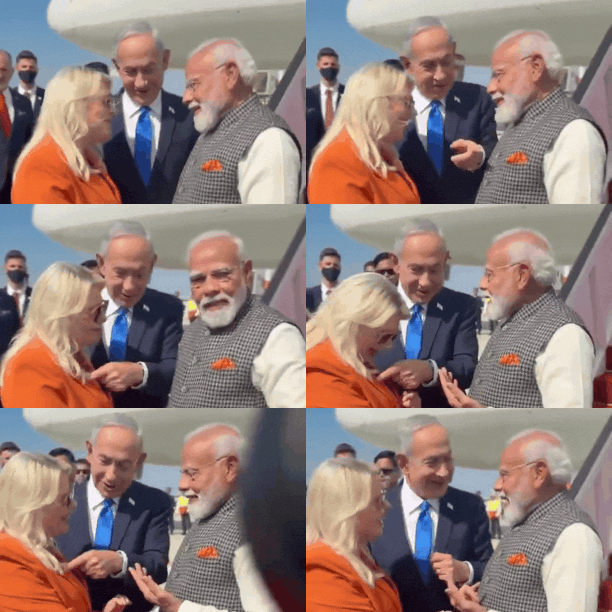
PM Modi’s 2026 Israel visit: Netanyahu pointing out ‘saffron match’ between PM Modi and SaraHowever, professor Rajan said that India’s policy is not “completely determined by Israel”, rather, currently, it is more concerned about “offending” the US.“India’s policy is not completely determined by Israel. Yes, Israel is an important partner but in the past also we have pursued our ties with Israel without damaging our relations with other countries,” he said.“India is primarily concerned about offending the US. At this time, it would not like to offend the Trump administration. And that’s exactly why it is not issuing any statements condemning of killing of Khamenei,” he said.

So, is there a shift?

Rajan Kumar, a professor at JNU, who teaches international relations said that currently, there is no shift in India’s policy towards the Middle East. Rather, he said, that the shift might happen after the war is over.“At the moment, I don’t see any shift happening. It is a continuation of policy where India’s preferred partner was United States and Israel. But at the same time trade ties were linked with many other countries in the region,” he said.“So, a shift is not apparent at the moment, but it might happen after the outcome of the event. Because if India thinks that Iran remains an important part and if the regime survives, it will pursue a different strategy. But if US wins, which is very unlikely, if the regime survives, resistance persists, it will have a different strategy. Now, India is pursuing a wait-and-watch policy in West Asia,” he added.However, he added that there was a need for India to go for a policy of multipolarity, rather than unipolarity under the influence of Israel and the US.Experts argue that India should embrace multipolarity in West Asia, rather than a unipolar tilt toward Israel and the US. While Israel is a valuable partner, destabilizing relationships with other West Asian countries could jeopardize India’s economic and security interests in the region.“India should pursue multipolarity, rather unipolarity under the influence of Israel and US in West Asia. Although we have good ties with Israel, we cannot de-stabilise our ties with other West Asian countries, for the reason that our economic and security interests are aligned there,” he said.

Source link

अयोध्या में अलविदा की नमाज के बीच शोक का माहौल, सादगी से मनाई जाएगी ईद

इस बार अयोध्या में रमजान के आखिरी जुमे यानी अलविदा की नमाज के दौरान गमगीन माहौल देखने को मिला. राम नगरी में बड़ी संख्या में मुस्लिम समुदाय के लोग नमाज अदा करने के लिए जुटे. अयोध्या इमामबाड़े में भी अलविदा की नमाज अदा की गई, जहां लोगों ने देश और दुनिया में अमन-चैन की दुआ मांगी. हालांकि, इस बार आम त्योहारों जैसा माहौल नहीं था, क्योंकि शिया समुदाय के धार्मिक नेता के निधन से मुस्लिम समाज में शोक का माहौल है.

शिया धर्मगुरु के निधन पर समाज में शोक की लहर
मुस्लिम समुदाय के लोगों ने कहा कि शिया धर्मगुरु अली खामेनेई के निधन की खबर से समुदाय में गहरा दुख है. इसी वजह से इस बार ईद का त्योहार सादगी से मनाने का फैसला लिया गया है. समाज के लोगों ने कहा कि ईद के दिन नमाज अदा की जाएगी और जरूरतमंद लोगों को जकात दी जाएगी, लेकिन कोई भव्य समारोह या बड़े आयोजन नहीं किए जाएंगे.

नमाज के बाद अंतरराष्ट्रीय मुद्दों पर नाराजगी जताई
विदाई प्रार्थना के बाद कुछ लोगों ने अंतरराष्ट्रीय मुद्दों को लेकर भी नाराजगी जाहिर की. इस दौरान एक पोस्टर फाड़ने और उसे पैरों से कुचलने की घटना सामने आई। अमेरिका और इजराइल के खिलाफ भी नारे लगाए गए. हालांकि मुस्लिम समुदाय के कई लोगों ने अपील करते हुए कहा कि दुनिया को लड़ाई-झगड़े से दूर रहना चाहिए और सभी को शांति और भाईचारे का रास्ता अपनाना चाहिए.

शहर में 69 स्थानों पर अलविदा की नमाज अदा की गई
अलविदा नमाज को लेकर प्रशासन भी पूरी तरह अलर्ट नजर आया. शहर भर में कुल 69 स्थानों पर नमाज अदा की गई। नमाज के दौरान सुरक्षा कड़ी करने के लिए अतिरिक्त पुलिस बल तैनात किया गया था। इसके अलावा शहर में पुलिस गश्त भी बढ़ा दी गई ताकि किसी तरह की अव्यवस्था न हो.

प्रशासन की कड़ी निगरानी में नमाज हुई
श्रेयस त्रिपाठी ने कहा कि अलविदा की नमाज शांतिपूर्वक संपन्न कराने के लिए शहर भर में पुलिस और सुरक्षा बलों को तैनात किया गया है. प्रशासन की देखरेख में सभी जगहों पर शांतिपूर्वक नमाज संपन्न हुई. इस वक्त अयोध्या में ईद की तैयारियां चल रही हैं, लेकिन शिया समुदाय में शोक के चलते इस बार यह त्योहार सादगी से मनाए जाने की बात कही जा रही है.

Source link

Ravinder Singh passes away: Indian football mourns Namdhari FC star

Ravinder Singh, a 25-year-old defender for Namdhari FC in the Indian Football League (IFL), died due to chest pain during a local football tournament in Bachauri village in Punjab’s Nawanshahr district. Singh was taken to a private hospital, where doctors declared him dead on Wednesday. The football community has paid tribute to his death and the IFL has announced a minute’s silence at all upcoming matches to honor his memory.

The funeral took place in Singh’s hometown, with the last rites performed by his brother Bhupinder Singh. The ceremony was attended by a large gathering of family members, friends and fellow footballers, reflecting the impact of Singh’s life on his community and teammates.

Indian football: complete coverage

Namdhari FC paid tribute to their late defender by sharing an emotional video message and holding a prayer in his memory.

Several other football clubs, including Minerva Punjab, Gokulam Kerala and Bengaluru FC, expressed their condolences on social media platforms. He trained at Minerva Punjab Academy during his formative years.

Credit: Bengaluru FC

Who is Ravinder Singh?

Ravinder Singh was a key pillar in Namdhari FC’s defence, playing a vital role for a club that has become a symbol of Punjab’s football resurgence in the Indian Football League. His journey to the professional stage was not glamorous, as he steadily progressed through local youth teams through hard work and determination.

Off the field, Ravinder balanced football with his studies and pursued a BA second year degree at Babbar Akali Memorial Khalsa College, Garhshankar. Managing the demands of college as well as the I-League was not easy, but he did it while inspiring many young footballers in Ludhiana. Wearing jersey number 31, Ravinder was known for his strong tackles and sharp positioning, which helped Namdhari FC maintain a solid defensive unit against some of the top teams in Indian football.

– ends

Published on:

March 13, 2026 17:32 IST

Source link

Iran war enters 14th day: Two weeks into conflict, what we know so far – Tehran blasts, Israel strikes, US plane crash

Iran war enters 14th day: Two weeks into conflict, what we know so far - Tehran blasts, Israel strikes, US plane crash
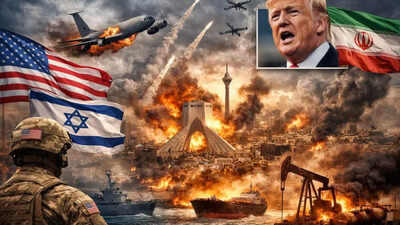
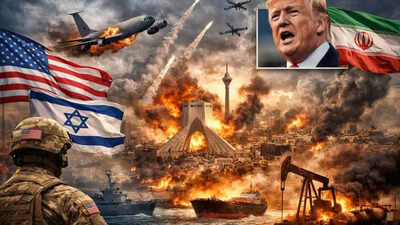
Representative Image (AI-Generated)

The war between the United States, Israel and Iran is about to enter its third week and tensions show no signs of easing as missile attacks, drone strikes and airstrikes continue across the Middle East.US President Donald Trump claimed in a virtual meeting that Iran “is about to surrender”, news agency Reuters reported, quoting Axios. He further told the leaders of the Group of Seven that the conflict is moving in Washington’s favor. Despite his comments, the war has escalated on multiple fronts, with casualties rising and global markets reacting to increased volatility.Nearly two weeks after the conflict began, oil prices have soared, shipping through the Strait of Hormuz has been disrupted and regional powers have joined the fighting. Missile exchanges between Israel and Iran continue, while allied groups and regional states are increasingly becoming part of the conflict.

Week 1: War begins with assassination of Iran’s supreme leader

The war began on 28 February when the United States and Israel launched coordinated attacks inside Iran under ‘Operation Epic Fury’, targeting military infrastructure and missile systems.The initial attack killed several senior commanders, including Iran’s supreme leader Ali Khamenei, prompting immediate retaliation from Tehran.

.

.

Iranian forces launched missiles and drones toward Israel and US military facilities across the region, marking the beginning of a rapidly escalating conflict.

Day 2: Iran launches major retaliation

On the second day of the conflict, Iran responded with a large number of ballistic missiles and drones targeting Israeli cities and military infrastructure. At the same time, the US military expanded its air campaign against Iranian missile launch sites and Revolutionary Guard facilities. Iran also began directing attacks on US bases and allied states in the Middle East, indicating that the conflict would not be limited to Iranian and Israeli territory.

Day 3: Hezbollah opens northern front

Lebanese militant group Hezbollah joins the conflict by firing rockets into northern Israel. Israel retaliated by attacking Hezbollah targets in the southern suburbs of Beirut and other parts of Lebanon.Among the deadliest attacks were overnight airstrikes on the eastern city of Nabi Chit, where at least 16 people were killed and 35 wounded, according to Lebanon’s Public Health Ministry. Officials warned that the death toll could rise as rescue efforts continued.

Day 4: bay stress increases

Missiles and drones began appearing over Gulf countries that host US military bases, including Kuwait, Bahrain, Qatar and the United Arab Emirates. The attacks near the Strait of Hormuz disrupted maritime traffic and raised fears of a global energy crisis. Oil markets reacted sharply as traders worried the conflict could significantly impact global supply.

Day 5: Gulf countries increasingly joining in

Iranian drones and missiles targeted several countries in the region. Air defense in the United Arab Emirates intercepted projectiles near Dubai’s international airport and coastal areas.In Bahrain, a missile struck a government oil refinery, causing a fire, officials later said. Saudi Arabia also prevented drones near key energy infrastructure.

Day 6: Mass strike campaign intensifies

The United States and Israel expanded their attacks inside Iran, attacking hundreds of targets over several days. Officials said the strikes destroyed large parts of Iran’s air defense network and missile systems. Israeli officials claim to have destroyed about 80 percent of Iran’s air-defense systems. Iranian officials said the death toll from the attacks across the country has risen to more than 1,300. Many cities reported heavy damage to buildings and infrastructure, including government facilities, hospitals, and residential areas.

Day 7: War spreads across the region

The clashes spread across multiple fronts, including Lebanon, Iraq and the Gulf. Explosions were reported in Dubai and Bahrain as air defense systems intercepted incoming projectiles. Shipping through the Strait of Hormuz slowed, affecting global trade routes.Trump ruled out immediate talks and demanded Iran’s “unconditional surrender”, signaling that the war could continue to expand across the region.

Week 2: Conflict escalates across the Middle East

Day 8: Heavy bombing and regional attacks

A week after the war, there were intense airstrikes on Tehran, while Iranian missiles targeted Israel and the Gulf countries. Saudi Arabia, Qatar and the UAE reported intercepting drones and missiles.As casualties increased rapidly, Western countries began to consolidate military assets in the region. At least 1,332 people are reported killed in US-Israeli strikes as a new wave of deadly bombings hits Tehran, according to Al-Jazeera.

Day 9: Attacks spread to the Gulf and Iraq

Missile and drone attacks were reported in Saudi Arabia, Bahrain, Kuwait and Iraq. A missile fell inside the US Embassy compound in Baghdad, although no casualties were reported. Israel also attacked fuel storage facilities in Tehran, causing major fires.Trump said that despite the ongoing hostilities with Iran, Washington has no interest in negotiating with it. “We’re not looking to compromise,” Trump told reporters aboard Air Force One. “They would like to compromise. We don’t want to compromise.”Trump claimed that the United States and Israel have severely weakened Iran’s military capabilities, including its navy, air force, and missile infrastructure.

Day 10: Iran announces new supreme leader

Iran appointed Mojtaba Khamenei as the country’s new supreme leader following the death of his father. The cleric, known to have close ties to the Islamic Revolutionary Guard Corps, took over leadership as Iran continued missile and drone attacks across the region.Saudi Arabia said it intercepted a drone targeting the Shaybah oil field and warned Iran it would suffer “the greatest harm” if attacks continued. The United States also began withdrawing non-essential diplomatic staff and families from Saudi Arabia and other Gulf countries due to increasing security threats.

Day 11: Intensified bombings and protests

Heavy airstrikes continued across Iran, with explosions reported in Tehran and other cities.Thousands of Iranians rallied in support of Mojtaba Khamenei as the government vowed to continue the fight. Iranian forces also launched drone strikes targeting Israeli infrastructure, including energy facilities in Haifa.Iran’s Foreign Minister Abbas Araghchi said Tehran would continue fighting as long as necessary, casting doubt on Trump’s insistence that the conflict would end “soon.”

Day 12: The largest wave of US attacks

US Defense Secretary Pete Hegseth said the attacks were the largest the US military has carried out since the war began. Tehran reported heavy bombing across the capital, while thousands of civilians fled major cities.The United States also destroyed several Iranian naval vessels near the Strait of Hormuz amid fears that Tehran might attempt to block the shipping route.

Day 13: War disrupts global energy markets

The conflict rapidly strained global energy supplies. The International Energy Agency announced the release of 400 million barrels from emergency reserves to stabilize markets, as tanker traffic through the Strait of Hormuz came to a near halt.Missile attacks and drone strikes continued across the Gulf while Israel expanded its campaign against Hezbollah targets in Lebanon.Casualties have increased across the region. Iranian officials say more than 1,200 people have been killed in Iran, while hundreds have been killed in Lebanon and dozens in Israel and other countries.The United Nations estimates that hundreds of thousands of people have been displaced, particularly in Lebanon, where persistent bombing has forced residents to flee their homes.Children have been worst affected, with humanitarian agencies warning that thousands have been injured or killed since the war began.

Day 14: Explosion in Tehran as war nears third week; Tension increased due to American plane crash

Heavy explosions were reported across Tehran as the war entered its 14th day, according to Iranian state media. The blasts were heard near a major pro-government demonstration in Tehran’s central square, where large crowds had gathered to mark Quds Day, an annual event held on the last Friday of Ramadan in support of the Palestinian cause.That day also saw a major aviation incident in Iraq. A Boeing KC-135 Stratotanker operated by the United States Air Force crashed in western Iraq during the afternoon. United States Central Command confirmed that four of the six crew members on board died, while rescue operations continued for the remaining personnel.

Global economic impact and energy crisis

The conflict has caused major disruptions in global energy markets. Oil prices rose above $100 a barrel amid fears that shipping through the Strait of Hormuz could be blocked.The waterway typically carries about one-fifth of the world’s oil supply, making it one of the most important energy corridors globally.Many Gulf countries have also reduced oil production as storage facilities filled due to shipping disruptions. World leaders have held emergency talks to stabilize markets and prevent a wider economic shock.

Source link