

Train, post, recover and repeat: A survival guide for India’s budding athletes
There is no dearth of sports talent in India. Walk into any training facility in the country, and you will find dedicated, disciplined competitors who have given years of their lives to their sport. Some of them are very good. Some are extraordinary. Most of them you’ve never heard of.
The ones you’ve heard about are doing well for themselves. Virat Kohli sells everything from energy drinks to luxury cars. Big names from cricket, tennis and badminton are on billboards, running campaigns, signing deals that would make most professionals jealous. Fame in Indian sports is exceptionally lucrative. But fame is also exceptionally rare.
For most Indian athletes, there are no billboards. No brand deals coming to inbox. There’s just training, competition, recovery and the monthly reality of financing all three without salaries, sponsors or a safety net. The question of how they survive financially and commercially is one that Indian sport has never adequately answered.
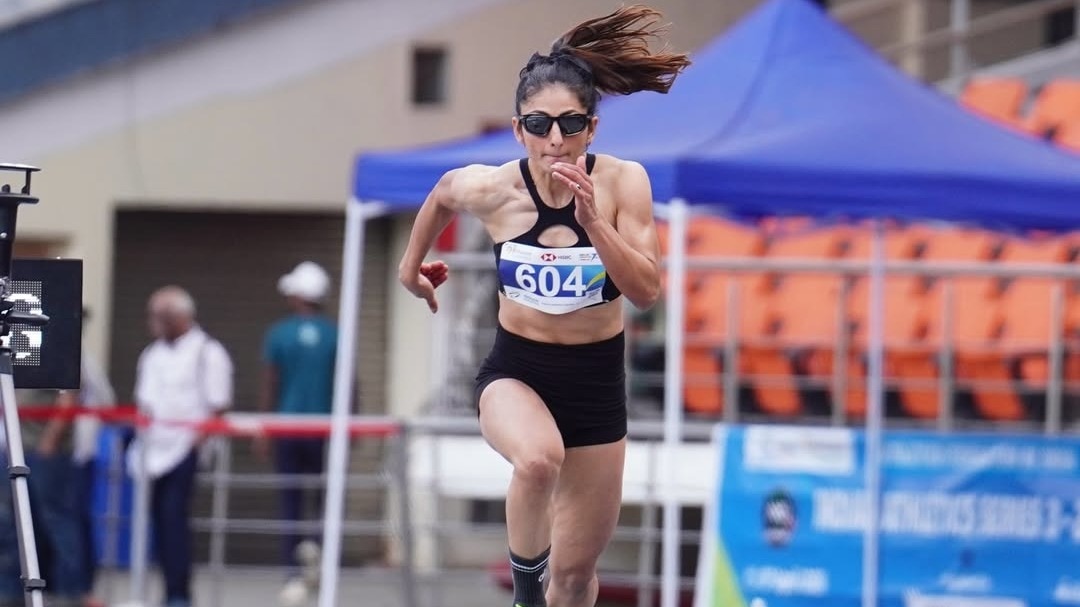
Niharika Vashishtha has found an answer. The triple-jumper is among a select group of Indian athletes who have crossed the 13m mark to qualify for the Asian Games in Aichi-Nagoya this September. She has been competing for fifteen years. She has also been a content creator for five years. According to him, one career cannot survive without the other.
Economics of being an athlete in India
Ask Vashishtha what it really costs to maintain an elite sports career, and she doesn’t hesitate. Once or twice a week, a session of physiotherapy costs around Rs 1,500. Quality supplements, especially imported supplements, cost Rs 30,000 to Rs 35,000 per month. Then there’s daily nutrition, organic food, strength and conditioning, and various other expenses that pile up quietly in the background. Don’t forget accommodation, travel and all the other usual expenses.
Add it all up, and you’re looking at a monthly outgoing that will impact most household budgets. Here’s the perspective that makes that number difficult: According to a 2023 research paper on labor income in India, a person earning Rs 50,000 per month sits in the top five percent of the country’s entire income distribution. The same figure is not the salary for a serious athlete. This is an ongoing cost.
“If you want to be the best in your field, you need to be the best in everything,” Vashishtha said in an exclusive interview with India Today. “For an athlete without sponsorship, all this is expensive and difficult to manage.”
Even a regular job is not a straightforward solution. An athlete’s day is built around training, recovery and diet. The typical sporting rhythm doesn’t leave much room for nine to five. By his mid-twenties, Vashishtha was well aware of bondage. She had just finished college, she was competing seriously, and she didn’t want to rely on her parents to finance it all.
“That was the point when I started thinking that I needed a steady source of income to support myself and my training,” she says. “Social media came into my life at just the right time.”
A phone and a pandemic
She was barely on social media before 2019, keeping a private account and largely ignoring the platforms. The turning point came when she returned from the World University Games, where she had represented India. Her agent, recognizing the direction things were headed commercially, encouraged her to begin making appearances.
“My agent told me that social media is going to be huge in the next few years and that it could be a great opportunity to explore alongside my sports career,” she says. Vashishtha did not believe it immediately, but he listened.
Then the pandemic came. Gyms closed, competitions were canceled and the country went indoors. For most athletes, the lockdown was a period of frustration and stalled momentum. For Vashishtha, this proved to be the best time to start. Training shifted to wherever he could find space and there was no competitive calendar to focus on, so he started posting.
Workout clips, training snippets, behind-the-scenes footage of careers most people knew nothing about. Nothing elaborate, nothing overly built. Just an athlete doing what she does, with a phone pointed at her.
“I started posting workout clips, behind-the-scenes videos, and training snippets just for fun,” she says. “Slowly, people started responding really well and that’s how the journey began.”
The reaction surprised him. People watched, shared, and came back for more.
keep posting when you get hurt
The true test of what he had built came not when things were going well, but when they broke down. An ACL injury halted his season and sent him into a rehabilitation process that lasted the better part of a year. Treatment meant regular travel to Bengaluru and Chandigarh. Apart from everything else, the costs were considerable.
She kept posting. Updates from the physio table, progress reports from the gym, the slow and unnatural business of getting the knee back to full strength. It was honest rather than sophisticated and audiences responded to that honesty. More importantly, the income kept coming.
“My ACL rehabilitation involved frequent travel for treatment,” she says. “I had to pay for physiotherapy, diet and rehabilitation. Social media income made it possible. Without it, I would have had to depend entirely on my parents.”
But the financial lifeline was only part of it. There’s a special kind of accountability that comes from having a spectator, even a minor spectator, watch you heal. Each post was a small commitment. Each update had a reason to appear in the next season. Vashishtha found that the platform he had built to finance his career was helping him keep himself together even during the toughest times.
“I kept posting parts of that journey on social media, and in a way, it helped me stay accountable and consistent,” she says.
“Knowing that people are following the process and looking for updates gives me extra motivation to move forward.”
Injury has always been one of the most financially and psychologically uncertain moments in an athlete’s career. You’re not competing, you’re losing visibility, and costs are higher than usual. For Vashishtha, social media addressed both problems simultaneously. This kept the income flowing, and it kept him with a sense of purpose when the training track seemed too far away.
His presence on these platforms began to open doors beyond sports. A casting director found her on Instagram and cast her in an advertisement with Akshay Kumar. It was an early sign that the platform could work in ways it wasn’t initially expected, creating opportunities in advertising and entertainment that athletes working entirely offline would never have.
the camera never turns off
The practical reality of how Vashishtha creates content is worth understanding because it dispels the notion that this kind of work requires significant time or resources. At the end of most training sessions, her father, who is often present, records a rep or two on his phone. She edits the footage herself. She notes that editing has an unexpected bonus: Seeing her own movement helps her analyze technique.
“It’s very simple,” she says. “I usually ask my dad or training partner to record one or two reps a session. I edit my videos myself. It doesn’t have to be overly complicated or high-effort.”
That ingenuity is part of why she believes content creation is a real and exemplary path for athletes of all disciplines. You don’t need a production crew or media strategy. You need a phone, a platform, and some consistency. The story, the effort, the stakes: the athletes already have it all. They just need to put a camera on it.
But once the camera is turned on, it does not turn off easily. When training is going poorly or there is simply no mental energy, the pressure to remain consistent doesn’t stop. Brand collaboration depends on engagement. Engagement depends on continuity. Which means there’s always a quiet obligation to sit through each training session, each recovery day, each moment of doubt.
“Even if training isn’t going well or you’re not in the right mental state, you still feel the need to post,” she says. “The pressure to always be visible is probably the hardest part.”
This is a stress that should not be underestimated. Athletes already bear the physical and psychological burden of high-performance sport. The responsibility of the content creator to always be visible online adds another layer to that. The financial benefits are real.
But they come at a price that isn’t always reflected in the highlight reels.
japan is waiting
The Asian Games are to be held in Aichi-Nagoya in September and Vashishtha has played his part. The 13 meter mark has been cleared. The decision on whether she will be included in the final tour squad or not rests with the selectors, not her. She is naturally unaffected by things beyond her control.
When asked whether her social media profile might be a factor in the competition in any way, whether competitors have seen her content or made assumptions, she gives the answer of someone who has spent fifteen years learning what matters and what doesn’t.
“Competitors may have seen my content, maybe they have an opinion, maybe they don’t,” she says. “I don’t think too much about it.”
The two worlds she inhabits, athlete and producer, have never really been in conflict for her. They have always served the same purpose. Fund each other. One documents the other. And when the competition begins, only one of them matters.
“My focus is to play with a neutral mindset in the Asian Games and be fully prepared regardless of everything that happens off the field,” she says.
But Vashishtha is not alone in finding this out. In all disciplines, a peaceful change is underway. 25-year-old fencer and content creator Rishika Khajuria is using her platform to promote fencing What Vashishtha has done for athletics: making an invisible sport visible, and finding a way to finance it in the process. In an interview with India Today in August 2025, she spoke clearly about the need for it.
“Since fencing is a new sport in India, we don’t get a lot of sponsors,” he said. “So it’s important for us to garner attention through social media. That’s the plan.”
This shows that the plan is the same everywhere. Train, post, recover and repeat. With thousands of Indian athletes still working out how to raise funds for the next training block, the next physio session, the next supplement order, the story is no longer just Vashistha’s. This is becoming a movement. You are already working. You can also document it.
– ends