

‘Force vs. Geography’ Trump’s Project Freedom meets Iran’s remaining firepower
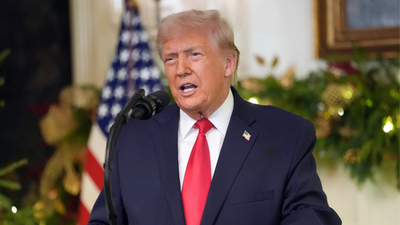
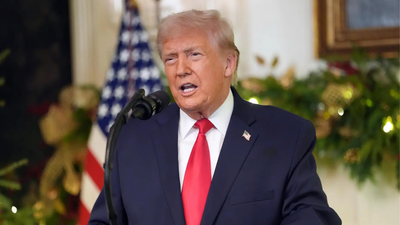
TOI correspondent from Washington: The United States and Iran are on the verge of resuming their shooting match in the Gulf after Tehran attacked the UAE with drones and missiles in response to US efforts to militarily rescue stranded ships in the Strait of Hormuz under “Project Freedom”.“In a high-stakes gambit that blends humanitarian rhetoric with hard power signaling, US President Donald Trump on Monday initiated a Washington-led move to move commercial ships out of the choppy waterway under protective US cover. But when Tehran attacked the UAE’s Fujairah province, it was forced to take defensive measures against incoming missiles and drones, as the power move was met with remaining Iranian firepower. The US, for its part, claimed that two merchant ships had passed through the strait but Iran rejected the claim, saying it had full control over the strait. The tit-for-tat announcements come amid a two-month-long conflict in the Gulf that has blocked one of the world’s most vital oil arteries and rattled global energy markets – and the US. Domestic politics – in a reversal.The competition for control of the Strait of Hormuz has now turned into a stark reality: the US clearly commands superior military power, but Iran appears to be dictating the terms of engagement, with clear warnings from Tehran revealing a situation where geography and asymmetric strategy are blunting Washington’s power, forcing it to work within the red lines set by its rival. What the US has portrayed as independence is being seen as provocation by Iran as both sides headed down a slippery path to renewed fighting on Monday. Earlier, defining the operation as humanitarian intervention, Trump said neutral countries had appealed to Washington to help free ships “locked” in the strait, many of which lacked food and essential supplies. The US will “safely escort its vessels out of these restricted waterways,” he said, warning that any interference “will have to be dealt with forcefully.” The operation, which began Monday morning Middle East time, was presented as a goodwill gesture – including to Iran – even if it had unmistakable coercive undertones.But Project Freedom had a hesitant start at the grassroots level. Shipping through the strait remained difficult, with most ships opting to use the Iranian-controlled traffic separation scheme instead of the US-proposed corridor near Oman. Shipping officials said the plan lacks operational clarity and it is unclear whether it is sustainable, with industry concerns that without Iranian coordination, any large-scale transit risks rekindling hostilities. Tehran’s attacks on the UAE within hours of the US move showed that fears were not unfounded. In strictly military terms, the US retains overwhelming superiority. The U.S. Navy could deploy forces across the Gulf with carrier strike groups, surveillance systems, and associated bases. But geography – and politics – complicate that advantage. Iran’s proximity to the strait, combined with its arsenal of coastal missiles, drones, and fast-attack craft, gives it effective control over the dynamics of escalation. Even limited harassment could halt commercial shipping, as insurers raise premiums and companies refuse to risk multimillion-dollar ships.Shipping companies, for their part, are voting with their hearts out: Most are staying out. Officials say Trump’s assurances fall short of the security guarantees needed to restart transit. Without a comprehensive agreement – ideally involving Iran – insurers are unlikely to underwrite voyages through the strait. The result is a disruption that will have a global impact, disrupting markets from Asia to Europe.In America itself, the crisis is hitting kitchen-table economics. Gas prices nationwide have risen to an average of $4.46 per gallon, up from $2.98 before the conflict – an increase of nearly 50 percent. Analysts have warned that if the hurdle persists, prices could cross $5.The spike is putting intense pressure on Trump, who has made energy affordability a central political message. The president has responded with a mix of external appeals and strategic pressure, repeatedly asking China and NATO allies to help reopen the waterway, whether by pressuring Iran or contributing naval assets.Critics argue that the administration’s approach has been reactive and lacks a coherent end game. Some lawmakers are questioning whether Project Freedom risks embroiling the US in a broader conflict without Congressional approval, while others argue that the President has little choice but to take action to stabilize global energy flows.However, Trump has maintained a defiant tone that the operation is both necessary and limited. He has pointed to “very positive discussions” with Iran as evidence that diplomacy is still in play, even as he stressed a willingness to use force if necessary.