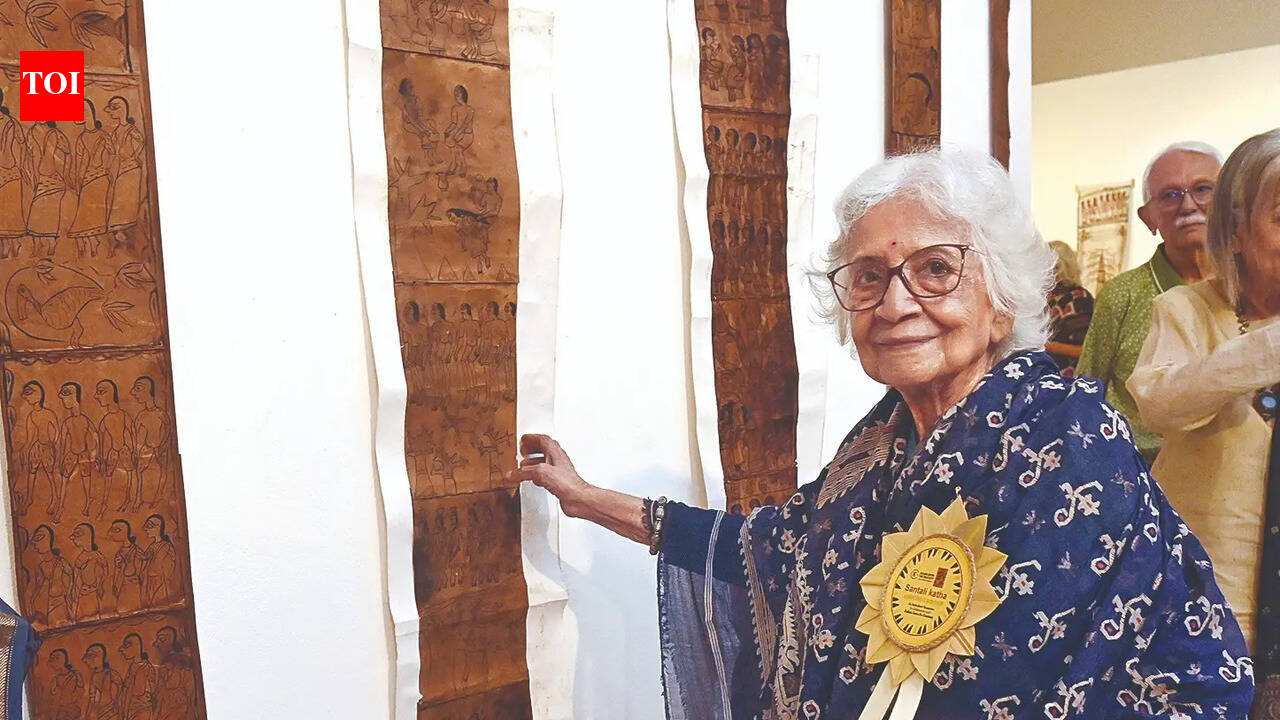

Display a vibrant picture of Santhali culture. events movie news
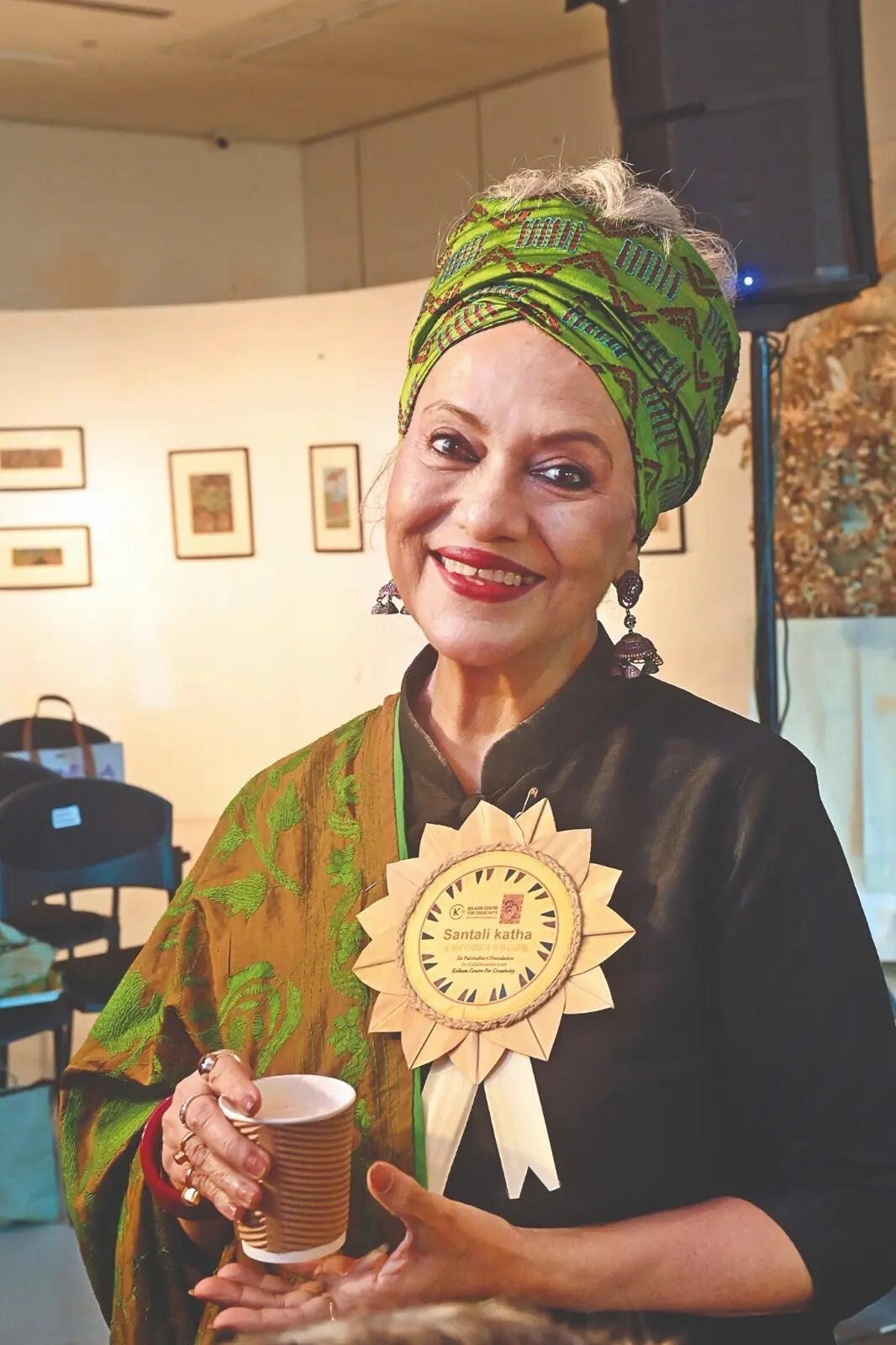
“People asked me not to do this exhibition at this time, but I deliberately chose this week. I believe that culture is more important than politics, and it should continue, no matter the circumstances,” says curator Ruby Palchaudhuri, as she transforms the Kolkata Center for Creativity into a living cultural narrative with Santali Katha, an exhibition on Santali art, culture and knowledge systems, which will be on view in the coming week. From tapestries and textiles to music and movement, the show challenges static views of tribal life – “We are used to seeing tribes in a static way… ethnographically,” she says, “but we forget that they are active contributors to our cultural diversity.”
This journey didn’t just start, it started almost 50 years ago, when I visited a Santal village for the first time and realized how little we actually understand these cultures. He stayed with me. This exhibition is a continuation of that inspiration. It took over a year with my team to bring it all together. It’s not easy, but it felt necessary
-Ruby Palchaudhuri
Mallika Sarabhai redefined improvisation on stageThe most fascinating moment of the evening came without rehearsal, without structure and based entirely on instinct. Mallika Sarabhai took to the stage without a script and instead chose to construct her performance in real time. She invited someone in the audience to share a Santali story, an everyday, contemporary anecdote, and as the volunteer spoke, they began to respond through movement. What happened next was not a performance in the traditional sense, but something more fluid. Words turned to gestures, pauses turned to rhythm, as he translated a spoken narrative into tangible form, creating a new, spontaneous form of storytelling that merged Santali oral traditions with the experience of modern life.
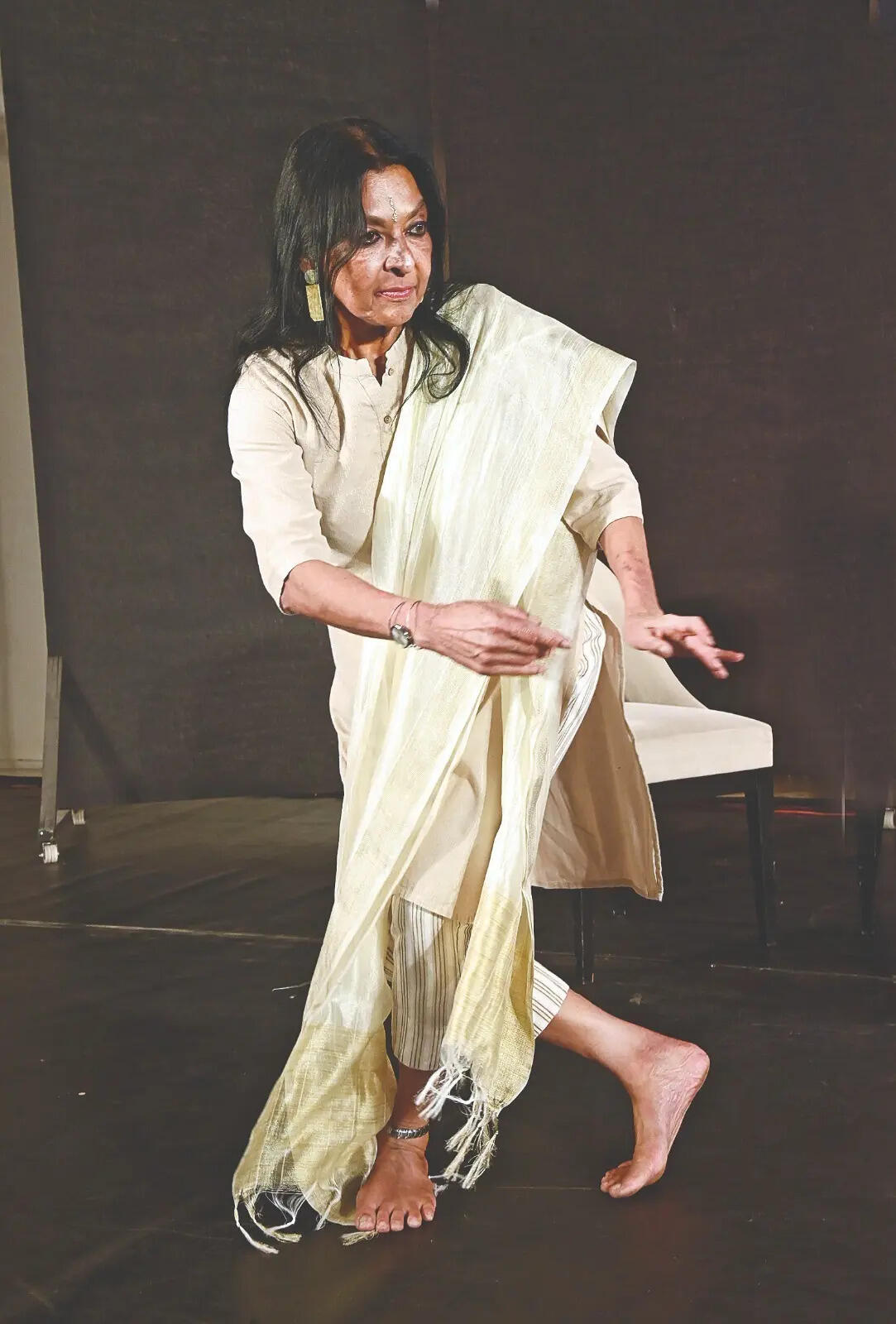
I like Kolkata very much. This is my favorite audience in the world, and bringing together the voices of indigenous people is so important today, especially when politically we are trying to erase them.
-Mallika Sarabhai
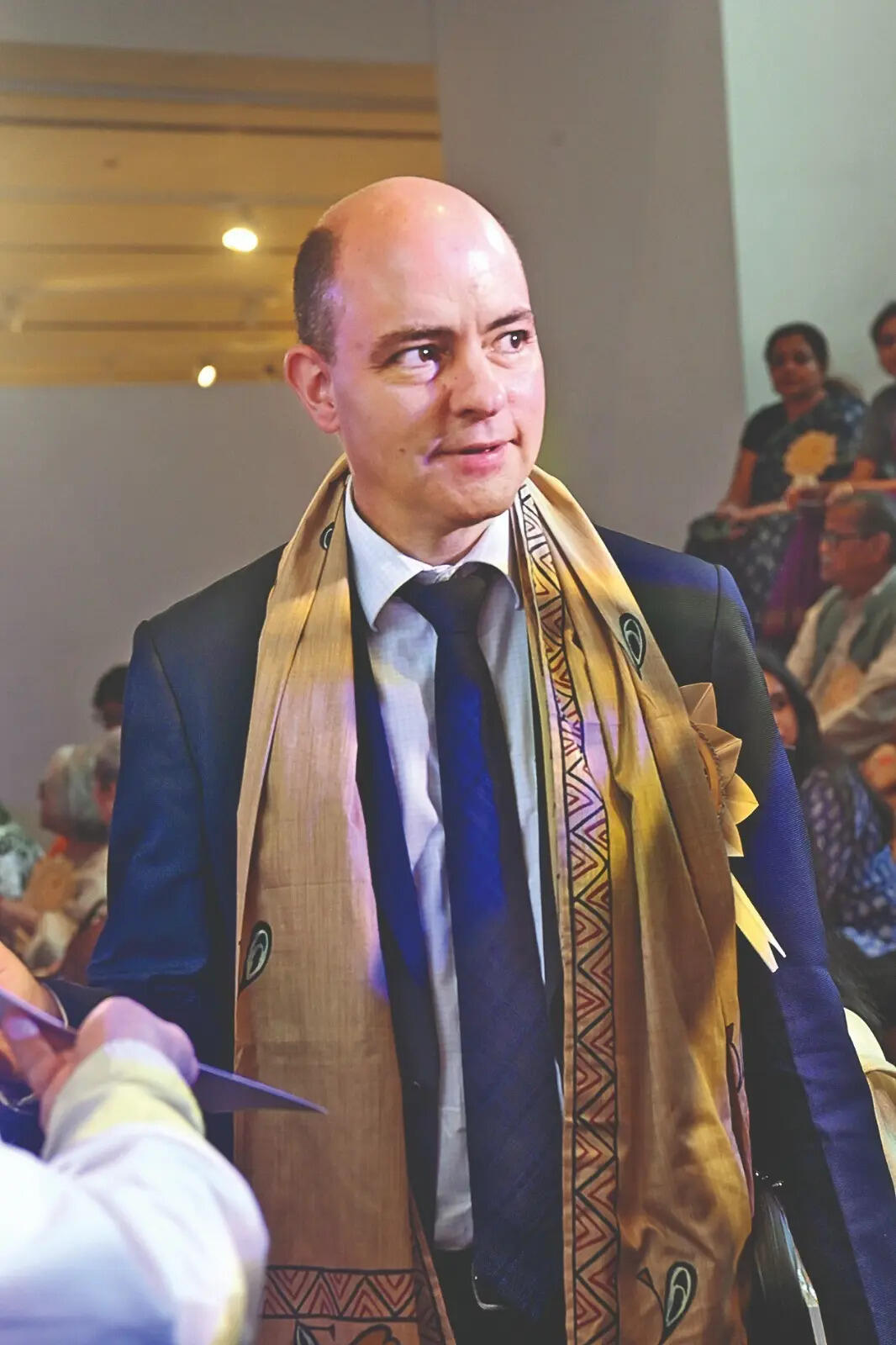
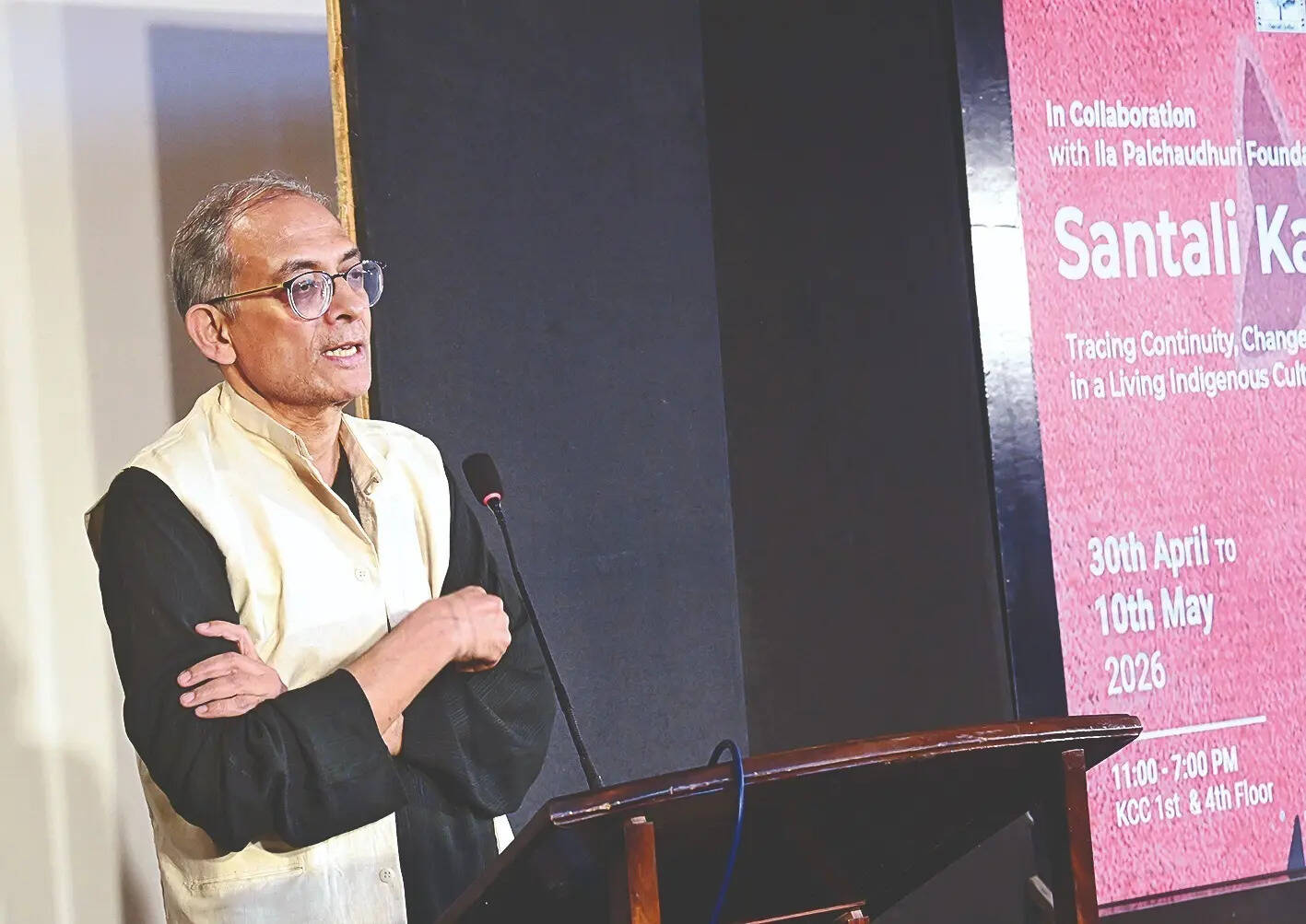
Crafts without attribution: Abhijit Banerjee calls itFor Nobel laureate Abhijit Vinayak Banerjee, the exhibition created a major inconvenience. “It’s really extraordinary… It has both a lot of creativity and a distinctive voice,” he said, before adding the main point: “We don’t acknowledge or acknowledge it enough.” Admitting, “I know nothing… I am not able to speak about Santali culture,” he instead turned to the system surrounding it – a system he argued undervalued its own creators. “Children of craftsmen don’t want to become craftsmen anymore,” he said, pointing to a change in aspiration. Social media has also changed the equation: “I need to wear a different outfit every day… so I can’t buy expensive jamdani.” Still, he left room for reversal. He linked this to sustainability, saying, “AI will eliminate many middle-skill jobs… and it could drive people back to crafts.” His most trenchant line was this: “Craftsmen are given the responsibility to be creative without credit for it… and it has to be offensive.”
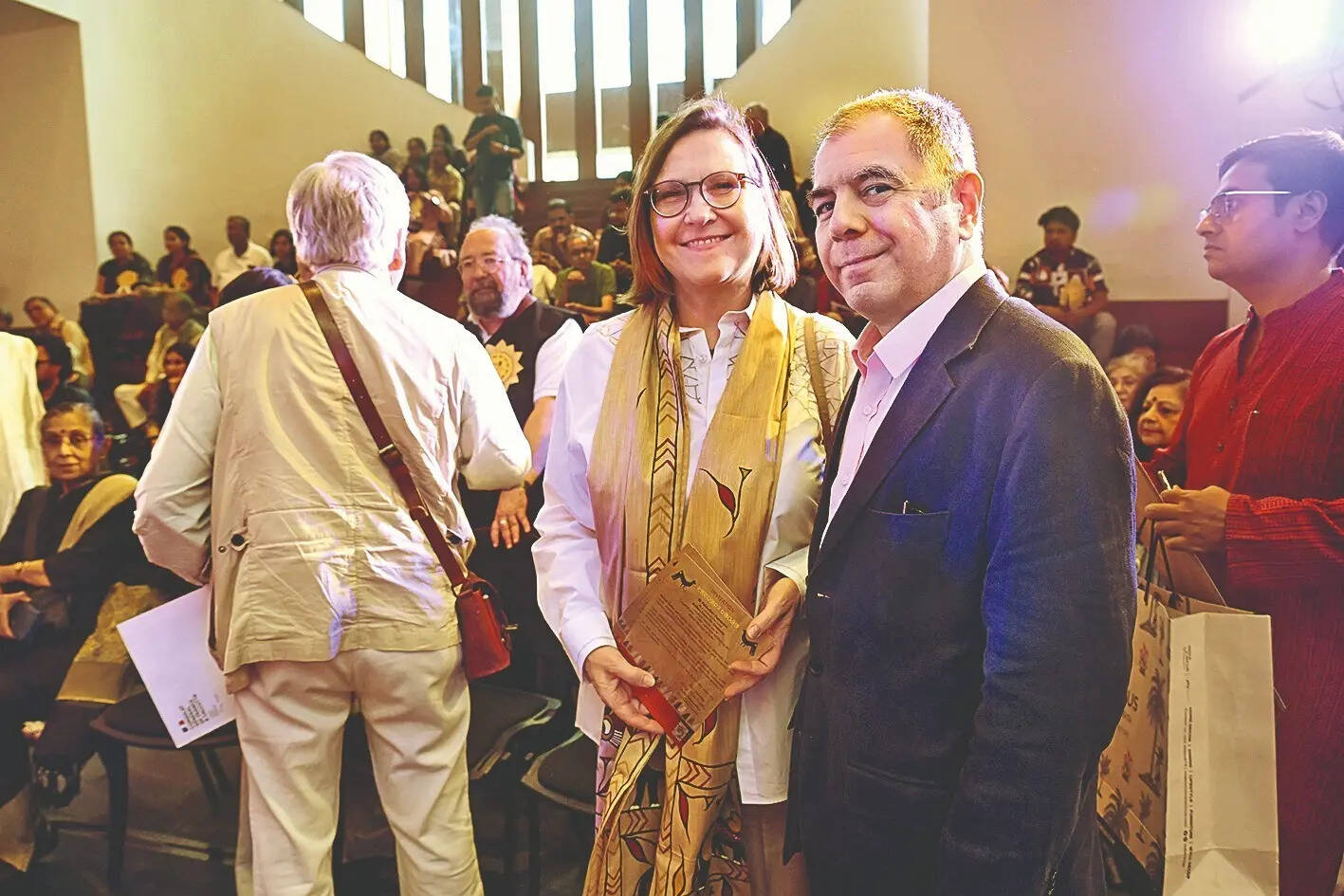
Where generations meet: an audience that completes the storyIf the exhibition set the tone, the audience deepened it. An amazing mix of ages and professions, photographers, artists, teachers came together, marking the continuation of the show. “I have only 87 years of experience in photography and I still continue to take photographs. I think if it is too young, then age is just a number,” said photographer Mala Mukherjee, bringing smiles from across the room. He said, “What brings us all here is the love for the celebration of Santali tradition… To bring something like this together, it is a difficult task.” Others pointed to its layered nature: “It lasts for a week with extensive discussions and many layers.” said Sauraveshwar Sen, a social sector climate action career coach. Dancer, Alokananda Roy, expressed this sentiment: “An amazing woman… a gorgeous young lady at 97. I can’t even imagine doing something like that at her age. I admire that sentiment.”
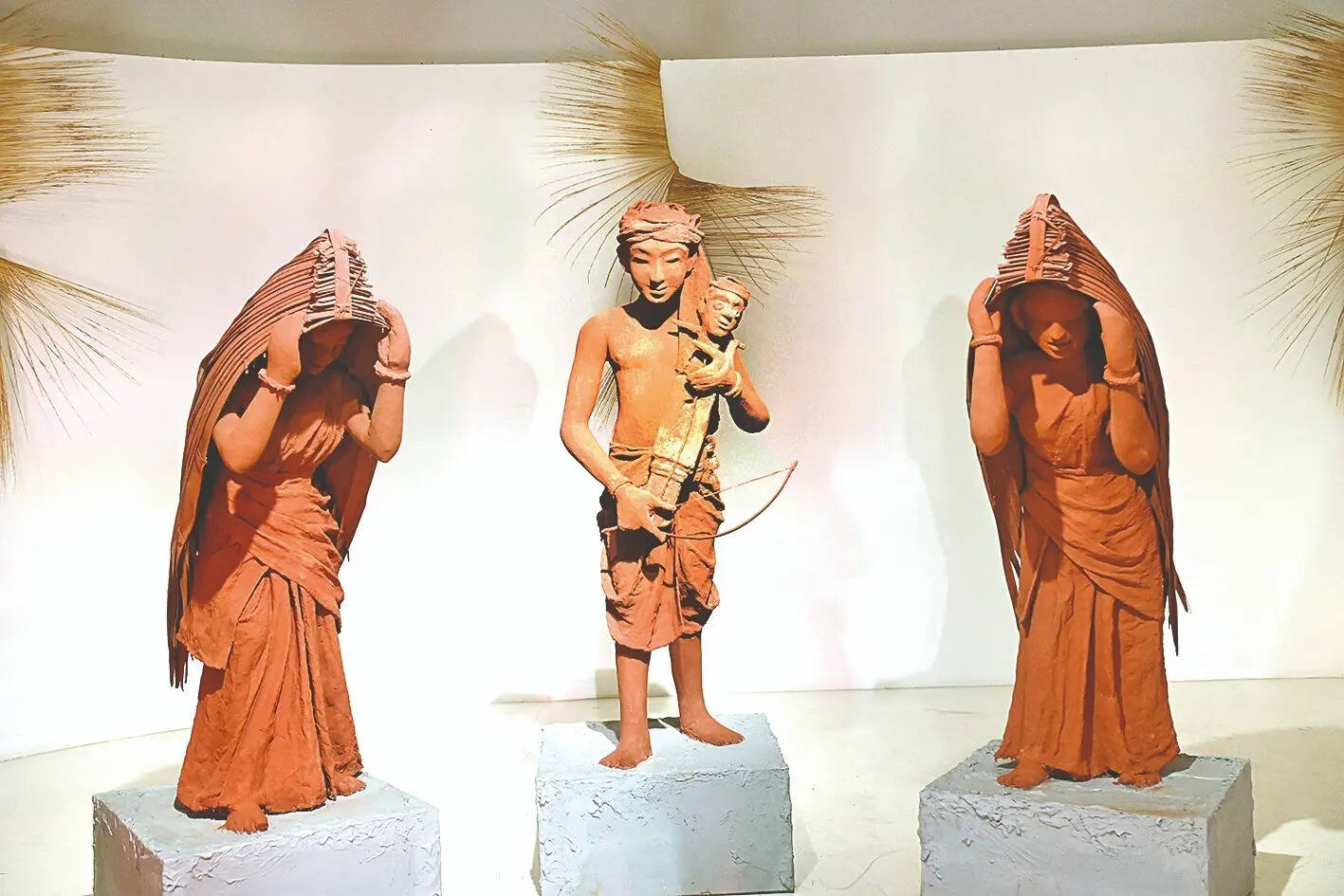
Today we also learn how the application came to be beyond praise: “Urban life can actually be inspired by Santhal traditions, even education systems, even the sustainability-minded corporate sector.
-Sauraveshwar Sen
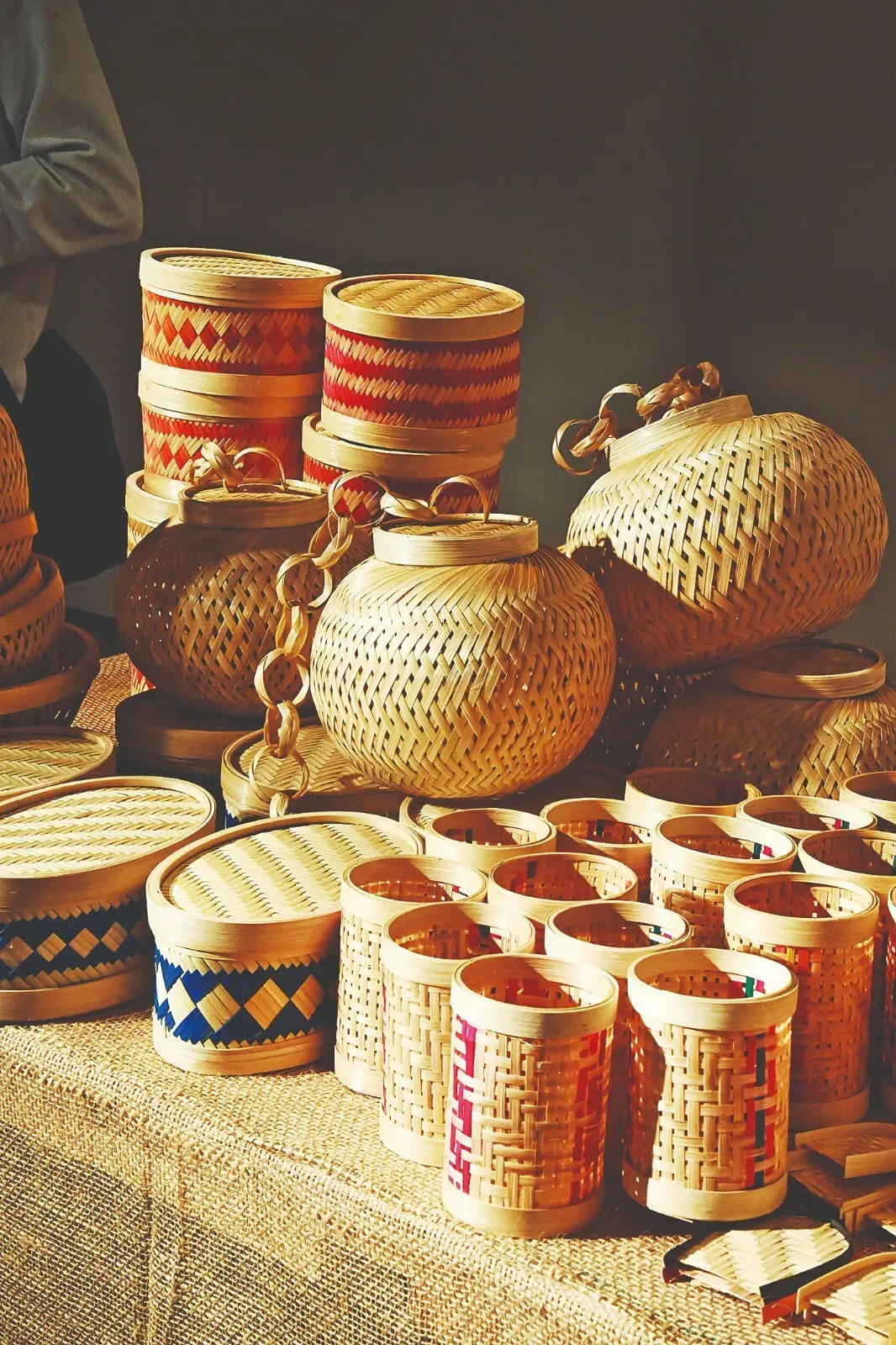
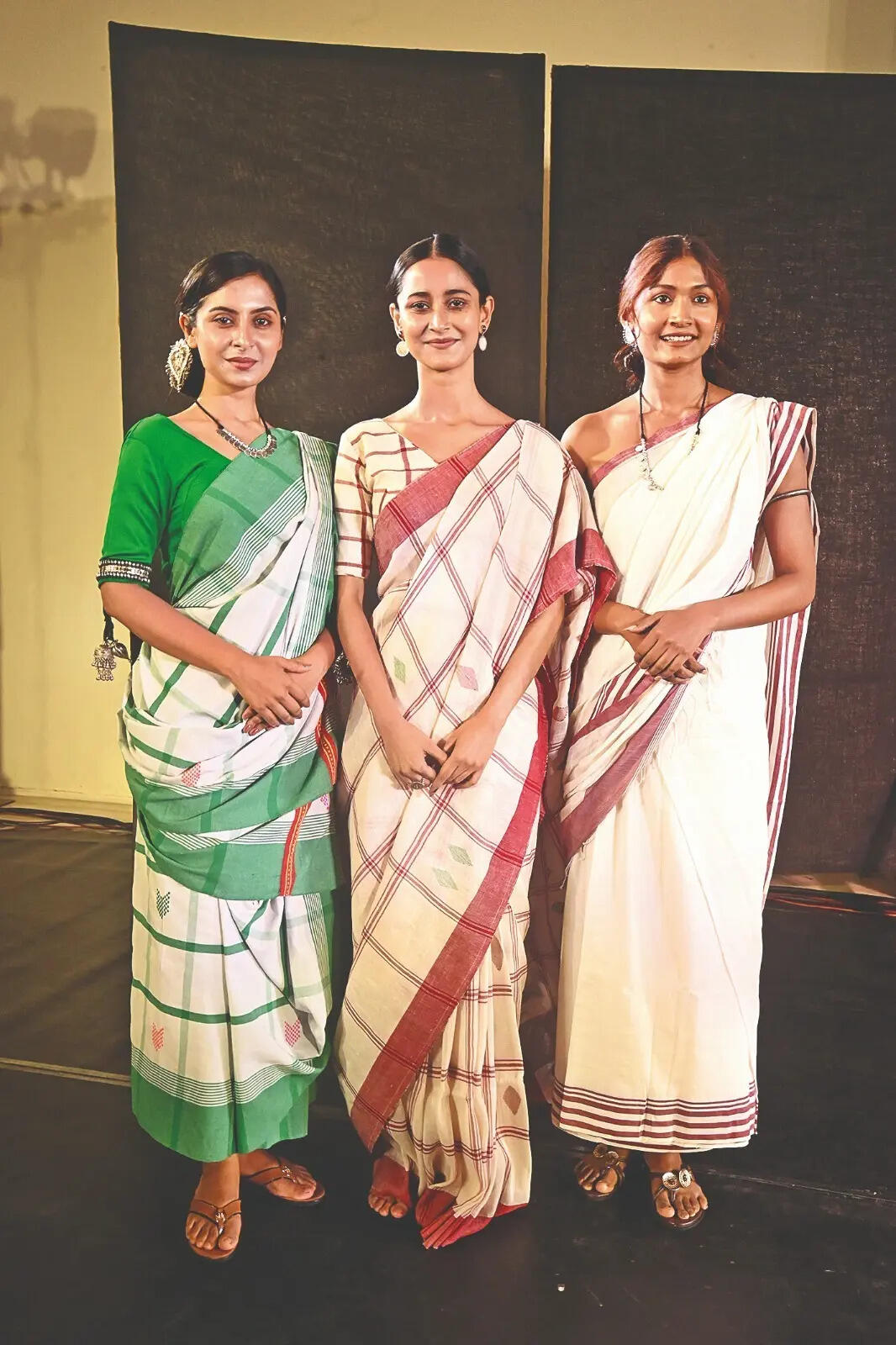
Saree as Story: Tradition, Memory and ReinventionOne of the strongest visual highlights came on the runway, where the Santal saree told its own story. Designer Lipsa Hembrum’s showcase, Galang Gaban, traces the journey of the traditional Santali curtain from function to form. Garments such as panhand-kanchi, once worn simply during daily labor, reflect designs rooted in movement, climate, and community life in today’s modern apparel. With earthy colours, bold borders and minimal embellishments, these garments were never about the occasion, they were about living life. Draping styles also varied by age, region and purpose, revealing a layered cultural language. But the show also pointed towards change. “Panhand-kanchi cloth is rarely seen these days,” it says, indicating a reshaping of tradition for modern lifestyle. Yet the reinterpretation on display suggests something else: not loss, but growth. Traditional weaves meet contemporary silhouettes, bringing Santali textiles to new spaces while retaining their identity.