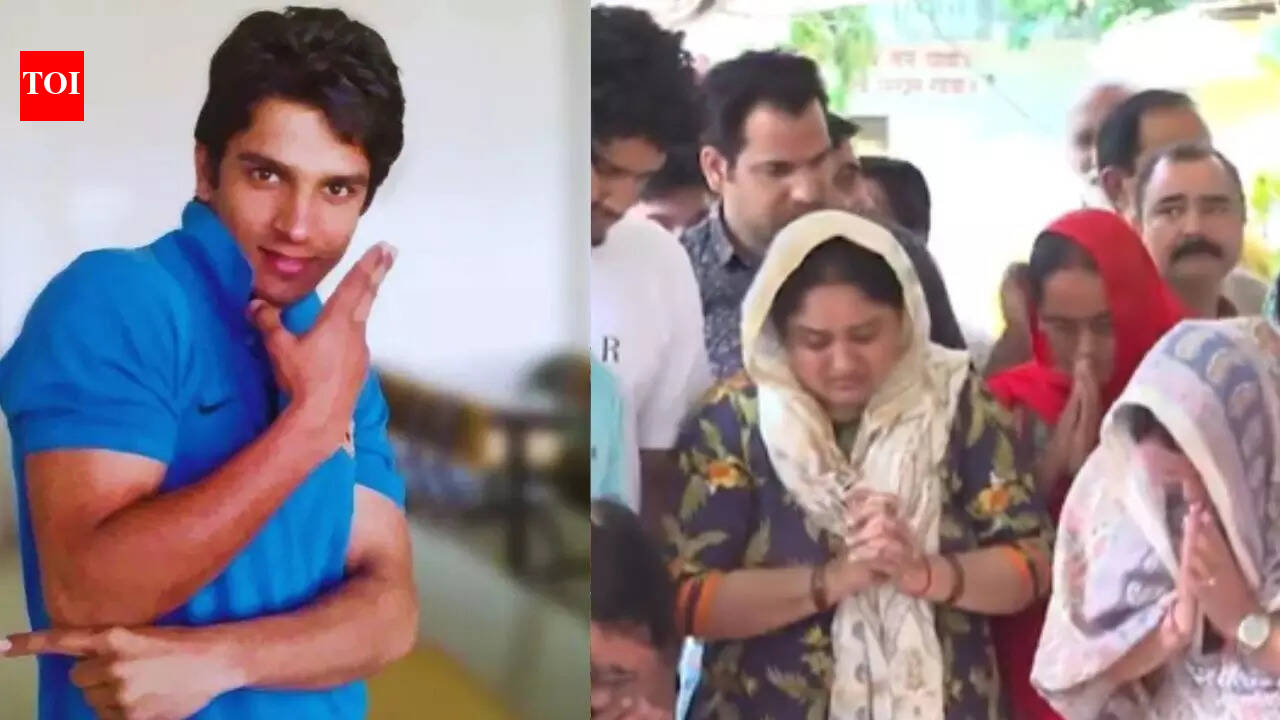
The last rites of Harish Rana, the first person to receive legal passive euthanasia in India, were performed in the national capital after his death at the All India Institute of Medical Sciences.
New Delhi: The last rites of Harish Rana, the first person to receive legal passive euthanasia in India, were performed in the national capital after his death at the All India Institute of Medical Sciences.According to news agency ANI, the family donated his corneas and heart valves.Rana, 31, remained under special medical care for a long time and died on Tuesday, marking a significant moment in India’s legal and medical landscape.In an official statement, AIIMS confirmed that Rana died at 4.10 pm at the institute.“Harish Rana passed away on March 24, 2026 at 4.10 pm at AIIMS, New Delhi. He was under the care of a dedicated team of doctors and was admitted to the Palliative Oncology Unit (IRCH) under the leadership of Dr. (Prof.) Seema Mishra, HOD, Onco-Anesthesia. AIIMS expresses its heartfelt condolences to his family and loved ones during this difficult time, the press release said.Earlier this month, in a landmark decision, supreme court of india Ghaziabad resident Rana, who was in a persistent vegetative state for more than a decade, was allowed to undergo passive euthanasia.A bench of Justices JB Pardiwala and KV Vishwanathan allowed withdrawal of Clinically Assisted Nutrition and Hydration (CANH). Rana was in an unwell state after accidentally falling from a building in 2013.Passive euthanasia refers to the withdrawal or withholding of life-sustaining treatment so that a patient who has no reasonable chance of recovery can be allowed to die naturally.Expressing deep sorrow while delivering the judgement, the court said that all stakeholders, including the patient’s family and the medical board that assessed his condition, were in agreement that no meaningful purpose would be served by continuing aggressive medical assistance.The bench also highlighted the absence of a comprehensive law on end-of-life care and urged the Central government to consider legislation in line with the principles laid down in the case Common Cause vs Union of India (2018).The court said, “The long absence of a comprehensive law on end-of-life care has forced this court to repeatedly step in to fill this void.”It said a dedicated legislation in this area would bring greater clarity and certainty on such emotionally complex issues.
Watch
Historic decision: Supreme Court allows passive euthanasia to Harish Rana after being in coma for 13 years
New Delhi: India is facing a rising burden of obesity, with one in four Indians being overweight, yet the condition is being treated as a lifestyle issue rather than a disease, experts said at a recent panel discussion led by ICMR and AIIMS after World Obesity Day.Experts said that despite growing awareness, most people do not seek treatment, and even those who attempt weight loss struggle to maintain it. “We lack effective long-term interventions, and behavior change remains difficult,” said Dr. Rajeev Bahl, Secretary, Department of Health Research and Director General, ICMR, pointing to broader social and environmental barriers.Unhealthy foods are often cheaper and more accessible, while healthy alternatives remain difficult to access, she said.The panel brought together Dr. Bahl; Dr. Anup Mishra, Director, National Diabetes, Obesity and Cholesterol Foundation; Dr. Naval Vikram, Professor, Department of Medicine, AIIMS; and Dr. Vandana Jain, Professor, Pediatric Endocrinology, AIIMS.Dr. Kamini Walia, Scientist and Head, Descriptive Research Division, ICMR, said obesity should be understood as a multifactorial disease driven by genetic, metabolic, environmental and social factors and not limited to individual defects.Doctors said the problem lies in everyday life. Dr Naval Vikram said obesity is a chronic disease that requires long-term management, influenced by diet, physical activity, psychological and environmental factors.The panel underlined that obesity often starts early. Dr. Vandana Jain stressed the need for a healthy home environment and said that childhood habits, family food choices and activity patterns play an important role.Dr. Anup Mishra said that metabolic complications develop at low body weight levels in Indians, making early detection important. He said new anti-obesity drugs are not a population-level solution and should be used selectively along with lifestyle changes.Experts also highlighted shortcomings in policy and implementation and said improving access to healthy food and creating space for physical activity remain key challenges.They also highlighted emerging research areas, including the gut microbiome, early life nutrition and maternal health, that may shape obesity risk from the earliest stages of life.A major concern remains stigma, which discourages people from seeking care. Experts said recognizing obesity as a disease can focus on long-term management and prevention.
उत्तर प्रदेश समाचार: उत्तर प्रदेश के नोएडा के सेक्टर 63 थाना क्षेत्र स्थित छिजारसी कॉलोनी से एक दिल दहला देने वाली घटना सामने आई है। यहां एक लड़की ने अपने ही घर में फांसी लगाकर आत्महत्या कर ली, जिससे इलाके में हड़कंप मच गया. घटना की जानकारी मिलते ही पुलिस मौके पर पहुंची और शव को कब्जे में लेकर पोस्टमार्टम के लिए भेज दिया. इस घटना से आसपास के लोग सदमे में हैं और पूरे इलाके में शोक का माहौल है.
एक साल पहले हुई थी शादी, नौकरी को लेकर था विवाद मृतक की पहचान दीपिका कुमारी के रूप में की गई है. करीब एक साल पहले उसकी शादी बिहार निवासी निशांत कुमार से हुई थी। शादी के बाद वह अपने पति और ससुराल वालों के साथ छिजारसी कॉलोनी में किराए के मकान में रह रही थी। दीपिका पढ़ी-लिखी थीं और एक प्राइवेट कंपनी में काम करती थीं। वह शादी के बाद भी अपना करियर जारी रखना चाहती थीं, लेकिन यही उनके वैवाहिक जीवन में तनाव का कारण बन गया।
पति और ससुराल वाले नौकरी के खिलाफ थे परिजनों के मुताबिक, दीपिका के पति और ससुराल वाले उसके नौकरी करने के खिलाफ थे। इस बात को लेकर पति-पत्नी के बीच अक्सर विवाद होता रहता था। बताया जा रहा है कि निशांत कुमार खुद एक निजी कंपनी में नौकरी करता है, लेकिन वह अपनी पत्नी को काम नहीं करने देता था. इस वजह से घर का माहौल लगातार तनावपूर्ण बना रहता था.
घटना वाले दिन भी विवाद हुआ था परिजनों के मुताबिक रविवार की सुबह इसी बात को लेकर पति-पत्नी के बीच विवाद हुआ था. सुबह करीब 11 बजे जब घर के अन्य सदस्य बाहर गए थे तो दीपिका घर में अकेली थी। इसी दौरान उन्होंने कमरे में पंखे से लटककर आत्महत्या कर ली. घटना के बाद जब परिजन वापस लौटे तो उन्हें इसकी जानकारी हुई।
पुलिस जांच में अलग-अलग पहलू सामने आये घटना की जानकारी मिलते ही पुलिस मौके पर पहुंची और जांच शुरू कर दी. पुलिस ने शव को पोस्टमार्टम के लिए भेज दिया है और मामले के सभी पहलुओं की जांच कर रही है। एसीपी उमेश यादव के मुताबिक, परिजनों की ओर से अभी तक कोई लिखित शिकायत नहीं दी गई है।
पति ने लगाए अलग-अलग आरोप, जांच जारी पुलिस की पूछताछ में पति ने अलग ही दावा किया है. उसका कहना है कि मृतिका के किसी अन्य युवक से संबंध थे, जिसका वह विरोध करता था और इसी कारण वह उसे काम करने से रोकता था. हालांकि पुलिस इस दावे की भी जांच कर रही है और हर पहलू को ध्यान में रखकर निष्पक्ष कार्रवाई करने की बात कर रही है.
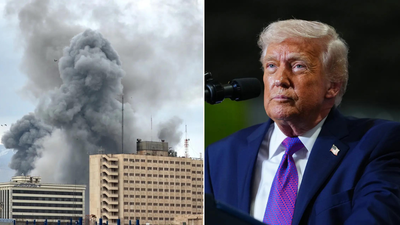
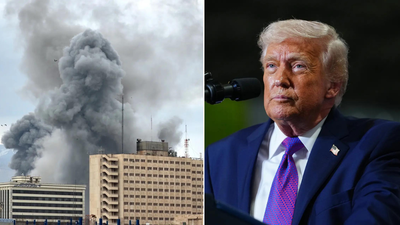
Is there an end to the chaos in the Middle East? Iran has set a high bar for a potential ceasefire with the United States as tensions have been rising since February 28. The ongoing military exchanges between the US-Israel alliance and Iran have created a constantly changing situation. Meanwhile, in addition to Tehran’s demands, the US has presented a 15-point proposal aimed at ending the ongoing conflict.It began as a targeted mission against then-Supreme Leader Ayatollah Ali Khamenei, who was killed earlier in the day. donald trumpOperation Epic Fury in coordination with benjamin netanyahuOperation Roaring Lion has now escalated into daily, large-scale bombings across the region, including cities such as Dubai and Abu Dhabi.Despite losing its longest-ruling leader, the Tehran regime has consolidated power within the Iranian government and the IRGC, according to the Wall Street Journal. The report also details the demands of a regime under supreme leader Mojtaba Khamenei.
What is Iran asking for?
According to the report, Tehran has asked the Trump administration to close all US bases in the Gulf region and pay compensation for attacks on Iranian territory. Additionally, Iran wants to charge fees for ships passing through the Strait of Hormuz, similar to how Egypt charges fees for passing through the Suez Canal.This demand included the removal of all sanctions imposed by the US.The regime also wants guarantees that the war will not resume and an end to Israeli attacks on Iran-aligned militias, including Hezbollah, in Lebanon. Allowing Iran to maintain its missile program without any negotiations to limit it remains a major hurdle.However, the Trump administration is unwilling to consider Tehran’s demands. A US official described them as “ridiculous and unrealistic”. Arab and US officials warned that such an approach could make reaching a deal with Tehran even more difficult than before Trump started the war.The first signal of the new diplomatic round came through Middle Eastern intermediaries late last week, and there have been no direct contacts between the US and Iran, officials said.
America has given a 15-point proposal to Iran
US President Donald Trump has shared a 15-point proposal with Iran to end the ongoing conflict in the Middle East. “All things begin with this, there cannot be any nuclear weaponsAccording to a New York Times report, citing officials familiar with the matter, Trump said the military operation continued, signaling renewed diplomatic pressure.Pakistan took the initiative to push the resolution, which addresses key issues including Iran’s ballistic missile and nuclear programs, as Washington seeks an “offramp” from the war now in its fourth week, which has broadened to include multiple countries.Israel’s Channel 12 reported that Trump is proposing a one-month ceasefire, during which the parties would discuss a plan including the handing over of Iran’s enriched uranium and restrictions on further enrichment. The New York Times noted that it had not reviewed the document directly, but was told that it also addresses maritime security concerns. Since the conflict began on February 28, Iran has effectively blocked Western shipping through the Strait of Hormuz, disrupting global oil and gas supplies and sending prices soaring.The Israeli report said that following compliance with the plan, Iran would end all sanctions, which it has imposed in various forms for years. Iran will also receive assistance in developing civilian nuclear power in Bushehr, a key site dating back to the 1979 Islamic revolution.It is unclear how widely the proposal has been circulated among Iran’s leadership or whether Tehran is willing to join on its basis. There is also no clarity on whether Israel supports this initiative or not. Despite diplomatic outreach, there are no immediate signs of hostilities subsiding. Israeli officials have indicated that military action could continue for weeks.Acknowledging the parallel diplomatic efforts, White House Press Secretary Carolyn Leavitt said, “As President Trump and his negotiators explore this new possibility for diplomacy, Operation Epic Fury continues unabated to achieve the military objectives set by the Commander in Chief and the Pentagon.”Pakistan’s de facto head of state and army chief Asim Munir has positioned himself as a potential mediator, taking advantage of alleged ties with Iran’s Islamic Revolutionary Guards Corps to facilitate communications. Egypt and Türkiye are also encouraging Tehran to engage constructively, officials said.The report said Munir had contacted Iranian Parliament Speaker Mohammad Bagher Ghalibaf and proposed that Pakistan host talks between the two sides. Supporting the initiative, Pakistan’s Prime Minister Shehbaz Sharif said that his country “fully supports the ongoing efforts to advance dialogue to end the conflict”. He said, “Subject to the consent of the US and Iran, Pakistan is ready and honored to be the host to facilitate meaningful and decisive negotiations for a comprehensive resolution of the current conflict.”Iran’s ability to respond quickly remains uncertain.
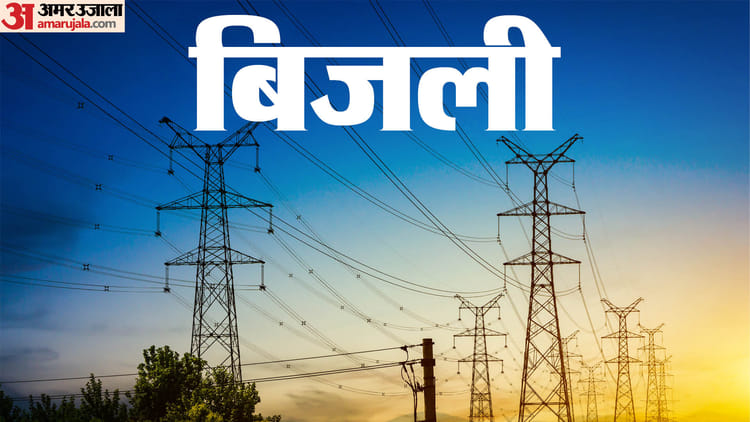
प्रदेश में मौसम तो बदल गया है लेकिन बिजली की मांग चार करोड़ यूनिट से ऊपर जा रही है. वहीं, राज्य का उत्पादन बेहद निम्न स्तर पर होने के कारण बिजली आपूर्ति यूपीसीएल के लिए एक चुनौती है. उधर, गैस की कमी के बीच यूपीसीएल को भविष्य में इंडक्शन का उपयोग बढ़ने पर 200 मेगावाट की अतिरिक्त मांग की उम्मीद है।
राज्य में पिछले पांच दिनों में कड़ाके की ठंड के बावजूद बिजली की मांग 4.4 करोड़ यूनिट है. गैस की कमी के बीच जिस तरह से इंडक्शन की मांग बढ़ रही है, बिजली की यह मांग बरकरार मानी जा रही है। यूपीसीएल ने भविष्य में इंडक्शन के कारण बिजली की मांग 200 मेगावाट और बढ़ने का भी अनुमान लगाया है।
मौजूदा स्थिति पर नजर डालें तो यूजेवीएनएल का बिजली उत्पादन अपने न्यूनतम स्तर 58 लाख यूनिट पर चल रहा है. मांग के सापेक्ष यूपीसीएल को केंद्रीय पूल से 1.2 करोड़ यूनिट बिजली मिल रही है। बाकी व्यवस्था यूपीसीएल बाजार व अन्य माध्यमों से कर रहा है। कोई कमी नहीं है लेकिन जैसे-जैसे गर्मी बढ़ेगी, ऐसे में चुनौतियां और भी बढ़ सकती हैं।
फिलहाल मांग के अनुरूप उपलब्धता है. कहीं भी कोई घोषित कटौती नहीं की जा रही है. निगम प्रबंधन भविष्य की ऊर्जा जरूरतों के हिसाब से अपनी रणनीति बना रहा है। इसका उद्देश्य उपभोक्ताओं को निर्बाध आपूर्ति सुनिश्चित करना है। –एमआर आर्य, निदेशक संचालन, यूपीसीएल
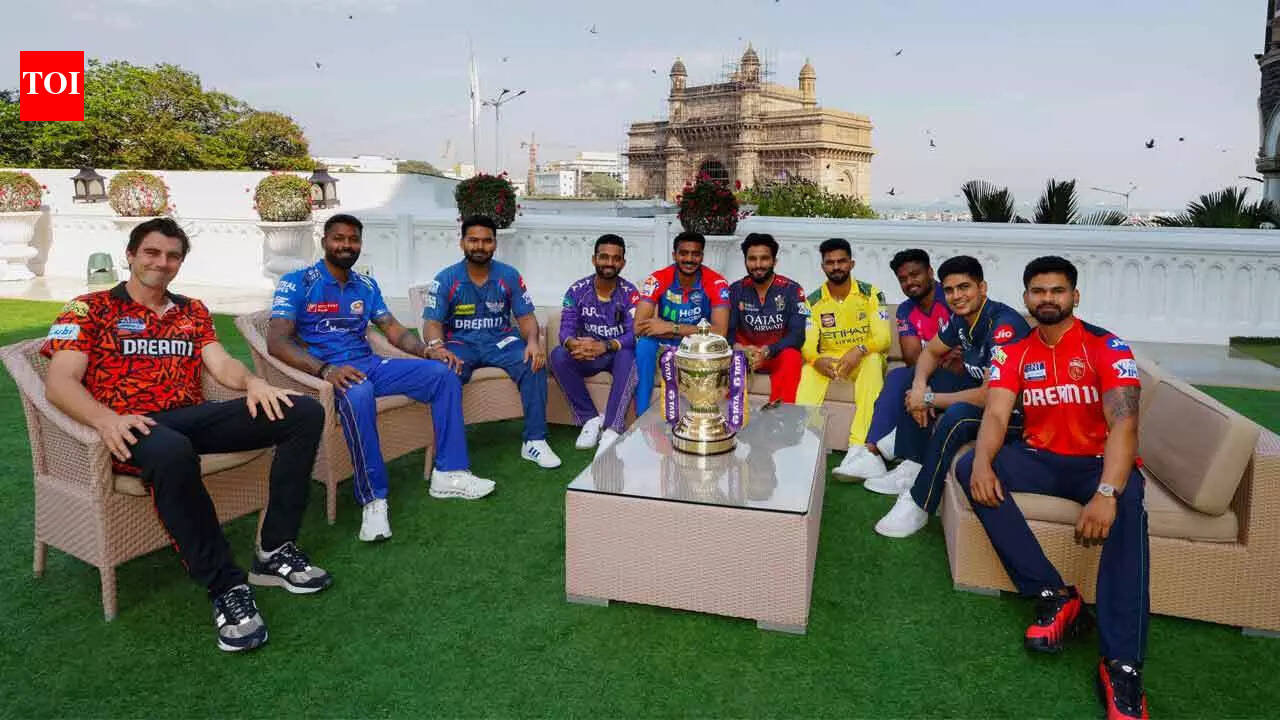
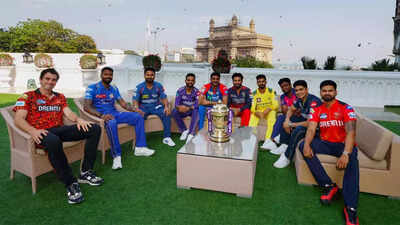
captain of all IPL The teams are set to meet officials of the Board of Control for Cricket in India (bcci) on March 25 to discuss a number of key issues including the Impact Player Rules and Code of Conduct. However, the primary focus is expected to be on clarifications regarding the two-bouncer rule, bat checking, ball replacement, use of saliva and the retire-out provision. The IPL 2026 captains meeting will be held at the BCCI headquarters in Mumbai.According to a BCCI release to franchises on Tuesday, Cricbuzz, Javagal Srinath and Nitin Menon – BCCI’s match referee and head of the umpire panel will address the captains respectively. The meeting is scheduled for Wednesday (March 25) from 4:30 pm to 6 pm.
What will be the agenda?
The BCCI recently shared the playing conditions for the season with the franchises, highlighting key changes to Rule 4.4 (Change of ball in the second innings); 5.8.3 (BAT Testing); 18.5.1 and 18.5.2 (intentionally run low); 19.5.2 (fielder grounded out of bounds); 28.7.6 (Restrictions on placement of fielders); and Appendix D-3.9 (combining umpire’s review with player’s review).A look at the new season’s playing conditions near this website shows no obvious changes, but the rules for ball substitution are explained in detail – something that was absent from last year’s playing conditions. Rule 4.4 in the latest playing conditions reads:ball replacement rules in ipl matchesIf, during play, the ball is lost, cannot be recovered, or is deemed unfit for use due to normal wear and tear, the umpire will replace it with another ball that has the same level of wear and tear. Once the replacement has been made, the umpire will inform both the batsman and the fielding captain.Rules for changing the ball in the second inningsIn evening matches, the team bowling second is allowed to request a change of ball after the completion of the 10th over. The request must be made only by the bowling captain and must be made at the end of an over (not during the over). This rule applies only once in the second innings, regardless of dew conditions, with the replacement ball having the same wear and tear as the previous ball.Additionally, the umpire reserves the right to change the ball at any time during the match at his discretion.
Explanation of main scenarios
Scenario 1: If the umpires change the ball before the 10th over due to it being wet, damaged, lost or out of shape, the fielding captain retains the right to request a change of ball after the 10th over. In this case, the umpires are required to approve the request.Scenario 2: If the captain requests a change of ball after the 10th over (e.g. in the 11th over) due to wet conditions and the umpires change it: Any request to change the ball later in the innings will be subject to the umpires’ discretion, not mandatory.Scenario 3: If the captain requests a ball change due to damage or shape issues during the 11th over and the umpires agree: The team can also make a mandatory request of their own after the 10th over (for example, later due to dew), and the umpires must accept it.There are also other things like team sheets, toss, broadcast media commitments and awards, about which there is no detail. The session will begin with the introduction of IPL COO Hemang Aming.
New Delhi: India may be making progress against tuberculosis, but the scale of the challenge remains grave – it accounts for almost a quarter of the world’s TB cases, while millions of infections go undetected.According to the Tuberculosis Fact Sheet 2026 released by the Centre, tuberculosis remains India’s biggest infectious disease challenge. India contributes about 25% of the global TB burden, with five countries accounting for more than half of the total cases worldwide.At the national launch event of World TB Day 2026 in Greater Noida, Union Health Minister JP Nadda said India is on the path to eliminate TB ahead of the global targets, driven by the “Jan Bhagidari” approach under the leadership of PM Narendra Modi. They cited a 21% decline in TB incidence and 25% reduction in deaths between 2015 and 2024, with treatment coverage now at 92%.Recent data supports this trend. Treatment success rates have improved to nearly 90%, while more than 26 lakh cases were notified in 2024, the highest ever, reflecting strong detection efforts.A major boost has come from the TB Free India campaign, which has focused on identifying hidden and high-risk cases. More than 20 crore people have been tested, resulting in detection of more than 32 lakh TB patients, including a large number of asymptomatic cases. Nadda said that due to intensive case finding, the unknown cases have reduced from 10 lakh to less than one lakh.He also announced the launch of an AI-enabled TB Mukt Bharat app to improve access to care and treatment tracking, as well as a 100-day intensive campaign covering 1.58 lakh villages and urban wards.The factsheet highlights that TB is closely linked to poverty, malnutrition and living conditions, with economically vulnerable populations at greater risk. People with diabetes, HIV, smokers, alcohol abusers and those who live in crowded areas are particularly susceptible. At the same time, drug-resistant TB remains a concern, with more than 55,000 cases expected in 2024, requiring longer and more complex treatments.Despite progress, shortcomings remain. About 64% of people with TB symptoms do not seek care due to stigma, lack of awareness or affordability issues, leading to delayed diagnosis and continued transmission.
voting
What do you think is most important to end TB in India?
To address this, the government has combined community outreach with technology. Initiatives like the Ni-Kshaya Mitra program have mobilized volunteers to provide nutrition and social support, while digital tools like the TB Free India app are helping streamline care.Emphasizing on increased funding and indigenous innovations like TrueNet, Nadda said TB is both preventable and curable, stressing the need to reduce stigma and ensure early diagnosis and treatment.Health officials underline that symptoms of TB go beyond a persistent cough and can include fever, weight loss, fatigue, chest pain and night sweats, making prompt testing important.
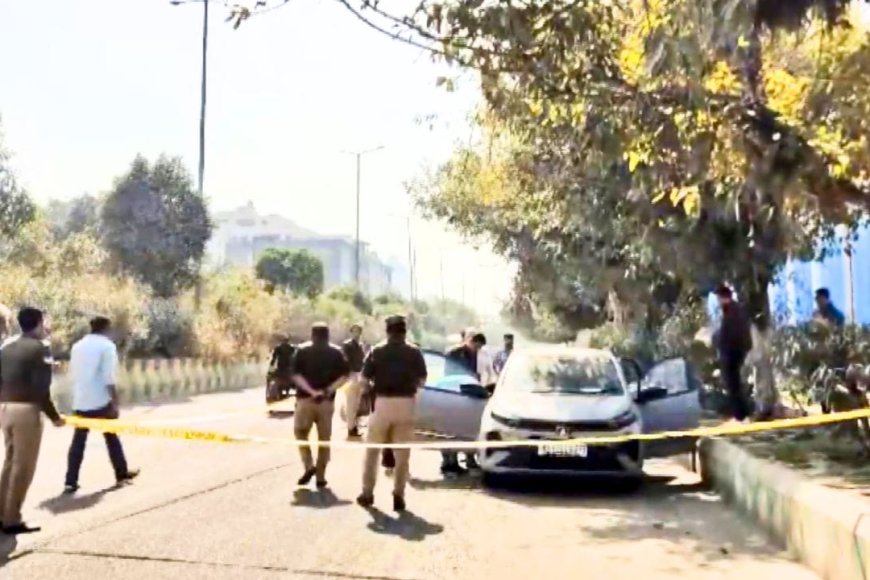
उत्तर प्रदेश समाचार: दिल्ली से सटे गाजियाबाद के लोनी इलाके में एक सनसनीखेज वारदात सामने आई है. ट्रॉनिका सिटी थाना क्षेत्र के रामपार्क (बुद्ध बाजार) मोहल्ले में एक पति ने अपनी पत्नी और उसके कथित प्रेमी की गोली मारकर हत्या कर दी। हैरानी की बात यह है कि घटना से कुछ देर पहले तक तीनों एक ही कमरे में बैठकर एक साथ खाना खा रहे थे. इस घटना के बाद पूरे इलाके में दहशत का माहौल है और पुलिस मामले की जांच में जुट गई है.
अवैध संबंध के शक को लेकर विवाद बढ़ता जा रहा था पुलिस के मुताबिक, आरोपी राशिद को अपनी 36 साल की पत्नी शबनम और उसके दोस्त फहीम (32 साल) के बीच अवैध संबंध का शक था. इस बात को लेकर घर में काफी देर तक तनाव रहा। राशिद इस रिश्ते के खिलाफ था, जिसके कारण पति-पत्नी के बीच अक्सर झगड़े होते थे।
खाना खाने के दौरान हुआ विवाद, फिर चली गोली बताया जा रहा है कि घटना की रात करीब 12:40 बजे पुलिस को झगड़े की सूचना मिली. पुलिस जब मौके पर पहुंची तो कमरे का नजारा बेहद खौफनाक था. शबनम का शव सोफे पर खून से लथपथ पड़ा था और पास में ही फहीम का शव भी पड़ा था. दोनों के सिर में गोली मारी गई थी. शुरुआती जांच में पता चला है कि डिनर के दौरान तीनों के बीच विवाद बढ़ गया और राशिद ने गुस्से में आकर अवैध हथियार से दोनों को गोली मार दी.
आरोपी मौके से फरार, पुलिस ने शुरू की जांच घटना को अंजाम देने के बाद आरोपी राशिद मौके से फरार हो गया. मामले की गंभीरता को देखते हुए वरिष्ठ पुलिस अधिकारी मौके पर पहुंचे और फोरेंसिक टीम ने साक्ष्य जुटाए. दोनों शवों को पोस्टमार्टम के लिए भेज दिया गया है और पुलिस हर पहलू से जांच कर रही है.
आरोपियों की तलाश में चार टीमें जुटीं इस मामले में डीसीपी ग्रामीण सुरेंद्र नाथ तिवारी ने बताया कि आरोपियों की गिरफ्तारी के लिए चार विशेष टीमें गठित की गई हैं. पुलिस उसके संभावित ठिकानों पर लगातार छापेमारी कर रही है. परिजनों से शिकायत लेकर आगे की कानूनी कार्रवाई शुरू कर दी गई है. इस दोहरे हत्याकांड के बाद इलाके में सन्नाटा है और लोग दहशत में हैं.
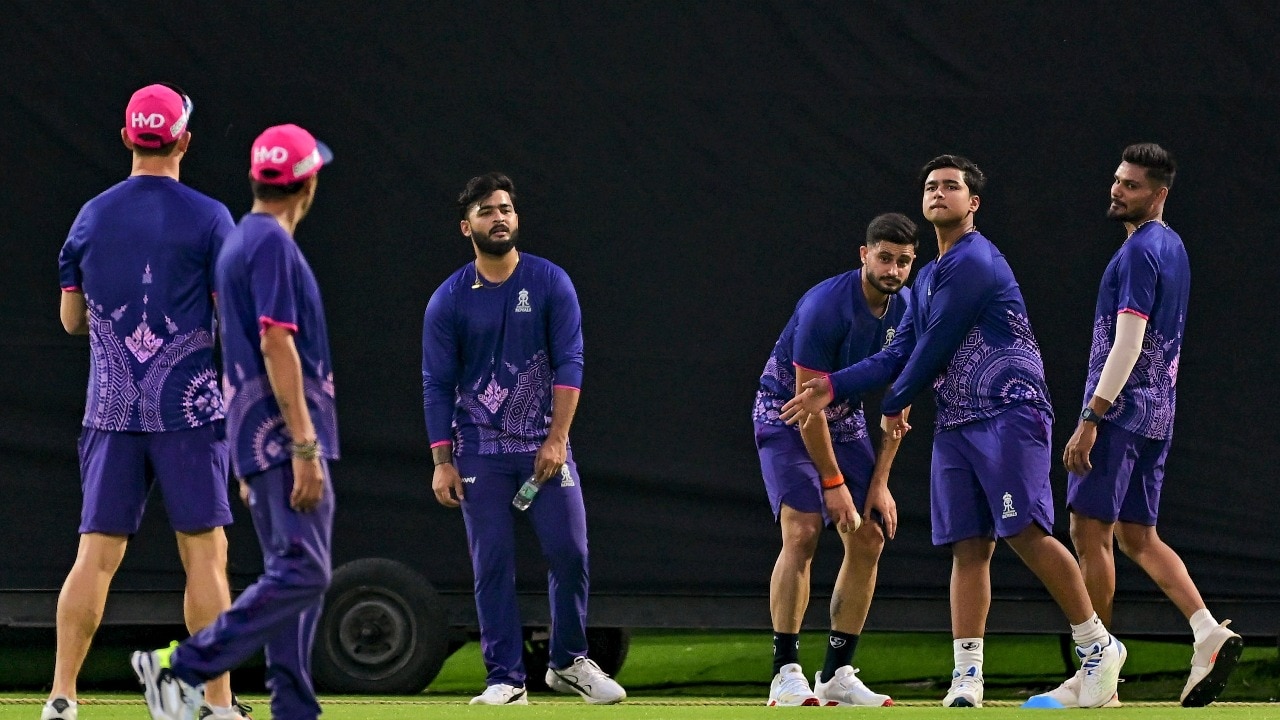
In January 2008, someone, or several people, made one of the most shrewd, questionable investments in the history of sports. For $67 million, he acquired the rights to a cricket franchise in Rajasthan, a desert state with neither a great cricketing tradition, no glamorous city center nor any obvious commercial appeal. It was the cheapest of the eight original IPL franchises. No one else wanted it at that price.
After eighteen years, The same franchise was sold for 1.63 billion US dollars. This is a return of more than 2,300%. But the story of how this money was made and, more importantly, who it was made for and how the ownership was structured, is one of the most complex, scandal-filled, legally disputed stories in cricket history.
In January 2008, the BCCI auctioned eight brand new IPL franchises to the highest bidder. Mumbai went for $111 million. Chennai received $91 million. Kolkata, Bangalore, Delhi, Hyderabad, Punjab captured the premium. The bidding rooms were buzzing with Bollywood money, industrial dynasties and a feeling that Indian cricket was becoming something else entirely.
And then there was Rajasthan.
The winning bid came in at $67 million, the market’s lowest level. The winning entity was Emerging Media, a subsidiary of UK-based technology group Blenheim Chalcot, led by British-Indian entrepreneur Manoj Badale.
maze in the desert
Right from the beginning, there was nothing clear about the ownership of Rajasthan Royals. The franchise agreement was not signed by Emerging Media.
The official franchise agreement with the BCCI was signed by Jaipur IPL Cricket Private Limited on 14 April, almost three months after the auction. This unit was incorporated after winning the auction.
At that precise moment, there were only two names listed in JICPL’s share register: Ranjit Barthakur and Fraser Castellino, each holding 5,000 shares. Immediately after signing, the shares jumped: Castellino transferred his shares by October 2008, Barthakur by January 2009. The real power resided in EM Sporting Holdings Limited, a Mauritius-based vehicle designed for opacity.
This is where the plot turned into a maze. EM Sporting had several partners. Tresco International Limited, controlled by Lalit Modi’s brother-in-law Suresh Chellaram, held 44.2% stake, making it the largest shareholder. Badale’s stake in Emerging Media IPL Limited was 32.4%. Blue Water Estates, linked to Lachlan Murdoch (son of media mogul Rupert), took 11.7%. Complementing this, Cookie Investments linked to Bollywood actress Shilpa Shetty and her husband Raj Kundra was also at 11.7%. On paper, Badale was the public face, a credible tech investor with a cricket academy in his past. In reality, Modi’s family was the largest, giving rise to whispers of a conflict: the IPL commissioner allegedly included his relatives through the backdoor in the franchise he oversaw.
Modi personally designed the tournament, conducted the auction and recruited franchise owners. Investigators later alleged that he also ensured that his family had a majority stake in one of the eight teams he oversaw. Rajasthan Royals did not fall cheap just like that. He was controversial from day one.
Test
When the Foreign Investment Promotion Board tried to investigate the ownership in 2009, it asked a question that no one could clearly answer: How did Badale come up with a $5 million earnest money deposit on behalf of a company that did not yet exist? When the BCCI investigated further in 2010 and discovered shareholders whose names allegedly did not appear anywhere in the franchise’s disclosed ownership, they expelled the team entirely. The Rajasthan High Court ensured restitution, but the damage was done. Rajasthan Royals were now a franchise with something to hide.
But something like magic happened on the field.
warne’s team
When Shane Warne took over the captaincy of Rajasthan in 2008, he was 38 years old. He had retired from international cricket. He was a veteran player playing in the new format with a team of budget buyers and unknowns. Shane Watson, Sohail Tanvir, Yusuf Pathan. The royals had no stars, no budget, no glamour.
He won the tournament. They, almost instantly, became cricket’s great romantic story: the cheapest team, the forgotten franchise, lifting the trophy.
Warne’s association with the franchise will last longer than captaincy. When the team rebuilt after its worst years in 2018, he returned as a stakeholder, and received equity in recognition of everything he had done for the club.
scams
The shadow of Chellaram-Modi never completely lifted, but new disasters added to it. In 2013, three Rajasthan Royals players – Sreesanth, Ankit Chavan and Ajit Chandila – were arrested by Delhi Police on spot-fixing charges.
The same year, the Income Tax Department launched a formal anonymous investigation into the franchise’s founder ownership structure, sending a detailed questionnaire to the BCCI about the Modi-Chellaram nexus and the post-auction shell company maze.
Then, in 2015, the Supreme Court-appointed Mudgal Committee found co-owner Raj Kundra, husband of Bollywood actress Shilpa Shetty, guilty of illegal betting, having bought the franchise when it doubled in value in its first year.
BCCI suspended the Royals. For 2016 and 2017, there was no Rajasthan Royals in the IPL.
Franchises have been expelled, investigated, fixed, staked and banned. And yet the underlying asset continued to appreciate. Perhaps this is the moral of the IPL business story: scams are temporary, valuations are permanent.
Reconstruction
The Royals returned in 2018 with a physically cleaner structure. The opacity was gone; Shetty and Kundra left; Badale’s emerging media was now more clearly in control. The team was re-imagined around young Indian talent. Sanju Samson, finally, as the captain; Yashasvi Jaiswal rose through the ranks.
Warne’s magic never recovered. Base partially shifted to Assam. The captaincy was handed over to Riyan Parag, who surprisingly survived the tumultuous journey.
sales
By 2025, with the IPL’s media rights and global profile at historic highs, Badale and existing investors decided it was time to exit. An investment bank that had managed the sale of Chelsea FC and advised Manchester United ran the process.
A consortium led by Kal Somani, an Arizona-based technology entrepreneur who had quietly held a minority stake in the franchise for years, ultimately won the bid at a reported valuation of $1.63 billion. The change in ownership is expected to take place after the conclusion of the IPL 2026 season.
The consortium supporting the acquisition includes two globally recognized sports owners: Rob Walton of the Walmart family and Sheila Ford Hamp of the Ford motor dynasty.
accounting book
The figures are surprising. A $67 million investment made in 2008 through a shell company through a Mauritius holding entity, in which the brother-in-law of an IPL commissioner was the majority beneficial owner, yielded a return of $1.63 billion after eighteen years. This is what IPL became.
Money flows in many directions. Badale, which consolidated 65% ownership before the sale, walked away with the largest individual windfall. Both Redbird Capital and Lachlan Murdoch significantly increased their returns. The Chellaram family, which held a 44.2% stake during the franchise’s most controversial years, may have collected a substantial sum for its initial investment, although the exact figures, appropriately, remain opaque.
And Lalit Modi? The Income Tax Benami investigation never resulted in a criminal conviction. The questions it raised – why the shell company, why incorporation after the auction, why the brother-in-law majority – were never conclusively answered.
What Rajasthan Royals ultimately represents is not just the story of a franchise, but an IPL story: the story of an organization that started out in question, survived a scandal on a scale that would have destroyed a smaller brand, and emerged at a valuation 24 times its founding price.
The desert kingdom which no one wanted became such a prosperous kingdom.
us President donald trump Said on Tuesday that Washington is “in talks right now” with Iran, signaling diplomatic efforts in the ongoing war. Speaking at the White House, Trump said that many top officials are involved in the talks. “We have a number of people who are doing that. And the other side, I can tell you, they would like to make a deal,” Trump said.
Watch
‘Nobody likes war’: JD Vance hits out at Trump on Iran; Breaks silence on America’s ‘endless wars’
Who is involved in the conversation?
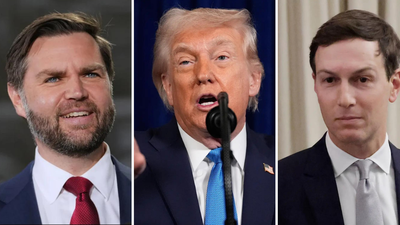
According to Trump, the following officials are involved in talks with Tehran:
Steve Witkoff (United States Special Envoy to the Middle East)
Jared Kushner (son-in-law of Donald Trump)
Marco Rubio (United States Secretary of State)
JD Vance (Vice President)
Donald Trump (President)
Trump said, “JD (Vance) is included. Marco is included. Jared Kushner is included…Steve Witkoff is included, and I am included…If Iran had a nuclear weapon, they would have used it. If I had not in my first administration dismantled the terrible Barack Hussein Obama Iran nuclear deal, they would have had a nuclear weapon 3 or 4 years ago. They would have used it…We destroyed their nuclear capability.”His comments came hours after he said Iran wanted to reach an agreement to end the war, which has now entered its fourth week. Trump also claimed that recent talks between US envoys and Iranian officials were “very good” and “productive”.Earlier, in a Truth Social post, Trump said he had postponed planned attacks on Iran’s power plants and energy infrastructure for five days to make room for negotiations.He said Kushner and Witkoff’s discussions with unnamed Iranian officials over the weekend were positive.Click here for live updates of the war The US President also suggested that there were “major points of agreement” between the two sides and expressed optimism about a potential deal. He said Iran would have to give up its enriched uranium reserves under any deal and said the Strait of Hormuz could soon reopen if talks were successful.At the same time, Trump maintained a tough stance, claiming that “this war has been won” and that US-Israeli actions had weakened Iran’s leadership and nuclear capabilities.
Iran’s response and denial
However, Iranian officials have strongly denied that any negotiations are taking place with the United States.Iranian Parliament Speaker Mohammad Bagher Qalibaf said “there has been no negotiation with the US” and accused Washington of spreading “fake news” to influence global financial and oil markets.Iran also rejected Trump’s claims of high-level contacts with the White House, calling them an attempt to manipulate markets amid rising oil prices due to regional tensions.
Who does Iran want to talk to?
Iran has told through back channels that it prefers to negotiate with Vice President JD Vance rather than US envoys Steve Witkoff or Jared Kushner.Vance is seen as more willing to end the conflict. Citing a source, CNN reported, “The assumption is that Vance will intend to defuse the conflict.”However, the White House has rejected these claims and said that only President Donald Trump decides who will negotiate on behalf of the United States.Press Secretary Carolyn Leavitt said, “President Trump, and only President Trump, determines who will negotiate on behalf of the United States. As the President said today, Vice President Vance, Secretary Rubio, Special Envoy Witkoff, and Mr. Kushner will all be included.”A White House official also dismissed reports about Iran’s priorities as a “coordinated foreign propaganda campaign to undermine the president,” CNN reported.
Why does Iran want to talk to JD Vance?
Tehran’s preference for JD Vance stems from mistrust following first failed negotiations and subsequent military action.According to CNN, Iran believes that discussions between Steve Witkoff and Jared Kushner would not be useful due to past experiences. The failure of earlier talks and the subsequent US and Israeli attacks have created a “trust deficit”.Explaining this approach, one source said, “The assumption is that Vance will intend to defuse the conflict.”Iranian officials view Vance as more sympathetic to ending the war than other senior US officials, including Witkoff, Kushner and Secretary of State Marco Rubio. According to the New York Post, his relatively cautious stance on military intervention has shaped this perception.At the same time, Iran has indicated that it does not want to rejoin the earlier negotiating team.Despite this priority, sources acknowledge that Iran will ultimately have little choice over who will represent the United States. One source highlighted, “Who the administration decides to send is something the Iranians will have to deal with, but that doesn’t mean they don’t have a preference.”However, the White House has reiterated that the decision rests entirely with President Donald Trump, not Tehran.
What next?
A possible meeting between US and Iranian officials, including in Islamabad, is being considered this weekend, although there remains uncertainty over whether it will take place.The talks come amid a wider crisis in the Middle East that is affecting global oil markets, particularly due to disruptions in the Strait of Hormuz, a key route for about 20% of the world’s crude oil supply.