Breaking News
CM vs CM: Pinarayi-Revanth’s heated argument on the last day of campaign. india news
CM vs CM: Heated spat between Pinarayi-Revanth on the last campaign day

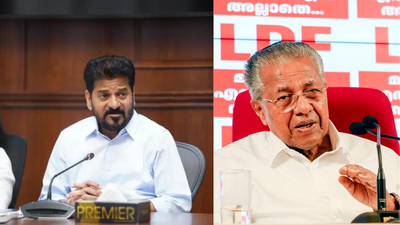
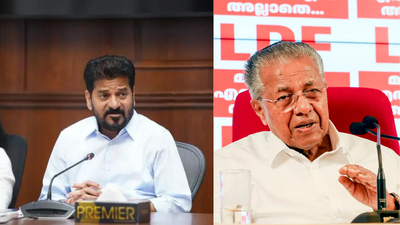
Kannur/Tipuram/Kottayam: Political rhetoric has intensified across the state in this election, heated exchanges are taking place between the Chief Minister of Kerala Pinarayi Vijayan and their Telangana counterparts Revanth Reddy Last day of campaigning for the April 9 elections.At a press conference in Kannur on Tuesday, responding to a question on Reddy’s earlier comments, Vijayan said a CM should maintain basic standards of conduct. “Such language is inappropriate for a CM. However, he has made the allegations publicly, so I will also respond publicly,” he said. Kerala CM Then replied, “At this moment, my response is ‘dash… mone revantha’; your reply is coming soon.”Vijayan’s jibe, which was widely criticized for being offensive, was in response to Reddy’s words, “Nee po mone Vijaya” (Go away, Vijaya) – invoking a dialogue from actor Mohanlal’s character from the 2000 film ‘Narasimham’ – while speaking at a UDF road show in the Nemom constituency of Thiruvananthapuram on April 2. Reddy had said that Vijayan’s “time is up” and “his expiry date has passed”.Responding to Vijayan’s taunt Telangana CM Compared him to PM Narendra Modi and repeated his comment, “Nee Po Mone Vijaya”. Speaking at an election rally in Pathanapuram, Reddy said that though he respects Vijayan as a senior and experienced politician, he cannot respect his ‘devil’s rule’ in Kerala.“Today he abused me. It doesn’t matter to me because he is an elderly man. I will take his abuses as a blessing,” Reddy said. “But he cannot misuse the power or the people of Kerala. He cannot be under Modi,” he said.Reddy commented, “One Modi sits in New Delhi and the other in Thiruvananthapuram.” He alleged that Vijayan has the support of BJP and communal forces.Reddy reiterated his remarks against Vijayan during an election rally of the UDF candidate in Mavelikkara.Later, in an apparent attempt to defuse the acrimony, Vijayan posted a letter on Twitter addressed to “Dear Sri Revanth Reddy”, outlining Kerala’s development achievements in detail. The letter concluded with a message emphasizing the continued progress of the state through the vision of a ‘New Kerala’.
Source link

J&K HC says history books can’t prove title; Two religious places and attached properties in Kishtwar were declared Waqf. india news

J&K HC says history books can't prove title; Two shrines and attached properties in Kishtwar declared Waqf

Srinagar: Holding two shrines and their associated properties in Kishtwar district as waqfs, the Jammu and Kashmir High Court has ruled in a nearly five-decade-old case that the petitioners claiming to be hereditary custodians of the tombs have no ownership rights. The court said that ownership of property should be decided on the basis of evidence and not on public history.A single bench of Justice Sanjay Dhar, in its judgment last week, said, “It is clear that it is only in matters of public history that the court can rely on appropriate books or documents of reference. Whether a person has ownership of a particular property or not cannot be a question of fact of public history.” The petitioners had relied on history books and records to support their claim.The case, which the court described as having a “long-checked history”, dates back to 1979, when the petitioners had approached the high court claiming to be the ‘Sajjada Nasheen’ or hereditary caretakers of the shrines of Ziarat Farid-ud-Din Sahib and Ziyarat Asrar-ud-Din Sahib, and claimed exclusive ownership over the shrines and the properties attached to them. In 1978, he moved the High Court after the Deputy Commissioner of Doda declared religious places as Waqf property.In 1998, a single bench of the Jammu and Kashmir High Court dismissed the petition, and in 2003 a division bench upheld it. However, in 2013 the Supreme Court set aside the division bench’s decision and referred the case to the HC for fresh consideration.In his judgment, Justice Sanjay Dhar highlighted the history of Kishtwar and the two pilgrimage sites. Kishtwar was an independent state before its annexation by Maharaja Gulab Singh in 1821. Around 1681, its ruler Raja Kirat Singh converted to Islam.Shah Farid-ud-din Sahib and his son Shah Asrar-ud-din Sahib, who arrived in Kishtwar in the 17th century, were revered saints whose mausoleums became major temples and still attract large numbers of devotees.The petitioners claimed hereditary rights over the shrines, saying that 20 kanals of land had been given by Kirat Singh to his granddaughter, who was married to one of his ancestors. He argued that the properties on which he built the houses were private and not waqf, as no such formal dedication had been made by its owner Raja Kirat Singh.Justice Dhar, however, said: “The petitioners have not placed on record any solid and concrete material to refute the presumption attached to the entries in the ‘Jamabandhi’ (revenue records). Therefore, it cannot be said that the petitioners or their ancestors were the owners of Ziyarat and the lands adjoining it.”On the history books referred to by the petitioners in support of their claims, the court said that the facts relating to the properties mentioned in those books “cannot be used to prove the ownership of the petitioners”.The petitioners also cited a 1969 report by a Waqf officer recognizing the hereditary role of Sajjada Nasheen, but the HC said the officer had no authority to decide ownership.While the HC upheld the inclusion of religious sites under Waqf, the petitioners were allowed to continue occupying residential premises on the land as lessees under the applicable Waqf rules.

Source link

‘Unacceptable’: Rahul Gandhi criticizes Trump’s ‘end of civilization’ warning for Iran | india news

'Unacceptable': Rahul Gandhi criticizes Trump's 'end of civilization' warning for Iran

New Delhi: congress leader Rahul Gandhi reacted indirectly on Tuesday US President Donald TrumpWarning Iran that any rhetoric contemplating the “end of civilization” is unacceptable in the modern world.In a post on Twitter, Rahul Gandhi said that war is a sad reality, but the use of extreme language or actions that can lead to disastrous consequences should be rejected.He wrote, “Wars are tragic, yet they remain a reality. Any language or action contemplating the end of civilization is unacceptable in the modern world.”He also issued a strong warning against the use of nuclear weapons, saying such actions could not be justified under any circumstances.Rahul Gandhi said, “The use of nuclear weapons can never be justified under any circumstances.”His comments come amid rising tensions between the US and Iran, with Trump warning that “an entire civilization will die” if Tehran failed to meet US deadlines.“Tonight an entire civilization will die, never to be brought back again. I don’t want it to happen, but maybe it will. However, now that we have complete and utter regime change, where different, smarter and less radical minds prevail, maybe something revolutionary wonderful can happen, who knows? We will find out tonight, in what is one of the most important moments in the long and complicated history of the world. 47 years of extortion, corruption and death will finally be over. God bless the great people of Iran!” Trump posted on Truth Social.

Source link

Over 10,000 West Asia flights on Indian carriers were canceled since February 28; AI increases fuel surcharge. india news

Over 10,000 West Asia flights on Indian carriers were canceled since February 28; AI increased fuel surcharge

New Delhi: Indian airlines have canceled more than 10,000 flights to West Asia since the US-Iran war began on February 28. Aviation Ministry Joint Secretary Asangba Chuba AO on Tuesday said Indian airlines had an average of 300-350 daily flights to West Asia, which have now come down to 80-90. Apart from the monetary losses caused by this decline, airlines are now having to take much longer routes to and from the West, at a time when aviation turbine fuel (ATF) prices have increased globally.Chuba AO said: “The Aviation Ministry is actively working with all stakeholders…exploring all ways we can support the industry, especially the airlines, and reduce the costs which will ultimately be passed on to consumers. “All measures are being explored to ensure that the momentum in the sector continues.”The Directorate General of Civil Aviation (DGCA) recently granted temporary relaxation in flight duty time limit (FDTL) for pilots operating long-haul flights to and from the West, allowing pilots tired from long haul flights to fly longer than before. The discount is valid till April 30. “It will be reconsidered. We still have some time. This is an evolving situation and keeping in mind what happens in the coming days, this arrangement will be reconsidered.” He said, ‘If the need arises, we will take the necessary decision at that time.’Meanwhile, after IndiGo, Air India has also hiked fuel surcharge by more than doubling aviation turbine fuel (ATF) base prices for international flights and by 25% for domestic flights. From Wednesday morning, Air India’s domestic fuel surcharge will be revised from Rs 399 to between Rs 299 and Rs 899, depending on the distance.The old fuel surcharge of Rs 399 will increase to $24 for SAARC flights. Surcharges for other international flights have been revised to between $50 (for flights to West Asia) and $280 (for flights to North America and Australia).

Source link

Delhi Chief Minister Rekha Gupta says, ‘1,531 colonies will be regularized under the new housing scheme’. india news

Delhi Chief Minister Rekha Gupta says, '1,531 colonies will be regularized under the new housing scheme'

New Delhi: Chief Minister Rekha Gupta lauded the Central government for regularizing Delhi’s unauthorized colonies on an “as is, where is” basis under the PM-UDAY scheme, saying the new framework allows 1,531 colonies to be regularized without the need for layout plan approval. Further, he informed that all plots and buildings within these colonies will be considered residential. Addressing a press conference at the National Media Center on Tuesday, he further informed that the joint survey will be conducted by the revenue officials under strict timelines. DDA-GIS survey will be completed within 7 days, deficiencies resolved within 15 days and conveyance deed issued within 45 days. He also said that out of 1,731 unauthorized colonies, 511 were being regularized immediately. “…In 2019, the government launched the PM-UDAY scheme for unauthorized colonies in Delhi. Under it, ownership transfer and mortgage rights were provided to residents. So far, around 40,000 conveyance deeds and authorization slips have been issued, although technical problems slowed down the progress, especially with the approval of the layout plan. Thanks to the intervention of the Prime Minister and the Urban Ministry, a major step has now been taken. There are about 50 lakh residents in unauthorized colonies in Delhi, about 10 lakh families. The new scheme allows regularization of 1,531 colonies, without requiring layout plan approval. CM Gupta said, all plots and buildings will be considered residential. “The approval process has been simplified: the responsibility now rests with the Revenue Department of Delhi, with ADM level officers as the single-point approval authority. The survey will be conducted jointly by revenue officials and strict timelines have been set. DDA-GIS survey within 7 days, resolution of deficiency within 15 days, and issuance of conveyance deed within 45 days. Of the 1,731 unauthorized colonies, 511 are being regularized immediately. The remaining excluded colonies are in restricted areas such as ridge areas, ozone-sensitive areas or near protected monuments. Authorization certificates will be issued by MCD…” CM Gupta said. Earlier, the central government had launched the Prime Minister-Unauthorized Colonies Housing Rights Scheme (PM-UDAY) in Delhi in 2019 to provide ownership rights to residents. However, progress under the Delhi Development Authority (DDA) remained slow for a long time. Therefore, in a significant change, the government has now approved regularization of these colonies on “as is, where is” basis. Under this principle, existing constructions would be accepted in their present form and given legal status. According to Union Housing Minister Manohar Lal Khattar, this step will provide great relief to small traders, because small shops up to 20 square meters will also become regular under certain conditions. The application process is scheduled to begin on April 24, with a fast-track timeline that includes a strict deadline of 7 days for GIS survey, 15 days for rectifying application deficiencies and 45 days for issuance of conveyance deed. “Under the guidance of Hon’ble Prime Minister @NarendraModi Ji, today begins a new chapter of dignity and rights for residents of unauthorized colonies in Delhi. Under the PM-UDAY scheme, 1511 out of total 1731 unauthorized colonies are being regularized on “as is, where is” basis without the mandatory requirement of layout plan. Additionally, the land use for all plots and buildings will be treated as residential, and regularization will be done only for existing built-up structures. Will be done on “as is, where is” basis. Giving relief to small traders, small shops up to 20 square meters will also be regularized with conditions. This application process will start from April 24, with a deadline of 7 days for GIS survey, 15 days for processing deficiencies in applications and 45 days for issuing conveyance deeds,” Khattar said.

Source link

Jammu and Kashmir: Police busts deep-rooted Lashkar module; Arrest Pak terrorist wanted for 16 years. india news

Jammu and Kashmir: Police busts deep-rooted Lashkar module; Arrest Pak terrorist wanted for 16 years

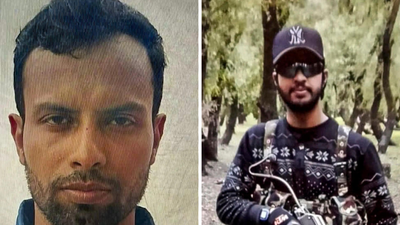
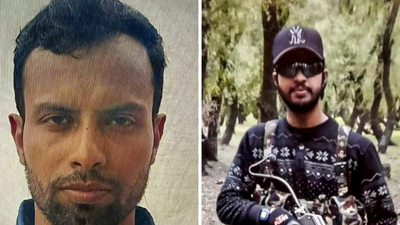
New Delhi: Jammu and Kashmir Police on Tuesday arrested five people including one pakistani terrorist which had been wanted for 16 years, because it had busted “deeply rooted” interstate Lashkar-e-Taiba module.Pakistani terrorist Abdullah alias Abu Huraira was caught along with another Pakistani national in an operation on Monday, six months after dismantling a “white-collar” terror cell centered at Faridabad’s Al-Falah University, according to officials.Officials said Srinagar Police conducted searches at 19 locations in Jammu and Kashmir, Rajasthan and Haryana in a joint operation with police forces of other states and central agencies. A large cache of weapons including four AK assault rifles, pistols, hand grenades and electronic gadgets were recovered in the raid.Officials said the operation, which began on March 31 and was monitored by Director General of Police Nalin Prabhat, who was camped in Srinagar, has revealed the funding and financial patterns of LeT.Officials said the five arrested include three residents of Srinagar, Mohammad Naqib Bhat, Adil Rashid Bhat and Ghulam Mohammad Mir alias Mama. They are accused of providing shelter, food and logistics support to terrorists.The unraveling of the elaborate network began on March 31 when the first of the three residents of Srinagar, Naqib Bhat, was arrested from Pandach area with a pistol and other incriminating material.During interrogation, he said that he was part of LeT and had purchased arms and ammunition from Adil Rashid, another associate of Zakura. Authorities said he also provided assistance to foreign terrorists.Who are the two Pakistani terrorists?According to officials, both Pakistani terrorists are classified as “A+” grade terrorists. Officials said he had infiltrated into India about 16 years ago and remained active in various districts of the Kashmir Valley and over the years has taken command of about 40 foreign terrorists, most of whom have been neutralized.Officials said Abdullah and Usman may have used false identities to move out of the valley. The investigation findings also reveal that a foreign terrorist managed to travel out of the country on a valid passport made from forged documents.He said the investigation is ongoing to identify additional associates, financiers, facilitators, safe houses and inter-state links and more arrests may be made.Incriminating material has been seized from several locations in different parts of Srinagar and other cities. Officials said these included three AK-47 rifles, one AK-Krinkov rifle, pistols, hand grenades, electronic equipment and gadgets.

Source link

Tamil Nadu Assembly elections: AIADMK’s Lima Rose Martin is the richest candidate with assets worth Rs 1,049 crore India News

Tamil Nadu Assembly elections: AIADMK's Lima Rose Martin is the richest candidate with assets worth Rs 1,049 crore
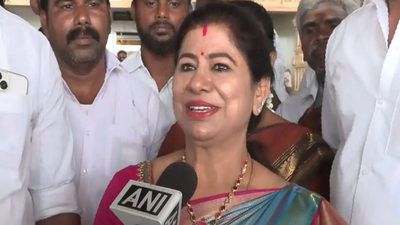
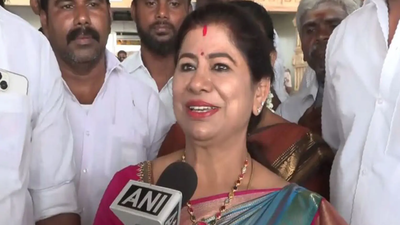
AIADMK’s Lalgudi candidate Lima Rose Martin

New Delhi: AIADMK’s Lalgudi candidate Lima Rose Martin has emerged as the richest contestant in the 2026 Tamil Nadu Assembly elections, declaring assets worth about Rs 1,049.56 crore in her election affidavit filed ahead of the April 23 polls.The 58-year-old wife of lottery businessman Santiago Martin filed her nomination papers on Monday. His affidavit shows movable assets worth Rs 139.62 crore and immovable assets worth Rs 909.94 crore, putting him ahead of other high-value candidates in the race, including Tamilaga Vetri Kazhagam (TVK) chief Vijay, who has declared assets worth over Rs 603 crore.The 159-page affidavit reveals that his real estate assets are spread across several districts including Coimbatore, Madurai, Tiruchirappalli and Tirupur. He also has agricultural holdings in Kerala and near New Delhi. Their annual income for the financial year 2024-25 was reported to be Rs 9.82 crore.The educational qualification of the candidate is stated to be Class VI. The affidavit also states that he has business interests in real estate, gaming and hospitality sectors.Her husband Santiago Martin has declared movable assets worth Rs 3,262.01 crore and immovable assets worth Rs 887.36 crore.His son, Jose Charles Martin, who is contesting from Puducherry on a BJP ticket, has declared total assets worth more than Rs 664 crore. His son-in-law, TVK Villivakkam candidate Aadhav Arjun, has declared total assets worth Rs 197 crore.The affidavit states that Lima Rose Martin and her husband both own three TVS XL mopeds. His personal vehicle collection also includes a Hyundai Creta and a Mahindra Thar.Rose has disclosed four criminal cases pending against him. A significant portion of his legal matters relate to proceedings initiated by the Income Tax Department. These cases include shifting of tax assessment from Coimbatore to Kolkata, a move which he and his daughter Daisy Martin Adhav Arjun unsuccessfully challenged in the Madras High Court in late 2024.As the wife of Santiago Martin, she has also been named in cases related to the Prevention of Money Laundering Act (PMLA). These investigations are generally linked to the long-running investigation by the Enforcement Directorate into her husband’s lottery business and alleged “proceeds of crime” worth hundreds of crores of rupees.The cases are currently being tried in various courts including special courts in Chennai and Kolkata.The Lalgudi seat is expected to be a high-profile contest as Tamil Nadu goes to polls on April 23 and the counting of votes will take place on May 4.

Source link

‘Relevant for political debate, not for removal proceedings’: Rajya Sabha Chairman rejects opposition notice for removal of CEC | india news

'Relevant for political debate, not for removal proceedings': Rajya Sabha Chairman rejects opposition notice for removal of CEC

New Delhi: Rajya Sabha Chairman CP Radhakrishnan rejected the opposition’s notice of moving a motion to remove Chief Election Commissioner Gyanesh Kumar. In his order dismissing the notice, Radhakrishnan said that although the allegations were relevant to the political debate, prima facie they did not meet the high constitutional hurdles for removal proceedings.He said, “Some of the allegations involve cases already decided or currently under judicial review. Although these allegations are relevant to the political debate, prima facie they do not meet the high constitutional hurdles for removal proceedings.”“Therefore, the prima facie requirements for accepting this notice of motion under the Judges (Enquiry) Act, 1968 have not been satisfied. Against this background, after considering the notice of motion and the existing constitutional and statutory provisions, I am of the firm opinion that the notice of motion does not deserve to be accepted. Accordingly, I decline to accept the notice of motion.”Radhakrishnan and Lok Sabha Speaker Om Birla on Monday rejected separate notices from the opposition seeking a motion to remove Kumar from his post.In March, the opposition had submitted a notice to the Lok Sabha Speaker and the Rajya Sabha Chairman against the Chief Election Commissioner citing seven allegations. These included alleged “biased and discriminatory conduct in office”, “deliberate obstruction of electoral fraud investigation” and “mass disenfranchisement”.The notice was signed by opposition parties including Congress, Trinamool Congress, DMK, RJD and the Left, along with the Aam Aadmi Party, which is no longer formally in the alliance. Some independent MPs also signed the notice.Radhakrishnan, in his order, gave a detailed rebuttal to each of the opposition’s allegations against Gyanesh Kumar. On the first allegation regarding the legality of Kumar’s appointment, Radhakrishnan said, “Even if considered true, these allegations do not amount to any act of misconduct attributable to the Chief Election Commissioner.” He rejected the second allegation over statements about irregularities in the voter list, saying it did not amount to ‘misbehavior’. Refuting the third and fourth charges of obstructing the investigation and SIR of electoral fraud in Bihar, he said that compliance with Supreme Court directions and the ongoing judicial investigation refute any claims of misconduct. On the fifth allegation, regarding nationwide SIR expansion, he described the claims as “hypothetical and speculative” and insufficient to prove abuses. Regarding contempt or non-compliance of Supreme Court orders, he said such issues are dealt with through the contempt jurisdiction of the court. Finally, on the seventh charge of compromising independence, he said, “In the absence of concrete details or strong evidence demonstrating deviation from constitutional or statutory obligations, such claims fail the test of prima facie instance of ‘abuse’.”

Source link

Sabarimala entry case: SC judge Nagarathna says can’t treat woman as ‘untouchable’ for 3 days | india news

Sabarimala entry case: SC judge Nagarathna says woman cannot be treated as 'untouchable' for 3 days

New Delhi: A woman cannot be considered “untouchable” for three days in a month and then again on the fourth day. Supreme Court Judge BV Nagarathna made this comment on Tuesday during the hearing of other cases including Sabarimala issue.The remarks came when Solicitor General Tushar Mehta, representing the Centre, said he took strong objection to the 2018 Sabarimala verdict’s observation that barring women aged 10 to 50 years from entering the temple amounts to “untouchability” under Article 17 of the Constitution. “Article 17 in the context of Sabarimala, I don’t know how it can be argued. Speaking as a woman, there cannot be three days of untouchability every month, and on the fourth day, there is no untouchability,” Justice Nagarathna.The comment came in response to Mehta saying: “India is not as patriarchal or gender stereotypical as the West perceives it to be.”In the Sabarimala case, Justice DY Chandrachud said that barring women from entering the Sabarimala temple in Kerala, whether due to age or menstruation, amounts to “untouchability”, placing them in a “subordinate” position, reinforcing “patriarchy” and undermining their dignity.Mehta said the ban on women’s entry into the Sabarimala temple is not linked to menstruation, but has been imposed only on the basis of a specific age group.He said, “We must be clear. Sabarimala belongs only to a particular age group. There should be no confusion. Lord Ayyappa’s temples across the country and the world are open to women of all ages. This is the only temple which has this restriction. It is a normal matter.”The nine-judge bench was hearing petitions examining discrimination against women at religious places, including the Sabarimala temple in Kerala, and the extent and limits of religious freedom in different religions. The Constitution bench comprised Chief Justice Surya Kant and Justices BV Nagarathna, MM Sundaresh, Ahsanuddin Amanullah, Arvind Kumar, Augustine George Masih, Prasanna B Varale, R Mahadevan and Joymalya Bagchi.

Source link

Rahul Gandhi accuses Modi government of excluding Dalit, tribal and OBC entrepreneurs from major public contracts. india news

'बहुजन उद्यमियों को बाहर क्यों रखा गया है?' कॉन्ट्रैक्ट डेटा गैप को लेकर राहुल गांधी ने केंद्र पर साधा निशाना

‘Why have Bahujan entrepreneurs been kept out?’ Rahul Gandhi targets Center over contract data gap

New Delhi: Rahul Gandhi Asking the Modi government why no data is maintained on the share of public works contracts worth over Rs 16,500 crore awarded to Dalit, tribal and OBC-owned businesses, he has accused the Center of promoting a “deliberately constructed exclusionary system” after Parliament had told him no such record existed.In an unstarred question in the Lok Sabha, Gandhi sought details on public works and infrastructure contracts awarded under the Central Public Works Department (CPWD) and the Ministry of Housing and Urban Affairs in the last five years, specifically asking how many were secured by SC, ST and OBC-owned enterprises.

Government response

In a written reply, Minister of State for Housing and Urban Affairs Tokhan Sahu said that though the government can provide the total number and value of contracts awarded year-wise, “there is no existing mechanism to track contracts awarded to enterprises owned by persons belonging to Scheduled Castes (SC), Scheduled Tribes (ST) and Other Backward Classes (OBCs).”The government also clarified that all such contracts fall under construction contracts, and it is “not mandatory” for them to maintain caste-based data. On a question on extending the purchase mandate for SC/ST owned enterprises, the minister replied: “In view of the above, the question does not arise.”

‘Deliberate boycott’: Rahul Gandhi

Responding to the government’s response on social media, the opposition leader said the response was “deeply worrying”.“The government does not maintain any data in this regard,” Gandhi said. “The policy says 25% of public procurement should be sourced from MSMEs, of which 4% is earmarked for Dalit and tribal entrepreneurs. However, when it comes to the largest and most lucrative contracts, public works, the government says this requirement is not ‘mandatory’.”He argued that this is “not just an administrative lapse; it is a system of exclusion deliberately created through the policies of the Modi government, which undermines social and economic justice.”“The question is simple: Why are Bahujan entrepreneurs being kept out of the country’s biggest public contracts?” He added.Rahul Gandhi further explained in his post that the government’s public procurement policy for MSMEs states that 25 percent of procurement by central ministries and public sector undertakings will be from micro, small and medium enterprises, of which four percent is specifically earmarked for SC/ST-owned enterprises.However, the government has now clarified in Parliament that this provision is not mandatory for public works contracts, which are generally among the largest and most profitable government tenders. These contracts are awarded through open tender processes, and no centralized database is maintained on the social category of contractors.This exchange has taken place ahead of assembly elections in many states. Gandhi’s office said the absence of such data raises broader concerns about equal access and transparency in government spending.Gandhi said, “Modi government will have to answer this.”

Source link