Breaking News
Maharashtra: 8 women workers killed in collision between truck and tempo on Samruddhi Highway in Jalna India News

Maharashtra: 8 women workers killed in collision between truck and tempo on Samruddhi Highway in Jalna

Eight women workers were killed when a truck and the tempo in which they were standing collided on the Nagpur-Mumbai Expressway in Maharashtra’s Jalna district. Police said the accident took place on Samruddhi Highway in Jalna when the workers, who were waiting in the side lane to get out after work, were hit from behind by a truck changing lanes.Jalna Superintendent of Police Ajay Kumar Bansal said, “Seven people died in this tragic incident. Six or seven others suffered serious injuries… The police have taken the truck driver responsible for the accident into custody. The police have registered a case of culpable homicide against him and are taking further legal action including his arrest.” Chief Minister of Maharashtra Devendra Fadnavis He described the accident as “extremely tragic” and expressed his condolences to the victims and their families. “The death of 8 people in the accident on Samruddhi Highway in Jalna is extremely saddening. I express my condolences to the victims. Our thoughts are with the families. The injured are being treated, and the local administration is coordinating. The District Collector and Superintendent of Police are at the spot. Pray for the speedy recovery of the injured. An assistance of Rs 5 lakh will be given to the families of the deceased,” Fadnavis said through a post on X.

Source link

PM chairs CCS meeting on Middle East conflict, orders immediate steps to secure supplies and curb price risks. india news

PM chairs CCS meeting on Middle East conflict, orders immediate steps to secure supplies and curb price risks

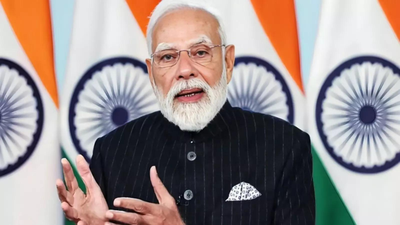
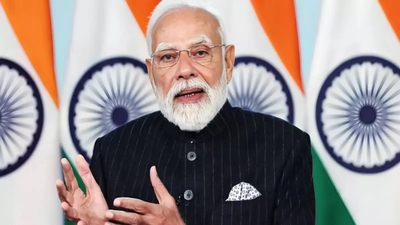
Prime Minister Narendra Modi on Wednesday chaired a special meeting of the Cabinet Committee on Security (CCS) to review the impact of the ongoing conflict in the Middle East, directing ministries to take immediate steps to safeguard essential supplies and protect civilians.“The Prime Minister has directed that all efforts should be made to protect civilians from the impact of this conflict,” the government statement said as the high-level panel assessed measures in energy, fertiliser, agriculture, logistics and MSMEs.The meeting reviewed actions to ensure availability of petroleum products, especially LPG and LNG, with diversification of supply sources. LPG prices for domestic consumers have been kept unchanged, while anti-diversion enforcement is being strengthened to prevent hoarding and black marketing.“Supply diversification, fuel duty reduction and power sector measures for LPG and LNG were reviewed to ensure sustainability of essential supplies,” the government said.The Prime Minister also assessed the power situation, highlighting steps taken by officials such as additional coal supply to thermal plants and easing of norms for gas-based power generation.“Adequate coal reserves exist which will adequately meet power needs in the coming months,” the release said.On fertilizers, the government said it is maintaining urea production and coordinating with foreign suppliers for DAP and NPKS to ensure adequate availability during the Kharif and Rabi seasons. States have been asked to take strict action against hoarding and diversion through monitoring and enforcement.The CCS also reviewed the price trends of essential commodities, with a control room being set up for real-time coordination with states and Union Territories under the Essential Commodities Act.“Steps are being taken to ensure stable prices of essential commodities and take strict action against hoarding and black marketing,” the release said.The Prime Minister stressed the importance of clear communication amid the emerging crisis.“The Prime Minister underlines the need for timely and smooth flow of authentic information to the public to prevent the spread of misinformation and rumours,” it said.The meeting also discussed global efforts to secure the safe passage of ships through the Strait of Hormuz and broader initiatives to stabilize supply chains.Officials said coordination is being increased at the central, state and district levels, with the Prime Minister directing all departments to take “every possible measure to ameliorate the problems of citizens and areas affected by the current global situation”.

Source link

Census 2027 begins: President Murmu, PM Modi among leaders who completed self-census. india news

Census 2027 begins: President Murmu, PM Modi included among leaders who completed self-census

New Delhi: According to the President’s Office, President Draupadi Murmu participated in the self-enumeration initiative for Census 2027 at Rashtrapati Bhavan on Wednesday.Murmu entered his household details on the official portal in the presence of Home Secretary Govind Mohan, Registrar General of India and Census Commissioner Mrityunjay Kumar Narayan and other senior officials, the office said in a post on Twitter.Vice President CP Radhakrishnan also completed the self-enumeration form for Census 2027 online at the Vice President’s residence on Wednesday, according to an official statement.The Vice President urged residents to participate in the self-enumeration process and submit their household details online through the official web portal during the period notified by their respective states and union territories.Prime Minister Narendra Modi With the start of the first phase of Census 2027 on Wednesday, they also completed their self-enumeration.Union Home Minister Amit Shah It also said on Wednesday that they have filled the self-enumeration form for their residence in Delhi as part of the ‘Housing Enumeration’ process marking the beginning of the first phase of Census 2027.He said that this exercise will play an important role in accelerating India’s development journey and will help in ensuring that the benefits of government schemes reach every citizen effectively.The 15-day window for self-counting in New Delhi Municipal Council (NDMC) and Delhi Cantonment areas began on Wednesday. Self-counting for Municipal Corporation of Delhi (MCD) areas will take place from May 1 to May 15.The door-to-door house listing campaign will run in two 30-day windows, from April 16 to May 15 in areas under NDMC and Delhi Cantonment, and from May 16 to June 15 in areas under MCD, as mentioned in the census programme.Census 2027 is being conducted in two phases, the first phase is known as House Listing and Housing Census and the second phase is called Population Census.

Source link

‘Be careful while filing nomination’: Mamata accuses Election Commission of bias, targets BJP. india news

'Be careful while filing nomination': Mamata accuses Election Commission of bias, targets BJP

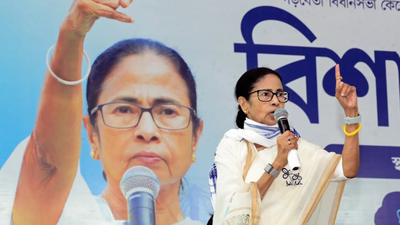
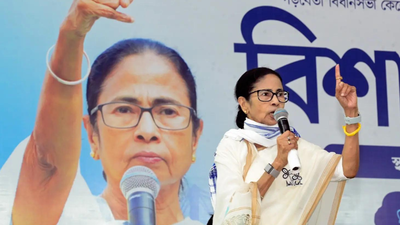
Trinamool Congress chairman Mamata Banerjee alleged on Wednesday that recently appointed officials by the Election Commission were tasked with rejecting nomination papers of his party’s candidates, and urged them to be cautious while filing nominations.Speaking at three election rallies in the state, Banerjee also alleged that BJP Misusing central agencies and bringing in people from outside for political gains.“Everything has been changed; it is a new setup here. Newly appointed officials by the Election Commission have been tasked with rejecting your nominations; so be cautious while filing your nominations. Take lawyers with you while filing nominations,” Banerjee said at the rally in Nanoor in Birbhum district, according to PTI.The West Bengal Chief Minister also appealed to voters, especially women, not to support the BJP.He said, “They (BJP) are anti-women, hence her name is being removed from the SIR citing logical inconsistency.” Mamata Banerjee alleged that ahead of the elections, the BJP was asking for bank account details of poor people and warned them not to share such information, claiming that it could lead to misuse of their money.The TMC chief alleged that the BJP was trying to bring in people from outside to influence voting in Bengal and said, “The people of Delhi will not be able to capture Bengal as long as I am here.”Chief Minister also welcomed Supreme CourtSIR’s comments stated that she was “happy” with them.Referring to the amendment in the voter list, Banerjee said her government has approached the Supreme Court and has so far succeeded in restoring about 22 lakh names, while about 18 lakh names are yet to be restored.He said those whose names have been removed will have to appeal before the tribunal and the government will bear the related expenses.Earlier in the day, the top court said the appellate tribunal will hear appeals filed by persons whose names have been excluded from the voter lists, as well as appeals challenging alleged incorrect names by election officials.At the rally in Nanoor, where party leader Anubrata Mandal was absent, Banerjee alleged that Nobel laureate Amartya Sen’s land in Shantiniketan was being snatched away, prompting her to intervene. He also urged people to defeat BJP in the elections so that they do not have to stand in queues in future.Later, addressing another rally in Burwan, the Chief Minister alleged large-scale deletion of voters’ names in several constituencies. He claimed that around 30,000 names have been removed in Dinhata and around 40,000 names in his own constituency Bhabanipur.However, Banerjee insisted that these developments would not help the BJP win the elections and asked people to consider her as its candidate in all 294 assembly constituencies.

Source link

‘Who is the biggest plaintiff? ‘Cost should be imposed’: SC imposes Rs 25,000 fine on Center in CISF dismissal case | india news

'Who is the biggest plaintiff? 'Cost should be imposed': SC imposes Rs 25,000 fine on Center over CISF dismissal case

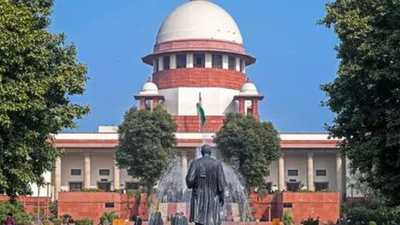
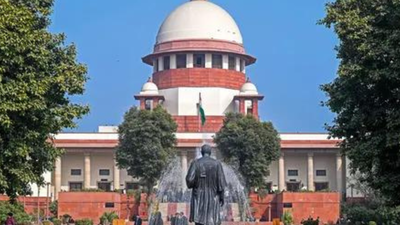
The Supreme Court on Wednesday imposed a fine of Rs 25,000 on the Center challenging the Punjab and Haryana High Court order which had set aside the dismissal of a CISF officer, saying the matter involved unnecessary litigation.Upholding the High Court judgment, a bench of Justices BV Nagarathna and Ujjal Bhuyan also directed that the officer be paid his outstanding salary, holding that the punishment imposed was disproportionate.Justice Nagarathna was quoted by PTI as saying, “We fail to understand why the Union of India has challenged the order of the Division Bench of the High Court. We hear the pending cases. Who is the biggest litigant? Fine should be imposed.”He said, “Why can’t there be a view that if the High Court finds it inconsistent and grants relief by setting aside all the orders, we will not go to the Supreme Court? He took medical leave but he also faced the threat of fleeing with his family.” Referring to his recent comments at a conference organized by the Supreme Court Bar Association, Justice Nagarathna said the court has taken the comments regarding the role of the government in pending cases very seriously.“It wasn’t just going to some resort and coming back. We prepared, we did the homework. We talked. Don’t forget,” he said.Two charges were filed against the CISF officer, being absent from duty for 11 days and indiscipline for allegedly leaving Mumbai with a woman, the daughter of a CISF constable, and attending her wedding with his younger brother.However, the High Court held that the 11-day absence was justified as the officer was on sanctioned medical leave during that period.Justice Nagarathna noted that during the disciplinary proceedings, the woman involved had appeared and stated that she had no complaints against the respondent-petitioner in respect of the allegation that she had eloped with his brother.The High Court said, “Otherwise it is not in dispute that the brother of the respondent-petitioner was married to the woman in question. Therefore, it is found that there was in fact no misconduct on the part of the respondent for which he could be removed from service.”

Source link

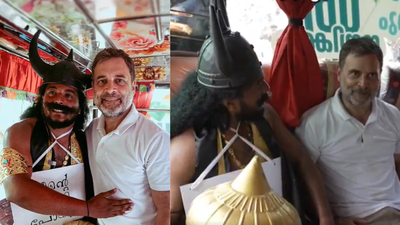
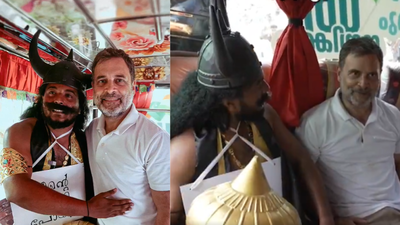
‘We will find another job for them’: Rahul Gandhi says he met ‘Yamraj’ during Kerala campaign, highlights UDF health scheme india news

'We will find another job for them': Rahul Gandhi says he met 'Yamraj' during Kerala campaign, highlights UDF health scheme
Screen Grab: X @rahulgandhi

New Delhi: Congress leader Rahul Gandhi on Wednesday shared a video of an unusual interaction during his Kerala election campaign, where he met a man dressed as ‘Yamraj’ – the Hindu god of death – during a bus ride in Balussery.The conversation appeared to be part of a publicity pitch for the UDF’s proposed Oommen Chandy Health Insurance Scheme, under which the alliance has promised health coverage of up to Rs 25 lakh for each household in the state.

Watch

Beyond freebies and welfare: What will Kerala’s 2026 elections decide?

In the video, the mace-wielding ‘Yamraj’ tells Gandhi that he is out of work as people will live longer because of the proposed insurance scheme.Referring to the encounter, the Leader of Opposition (LoP) in the Lok Sabha said on Twitter, “Yesterday in Balussery, Keralam, I met Yamraj in a bus. Unfortunately he was not particularly happy to see me or the other UDF leaders.“UDF’s Oommen Chandy Health Insurance Scheme promises health coverage of Rs 25 lakh for every household – it will put Yamraj out of work but we will soon find another job for him.”Highlighting the purpose of the promise, Gandhi said, “Our mission is simple – no family in Kerala should ever feel the financial burden of a medical crisis. With a coverage of Rs 25 lakh, we are ensuring that illness never takes away a family’s dignity, its savings or its future. Healthcare is a right and UDF is here to make it a reality for every Keralite.”The health insurance scheme is one of the major welfare promises announced by the United Democratic Front (UDF) for the Kerala elections.The alliance has promised to deliver five Indira Guarantees, including free travel for all women in Kerala State Transport buses, monthly assistance of Rs 1,000 for college-going girl students and an increase in welfare pension by Rs 3,000 per month.Besides this, the UDF has also promised the Oommen Chandy Health Insurance Scheme, which provides coverage of up to Rs 25 lakh for each family along with interest-free loans of up to Rs 5 lakh for small businesses.Voting in Kerala is scheduled to take place on April 9, while counting of votes for the elections will take place on May 4.

Source link

Evening Newspaper: IRGC ‘takes control’ of Iran government; Priyanka Gandhi calls PM Modi ‘America’s slave’ and much more. india news

Evening Newspaper: IRGC 'takes control' of Iran government; Priyanka Gandhi calls PM Modi 'America's slave' and more
  • With President Massoud Pezeshkian sidelined, IRGC has taken control of Iran’s key government functions, reports say
  • Donald Trump considers pulling out of NATO, calls alliance a “paper tiger” amid Iran conflict
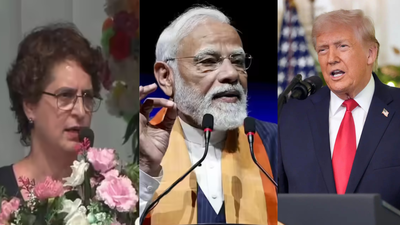
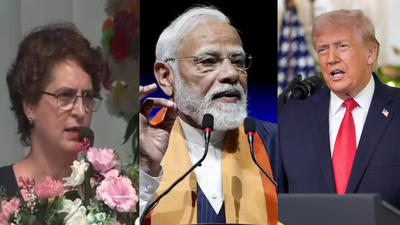
  • Priyanka Gandhi Vadra attacks PM Modi, Himanta Biswa Sarma by calling them “double-slavery government”.
  • Reserve Bank of India implements strict digital payment rules from April 1, OTP is no longer enough
  • Ravichandran Ashwin praises Ricky Ponting for Punjab Kings comeback after win against Gujarat Titans

Here are the top 5 news of the day:

power shift? Iran’s military takes control of state functions, sidelines President Pezeshkian – report

As cited by Iran International, the IRGC has reportedly taken control of key state functions in Iran, blocking presidential appointments and decisions, while tightening its grip on the country’s main centers of power. The move has effectively sidelined the government and pushed President Massoud Pezeshkian into a “complete political impasse” amid rising tensions between his administration and Iran’s military leadership. Read the full story

‘Double-slavery government’: Priyanka Gandhi calls PM a ‘slave’ of America, calls Assam CM Himanta a ‘slave’ of Modi

Congress leader Priyanka Vadra on Wednesday took a dig at the BJP-led central and state governments in Assam, accusing Prime Minister Narendra Modi and Chief Minister Himanta Biswa Sarma of running a “government of double slavery”. Addressing a rally in Nazira, Priyanka hit out at the BJP’s central campaign, saying it has failed to fulfill its promises. Read the full story

Will America withdraw from NATO? Trump calls coalition ‘paper tiger’ as faction shy away from joining Iran war

US President Donald Trump said on Wednesday he is strongly considering pulling the United States out of NATO, calling the transatlantic alliance a “paper tiger” amid growing differences with European partners over the ongoing conflict with Iran. In an interview with The Telegraph, Trump said that leaving NATO was now “beyond reconsideration”, adding, “I never got carried away by NATO. I always knew they were a paper tiger, and Putin knows that too.”Read the full story

OTP can’t secure payments: RBI to impose strict digital payments rules from April 1 – what’s changing?

With the start of the new financial year, India’s digital payments landscape is set for a major security makeover as the Reserve Bank of India (RBI) is imposing strict authentication norms from April 1. The move comes in response to increasing transaction volumes and increasing risks of fraud. RBI aims to strengthen the country’s payments ecosystem with more robust and adaptive security measures. Read the full story

‘Ponting proved right once again’: Ashwin on bold decision of Punjab Kings vs Gujarat Titans

Former India off-spinner Ravichandran Ashwin praised Ricky Ponting for his decisive team selection after Punjab Kings defeated Gujarat Titans in a tense IPL 2026 clash, saying the great Australian was “proved right once again.” Punjab won closely by three wickets, but it was the impact of the less expected contributors that caught Ashwin’s attention. Speaking on his YouTube channel, Ashwin admitted that he initially questioned the decision to include Xavier Bartlett in place of Azmatullah Umarzai. Read the full story

Source link

Music of the Tesseract: The Sound of Truth india news

Music of the Tesseract: Sounds of Truth

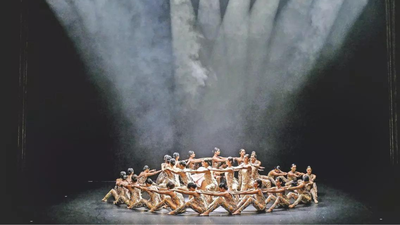
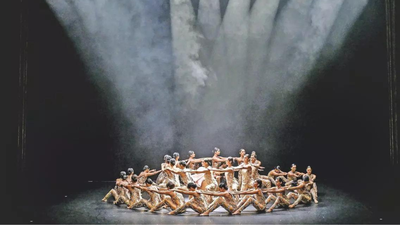
There is a moment at the end of Stanley Kubrick’s Eyes Wide Shut where a waltz plays over scenes of uneasy beauty. The piece is Shostakovich’s Waltz No. 2, composed for a Soviet film in the mid-1950s, later misattributed to a different suite entirely, and now one of the most recognizable orchestral pieces in the world because of what it does to a room. This does not provide relief. It destabilizes elegantly. This was the first music the audience heard as they entered Tesseract: The Geometry of Truth, and this choice said something about what the intention of the evening was.Tesseract’s musical direction was not accidental. An Exposition of Soviet Orchestral Music, in Eleven Pieces, Michael jacksonbilly joel, queen, and three hans zimmerThere was a coherent argument being made about the most famous film scores. Firstly, the choreography and staging were increased. The music worked. Taken together, these songs form their own kind of geometry: different angles on the same central question of what truth is, who possesses it, who is denied it, and what it costs to honestly seek it.Waltz No. 2 – Dmitri Shostakovich

Watch

Dmitri Shostakovich – Waltz No. 2

Shostakovich composed this waltz for a Soviet film in the mid-1950s, and it circulated for decades under a false title – a piece of music whose identity was the subject of the record. Its fame increased when Kubrick used it in Eyes Wide Shut, where it outlined a world of beautiful surfaces with dark truths hidden beneath. As a prologue to a show about perception and reality, it was perfect.Michael Jackson appears three times in the Tesseract soundtrack, and this progression is not accidental.Man in the Mirror – Michael Jackson

Watch

Michael Jackson – Man in the Mirror (Official Video)

From his 1988 album Bad, it is the most significant of Jackson’s three pieces – a gospel-drenched call to self-examination that he performed with a choir behind him at that year’s Grammy Awards. The music video, unusually, features almost no one Jackson himself; Instead it moves through a collection of suffering, protest and injustice, as if to say: This is what you’re looking away from.They Don’t Care About Us – Michael Jackson

Watch

Michael Jackson – They Don’t Care About Us

Released eight years later and considerably more confrontational, it turns the gaze outwards. It’s a song about those who are unaccounted for in history, those voices that the establishment finds convenient to ignore. In this, anger is specific and acquired. While Man in the Mirror asks the individual to look inward, it also takes the world into account.Earth Song – Michael Jackson

Watch

Michael Jackson – Earth Song (Official Video)

A gospel lament for the natural world, released in 1995, it asks what collective human ambition – including the ambition to explore and create and develop – has cost the planet that makes it all possible. The pursuit of progress, even the pursuit of truth, is not free. Of Jackson’s three works, it carries the widest moral weight and the most difficult questions.Billy Joel offered two very different registers.She’s Always a Woman – Billy Joel

Watch

Billy Joel – She’s Always a Woman (Official Audio)

Written in 1977, it is a portrait of a man who resists being reduced to a simple narrative – a study of the difference between who a person really is and who other people insist on seeing. Joel wrote it partly in frustration at critics who had misread his beloved man, but it became something larger: a sober argument against the laziness of received opinion. In a show about the geometry of truth, it’s worth noting that the truth about people is almost always more complex than we give it shape.We Didn’t Set Fire – Billy Joel

Watch

Billy Joel – We Didn’t Start the Fire (Official HD Video)

Written after a conversation with a young man who believed the 1950s were eventful, it is the opposite of calm – 119 historical references compressed into under five minutes, a torrent of events presented without hierarchy or judgment. Joel said he never meant it as an apology for his generation or an accusation against anyone else. He argued that the world has always been chaotic. The fire was burning long before any of us arrived.We are champions – Rani

Watch

Queen – We Are The Champions (Official Video)

Freddie Mercury wrote it in 1977 to address the audience directly – not a triumphant boast but a recognition of failure, perseverance, and a shared journey through something that might ultimately equate to victory. We are really open in this. It belongs to the one who has earned the right to claim it. As an anthem of collective resilience, it represents the emotional center of the evening without needing to explain itself.Hans Zimmer is represented three times, and all three pieces span a decade of his most famous work.Time – Hans Zimmer (Inception, 2010)

Watch

Hans Zimmer – Time (Start)

The piece builds from a single delicate motif into something vast and unresolved; This is along the lines of the final moments of Christopher Nolan’s ‘Inception’, where the line between dream and waking is deliberately left open, and the music also refuses to close. For a show built around perception and truth, certain pieces of music do more with less.The Dark Knight Theme – Hans Zimmer and James Newton Howard (2008)

Watch

The Dark Knight Main Theme – Hans Zimmer

Built from Almost Nothing – a two-note motif that Zimmer pairs with a character defined by his willingness to expose the fragility of everything people believe keeps them safe. According to Nolan, the Joker does not want power or money; He wants to demonstrate that the systems people rely on are more fragile than they appear. In other words, it’s a theme of what happens when comfortable fantasies are demolished.Interstellar Main Theme – Hans Zimmer (2014)

Watch

Interstellar Main Theme – Extra Extended – Soundtrack by Hans Zimmer

Recorded almost entirely on pipe organ – an unusual choice for a science fiction film, and a deliberate one. This organ holds associations for centuries: sacred, vast, unknown. It stands out from the others in the Tesseract soundtrack. It doesn’t argue. It does not make allegations. This is the witness.Chevaliers de Sangrial – Hans Zimmer (The Da Vinci Code, 2006)

Watch

Chevaliers de Sangrial (from The Da Vinci Code Original Motion Picture Soundtrack)

The climactic theme of Ron Howard’s adaptation of Dan Brown’s novel – a story built entirely around the proposition that the most guarded truths are those that would cause the most damage to institutions if revealed. Zimmer’s score for the moment of revelation is not so much triumphant as solemn: a choir ascending without haste, as if truth itself is walking toward the light. This is the final part of the Tesseract soundtrack. It feels right to close in the evening.

S no. title song artist/musician Sources/Notes
1 waltz number 2 dmitri shostakovich Russian State Symphony Orchestra/Performed by Dmitry Yablonsky
2 man in the Mirror michael jackson
3 they don’t care about us michael jackson
4 she is always a woman Billy Joel
5 we did not set fire Billy Joel
6 we are champions Queen
7 Time hans zimmer From start
8 dark night theme Hans Zimmer and James Newton Howard From dark knight
9 Earth Song michael jackson
10 interstellar main theme hans zimmer From interstellar
11 Chevaliers de Sangrial hans zimmer From the Da Vinci Code

The Tesseract was a presentation about perception, geometry and how truth can take many shapes depending on where you stand. Its music was also selected with equal seriousness. From a Soviet waltz that had been misnamed for decades, to a choir leading the way to a last-minute revelation, the songs held the truth for a brief moment in human memory.

Source link

Puducherry assembly election SWOT analysis: NDA vs Congress-DMK in direct clash amid TVK buzz | India News

Puducherry assembly election SWOT analysis: NDA vs Congress-DMK in direct clash amid TVK buzz
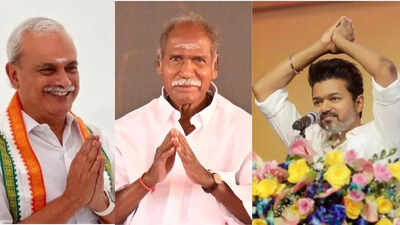
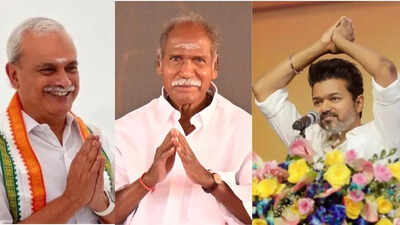
Congress’ V Vaithilingam; CM N Rangasamy; TVK chief Vijay

NEW DELHI: The upcoming Puducherry assembly elections have set the stage for a direct contest between the ruling National Democratic Alliance (NDA) of All India NR Congress (AINRC)–BJP and the Congress–DMK’s Secular Progressive Alliance (SPA).The NDA, led by chief minister and AINRC founder-president N Rangasamy, is aiming for a second consecutive term. Meanwhile, the Congress and DMK finalised their seat-sharing at the last moment, and will fight to reclaim power in the Union territory.
Puducherry assembly polls 2026

Puducherry assembly polls 2026

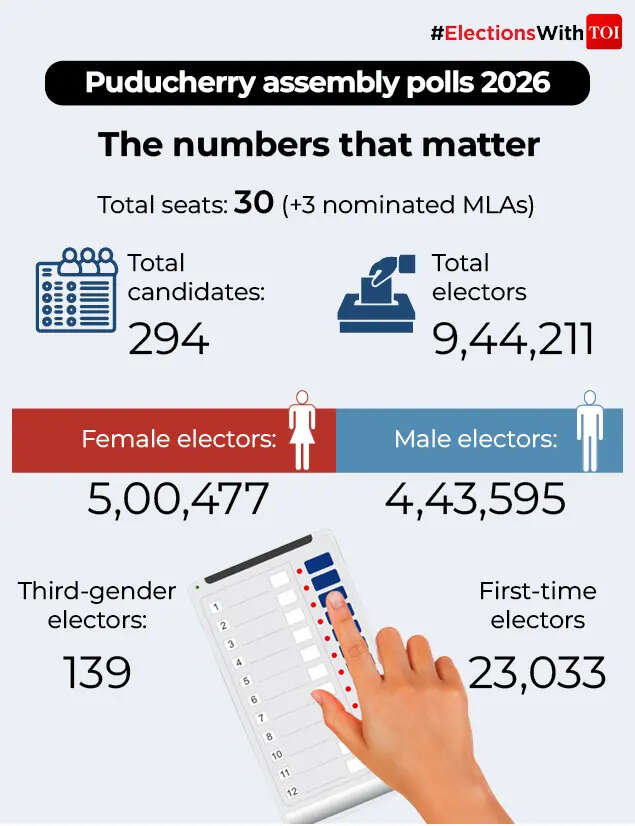
Puducherry’s 33-member legislative assembly includes 30 elected seats, while three members are nominated by the Centre. Voting will be held on April 9, followed by counting on May 4, alongside counting in Assam, Kerala, Tamil Nadu and West Bengal, all of which will also vote this month.

A snapshot of past elections

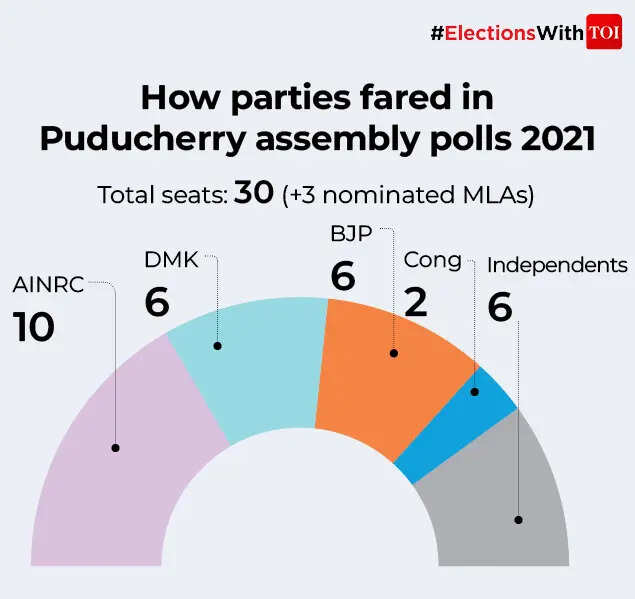
Puducherry has not re-elected a government since the Congress in 2006. In February 2011, Rangasamy, a former Congress member, launched the AINRC, which came to power a few months later. The grand old party reclaimed power in 2016, before the AINRC–BJP combine won the assembly elections in 2021.In the previous polls, the AINRC and BJP—contesting together for only the second time and their first assembly election as allies—ousted the Congress. The alliance won 16 seats, exactly the majority needed to form the government.
How parties fared in Puducherry assembly polls 2021

How parties fared in Puducherry assembly polls 2021

Five years before that, the Congress had emerged victorious with 15 seats, while the DMK added two more to their joint tally. The AINRC, which had experienced rapid success soon after its formation, was voted out, securing just eight seats.Can AINRC reverse the trend?

High-stake contest

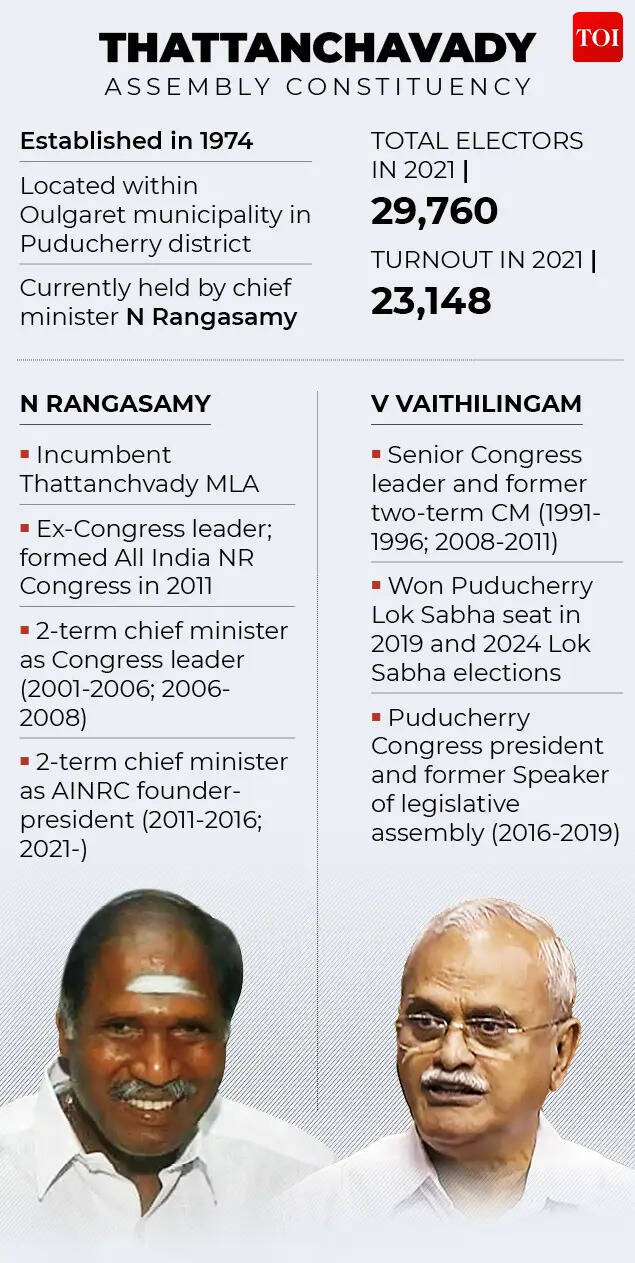
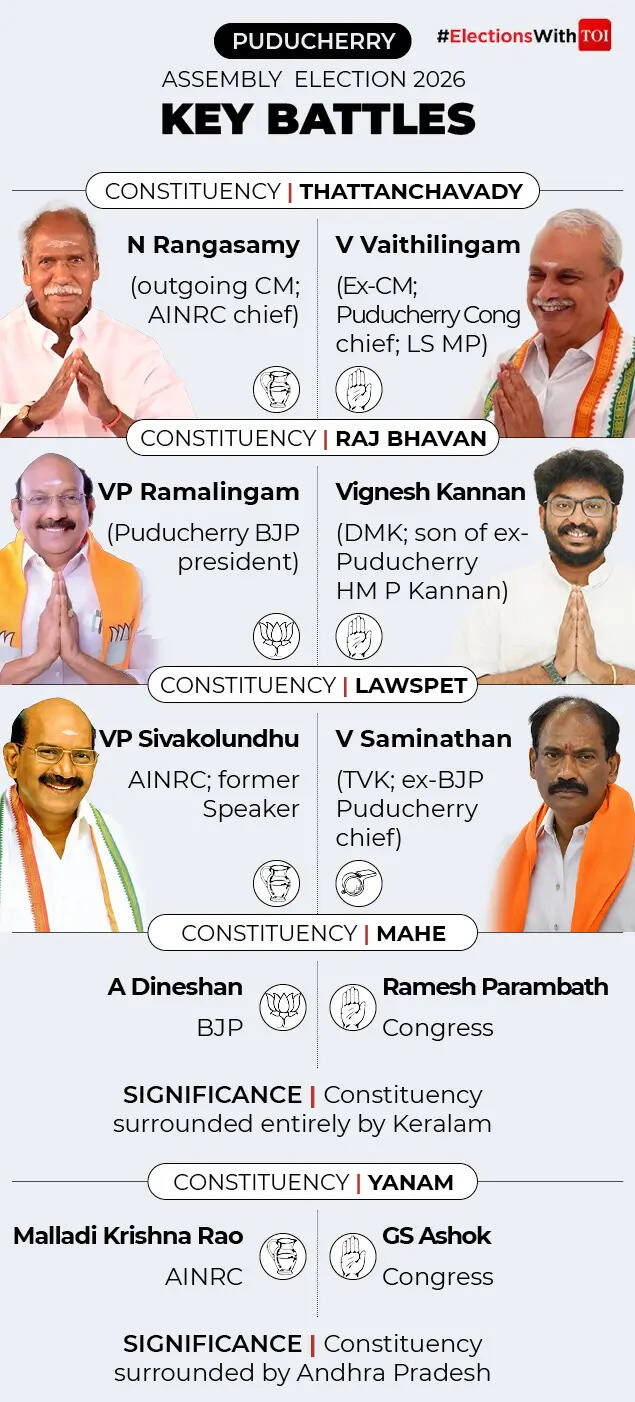
The most high-profile contest of the election is set to unfold in Thattanchavady, featuring two candidates who were once in the same party and have both held the UT’s top executive post. On the final day of nominations, with the Congress and DMK yet to finalise a seat-sharing agreement, V Vaithilingam, Puducherry Congress president and former chief minister, filed his nomination from Thattanchavady, setting up a direct clash against Rangasamy, the outgoing CM.
Thattanchavady constituency

Thattanchavady constituency

Since his second term as chief minister ended in 2011, Vaithilingam has represented the UT’s only Lok Sabha seat—also called Puducherry—which he won in both the 2019 and 2024 general elections. Meanwhile, Rangasamy has held the chief ministerial post four times, twice each with the Congress and later with the AINRC.Thattanchavady could, therefore, once again decide Puducherry’s next chief minister.

Major poll battles

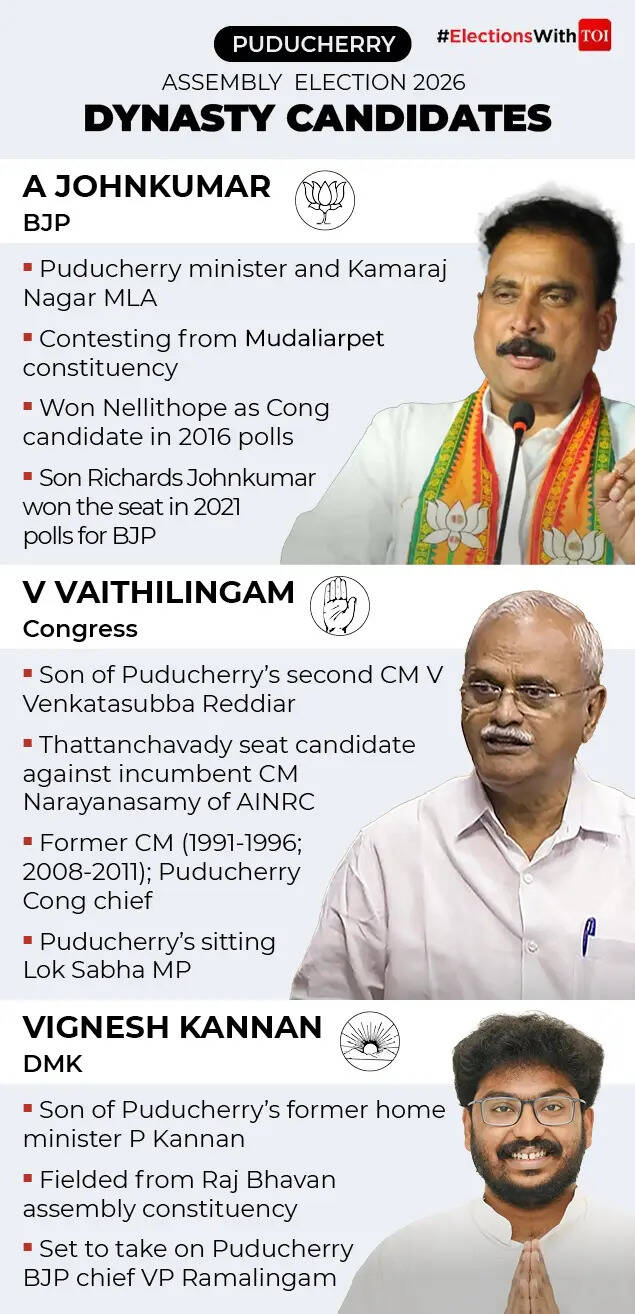
While the Rangasamy–Vaithilingam contest will be the most high-profile battle, several other constituencies are also set to witness intense fights. For the Raj Bhavan segment, the NDA has nominated VP Ramalingam, the Puducherry BJP chief. The SPA nominee is Vignesh Kannan, who recently joined the DMK and is the son of the late P Kannan, an ex-Puducherry minister and a former parliamentarian.
Key battles

Key battles

In Lawspet, AINRC’s VP Sivakolundhu, who served as assembly speaker while in the Congress, faces a strong challenge from V Saminathan of actor-politician Vijay’s two-year-old Tamilaga Vettri Kazhagam (TVK). Saminathan, a former Puducherry BJP president, holds the distinction of being the longest-serving leader in that position, making this race a high-stakes contest.In Mahe and Yanam, which fall in Kerala and Andhra Pradesh respectively, the NDA candidates are A Dineshan (BJP) and Malladi Krishna Rao (AINRC). The SPA candidates are Ramesh Parambath (Congress) and GS Ashok (Congress).
Puducherry dynasty candidates

Puducherry dynasty candidates

Other major candidates include home minister and BJP leader A Namassivayam (Mannadipet), minority affairs minister and BJP leader A Johnkumar (Mudaliarpet), and AINRC’s Nedungadu nominee Chandira Priyanga, a former minister who resigned in October 2023 as the lone woman in the cabinet.From the Congress-DMK alliance, DMK’s R Siva, leader of the opposition in the outgoing assembly, will contest from Villianur. DMK leader and ex-minister AMH Nazeem will contest the Karaikal South seat.

Key issues dominating the election campaign

Statehood: Ahead of the electoral battle, the long-pending demand for statehood for Puducherry has emerged as the biggest issue and could play a decisive role in the outcome. As the ruling party and an ally of the BJP, which leads the Union government, the AINRC stands to lose the most if the opposition is able to bring this issue to the forefront effectively.Puducherry’s Union territory status means that most administrative matters are decided by the lieutenant governor—the UT’s constitutional head appointed by the President on the Centre’s recommendation—rather than the chief minister. For instance, the police department reports to the Union home ministry, unlike in a full-fledged state, where it functions under the elected political administration. Successive governments in the UT have cited this lack of full-fledged powers as a hindrance to effective governance.‘Excessive’ focus on Puducherry district: The district, which shares its name with the Union territory and is home to its capital city of the same name, also accounts for a lion’s share of the assembly seats. Out of the 30 assembly constituencies, 23 are located here, giving it an overwhelming influence in determining the outcome of the elections. This concentration of seats means that political campaigns, party strategies, and voter attention are heavily focused on the Puducherry district, often overshadowing Karaikal, Mahe, and Yanam. Additionally, Mahe and Yanam are surrounded by two different states (Kerala and Andhra Pradesh, respectively), which shape their political and administrative dynamics differently.
Candidates with criminal cases

Candidates with criminal cases

Water contamination: In September 2025, the Puducherry city faced a public health concern due to contaminated drinking water in some areas, with many residents reportedly falling ill with symptoms like diarrhoea and vomiting after consuming unsafe water. The contamination was believed to be caused by poor sanitation and possible mixing of sewage with the water supply. The incident led to protests and raised concerns about the need for better water quality management and improved public health measures.Unemployment: Despite its small size and relatively low population, the UT has recorded a high unemployment rate. In June 2021, just a month into the AINRC–BJP government’s first term, the unemployment rate stood at a national high of 47.1%, according to a Centre for Monitoring Indian Economy (CMIE) study, compared to a national average of 9.2%.This was significantly lower than the figures recorded in April 2020, when the unemployment rate had peaked at 75.8% against a national average of 23.5%, largely due to the lockdown imposed to curb the spread of Covid-19.

SWOT analysis

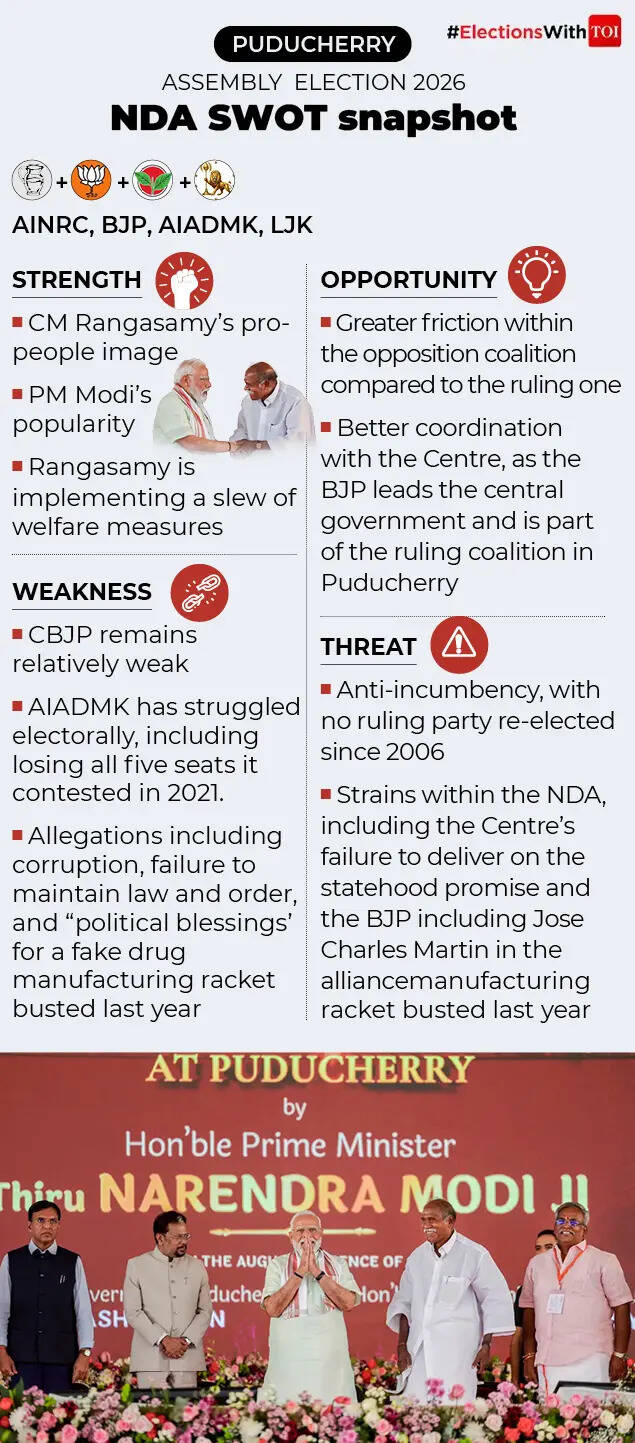
NDA: The alliance has retained its previous formula, under which AINRC will contest 16 seats and BJP 14. From its quota, the BJP has allocated two seats each to allies like the AIADMK and the newly formed Latchiya Jananayaga Katchi (LJK), led by businessman Jose Charles Martin, son of “lottery king” Santiago Martin.Strength

  • CM Rangasamy’s pro-people image
  • The UT government’s popularity
  • Rangasamy is implementing a slew of welfare measures

Weakness

  • BJP remains relatively weak in Puducherry
  • AIADMK has struggled electorally, including losing all five seats it contested in 2021.
  • Allegations including corruption, failure to maintain law and order, and “political blessings’ for a fake drug manufacturing racket busted last year

Opportunity

  • Greater friction within the opposition coalition compared to the ruling one
  • Better coordination with the Centre, as the BJP leads the central government and is part of the ruling coalition in Puducherry

Threat

  • Anti-incumbency, with no ruling party re-elected since 2006
  • Strains within the NDA, including the Centre’s failure to deliver on the statehood promise and the BJP, including Jose Charles Martin in the alliance
NDA SWOT

NDA SWOT

Congress-DMK: The Congress–DMK alliance is the more traditional of the two major coalitions, having contested assembly elections here since 2006.Last time, the DMK won six constituencies compared to the Congress’ two, emerging as the second-largest party and holding the leader of the opposition post.The Congress will field 16 candidates, with the remaining seats allotted to the DMK. The MK Stalin-led party had initially announced one seat from its quota for the Viduthalai Chiruthaigal Katchi (VCK). However, the VCK chose to contest independently and field its own candidates in three constituencies.Strength

  • As the two most successful parties, both – especially the Congress – continue to have a widespread organisational presence

Weakness

  • Congress’ inability to convert issues into votes
  • Congress-DMK sea-sharing friction almost derailed the alliance

Opportunity

  • The previous AINRC (2011–2016) and Congress (2016–2021) administrations both lost power after just one term

Threat

  • Congress’ broader national decline
  • Despite potential anti-incumbency, AINRC-BJP combine appears better positioned to retain power
  • The last-day seat-sharing announcement could lead to friendly contests
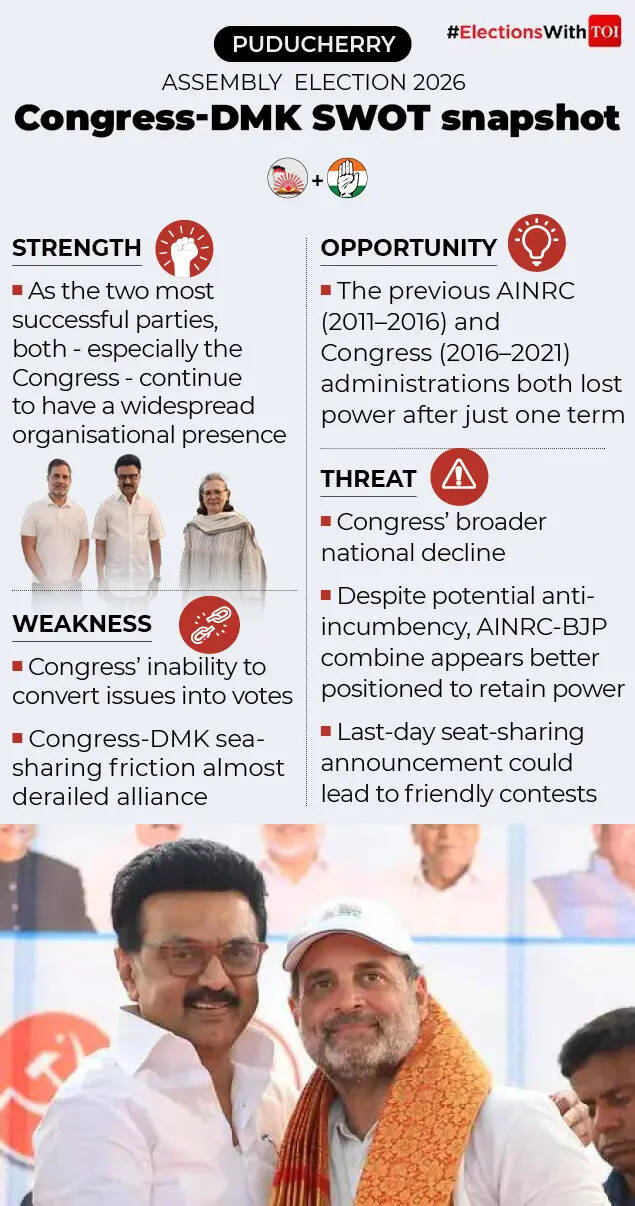
Congress-DMK SWOT

Congress-DMK SWOT

Wildcard factor

As in neighbouring Tamil Nadu, the biggest wildcard factor in Puducherry is “Thalapathy” Vijay. His TVK initially announced candidates for all 30 constituencies before joining hands with independent legislator G Nehru’s newly formed Neyam Makkal Kazhagam (NMK).Under this arrangement, the TVK withdrew its nominees from the Orleanpet and Thattanchavady seats for the NMK. Nehru himself will contest from Orleanpet, while NMK general secretary E Vinayagam will stand from Thattanchavady.Like in Tamil Nadu, the TVK’s biggest strength is Vijay’s massive popularity; his Puducherry rally in December last year drew thousands. Yet, converting his fan base into votes will be the party’s biggest challenge. Additionally, as a newly formed party—it was launched in February 2024—the TVK lacks both a strong grassroots organisation and governance experience compared to more established parties.Yet, TVK could attract voters seeking alternatives beyond the two major alliances. This could end up benefiting one of the two while hurting the other, and at the same time help establish TVK as a rising political force.Unsurprisingly, Vijay was reportedly courted by the AIADMK, BJP, and Congress in Tamil Nadu, but he declined overtures from all three.Strength

  • Built-in fan base driven by Vijay’s strong popularity

Weakness

  • Political debutant; therefore lacks political and policy experience
  • Lack of a grassroots organisational network
  • No prominent face beyond Vijay

Opportunity

  • Positioning as a fresh alternative to the dominant coalitions
  • Attracting voters seeking change

Threat

  • Potential difficulty in converting fan support into actual votes
  • Reputation impact following the Karur stampede
  • Potential disruptions due to frequent travel to Delhi for CBI questioning
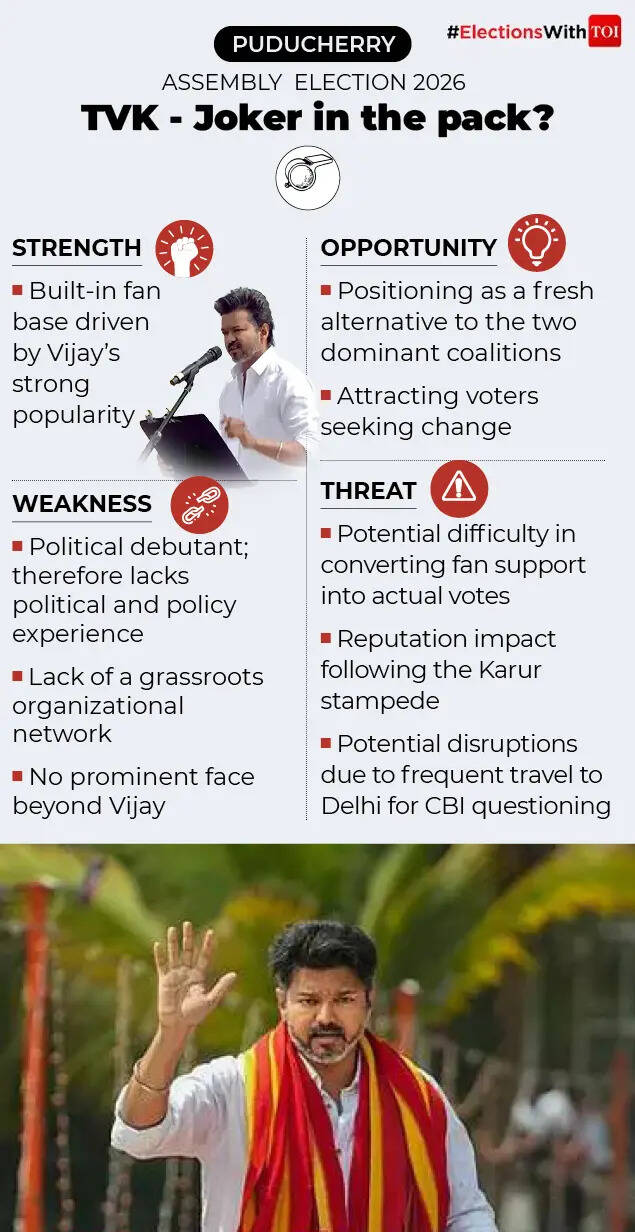
TVK SWOT

TVK SWOT

Stage set for poll battle

As the elections approach, several political heavyweights—including Prime Minister Narendra Modi, Union home minister Amit Shah, and Congress MP and Lok Sabha leader of opposition Rahul Gandhi—are expected to visit Puducherry regularly to campaign for their respective parties..Still, attention is not on Puducherry as it is a Union territory and small in size. However, it has its own politics and stands out for its French colonial past and the fact that its four districts are spread across three different states, with two of the states—Tamil Nadu and Kerala —voting in the current round, giving the UT a unique political significance.With the key players and alliances in place, the stage is now set for a potentially close poll battle.


Source link

Electricity Amendment Bill 2025: Why farmers, workers and states are backing down. india news

Electricity Amendment Bill 2025: Why are farmers, laborers and the state retreating?

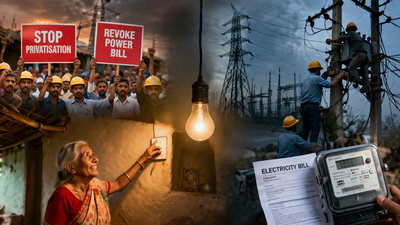
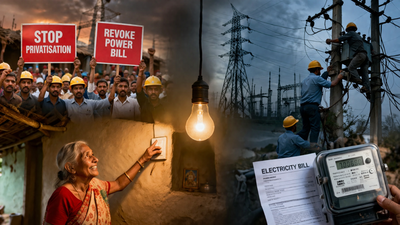
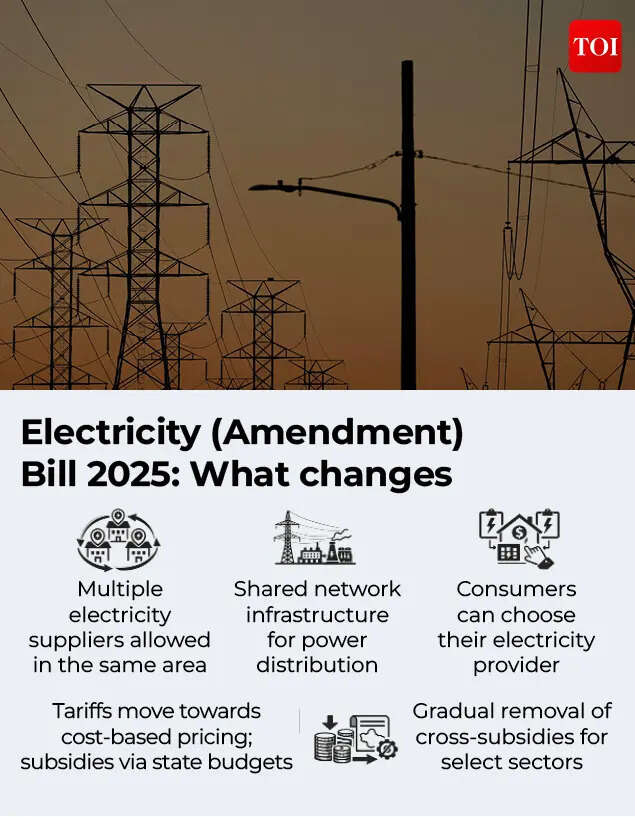
About 27 lakh workers have gathered across the country. strike-Started with a single step: Introduction of the Electricity (Amendment) Bill, 2025 in Parliament. These are not just any workers, but the people who keep the country’s electricity running – engineers, linemen and power system workers. The Center has not yet introduced the bill in Parliament.A glimpse of this unrest was visible earlier this month, when employees of several state electricity boards walked off the job in protest.The protests are not limited to the workforce. Farmer unions have also raised concerns, indicating that opposition to the bill is coming across all sectors. However, the government has drafted the Electricity (Amendment) Bill, 2025 as a long-awaited reform – aimed at making the power sector more competitive, efficient and better equipped for future demand. At its core is a significant change: allowing multiple electricity distribution companies to operate in the same area using shared infrastructure, while maintaining the obligation to supply electricity to all consumers.But it’s not as simple as a switch, a bulb and a wave of happiness. For Kaveri Amma, electricity came like a miracle – simple, shared, and operated by a single supplier that illuminated the entire village.But if Kaveri Amma were alive today, that simplicity would no longer exist. Electricity will still come at the flick of a switch – but there won’t be just a personality like Shah Rukh Khan running the show. This could be multiple companies sharing the same wires, competing to supply electricity to the same home.This change is at the core of the Electricity (Amendment) Bill 2025. “Privatization!”– This is the word that power sector employees, farmers and trade unions are mobilizing against. The Center has been trying to rework the electricity law for more than a decade, but every attempt has met with resistance.The protest is not just about the bill, it is also about how it is being prepared. A working group formed by the power ministry in January 2026 to finalize the bill has come under criticism All India Power Engineers Federationwhich has blocked the inclusion of the All India Discom Association, arguing that it indicates a inclination towards privatization and marginalization of workers’ concerns.

-

But privatization is not the only concern. The bill could bring about some more immediate changes—who supplies electricity to consumers, and how much they pay for it.The thing is, India’s power sector is at an interesting crossroads. Electricity use is constantly increasing – more appliances, more electric vehicles, more data centers running quietly in the background. And the system, for now, remains in place. In 2025, the country aims to meet a record peak demand of over 240 GW, with the total installed capacity crossing 5 lakh MW. Even more striking is the change in the energy mix – more than half of this capacity now comes from non-fossil sources. On paper, it looks like a sector that is expanding, modernizing, and even cleaning up.But behind this growth story lies a more complex reality. Getting electricity to your home still depends on a vast and expensive network—generation, transmission, and ultimately distribution. And it’s the last step that carries the most stress. State-run distribution companies, or discoms, have historically grappled with rising losses. In fact, recently, after years of red ink, they collectively posted a modest Benefit About Rs 2,700 crore in 2024-25. To put this in perspective, the sector had recorded losses of over Rs 25,000 crore just a year ago and nearly Rs 68,000 crore a decade ago. It’s a change, but a fragile one, built on a system that still struggles with low-cost tariffs, delayed subsidies and persistent inefficiencies.This gap – between the rapidly growing power system and financially stressed distributors – is what the government is trying to address through the Electricity (Amendment) Bill 2025. The idea itself is not new; Versions of this have appeared several times over the years. But the pitch remains the same: introduce competition, allow multiple companies to supply electricity to the same area, and, to make the system more efficient, give consumers more choice, at least in theory.

Why are farmers against this?

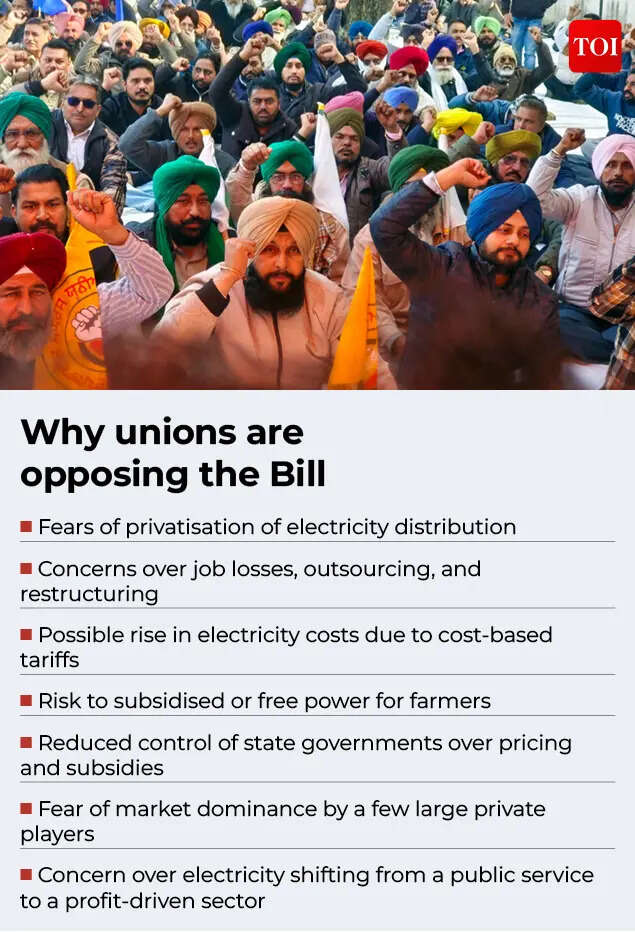
The main focus of the proposed changes is tariff reform and efficiency. The government says the bill will move toward cost-reflective tariffs, while targeted subsidies for vulnerable groups such as farmers and low-income households will continue through the state budget. But farmers organizations are not buying it. In India, many states provide free or subsidized electricity to farmers. The entry of private players will eventually make state-run discoms inefficient, forcing farmers to pay to choose private suppliers.

-

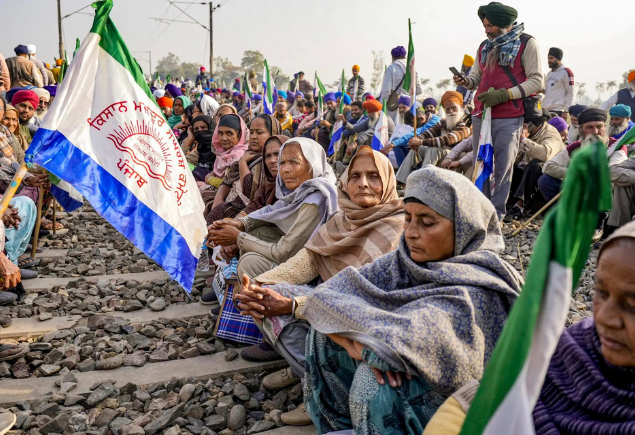
Rail roko protest of Kisan Mazdoor Morcha

question of center vs state

Another deeper concern is who gets to decide. At present, the responsibility of electricity distribution largely rests with the states. Each has its own utility, and with it, a degree of control over tariffs and subsidies – often used as policy levers and sometimes as political promises.The concern is that this balance could change. If more control moves toward central regulators or new private players entering the system, states may have less say over how electricity is priced and who gets subsidized power. And for many, this isn’t just an administrative change – it’s the loss of a vital tool they’ve long relied on.These concerns are not limited to policy alone. This also extends to jobs. With greater private involvement, there are concerns about outsourcing, restructuring of state-run utilities and the potential for job losses across the sector – particularly for the same workforce that is now leading the protests.Tapan Sen, vice-president of the Center of Indian Trade Unions (CITU), said, “Privatization and open access will lead to large-scale job losses, contracting and outsourcing. By allowing private licensees in defense sectors, the Bill also puts national security at risk in the name of ‘ease of doing business’.”

What about consumers?

Electricity is a politically sensitive topic in India. In India, elections are fought and won by promising free or subsidized electricity. Therefore, the commodification of this topic has sparked debate on the welfare state.CITU said that “This bill is part of a broader neoliberal strategy to hand over the entire electricity supply chain – from generation to distribution – to private monopolies.” “By promoting speculative electricity markets, the Bill turns electricity, a basic human need, into a tradable commodity. Such regulation would lead to price volatility, unreliable supply and weakening of public control over energy security,” Sen said.The objective of the bill is to make the power sector competitive. Competition provides choices to consumers, lowers prices and provides them with the best services. It clearly states “lack of competition In electricity supply, consumers are tied to a single discom, limiting service quality and innovation.At least on paper, the promise is straightforward: More competition should mean more choice, better service and lower prices. This is the logic driving this bill. If multiple companies can supply electricity to the same area, they will compete to keep consumers happy.But it doesn’t always go so neatly. In some sectors, competition worked early on, such as telecommunications. More players entered, prices fell and services improved. But with time, the same competition went out of the field. What started as a crowded market eventually narrowed down to a handful of major players. Similarly, the privatization effort of Air India was initially welcomed, but the recent IndiGo crisis exposed the dangers of monopoly in the system.That possibility exists here also. Even if multiple electricity distributors enter the same area, the market may not always be crowded. It may settle around some big companies. And even when that happens, competition may force better service, but it doesn’t necessarily guarantee cheaper electricity.

-

How successful have been the privatization steps?

If the idea is to bring in private players to fix distribution, India has already tried it – just not on a large scale. Discoms sit at the very end of the power chain, responsible for delivering electricity to households and collecting payments. In fact, they are monopolistic retailers in their sectors. And yet, despite their central role, most state-run discoms have been grappling with losses, inefficiencies and rising debt for years. Privatization has often been offered as a way out of this cycle.In practice, only a few states have followed that path. Odisha was one of the first to try in the late 1990s, but the initial effort was not successful and had to be withdrawn. Delhi’s experience in 2002 is often held up as a benchmark. After disbanding its electricity board and bringing in private operators, results started becoming visible at the grassroots level – losses in the system reduced rapidly. Aggregate technical and commercial (AT&C) losses, which once ranged from 45-60%, have declined over time to less than 6.5%. This is a significant improvement, especially when the national average is still around 15%.But this is only part of the story. As research and analysis from the Center for Social and Economic Progress shows, while efficiency improved and supplies became more reliable, the financial picture remained complex. Tariffs continued to be tightly regulated, and disagreements between the regulator and discoms over cost approvals became routine. A large portion of the expenses claimed by the discoms were not always allowed to be recovered through tariffs, leading to the creation of “regulatory assets” – essentially costs deferred to the future. In the case of Delhi, this has reached thousands of crores of rupees, with disputes dragging on for years in tribunals and courts.And this is where the limitations of privatization become visible. Bringing in private operators may fix operational problems – like reducing theft or improving billing – but it doesn’t automatically solve deeper structural problems. Questions related to tariff-setting, cost recovery and regulatory oversight do not disappear. In fact, if anything, they become more conflicted. The result is a system where efficiency gains coexist with financial uncertainty – and where, ultimately, the consumer may still have to bear the costs.Perhaps that is why most states are in no hurry to follow Delhi’s path. Government-run discoms still dominate the landscape, and private participation is limited. The broader lesson of the last two decades is quite clear—privatization can improve the way electricity is distributed, but in itself, it does not guarantee a financially stable system. It depends just as much on how the sector is regulated – and how those regulations are enforced.

Source link