Breaking News
Nagastra-1 to Project KAL: Can India scale its drone warfare capability?
Nagastra-1 to Project KAL: Can India scale its drone warfare capability?

The ongoing confrontation between the United States and Iran has once again demonstrated a stark truth about modern warfare: the decisive edge no longer lies in tanks, fighter jets, or even missiles alone, but increasingly in swarms of cheap, expendable, and intelligent unmanned systems. From the deployment of Iran’s Shahed-series loitering munitions to America’s reverse-engineered low-cost strike platforms, the conflict has underlined a structural shift in how wars are fought and sustained.Unmanned aerial systems are no longer auxiliary assets. They are shaping strategy, dictating tempo, and redefining cost equations. A drone costing tens of thousands of dollars can now neutralise assets worth millions, if not more. In such a scenario, endurance, scalability, and production capacity matter as much as technological sophistication.

‘DIRECT HIT’: Iran DECIMATES Major ‘U.S.-LINKED ECONOMIC FACILITY’ In Gulf To Avenge Israel Strikes

It is within this rapidly evolving global battlefield that India is attempting to define its own drone doctrine. The country’s experience during Operation Sindoor in May 2025 marked a transition point. For the first time, drones were not merely surveillance tools but central to operational planning, execution, and battlefield outcomes. Yet, even as India demonstrated capability, a deeper question emerged: can it scale?

The age of cheap precision: Why drones are redefining warfare

The defining lesson from recent conflicts, particularly the Russia-Ukraine war and the US-Iran confrontation is simple. Warfare has entered an era where affordability and mass production are as critical as precision.Loitering munitions, often described as kamikaze drones, exemplify this shift. These systems combine the persistence of surveillance platforms with the lethality of guided munitions. They can loiter over a target area, identify opportunities, and strike with minimal warning. Unlike traditional missiles, they are relatively inexpensive and can be deployed in large numbers.
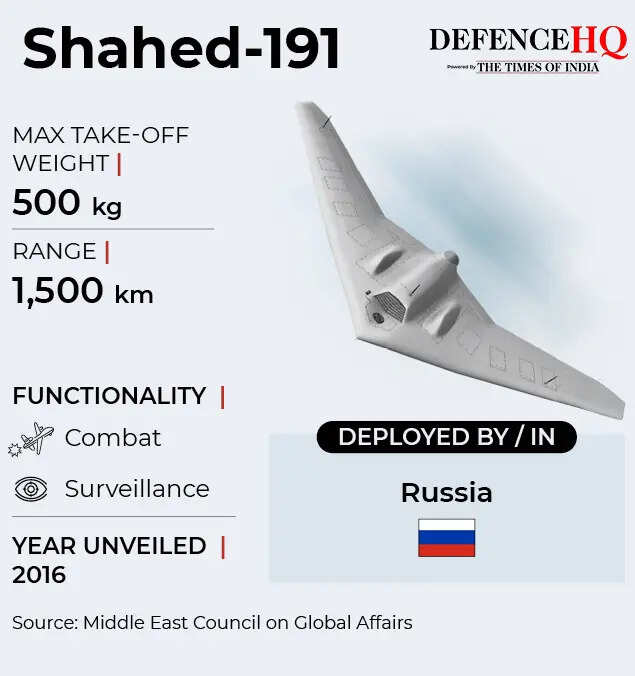
Shahed-191

Iran’s Shahed-136 has become the archetype of this model. With a range of around 2,000 kilometres and a modest warhead, it is not technologically advanced. Yet its strength lies in its simplicity and scalability. Produced in large numbers, it has altered the economics of air defence by forcing adversaries to expend costly interceptors on low-cost threats.
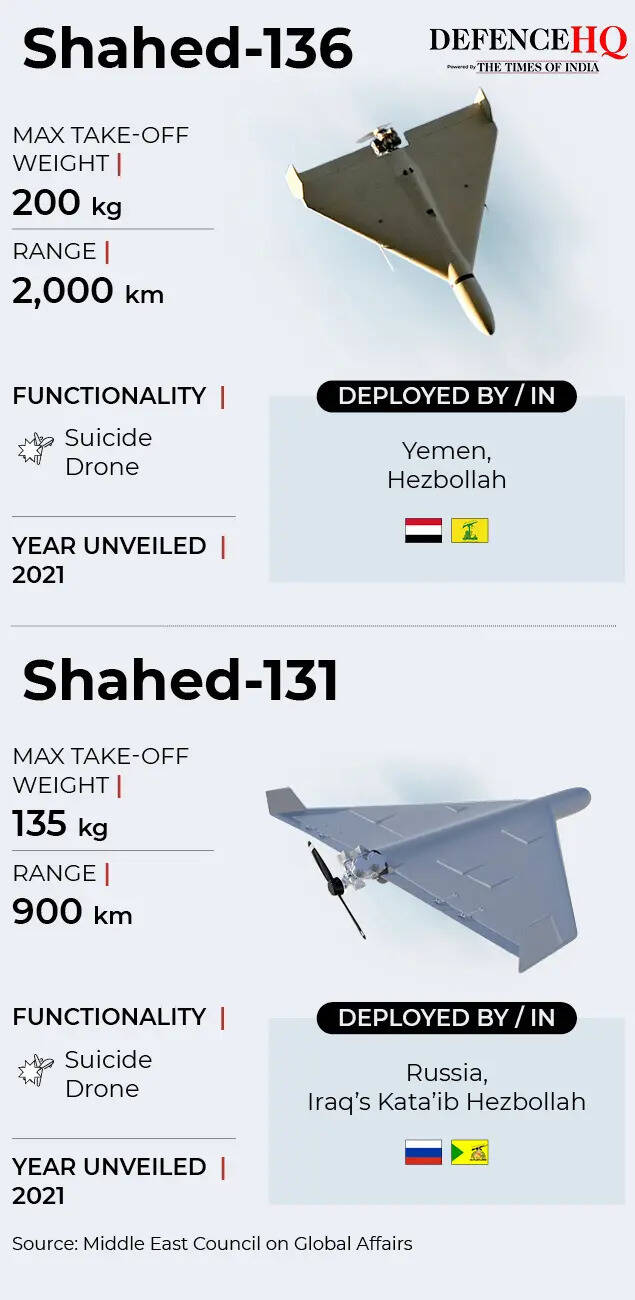
Shahed-136 and Shahed-131

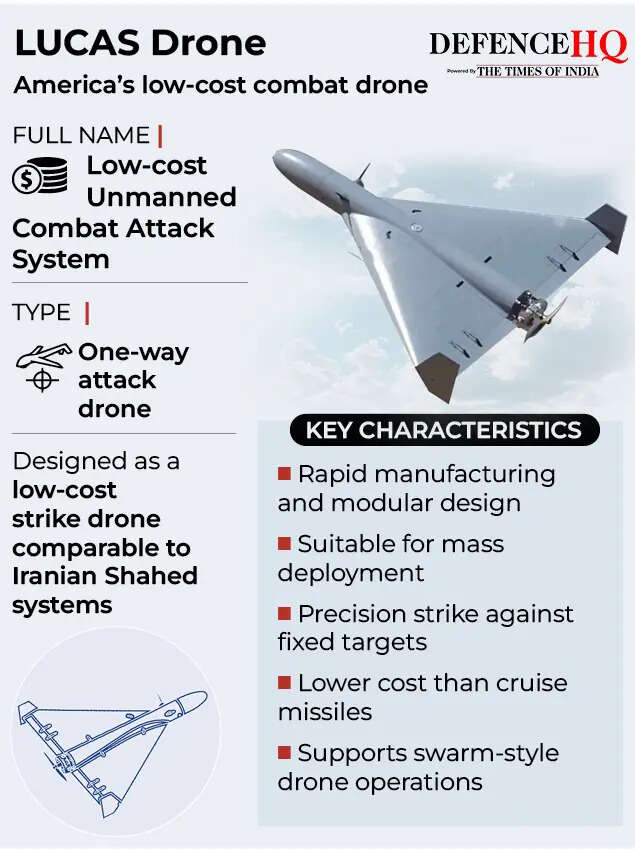
The United States has acknowledged this shift. Its Low-cost Unmanned Combat Attack System, developed by reverse-engineering captured Shahed drones, reflects a pragmatic recognition that the future of warfare lies not in exquisite platforms alone but in mass-producible systems.This is the benchmark against which all emerging drone powers, including India, are now measured.

Where India stands in the global drone race

India today occupies a transitional space in the global drone hierarchy, positioned somewhere between technological competence and industrial under-preparedness. It is neither a laggard nor a leader. Instead, it is a capable but constrained player attempting to bridge the gap between innovation and scale in an ecosystem that is rapidly being defined by mass production and cost efficiency.At a capability level, India has made undeniable progress. Over the past decade, it has developed or inducted systems across the entire drone spectrum, from high-altitude long-endurance platforms to tactical surveillance UAVs, loitering munitions, and counter-drone technologies. Indigenous programmes such as Nagastra, ALS-50, and Switch UAVs demonstrate that Indian industry can design and deploy mission-ready systems tailored to diverse terrains, from deserts to high-altitude borders. Operation Sindoor reinforced this reality by showing that Indian forces can integrate drones into real-time combat scenarios with measurable impact.However, global leadership in drone warfare is no longer determined by the ability to build a few advanced systems. It is defined by the capacity to produce thousands of affordable, expendable platforms and sustain their deployment over extended periods. This is where India’s position becomes more complex.The United States continues to dominate the high-end segment, with platforms such as the MQ-9 Reaper and now newer low-cost experimental systems that blend precision with affordability. At the same time, it is rapidly adapting to the economics of mass drone warfare, as seen in its reverse-engineering of Iranian-style loitering munitions. Russia and Ukraine, through the ongoing conflict, have demonstrated what industrial-scale drone warfare looks like, deploying hundreds of thousands of units annually, particularly first-person view and kamikaze drones.Turkey has carved out a niche by combining affordability with export-driven scale. Its Bayraktar series has become a global benchmark for cost-effective combat drones. Iran, perhaps the most instructive example, has mastered the art of producing simple but effective long-range kamikaze drones in large numbers, fundamentally altering battlefield economics. Even Pakistan has moved aggressively, leveraging Chinese collaboration to build and induct armed drones and loitering munitions at relatively low costs.Against this backdrop, India’s challenge is not one of design but of depth. Its production runs remain limited, often in the hundreds, which constrains both operational flexibility and deterrence value. Without large-scale orders, manufacturers struggle to justify investments in assembly-line production, leading to a cycle where low demand limits supply capacity, and limited capacity restricts demand.Another dimension of this gap lies in supply chains. While India has increased indigenous content in many systems, critical components such as sensors, semiconductors, and communication modules often rely on external sources. In a prolonged conflict scenario, such dependencies could create vulnerabilities, particularly if global supply chains are disrupted.That said, India is not static. Policy interventions, including production-linked incentives, easing of drone regulations, and increased defence procurement from domestic players, are gradually reshaping the landscape. The entry of private players and startups has injected agility into the ecosystem, accelerating innovation cycles. Programmes like iDEX and emergency procurement during Operation Sindoor have also demonstrated that when required, the system can respond quickly and at scale, at least in the short term.The emerging projects such as long-range kamikaze drones and swarm systems indicate that India is acutely aware of where the future lies. The focus is shifting from standalone platforms to networked systems, from individual drone performance to collective operational effect. This conceptual shift aligns with global trends, where the emphasis is on swarming, autonomy, and resilience in contested electronic environments.In essence, India stands at a crossroads in the global drone race. It has crossed the threshold of technological viability but has yet to achieve industrial maturity. The next phase will determine whether it can convert its growing innovation base into a scalable manufacturing ecosystem capable of competing with established drone powers.The distance between India and the leaders is no longer measured in technology alone. It is measured in numbers, production speed, and the ability to sustain a drone-intensive conflict. Bridging that gap will define India’s position in the future battlespace.

Operation Sindoor: India’s drone moment

Operation Sindoor marked a doctrinal shift in India’s military thinking. Rather than treating drones as supplementary assets, the Indian armed forces integrated them across multiple layers of combat operations.From frontline reconnaissance to deep-strike missions, drones played a central role. The operation demonstrated the effectiveness of a networked drone ecosystem, where different categories of unmanned systems worked in tandem to achieve tactical and strategic objectives.
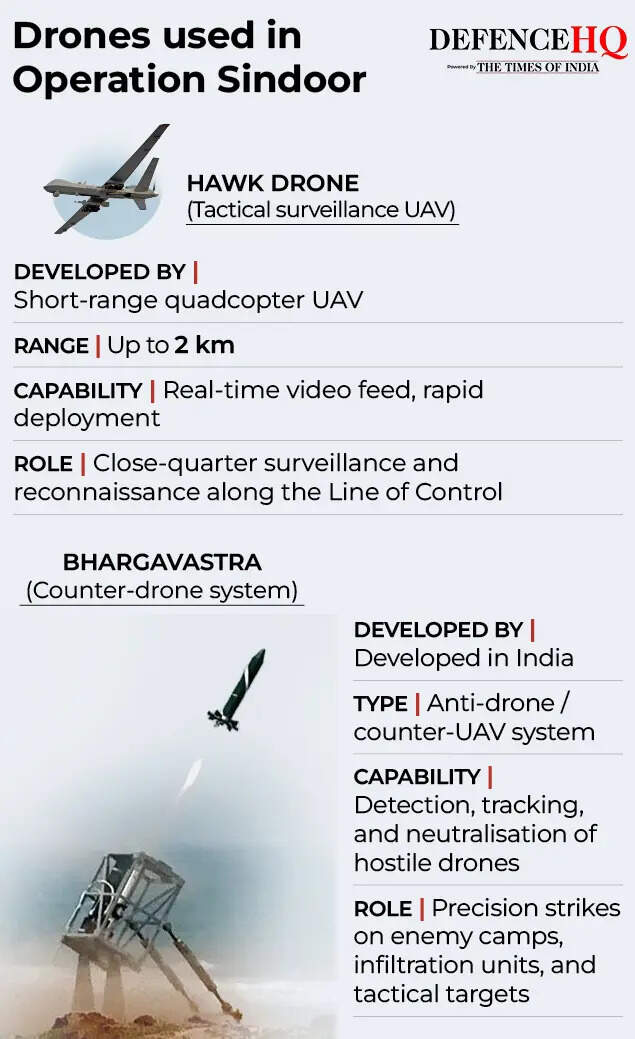
Drones used in Operation Sindoor

First-person view drones provided real-time situational awareness to troops on the ground. Loitering munitions conducted precision strikes against high-value targets. Surveillance UAVs extended operational visibility beyond line-of-sight constraints. Counter-drone systems ensured protection against hostile unmanned threats.This layered approach reduced risk to personnel, improved response times, and enhanced battlefield efficiency. However, the scale of deployment remained limited. India reportedly used around 100 drones during the operation, a fraction of the numbers seen in contemporary conflicts elsewhere.The lesson was clear: capability exists, but scale does not.

Nagastra-1: India’s indigenous loitering munition

At the heart of India’s indigenous drone capability lies the Nagastra-1, a loitering munition developed through collaboration between private industry and defence startups. Designed as a portable, precision-strike system, it represents India’s attempt to build a homegrown equivalent to global kamikaze drones.The Nagastra-1 is a lightweight, man-portable system that can be carried in two backpacks. It combines a fixed-wing UAV with a pneumatic launcher, a ground control station, and communication systems. With a flight endurance of up to 60 minutes and a range of 15 kilometres in manual mode, extendable to 30–40 kilometres autonomously, it offers flexibility across operational scenarios.
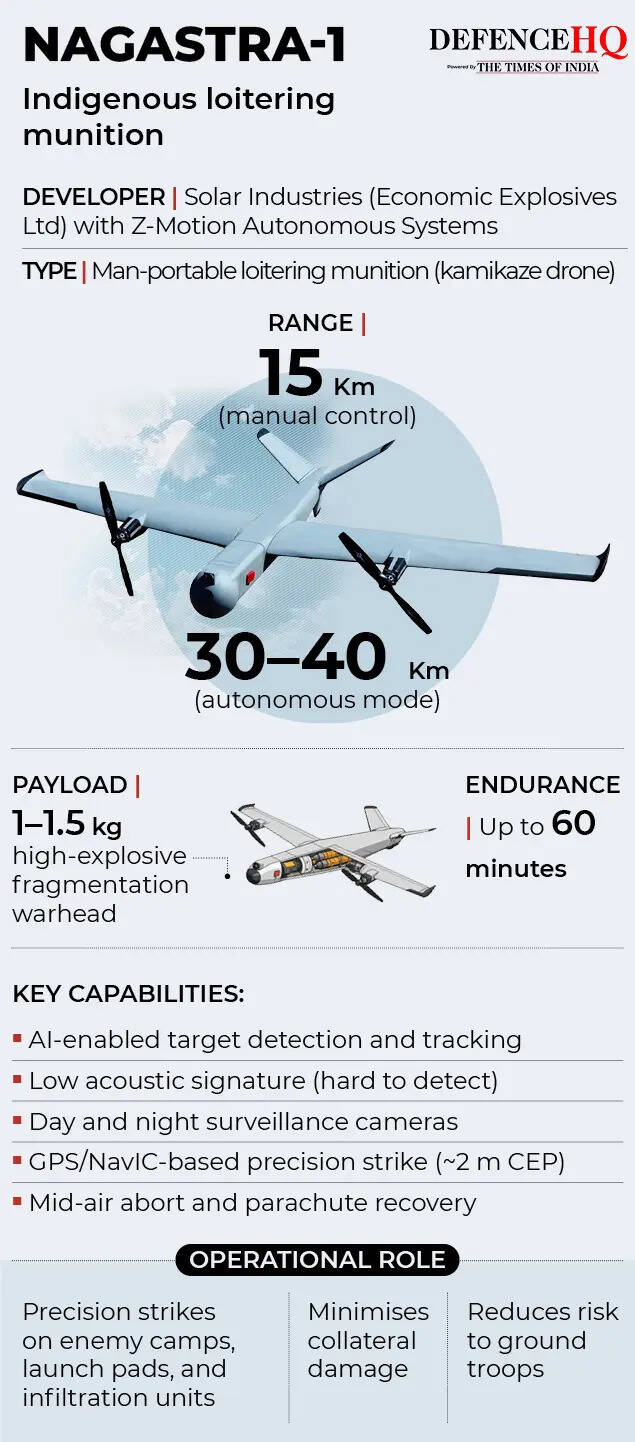
Nagastra-1

What distinguishes the system is its emphasis on precision and adaptability. Equipped with day and night surveillance cameras, it can identify and track targets before executing a strike. Its warhead, weighing between 1 and 1.5 kilograms, is designed for targeted engagements, minimising collateral damage.The drone operates with a man-in-loop system, allowing operators to make real-time decisions. It can abort missions mid-flight and be recovered using a parachute mechanism, a feature that enhances cost efficiency. Its electric propulsion system ensures low acoustic signatures, making it difficult to detect at higher altitudes.During Operation Sindoor, the Nagastra-1 was deployed for precision strikes against selected targets, including launch pads and infiltration units. Its performance validated the concept of indigenous loitering munitions in operational conditions.However, the scale of deployment remains limited. Orders for a few hundred units, while significant, fall short of the thousands required for sustained high-intensity conflict.

Beyond Nagastra: The broader drone ecosystem in Sindoor

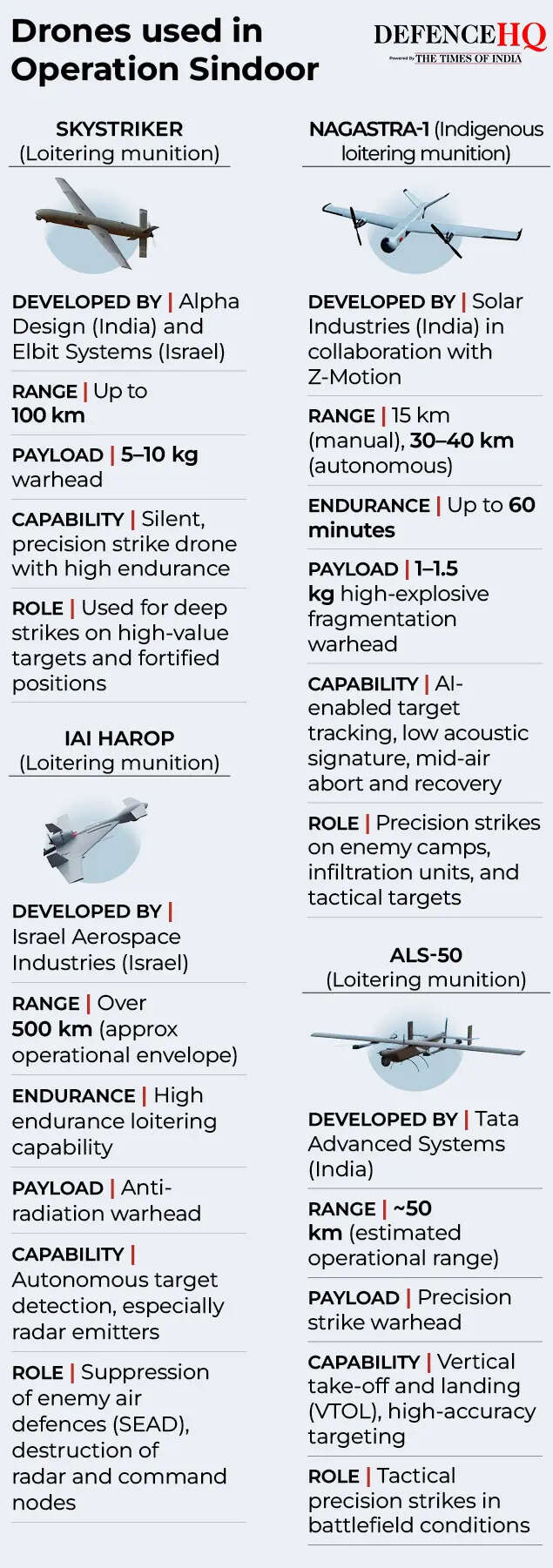
Operation Sindoor was not built around a single breakthrough platform. Its significance lay in creating a layered, multi-platform drone ecosystem where different unmanned systems performed specialised roles within an integrated operational framework. This marked a shift from earlier doctrines, where drones were largely limited to surveillance. In Sindoor, they became central to decision-making, strike execution, and defensive operations.At the higher end, India deployed loitering munitions such as the Israeli-origin Harop for suppression of enemy air defences. With long endurance and advanced targeting, these systems were used to neutralise radar sites and command nodes, enabling safer follow-on operations. However, their high cost and import dependence limit their use at scale in prolonged conflicts.
Drones used in  Operation Sindoor

Mid-tier systems like SkyStriker provided a balance between range, payload, and affordability, enabling precision strikes at distances of up to 100 kilometres. Indigenous platforms such as ALS-50 added depth to this layer, reflecting growing domestic capability in precision strike systems, even if production remains limited.At the tactical level, short-range surveillance drones, including quadcopter-based systems, delivered real-time intelligence to troops in complex terrains. First-person view drones further enhanced battlefield agility, enabling precise engagement of small and moving targets at low cost.Equally critical was the defensive layer. Counter-drone systems like Bhargavastra, supported by electronic warfare tools and jammers, ensured protection against hostile UAVs, highlighting the dual nature of modern drone warfare.What made this ecosystem effective was its integration. Surveillance, strike, and defence systems operated in coordination, reducing response times and improving accuracy. Yet, a key constraint persists. High-end capabilities still rely on imports, and overall deployment remains limited by production capacity.Operation Sindoor demonstrated that India has the foundations of a modern drone warfare architecture. The challenge now is to deepen this ecosystem, reduce dependencies, and scale it for sustained, high-intensity conflict.

The cost dilemma: MQ-9B vs mass drones

India’s acquisition of 31 MQ-9B Predator drones represents a significant enhancement in surveillance and strike capability. These high-altitude, long-endurance UAVs can operate for over 40 hours and carry substantial payloads, making them valuable assets for strategic missions.However, their cost raises important questions. At an estimated $3.5 billion for 31 units, the investment reflects a focus on high-end capability rather than mass deployment.
LUCAS Drone

In contrast, the economics of drone warfare increasingly favour low-cost, expendable systems. For the same cost, tens of thousands of kamikaze drones could potentially be produced, offering greater flexibility in prolonged conflicts.This is not to suggest that high-end platforms lack value. Rather, it highlights the need for balance. A modern drone force requires both sophisticated systems for strategic missions and large numbers of affordable platforms for tactical operations.

Project KAL and Sheshnaag-150: India’s answer to Shahed

Recognising the need for long-range, low-cost strike capabilities, Indian defence startups have begun developing systems that mirror the operational philosophy of the Shahed-136.Project KAL, developed by a Noida-based company, is designed as a long-range kamikaze drone with an endurance of three to five hours. Its ability to loiter over target areas, gather intelligence, and execute precision strikes aligns with the emerging requirements of deep-penetration warfare.
Sheshnaag-150

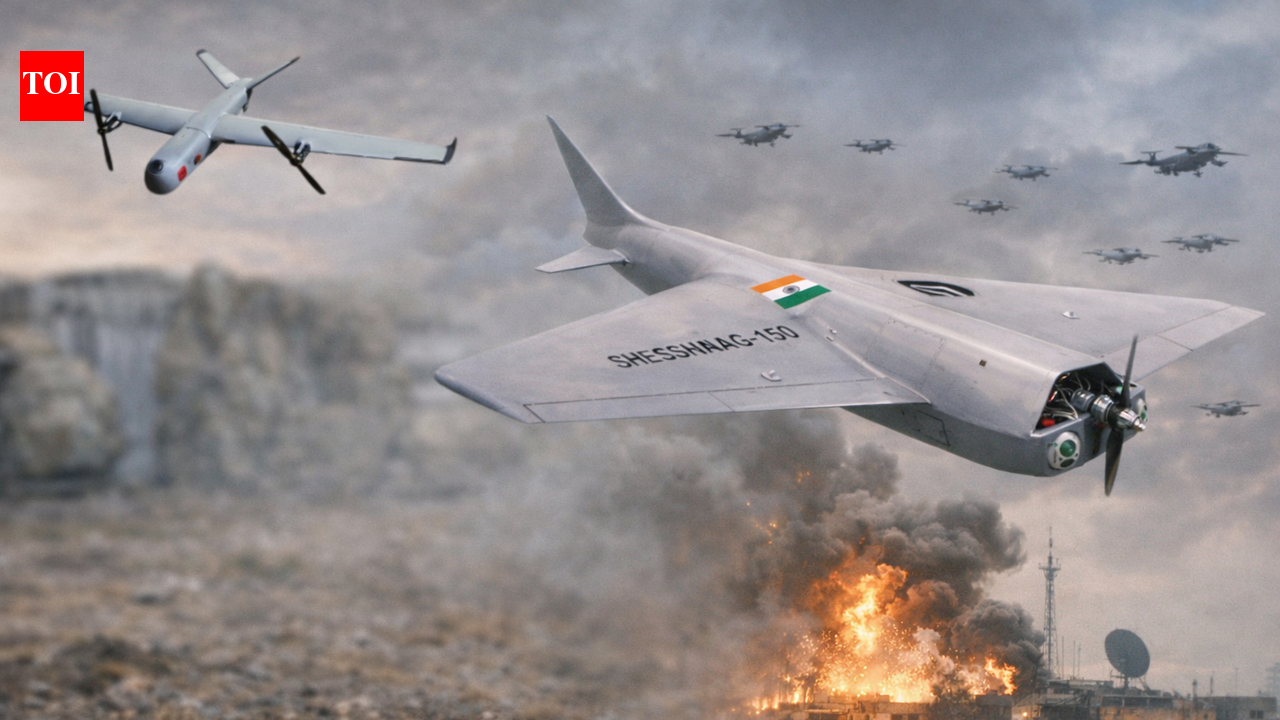
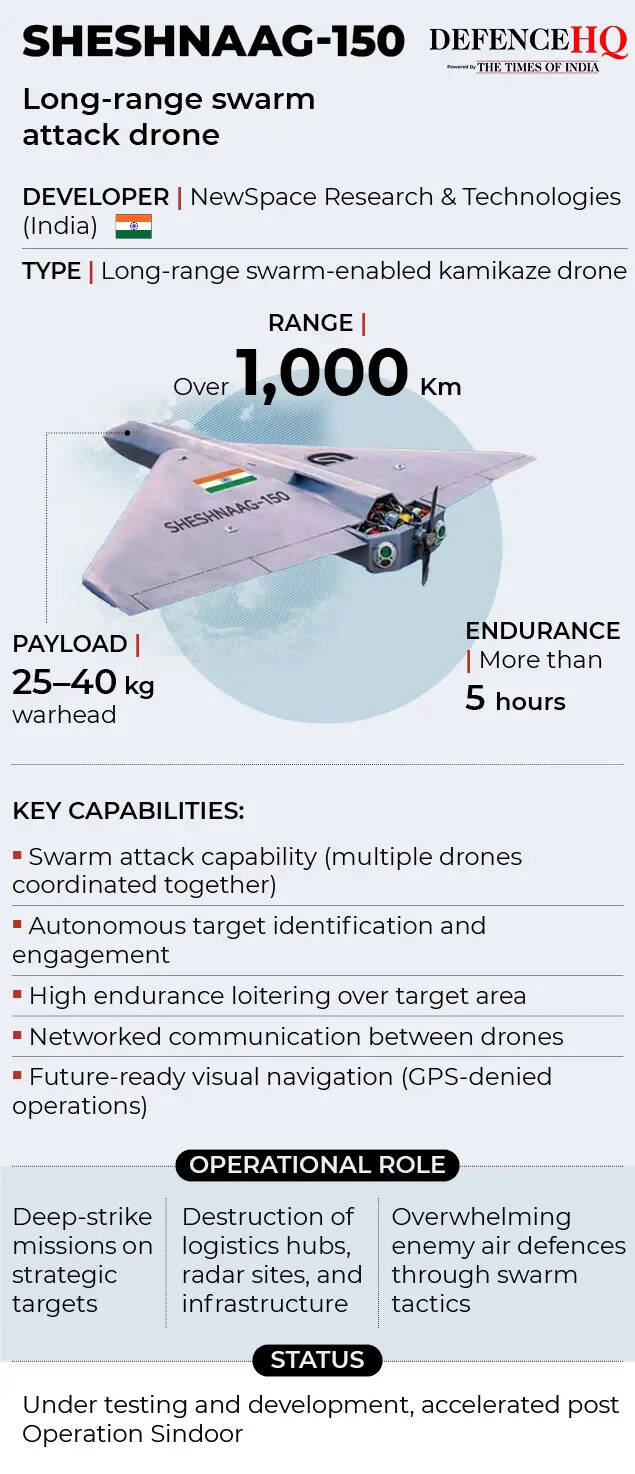
The Sheshnaag-150 represents a more ambitious evolution. Designed as a swarm-capable attack drone, it combines long range, high payload capacity, and autonomous coordination. With an operational range exceeding 1,000 kilometres and an endurance of over five hours, it is intended to strike strategic targets such as logistics hubs and radar installations.What sets the Sheshnaag-150 apart is its swarm capability. Multiple drones can operate in coordination, overwhelming enemy air defences through sheer numbers and synchronised behaviour. This approach reflects the next stage of drone warfare, where individual platforms are less important than the collective intelligence of the swarm.The system also incorporates advanced software architecture, enabling drones to communicate, adapt, and execute missions with minimal human intervention. Future iterations are expected to include visual navigation systems, allowing operation in GPS-denied environments.Both Project KAL and Sheshnaag-150 remain in development. Their success will depend not only on technological performance but also on the ability to scale production.

Vayu Baan and the evolution of air-launched drones

Another significant development in India’s drone ecosystem is the Vayu Baan programme, which focuses on air-launched unmanned systems and signals a shift towards deeper integration of drones within combat operations. Designed to be deployed from helicopters, these compact unmanned platforms can function both as surveillance assets and precision-guided munitions, expanding the tactical reach of existing air assets without increasing risk to personnel.India’s Vayu Baan programme marks a decisive move towards integrating unmanned systems with traditional manned platforms, reflecting the transition from standalone drone usage to networked, multi-domain warfare. Developed by the Indian Air Force’s Directorate of Aerospace Design, the project centres on air-launched effects, where drones are released mid-flight and then transition into independent surveillance or strike roles.Once deployed, these drones unfold their wings, activate propulsion, and begin autonomous operations. With an expected range of over 50 kilometres and an endurance of around 30 minutes, they are suited for missions such as real-time reconnaissance, target acquisition, and precision engagement. Equipped with electro-optical and infrared sensors, they are designed to operate in contested environments, including GPS-denied scenarios.The concept aligns with a broader global trend of manned-unmanned teaming, enhancing battlefield flexibility while improving survivability. For India, Vayu Baan represents not just a platform, but a doctrinal shift towards faster, more adaptive, and network-centric warfare.

The scale problem: Hundreds vs thousands

Perhaps the most critical challenge facing India’s drone programme is scale. Modern conflicts have demonstrated that effectiveness is not determined solely by technological superiority but by the ability to sustain operations over time.Ukraine and Russia have deployed hundreds of thousands of drones in a single year. These numbers are not anomalies but indicators of the future trajectory of warfare.India’s deployment during Operation Sindoor, while operationally significant, remains modest by comparison. Orders for systems like Nagastra-1 in the hundreds do not justify the establishment of large-scale production lines. Without such infrastructure, scaling up during a conflict becomes difficult.The issue is not merely industrial but strategic. A country that cannot produce drones at scale risks being outpaced in prolonged engagements.

Where is India’s Shahed?

India’s push for indigenous defence manufacturing has begun to deliver visible results, particularly in the drone segment. Platforms such as Nagastra-1, ALS-50, and emerging systems like Sheshnaag-150 reflect a growing domestic capability to design and deploy mission-ready unmanned systems. Much of this progress has been driven by the increasing role of the private sector, with startups and established firms contributing to rapid innovation, supported by government initiatives, procurement reforms, and programmes aimed at boosting self-reliance.Yet, despite these gains, the central question remains: where is India’s equivalent of the Shahed-136?The answer lies in the gap between capability and scale. While India has demonstrated that it can build effective loitering munitions and long-range strike drones, it has not yet translated this into mass production. Supply chain dependencies continue to pose a challenge, particularly for critical components such as sensors, semiconductors, and communication systems. Regulatory complexities and fragmented demand further constrain the ability to establish large, sustained production lines.The Shahed is not just a drone. It is a model of warfare built on simplicity, affordability, and industrial-scale manufacturing. This is where India still lags. Projects such as KAL and Sheshnaag-150 show that the technological foundation exists, and the industrial ecosystem is evolving to support it.However, without the urgency and scale that define leading drone powers, India’s progress remains incomplete. Its drone programme is still transitioning from developing capable systems to deploying them in large numbers. Until that shift happens, India will continue to trail in a domain where numbers, not just technology, define battlefield advantage.

The road ahead: From capability to capacity

Operation Sindoor marked the beginning of India’s drone-centric warfare doctrine. It demonstrated that the country can design, deploy, and integrate unmanned systems effectively.The next phase will be defined by scale, integration, and innovation. Building assembly-line production capabilities, investing in swarm technologies, and developing resilient communication systems will be critical.Equally important will be the integration of drones into everyday military operations. Plans to establish dedicated drone units within infantry formations indicate a shift towards institutionalising unmanned systems.The future battlefield will not be dominated by a single platform but by networks of interconnected systems operating across domains. In this environment, adaptability and scalability will be as important as technological sophistication.India has taken the first steps. The challenge now is to accelerate.


Source link

Living Together Tips: Do’s and Don’ts for Couples Living Together

moving together? 10 Do's and Don'ts You Should Know
Moving in together is an important milestone in a relationship. Prioritize open discussion on finances and division of labor from day one to prevent future conflicts. Respecting personal space and setting clear house rules are important for harmony. Resolve minor problems quickly and allow adequate time for adjustment; Perfection is not instant. Genuine commitment, not convenience, should drive this decision.

Sharing a home is an exciting stage in a romantic relationship. You have the keys, but now what? While this is exciting, it is also an important step that should not be taken lightly. Sharing a roof means mixing habits, lifestyles and everything in between. Before you pack your boxes, here are some thighs you should get from day one.

Talk about finances quickly

Before you say ‘Oh, we’re not that couple. ‘Money is not a problem’, let’s stop you there. Money becomes the number one source of conflict when you live together. Even before you rent a place, or move into his or her house, start talking about money. How will you divide the expenses? Whether you go half-and-half, or split proportionately, open a joint account for expenses – it should all be clear.

Watch

Toxic Relationships Can Cause Emotional Conflict: Here Are Ways to Deal With It

discuss work

Nobody likes chores, but they happen. And it is important to take care of it. Cleaning, dishes, laundry, cooking – these all need to be discussed, unless you want to be the one cleaning the bathroom every day. Create a schedule based on availability, strengths and weaknesses.

respect each other’s personal space

Yes, you are living together because you want to spend ‘more’ time together, not ‘all’ the time. So set a boundary on personal space. Talk about this. Maybe it’s spending Friday evenings in the reading room, or dancing with your friends on Saturday nights. It is important to protect your individuality at all costs. Discuss this with your partner.

set house rules

Believe it or not, you need household rules. These will save your time and peace. Talk about having guests, whether overnight visitors are allowed. You don’t want to find his friends lying on the couch and trashing your house after three weekly match days. It’s important to discuss these things, because these little things add up quickly. Think of it less as a rule book and more as healthy limits for the well-being of both of you.

keep communication open

When you’re hanging out together, it’s important to keep communication open. Make a habit of checking regularly, not just when something goes wrong. Talk about concerns before they become big issues. Be open and honest with each other.

Don’t jump into it just because it’s convenient

Why are you going in? Now that’s a question you have to answer for yourself. Are you moving forward because you really want to make your relationship work or because it solves a logical problem? It might help to split the fare, cut down on commuting costs, but it shouldn’t be your reason.

don’t avoid talking about money

Most couples avoid talking about money, and this gets them into deep trouble. Your financial arrangements are what provide you peace while having sex. Therefore, it is also important to revise your financial agreements as you move forward.

Don’t skip setting limits

Most people think that boundaries are walls, but they are not. This is the foundation of a healthy relationship. Always set proper boundaries. For example, alone time or self-care on Sundays, time with family, or privacy with your phone. These small boundaries are what will bring you together.

Don’t ignore initial irritations

Now when you live together, both of you will have different lifestyles. It is important to address minor differences as quickly as possible. For example, if you keep avoiding your partner’s habit of bringing bathroom slippers into the living room, one day it will turn into a much more serious situation. Just tell them it bothers you.

Don’t expect perfection in a week

You won’t feel ‘at home’ for the first week or two. It will take time to adjust to the new place. You are getting to know your partner’s habits, and seeing if they suit yours. So don’t jump to conclusions in the first week. Give it some time, as it takes time to settle.

Source link

‘I was a little unsure’, says Jisshu Sengupta on working with Priyadarshan and Akshay Kumar for ‘Bhoot Bangla’

Jisshu Sengupta on working with Priyadarshan and Akshay Kumar for 'Bhoot Bangla', says 'I was a little unsure'

‘Seetha Ramam’ actor Jishu Sengupta Has worked not only in Hindi films but also in Bengali cinema. Now the actor will soon be seen in the upcoming horror-comedy film ‘Bhoot Bangla’. The actor recently talked about the experience of working with him Akshay Kumar and director Priyadarshan.Speaking to IANS, he said that it took him some time to understand Priyadarshan’s working style before he felt completely comfortable on the set. Jisoo also admitted that during the first few days of shooting, he felt a little nervous, not because of pressure but because he was excited about the opportunity to work with the acclaimed director.

Watch

“What are you most afraid of?” Akshay Kumar and Priyadarshan revealed the secret. ghost bungalow

Jisshu Sengupta on knowing Priyadarshan

‘In the first few days, I wouldn’t really say I was stressed, but you know, I was working with “the” Priyadarshan. He is a very laid back director on the set. He has fun and takes advice from everyone,’ said Jisshu.

Jisshu Sengupta on working with Akshay Kumar

He further added, “Akshay sir would come and say, “Sir, maybe we can do it like this,” and he would say, “That’s good, let’s do it.” That’s the kind of person he is.” Jisshu further added, “Working with Akshay paaji was also a joy. It was a lot of fun to be around him.” Recalling his initial confusion, the actor revealed that the director’s minimal response had made him a little unsure about his performance.‘The first few days, I was a little unsure because he would say “cut” and then “next shot”. So I thought maybe something was wrong. Then I went and asked Abhilash, who is the next in command. I said, “Abhilash, sir you are not saying anything. Is that okay?” He said. He further said that he is confident about Priyadarshan’s working style.Abhilash told me, “No, no, Jisshu sir, everything is fine. That’s just the way he is.” Then after two-three days I became fine. If he is not well, he will come and tell you. He said, ‘If he is well he will not say anything.’Jisshu said that once he understood the renowned filmmaker’s vision, he became completely comfortable on the sets.

voting

Have you ever felt nervous working with someone you admire?

‘Once I understood that if he wasn’t saying anything, it meant everything was fine, I felt completely relaxed. It was a lot of fun working with him. He said, “There is no doubt about it.” He also told about the London schedule of the film. There was a show in London, and I was the only actor there, but we had a lot of fun. He further said, Priyadarshan sir and I had a great time there. The actor also said that Akshay Kumar is equally funny.Talking about ‘Bhoot Bangla’, this film marks another collaboration between Akshay Kumar and Priyadarshan after many years. Akshay Kumar is in the film, Rajpal YadavParesh Rawal, Tabu, Vamika Gabbi and late veteran star Asrani. It will be released on 10th April.

Source link

Why didn’t Naga Chaitanya sign Hindi films after Aamir Khan’s ‘Lal Singh Chaddha’? ‘Vrishkarma’ actor gave clarification. telugu movie news

Why didn't Naga Chaitanya sign Hindi films after Aamir Khan's 'Lal Singh Chaddha'? 'Vrishkarma' actor gave clarification
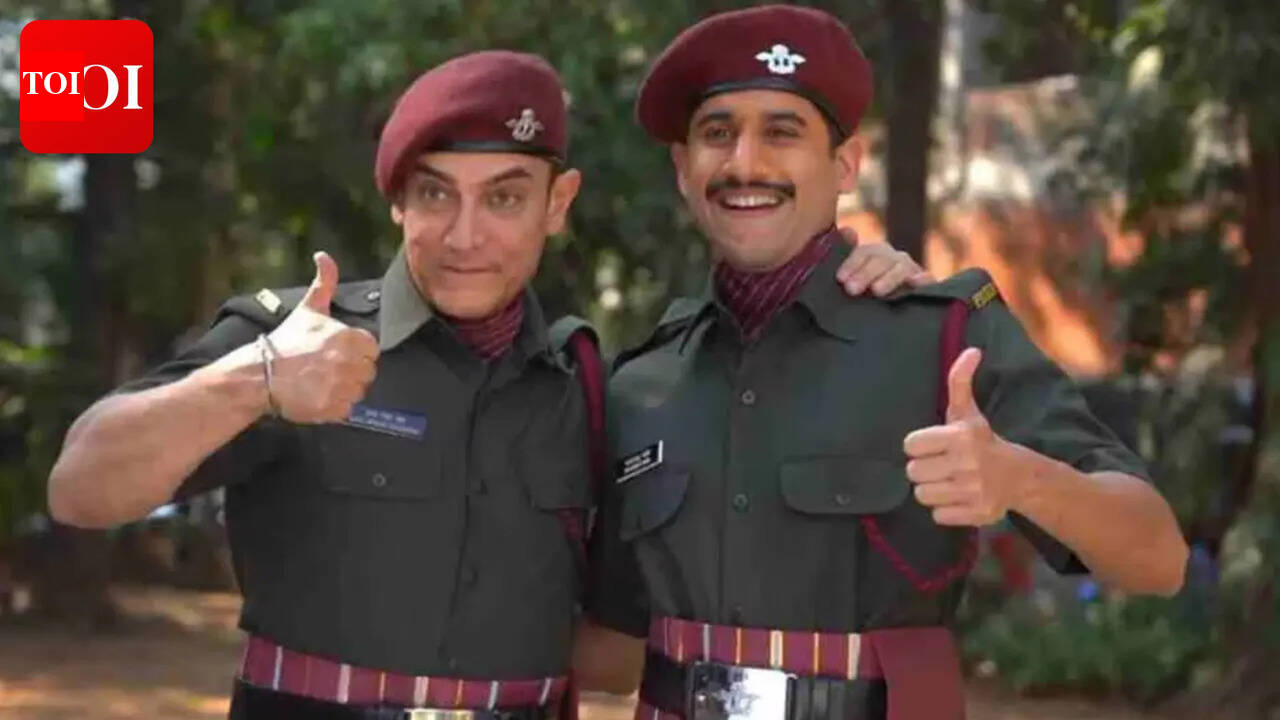
Naga Chaitanya addressed speculations about his Hindi film absence. He says the reason for this is his busy Telugu film schedule and not the box office results of ‘Laal Singh Chaddha’. The actor enjoyed his Bollywood debut and is open to future Hindi projects with the right script. He is currently focusing on his Telugu commitments.

tollywood actor Naga Chaitanya Currently busy with many exciting projects in Telugu cinema. The young star recently achieved major success with the film ‘Thandel’ which received a strong response from the audience. Now he is preparing to entertain the fans with his upcoming film ‘Vrishkarma’. While Chaitanya is continuously signing films in Telugu, many people on social media are discussing why he has not acted in any other Hindi film after his debut in ‘Laal Singh Chaddha’. film starring aamir khan Could not perform well at the box office in the lead role. Because of this, some rumors suggested that Naga Chaitanya was avoiding Bollywood after the results of the film.

Naga Chaitanya is busy in Telugu films

Responding to these rumours, Naga Chaitanya clarified that the box office result of ‘Lal Singh Chaddha’ is not the reason behind his absence from Hindi films. According to Hindustan Times, he said that his busy schedule in Telugu cinema was the main reason. He said, “There is no particular reason for not doing Hindi films. I am just busy with back-to-back projects in Telugu, so I could not give time to Hindi films.” The actor also clarified that the rumors doing the rounds online are not true. “These stories that I stopped doing Hindi films because of the result of one film are completely false,” he said.

Chai keeps herself open to Bollywood films

Naga Chaitanya also said that he is ready to act in Hindi films again if given the right opportunity. He said, “If I get a good script and an interesting opportunity in the future, I will definitely do another Hindi film.” Speaking about his experience of working on ‘Laal Singh Chaddha’ he said that it was a memorable journey. He told, “I enjoyed shooting that film a lot. I learned many new things from the people there and Aamir Khan’s team treated me with great respect.” He also told that success and failure are normal in the film industry and actors learn to handle both.

‘Lal Singh Chaddha’ created the identity of Naga Chaitanya bollywood debut

Naga Chaitanya debuted in Hindi cinema with ‘Lal Singh Chaddha’. Aamir Khan was the lead actor in the film and Naga Chaitanya played an important role. Although the film did not perform well at the box office, Chaitanya’s performance received positive comments. The actor is currently associated with Telugu cinema, and his projects like ‘Vrishkarma’ are creating a lot of buzz among fans. Considering his powerful performance and desired fan base, he may eventually make a comeback in Bollywood if a great script comes his way.

Source link

Soft Parenting vs. Gentle Parenting: What’s the Real Difference and Which Works Better? |

Soft Parenting vs. Gentle Parenting: What's the Real Difference and Which Works Better?
Soft Parenting vs. Gentle Parenting: What’s the Real Difference and Which Works Better? (Photo Credit: Shutterstock)

In the modern changing world of parenting, it is common to hear the terms soft parenting and gentle parenting used interchangeably. Although both forms of parenting promote the development of well-rounded and emotionally well-adjusted children, they are not the same. Understanding the differences between the two forms of parenting can enable parents to make more conscious decisions in the parenting process.Soft parenting is a new term that has become popular in the modern world. The new approach to parenting emphasizes flexibility and soft approach in child rearing. In this approach to parenting, the parent’s priority is the child’s comfort and the creation of a stress-free environment. Furthermore, this approach represents changing and flexible forms of parenting that are replacing rigid approaches to parenting. However, the flexible approach of soft parenting makes it difficult for the child to differentiate between right and wrong.

Watch

Mindful Parenting: Developing Emotional Intelligence in Children

Gentle parenting, on the other hand, is more structured and purposeful. It’s built on empathy, respect, understanding, and boundary setting. Gentle parents focus on recognizing the child’s feelings as well as guiding them in the right direction in a gentle and assertive manner. Gentle parenting also emphasizes the long-term emotional development of the child and helps them learn important skills in life.Another important area of ​​difference between the two parenting styles is discipline and limit setting. Soft parenting may focus more on avoiding conflicts and making the child uncomfortable. Gentle parenting, however, does not believe in avoiding conflicts and making the child uncomfortable. It simply redefines the discipline.However, both of these approaches are likely to have their own challenges. For example, soft parenting may lack structure, and gentle parenting requires a lot of patience and effort from parents. In the end, it’s not about which one is better. Every family and child is unique in some way. What may work for one family may not be the same for another. The most effective approach may be one that balances the two. Rather than the attitude, what is most important is the environment in which the child grows up.

Source link

Khelo India Tribal Games: Government’s ‘talent hunt’ or a farce for tribal youth?

Khelo India Tribal Games: Government's 'talent hunt' or a farce for tribal youth?
Khelo India Tribal Games of Chhattisgarh is going to become an annual event, which will serve as an important platform for identifying and nurturing tribal athletic talents. The initiative aims to provide youth with constructive engagement through sports, scholarships, training and pathways to national centers of excellence. The program seeks to unleash the significant sporting potential within tribal communities.

Raipur: Khelo India Tribal Games is being set up as a long-term talent identification and development platform for tribal athletes, with Chhattisgarh as the host state. Sports Authority of India (SAI) Deputy Director General Mayank Srivastava said the initiative was launched to address the lack of sports opportunities in certain sections of the society, especially tribal areas, and to bring more youth into constructive engagement through sports. Under the Khelo India Talent Identification and Development vertical, the selection is not limited to one tournament. The committee also searches for athletes in other competitions. The DDG told TOI that during the Tribal Games, representatives of the committee will evaluate the participants and identify promising talent. Those selected may be called for trials and may either be included as Khelo India athletes or may be directly sent to the National Centers of Excellence of the Sports Authority of India. If the number of athletes is large or placement in NCOE is not possible, they can be accommodated in SAI training centres, where they get free training. Srivastava said that athletes selected under Khelo India on the basis of talent are provided scholarships and training assistance. Apart from the NCOE, there are more than 300 Khelo India-recognised training centers across the country where athletes can train, or they can make their own arrangements. In such a situation, the government provides financial assistance of about Rs 5 lakh to the scholarship holders. On the issue of government job quota for outstanding tribal sports athletes, he clarified that the matter does not directly fall under his jurisdiction. However, he said governments generally reserve jobs for athletes who meet the required criteria, including winning medals in national and international level competitions. He also highlighted the infrastructure component of Khelo India and said Rs 3,000 crore has been allocated under the scheme for sports infrastructure. Along with central assistance, states are also developing their own facilities. According to officials, all states are utilizing the infrastructure provisions of Khelo India and there is no widespread shortage of sports infrastructure in the country. He said the infrastructure will continue to be strengthened, especially if events like tribal games are organized regularly. The broader objective is to involve the youth, he said. Sport was described as the most effective and creative form of engagement for young people, satisfying their need for excitement, competition and physical activity. He argued that greater participation in sports could help keep youth away from destructive thoughts. As an example, he pointed to the Bastar Olympics, where surrendered Naxalites reportedly actively participated and increased demand for sports kits in Jagdalpur. Tribal Games are just the beginning and will now be organized every year in the state. He stressed that there is significant sporting talent in tribal communities and the new platform will help identify athletes, place them on a development path, provide training and tournament exposure and improve their chances of being seen at a higher level. The existing centers at Bilaspur and Raipur along with SAI facilities are expected to support that process.

Source link

Paul McCartney recalls ‘The Beatles’ first visit to America during LA concert: ‘We were just kids’

Paul McCartney recalls 'The Beatles' first visit to America during LA concert: 'We were just kids'

Even at the age of 83, Paul mccartney Be it small or big, own the room with energy. When he performed in Los Angeles, he skipped the usual stadium crowds for something more personal: a small concert at the Fonda Theatre. By design, it was less like a show and more like hearing stories from someone who has seen it all. The iconic music was there, but what really drew people in were the memories, especially when they started talking about The Beatles’ first visit to America.

What Paul McCartney said about The Beatles’ first visit to America

Per People, Paul started things off with his usual charm. “Welcome to Hollywood! We’ll have some fun!” he called out smilingly towards the packed room. The venue can only hold around 1,200 people, which is much smaller than the usual playing arenas. He looked around the room and joked, “It’s great to be at these small events – I mean, it’s not that small.” The crowd was mostly young, probably with parents who were born after The Beatles or Wings. Paul loved this intimacy and said, “It’s nice to see the whites of your eyes.” He even became nostalgic about the venue, remembering that it was called the Hollywood Music Box Theater “a hundred years ago” before it took the Henry Fonda name.Now, the concert will help promote their new album, ‘The Boys of Dungeon Lane’, their first in six years. But Paul admitted with a shy smile that he and the band had not yet learned the new songs. “But I’m glad you liked it, yes,” he laughed. So instead, he moved into hit films.And what a lineup it was: almost every Beatles classic you could want. Think ‘Help!’, ‘Let It Be’, ‘Hey Jude’, ‘Ob-la-di, Ob-la-da’ and many more. He also played John Lennon’s beautiful song ‘Now and Then’ and paused to say, “Thanks for writing this, John.”Paul covered Wings favorites like ‘Jet’ and ‘Nineteen Hundred and Eighty-Five’, as well as solo tracks like ‘Every Night’ and ‘My Valentine’, which he dedicated to his wife Nancy Shevell, who was sitting in the audience. He kept the chatter light, hopping between his grand piano and that famous Hofner bass, looking like the one in all those iconic Beatles photos.But it wasn’t all music. Paul still knows how to tell a story. He started talking about ‘The Beatles’ first visit to America. “We hadn’t really seen much, and we certainly hadn’t seen America, so it was pretty surprising,” he said. He joked about how, at the time, the guys in the audience were watching with their hands on the guitar, trying to understand the chords, while the girls were just hanging their heads and screaming. He teased the crowd, “Make us scream The Beatles!” And they did so, louder than ever. You can see how much he liked it.Paul also nodded to some famous faces standing on the balcony: Dustin Hoffman and Morgan Neville, who recently filmed the new McCartney documentary ‘Man on the Run’. “What a story!” Paul called smiling. “Very good, Morgan. You’ve made a good movie.”

Inside Paul McCartney’s intimate LA concert

Paul McCartney played two shows at the Fonda Theater in Los Angeles on March 27 and 28, 2026. If you know McCartney, you know he’s used to stadiums filled with thousands of fans, not just a cozy room with 1,200 people. That change changed everything. can you Feel It. He even told the crowd that he liked being close enough to “see the whites of your eyes”, just like he did back in those small clubs at the beginning of his career.Per People, the show was loose and warm, almost like McCartney hanging out with old friends. He joked, chatted with the audience and even told stories between songs. The crowd was nothing but your average fans. Think this: Taylor SwiftOlivia Rodrigo, John Mayer, Billie Eilish, Stevie Nicks and even Ringo Starr are all in the same room. It wasn’t just a concert; It was a magnet for music royalty and Hollywood stars. Celebrities mingled, fans lost their minds, and at least for one night, everyone in the room got a chance to see a legend up close.

‘The Beatles’ first visit to America: what really happened?

In February 1964, ‘The Beatles’ arrived in America, already famous in Britain. According to The Hollywood Reporter, America took things to a whole new level. His big break came on ‘The Ed Sullivan Show’, as 73 million people watched it that night. It’s a staggering number, and honestly, it changed everything for music.At that time, the country needed something to believe in. JFK’s assassination left a dark cloud, and the Beatles brought excitement and hope. The fans went wild: screaming, fainting, crowds gathered in airports and hotels. Their energy, charm and new sound spawned the “British Invasion” and turned pop culture upside down.From that first tour, ‘The Beatles’ became more than just a band. He rewrote the rules of music, celebrity, and what it means to be young.

Watch

‘Should we rock?’: Paul McCartney brings Beatles bandmate Ringo Starr on stage during London concert

Source link

Tamil Nadu CM Stalin says, ‘This time the victory margin will be huge’; Nomination filed from Kolathur constituency. india news

Tamil Nadu CM Stalin says, 'This time the victory margin will be huge'; Filed nomination from Kolathur constituency
MK Stalin is the Dravida Munnetra Kazhagam (DMK) candidate for the upcoming assembly elections, which are going to be held on April 23 covering a total of 234 constituencies in the state in a single phase. Counting of votes is to take place on May 4.

Chennai: As Tamil Nadu Assembly elections approach, Chief Minister MK Stalin on Monday filed his nomination from Kolathur constituency. After filing nomination, CM Stalin held a road show to interact with the public. “Our victory will be great. This time I am seeing huge support compared to the last three times. This is the United Progressive Alliance.” Tamil Nadu Fighting against Delhi. This time the victory is going to be huge,” Stalin told ANI. The DMK will contest 164 of the 234 seats in the state, while 70 seats have been allotted to its alliance partners. These partners include Congress Party with 28 seats, Communist Party of India (CPI) with 5 seats, Communist Party of India (Marxist) (CPI(M)) with 5 seats, VCK with 8 seats and MDMK with 4 seats.Other smaller parties in the alliance include Desiya Murpokku Dravida Kazhagam (DMDK) with 10 seats, Indian Union Muslim League (IUML) with 2 seats and several other regional parties.AIADMK has also released the second list of 127 candidates for the Tamil Nadu Assembly elections, taking the total number of party candidates to 150. The second list features a mix of sitting MLAs, former MLAs and new faces as the party hopes to return to rule under the leadership of E Palaniswami. Yesterday, Tamil Nadu Chief Minister Stalin unveiled the party’s “superstar manifesto” for the 2026 assembly elections, triggering a sharp political clash with the opposition AIADMK and BJP dismissing the document as a “copy-paste” exercise and accusing the ruling party of indulging in “sticker politics”, while DMK leaders defended it as a comprehensive, people-driven roadmap based on the Dravidian model. Did it.

Source link

IIM Vizag, Andhra government to promote entrepreneurship spirit in villages

IIM Vizag, Andhra government to promote entrepreneurship spirit in villages
Thriving initiative to set up 150 rural enterprises across Andhra Pradesh

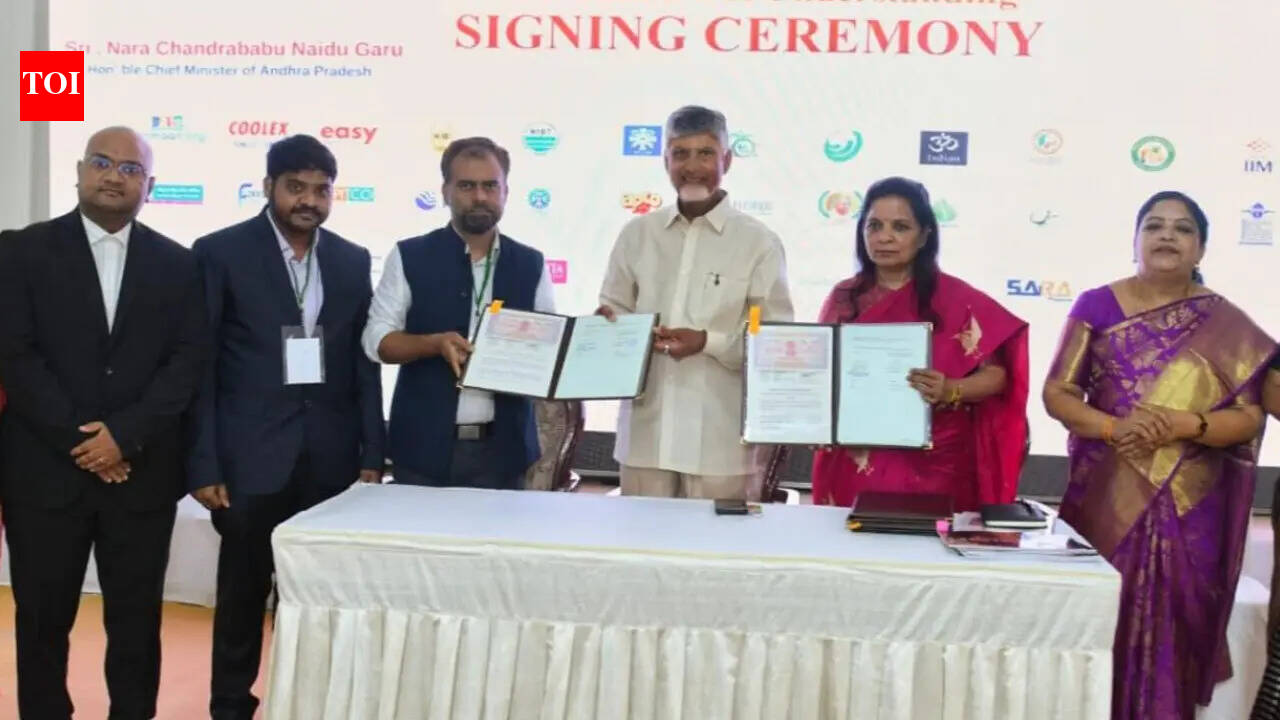
Visakhapatnam: IIMV Field, the incubation and startup hub of the Indian Institute of Management Visakhapatnam, has partnered with the Andhra Pradesh government to strengthen women-led Self Help Group (SHG) enterprises across the state through the ‘Sampannakari’ initiative. As part of this, 150 women-led SHG enterprises from all 26 districts will be developed through a structured program over a period of two years to help them scale up and grow sustainably. IIMV Field recently presented Chief Minister N. An MoU was signed with SERP (Society for the Eradication of Rural Poverty), the state level implementing agency of the AP government, in the presence of Chandrababu Naidu. The project is being implemented under the Deendayal Antyodaya Yojana – National Rural Livelihood Mission (DAY-NRLM) of the Ministry of Rural Development. It is based on similar initiatives taken in states such as Karnataka, Kerala and West Bengal with a focus on promoting non-agricultural rural enterprise development. The main objective of the program is to strengthen rural livelihoods by encouraging entrepreneurship beyond agriculture, including sectors such as food processing, small-scale manufacturing and service-based enterprises within the rural ecosystem, thereby reducing dependence on agriculture alone. Speaking to TOI, Professor M Chandrasekhar, director of IIM Visakhapatnam, said the thriving initiative was taken by Chief Minister N. Chandrababu Naidu’s vision of “One Family, One Entrepreneur”. “This program focuses on grassroots entrepreneurship by moving beyond the urban startup ecosystem to support rural families. It is being launched as a pilot initiative to promote entrepreneurship at the grassroots level. Additionally, it will generate insights that can inform future policy interventions and enable scale-up to larger groups in later stages. The objective of the program is to create a structured ecosystem for rural enterprise development by combining financial assistance, capacity building and sustained guidance, ultimately contributing to sustainable livelihoods and rural economic development.“Professor Chandrashekhar said. IIMV FIELD Directors Dr. M. Shamim Javed and Dr. R. Sai Shiva Jayanti said the program aims to identify and support 150 rural enterprises across Andhra Pradesh. “These enterprises can operate in a wide range of sectors including food processing, small-scale manufacturing and other livelihood-oriented activities. The primary focus is on businesses that are already operational and having a minimum annual turnover of around Rs 12 lakh. A small proportion (about 10%) may also be selected from early stage or nascent enterprises to encourage new entrepreneurial ideas,” he said. “The selected enterprises will undergo a structured incubation program for two years, during which they will receive ongoing support. This includes guidance on improving revenue streams, strengthening branding and market position, optimizing cost structures and increasing overall profitability. The program aims to enable these enterprises to achieve a targeted annual growth rate of around 15%, thereby transforming them into scalable and high-growth enterprises,” said Dr Javed and Dr Jayant. “In addition to capacity building, the program provides access to financial support mechanisms. These include performance-based ‘challenge grants’, awarded based on milestones achieved, as well as linked financing schemes such as subsidies or zero-interest loans to support expansion and working capital needs. Extensive outreach efforts have been made to ensure participation of rural communities. Pamphlets and digital resources have also been distributed in the districts to facilitate awareness and engagement,” said Dr Javed and Dr Jayant. Eligibility, Application Process and Selection Criteria for Enrichment Program• Eligibility for the program is closely linked to the Self-Help Group ecosystem. • Enterprises should be led by or associated with SHG members, ensuring strong participation of women in ownership or leadership roles. • The program primarily targets rural-based enterprises, including informal or family-run businesses. • The application process is currently open, with the closing date set for April 15. • To improve accessibility, the process is supported by a mobile-based application platform, along with AI-enabled assistance features such as chatbots and voice support to guide applicants in filling the form. • Helpline support available to resolve queries. • Initially, around 500 to 1000 applications will be shortlisted based on eligibility and professional potential. • This will be followed by detailed ground verification to assess the authenticity, scale and operational status of the enterprises. • Based on this evaluation, 150 enterprises will be finalized ensuring balanced representation across districts and regions. • To apply for the completion program – https://ee.kobotoolbox.org/x/bN1lgH3D • To know more about the program – iimvfield.com/sampannakaari/

Source link

Where are US troops going next in the Middle East? As Trump considers ways to end the war, Iran’s uranium is in focus

Where are US troops going next in the Middle East? As Trump considers ways to end the war, Iran's uranium is in focus

A month after Donald Trump-designed war with Iran, Washington is quietly expanding its military footprint in the Middle East, sending several hundred thousand additional troops to join a growing force of Marines and Army paratroopers. US military officials told The New York Times on Sunday that the deployment was intended to give the president broader options amid rising tensions with Tehran.At present, the newly arrived commandos, which include Army Rangers and Navy SEALs, remain without any defined mission. Speaking on condition of anonymity, the officials said their roles were still taking shape, underscoring the fluidity of a conflict that is constantly evolving.

Watch

‘Attackers will not return alive’: Trump surprised by Iran’s ‘coffin’ warning to thousands of American soldiers

With a massive US military buildup in the Gulf, Trump is eyeing a bold and high-risk mission: extracting about 1,000 pounds of enriched uranium from Iran.U.S. officials told The Wall Street Journal that the plan, which is still under consideration, would be fraught with complexity and risk — potentially keeping U.S. forces inside Iranian territory for days, if not more, in order to secure one of Tehran’s most sensitive assets.However, what is clear is the range of possibilities. These specialized ground forces could be tasked with securing the Strait of Hormuz, a choke point for global oil flows that Iran has effectively closed off. Other scenarios under consideration include a mission to seize Kharg Island, Tehran’s vital oil hub in the northern Persian Gulf, or a campaign targeting enriched uranium reserves at the Isfahan nuclear site.They join a steady build-up: 2,500 Marines and the same number of sailors have recently arrived, bringing the total US troop level in the region to more than 50,000 – about 10,000 more than usual. The reinforcement reflects a change in the broader military stance as Trump considers his next move.Still, key questions remain unanswered. The exact role of the 31st Marine Expeditionary Unit, now in theater, is still unclear. Officials say one focus of the discussions is how to reopen the Strait of Hormuz, through which about a fifth of the world’s oil supply typically passes. Currently, the waterway is largely disrupted amid Iranian retaliatory attacks linked to the US-Israeli campaign.This increase comes on the heels of an already extensive US presence, with bases and naval deployments in Saudi Arabia, Bahrain, Iraq, Syria, Jordan, Qatar, the United Arab Emirates and Kuwait. Still, the current numbers – although inflated – tell only part of the story.Notably absent was the USS Gerald R. Ford and its 4,500 workers. Plagued by technical problems, including an onboard fire, the carrier departed the area on 23 March, sailing via Crete before reaching Croatia. Its next destination remains uncertain.In parallel, the Pentagon has dispatched about 2,000 troops from the 82nd Airborne Division, adding another layer of operational flexibility. Their exact location is unknown, but officials say they are located a good distance from Iran. Like the commandos, they could be directed towards Kharg island – which has already been the target of more than 90 US airstrikes this month, or could translate into broader ground operations.

voting

With rising US-Iran tensions, what worries you most?

Still, military analysts caution against reading the troop buildup as a prelude to attack. The army of 50,000, many of them at sea, was far less than the number needed for a sustained land campaign. By comparison, Israel mobilized more than 300,000 troops for its Gaza offensive in October 2023, while the US-led invasion of Iraq in 2003 began with about 250,000 personnel.Iran, with a population of about 93 million and a vast, diverse landmass, presents a far more formidable challenge. Capturing territory, let alone conquering it, would demand far greater resources. For now, the US stance appears to be less about occupation and more about keeping options open in an escalating conflict.

Source link