Breaking News
Andhra Pradesh High Court rules against DNA testing of children in marital disputes.

Can a husband conduct a DNA test on his children to prove infidelity? What did the Andhra Pradesh High Court say?

Andhra Pradesh The recent judgment of the High Court that DNA testing of children should not be ordered in a mechanical manner in matrimonial disputes highlights the importance of protecting the rights of children. The High Court said that children should not be used as pawns to settle disputes between parents and a man cannot undergo DNA test of his children to prove his wife’s infidelity. Background of the case The case arose out of a long pending matrimonial dispute between a husband and wife from Vizianagaram district. The husband filed HMOP No. 45 of 2019 before the Senior Civil Judge, Vizianagaram, seeking divorce on the grounds of desertion under Section 13(1)(ib) of the Hindu Marriage Act, 1955. During the pendency of the divorce petition, the husband moved IA No. 553 of 2022 under Section 45 of the Indian Evidence Act, seeking DNA testing of his two children. He claimed that testing was necessary to establish that he was not the biological father, alleging that the children were born out of his wife’s adulterous relationship. The trial court rejected the DNA testing application and reached a settlement on July 10, 2024, citing potential social stigma. Supreme Court Legislation discouraging the mechanical use of DNA tests involving children. Challenging this denial, the husband approached the Andhra Pradesh High Court through a civil revision petition under Article 227 of the Constitution. Appellant’s arguments The husband argued that the trial court erred in rejecting his application for DNA testing. His lawyer Krishna S argued that the DNA test would help reveal the truth about the paternity of the children. Denying such scientific evidence would deprive the petitioner of an important opportunity to prove its allegations.Krishna argued that the petitioner’s right to fair trial and justice cannot be denied by considering the right to privacy of his wife and children. He argued that his right to privacy is not absolute. According to him, ordering the DNA test would not cause any prejudice to his wife or children as it would only reveal the truth in the marital dispute where infidelity was alleged. defendant’s answer The wife opposed the petition, arguing that the divorce petition was only on the grounds of desertion, but not on the grounds of adultery. Their lawyer A Sai Naveen said that conducting DNA tests on children would be a violation of their privacy and dignity. He said that when children are not parties to the dispute between parents, DNA test of children should not be ordered. Naveen relied on recent Supreme Court judgments in which the top court had warned courts below against allowing DNA tests, which could have harmful social and psychological consequences for children, including the risk of their validity being questioned.High Court analysis Considering the arguments of both the parties, the High Court judge, Justice Taralada Rajasekhar Rao, upheld the arguments of the respondent (wife) and held that the divorce petition was filed on the grounds of desertion, but not on the grounds of adultery. Additionally, the children were not parties to the suit, nor were they claiming maintenance or any legal benefits. The High Court also cited several Supreme Court decisions including Gautam Kundu Vs. State of West Bengal, Aparna Ajinkya Firodia vs. Ajinkya Arun Firodia, and R. In Rajendran v. Qamar Nisha the court reiterated that there is a strong presumption of legitimacy under Section 112 of the Evidence Act for children born during a valid marriage. Justice Rao said DNA testing should not be ordered routinely or only to support allegations of infidelity. He said the child’s interests, identity, privacy and social standing should be given priority over parental disputes.The High Court also rejected the argument that refusal to undergo DNA testing violates the husband’s right to a fair trial, holding that a party’s right to a fair trial cannot override the fundamental rights and best interests of a third party, especially a child.legal significance This decision of the AP High Court reinforces the legal principles that DNA testing of children is an exception, not the rule, especially in matrimonial disputes. It also emphasizes that courts should adopt a child-centric approach, not a parent-centric one. Allegations of incest must be proven through independent evidence, not by subjecting children to intrusive scientific tests.It also reiterates the continued relevance of section 112 of the Evidence Act in protecting the legitimacy of children. last order The Andhra Pradesh High Court dismissed the civil revision petition, upholding the trial court’s refusal to order DNA testing. It also imposed a fine of Rs 3000 on the petitioner, payable to the District Legal Services Authority within three weeks and directed recovery of the amount including taking coercive steps if necessary.Highlights from the decision

  • DNA testing cannot be adopted as a shortcut to prove marital misconduct.
  • Children cannot be used as “evidence” in disputes between parents.
  • The right to a fair trial does not violate a child’s right to privacy and identity.
  • The grounds given in a divorce petition strictly determine the scope of evidence.

Why does it matter?This judgment is significant as it strengthens judicial safeguards around the rights of children in family court litigation. As DNA testing becomes more accessible, there is an increasing need for courts to create strict limits on its use.The judgment sends a clear message that the pursuit of truth in matrimonial disputes cannot be done at the expense of the dignity, legitimacy and social welfare of the child, and that parental disputes must be resolved without causing irreversible harm to children.

  • Judgment: AP High Court
  • Judge: Justice Taralada Rajasekhar Rao
  • Petitioner Advocate: Krishna S
  • Defense Counsel: Sai Naveen A

Judgment referred to:

  • R.Rajendran Vs. Qamar Nisha and others
  • Gautam Kundu Vs. State of West Bengal and Another, AIR 1993 SC 2295.
  • Report of Aparna Ajinkya Firodia vs Ajinkya Arun Firodia (2024) 7 SCC 773
  • Sahara India Real Estate Corporation Limited and Others Vs. Securities and Exchange Board of India and another reported in (2012) 10 SCC 603

Read the full decision:

Source link

Mounaragam heading towards climax, Malayalam’s longest serial to end soon

Mounaragam heading towards climax, Malayalam's longest serial to end soon
With the departure of Mounaragam after an incredible run of seven years and over 1600 episodes, fans are missing the emotional rollercoaster that started with a village girl overcoming her speech challenges. Starring Naleef Gee and Aishwarya Ramsai, the series captured hearts with its touching story and the heartfelt bond between its leads.

After seven years, Mounaragam, the longest running serial on Malayalam TV, is heading towards its climax. The Naleef Gaye-Aishwarya Ramsai starrer is moving ahead after completing the milestone of 1600 episodes. Sharing a teaser online, the makers have confirmed that the serial will soon have its much-awaited climax.Maunaragam started with the story KalyaniA village girl who has difficulty speaking. The young girl also faced severe bullying and conflict from her family because of her disability. There was a change in Kalyani’s life after Kiran’s entry. Both of them fall in love and despite many conflicts, they get married. The next major turning point in the story came when Kalyani regained her ability to speak and it is still celebrated as one of the most emotional moments of the show. Currently, in the show, Kalyani is admitted to the hospital in a critical condition after being stabbed by Rahul. Is Kalyani’s life in danger? Will have to wait and see.Mounaragam was inspired by the Telugu serial of the same name. Later, it was remade in Kannada and Tamil as Mounaraaga and Katrina Mozhi respectively. However, it was the Malayalam version of the serial that attracted more attention across all languages.Mounaragam marked the Malayalam TV debut of actors Naleef Gay and Aishwarya Ramasai. Undoubtedly, the duo’s sizzling chemistry is still one of the major highlights of the show. Along with them, the performances of actors Darshana Das, Balaji, Sethu Lakshmi, Beena Antony, Anju Nair and Sabu Varghese also won hearts.As the show is about to end after seven years, fans are curious to know how the story will end.

Source link

Silambarasan describes ‘Youth’ as ​​’fresh, vibrant and full of heart’; Praised the acting and directing talent of Ken Karunas. tamil movie news

Silambarasan describes 'Youth' as ​​'fresh, vibrant and full of heart'; Ken praises Karunas's acting and directing talent.
Silambarasan TR has praised the newly released Tamil film ‘Youth’ directed by and starring newcomer Ken Karunas. He praised Karuna’s dual performance and directorial talent, describing the upcoming film as fresh, vibrant and relatable to the current generation. Silambarasan also praised GV Prakash’s music and encouraged audiences to experience the film in theatres.

Silambarasan TR has backed another newcomer in Tamil cinema with the new film ‘Youth’ which was recently released on 19th March. This coming of age film directed and starring newcomer Ken Karunas has created a lot of excitement and is spreading like wildfire among the youth. The film ‘Youth’ also marks the debut of newcomer Ken Karunas as the hero and it has been trending and loved by everyone including the general audience and the film fraternity. It is scheduled to be released on March 26, 2026 in Telugu language.

Silambarasan praises ‘youth’ for connecting with today’s generation

Actor Silambarasan, who is busy with Vetri Maaran’s ‘Arasan’, took out time to watch the film and shared his views on the film via social media. He said that the film is “new age, energetic and full of emotions” and added, “A film that is very relatable to the current generation.” From this it can be inferred that the film seems close to the current scenario. STR’s support will definitely give the film significant recognition among the people.

Silambarasan praises Ken Karunas’ performance and direction in ‘Youth’

While appreciating Ken Karunas’s dual responsibilities, Silambarasan praised the young filmmaker-actor. He wrote, “Brilliant performance by Ken, you really nailed Thambi. To act and direct at such a young age and make it so engaging is really impressive.” She also praised the supporting cast and said, “Loved your moments with Sooraj sir and Devdarshini ma’am. Anishma, Meenakshi and Priyanshi Yadav really brought life to the film. His full praise shows how much he appreciated the team’s hard work and their performance.

STR praises GV Prakash‘s music and urges audiences to watch ‘Youth’ in theaters

Silambarasan emphasized the film’s music, saying that “the music enhanced all the scenes beautifully.” He praised composer GV Prakash for his collaboration in the film’s music. In the end, STR encouraged everyone to watch the film in theaters and congratulated the team. It is noteworthy that Ken Karunas plays the role of Silambarasan’s fan in ‘Youth’.

Source link

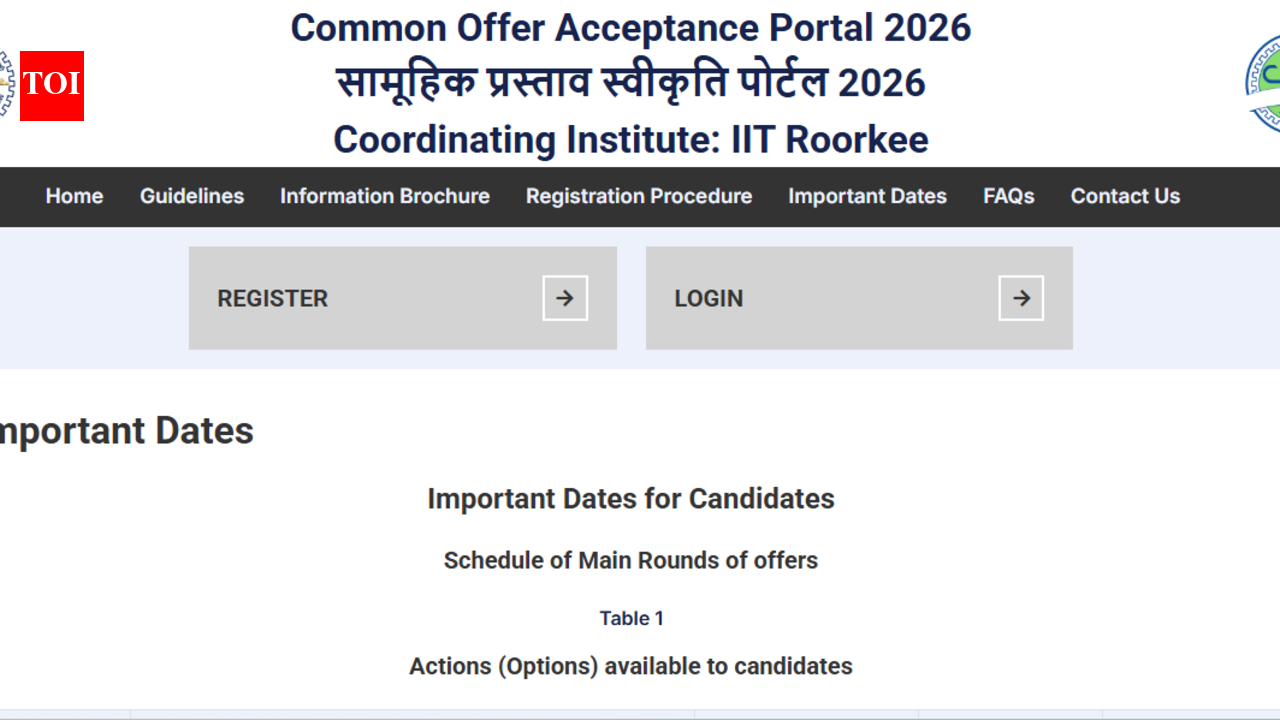
GATE COAP 2026 schedule released: Round 1 to start from May 11; Check important dates here

GATE COAP 2026 schedule released: Round 1 to start from May 11; Check important dates here

Indian Institute of Technology Roorkee has released the schedule of Common Offer Acceptance Portal (COAP 2026). The portal is used for admission to Master of Technology (M.Tech) programs and recruitment in Public Sector Undertakings (PSUs) through Graduate Aptitude Test in Engineering (GATE).Registration for COAP 2026 will start soon on the official website. Candidates who have valid GATE score can participate in this process.Earlier, the Indian Institute of Technology Guwahati had declared the results of GATE 2026 on March 19. As per the rules, candidates who have qualified GATE 2026, 2025 or 2024 are eligible.It is important to note that candidates have to apply separately to each institute or PSU for MTech admission or jobs. COAP is used only to accept or reject proposals.

CoAP 2026: Important dates

Here are the rounds and dates:

Round no.
Time window to view offers and make a decision
accept and freeze
hold on and wait
Decline and wait
round 1 May 11 (10:00 am) – May 13 (09:00 am) Yes Yes Yes
round 2 May 17 (10:00 am) – May 20 (09:00 am) Yes Yes Yes
round 3 May 24 (10:00 am) – May 27 (09:00 am) Yes yes no* Yes
round 4 May 31 (10:00 am) – June 3 (09:00 am) Yes yes no* Yes
round 5 June 5 (10:00 am) – June 10 (09:00 am) Yes No Yes
round 6 June 13 (10:00 am) – June 17 (09:00 am) Yes No Yes
round 7 June 20 (10:00 am) – June 23 (09:00 am) Yes No Yes
round 8 June 27 (10:00 am) – July 1 (09:00 am) Yes No Yes
round 9 July 3 (10:00 am) – July 5 (09:00 am) Yes No Yes
round 10 July 8 (10:00 am) – July 10 (09:00 am)* Yes No Yes

Options available to candidates

In each round, candidates will see the offers given by the institutes and can choose from these options:

  • Accept and Stop: Accept the offer and don’t wait for other options
  • Hold on and wait: Propose but wait for better
  • Reject and wait: Reject the current offer and wait for others

important instructions

  • Candidates can select “Retain and Wait” only twice for the same institute and course
  • In Rounds 1 to 4, all three options are available
  • If no option is selected in any round, the proposal will be automatically rejected
  • In Round 5, only “Accept and Freeze” or “Reject” options are allowed.
  • From rounds 6 to 10, only final decisions can be made (accept and hold or reject).
  • Round 10 will be conducted only if some institutions continue the process after Round 9

Participating Institutions

Many top institutes are part of COAP 2026, including the Indian Institute of Science Bengaluru and many Indian Institute of Technology (IITs) like Bombay, Delhi, Madras, Kanpur, Kharagpur, Hyderabad and others.Candidates are advised to check the official COAP portal regularly and apply separately to their preferred institutions to complete the admission process.

Source link

The missing link between classes and jobs

The missing link between classes and jobs

India’s skills challenge is becoming more urgent as the country tries to create a large youth workforce to reshape the economy in the face of technology, changing labour-market needs and global uncertainty. In a round table conference organized by The Times of India And JPMorgan Chase Policy makers, teachers, employers and researchers examine why the transition from education to employment remains so difficult for many young people.The discussion revealed that the problem goes deeper than the shortage of training seats. Panelists pointed to weak career guidance, outdated curricula, limited work experience, social stigma around professional careers, low job creation and structural barriers faced by women and rural youth. They first outlined a comprehensive set of solutions, from career awareness and hyperlocal demand-mapping to stronger apprenticeships, employer-led training and better support systems that can help young people get into work more smoothly.

JPMC-TOI (1)

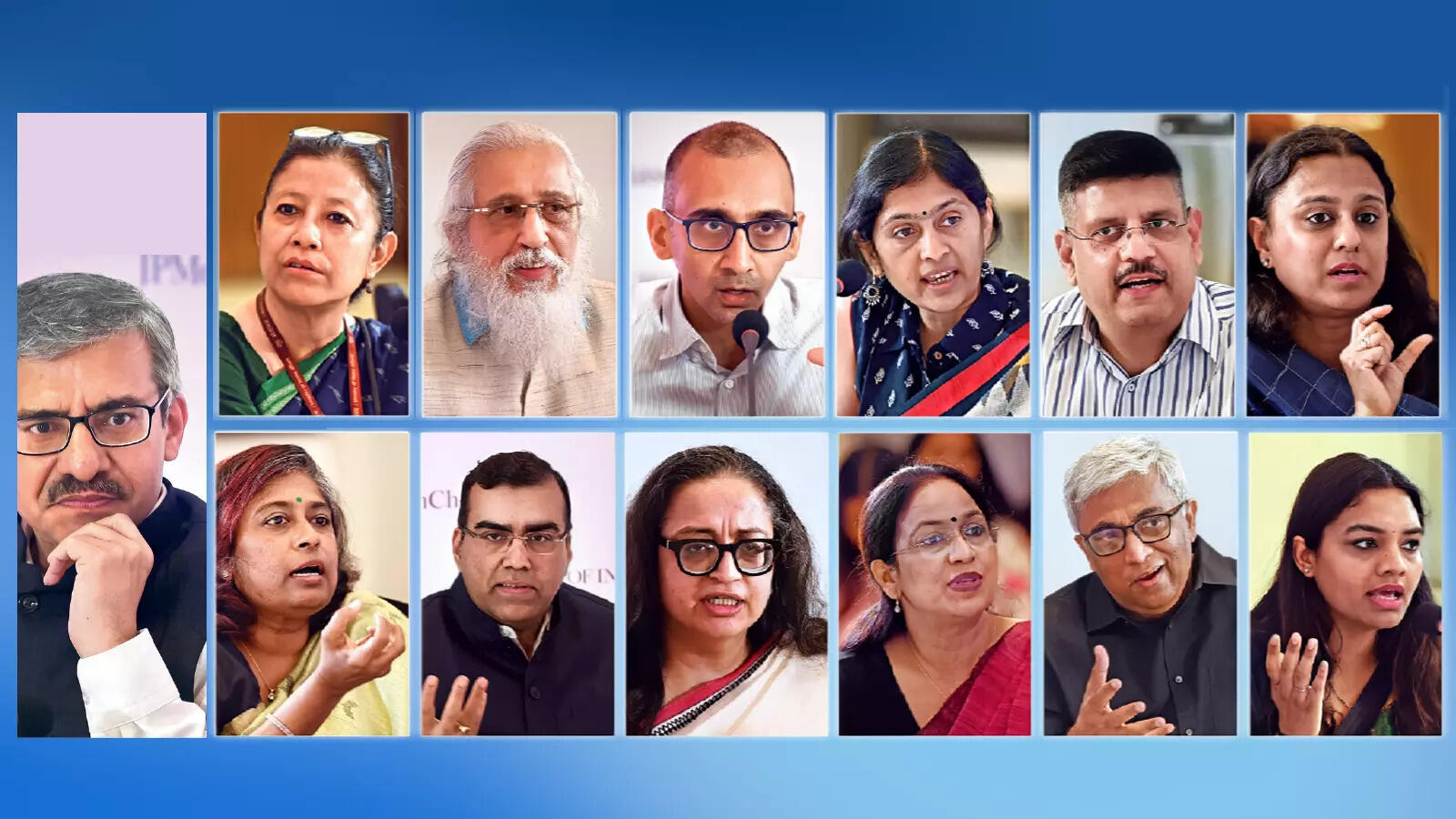
A cross-section of policymakers, educators, researchers and employers who participated in the TOI-JPMorganChase Skilling Roundtable

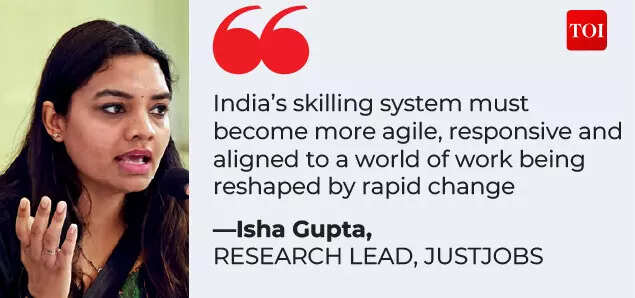
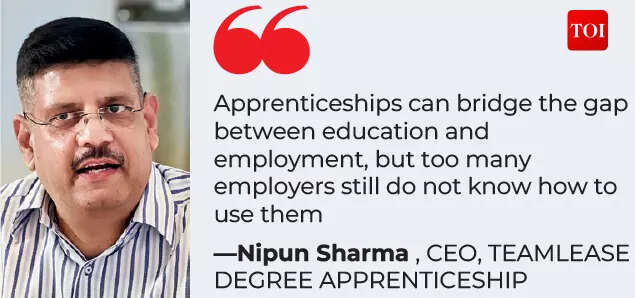
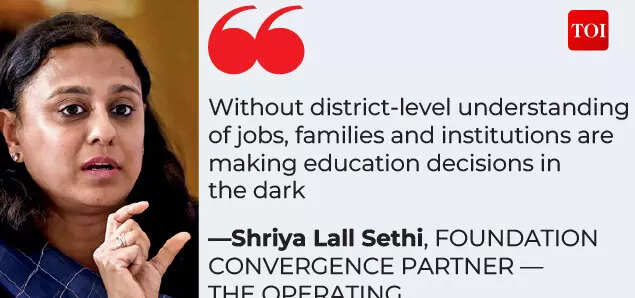
1. Students are choosing in the darkOne of the concerns was that students often make educational choices without understanding what jobs exist, what qualifications they require, or what pathways are actually viable. Isha Gupta, head of research at JustJobs, identified this as a central “information gap” in the transition from education to employment. Shriya Lal Sethi, operating partner at The Convergence Foundation, said the problem is compounded by the lack of reliable district and state-level data on job demand.Solution: : Priya Aggarwal, Founder Director, Antrang Foundation, said career education should start from school, with teachers, parents, principals and local employers helping students understand the real options. Sethi called for hyperlocal demand-mapping so that institutions and households can make better decisions. Nipun Sharma, CEO of TeamLease Degree Apprenticeships, said there also needed to be improved awareness among employers about existing skills and apprenticeship pathways.

quote-01

Reena Sonowal

quote-02

Esha Gupta

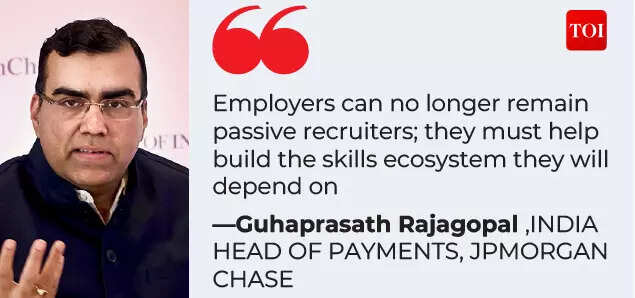
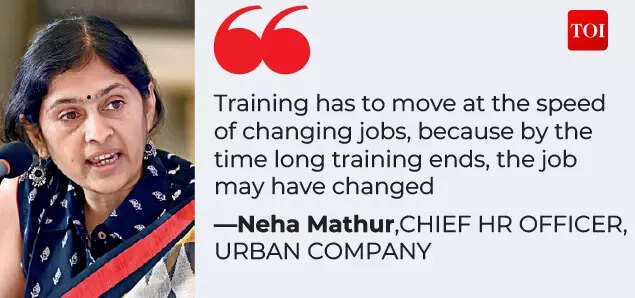
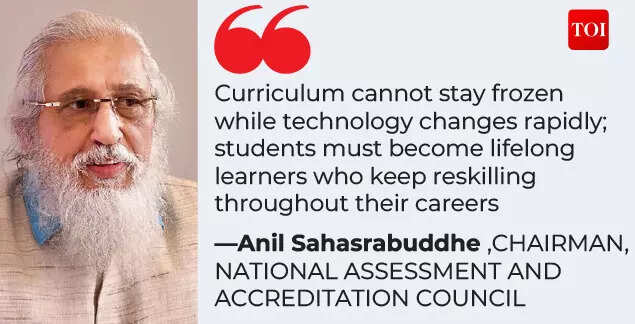
2. Jobs don’t need what colleges teach.Many speakers said that India is producing graduates and trainees whose education is poorly aligned with the changing demands of the workplace. Professor Anil Sahasrabuddhe, chairman of the National Assessment and Accreditation Council (NAAC), said the outdated curriculum has long been a complaint of the industry and institutions have been forced to move towards more frequent revision and closer consultation with employers.Solution: Sahasrabuddhe called for continuous curriculum reform and lifelong learning. Guhaprasath Rajagopal, India payments head, JPMorgan Chase, said employers should stop behaving like passive recruiters and instead become active skill-builders. Neha Mathur, chief human resources officer at Urban Company, said companies need to bridge the gap between training and jobs by building in-house training systems that respond quickly to changing demand.

quote-03

Guhaprasath Rajagopal

quote-04

Neha Mathur

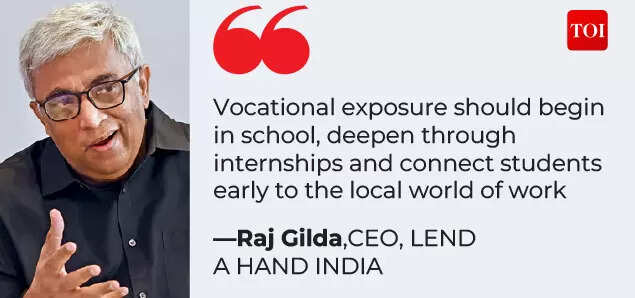
3. No one is ready for a job without work experienceThe panel returned repeatedly to the problem of the “experience gap” – the lack of actual experience in the world of work prior to entry into a job. Gupta said many youth struggle because the reality of employment does not match their imagination.Solution : Sahasrabuddhe and Professor Amit Basole of Azim Premji University both described internships as an effective bridge between education and work. TeamLease’s Sharma makes a strong case for apprenticeships, saying they allow students to learn while earning and ease the transition into stable employment. Sethi highlighted work-integrated degree programmes, while Raj Gilda of Lend A Hand India, an NGO working in the jobs and skills sector, said vocational exposure should start much earlier in school and deepen over time through local internships. His NGO supports class 11 and 12 students for 80-hour internships with local businesses—grocery stores, health care units, cafes, garages, workshops, small manufacturers.

quote-05

Nipun Sharma

quote-06

Amit Basole

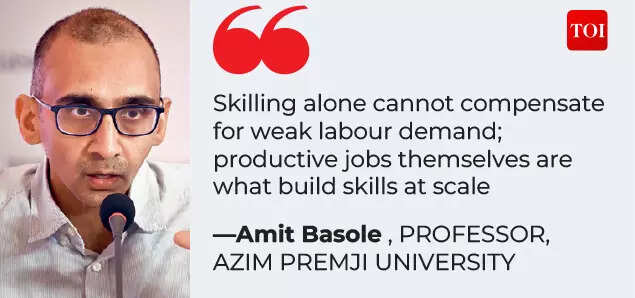
4. Skills cannot replace employment generationAmit Basole said that the skills debate too often sees the problem as merely a problem of supply. India has expanded education and skills infrastructure, he said, but demand for labor has not grown as fast, especially for workers without college degrees.Solution: : Basole said skills policy should be linked to broader job creation, especially in manufacturing and other sectors that can absorb large numbers of non-graduate workers. He also said employers’ reluctance to invest in workers cannot be separated from broader business barriers such as energy costs, logistics and regulation. His larger point was that productive jobs themselves create skills, and skills cannot be treated as a substitute for job-creation.

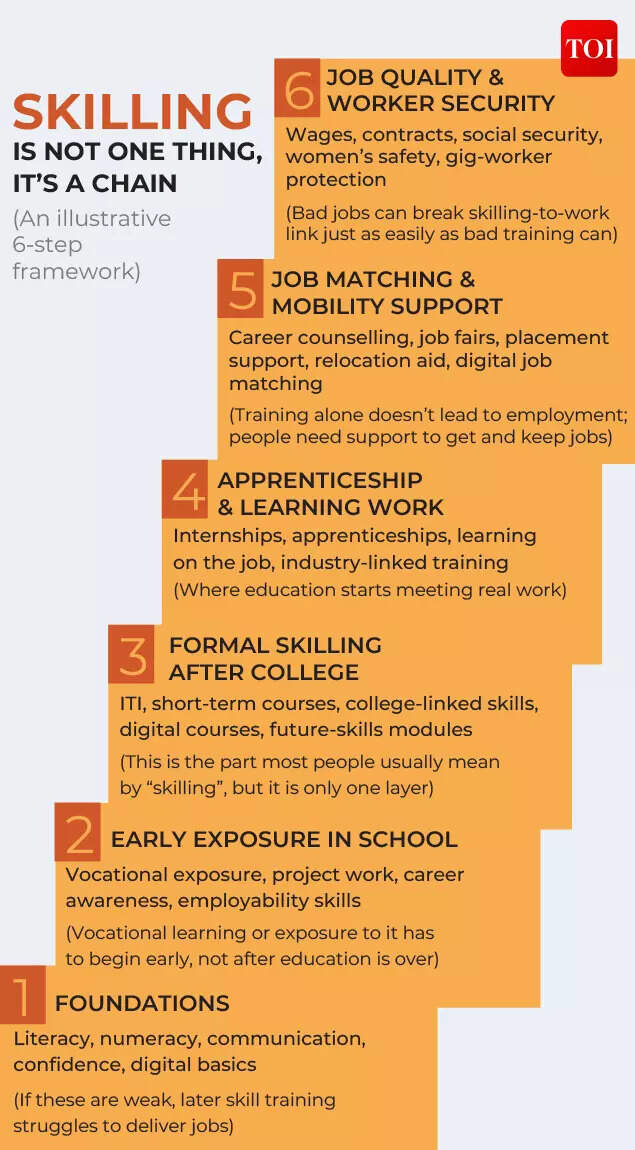
Skill isn't one thing, it's a series

Skill isn’t one thing, it’s a series

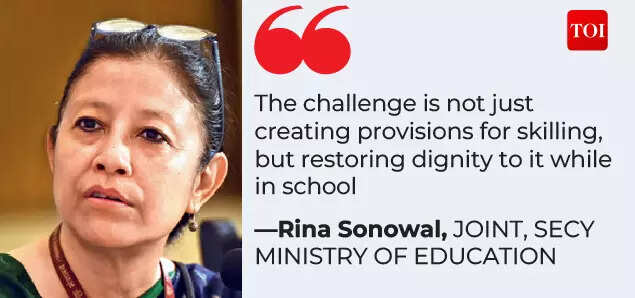
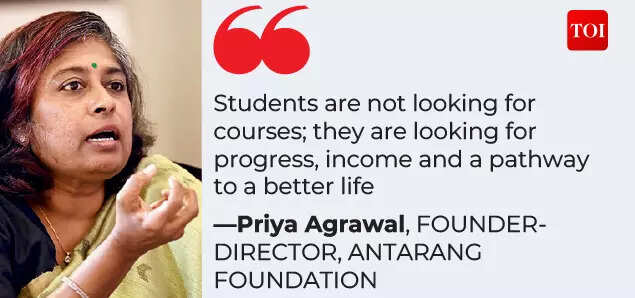
5. Why is there still a lack of respect in business work?Another recurring theme was that skill-based and manual work still does not have the same social legitimacy as white-collar careers. Reena Sonowal, joint secretary in the education ministry, said one of the persistent challenges of the sector is that skills are less aspirational than traditional education. Basole linked this to deeper social attitudes, including caste-based ideas about physical labour.Solution : Sonowal said that dignity of labor has to be included in school education. Priya Agarwal said there is a need to normalize career pathways through trusted institutions like schools. His foundation works with public schools to integrate career education into public education systems. Mathur of Urban Company suggested that professional work acquires dignity when it provides visible advancement in income and status. Nipun Sharma said that success stories of people who learn while earning can help change social perceptions.

quote-07

Anil Sahasrabuddhe

quote-08

Priya Aggarwal

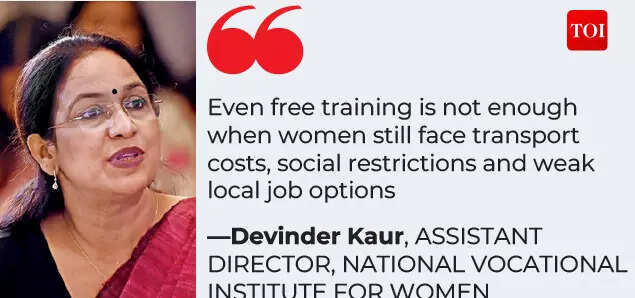
6. Barriers for women often lie outside the classroomIt became clear from the discussion that women’s participation in skills and employment is determined by barriers beyond class. Devinder Kaur, assistant director of the Noida-based National Vocational Training Institute for Women, said many women, especially from rural areas, struggle with transportation costs, living expenses, social restrictions, marriage-related barriers and weak local placement options, even when training is subsidized.Solution: : Citing efforts to help women access vehicles and better commute to work, Neha Mathur said employers need to think beyond training and address practical mobility barriers. Sharma said safe housing remains a major concern. The broader solution suggested by the panel was that skills policy should include support for transportation, housing, security and family acceptance if women are to remain in jobs.

quote-09

Raj Gilda

quote-10

Manisha Chadha

7. Should skill development follow local jobs?The panel also debated whether skills should be tailored primarily to local jobs or to broader labour-market dynamics. Sethi argued for local demand mapping so that institutions could link training with nearby opportunities. Raj Gilda emphasizes that small local businesses – from garages and salons to retail shops and cafes – are an under-utilized source of internships and early work experience.Solution: : The view that emerged was that both perspectives matter. Local opportunities can make entry into work easier, especially for school students, women and first-generation learners. But Nipun Sharma cautioned against limiting skills to local labor markets, saying mobility across cities or even abroad often replaces income. The answer is local grounding, combined with routes for mass mobility.

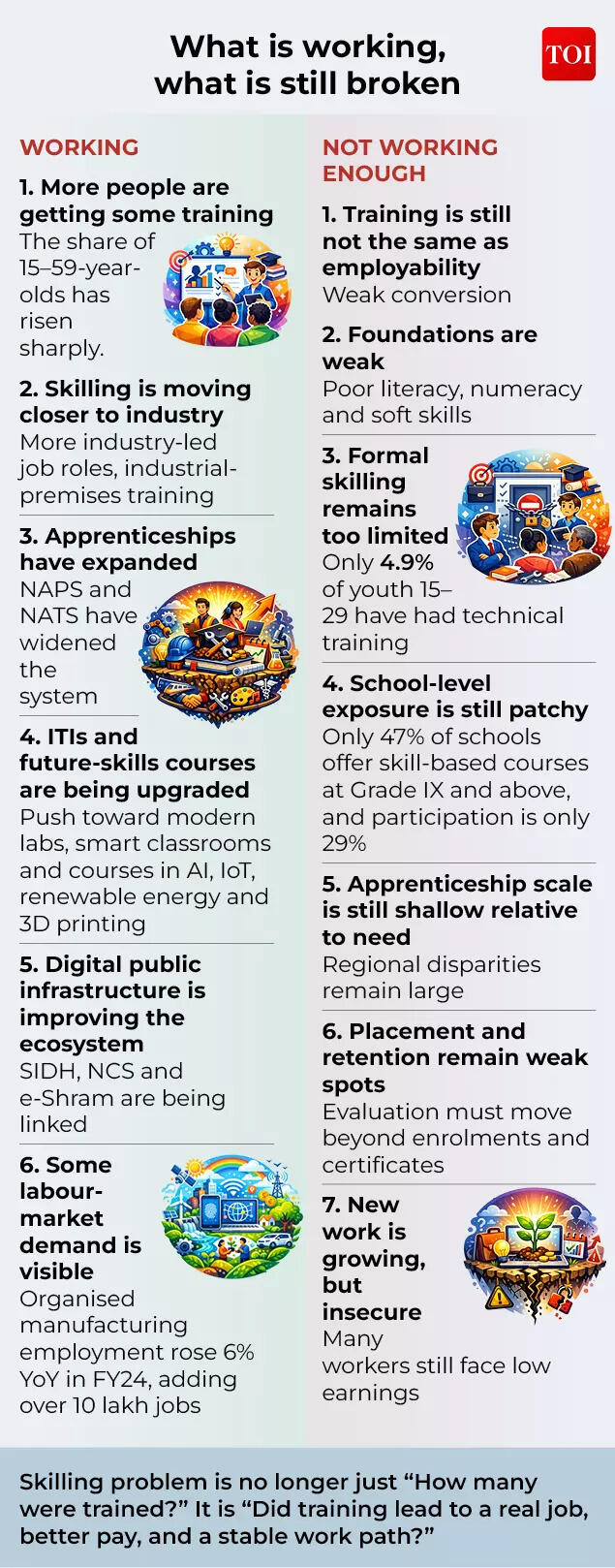
What's working, what's still broken

.

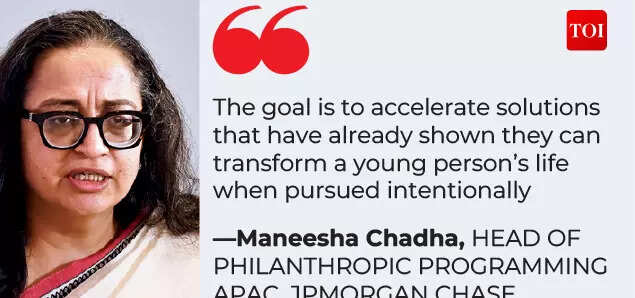
8. Why do good skill ideas stop on the ground?A repeated theme in the discussion was that the country does not lack policy frameworks or platforms; The bigger issue is irregular lifting and poor execution. Sahasrabuddhe listed several existing initiatives, including curriculum reform measures, digital learning platforms and credit systems. He talked about UGC and AICTE, the two regulators of the higher education sector, coming together to create model curricula in collaboration with industry leaders and alumni.Solution: : Speakers suggested the need to focus less on starting new schemes and more on improving existing schemes. This will mean stronger quality tracking, better coordination with institutions and employers, and greater awareness within the industry of tools such as apprenticeships and modular credentials. Sharma said apprenticeship budgets and provisions are largely underutilized because employers do not have adequate information about them.Manisha Chadha, Head of Philanthropic Programming APAC at JPMC, highlighted the range of solutions being piloted at the grassroots level and said the idea is to accelerate the adoption of all these models, which have successfully demonstrated that proactive and deliberate efforts can transform a young person’s life.

quote-11

Shriya Lal Sethi

quote-12

Devinder Kaur

9. AI will change jobs. Can skills development continue?The panel also discussed AI as both a disruptor and an opportunity. There was a recognition that technology was reshaping entry-level roles and could reduce the demand for some traditional tasks.Solution: Nipun Sharma said AI can be used for counselling, personalized learning, fitment and matching workers with employers. Guhaprasath Rajagopal said that AI should not only be seen as a threat, but also as something that complements skill systems to make them more efficient. The broad suggestion was that skills systems would need to adapt rapidly, both in what they teach and how they teach.JustJobs’ 6-point plan:A report by JustJobs Network, a global research organization, based on field evidence from seven nonprofit partners, recommends six linked reforms: measuring local job demand, providing ongoing career guidance, teaching employability skills, building industry links, strengthening trainers, and involving families.

Source link

‘Peddi’: Teaser of Ram Charan’s film ‘Kushti’ expected to be released on his birthday.

'Peddi': Makers may release 'Kushti' teaser on Ram Charan's birthday - Report
Fans are eagerly waiting for the teaser of Ram Charan’s upcoming sports drama ‘Peddi’ which will likely drop on his birthday on March 27. Directed by Buchi Babu Sana, the film stars Janhvi Kapoor and music by AR Rahman. Originally scheduled to release on March 27, ‘Peddi’ will now release on April 30, 2026.

Ram Charan will next be seen in the upcoming sports action drama ‘Peddi’ directed by Buchi Bana Sana. Ahead of the actor’s birthday next week, recent reports suggest that a teaser is likely to be released on his special day.According to All India Radio, the makers are expected to release a teaser of the film titled “Kushti” on Ram Charan’s birthday on March 27. However, the makers have not confirmed anything officially yet. So, everyone is waiting for a clear announcement.

About ‘Pedi’

Directed by ‘Uppena’ fame Buchi Babu Sana, the film is reportedly a sports action drama and mostly revolves around a cricket tournament in a village. Additionally, after her debut in ‘Devera’ with Jr NTR, Bollywood’s Janhvi Kapoor will be seen in her second Telugu film with Ram Charan’s strong and long beard look. Earlier, the team had shown Janhvi Kapoor in the role of Achiamma. She looks happy and full of life in the village setting. His role looks fun and lively.The film also stars Shiva Rajkumar, Divyendu Sharma, Jagapathi Babu and Boman Irani.

Music of ‘Peddi’

The music of the film has been composed by AR Rahman. The makers have released two songs so far, the first is ‘Chikri Chikri’ and the second song ‘Rai Rai Ra Ra’ has been released recently. It’s a fast and fun dance song. Ram Charan’s moves and Rahman’s voice made it special in both Telugu and Tamil.

Watch

Inside Kollywood’s 2025 crisis and uncertain future

After this film, Ram Charan will work with Sukumar again. His new project is currently called ‘RC17’. They had previously worked together on ‘Rangasthalam’, which was a big hit.Coming back to ‘Peddi’, the release date was earlier scheduled for March 27, but was later pushed to April 30, 2026.

Source link

‘Kasaragod Embassy’ OTT release: Where to watch Kabir Duhan Singh starrer thriller series online

'Kasaragod Embassy' OTT release: Where to watch Kabir Duhan Singh starrer thriller series online
Kabir Duhaan Singh will star in the new Malayalam thriller ‘Kasaragod Embassy’ on ZEE5, a crime series about a fake passport racket. The story follows two cousins ​​who are pushed into illegal activities by their uncle, which leads to their imprisonment. The series, set between 2008-2010, promises to be a realistic and intense watch for crime thriller enthusiasts.

After playing the terrifying villain in the action film ‘Marco’ starring Unni Mukundan, Kabir Duhan Singh The series is all set to enter the Malayalam OTT space with ‘Kasaragod Embassy’.

a crime thriller

‘Kasaragod Embassy’ revolves around a fake passport racket. The story is based on the operation of an illegal network that traps vulnerable individuals.The story also explores a high-level police investigation. Tension rises as the police try to crack down on the racket. The series promises to be an intense watch and is now streaming on ZEE5.

A story of desperation and survival

The series is set between 2008 and 2010 and is based on two young cousins, Azhi and Chemmu who dream of escaping poverty in Kasaragod. His life takes a different turn when he starts working for his uncle Razak Mama, whose stationery shop secretly functions as a counterfeiting centre.When their efforts to obtain valid passports fail, desperation pushes them into the illegal world. Razak introduced him to the job of gold smuggling and claimed that it would help him escape.Things get out of control as the cousins ​​are used as disposable pawns and eventually end up in jail. The remaining episodes are full of entertainment and thrill.‘Kasaragod Embassy’ sets itself up as a realistic crime thriller and the makers definitely target those who like this kind of genre.

Cast and Crew Details

Directed by Aatish M Nair and written by Heeraj PH, ‘Kasaragod Embassy’ features a strong ensemble cast, with Kabir Duhan Singh playing the villain and also starring Sudheesh, Deepak Parambol and Ronnie David in lead roles.Other notable actors include Dinesh Prabhakar, Abu Salim, Govind Pai and Aparna Srikutty.Kabir, on the other hand, was last seen in the Malayalam action flick ‘Marco’, where he played the ruthless villain Cyrus opposite the lead character Unni Mukundan.

Source link

Investigation is still ongoing, but Faridabad Cardiac Center reopened. gurgaon news

Investigation still underway, but Faridabad Cardiac Center reopens

Gurgaon: The reopening of the cardiac center at Faridabad’s Badshah Khan Civil Hospital has brought vital services back on track, but has also raised uncomfortable questions about monitoring, accountability and timing, while serious allegations related to the facility remain under investigation.After the resumption of services on Friday, the center will continue to operate under the public-private partnership (PPP) model. Health Minister Aarti Rao had said that no renewal was being considered and the existing PPP agreement would continue as per its original terms till May 2027.Officials reiterated this on Friday, underscoring that there is no new contractual decision to reopen. Local Government Minister Vipul Goyal visited the hospital along with Mayor Praveen Joshi on Friday.“The contract is valid till May 2027. It has not been renewed; it continues as per the original terms,” ​​Faridabad CMO Jayat Ahuja told TOI. The resumption comes just days after the Haryana Human Rights Commission took cognizance of a complaint alleging that Meditrina Heart Centre, which was running the cardiac facility, allowed a doctor who was not a qualified cardiac surgeon to perform cardiac procedures, resulting in “grave injustice” to patients. It had directed the Additional Chief Secretary (Health), Director General of Health Services and Chief Medical Officer of Faridabad to submit a detailed report on the action taken against the company, the status of its contracts, steps regarding alleged fund misappropriation and efforts to appoint a new agency. The matter is still under investigation.Still, the sequence of events leaves a gray area. The FIR lodged by the Faridabad Anti-Corruption Bureau in October 2024 against the company’s top official is still ongoing. The charges include fraud, forgery and destruction of evidence. A separate complaint details how an MBBS doctor allegedly posed as a cardiologist and performed dozens of heart procedures, along with claims of reusing critical consumables and double billing under government schemes.Citing that the matter is pending in the court, the officials have maintained silence on the specifics. “The issue is before the court and any outcome will depend on the judicial proceedings,” Ahuja said.For patients, reopening restores access to cardiac care. For the system, it again highlights whether regulatory scrutiny has kept pace with the risks identified over the past year.In June 2025, TOI reported that Pankaj Mohan Sharma, an MBBS doctor, allegedly posed as a cardiologist and performed more than 50 heart procedures over eight months at the centre. Sharma misused the registration number of a legitimate cardiologist. The fraud came to light after a complaint by Sanjay Gupta, a Faridabad-based lawyer. The hospital management has removed the accused. The case before the HHRC is scheduled for April 9, and its findings are likely to determine whether the current arrangement can continue without deeper intervention.

insert banner

Source link

Sudden drop in temperature after rain in Delhi-NCR, heat wave wreaks havoc. gurgaon news

A sudden drop in temperature was seen after the rain in Delhi-NCR, the heat wave broke.
Friday was the coldest day of March in six years in the city.

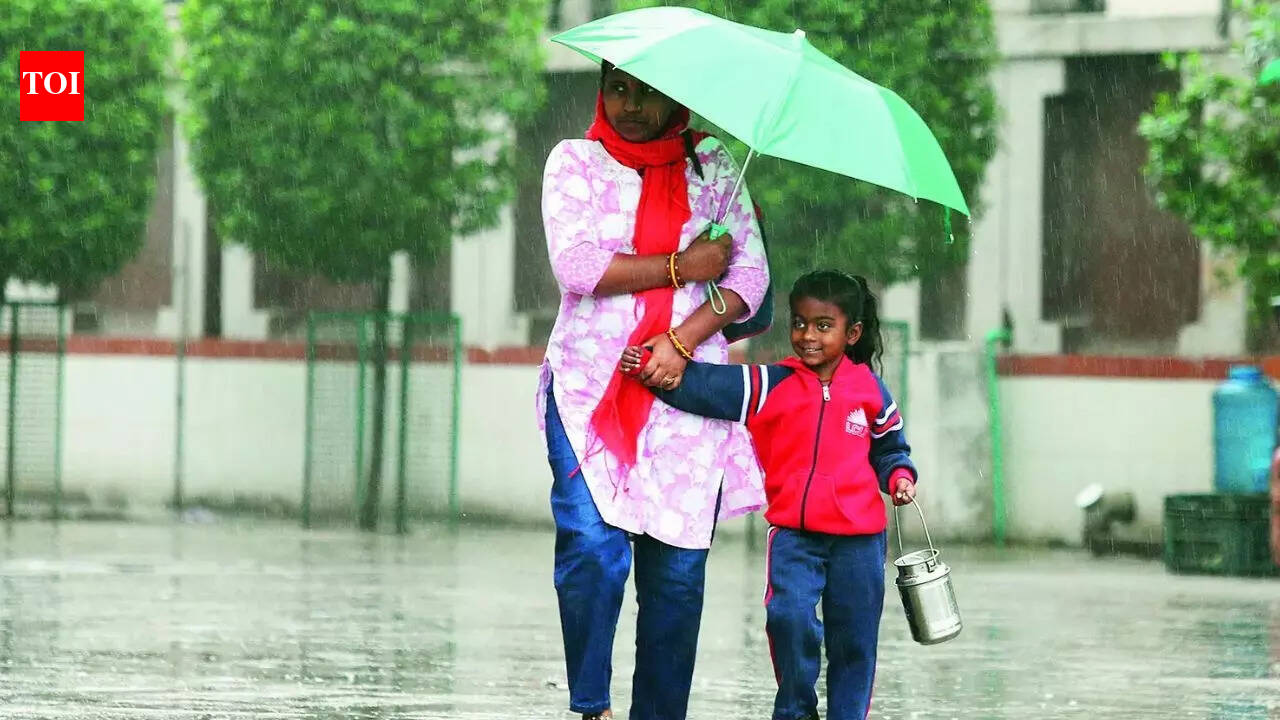
Gurgaon: Light rain, storm and strong winds lashed the city on Friday, bringing the minimum temperature to 16 degrees Celsius, 2 notches lower than Thursday’s 18.3 degrees Celsius. The maximum temperature was 21.1 degrees Celsius, which is 3.6 degrees less than the previous day.Independent meteorologist Navdeep Dhaiya called it a “very rare cold day” for north India in late March, noting that maximum temperatures in Delhi, Haryana, Punjab and western Uttar Pradesh are likely to remain between 15-19 degrees Celsius – about 10-15 degrees Celsius below normal. Across the state, the average minimum temperature dropped by 1.2 degrees Celsius compared to the previous day and reached near normal levels. The lowest minimum temperature in the state was 14.3 degrees Celsius in Sonipat.This change has been caused by an active Western Disturbance and associated cyclonic circulation over the region, causing heavy snowfall at higher altitudes. One such place is Lahaul of Himachal Pradesh.In the last 24 hours, the city recorded 6.5 mm rainfall, while Rohtak recorded 22.4 mm rainfall and Narnaul 12.5 mm rainfall. The IMD said the weather is likely to remain dry on March 21, 22 and 24, with isolated rain again likely on March 23, 25 and 26.

insert banner

Source link

A war diary from an unlikely author: the son of Iran’s president

A war diary from an unlikely author: the son of Iran's president

When? masoud pezeshkianIran’s president made a very brief public appearance last week to greet citizens at an anti-Israel rally, with another member of his family also there.His son Youssef Pezeshkian, 44, who serves as an adviser to the president, had not spoken to his father since the war began and the country’s leadership went underground. He was hoping to catch a glimpse of her. In a diary posted on his Telegram channel, he regretted that it was of no use.The son, a college professor, kept a daily diary of the war, which includes both personal and political thoughts. This diary offers a rare glimpse of what Iran’s political leaders were like – and sheds light on – during the war. And perhaps unintentionally, Youssef sometimes takes his readers into the arguments and deliberations of Iran’s leadership.While Iran’s leaders have projected defiance in public statements, the younger Pezeshkian writes about the fear beneath the facade as several leaders have been targeted and killed in Israeli bombings. “I think some political figures are panicking,” he wrote in early March, on the sixth day of the war. “People are stronger and more resilient than our pundits and political leaders imagine. We have to keep reminding ourselves that defeat will happen only when we feel defeated.”He wrote that he and his two siblings could not wait until the remaining two years of his presidency were over so “we can all get back to normal life”.As the war enters its fourth week, with many leaders killed, all who remain have retreated to what they hope will prove to be safe places. Yusuf wrote in his diary that protecting the lives of officers had become a top priority for the country. It is an honor to stop targeted killings, he said.Yusuf has posted diary entries on his Telegram page almost every day since the war began, a practice he has continued for at least a year. He has linked some entries to his other official social media pages like Instagram.Yousef recalled attending a meeting with government officials in the first week of the war, in which disagreements about strategy emerged. “The biggest serious disagreement we have is: How long should we fight?” He has written. “Forever? Until Israel is destroyed and America withdraws? Until Iran is completely destroyed and we surrender? We have to study different scenarios.”Yusuf did not respond to a request for comment. Two Iranian officials and a former senior official who knew him and worked with him in his father’s administration said the social media pages were authentic and that he had written the entries. Iranian media have occasionally mentioned his writings. In the diaries, Yusuf says that he keeps receiving messages about the war. Sometimes, he said, “the messages tell us to surrender and return power back to the people,” a notion he dismissed as “ignorant and delusional.”He did say that he is worried that Iran’s attacks on Arab countries could have the opposite effect. He wrote, “It is very sad that in order to defend ourselves we have to attack American targets in friendly countries.” “I don’t know if they will understand our situation.”Yusuf defended his father when he apologized to Arab countries for the attacks. “Apologizing to neighbors is a moral duty,” he wrote. He said that there is no fault of the people living in Arab countries, but their lives have been ruined. But in his diary he said that unless Iran could stop targeted killings, “we will lose the war”.

Source link