


No DUI, no illegal employment: Indian student deported from US for an honest answer

An Indian student was deported from America because of his answer to a question.
An Indian student was recently deported from the airport for an honest answer that he didn’t know would be considered illegal in the US. San Jose-based immigration attorney Malavika Nandivelugu made a social media post on the experience of the Indian student, who had a clean record, no DUIs, no evidence of any illegal employment. But when he was asked whether he had ever used marijuana, he said yes. “What many of you here don’t fully understand: legality at the state level means nothing in an immigration context. Under federal law, marijuana is still illegal. As an F-1 student, even casually, even once, admitting to using it can destroy your immigration status,” the lawyer said, explaining that while the incident had nothing to do with immigration actions, it was nothing new. It is not. Students are also told about it during the orientation session, but most of them do not pay attention to it because they do not pay attention to it. Nandivelugu said, “It’s not about morality. It’s about consequences. He didn’t lie. He had no intention of breaking the rules. He didn’t know the importance of what he was saying. And that lack of awareness cost him everything.”“I have seen parents of students back home living a nightmare as their children in America dabble in recreational drugs, waste time, waste money and ultimately lose their future,” the lawyer said. Even though many states have legalized marijuana, under US federal law (Controlled Substances Act), hemp is still illegal. Immigration is governed by federal law, not state law.Prince Harry also faced controversy regarding drugs as he openly admitted in his memoir Spare that he had taken marijuana, cocaine, and psychedelic drugs, although US visa applications specifically ask about past drug use. But even after a long legal battle, he was not deported from America.

‘Malicious actor, not whistleblower’: Indian-origin founder Karun Kaushik reacts to ‘fraud’ allegations against startup

Delve’s Indian-origin co-founder and CEO Karun Kaushik has responded to allegations that his company has misled customers on regulatory compliance, saying rapid growth led to internal shortcomings, while also claiming the controversy is linked to a targeted cyberattack.Delve is a compliance technology startup that helps companies assess and manage their security, privacy, and regulatory compliance. Its headquarters is located in San Francisco, California.In a video statement, Karun Kaushik said the company “grew too fast”, which created gaps in processes and oversight. He acknowledged that systems could not keep up with the expansion, leading to issues that are now under investigation. The company also issued a public statement apologizing to customers for “falling short” in its own standards.Additionally, Delve strongly disputed the substance of the allegations. The company said that these claims are from an anonymous actor and not from a legitimate whistleblower. According to Delvey, the person behind the post conducted a “targeted cyberattack”, gained access to internal data under false pretenses, and then used that content to launch what was described as a coordinated smear campaign.Delvey said the company’s internal data was stolen and then used with fabricated claims and “cherry-picked” screenshots to make the company look bad. The company said their public response has been delayed due to ongoing cybersecurity and forensic investigations.The allegations, reported by TechCrunch and based on anonymous posts, claim that Delve misled customers about its compliance with key regulatory frameworks. These include the Health Insurance Portability and Accountability Act and the General Data Protection Regulation.The claims further allege that Delve provided audit-related materials described as “bogus evidence” to clients and facilitated compliance certificates without completing full audit processes. If true, such actions could expose customers to legal and financial risks by failing to meet required standards.Delve has disputed these characterizations. The company said any materials referenced were taken out of context and, in some cases, were templates to help clients prepare documents rather than final audit evidence.In response to the situation, Kaushik said the company has introduced changes, including a new auditor network, free re-audits for clients and greater transparency in penetration testing and audit communications. He said Delve is reviewing its past work, strengthening internal controls and working to rebuild trust.Despite the controversy, Kaushik said the company remains committed to its compliance business and is “not going anywhere.”Kaushik studied artificial intelligence at MIT, previously founded a health tech venture, and led scientific research before launching Delve in late 2023. He oversees product, audit delivery and client operations.

World’s unhappiest countries in 2026: Afghanistan, Zimbabwe and Lebanon among least happy countries world News

The latest global happiness rankings paint a difficult picture, especially at the lower end of the list. It appears that countries like Afghanistan, Zimbabwe and Lebanon are facing deep-rooted challenges that go beyond simple economic concerns. The data, which measures overall life satisfaction along with several social indicators, shows scores falling below 4 for many countries. Afghanistan, in particular, stands out with an exceptionally low score. Experts say happiness rankings often reflect actual reality more than policy claims. And here, the reality appears uneven. Some countries show little resilience and others continue to struggle, with no signs of quick recovery.Check out the list of top 10 unhappiest countries in the world below, as per the World Happiness Report (WHR) 2026 report.
list of most unhappy country in the world 2026
Source: World Happiness Report 2026
Least happy countries 2026
afghanistanAfghanistan is ranked last at 147th position with a score of only 1.446. That number appears immediately. The decline of −2.594 is also the steepest of this group, indicating a rapid decline rather than a slow decline. Life on the ground reportedly remains extremely difficult due to economic collapse, political uncertainty and limited access to basic services. Even measuring happiness here can be complicated, given the gaps in reliable data. Sierra Leone Sierra Leone, ranked 146, recorded a score of 3.251, a decline of -1.067. That decline is quite noticeable. The country has spent years trying to recover from past crises, yet progress appears uneven. Public systems, particularly healthcare and infrastructure, are often under pressure. malawi Malawi is ranked 145th with a score of 3.284 and a decline of −0.829. This is not the steepest decline, but it indicates underlying stress. The reports often mention economic limitations, climate-related disruptions, and resource constraints. The pressure would be felt especially in rural areas. There are signs of development efforts, although they appear slowly. zimbabweZimbabwe, ranked 144th, has seen a steep decline of −1.481. This is one of the bigger downfalls on the list. Economic instability and currency instability have been a recurring concern over the years. Daily life can reportedly seem unpredictable. Prices fluctuate, jobs remain uncertain. These factors can determine how people perceive their overall quality of life. botswana Botswana is ranked 143rd with a score of 3.464 and a decline of −0.506. Here it is often seen as relatively stable compared to others. That’s what makes this decline interesting. This may not be a sign of a crisis, but of emerging pressure points. Analysts sometimes highlight inequality and economic changes. The fundamentals appear to be intact, although small cracks may be forming beneath the surface.yemenYemen, at 142, recorded a score of 3.532, a decline of -0.522. Most of the detailed data is missing, which in itself seems important. Ongoing conflicts and humanitarian issues dominate the situation. The numbers probably represent only a fraction of the lived reality. Reports often describe widespread hardship, which may explain the declining trend.lebanonLebanon is ranked 141st with a score of 3.723 and a decline of −1.208. This is a huge decline. In recent years the country has suffered financial collapse, political instability and public despair. Everyday services have reportedly struggled. Confidence too. This decline represents more than a temporary disruption but points to deeper, ongoing uncertainty.DR Congo DRC, which is ranked number 140, receives a score of 3.761 and shows a decline of −0.817. This country is considered one of the countries that has abundant natural resources but unbalanced development. Conflict issues and poor governance in some areas are contributing to the situation there.egypt Egypt ranks 139th with an index of 3.862, a decrease of -0.411. Although this represents a smaller percentage than others, it still indicates some pressure. Inflation and cost of living are common issues that can be found in the causes of dissatisfaction. Despite continued growth in various economic sectors, this inequality can also affect the general mood.tanzania Tanzania, which ranked 138th, is unique to this group in that it is the only nation to show improvement (+0.132). Its score still shows some weakness at 3.902, yet its progress appears to be noticeable.
voting
Should countries facing political instability focus more on improving happiness or address their political issues first?
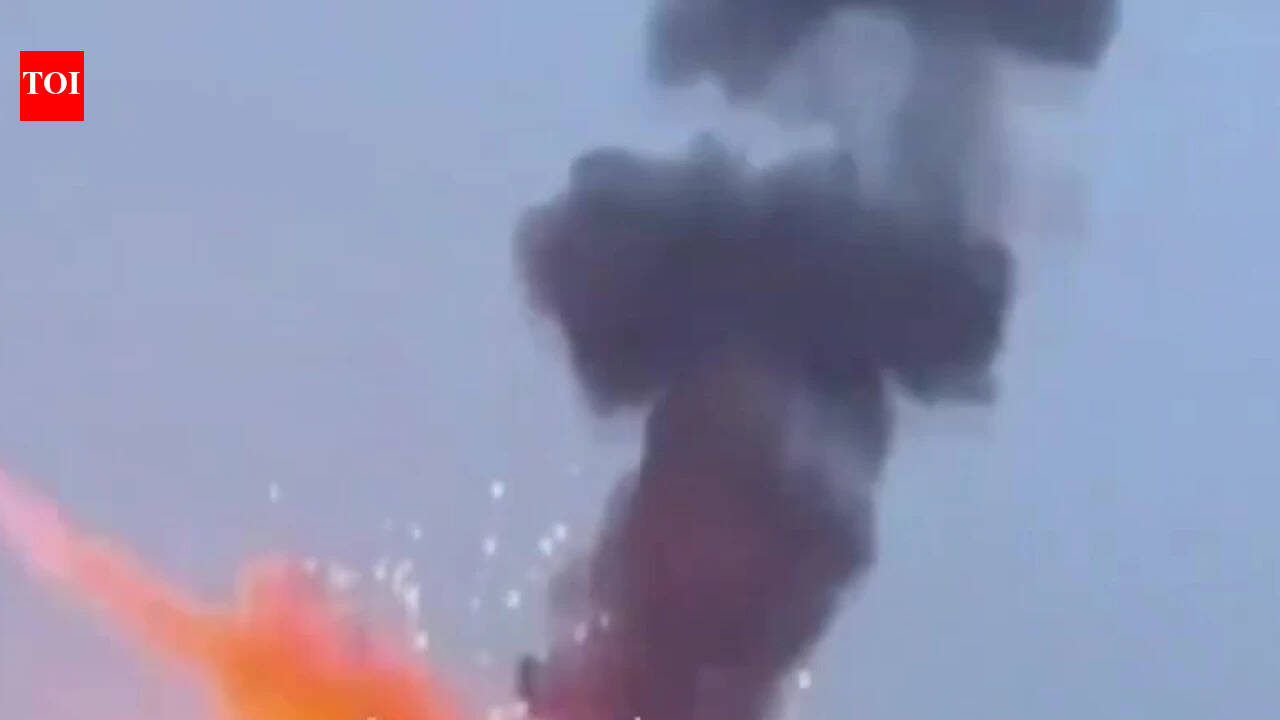
WATCH: Explosion at Bahrain’s major oil refinery site after Iran missile attack
Bahrain oil refinery explosion (Credit: Press TV X Handle)
A storage tank operated by Bapco Energy, the country’s largest refinery, caught fire following a missile attack by Iran on Sunday.Iran’s state-affiliated media shared video on social media of the moment the facility exploded and caught fire. The 10-second clip shows an explosion and then black smoke and fire coming out of the scene.In a statement quoted by Al Arabiya, the company confirmed that the fire has been brought under control and the damage is being assessed.Separately, Bahrain’s Interior Ministry said sirens were sounded early Sunday, urging citizens and residents to remain calm and move to the nearest safe place.
Last month also this place was targeted in a similar manner. That fire was also brought under control without any casualties. The incident comes amid an escalating conflict between the United States and Israel against Iran, with Tehran launching attacks targeting Israel and parts of the Gulf region. In the latest development, as tensions continue to escalate, Iran mocked the US for inflicting a “bitter defeat” in southern Isfahan following the rescue of a second F-15 crew member who went missing after the jet was shot down by Tehran. According to news agency ANI, Ibrahim Zolfaghari, a spokesman for Iran’s Khatam al-Anbiya Central Headquarters, said the incident had “exposed the hollow nature of the US military and the disgraceful failure of its forces.”“According to Press TV, Zolfaghri said Iranian forces shot down a C-130-class aircraft involved in the operation.
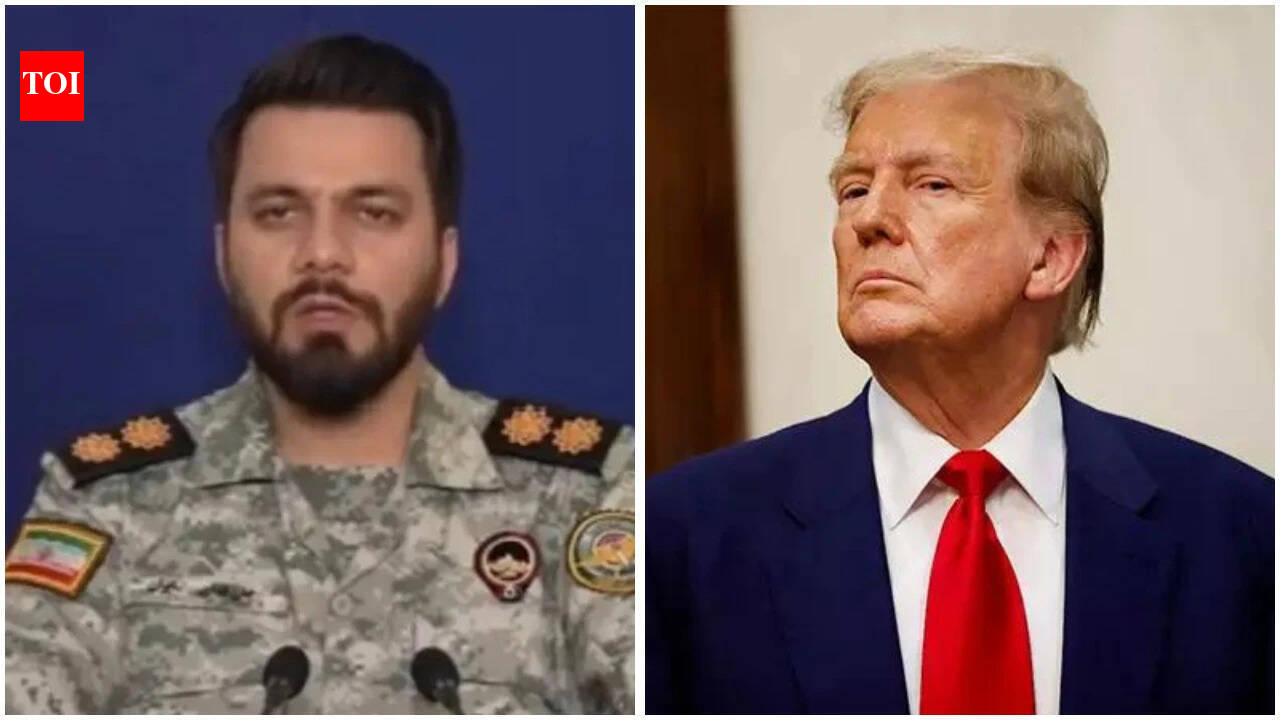
‘Bitter defeat for America’: Iran hails plane attack as victory after rescue of second F-15 pilot
Iran hails plane attack as victory after second F-15 pilot is rescued
Iran claimed a “bitter defeat” for the United States in southern Isfahan on Sunday after the rescue of a second F-15 crew member who went missing after Tehran shot down the jet.According to news agency ANI, Ibrahim Zolfaghari, a spokesman for Iran’s Khatam al-Anbiya Central Headquarters, said the incident had “exposed the hollow nature of the US military and the disgraceful failure of its forces.”“
“Trump tries to justify his weak military’s bitter defeat by creating an illusion for public opinion,” he said. According to Press TV, Zolfaghri highlighted that Iranian forces had shot down a C-130-class aircraft involved in the operation.Zolfaghari described Iran’s actions as a clear example of the “courageous” and “heroic” defense of its forces against US aggression.“We had already warned that the brave fighters of the country in the armed forces, with the help of God, will take down any aggressor and completely crush the attackers. The Iranian army’s decisive victory in southern Isfahan is a clear example of this courageous action,” he said.
US hails “most daring” rescue operation
While Iran called it its victory, President Donald Trump described the mission as a victory for the US military. In a social media post, Trump wrote that the rescued aviator was injured but “will be absolutely fine” and praised the operation, calling it “one of the most daring search and rescue operations in American history.” He confirmed that dozens of aircraft equipped with the “most lethal weapons” were deployed after two Black Hawk helicopters were reportedly targeted by local Iranian forces.Trump said, “This is the first time in military memory that two American pilots have been rescued separately over enemy territory. We will never leave an American warrior behind!” He also claimed that the operation proved America’s “overwhelming air dominance and superiority over Iranian skies”.
The conflict is increasing amid the ongoing war
This rescue operation has been done amid increasing tension between America and Iran. The conflict began with joint US-Israeli attacks on February 28 and has since killed thousands, disrupted shipping routes including the Strait of Hormuz and sent fuel prices soaring. Both sides have attacked civilian targets, raising concerns over possible war crimes.Two Black Hawk helicopters and a C-130 transport plane were shot down in Isfahan during the US operation, Iranian state TV said, citing the Joint Military Command, with pictures showing smoke rising from a desert area. During the mission, Iranian tribesmen also fired on American helicopters.Meanwhile, regional diplomatic efforts continue. Egypt’s Foreign Minister Badr Abdellatty and Pakistan’s Foreign Ministry have both held talks with US and Iranian officials to explore measures to de-escalate tensions, warning of a possible “unprecedented explosion” in the Middle East.Aid agencies have warned that the ongoing conflict is disrupting food and medicine deliveries. The UN Food and Agriculture Organization said that if hostilities continued until June, an additional 45 million people could face severe hunger, adding to the 320 million already at risk globally.
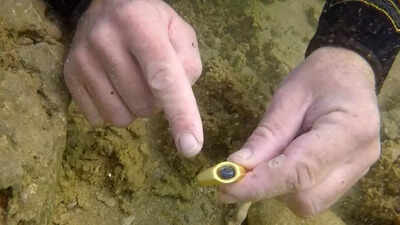
What lies beneath the Mediterranean Sea will surprise you: ancient shipwrecks reveal gold, coins and forgotten history. world News
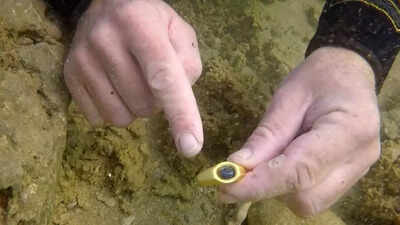
Two ancient shipwrecks lie under a few meters of water near the coast of Caesarea, providing insight into what happened in the past regarding the use of ships. The discovery, made near the Mediterranean Sea, included valuable gold, coins and other objects from two different periods of history. The findings show that both of these shipwrecks can be traced back to the Roman and Mamluks eras, both periods separated by more than a thousand years. The environment played a role in the discovery as sand shifted and covered the remains over time.
Coins from Mediterranean shipwreck in shallow waters reveal ancient trade routes
According to the Armstrong Institute, two pieces of the ship were found at a depth of about four meters in a coastal area known for choppy sea conditions. This part of the Mediterranean coast has long been exposed to seasonal storms and strong wave activity, making navigation and anchoring difficult. Archaeological assessment suggests that both ships may have been anchored offshore when adverse weather conditions increased. Anchoring in shallow, open water without natural harbor protection increased the potential for structural damage. Over time, wave forces and sediment movement contributed to the fragmentation of the vessels. Changing sea level played an important role in both the preservation and redistribution of the remains, allowing the artifacts to remain partially buried until recent exposure.The discoveries include a considerable amount of money dating back approximately 1,700 years and some dating back approximately 600 years. Many of these coins are from the Mamluk period, made of silver. The money was not kept in any container but was found spread under the seabed. This suggests that the ships probably broke up during the wreck, causing items to scatter everywhere. Findings of money from many different periods show that the area saw much trading activity throughout time. This is consistent with history that depicts this eastern region as a commercial artery in ancient times.
Personal artifacts highlight the presence of individuals on the board
In addition to cargo, personal artifacts were also found, which serve as evidence of the people aboard the ships. One of the artefacts discovered is a red stone with an engraved harp, which was probably used for the Gemma ring. This symbol is believed to be associated with the culture and religion of Kinor David. Other artefacts discovered include bronze bells, ceramic vessels and miniature figurines. These appear to have been personal artefacts of passengers or members of the ship’s crew.
Ancient gold ring with Good Shepherd symbol highlights early Christian identity and symbolism
Perhaps one of the most interesting artifacts found was an octagonal gold ring with an emerald stone, engraved with a depiction of the “Good Shepherd” with sheep. This can be interpreted as a reference to early Christianity, and the artwork is an allusion to the “Good Shepherd”, indicating protection and guidance from a higher power. This discovery gives us information about early religious practices in the area and adds cultural value to such an object. Thus, the importance of artifacts goes beyond not only physical characteristics, but also cultural value.The second artifact includes some objects that indicate the use and design of the ship. Objects such as an iron anchor, lead pipes (possibly part of the bilge pump system), a bronze eagle and a dramatic mask were found. These objects provide information about the practical design of the ships as well as the cultural setting of the people who used them. Thus, they represent not only the engineering aspect but also the culture aboard such ships.
Artifacts from Roman and Mamluk shipwrecks reveal maritime history
Both shipwrecks represent different events that occurred in the same coastal area but during different historical periods. The combination of Roman and Mamluk artefacts within a shared area highlights the long-term use of this sea route. The recovered material collectively documents trade patterns, navigation risks and the presence of individuals engaged in seafaring activities. The shallow depth of the site and the influence of environmental conditions contributed to both the preservation and eventual discovery of the artifacts. These findings provide a structured record of marine history, supported by physical evidence obtained directly from the sea floor.
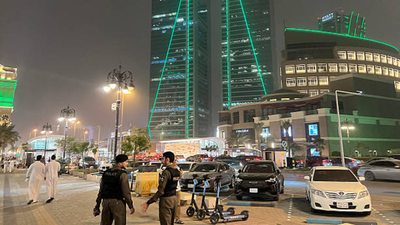
Massive crackdown in Saudi Arabia: Over 14,000 illegal residents arrested in a week world News
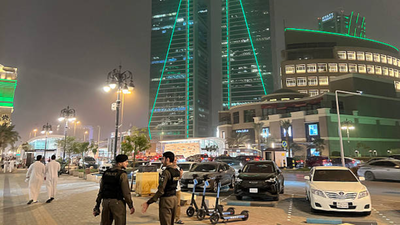
Saudi Arabian security forces have detained thousands of illegal residents in a nationwide crackdown, as authorities stepped up enforcement of residence, labor and border rules, while warning of severe penalties for anyone found aiding violators. The interior ministry said a total of 14,242 persons were arrested during joint surveillance operations conducted between March 26 and April 1 in coordination with multiple government agencies. The arrests covered a wide variety of violations, including 7,884 related to residency law violations, 3,948 related to border security law, and 2,410 related to labor law. Authorities also outlined follow-up actions taken following the arrest. A total of 23,815 violators were sent to their diplomatic missions to secure travel documents, while 6,808 were directed to complete their travel bookings. In addition, 6,285 persons have already been deported. Border enforcement remained a major focus during this period. Officials said 1,449 people were detained while attempting to enter the state illegally. Of these, 27 percent were Yemeni nationals, 71 percent were Ethiopian nationals, and the remaining two percent were from other nationalities. 29 other individuals were arrested while trying to leave the country illegally. Those supporting illegal residence were also targeted in the action. Security forces arrested 25 individuals on charges of providing transportation, shelter or employment to the violators. Meanwhile, a total of 36,365 migrants, including 32,309 men and 4,056 women, are currently undergoing legal processes as authorities move to enforce the rules. The Interior Ministry reiterated that strict penalties apply to anyone facilitating illegal entry or offering assistance to undocumented persons. These include prison sentences of up to 15 years and fines of up to SR1 million. Officials said vehicles used for transportation and properties used for shelter could also be seized. Members of the public have been urged to report violations through designated emergency numbers. The ministry advised residents to call 911 in Mecca, Riyadh and the Eastern Province, while 999 and 996 could be used in other areas of the kingdom.
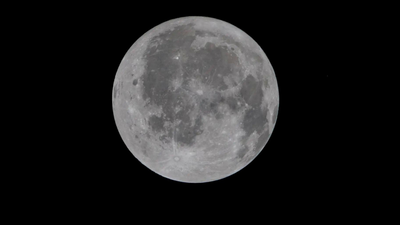
‘Best camera ever’: Artemis II crew will study the moon’s surface primarily with their eyes
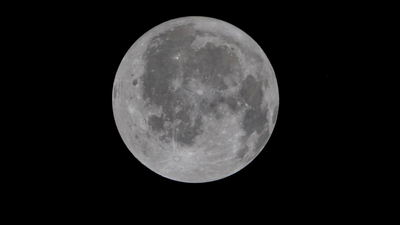
NASAOn a historic trip to the Moon, Artemis II astronauts will study the Moon’s surface with what lead scientist Kelsey Young calls “the best camera that has ever existed or will ever exist” – with their own eyes. Early Sunday, the four-member crew, consisting of three Americans, Commander Reed Wiseman, pilot Victor Glover, mission specialist Christina Koch and Canadian astronaut Jeremy Hansen, passed the “two-thirds” mark of their journey aboard the Orion spacecraft. They are expected to reach the moon on Monday and conduct a fly-around, photographing the far side of the moon during the mission. “The human eye is basically the best camera that has ever existed or will ever exist,” Kelsey Young, Artemis II’s lead scientist, told AFP. “The number of receptors in the human eye far exceeds the capacity of a camera.”Despite advances in imaging technology, Young said human vision is excellent at detecting subtle changes in color, context and lighting that reveal textures on the lunar surface. “Humans can understand how light changes surface details, such as how angled lighting reveals texture but reduces visible color,” he said.The crew underwent more than two years of rigorous training to become “field scientists”, including geological expeditions to Iceland and Canada, simulating a flight to the Moon, and memorizing the “Big 15” sites of the Moon. Using an inflatable Moon globe, the astronauts practiced observing how sunlight changes the colors and textures of the surface, and refined their skills at taking detailed notes.Noah Petro, head of NASA’s Planetary Geology Laboratory, said the moon would appear to astronauts to be “about the size of a basketball held at arm’s length.” “The question I’m most interested in is whether they will be able to see colors on the moon’s surface,” he said, referring to the light gray and brown colors that indicate composition and history.David Kring of the Lunar and Planetary Institute played down expectations of major discoveries, but emphasized the historic nature of the observations. He said, “Astronauts describing what they’re seeing…it’s a phenomenon that at least two generations of people on Earth have never heard of before.”Artemis II was launched on April 1 from Kennedy Space Center’s Launch Complex 39B atop a NASA Space Launch System rocket. This mission, the first manned Moon visit in more than 53 years, advances NASA’s Artemis program, which aims for sustainable lunar exploration and the last manned mission to Mars.
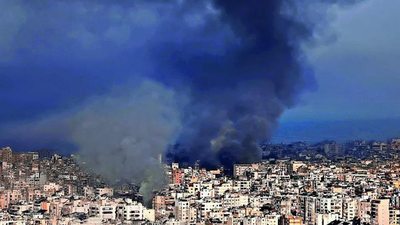
Iran drone attack on US embassy in Saudi Arabia hits CIA station: Report | world News
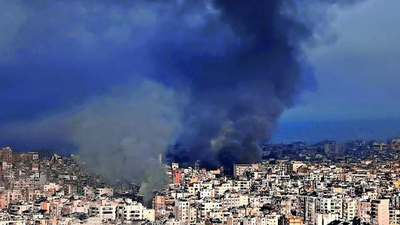
An Iranian drone attack on the US Embassy in Saudi Arabia last month caused far more damage than officials in the kingdom had previously anticipated and dealt a major blow. Central Intelligence Agency (CIA) facility within the complex, according to a latest report by The Wall Street Journal citing current and former US officials.The attack occurred in Riyadh on March 3, when a drone breached the air defenses protecting the Saudi capital’s diplomatic quarter and struck the US compound. Officials said a second drone arrived shortly afterward, flew into the crack created by the first drone, and exploded.
The attacks took place around 1.30 am and targeted a secure part of the embassy compound. According to officials, three floors were heavily damaged and areas including the Central Intelligence Agency (CIA) station were affected. While Saudi officials initially described the incident as causing only minor material damage and limited fire, sources told The Wall Street Journal that the fire lasted about half a day and that parts of the embassy could not be repaired. No injuries were reported, but officials said that if the attack had occurred during working hours and been stopped in time, it could have resulted in mass casualties.Additional drones were intercepted later that night, including debris falling near a preschool. A drone is believed to have targeted the residence of the most senior US diplomat in Saudi Arabia.Bernard Hudson, former CIA counterterrorism chief, said, “It was able to produce a weapon indigenously, fire it hundreds of miles, and put it into the embassy of their top rival, which meant they could hit whoever they wanted in the city.”“The true extent of the damage caused at these locations has been completely highlighted,” he said. “This raises suspicions that much damage may actually have been caused.”The incident is part of a broader escalation in which Iran and allied groups have targeted US diplomatic and military sites across the region. Embassies and consulates in Baghdad, Dubai, Kuwait City, Riyadh and Erbil have faced missile or drone attacks, although none resulted in American deaths.The US State Department said it did not disclose specific security measures but confirmed it was monitoring threats in Saudi Arabia and advised citizens to avoid places associated with Americans.The broader conflict involving Iran, the United States and Israel, which began on February 28, has now entered its second month, raising tensions across the Middle East and raising concerns of broader regional escalation. The confrontation began with joint US-Israeli attacks on Iranian military and security infrastructure, after which Tehran retaliated with missile and drone attacks on US targets in the Gulf and other regional bases, leading to sustained exchanges between the two sides. Not just Riyadh, US embassies and consulates in Baghdad and Erbil in Iraqi Kurdistan have also been targeted, with attacks reported near US diplomatic facilities amid the ongoing conflict. According to multiple reports, similar threats and attack attempts have spread across the Gulf, including in Kuwait and the United Arab Emirates.
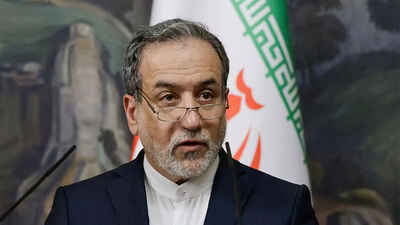
‘Serious threat of radioactive contamination’: Iran’s Foreign Minister writes to UN on Bushehr nuclear attacks
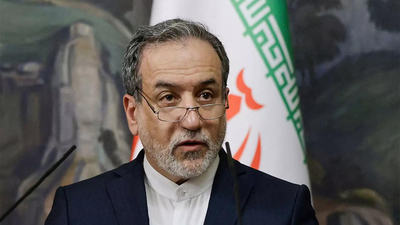
Iran’s Foreign Minister Abbas Araghchi has written a letter to UN Secretary-General Antonio Guterres in response to the recent US-Israeli attacks targeting Tehran’s Bushehr nuclear power plant.In his letter, Araghchi wrote: “Repeated attacks by attackers in the vicinity of the active Bushehr nuclear power plant are a matter of great concern. They place the entire region at grave risk of radioactive contamination with serious human and environmental consequences.”This comes after a projectile attack near the perimeter of the Bushehr plant on Saturday, which killed a member of the site’s physical security staff and damaged a nearby building.Reports confirmed that while supporting structures were affected, there was no damage to the main plant and power generation.Araghchi stressed that the proximity of such attacks to an active nuclear facility creates an intolerable situation with the possibility of radiological releases. He stressed the need for international attention to prevent escalation around nuclear infrastructure.The International Atomic Energy Agency (IAEA), led by Director General Rafael Mariano Grossi, also expressed deep concern over the incident. In a statement shared on Twitter, the agency confirmed that this is the fourth attack near Bushehr in recent weeks.Grossi said, “Nuclear power plant sites and surrounding areas should never be targeted. Auxiliary buildings may contain critical safety equipment. Maximum military restraint is necessary to prevent a nuclear accident.”The IAEA confirmed no increase in radiation levels at the site and highlighted that attacks near nuclear facilities significantly increase the risk of potential accidents.The Bushehr incident is part of a series of recent attacks in the Middle East conflict. Iran, Israel and America are involved in this war that started on February 28.