Breaking News
“I’m afraid of them”: Twitch streamer FanFan faces backlash over viral comments on gay people

"i'm afraid of them": Twitch streamer FanFan faces backlash over viral comments on gay people
Twitch streamer Fiona “FanFan” has faced criticism after a viral clip appeared to show her joking about being “afraid” of gay people. While some fans defended her tone, calling it sarcastic, others called it insensitive. The controversy has reignited debate over the streamer’s accountability, especially as his past comments, including those regarding Kai Sennett, have resurfaced.

Twitch streamer Fiona’s “FanFan” is trending once again, but not for the reasons she might have expected. A recent livestream clip has drawn her into a heated online debate after she made comments about gay people that many viewers found uncomfortable, even though she was joking. Known for her unfiltered personality, FanFan has built a loyal following by saying things that others might avoid. However, this time the same spontaneity has given rise to a serious reaction.The clip quickly went viral and received views and comments on multiple platforms within hours. Some fans immediately came to her defense and said it was just ridiculous. Others disagreed, saying that jokes can also go too far. The moment has quickly turned into a larger discussion about what streamers say in live shows and how much responsibility they have when they’re in front of a lot of people.

What FanFan Really Said and Why People Are Divided Over It

The moment in question came during an April 5 stream when a viewer accused him of hating gay people. Fanfan responded with a mixture of laughter and sarcasm, saying:“No, I don’t hate gay people… Hate is a strong word… I hate them. I’m afraid of them.”He later added further context, saying:“(‘You hate gay people,’ one viewer said) No, I don’t hate gay people! I don’t hate gay people, I just… I don’t hate them, hate is a strong word. I hate them (laughs). I’m kidding! I’m just afraid of them (laughs). I don’t hate them.”Some people could tell by her tone that she was not serious. He said that his general style is often strange or extremely funny. But some people were not convinced. He said that even if it was meant as a joke, the words could still come across as rude.People have criticized Fanfan before also. He previously received a lot of attention in a segment with Kai Sennett and Sean “Diddy” Combs, which was widely debated online. Some critics say this new clip seems to be part of a pattern rather than a one-time thing.The nature of livestreaming is at the heart of it all. You can’t go back and change anything, and once a sentence is out you don’t have time to think about it again. That raw, immediate style is what makes streaming real. But it also means that every word matters.


Source link

UAE becomes world’s first ’10 Giga’ nation, launches ultra-fast U6GHz internet network. world News

UAE becomes world's first '10 Giga' nation, launches ultra-fast U6GHz internet network
UAE launches world’s first ultra-fast U6GHz internet network/Representative image

The United Arab Emirates has taken a major step forward in internet technology by launching the world’s first commercial upper 6GHz (U6GHz) network. The announcement was made during the SAMENA Council Leaders Summit 2026 led by the Telecommunications and Digital Government Regulatory Authority (TDRA).Simply put, this new network is designed to make Internet connections faster, smoother, and more reliable, especially as more people use data-heavy apps and services.

What is U6GHz?

The U6GHz band, which operates between 6425–7125 MHz, is often called the “golden spectrum” because it provides both strong coverage and high speeds. It sits in a range that can handle large amounts of data without slowing down.With this network, users can see speeds of up to 10Gbps for download and 1Gbps for upload under the advanced 5G technology. This means faster downloads, easier streaming, and better performance for apps that rely on real-time data, including apps powered by artificial intelligence.The new system is also expected to play a role in future 6G technology, making it a significant step forward rather than just a short-term upgrade.

why it matters

As more services go online and technologies like AI advance, the demand for faster and more stable internet is increasing. The U6GHz network is meant to handle this demand, providing low-latency and high-speed connectivity for both everyday use and advanced digital applications.The rollout is supported by global technology companies such as Huawei, Nokia and GSMA, as well as UAE telecom operators du and eend.There has been progress in development in the last few years. U6GHz spectrum was allocated for mobile services in 2024, followed by field trials in 2025, achieving speeds of up to 10Gbps. In 2026, the network has now gone into commercial deployment.

Source link

Journalist kidnapped: US confirms release of journalist Shelley Kittleson from Iran-backed militia in Iraq | world News

'Do not travel to Iraq': Trump aide warns US citizens amid terror attack warnings

American journalist Shelley Kittleson has been released after being kidnapped Iraq by the Iran-backed militia Kata’ib Hezbollah, US and Iraqi officials confirmed on Tuesday. Their release came after coordinated efforts by Iraqi authorities and US agencies including the State Department and the FBI.Kittelson, who was kidnapped in Baghdad in late March, was freed after about a week in captivity. Officials said efforts are now underway to ensure his safe return from Iraq, as militias reportedly required him to leave the country following his release.

Watch

‘Do not travel to Iraq’: Trump aide warns US citizens amid terror attack warnings

U.S. Secretary of State marco rubio Affirmed development and acknowledged the role of various institutions in achieving its independence. “The U.S. State Department appreciates the Federal Bureau of Investigation, the War Department, U.S. personnel from multiple agencies, the Iraqi Supreme Judicial Council, and our Iraqi partners for their assistance in securing his release,” Rubio said in a statement on Twitter.“We are relieved that this American is now free and are working to assist in his safe return from Iraq,” Rubio said.Their release is believed to be part of a wider arrangement involving Iraqi authorities and militia groups. Officials indicated that pressure from Iraqi leaders and possible concessions, including the release of detained militia members, played a role in securing their freedom.Kata’ib Hezbollah described the release as a gesture linked to Iraq’s outgoing prime minister, while emphasizing that it was a one-time decision. The Iran-linked group has previously been involved in attacks against US interests in the region.Kittelson, a veteran freelance journalist known for reporting from conflict zones in the Middle East, was kidnapped in Baghdad on March 31 when armed men stopped him on a street in the city. Her kidnapping raised international concern and highlighted the risks faced by journalists working in unstable areas.The incident occurred amid heightened regional tensions over Iran-backed militias in Iraq. Press freedom organizations and authorities welcomed their release, while reiterating concerns over the safety of journalists working in conflict zones.

Source link

Dubai Police Cycling Initiative: ‘Ride with the Police’: Dubai Police launches weekly cycling initiative at the Autodrome | world News

'Ride with the Police': Dubai Police launches weekly cycling initiative at the Autodrome
Dubai Police launches weekly cycling initiative at the Autodrome.

Dubai Police has launched a new cycling initiative that brings residents on the track with officers in a structured, fitness-focused setting. The program, called “Ride with Police”, began on Wednesday at the Dubai Autodrome in Dubai Sports City and will run every week until April. The sessions provide a controlled environment where participants can cycle safely while taking part in a community-led activity. The initiative is part of ongoing efforts to encourage healthy routines and promote active lifestyles through organized events. It also creates an informal space for residents to connect with police personnel apart from regular interactions. A key feature of the program is the participation of the Dubai Police professional cycling team. Participants can ride alongside trained cyclists, observe their techniques and interact directly with them, adding a practical dimension to the experience. By combining fitness with community engagement, the initiative is expected to encourage regular participation while strengthening relationships between residents and law enforcement.

Source link

There’s a hidden energy goldmine beneath this Kenyan town; Here’s how it powers a nation. world News

There's a hidden energy goldmine beneath this Kenyan town; Here's how it powers a nation

Nestled into the beautiful cliffs of the Great Rift Valley, Naivasha has become a beautiful lakeside destination and one of Africa’s leaders in renewable energy production. Taking advantage of geothermal energy produced by the volcanic forces found within Hell’s Gate National Park, Naivasha now serves as the primary anchor of Kenya’s energy security, generating approximately half of the country’s total electricity. This new source of energy – derived from the Earth – is a reliable, continuous, clean energy source, allowing the continued development of industries and the protection and preservation of the environment. Today, Naivasha is a model for other countries to emulate, as it can produce electricity for industrial activities without adversely impacting the surrounding wildlife and support one of the country’s major floriculture industries while protecting the national electricity grid from the effects of climate change.

How did Naivasha become the geothermal capital of Kenya?

Naivasha’s rise to its current status as the geothermal capital of the world began with the completion of the Olkaria I power plant in 1981; Therefore, Kenya is the first African country to harness geothermal steam from volcanic sources. According to a study published on the International Renewable Energy Agency (IRENA), being located on a major tectonic plate boundary gives Naivasha an advantage with respect to its thin continental crust and high thermal gradient; As a result, magma in the region heats underground aquifers to temperatures above 300 degrees Celsius. As a result, this unique location gives Naivasha the potential to produce approximately 900 megawatts (MW) of energy from the Olkaria Geothermal Complex, which is approximately 47 percent of Kenya’s total electricity consumption. The availability factor of geothermal energy (compared to solar or wind) is around 95 percent, thus making Naivasha the most reliable energy center in East Africa as it relates to electricity generation.

Geothermal direct-use in Naivasha

Naivasha’s geothermal success can also be seen in ‘direct-use’ applications outside the electricity grid. For example, Naivasha is the center of Kenya’s billion-shilling flower industry. According to the report titled ‘Sustainable Geothermal Power Generation and Heating of Greenhouses and Spas in Kenya’s Rift Valley’ published by the United Nations, geothermal steam is used to heat large greenhouses at controlled ambient temperatures, allowing year-round production of roses and eradicating significant amounts of fungal disease while being able to use less expensive energy sources such as fossil fuels. Additionally, a 1,000-acre Special Economic Zone (SEZ) is located in Naivasha, where producers access subsidized geothermal energy at rates significantly lower than current market costs; For example, they can manufacture the goods at a rate of about 7 US cents ($0.07) per kilowatt hour (kWh), compared to the current market rate of about 0.18 cents per kilowatt hour (kWh).

From waste water to giant spa: Africa’s largest natural pool

According to UNESCO, one of the key distinguishing features of Naivasha’s geothermal identity is the fact that it is located inside Hell’s Gate National Park. This requires advanced engineering techniques that limit environmental impact. Large mammals such as giraffes and buffalo can be found roaming freely among power generation infrastructure due to the use of low-profile pipelines and silent turbines.Additionally, mineral-rich brine produced as a byproduct of steam production is being used to fill Africa’s largest natural health spa, the Olkaria Geothermal Spa, significantly increasing eco-tourism revenues for the surrounding area.

The 5,000 MW dream: empowering Kenya’s Vision 2030

In terms of technological achievements, Naivasha’s contribution to geothermal energy production in Kenya from 2024 to 2026 ranks 6th in the world. According to the US Department of Commerce, the Government of Kenya has set an ambitious target of adding an additional 5,000 megawatts (MW) of power generation capacity in Naivasha under its Vision 2030 program. The Geothermal Development Company (GDC), a state-owned company that offloads the risks of drilling to private investors, will therefore contribute to making Naivasha a lead driver in enabling Kenya to achieve its 100 percent renewable electricity grid target.

Source link

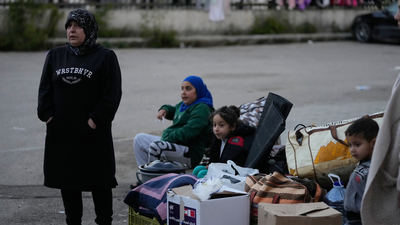
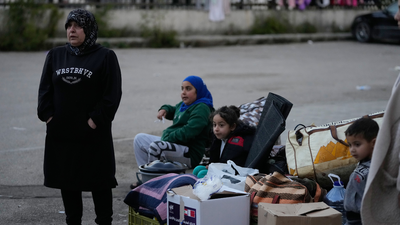
Middle East Crisis: Despite US ceasefire agreement, tension continues in the Middle East; Israel says deal is limited to Iran

Tension continues in Middle East despite US ceasefire agreement; Israel says deal is limited to Iran
Ceasefire just in name? Gulf countries played siren (AP Photo)

Missile alert sirens sounded in several Middle Eastern countries early Wednesday, despite Iran and the United States saying they had reached a two-week ceasefire in the war. Despite diplomatic efforts, fighting continued on multiple fronts. In Abu Dhabi, a gas processing facility was set on fire after incoming Iranian strikes, officials said. It was not immediately clear which targets were hit in Israel, which has faced frequent missile and drone attacks throughout the conflict.

Watch

‘Not all goals achieved in Iran’: Israel’s big confession; Netanyahu angry with Tehran ceasefire?

Alerts were also reported in Saudi Arabia, Bahrain and Kuwait, highlighting the confusion and instability surrounding the ceasefire.Iran’s paramilitary Revolutionary Guard has directed most of the war, with field commanders reportedly deciding on attacks independently, raising doubts over whether all forces are complying with the ceasefire.Observers say that in many conflicts in the Middle East, attacks are often launched at the last minute before a ceasefire has fully taken effect, allowing the sides to claim an advantage.The ceasefire, involving Iran, the United States and Israel, was aimed at preventing a war that has destabilized the region and disrupted global energy markets. However, questions quickly emerged over its terms and implementation.Iran has insisted it will maintain control over the Strait of Hormuz and continue uranium enrichment, which are major sticking points for Washington. US President Donald Trump initially described Iran’s proposal as ‘viable’, later calling it a ‘fraud’, while saying that ending Iran’s nuclear program is a key objective.Israel has supported the ceasefire but clarified that it does not apply to the ongoing conflict with Hezbollah in Lebanon. Pakistan, which has acted as mediator, said the ceasefire took effect immediately and further talks could begin soon in Islamabad – a claim contradicted by continued attacks.In Tehran, pro-government protesters took to the streets after the announcement, chanting slogans against the United States and Israel and rejecting any agreement.Under the proposed terms, Iran would allow passage through the Strait of Hormuz under military surveillance and, along with Oman, would potentially charge transit fees on shipping. Tehran has also demanded the withdrawal of US forces from the region, relief from sanctions and access to frozen assets.Even as the United States halted offensive operations, both Iran and Israel appeared to continue military actions. Recent attacks have targeted infrastructure, including oil facilities and transportation networks, worsening economic and geopolitical tensions.

voting

What is the most important issue affecting the ceasefire agreement?

With casualties rising and missile alerts still in effect in Iran, Israel, Lebanon and the wider region, the ceasefire remains fragile and its future uncertain.

Source link

Donald Trump: From the brink to the rescue: Trump’s Iran pivot buys time, not trust

From brink to relief: Trump's Iran pivot buys time, not confidence
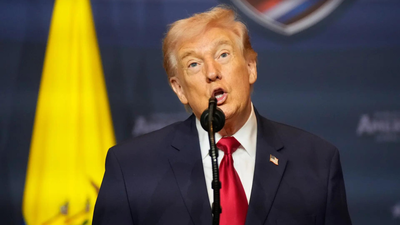
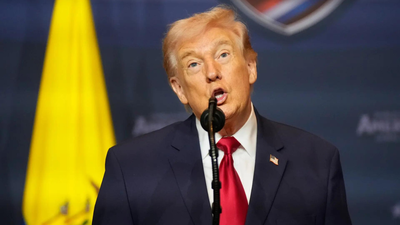
US President Donald Trump

TOI correspondent from Washington: In a sudden turn that pulled the world back from the brink of apocalyptic attack, the United States and Iran have entered into a fragile two-week ceasefire after days of escalating attacks and threats, providing a narrow window for diplomacy to achieve Middle East peace amid residual mistrust and suspicion. Ceasefire declared by US President donald trump Just two hours before his 8pm deadline to “annihilate Iranian civilization”, the move marks a welcome – if chaotic – deceleration in a months-long conflict that has seen global oil prices surge 60% and the world economy boom. However, questions remain about whether the ceasefire, put together through a mix of public signaling and backchannel contacts, is a genuine turning point or merely an intervention in the volatile confrontation.As can be understood from official statements and diplomatic sources, the framework of the ceasefire is limited but significant. Based on a 10-point proposal drafted by Tehran, which Trump initially dismissed as inadequate but now says forms a “viable basis” for talks to be held in Islamabad on Friday, it would involve both sides halting direct military attacks and demobilizing allied or proxy forces for a period of 14 days. Maritime activity in and around the Strait of Hormuz is expected to continue under close monitoring, with informal assurances against interference with commercial shipping. However, no formal written agreement has been released publicly, and key details – including enforcement mechanisms and verification – remain opaque.The breakthrough came not from the United Nations or traditional European mediators, but through intense backchannel negotiations by Pakistan, whose Prime Minister Shehbaz Sharif and army chief Asim Munir reportedly engaged US Vice President JD Vance and Iranian Foreign Minister Abbas Araghchi to end the temporary ceasefire.“On the basis of conversations with Prime Minister Shehbaz Sharif of Pakistan and Field Marshal Asim Munir, and in which they requested that I stop the destructive force being sent into Iran tonight, and subject to the Islamic Republic of Iran agreeing to the full, immediate and safe opening of the Strait of Hormuz, I agree to suspend the bombing and attack on Iran for a period of two weeks. This will be a two-way ceasefire!” Trump said in a social media post, presenting himself as a liberal winner. Although he claimed that the reason for agreeing to the ceasefire was because “we have already met and exceeded all military objectives, and are very far from a definitive agreement related to long-term peace with Iran and peace in the Middle East,” Trump acknowledged receiving a 10-point proposal from Iran, which he said “is a practical basis for negotiating.” “Almost all of the various points of previous dispute between the United States and Iran have been agreed upon, but in a two-week period the agreement will be finalized and completed,” he wrote. But that spin was contradicted by an Iranian statement issued through the Tasnim news agency (the semi-official voice of the IRGC), the authenticity of which Trump disputed. The statement congratulated the Iranian people for “forcing the criminal US to accept its 10-point plan”, calling the ceasefire conditional and reversible, while warning that any violations would be met with a “decisive response”.Trump pointed to a statement by Iran’s foreign minister, dismissing the statement as a “hoax” and “fake news spread by CNN.” Part of the confusion appears to have arisen from overlapping and potentially divergent signals within Iran’s own leadership. Statements attributed to its Foreign Ministry struck a somewhat conciliatory tone, stressing the importance of dialogue and indicating readiness for structured talks. This has fueled speculation about a possible rift between Iran’s diplomatic apparatus and the more radical clerical and security establishment that ultimately holds authority. The diplomatic center of gravity of the ceasefire has now shifted to Islamabad, where talks are scheduled to take place on Friday. However, Pakistan’s role has also not been without controversy. Some commentators have suggested that Sharif and Munir effectively acted as “wingmen” for Trump, helping to bring about a pause that allows the US President to back down from earlier threats without having to back down under pressure. Critics point to the president’s past warnings about excessive force – including rhetoric calling for the destruction of Iranian civilization – as evidence of an overreach that requires a diplomatic off-ramp. In this reading, the ceasefire serves as a face-saving mechanism rather than a negotiated settlement. The social media post showed an edited history of Sharif’s statement to show that he was posting messages directed at her, prompting the day’s events.Trump surrogates reject such characterizations, insisting that the pause reflects strength and strategic discipline rather than a concession. Yet the optics remain controversial, especially in light of growing commentary in political and media circles around the so-called “TACO” label – “Trump Always Chickens Out”. Although such satires are not part of the formal policy discussion, they underscore the domestic dimension of the narrative battle surrounding the ceasefire.

voting

Do you believe that the recent ceasefire between the US and Iran can bring lasting peace to the Middle East?

The situation in Israel adds another layer of complexity. Officials in Israel have not publicly opposed the ceasefire, but nor have they explicitly endorsed it, while indicating cautious acceptance as long as it does not hinder their ability to take action against perceived threats. At the heart of the upcoming talks in Pakistan are several unresolved issues that will determine whether the ceasefire can turn into something more durable. These include the scope of sanctions relief, the future of Iran’s nuclear program, the role of a regional proxy, and security guarantees for maritime traffic. Diplomats will be watching for signs of coherence in Iran’s negotiating position, particularly whether the State Department’s tone is in line with broader leadership.

Source link

The world’s most mysterious lakes which do not meet the sea and are becoming natural ‘dead ends’ of water. world News

The world's most mysterious lakes which do not flow into the sea and are becoming natural 'dead ends' of water

Lakes are often thought of as calm bodies of water with clear inflows and outflows, part of a continuous cycle that eventually connects back to the ocean. Some lakes are located in closed valleys where water enters but never leaves through rivers or streams. These are known as endorheic lakes. Water simply collects, then slowly disappears through evaporation. It sounds simple, yet the behavior of these lakes is quite different from normal freshwater systems. Many of them are large, highly saline, and shaped by climate more than anything else. Some are famous across continents, and each tells a slightly different story about geography, isolation and environmental balance.

From Caspian Sea to Lake Chad: endorheic lakes of the world who never reach the ocean

Caspian Sea

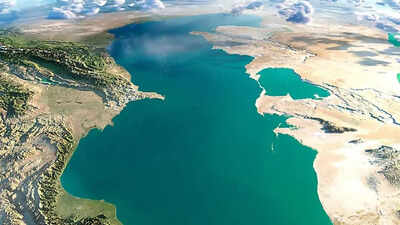
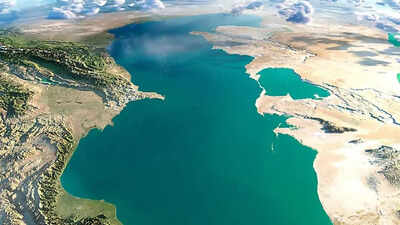
The Caspian Sea is reputed to be the largest endorheic lake on Earth. Despite its name, it is landlocked and has no direct connection to the sea.It is bordered by several countries including Kazakhstan, Russia, Azerbaijan, Turkmenistan and Iran. It extends for hundreds of miles and reaches great depths in some areas. The lake receives large inflows from rivers such as the Volga. This constant supply helps maintain its volume, even though evaporation remains a strong opposing force.Its ecosystem is diverse. Fish species, seals and migratory birds all depend on it. Additionally, pressures such as pollution, fishing and changing river flows continue to affect its condition.

Balkhash Lake

Lake Balkhash is another major endorheic lake located in Kazakhstan. Its structure is quite unusual. One side has fresh water, while the other side is more salty.This difference comes from geography. The lake is divided by a narrow expanse of land, and the flow of the Ili River mainly nourishes one section. The second section experiences more evaporation and less replenishment. Over time, human activity has affected its balance. Water diversion and upstream use have reduced flow levels. Reports suggest that this has contributed to increased salinity in some parts of the lake.It freezes during the colder months, which adds another layer to its seasonal behavior. The lake is not at all stable but varies with rainfall, river flow and temperature cycles.

lake chad

When talking about shrinking lakes, Lake Chad is often discussed. It is located in Central Africa and serves as an important water source for surrounding communities.In earlier decades, the lake covered a much larger area. Today, its size fluctuates greatly depending on rainfall and the flow of rivers such as Chari. Experts say a combination of low rainfall, water use and population pressure has contributed to the decline. Agriculture and irrigation utilize huge amounts of its resources. Also, climate variability affects its recharge.

Lake Titicaca

Lake Titicaca is located high in the Andes Mountains between Bolivia and Peru. It is one of the highest navigable lakes in the world. Its rise is remarkable and so is its cultural importance. Indigenous communities have lived around it for centuries. The lake supports agriculture, fishing and tourism.Although a small outflow is present, the system behaves largely like an endorheic basin. Much of its water balance depends on rainfall, river flow and evaporation.The environment around it is relatively stable compared to some other endorheic lakes. Nevertheless, there remain continuing demands on resource use and tourism in the area.

Great Salt Lake

The Great Salt Lake in the United States is known for its high salt concentration. It is one of the saltiest large bodies of water in the world. It was formed as the remains of a very large prehistoric lake. Over time, the climate changed and the water body reduced to its present size. What remains is shallow and highly mineralized.Due to the salinity level no fish can survive in its waters. Instead, special microorganisms and some bird species thrive around it. The islands within the lake support wildlife such as bison and antelope.Water flows from many rivers, but evaporation dominates. The size of the lake varies depending on seasonal conditions, although its salty nature remains constant.

What makes endorheic lakes different from other lakes?

An endorheic lake forms in a drainage basin that has no outlet to the sea. Water flows from rivers, rain or melting snow, but it has nowhere else to go. It remains stored until it evaporates. This process leaves behind minerals and salts. Over time, these build up. This appears to be one of the main reasons why many endorheic lakes are saltier than normal freshwater lakes.

Source link

How rain turns the salt desert in Bolivia into the world’s largest mirror world News

How rain turns the salt desert in Bolivia into the world's largest mirror

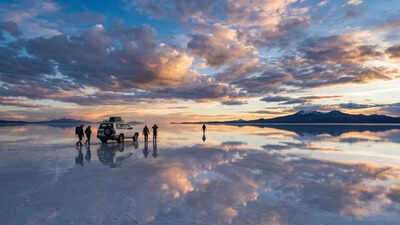
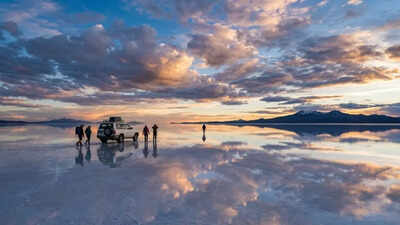
The Salar de Uyuni – the contiguous remains of an ancient lake that covered an area of ​​more than 10,000 square kilometers in the Andes of Bolivia, South America – is now a vast and flat white salt pan. During the rainy season, when water collects on the impermeable crystalline layer of the salt pan and forms a large shallow pool, a natural mirror is formed. The resulting natural mirror reflects the sky below as if it were flat – almost perfectly; Thus, space agencies use these flats/pools to test their satellite altimeters. Besides being beautiful, this natural mirror is also located right above a large salt water body with high levels of lithium; Therefore, the Salar de Uyuni symbolizes a unique intersection of a geological phenomenon, an atmospheric phenomenon and today’s technology.

How the Salar de Uyuni in Bolivia became the world’s largest natural mirror

The extreme flatness of the Salar de Uyuni, which has an elevation change of less than 1 meter over its 10,582 square kilometer area, enables it to turn into a completely flat surface. During the rainy season (December to April) the surrounding mountain runoff floods the area, creating a thin layer of uniform water due to the impermeability of the salt layer and the completely flat ground. That is, the water layer is very shallow (a few centimeters thick), forming a liquid lens that reflects the sky and clouds, creating a uniform horizon.

Why are NASA and ESA looking to Bolivia to fix their satellites?

The natural mirror of the Salar de Uyuni is additionally very large and chemically stable. As a result, it is essential to the science of space-based observations of the Earth. For example, NASA and ESA satellite vehicles use the flooded Salar de Uyuni to calibrate the satellite’s radar and laser altimeters. Additionally, because the water surface is an ideal ‘level’, and is highly reflective, scientists can compare satellite measurements against accurately surveyed terrestrial elevations of the flat to verify data accuracy; Therefore, the Bolivian Desert is a very important geologic benchmark for satellite sensors in measuring sea level changes and Earth’s ice sheet changes.

40,000 years of change: how ancient lakes became modern mirrors

The mirror effect is the culmination of 40,000 years of geological history. The Salar de Uyuni was formed by the evaporation of several ancient lakes such as Lake Minchin and Lake Tauca. As these lakes dried up from the high-altitude Andean sun, they left behind large amounts of sodium chloride and other minerals. Beneath this white layer is a huge deposit of lithium-rich salty water. During the rainy season the high concentration of minerals in the water increases the density of the salty water, which suppresses the waves creating a still reflection for visitors today.

Why is thin air ideal for reflection?

Located 3,656 meters above sea level, the dry air of the Altiplano has remarkably low humidity, and this is the key to the mirror’s clarity. With minimal water vapor and pollution in the atmosphere, light can pass through with little scattering due to the absence of aerosols and moisture. When the water is completely calm, a whitening effect emerges, blurring the line between earth and sky.This phenomenon is caused by the specular reflection of sunlight from the smooth surface of water, which is reflected at a consistent angle, creating a celestial dome directly beneath the observer’s feet.

Source link

“The President killed Charlie”: Candace Owens sparks outrage with explosive claim about Charlie Kirk murder

"the president killed charlie": Candace Owens sparks outrage with explosive claim about Charlie Kirk murder
Candace Owens sparked controversy after making claims, questioning the narrative and receiving strong reactions online, related to the murder of Charlie Kirk. His comments drew a sharp response from critics, who accused him of spreading unverified theories. The debate quickly escalated, exposing deep political divisions and focusing renewed attention on the circumstances surrounding Kirk’s death.

The war of words over rising US-Iran tensions has taken a sharp and personal turn. As the deadline on the Strait of Hormuz approaches, political rhetoric is no longer limited to official statements. Voices from outside government circles are emerging and some are going further than measured criticism. Among them, Candace Owens has sparked fresh controversy with comments directly aimed at donald trump.His comments come at a moment of high global concern. With Iran refusing to back down and threats increasing, the story is rapidly changing. Public figures are now shaping policy as well as perception. Owens’s statements have not only raised questions about leadership but also sparked broader debate about loyalty, influence and the costs of political decisions.

Backlash over Candace Owens’ comments as Donald Trump toughens Iran stance

Owens responded strongly to the evolving situation and drew strong comparisons between Iran’s leadership and Donald Trump’s approach. “The Iranian President tweets that he is willing to sacrifice his life for his people,” he wrote, citing statements by Iranian President Massoud Pezeshkian. He then compared his view of Trump’s priorities, saying, “Donald Trump was willing to sacrifice charlie kirk And is willing to sacrifice every American life and livelihood for Greater Israel,” before ending with the sharp question, “Who then is the beast?”The comments immediately caught fire and sparked sharp reactions across political parties. Trump’s supporters strongly objected, arguing that Owens’ claims lacked evidence and crossed a line. Among the most vocal critics was Laura Loomer, who accused Owens of being against American interests. Loomer wrote, “Candace Owens is defending the Iranian regime over the United States. She said with zero evidence that President Trump killed Charlie Kirk and said Trump is an animal,” while also raising concerns about possible foreign influence.This underlines the fragmented nature of conflict discourse. On the one hand, opponents are raising doubts about the dangers associated with an aggressive foreign policy. On the other hand, supporters are calling such criticism dangerous and misleading. As tensions in the Middle East continue to worsen, the volume of such accounts will continue to increase.So far, the political backlash continues to grow. What started as a geopolitical standoff is also becoming a war of perception and words are as powerful as actions.

Source link