Breaking News
IshowSpeed ​​Baby Prank: Fact Check: Is IShowSpeed ​​Having a Baby? Truth behind viral livestream claim about daughter and leaving YouTube

Fact Check: Does IShowSpeed ​​Have a Baby? Truth behind viral livestream claim about daughter and leaving YouTube
Fact Check: Does IShowSpeed ​​Have a Baby? The truth behind the viral livestream claim about daughter leaving YouTube (Image via Getty)

iShowSpeed ​​confused fans this week by talking about having kids and leaving YouTube. At first many people believed him. But the truth is simple. He was joking. This entire moment was part of an April Fool’s Day prank on April 1, 2026. During the 13-minute livestream, Darren Watkins Jr., better known as iShowspeed, held what looked like a child and spoke very seriously. He told viewers that he had become a father and wanted to delete his YouTube channel, which has more than 51.8 million subscribers. It seemed genuine from his tone, and fans immediately started reacting online.But near the end of the stream, everything changed. She dropped the “child”, who turned out to be a doll, and revealed the truth. This was all a prank. Some child. no goodbye. Just a joke for April Fool’s Day.

iShowSpeed ​​surprises fans story of fake child And claims to have been kicked out of YouTube during an April Fool’s livestream

Darren Watkins Jr. spoke in an emotional tone during the livestream, which made many people believe him. He said,“I’m going to delete my YouTube channel, brother. You all think I’m playing, brother? I’m sorry, chat, but I can’t do all this anymore, brother. I never told you all this. I never told you all, brother. I never told you all, but, chat, eight months ago, I got pregnant with a girl, brother. Eight months ago I got pregnant with a girl. Yes. Eight months ago I got pregnant with a girl, and I had a baby. I had a child, and I had a daughter.”

Watch

I’m leaving YouTube💔

He continued to talk about growing up and wanting to be a father. He said,“I feel like I’ve done everything, Chat. Like, I want to start a family. I want to be a dad. You know? Chat, I want to be a dad. I want to start a family. I want to take these with me. Chat, don’t you feel like sometimes in life it’s time for a change? You know, Chat, I feel like sometimes in life… it’s time for me to grow up.” Because of his voice being so serious, many fans thought it was real news.iShowSpeed ​​reveals prank while Slipz and WWE moment add to April Fool’s chaosAfter about 13 minutes, Darren Watkins Jr. suddenly dropped the baby doll and said, “April Fools! Green apples!” That one moment made everything clear. The child’s story was false. The channel was not being deleted. This was all planned as a prank.His cameraman and friend Slipz also joined in the fun. On X, Slipz posted a message stating that he was leaving the team. He thanked fans and wrote about his journey, making it seem emotional and final. But this was also part of April Fool’s jokes.Far from being a joke, IShowSpeed ​​has also been in the news for something real. Recently, he accidentally helped The Vision win the WWE World Tag Team Championship during Monday Night RAW. That moment fueled his growing presence outside of YouTube as well.

Stay updated with our live blog for minute-by-minute coverage israel iran war Including breaking news, missile attacks and the latest updates on the Middle East crisis

Source link

Who is Randy George? US Defense Secretary Pete Hegseth asks Army Chief General to step down

Who is Randy George? US Defense Secretary Pete Hegseth asks Army Chief General to step down

US Secretary of Defense pete hegseth Army Chief of Staff General Randy George has been asked to step down and take immediate retirement, CBS News reports.Hegseth reportedly wants someone in the role who will fully implement his and President Trump’s vision for the military. “We are grateful for his service, but it was time for a change of leadership in the military,” a senior Defense Department official told CBS News.George is a West Point graduate and career infantry officer who has served in the Army for decades. She was commissioned in 1988 and deployed during Operation Desert Shield, Desert Storm, Operation Iraqi Freedom, and Operation Enduring Freedom. Before being appointed Army Chief, George served as the Vice Chief of Staff from 2022 to 2023 and Senior Military Assistant to US Defense Secretary Lloyd Austin from 2021 to 2022 during the Biden administration.George was nominated for the post of Army Chief by the then US President Joe Biden And it was confirmed by the Senate in 2023. The normal tenure of four years will keep him in the post till 2027.The current vice chief of staff, Gen. Christopher LaNave, who previously served as military aide to Hegseth and commanding general of the Army’s 82nd Airborne Division from 2022 to 2023, will serve as acting Army chief of staff. Chief Pentagon spokesman Sean Parnell said Laneway “is a battle-tested leader with decades of operational experience and Secretary Hegseth trusts him completely to carry out this administration’s vision without mistake.”Hegseth has previously fired more than a dozen senior military officers. The decision to remove George was not related to a recent incident in which Hegseth overruled the Army’s suspension of the flight crew that flew over the home of American artist Kid Rock in Nashville. Following the suspension and administrative review, Hegseth wrote on his personal X account, “No punishment. No investigation. Move over, patriots.” George’s expulsion was independent of this incident.

Stay updated with our live blog for minute-by-minute coverage israel iran war Including breaking news, missile attacks and the latest updates on the Middle East crisis

Source link

UK police search for anonymous letter writer to solve 13-year-old mystery of mother and five children’s deaths in house fire

UK police search for anonymous letter writer to solve 13-year-old mystery of mother and five children's deaths in house fire

An anonymous handwritten letter has given new impetus to a 13-year-old investigation into a devastating house fire in Harlow, England, that killed a mother and her five children. Police say the letter contains “many details” that could be important in solving the case, but they are urging the author to come forward so the information can be properly verified and taken forward.The incident occurred in October 2012, when a fire broke out in a family’s house in the early hours of the morning. Dr Saba Usmani, 44, and her five children aged three to 12 years lost their lives in the fire.Her husband, Dr. Abdul Shakur, was the only survivor and tried his best to alert his family and escape the inferno.

Police appeal to ‘unwilling witness’

Leading the investigation, Detective Chief Inspector Lewis Metcalfe said the letter appeared to have been written by someone struggling with the burden of withholding vital information.“The author references the ‘nightmare’ of not feeling able to share something even after knowing it,” she said, making a direct appeal to the person to come forward with confidence. Police have assured that the man will be treated appropriately and that his information could be vital in bringing those responsible to justice.

Despite extensive investigation, the case still remains unsolved

The investigation, known as Operation Shakespeare, involved more than 70 officers, almost 500 witness statements and around 2,000 pieces of evidence. Despite this extensive effort, no one has ever been charged.Earlier findings were inconclusive, with a coroner saying there was insufficient evidence to determine whether the deaths were accidental or unlawful.

Suspicious circumstances are being investigated

Investigators have long considered the fire a suspected arson attack. At the same time, a car was found burning near the house, which increased the suspicion. Over the years, several clues have remained unsolved, including a mysterious phone call, unidentified persons seen near the scene, and items missing from the house.

failure in initial investigation

The investigation also faced early challenges, with key forensic evidence reportedly mishandled or destroyed, limiting the ability to draw definitive conclusions. Experts later raised concerns about how important samples were collected and preserved.Police believe the answers still lie within the local community. The recent letter has strengthened his belief that someone knows what happened.“For too long, the family has been living without answers,” Metcalfe said. “This could be the breakthrough we’ve been waiting for.”Authorities continue to urge anyone with information, particularly the anonymous letter writer, to come forward and help solve one of Britain’s most horrific unsolved cases.

Stay updated with our live blog for minute-by-minute coverage israel iran war Including breaking news, missile attacks and the latest updates on the Middle East crisis

Source link

Columbia disaster: How ‘suitcase-sized’ piece of foam ruined NASA mission

Columbia disaster: How 'suitcase-sized' piece of foam ruined NASA mission

On February 1, 2003, the Space Shuttle Columbia crashed while returning to Earth’s surface, resulting in the death of seven crew members aboard. The uniqueness of this tragedy lies in the fact that the accident was not caused by a sudden failure, but by an incident that occurred at the time of launch. A piece of foam insulation struck the Space Shuttle’s left wing, damaging the protective coating. Although this issue was raised during the flight, it was never addressed. By the time the space shuttle was returning to Earth, accidents had already begun. This was perhaps one of the defining moments in the history of space exploration.

What was the space shuttle? colombia disaster

The Columbia space shuttle accident occurred during the STS-107 mission, a scientific research mission conducted by NASA. After 16 days in space, the spacecraft began its descent back to Earth.During its descent, the spacecraft disintegrated over Texas after extremely hot gases entered the ship through a damaged part of the left wing. All crew members died in the disaster. According to official reports NASAThe disaster occurred as a result of damage suffered during launch.

What went wrong during launch

The root cause of the disaster is the launch of Columbia on January 16, 2003. During launch, a section of foam insulation broke off from the external fuel tank and struck Columbia’s left wing.The damage caused by the hit in the Columbia disaster was in the thermal protection system, which protects Columbia from extreme heat. The damage was estimated to be low at the time, and the mission proceeded without further inspection.

How did the breakup happen because of the loss?

The shuttle has a special system to protect itself from the extreme temperatures encountered while re-entering the atmosphere. These extreme temperatures can reach up to 1,500°C. The impact of the foam resulted in damage to the reinforced carbon panels on the wing, creating an open space.When Columbia re-entered Earth’s atmosphere, hot gases entered the wing cavity, damaging the wing’s internal structure. This damage caused the spacecraft to disintegrate at high altitude.

Why were the warning signs ignored?

One of the most important things to note about the Colombia disaster is that there were signs, but they were not heeded. Engineers had expressed their concerns about the foam strike and asked for high-resolution images to evaluate the damage.However, these concerns were not addressed. CAIB The report revealed that organizational factors at NASA contributed to poor decision making and risk assessment, which made the disaster not only a failure, but also a failure in terms of communications.

Human cost and lasting impact

All seven astronauts aboard Columbia lost their lives in this tragedy, which was a major blow to the world of space exploration. This tragedy touched the heart of the entire scientific world.NASA halted shuttle missions for more than two years after the tragedy. They implemented safety measures, including better inspections, better communications, and better launch procedures.The Columbia tragedy is still relevant in the world of modern space exploration, reminding everyone that even small failures in high-risk environments can have devastating effects.

Source link

Reasons for firing Pam Bondi: Pam Bondi was fired: 5 possible reasons Trump removed her from the role of Attorney General

Pam Bondi was fired: 5 possible reasons Trump removed her from the role of Attorney General

The firing of Pam Bondi marks a significant shift within the administration of Donald Trump, with multiple factors contributing to her removal from one of the most powerful legal positions in the United States.While the White House has maintained a restrained tone, reports indicate that his exit comes after several weeks of internal tension, political pressure and disagreements over high-profile issues.

1. Fallout from Epstein-related cases

One of the most serious challenges during Bondi’s tenure was his handling of issues involving Jeffrey Epstein. The case received frequent criticism and became politically sensitive. Questions were raised over how related documents and decisions were managed within the Justice Department, increasing pressure on Bondi.

2. Growing frustration within the White House

Behind the scenes, Trump began to lose confidence in Bondi’s leadership. Reports cited by the Guardian suggest he had privately consulted with advisers about his future in recent weeks. Although he continued to praise him publicly, calling him “a wonderful person” who was “doing good work”, such parallel messages have often preceded his exit in his administration.

3. Pressure from within Republican ranks

Bondi’s position was further weakened by criticism from within Trump’s own political circle. Some Republican and MAGA figures and allies were dissatisfied with how major legal and political cases were handled. This internal pushback played an important role, as it directly affected his perceptions of his effectiveness.

4. Controversy over Justice Department decisions

During his tenure there were repeated investigations into whether the Justice Department was being run in a politically neutral manner. Critics argued that some decisions appeared to be politically motivated, while supporters said she was furthering the administration’s agenda. The ongoing controversy has increased the pressure on his situation.

5. Pressure inside the GOP administration

Bondi’s firing also fits the pattern of changes in Trump’s second term. The President has shown a tendency to closely scrutinize senior officials, especially those facing increasing criticism. In recent months, other high-profile figures, including Kristi Noem, have also been reassigned or ousted.Despite the tensions, Bondy remained publicly associated with the administration until her exit. His departure comes at a time when the Justice Department is handling a number of politically sensitive cases.There is no confirmed successor yet, although several names are being considered from within the administration. According to CNN, White House officials have discussed possible choices for attorney general, with Lee Zeldin, the Senate-confirmed administrator of the Environmental Protection Agency, emerging as a possible candidate.

Stay updated with our live blog for minute-by-minute coverage israel iran war Including breaking news, missile attacks and the latest updates on the Middle East crisis

Source link

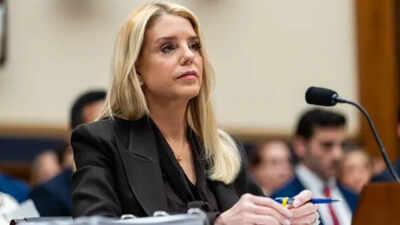
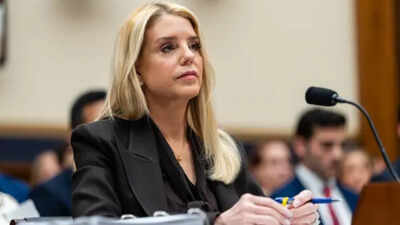
Trump removes Pam Bondi from the post of US Attorney General

Trump removes Pam Bondi from the post of US Attorney General

US Attorney General Pam Bondi has been removed from her post as Attorney General by the President donald trump. Trump told Fox News that “Pam Bondy is out of the U.S. Attorney General position. The U.S. President confirmed the development on Truth Social. “Pam Bondy is a great American patriot and a loyal friend, who served faithfully as my Attorney General this past year. “Pam did a tremendous job overseeing a massive crackdown on crime across our country, bringing homicides down to their lowest level since 1900,” he said.While confirming Todd Blanche to serve as acting attorney general, Trump said Bondi would move to the private sector. “We love Pam, and she will be transitioning to a much-needed and important new job in the private sector, to be announced at a date in the near future, and our Deputy Attorney General, and a very talented and respected legal mind, Todd Blanch, will step in to serve as Acting Attorney General. Thank you for your attention to this matter!” he added in his statement.

Watch

US: Pam Bondi fumes after Neguse exposes corruption during House hearing

The move comes after growing frustration over his performance, including his handling of investigative files related to the late financier and sex offender, according to a White House official cited by Reuters. Jeffrey Epstein.Trump also reportedly became frustrated that Bondi was not moving faster to prosecute critics and opponents whom he wanted to face criminal charges.Bondi, the former Florida attorney general, had been a staunch and combative supporter of Trump’s agenda during his tenure, pushing policies that critics said destroyed the Justice Department’s longstanding tradition of independence from the White House. He also oversaw the removal of dozens of career prosecutors linked to investigations that Trump disliked, accusing them of undermining the department’s commitment to impartial justice.However, it was the controversy surrounding her handling of files related to financier and convicted sex offender Jeffrey Epstein that overshadowed her time in office. Bondi faced continued criticism from both Trump allies and Republican lawmakers over allegations that records related to the DOJ’s sex trafficking investigation into Epstein were improperly released or insufficiently transparent. Epstein, who maintained ties to influential figures, remains a politically sensitive subject, with investigations also reviving into his past relationship with Trump, which the president has said ended decades ago.The matter escalated after Bondi initially suggested that a client list linked to Epstein be reviewed. When the initial disclosures largely included already public material, the Justice Department and the FBI later closed the case, saying no further releases were needed. The move triggered a bipartisan backlash, which ultimately resulted in the mandatory release of most of the remaining files.The controversy persisted despite the subsequent release of approximately 3 million pages of documents. MPs criticized the sweeping cuts and expressed concern over the identities of some victims being exposed. The Republican-led House Oversight Committee subpoenaed Bondy for his testimony on April 14.Bondy argued in defense of his handling of the files, saying that the Trump administration was more transparent than its predecessors and that officials worked under tight deadlines to review comprehensive records. During a controversial House hearing in January, he deflected criticism with political attacks on lawmakers and refused to apologize to victims and their families who were present at the proceedings.In addition to the Epstein issue, Bondi also faced internal criticism over the pace of legal action against Trump’s critics, with the president reportedly frustrated that prosecutions were not moving fast enough.His removal could signal a change in Justice Department strategy, potentially including more aggressive use of the legal system against Trump’s political opponents.Bondi is the second senior official to be fired in recent weeks, following the ouster of Homeland Security Secretary Kristi Noem on March 5 amid criticism of her handling of the agency and immigration policy.

Stay updated with our live blog for minute-by-minute coverage israel iran war Including breaking news, missile attacks and the latest updates on the Middle East crisis

Source link

Is Donald Trump going to fire Tulsi Gabbard? Intelligence chief unwilling to support Iran war, report says

Is Donald Trump going to fire Tulsi Gabbard? Intelligence chief unwilling to support Iran war, report says

Fresh questions are swirling about the future of Tulsi Gabbard after donald trump Advisers talked privately about whether he should remain in one of the administration’s most sensitive roles.According to a report from the Guardian, Trump has asked Cabinet officials in recent weeks whether he should replace Gabbard as director of national intelligence. The conversation followed his growing frustration over his handling of internal disagreements over the US stance on the Iran war.

Watch

Tulsi Gabbard’s explosive Iran statement in the Senate; ‘At least 15 American targets attacked…’

At the center of the tension is former deputy Joe Kent, who resigned after arguing that Iran posed no imminent threat to the US. Trump was already angered by Kent’s comments, but matters worsened when Gabbard refused to condemn them during testimony before Congress at the worldwide threats hearing last month.Sources said Trump was particularly upset that Gabbard appeared reluctant to fully support the administration’s justification for military action against Iran. His stance comes from long-held views, including opposition to US involvement in foreign wars and earlier statements questioning the legality of pre-emptive strikes.Despite the criticism, Trump has offered a measured public response. When asked if he still had confidence in him, he told reporters, “Yeah, definitely.” “I mean, his thought process is a little different from mine, but that doesn’t mean someone isn’t available to serve.”The White House has also calmed the speculations. Spokesman Steven Cheung said, “As President Trump said in his remarks just now, he has confidence in Director Gabbard and the tireless work she is doing. She has assembled the most talented and impressive Cabinet we have ever seen, and they have collectively achieved a historic victory on behalf of the American people.”However, no clear replacement for Gabbard has emerged, making any immediate decisions unlikely.This uncertainty comes amid scrutiny of Gabbard’s tenure. He has faced criticism on several fronts from within the GOP administration, including a video warning nuclear war After a trip to Hiroshima, which reportedly irritated Trump. He also publicly contradicted them earlier this year when he told lawmakers that Iran had not decided to build nuclear weapons. “He’s wrong,” Trump said before authorizing strikes on Iranian nuclear facilities using American B-2 bombers.Nevertheless, he has also earned Trump’s approval at times, including endorsing his assessment that Russia did not attempt to boost his 2016 campaign.For now, Gabbard remains in post, with her office insisting she is focusing on her duties. Spokeswoman Olivia Coleman said, “Over the past two weeks, President Trump has said he has confidence in the DNI and that he has performed well in his hearings before Congress. He is committed to carrying out the responsibilities the President has given him.”

Stay updated with our live blog for minute-by-minute coverage israel iran war Including breaking news, missile attacks and the latest updates on the Middle East crisis

Source link

Viral video: Russian tourist strangled by locals after he allegedly touched and harassed women in Bali.

Viral Video: Russian tourist strangled by locals after he allegedly touched and harassed women in Bali
A Russian tourist physically restrained in Bali after allegedly harassing women/Instagram

A confrontation between a Russian tourist and local residents in Bali has attracted massive attention after a video emerged showing the man being restrained by chokehold following allegations of inappropriately touching women during a night out. The footage, filmed in the coastal region of Uluwatu, captures a chaotic scene: a shirtless man lies on the ground, surrounded by onlookers, as a local man, identified as Balinese fighter and gym owner Belda Brig Sandow, holds him in a headlock from behind. As the struggle begins, the tourist loses consciousness while bystanders react with concern. Voices urging restraint can be heard in the background. “He’s out, he’s out,” one man says repeatedly, attempting to defuse the situation. But Sandow, holding on, addresses both the man and the onlookers: “Respect the locals.” Moments later, he explained the reason for the confrontation, saying, “It’s a drunk bule (foreigner) who is touching a girl and has no respect for her.” The term “bule” is commonly used in Indonesia to refer to foreign, especially white, visitors. The video shows the man’s face turning red as he struggles and he tugs at Sandow’s arm in an apparent attempt to break free. After several tense seconds, his body relaxes. Sandow then slowly releases the hold, leaving the person lying motionless on the ground before starting to move again. As the tourist regains consciousness, he is clearly confused and mutters, slurring his words, “I got it, I got it.” Sandow, still standing beside him, explains the intention behind his act: “If I punch you, I can finish you off. But before you can understand, I strangled you. Where are you from?” “I understand, brother. I’m from Russia,” the man replies, wiping his face. Sandow responded with warning: “Are you from Russia? [There’s] There are many Russian people messing around here, don’t be one of them.” When the man, now seated, asks, “Who did I touch?”, Sandow cuts him off: “Who? Don’t say who. Everyone has already seen, you’re drunk.” Then he says, “Bali is good, but if you are not good, we can break you here. Shut up and go home.”

What did Sandow say later?

Following the incident, Sandow, who runs Zendo Fight Club, addressed the confrontation in a statement posted online, offering both justification and reflection. He described that behavior, saying, “This guy was drunk – touching people, walking in the middle of the street, stopping strangers and even getting slapped on the head like it’s a normal thing.” He said the situation only worsened after he crossed the line: “Nobody said anything until he touched one of my friends. That’s when I intervened and it turned into a fight.” While defending his intervention, Sandow also acknowledged how it unfolded: “What I did was probably not right, and for that I apologize. I’m human – sometimes emotions take over. But I didn’t start it. He crossed the border first.” He framed the incident as part of a wider concern about conduct among some visitors to the island: “Bali is a beautiful place, and the people here are kind and respectful. That’s what we want everyone to experience. But respect goes both ways. I’m tired of seeing some foreigners come here and behave without respect.”Also read: US tourist detained after being caught violating Bali’s most sacred rule on ‘Day of Silence’

a pervasive pattern of anxiety

The incident comes amid increasing scrutiny of tourist behavior in Bali, a destination that has long promoted itself as welcoming but faces challenges related to overcrowding and misconduct. Earlier this year, a separate video showed tourists brawling outside a supermarket in Kuta, with women heard shouting as the fight escalated before locals intervened. In another case, 57-year-old American tourist Carl Adolph Amrhein was detained by local security on March 19, 2026, for walking on a main road in Sukawati during Nyepi (Day of Silence), the annual holy holiday that bans all outdoor activities, travel and noise for 24 hours. In response to a series of such incidents, the provincial government of Bali initiated Updated behavioral guidelines in 2025 Aimed at foreign visitors. Governor Wayne Koster said the measures are intended to address concerns ranging from respect for religious customs to environmental protection and public conduct. “This ensures Bali’s tourism remains respectful, sustainable and in line with our local values,” Koster said at the time.

Source link

Nuclear-powered icebreakers & submarines: How Russia, China aim to topple US-controlled global trade order

Nuclear-powered icebreakers & submarines: How Russia, China aim to topple US-controlled global trade order

NEW DELHI: How does the world truly function? Some argue it runs on money, others insist natural resources dictate the balance of power. But moments of conflict often cut through these theories and reveal a more enduring truth: the world moves through its sea lanes. From crude oil and LNG to semiconductors and finished goods, nearly everything that powers modern economies must pass through a handful of strategic maritime chokepoints before reaching its destination.straitThe ongoing tensions involving the United States and Iran have once again laid bare this reality. Disruptions around key straits and shipping corridors rarely remain localised—they ripple across continents, unsettling supply chains, driving up costs, and injecting volatility into global markets. Control over these routes has long translated into geopolitical leverage, enabling nations positioned along them to shape trade flows in ways that extend far beyond their immediate geography.Yet, this very dominance has triggered a quiet but determined search for alternatives. Countries that find themselves exposed to these chokepoints are increasingly exploring new corridors that can bypass traditional routes and reduce reliance on contested waters. It is within this shifting landscape that the Arctic is re-emerging—not as a distant, frozen wilderness, but as a potential game-changing maritime highway.
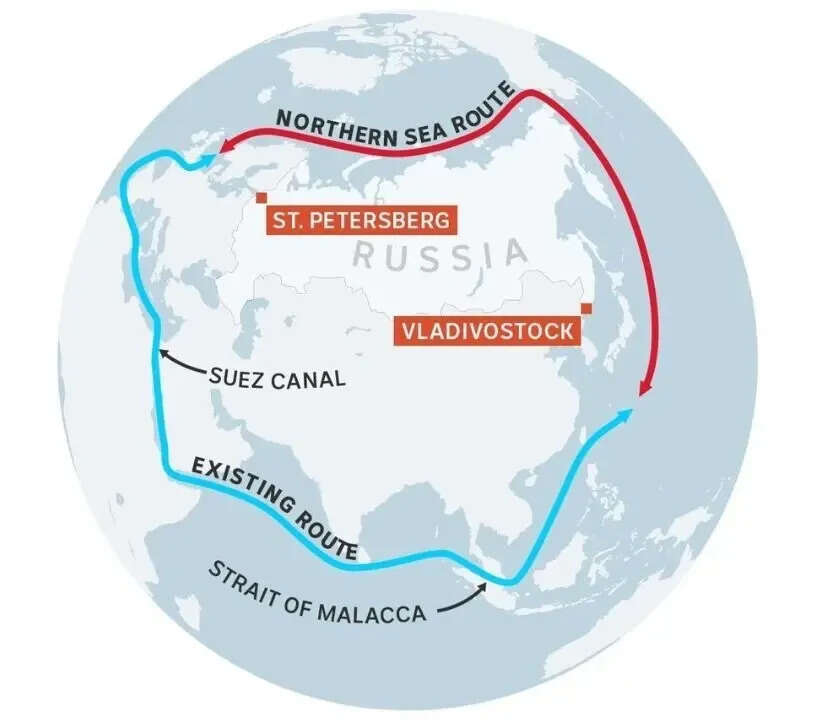
_Image credit ORF

Image credit: ORF

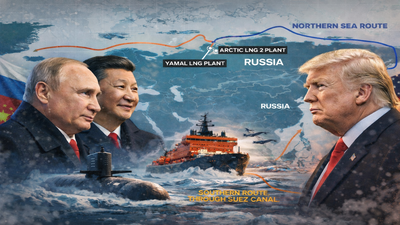
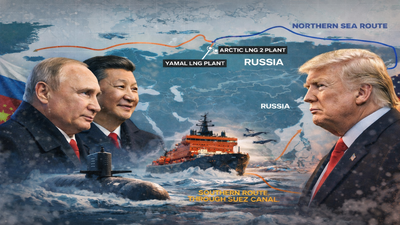
Here, Russia and China are moving with calculated intent. Moscow, in particular, brings decades of Arctic experience, having built the technological and military capability to operate in some of the harshest conditions on Earth. Its fleet of nuclear-powered icebreakers and submarines—capable of remaining deployed for months without docking—reflects a sustained strategic focus on the High North. Beijing, aligning its ambitions with Russia, sees in these icy waters an opportunity to redraw global trade maps through what it calls the Polar Silk Road, an Arctic extension of its broader connectivity strategy, as reported by Reuters.Together, their push into the Arctic is not merely exploratory—it is strategic. It is about reshaping the architecture of global trade, challenging the traditional maritime order, and opening a new frontier where control over ice-bound routes could redefine power in a rapidly evolving world.At the centre of this transformation is the growing dominance of Russia and China in Arctic waters, both economically and militarily, at a time when the United States and its Western allies are widely seen as lagging in infrastructure and preparedness. According to CNBC, increased Arctic shipping activity and expanding Chinese and Russian icebreaker fleets are already shifting the balance, while Reuters reports that new northern sea routes could significantly cut transit times between Asia and Europe, reducing dependence on chokepoints such as the Suez Canal.The implications are far-reaching. What began as an environmental story about melting ice has evolved into a full-scale strategic contest—one involving trade corridors, energy flows, military positioning, and technological capability. This emerging Arctic theatre is now raising concerns in Washington and Nato capitals about a gradual but decisive shift in the balance of power in the High North.

Arctic routes: A shorter path with massive implications

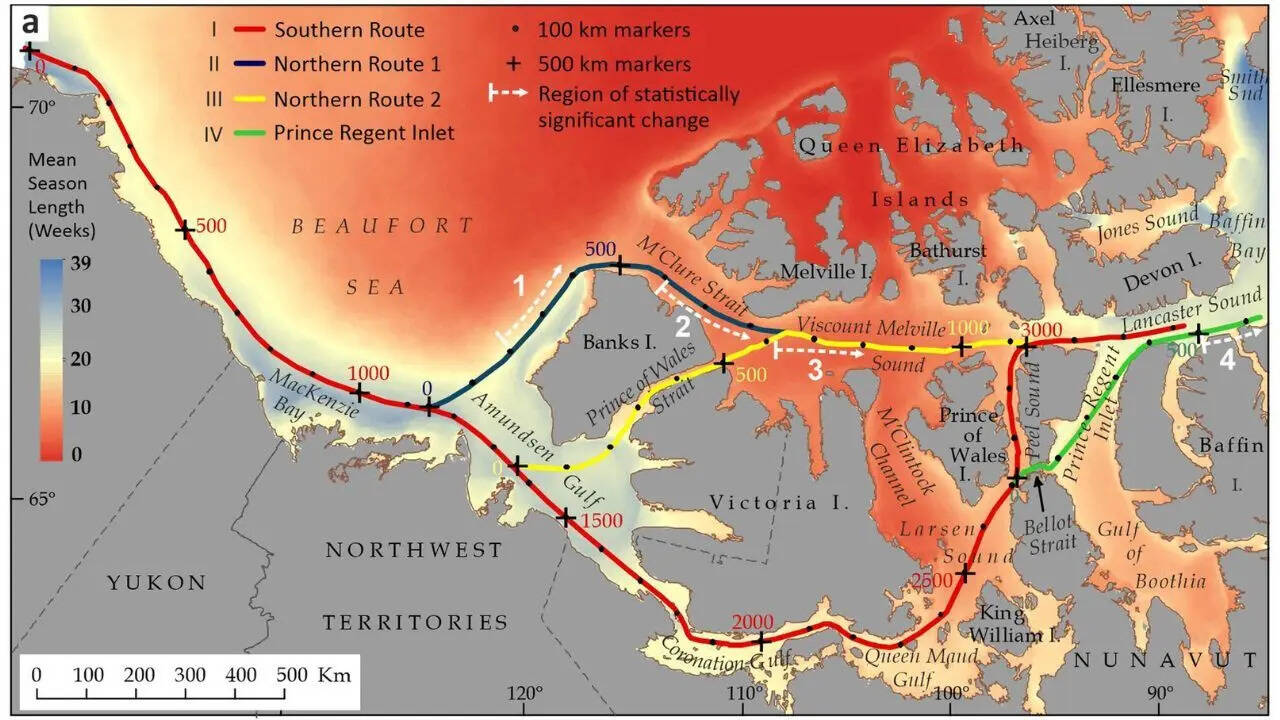
At the heart of the Arctic race are two major shipping corridors: the Northwest Passage, running through Canada’s Arctic archipelago, and the Northern Sea Route (NSR), which stretches along Russia’s northern coastline. According to Reuters, these routes can cut transit distances between Asia and Europe by as much as 4,500 nautical miles, effectively halving travel time compared to traditional routes via the Suez Canal.

Image credit Phys.org

This reduction translates into lower fuel costs, faster delivery times, and increased commercial efficiency. As Aaron Roth, principal at the Chertoff Group, told CNBC, “From an economic and commercial standpoint, it makes sense for shippers to be interested in the development in that region to save time.”Shipping activity reflects this growing interest. More than 1,800 ships traversed Arctic waters in 2025, marking a 40% increase from 2013 levels, according to maritime data cited by CNBC. China, in particular, has begun testing the commercial viability of these routes, completing 14 voyages in 2025, including the first-ever journey by a COSCO container ship through Arctic waters.However, despite these gains, Reuters reports suggest that Arctic shipping remains complex and costly due to harsh weather, limited infrastructure, and seasonal ice conditions. Even so, the trajectory is clear: as ice continues to recede, these routes are expected to become increasingly viable and strategically indispensable.

Russia’s Arctic dominance: Energy, icebreakers and control

Russia currently holds a commanding position in the Arctic, both in terms of infrastructure and natural resources. According to Reuters and AFP, Moscow controls a significant portion of Arctic oil and gas reserves, with Arctic fields accounting for roughly 20% of its total oil output and containing an estimated 35.7 trillion cubic metres of natural gas—nearly 75% of its proven reserves.This concentration of resources gives Russia both economic leverage and strategic control. Moscow has invested heavily in developing the Northern Sea Route as a key export corridor, particularly after Western sanctions following its 2022 invasion of Ukraine forced it to reroute energy exports towards Asia. Crucially, Russia also dominates icebreaker capabilities. According to CNBC, it operates a fleet of 45 icebreakers, including eight nuclear-powered vessels—the only such fleet in the world. These ships are essential for carving navigable paths through thick Arctic ice, making year-round shipping possible.Russia’s long-term ambitions are backed by substantial investment. AFP reports that Moscow has approved a €20 billion ($23.4 billion) plan to develop Arctic infrastructure and shipping routes through 2035. Despite current limitations—such as relatively low cargo volumes of 37 million tonnes transported via the NSR in 2025, according to RIA Novosti—Russia is steadily expanding its capabilities.

China’s Arctic strategy: The rise of the Polar Silk Road

China, though not an Arctic nation, has emerged as a key player through its “Polar Silk Road” initiative, launched in 2018 as part of its broader Belt and Road framework. According to Reuters and AFP, Beijing aims to become a “polar power” by 2030, investing in infrastructure, scientific research, and energy projects across the region.Chinese firms have taken significant stakes in Arctic energy projects, including a nearly 30% share in Russia’s $27 billion Yamal LNG project, according to Reuters. This partnership ensures long-term access to liquefied natural gas while also giving China a foothold in Arctic shipping and technology.
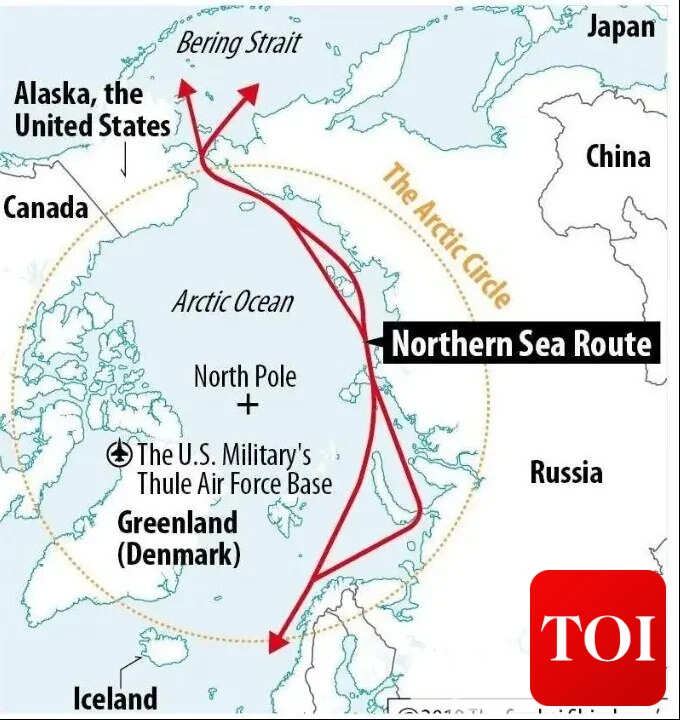
_Image credit ORF (1)

China’ s polar silk road (Image credit: ORF)

China’s involvement extends beyond economics. AFP reports indicate that Beijing operates icebreakers equipped with seabed-mapping mini-submarines and maintains Arctic observation satellites, which it claims are for scientific purposes. Additionally, joint military activities with Russia—including bomber patrols near Alaska in 2024—signal a growing strategic alignment between the two powers.Trade data underscores this cooperation. Despite Western sanctions, multiple Reuters reports confirm that Chinese terminals have continued to receive LNG shipments from Russia’s Arctic LNG 2 project, often using complex shipping arrangements and “shadow fleets” to bypass restrictions.Malacca dilemma: Why China is looking beyond India’s maritime leverageChina’s Arctic push is also rooted in a long-standing strategic vulnerability closer to home—the so-called “Malacca dilemma.” A significant share of China’s energy imports and trade flows pass through the Strait of Malacca, one of the world’s busiest and most tightly controlled maritime chokepoints. Analysts suggest that any disruption in this narrow corridor—whether due to conflict, blockades, or heightened naval presence—could severely impact Beijing’s energy security and supply chains.This is where India’s strategic geography comes into play. Positioned astride key Indian Ocean sea lanes and with growing naval capabilities, New Delhi is widely seen by strategic experts as having an upper hand in monitoring and potentially influencing traffic through the Malacca Strait. India’s partnerships with countries like the United States, Japan, and Australia under frameworks such as the Quad have further strengthened its maritime posture in the region, raising concerns in Beijing about overdependence on a single chokepoint.In this context, China’s interest in alternative routes—from the China-Pakistan Economic Corridor to the Arctic’s Polar Silk Road—appears less exploratory and more strategic. By investing in northern sea routes that bypass Malacca entirely, Beijing is attempting to diversify its trade arteries, reduce geopolitical risk, and ensure that its economic lifelines remain insulated from regional power dynamics dominated by rivals.

Militarisation of the Arctic: A new strategic frontier

Beyond trade and energy, the Arctic is increasingly becoming a militarised zone. According to AFP, Russia has significantly expanded its military infrastructure in the region, including deploying S-400 air defence systems, building radar bases, and constructing a 3.5-kilometre runway capable of hosting nuclear-capable bombers on Franz Josef Land.Military exercises have also intensified. In September 2025, Russia’s Northern Fleet conducted large-scale drills involving troop landings and live-fire exercises from ships and nuclear submarines, AFP reported.China’s military footprint, while smaller, is growing in collaboration with Russia. Joint patrols and increasing technological capabilities suggest a coordinated approach to Arctic security and surveillance.Experts warn that the region’s geography makes it strategically critical. As Roth noted in CNBC’s report, the Arctic represents the shortest route between Russia and the United States, making it vital for missile defence, surveillance, and early warning systems. “The shortest distance between Russia and the United States is through that pass,” he said, underlining its importance for national security.

The US response: Playing catch-up in icebreakers and infrastructure

In contrast to Russia and China, the United States is widely seen as lagging in Arctic capabilities. According to CNBC, the US currently operates just three icebreakers, one of which is over 50 years old—far behind Russia’s fleet of 45.Former Federal Maritime Commission chairman Lou Sola told CNBC that chronic underfunding and maintenance issues have crippled the US Coast Guard’s capabilities. “They’ve been resorting to cannibalising one ship to use its parts on another,” he said, adding that shipbuilding has suffered significantly as a result.Recognising this gap, the US government has launched a renewed push to expand its Arctic presence. According to Reuters and CNBC, a $30 billion shipbuilding initiative announced in 2025 includes plans to build 11 new Arctic security cutters and additional medium-sized icebreakers.The programme involves multiple international partnerships. Companies such as Davie Defense, Bollinger Shipyards, and Finland-based Rauma Marine Constructions are participating in the effort. Reuters reports that Davie Defense alone plans to build five polar icebreakers, with initial construction in Finland before shifting production to upgraded shipyards in Texas.However, timelines remain long. The first US-built icebreakers are not expected until the early 2030s, highlighting the scale of the gap the US is trying to close.

Greenland and geopolitics: The strategic pivot

Greenland has emerged as a focal point in Arctic geopolitics. Both major Arctic shipping routes pass near the island, making it strategically vital for monitoring maritime traffic and military movements.US President Donald Trump’s renewed interest in acquiring Greenland—framed as a national security priority—reflects broader concerns in Washington about maintaining influence in the region. Analysts emphasise the importance of strengthening alliances with Canada, Denmark, and European partners to counter Russian and Chinese advances.

Energy corridors and sanctions: The Arctic workaround

The Arctic is also playing a crucial role in reshaping global energy flows. Following Western sanctions, Russia has increasingly used Arctic routes to export oil and gas to Asia. Reuters reports that LNG shipments from projects such as Arctic LNG 2 have continued to reach China despite sanctions, often at discounted prices and through complex logistics involving floating storage units and ship-to-ship transfers.Data from Bloomberg and Reuters indicate that Arctic LNG 2 has ramped up production to record levels, with daily output exceeding 17 million cubic metres by late 2025. Ship-tracking data shows multiple cargoes being delivered to Chinese ports, highlighting the resilience of these supply chains.The Northern Sea Route, in particular, offers a strategic advantage by reducing transit times by up to 10 days compared to the Suez Canal, according to Reuters. This allows Russia to maintain export volumes and revenue streams despite Western restrictions.

A shifting global order anchored in the Arctic

The rapid transformation of the Arctic is not merely a regional development—it represents a structural shift in the global economic and geopolitical order. According to Reuters analysis, the emergence of Arctic trade corridors could create an alternative system of shipping and energy flows, reducing the influence of traditional Western-controlled chokepoints.Russia’s control over resources and infrastructure, combined with China’s financial and technological investments, is creating a powerful axis in the High North. Meanwhile, fragmented Western holdings and slower investment cycles have left the US and Europe struggling to keep pace.Experts warn that this imbalance could have cascading effects on global supply chains, energy pricing, and geopolitical leverage. Disruptions—whether from sanctions, cyberattacks, or regulatory changes—could ripple through the global economy, given the increasing importance of Arctic routes.

The High North becomes the new frontline

The Arctic is no longer a distant, frozen expanse—it is a rapidly evolving arena where climate change, commerce, and conflict intersect. As reports collectively indicate, the region is becoming central to global trade, energy security, and military strategy.Russia and China have moved decisively to capitalise on this transformation, building infrastructure, expanding military capabilities, and forging strategic partnerships. The United States, while beginning to respond, faces a significant challenge in closing the gap.What is unfolding in the Arctic is not just a race for resources or shipping lanes. It is a contest over the future architecture of global power—one that will likely define international relations for decades to come.

Stay updated with our Live Blog for minute-by-minute coverage of the Israel Iran War including breaking news, missile attacks, and Middle East crisis Latest Updates

Source link

Indian-origin Mr Thanedar faces massive trolling over birthright citizenship: ‘Your entire lineage should be banned’

भारतीय मूल के श्री थानेदार को जन्मजात नागरिकता पर बड़े पैमाने पर ट्रोलिंग का सामना करना पड़ा: 'आपके पूरे वंश पर प्रतिबंध लगाया जाना चाहिए'

Mr Thanedar was brutally trolled for his comments on birthright citizenship.

repealed Mr Thanedar He was brutally trolled and blamed for the suicide of his first wife after he expressed interest in the Supreme Court hearing on birthright citizenship. Thanedar said the hearing was extremely personal for him because he came to the United States as an immigrant. But he was attacked based on baseless claims and a social media user blamed him for the suicide of his first wife. “As an immigrant myself, today’s arguments over birthright citizenship are deeply personal to me. The 14th Amendment is clear: children of immigrants are guaranteed U.S. citizenship. Despite President Trump’s wishes, he cannot rewrite the Constitution,” Thanedar wrote.

Watch

‘I’m not sure’: Trump’s lawyers stumble as Gorsuch blocks them on birthright citizenship issue

Birthright citizenship says that people born in the US are Americans – regardless of their parents’ legal status. President Donald Trump wants to end it and the Supreme Court is hearing arguments in this regard. Mr. Thanedar did not receive birthright citizenship because he was not born in the United States. He came to America on a student visa but as soon as he expressed interest in the Supreme Court arguments, he was trolled a lot. One wrote, “You married a naturalized citizen to get your green card and then forced that woman to kill herself by giving her an entire bottle of anti-depressants. You then used your legal position to open a biolab in New Jersey, where you tortured and killed innocent animals while defrauding investors.” “You should be denaturalized, deported, and your entire lineage banned from setting foot in America,” the troll wrote.

Who was the first wife of Mr Thanedar?

Mr Thanedar’s first wife was Shamal Thanedar, a neurologist and mother of two, who took her own life in 1996 at the age of 37 by overdosing on antidepressant pills. At that time he was living in St. Louis. At that time his sons were 4 and 8 years old. Mr Thanedar said his wife hid from him that she suffered from depression and he was shocked by her death. In 2024, Thanedar produced and starred in a short film ‘Dear Pra’, which is about Shamal’s suicide. Shamal was also an immigrant from India and there is no evidence that she was a naturalized citizen when she and Thanedar married. Thanedar married Shamal in 1984 and became a naturalized US citizen in 1988. After Shamal’s death, Thanedar married his current wife Shashi in 1999.

Stay updated with our live blog for minute-by-minute coverage israel iran war Including breaking news, missile attacks and the latest updates on the Middle East crisis

Source link