


Indian-origin Mr Thanedar faces massive trolling over birthright citizenship: ‘Your entire lineage should be banned’

Mr Thanedar was brutally trolled for his comments on birthright citizenship.
repealed Mr Thanedar He was brutally trolled and blamed for the suicide of his first wife after he expressed interest in the Supreme Court hearing on birthright citizenship. Thanedar said the hearing was extremely personal for him because he came to the United States as an immigrant. But he was attacked based on baseless claims and a social media user blamed him for the suicide of his first wife. “As an immigrant myself, today’s arguments over birthright citizenship are deeply personal to me. The 14th Amendment is clear: children of immigrants are guaranteed U.S. citizenship. Despite President Trump’s wishes, he cannot rewrite the Constitution,” Thanedar wrote.
Birthright citizenship says that people born in the US are Americans – regardless of their parents’ legal status. President Donald Trump wants to end it and the Supreme Court is hearing arguments in this regard. Mr. Thanedar did not receive birthright citizenship because he was not born in the United States. He came to America on a student visa but as soon as he expressed interest in the Supreme Court arguments, he was trolled a lot. One wrote, “You married a naturalized citizen to get your green card and then forced that woman to kill herself by giving her an entire bottle of anti-depressants. You then used your legal position to open a biolab in New Jersey, where you tortured and killed innocent animals while defrauding investors.” “You should be denaturalized, deported, and your entire lineage banned from setting foot in America,” the troll wrote.
Who was the first wife of Mr Thanedar?
Mr Thanedar’s first wife was Shamal Thanedar, a neurologist and mother of two, who took her own life in 1996 at the age of 37 by overdosing on antidepressant pills. At that time he was living in St. Louis. At that time his sons were 4 and 8 years old. Mr Thanedar said his wife hid from him that she suffered from depression and he was shocked by her death. In 2024, Thanedar produced and starred in a short film ‘Dear Pra’, which is about Shamal’s suicide. Shamal was also an immigrant from India and there is no evidence that she was a naturalized citizen when she and Thanedar married. Thanedar married Shamal in 1984 and became a naturalized US citizen in 1988. After Shamal’s death, Thanedar married his current wife Shashi in 1999.

Florida Vice Mayor Nancy Metayer-Bowen shot dead inside her residence, husband accused of ‘premeditated murder’

Nancy Metayer Bowen was found dead inside her Florida home. Accusation of murder on husband.
Nancy Metayer-Bowen, the vice mayor of Coral Springs, Florida, was found dead inside her home on Wednesday after police responded to a call around 10 a.m. When police arrived, they said they found the vice mayor dead and they determined the incident was domestic in nature. Her husband Stephen Bowen was taken into custody and charged with premeditated murder and tampering with evidence. Reports say that Nancy was shot dead and the incident has shaken the Metayer family to the core as it has been only three months since they lost their son. Donovan Joshua Leigh Metayer, Nancy Metayer’s younger brother, died by suicide on December 15. Joshua was suffering from schizophrenia for the last seven years. He survived the deadly 2018 school shooting at Marjory Stoneman Douglas High School in Parkland.“On behalf of our entire family, we are deeply saddened by the passing of our beloved sister Nancy Metayer-Bowen,” the family said in a statement on its Instagram page. “She was not only a beloved member of our family, but also a dedicated public servant who dedicated her life to improving the lives of others.”The statement said, “While many knew her as a leader and advocate, we knew her as a sister, a daughter, and a friend whose warmth and laughter filled every room. Her legacy will live on not only in the policies she helped shape, but also in the countless lives she touched. We are grateful for the support and kindness during this difficult time. As we mourn her loss, we remember her remarkable life and the lives she lived by “Let’s also celebrate the lasting impact left.” Metayer, 38, became the first Black woman elected to the Coral Springs Commission in 2020. He served as Florida’s Caribbean Vote director during the 2024 presidential election. Rep. Jared Moskowitz posted on Twitter: “I’m in shock. I was with her on Saturday. She had just buried her brother. She was about to announce she was running for Congress.” State Representative Angie Nixon also issued a statement saying she was “completely shocked” and “devastated”, calling Metayer her friend, colleague and sister in the movement. “She was a kind and caring person, and a true leader in her community. This is a tremendous loss for us all, and the world is darker without her.” I am keeping Nancy’s family in my thoughts and prayers.”

Artemis II mission: 8-year-old boy’s white plush toy becomes ‘silent hero’ of NASA moon mission

NASAThe Artemis II mission is the first mission to return humans to the vicinity of the Moon in more than 50 years and is scheduled for April 1, 2026. The Space Launch System (SLS) rocket launched the mission into orbit, but it was a small white stuffed animal designed by an 8-year-old boy that attracted attention and became the ‘silent hero’ of the mission.‘Now floating aboard the Orion spacecraft, the mascot is an official zero-g indicator that tells both the crew and Houston’s mission control that the astronauts have reached zero-gravity conditions by identifying the system used in weightless environments.NASA uses such toys as visual markers to quickly show the crew and controllers that there is a lack of gravity (or that they are floating!)! Through this unique design, NASA hopes to engage youth around the world with the Artemis program and inspire a new generation (the Artemis Generation) to succeed in journeys to the Moon and Mars by providing their own ‘silent heroes’ on the journey!
NASA’s Artemis II moon mission: The surprising story of a plush toy that made headlines
The selection of a white plush toy for Artemis II is based on a long-standing aerospace tradition, where small plush objects signal the transition to microgravity. According to NASA, once the Orion spacecraft reaches its initial orbital insertion and trans-lunar injection (TLI) stage, the toy will begin to float, providing a visual telemetry signal to the crew (consisting of four members) that they have passed through Earth’s strongest gravitational field. The toy was selected through a ‘Moon mascot’ design challenge and will symbolize the next generation of explorers. NASA’s Office of STEM Engagement has found through research that involving children in the design of mission hardware leads to lasting interest in developing future careers in space science and engineering.
Why does NASA rely on plush toys more than high-tech sensors?
Zero-G indicators are crazy-looking functional visual telemetry devices that are documented in flight manifests by agencies like NASA and the Canadian Space Agency (CSA). During the intense eight-minute lift-off of the Space Launch System (SLS) rocket the crew will experience tremendous G-forces that will pin the crew to their seats. The moment the plush toy moves away from the wire confirms the transition to the microgravity environment.Technical documentation from the International Space Station (ISS) National Lab indicates that it is optimal to use plush items because they will not conduct electricity, they are very light and therefore will not damage the sensitive glass equipment or cockpit instruments inside the Orion capsule.
How the Artemis II mascot protects and inspires the crew
The moon mascot, conceived through a global youth design challenge, has undergone several tests for quality assurance before being launched into space as an astronaut. NASA says anything that goes into the Orion spacecraft must be made from specially engineered materials that are rated for space applications and must meet specific requirements for flammability and off-gassing within a closed, pressurized atmospheric environment. This is to ensure that it is safe for the astronauts to breathe while aboard the Orion spacecraft and that the gaseous environment within Orion will not be adversely affected throughout the flight of the astronauts, Reed Wiseman, Victor Glover, Christina Koch and Jeremy Hansen. The Smithsonian’s National Air and Space Museum says these artifacts help create a historical record of space exploration, providing us with a connection to the technology/machines that made humanity’s missions beyond planet Earth possible, as well as a tangible connection to the human experience on our home planet.

Dubai taxi fare cut: Dubai announces 50% cut in taxi fares, free parking – check who is eligible for new RTA benefits | world News

Dubai’s Roads and Transport Authority (RTA) announced a new deal to reduce daily transport costs for selected residents, including exemption from public parking charges as well as a 50 per cent discount on taxi fares.The initiative, unveiled in early April 2026, was launched in coordination with Dubai’s social development authorities as part of ongoing efforts to increase mobility access and reduce financial stress on vulnerable groups. Officials said the move reflects the emirate’s long-term commitment to building an inclusive and accessible transportation system.
Who gets 50% discount on taxi fares in Dubai?
According to the RTA, the 50 percent reduction in taxi fares primarily targets people with disabilities, a category officially recognized in the UAE for persons with disabilities.Officials clarified that eligible residents must have valid identification such as Sanad card, which enables them to access several benefits supported by the government. Concessional fares apply to RTA taxis, including specially equipped vehicles designed to meet mobility needs such as wheelchair access.Officials noted that the agreement ensures beneficiaries can travel more affordably for essential trips, including medical appointments, work trips and daily errands. The authority stressed that improving “first and last mile connectivity” remains a priority for those determined as part of Dubai’s transportation strategy.
Parking fee waiver
As part of the same agreement, Dubai has extended parking fee waivers to eligible residents in designated paid parking areas.RTA officials confirmed that the relaxation applies to beneficiaries registered under approved social welfare categories. While people of determination remain the primary focus, certain senior citizens and eligible residents enrolled in social assistance programs may also benefit, subject to approval and documentation.The authority said these discounts are aimed at reducing recurring costs for residents who rely on private vehicles, especially in areas where paid parking is widely implemented.
UAE’s inclusive transportation system
In its statement, the RTA said the initiative is in line with Dubai’s broader vision of creating a “barrier-free city” and improving the quality of life through accessible infrastructure and services.Officials highlighted that Dubai has continuously expanded incentives in recent years, including subsidized public transport fares and dedicated mobility services. The latest agreement builds on those efforts by integrating financial relief with practical access measures.The announcement comes as Dubai continues to enhance its transportation ecosystem, with officials emphasizing that inclusive mobility is not just a service upgrade but a key part of the emirate’s urban development goals.
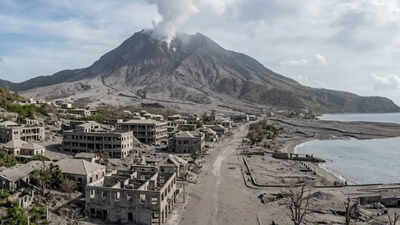
The haunted capital of the Caribbean: How the Soufriere Hills volcano buried an entire city in minutes world News
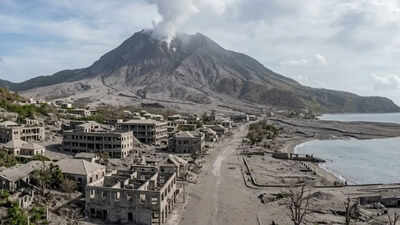
In 1997, an eruption occurred in the Soufriere Hills and engulfed the town of Plymouth on the island of Montserrat. The capital, once a bustling center for commerce, was covered with several feet of ash and debris in a matter of hours, necessitating permanent evacuation. The Montserrat Volcano Observatory says the eruption destroyed more than 80 percent of Plymouth’s infrastructure. Even though Plymouth is now a deserted exclusion zone, it is still legally the capital of the island today. The city has been compared to a ‘modern Pompeii’ and is a reminder of the devastating effects of geology; It has also provided scientists with valuable information about how volcanoes affected and displaced modern civilization over time.
How Soufriere Hills Volcano wiped plymouth off the map
The destruction of Plymouth was caused primarily by pyroclastic density currents (PDCs) – gravity-driven clouds of hot gas and rock. Research published by the U.S. Geological Survey (USGS) and the Montserrat Volcano Observatory (MVO) indicates that these flows reached temperatures in excess of 400 °C (752 °F) and traveled at speeds in excess of 100 mph. PDC flows behaved like fast-moving fluids, and due to the fluid nature of these high-velocity streams, they were able to completely cover buildings from their base to the second floor with a densely packed matrix of fine ash and tephra. In doing so, this quick burial preserved the Plymouth in a frozen state, thus providing archaeologists the opportunity to study the ashes and volcanic soil from everyday objects of 20th century life. These artifacts represent a unique, but fragile means by which archaeologists will gain knowledge about life in the Caribbean during the 20th century.
How does the MVO monitor structural decay in the restricted area?
Plymouth, the (legal) capital of Montserrat, has been destroyed along with all of the city’s infrastructure. However, the Government of Montserrat maintains that although the government has moved its administrative functions to the north of Brades Island, Plymouth’s legal status as the official seat of government is still preserved in the constitution and other records. The southern half of Montserrat is designated as Zone V exclusion zone and cannot be entered without police escort due to the constant danger from the volcano. This ongoing and complete legal and physical isolation of the city allows the Montserrat Volcano Observatory (MVO) to use GPS and seismic sensors to study accelerated structural failure and corrosive loading from the weight and chemical acidity of volcanic tephra.
How volcanic tephra reshaped Montserrat’s topography
According to research in the Journal of the Geological Society, the large amount of volcanic material deposited in Plymouth permanently reconfigured the island’s topography and expanded its coastline. Layers of ash, more than 12 meters (39 ft) thick in some areas, have altered the island’s drainage basin and coastline. In addition, the high porosity of volcanic tephra acts as a thermal insulator; Therefore, combined with the lack of light, this creates a slow decay rate for all organic materials and household artifacts that may be buried beneath it.Based on data from NASA Earth Observatory, these environmental changes have produced specialized pioneer plant species in the exclusion zone and provide a unique model of biological succession in post-eruptive tropical environments.

‘Hundreds or thousands of troops could be involved’: Inside Donald Trump’s high-risk plan to seize Iran’s uranium reserves

The United States military has reportedly prepared an extraordinary wartime contingency plan upon request donald trump Including a high-risk operation to seize Iran’s highly enriched uranium reserves. The move could be one of the most ambitious and unprecedented military missions in modern history, The Washington Post reported, citing two people familiar with the matter.The proposal involves securing approximately 1,000 pounds of radioactive material from within Iran. According to a report, the plan is not a conventional attack and would require a large-scale, intensive ground-level operation inside hostile territory. Military planners have designed a complex logistical sequence. The US military would need to enter Iran, transport excavation equipment, and build a temporary runway capable of handling heavy cargo aircraft. These planes would then be used to extract uranium from the site. The operation could involve hundreds or even thousands of troops and last several weeks, significantly increasing the risk to Iranian security.This report comes after Trump in his recent Iran address said that the war will end very soon and reiterated that the US will continue the operation for the next two to three weeks.US officials recently offered Iran a 15-point framework aimed at ending the conflict, which reportedly included a demand that Tehran surrender its stockpile of highly enriched uranium, which Donald Trump has called “nuclear dust.”Iran rejected the proposal, although in talks shortly before the war began, it had indicated a willingness to reduce its uranium enrichment levels rather than abandon it altogether.US officials recently offered Iran a 15-point framework aimed at ending the conflict, which reportedly included a demand that Tehran surrender its stockpile of highly enriched uranium, which Donald Trump has called “nuclear dust.”Iran rejected the proposal, although in talks shortly before the war began, it had indicated a willingness to reduce its uranium enrichment levels rather than abandon it altogether.

UAE issues strict warning against recruitment of illegal domestic workers: Violators face heavy fines, agencies closed | world News

A stern warning has been issued over the illegal recruitment of domestic workers in the United Arab Emirates, with authorities making it clear that unlicensed activity will face immediate and serious consequences. The move aims to tighten surveillance in the labor market while protecting both workers and customers from legal and financial risks. The Ministry of Human Resources and Emiratisation (MoHRE) said it will not tolerate any entity involved in the recruitment of domestic workers without obtaining the necessary licenses. Officials said strict legal, administrative and financial measures will be implemented against violators. These actions may extend to immediate closure of violating entities and referral to competent judicial authorities, in line with applicable laws throughout the country. Operating without a license is a clear legal violation, the ministry explained. Penalties include closing down the offending office, suspending its business activities without delay and initiating legal proceedings. Cases may be referred for both criminal and civil proceedings depending on the nature of the offence. In addition to these steps, violators may face significant financial penalties, with large fines being part of the enforcement process. MoHRE has urged customers to remain cautious and transact only from licensed and officially recognized offices. It advised the public to verify the credibility of any recruitment entity through approved and official channels before entering into a contract. This is necessary to protect individual rights and avoid unintended legal consequences, the ministry said. As part of its ongoing awareness efforts, the ministry called on the public to follow existing rules and report any illegal recruitment practices. The move aims to strengthen oversight, support the protection of society, and ensure that the labor market remains appropriately regulated.
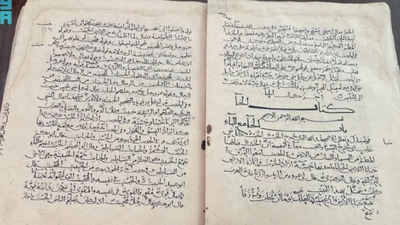
Rare 1000-year-old Quran manuscript unveiled in Saudi Arabia world News
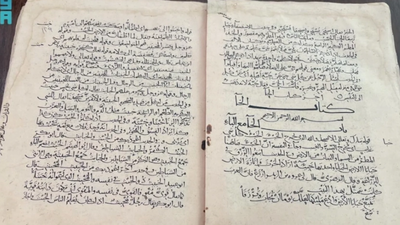
A rare manuscript written nearly a millennium ago has surfaced in Saudi Arabia, offering a detailed glimpse of early Quran scholarship. The discovery not only highlights the depth of classical Islamic studies but also draws renewed attention to the vast collection of rare texts preserved for academic research.manuscript, title “Gharib Al-Quran” (Rare Terms in the Quran), was unveiled by the King Abdulaziz Public Library. It was written by the prominent early scholar Abu Ubaydah Ma’mar ibn al-Muthanna and dates to the 4th century. This work is unpublished and is considered an important contribution to the field of Quran science. Physically, the manuscript consists of 23 folios, each measuring 17 by 22 centimeters. It is written in clear Andalusian script, while the names of the surahs are inscribed in Kufic script, reflecting a mixture of classical calligraphic traditions.The Library’s extensive collection places this manuscript in a much larger historical context. It contains a diverse range of rare Quranic exegetical works spanning several centuries. is one of these I’rab al-Quran wa Maanih By Abu Ishaq al-Jazzaj, written in the 5th century AH, and Tawil Mushkil Al-Quran By Ibn Qutaybah al-Dinwari, with a copy of the 7th century AH. The collection also includes parts of Tafsir al-Tabari (Jami al-Bayan fi Tafsir al-Quran) by al-Tabari, copied in the sixth century AH and consists of 77 folios. Another notable work, Fee Maani Al-Quran wa Tafsirih Written by Abu Bakr Muhammad al-Naqqash, it consists of 113 pages and dates to the 7th century AH.In total, the heritage collection contains more than 185 rare manuscripts dedicated to the interpretation of the Quran. As well as these, there are hundreds of additional texts covering various Quranic sciences, including grammar, linguistic analysis, methods of recitation and verse exegesis. These manuscripts are systematically classified into four main areas: interpretation (tafsir), recitation and tajwid, Quranic science, and Quranic manuscripts or mushāf. Within the explain category alone, collection features work as follows Lubab al-tawil fi maani al-tanzil, al-taysir fi al-tafsir By Omar Al-Nasafi, Hall Al-Ishakalaat Fi Faham Ba’d Al-Ayat of the 12th century AH (17th century CE), Al-Bahr al-Madid fi Tafsir al-Quran al-Majid by Ahmad Ibn Ajiba, and Maalim al-tanzil By Al-Baghawi. Other important texts include Tafseer Al-Jalaaleen, Al-Durr al-Masun fi ‘Uloom al-Kitab al-Maknun, Al-Durr al-Manthoor fi al-Tafsir Bil-MathoorAnd Al-Jawahir al-Hisan fi Tafsir al-QuranWith a number of specialized manuscripts addressing the linguistic, grammatical and exegetical dimensions of the Quran.through the unveiling of Gharib Al-QuranThe library has strengthened its broader purpose of displaying rare cultural properties including manuscripts, documents, photographs, coins and artefacts. The Institute aims to open new avenues of engagement with heritage while supporting systematic academic research. By preserving and presenting these materials, it seeks to make historically important works more accessible to scholars and deepen the study of Quranic science across generations.

5 things H-1B visa holders fired by Oracle should do immediately to stay in the US legally

H-1B visa holders laid off in Oracle’s mass layoffs should act quickly within the 60-day grace period, an immigration lawyer said.
Immigration attorney Gabriela Urizar said H-1B visa holders who were unfortunately laid off in Oracle’s massive layoffs, which affected 30,000 people worldwide, should take immediate action to remain legal in the US. Oracle handed out a cold email at 6 a.m. on March 31, informing thousands of people that they had been laid off because their roles had been eliminated due to an organizational restructuring. He was told that March 31 was his last working day. It is not yet known whether the company will have another phase of layoffs soon or not. Urizar, a lawyer with Manifest Law, said the H-1B has a 60-day grace period, which allows them to legally stay in the US after losing their job. But it is not guaranteed and may be shortened or eliminated by the Department of Homeland Security at its discretion. H-1B visa holders need to act fast and keep in mind that the grace period starts on their last working day.
5 things fired H-1B visa holders should do immediately
- Quickly view Form I-94 on the CBP website to see your exact date of entry and entry by date of your visa. This form controls how long you can legally stay in the US. If your I-94 expiration date is coming up in less than 60 days, the H-1B grace period ends early.
- Transfer your H-1B to a new employer by filing a new I-129. You can start working as soon as it’s filed without waiting for full approval, since you’re already in the US.
- If you do not find a job within 60 days apply to change your status to another visa category. Change to a student visa or B visa to buy more time and stay in the US legally.
- If you are in the green card process with an approved Form I-140, you may be able to apply for adjustment of status.
- Do not travel internationally during your grace period. If you leave the US, your grace period ends, and you cannot re-enter.
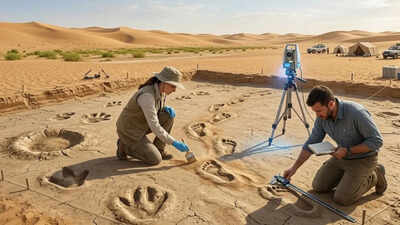
A surprising discovery in Saudi Arabia: 120,000-year-old footprints reveal where humans once walked. world News
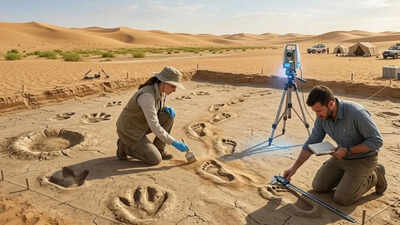
Archaeologists have identified 120,000-year-old human footprints at the ancient lake site of Alathar in Saudi Arabia’s Nafud Desert. Ancient human artifacts discovered in the Nefud Desert show a long history of human habitation in the region. According to research published in Science Advances, the site includes 120,000-year-old human footprints found in Alather (an ancient lake), providing the oldest dated example of Homo sapiens on the Arabian Peninsula, pushing back the timeline of human migration from Africa. During the last interglacial, before the region became arid, it was called the ‘Green Arabia’, replete with large lakes and abundant plant and animal life. Many of the 120,000-year-old footprints were discovered collaboratively by archaeologists from the Max Planck Institute and the Saudi Heritage Authority. These footprints provide evidence that early humans, who used inland lake systems as excellent habitat areas and migration corridors, lived and migrated alongside prehistoric elephants and hippos for about 15,000 years, when climatic conditions allowed good living and good migration.
Alathar discovery: 120,000-year-old human footprints in Saudi Arabia
Researchers working at Alathar in the Nefud Desert have found ancient traces of anatomically modern humans (Homo sapiens). According to Science Advances (research journal), researchers from both the Max-Planck Institute and the Saudi Ministry of Culture used Optically Stimulated Luminescence (OSL) dating to establish a chronology of 120,000 years. It represents the first evidence of the presence of modern humans in this part of the world, effectively filling a significant spatial and temporal gap in hominin dispersal models.
green billion incident
An article from the Max Planck Institute suggests that about 120,000 years ago, the Nefud Desert was a green and wet place, with many lakes and abundant grasslands. This time period is called the Last Interglacial Period and was characterized by a humid monsoon season, which transformed central Arabia into Green Arabia. These environmental changes created new and suitable migration routes, allowing humans and megafauna to exploit inland lake corridors in the peninsula.
Coexistence with prehistoric giants
At the Alather site there is evidence not only of humans, but also hundreds of traces of other species, including ancient elephants, ancient horses, and giant camels (now extinct Pleistocene megafauna). The fact that the Alathar site is devoid of stone tools tells us that humans used the lake as a ‘temporary water hole’; Therefore, Alather provides us with an extraordinary opportunity to see how early humans were living through an environment where they co-existed with enormous amounts of both Pleistocene and modern megafauna.
Challenging the ‘Out of Africa’ Model
The discovery changes the timeline we have for the early dispersal of modern humans. According to the Saudi Ministry of Culture, if modern humans were present in the interior of Arabia about 120,000 years ago, this suggests that Homo sapiens expansion out of Africa occurred earlier and more frequently than once thought. Furthermore, this exhibit proves that our ancestors not only traveled along coasts, but could also travel inland at times when there was enough water and food to sustain human life in an area.