Breaking News
Scientists discover ‘hidden world’ 100 kilometers beneath Antarctica that could change climate predictions World News
Scientists discover 'hidden world' 100 kilometers beneath Antarctica that could change climate predictions

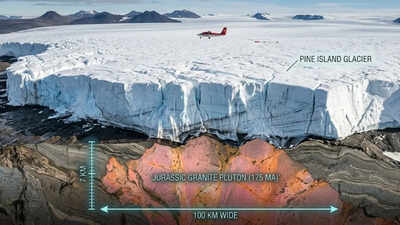
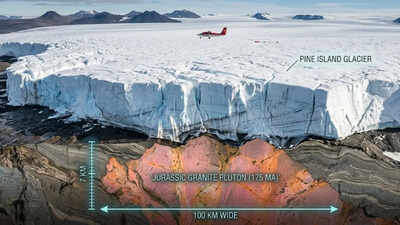
Scientists from the British Antarctic Survey have made a breakthrough in solving a decades-old geological mystery by identifying a large granite mass buried beneath the West Antarctic Ice Sheet (WAIS). The team discovered the mystery after noticing some exotic (pink) stones located at the top of a black volcano within the Hudson Mountains. Next, they conducted state-of-the-art aerial gravity surveys and modern radiometric dating to establish how these ‘irregular’ boulders were tied to the huge, magmatic Jurassic-aged granite body (the ‘hidden giant’), which measured 100 kilometers across and covered a surface area almost half the size of Wales, extending to 7 kilometers depth beneath Pine Island Glacier. The incredible hardness of the hidden giant will also greatly influence the flow rate of sea ice, providing a new factor in the knowledge base used to predict global sea level rise due to the rate of ice melting around the world.

Origin of 175 million year old rocks found in Antarctica

It all started with a geological anomaly in the Hudson Mountains of West Antarctica, where exotic pink granite boulders were found on top of deep volcanic peaks. The pink granite boulders (‘irregular’) did not resemble the surrounding volcanic rock in any way and after much debate, scientists concluded that these boulders were ‘uprooted’ from the valley floor by a fairly thick ancient ice sheet and then deposited on top of the volcanic peaks when the ice receded. According to research published in Nature, using U-Pb zircon geochronology (radioactive dating), scientists determined that these rocks were about 175 million years old, dating back to the Jurassic period, when the supercontinent Gondwana began to break up.

How scientists discovered a 100-km-long granite mass beneath Antarctic ice

Because the source of the pink rocks was buried under miles of ice, the British Antarctic Survey used aerial geophysical surveys by flying Twin Otter aircraft equipped with geophysical instruments to conduct both gravity and magnetic surveys on Pine Island Glacier to define the density of the materials beneath. Ultimately, they discovered a giant granite body, or ‘pluton’, approximately 100 kilometers wide and 7 kilometers thick; The approximate area of ​​the granite body is half that of Wales. This large block of granite is significantly harder and more stable than the surrounding sedimentary basins.

Why is the West Antarctic Granite Body important to climate models?

The discovery is important not only because of its geological significance, but also because it will impact climate science. Pine Island Glacier, one of the fastest melting glaciers in Antarctica, is one of the largest contributors to global sea level rise. The ‘hidden giant’, or the world’s largest granite formation, provides the bedrock support or structural skeleton for the ice sheet. Since granite is an exceptionally dense and hard bedrock, this would be a high-friction site where the glacier would grip the ground more tightly or create ‘sticky’ points in some places, slowing the movement of the glacier into the sea. The exact size and position of this granite structure will be a key variable in computer models that predict how much sea level rise will occur in the year 2100.

Granite bodies are a ‘missing link’ in Earth’s history

Furthermore, this granite body provides a glimpse of the history of Gondwana. According to a research paper published on USGS, the chemical composition of the granite boulders indicates that they were formed during a time of intense tectonic activity and rifting, thus providing geologists a more complete record of the ‘missing link’ in the West Antarctic Rift System. This confirms that this location was once an area of ​​large amounts of magma that was injected into the Earth’s crust and cooled beneath the surface before being covered by the West Antarctic Ice Sheet millions of years ago.


Source link

Saudi authorities bust illegal fitness drug racket, detain gym trainers. world News

Saudi authorities bust illegal fitness drug racket, detain gym trainers
Saudi Arabia detains gym trainers selling unlicensed weight loss, hormonal and peptide drugs after investigation/Image: SPA

Saudi Arabia’s Health Ministry has detained several gym trainers from Arab countries for selling and promoting unregistered weight loss drugs, hormonal drugs and peptide substances, according to a report by the Saudi Press Agency. The action was taken in coordination with the Saudi Food and Drug Authority and other relevant agencies after monitoring social media for regulatory violations. The investigation led to a sting operation that traced the supply chain to a warehouse storing hormonal supplements, peptide ingredients and retatrutide, a substance still undergoing clinical trials with no confirmed safety record. Officials said the products were stored in improper conditions, raising concerns about potential health risks. Legal action has been initiated against those involved and the cases have been referred to the competent authorities for prosecution. Under the Law on Practice of Healthcare Professions, penalties may include imprisonment of up to six months and a substantial fine, along with additional penalties under other applicable laws. The ministry has urged gyms and sports centers to strengthen internal monitoring and ensure that employees follow health rules. Athletes and gym users are advised to obtain medical products only from licensed sources and under professional supervision. The public has also been warned against using or purchasing products promoted on social media without verification. Violations can be reported to the ministry’s unified call center 937.

Source link

UAE distance learning extension: UAE extends distance learning till April 17; Ministry confirmed that schools and universities will remain online. world News

UAE extends distance learning until April 17; Ministry confirms schools and universities to remain online
UAE extends distance learning for all schools, universities till April 17 / Image: File

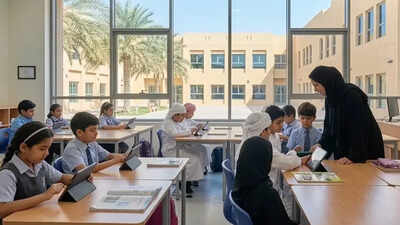
The UAE has officially extended remote learning in all educational institutions until April 17, 2026, keeping millions of students out of classrooms for at least two more weeks.The decision was announced by the UAE Ministry of Education, which confirmed that the extension applies to nurseries, kindergartens, public and private schools across the country, as well as teaching and administrative staff.Officials said the move is aimed at ensuring the safety and well-being of students and teachers while maintaining continuity in learning through digital platforms. The situation will be reviewed weekly, meaning the April 17 deadline could be revised depending on developments.

Why did UAE extend online classes again?

The latest expansion is part of a longer shift toward remote learning that began in March.Schools across the UAE initially began online learning between March 2 and March 4, followed by an early spring break from March 9 to March 22, which was brought forward due to regional developments.When Term 3 was due to start on 23 March, officials decided to continue with remote learning rather than reopening campuses. The initial plan was to resume physical classes by early April, but the new announcement has now pushed that timeline to mid-April.This gradual and evolving approach reflects how UAE authorities are responding in real time, rather than committing to a fixed reopening schedule.

Schools and curriculum affected

This expansion affects a wide range of institutions across different courses.Many Indian curriculum schools including

  • Delhi Private School Dubai
  • Credence High School Dubai

Online classes have continued till the end of the academic session, with students attending classes virtually rather than returning briefly before the new session.Similarly, schools with British, IB and US curriculums in Dubai and other emirates initially planned to reopen on staggered dates in early April, but those plans are now on hold.Following instructions from local regulators such as the Sharjah Private Education Authority (SPEA), many schools in Abu Dhabi, Sharjah and the Northern Emirates had already started the new 2026-27 academic year online.For younger students, including kindergarten children, schools held mock online sessions over the weekend to help families adapt to digital learning platforms.

university program

While schools are completely online, universities in the UAE are taking a more flexible approach.Under the guidance of the Ministry of Higher Education, some institutions have started a phased return to campus from March 30, but only for courses that require physical presence, such as:

  • clinical training
  • laboratory work
  • Practical or field-based programs

On-campus examinations are also permitted where necessary.However, many major institutions continue to operate remotely.

  • American University of Sharjah Will remain completely online until further notice
  • American University of Ras Al Khaimah extends remote learning until early April
  • American University in Dubai continues virtual classes

This hybrid model highlights the shift toward flexible education systems rather than a one-size-fits-all reopening.

How is online learning conducted?

Schools across the UAE have now settled into structured digital routines, with many institutions replicating full-day schedules similar to physical classes. Students are attending live virtual lessons, completing online assignments and participating in regular assessments through dedicated learning platforms.Also, schools have strengthened communication with parents to ensure that students remain academically engaged and on track. Authorities had previously issued detailed Term 3 guidelines that encouraged flexible timetables, continuous assessment methods and close coordination between teachers and families.This approach has helped minimize disruption and maintain continuity of learning, even if campuses remain closed for extended periods.

Will schools reopen after April 17?

At present, the probable date of return is April 17, but officials have made it clear that the situation is being constantly reviewed.Any decision to resume in-person classes will depend on regional conditions, safety assessment and approval from authorities such as Dubai’s Knowledge and Human Development Authority (KHDA).Schools seeking to reopen early must submit detailed requests, which are reviewed on a case-by-case basis before approval.Until then, distance learning remains the primary mode of education in the UAE, leading to one of the most extended and structured online learning phases since the pandemic era.

Source link

Seeking to end the war without reopening the Strait of Hormuz, Donald Trump tells allies Iran is refusing to budge

Seeking to end the war without reopening the Strait of Hormuz, Donald Trump tells allies Iran is refusing to budge

us President donald trump Iran has told its allies it is ready to end the war without reopening the Strait of Hormuz, which Iran has refused to open despite repeated warnings from the US President. This is another soft stance adopted on Tehran as Tehran has refused to bow down after US-Israel started the war.In recent days, Trump and his aides concluded that an operation to reopen the strategic chokepoint would likely prolong the conflict beyond his preferred four- to six-week timeline, The Wall Street Journal reported.

Watch

Iran war near ‘end’? Trump indicated that the US could ‘end the operation’ despite the closure of Hormuz. report

The report said Trump opted to focus on achieving key objectives, i.e. weakening Iran’s naval capabilities and missile stockpile before curtailing active hostilities, while increasing diplomatic pressure on Tehran to restore normal trade flows.If those efforts fail, United States officials will look to Europe and allies in the Gulf to take the lead in reopening the strait, according to the report.White House press secretary Carolyn Levitt also said that Arab countries could be asked to share the burden of the military operation in Iran.“I think it’s something the president would be very interested in. I wouldn’t go further than him on it but it’s certainly a consideration, I think you’ll hear more from him about it,” she said.Trump last week gave Iran a 10-day cooling-off period, a decision he called a “gift” from Tehran, allowing eight oil tankers to pass through the Strait of Hormuz and halting planned attacks on key energy infrastructure.He also described the move as a sign of progress in ongoing diplomatic efforts, and said Iran had asked for more time through backchannel communications.

voting

Should the US rely on its allies in Europe and the Gulf to reopen the Strait of Hormuz?

“He said to me very nicely through my people, ‘Can we get more time?’ Because we’re talking about tomorrow night, which is very early, and if they don’t do what they have to do, I will shut down their power plants,” Trump told Fox News.Starting on February 28, the United States and Israel launched coordinated attacks on Iran, which was retaliated with strikes, escalating conflict throughout the Gulf region. The Strait of Hormuz, a vital artery for global energy flows, has since come into sharp focus.The narrow waterway linking the Persian Gulf to the Indian Ocean is now effectively closed, sharply reducing daily maritime traffic and disrupting the movement of container ships, dry bulk carriers and oil tankers.

Source link

‘India is a better mediator than Pakistan’: Israeli envoy on Middle East war

'India is a better mediator than Pakistan': Israeli envoy on Middle East war

As the war in the Middle East enters its second month, efforts to reduce tensions and bring about peace have intensified, with Pakistan attempting to establish itself as a major diplomatic player. However, an Israeli envoy strongly rejected Islamabad’s role, instead expressing a clear preference for India as a “better mediator”.Israel’s Foreign Ministry special envoy Fleur Hassan-Nahoum told news agency ANI from Jerusalem that the conflict escalated soon after it began. “Well, we have been involved in a multi-front regional conflict since October 7, when we were attacked from the south by Hamas, a proxy of the Iranians. And then on October 8, when we are attacked from the north by an Iranian proxy. And so the multi-front has already been happening for some time now, unfortunately.Highlighting developments over the past month, he described what he described as a sharp decline in hostile capabilities. “Today, we see that after a month, there have been considerable military gains. 80% of the Islamic Republic’s rocket launches have been destroyed. The entire navy has been destroyed. The entire top echelon of their military leadership and political leadership has been destroyed primarily.He also claimed increasing internal instability within Iran. “And when it comes to their strategies at the moment we see cracks in the regime leadership, defections from the Basij and complete chaos every day. They’re just, you know, sending rockets at any country they can get their hands on. “So I think there has been a lot of military advantage.”On the United States’ evolving approach, Nahoum outlined what he described as a dual-track strategy combining diplomacy with military pressure. “At every single moment, at every single intersection of this, President Trump has always presented an opportunity for compromise. And it is the intransigence of the Islamic Republic that has prevented compromise and nothing else.”He said such an approach allows for de-escalation while maintaining pressure on the ground. “I think it’s a good strategy to always give them a ladder to climb down from the tree, but at the same time, still have the military advantage to destroy them when we need to.”Commenting on reports of Pakistan attempting to play a mediation role despite the lack of diplomatic relations with Israel, he expressed skepticism. “I mean, I don’t know what the Pakistanis think they’re doing. I think they’re trying to make themselves relevant. They’re a big problem themselves in the world of jihadist terrorism. But, you know, they could try. I’m not sure they’d be very successful.”He denied any agreement on Iran’s nuclear program. “No, of course not. We cannot have a regime calling for total destruction, and also possessing weapons of mass destruction.” There can be no compromise when it comes to the nuclear weapons they possess, otherwise they can get rich fast.”Referring to India’s diplomatic reach, he acknowledged New Delhi’s balanced position. “India is a very close ally of Israel. As you know, your Prime Minister was here just a few days before the war. And we understand that India has good relations with everyone. And if you ask me, they can be a much better mediator than Pakistan. But let’s see how things develop.”

Source link

Trump shares video of massive explosions in Isfahan, Iran after US-Israeli attacks; Bunker-busters were used?

Trump shares video of massive explosions in Isfahan, Iran after US-Israeli attacks; Bunker-busters were used?

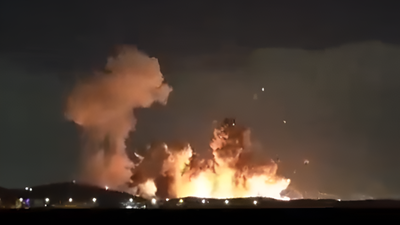
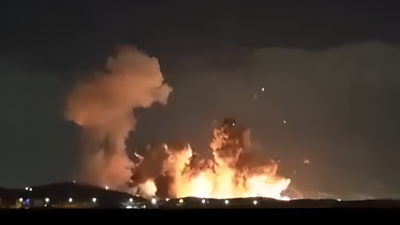
us President donald trump Earlier Tuesday he stepped up his rhetoric and messaging over the US military campaign against Iran, highlighting the scale of the attacks allegedly carried out by B2 bunker busters under Operation Epic Fury. He shared a social media post showing the Isfahan site in Iran engulfed in flames.Earlier, Trump had warned that Iran’s energy infrastructure could be “destroyed” if a deal was not reached soon.The post, shared without any caption on Truth Social, showed massive explosions in the night sky of Isfahan, a city of about 2.3 million people and home to Badr Military Airport.According to a US official quoted by The Wall Street Journal, US forces attacked a large ammunition depot in Isfahan using 2,000-pound bunker-buster bombs. A large number of weapons were reportedly used in the operation.Isfahan is also known for its reserves of enriched uranium linked to Iran’s nuclear program. The city was previously targeted during a US strike last summer under Operation Midnight Hammer, which focused on its nuclear facilities.

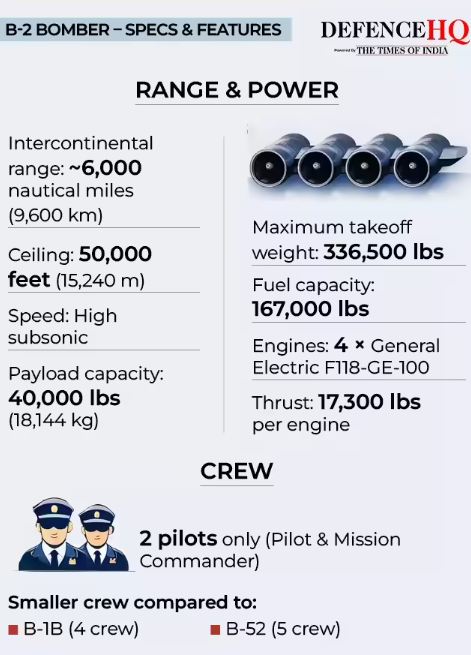
What are B2 bombers?

B-2 bombers are capable of carrying the GBU-57 bunker-buster, a weapon designed to penetrate deep underground before exploding. It was specifically developed to destroy hardened nuclear facilities and deeply buried command centers.The B-2 is one of the most advanced aircraft ever built. Its flying-wing design and special materials significantly reduce its radar signature, allowing it to avoid detection and operate in heavily defended airspace. This makes it particularly suitable for attacking strong underground targets. Notably, it is the only aircraft capable of deploying the GBU-57.

b2 bomber

During Operation Midnight Hammer last June, seven B-2 bombers reportedly dropped fourteen of these bombs on Iranian nuclear sites at Fordow, Natanz, and Isfahan. The operation marked the first known combat use of the weapon, which demonstrated the United States’ ability to target and destroy deeply buried and reinforced infrastructure.

Source link

The continuing war in Iran has depleted America’s high-end missile stockpile

The continuing war in Iran has depleted America's high-end missile stockpile

Despite frequent US and Israeli airstrikes, Iran has launched about 1,200 ballistic missiles and 4,000 rudimentary Shahid cruise missiles at Gulf countries since the war began, according to official reports from those countries, which are not widespread.Following the principle of shoot-shoot-look, ballistic missile defense requires firing at least twice at each target, with the crews launching twice and then checking the results. This means that at least 2,400 interceptors were fired during the war, and probably more, as additional missiles were sometimes required to defend against incoming projectiles. The vast majority were Patriot PAC-3 and GEM-T missiles, of which the Gulf states had fewer than 2,800 missiles before the war, based on estimates from U.S. foreign military sales authorities and three experts and a person familiar with the matter.The US Defense Department said it has all the weapons needed to accomplish its mission. Foreign Military Sales (FMS) documents show how many missiles were requested or authorized, but a smaller number may have been delivered. While Lockheed Martin Corp makes about 650 PAC-3 interceptors per year, the company signed a deal in January to build 2,000 per year by 2030. The company also builds 96 THAAD interceptors per year, but reached a separate agreement to increase that number to 400.The United States has also launched hundreds of Tomahawk missiles worth $2 million and more than 1,000 secret JASSM missiles worth $1.5 million, according to a person familiar with the matter, who did not want to be named. Although many attacks have adopted cheaper Joint Direct Attack Munitions, or JDAMs, heavy use of cruise missiles continues as parts of Iran’s airspace remain risky for close-in operations.There were approximately 4,000 Tomahawks in US stockpiles before the war, and RTX Corp. Produces about 100 each year; According to government documents, Lockheed may build up to 860 JASSMs this year. Both missiles are designed to fly long distances. These types of weapons are vital in the conflict against an advanced adversary such as China.“Allowing high-end weapons to be phased out shows that the US thinks it won’t need to fight China or can win quickly,” said Peter Layton, a former Royal Australian Air Force officer and visiting fellow at the Griffith Asia Institute. “This is strategically interesting because it shows that the Trump administration views Iran as the most important issue and is willing to take a gamble on destroying it.”The waste of munitions has alarmed US allies around the world, as weapons systems and ammunition have been withdrawn to support the campaign against Iran. According to the Washington Post, the Pentagon is considering diverting arms shipments destined for Ukraine to the Gulf region. Those supplies include missile interceptors.Officials in Germany and France, which have two of the continent’s most powerful armies, say they are seeing signs of tensions in some arms supplies. “Prolonged US involvement in the war in Iran would put significant pressure on US military stocks,” said Thomas Erndl, a defense policy spokesman for German Chancellor Friedrich Merz.

Source link

Carolyn Levitt criticizes NYT article criticizing Trump’s $300 million White House ballroom: ‘Never built anything…’

Carolyn Levitt criticizes NYT article criticizing Trump's $300 million White House ballroom: 'Never built anything...'

White House press secretary Carolyn Leavitt has hit back at criticism of a controversial new ballroom project after reports claimed Trump’s expensive project has design flaws. The reaction comes as US President Donald Trump renewed scrutiny of his proposed White House ballroom, a massive expansion project estimated to cost between $300 million and $400 million. The planned structure, part of a new east wing, will span approximately 90,000 square feet and replace the original wing, which was demolished in 2025.Architects and design experts recently raised concerns about the proposal, pointing to several unusual features. These include stairs that lead nowhere, false windows and columns that can block interior views. One of the most discussed issues has been described as a staircase serving no functional purpose. According to reports, some of the stairs in the design do not connect to any entrance.Levitt rejected the criticism, taking aim at the people behind the report. In a post responding to the New York Times analysis, he dismissed the authors’ expertise and defended the project as necessary. He argued that the White House had “needed” a ballroom for decades and saw the expansion as an improvement to the historic site.The project has been promoted by Trump as a long-awaited addition that would allow the White House to host large events indoors, rather than relying on temporary tents on the South Lawn. MAGA supporters within the administration have also emphasized that the ballroom is being funded by private donors, not taxpayers.However, critics, including architects, preservationists, and historians, argue that the ballroom’s scale and design could disrupt the historic symmetry of the White House and harm its cultural significance. Some have also raised concerns about the speed of approval and the lack of traditional oversight processes.

Source link

NASA astronaut suddenly lost ability to speak in space: What scientists know so far

NASA astronaut suddenly lost ability to speak in space: What do scientists know so far?

Space, as most of us think of it, is a quiet and peaceful place, but for those living and working aboard the International Space Station (ISS), it can also be a place of physical wonder. A recent incident, where a veteran NASA astronaut, Michael Fincke, told the Associated Press that he had lost the ability to speak clearly, has focused attention on the profound effects space can have on the human body. Although this may seem like a frightening prospect, scientists are quick to reassure us that this phenomenon, although not entirely expected, is also not entirely unexpected. The fact of the matter is that our bodies are designed to work within a specific gravitational field, and in space, even simple actions like speaking may not always work as expected. Although its reasons are not yet certain, scientists are trying to understand the reasons behind this phenomenon.

How does microgravity affect speech and the human body

In space, one of the first things an astronaut will notice is that bodily fluids shift toward the upper body and head. On Earth, gravity ensures that bodily fluids are distributed evenly. However, this is no longer the case in space. according to NASAThis is known as a “fluid shift” and can lead to nasal congestion.This is affecting not only the way an astronaut looks, but also the way an astronaut communicates. Speaking is a complex process in which sound is coordinated with airflow and resonance in the mouth and nose. An astronaut’s voice may sound different due to pressure in the head. Actually, astronauts have noticed that their voices are different in space. They may sound soft or nasal.In most cases, these effects are minor. However, it is an example of how minor physical changes can affect an astronaut’s ability to communicate in space.

Possible reasons behind temporary loss of speech

The inability to speak may be explained by a combination of neurological and physical factors. It is a known fact that space travel affects the central nervous system, including the way the brain sends signals to the muscles needed for communication and speech.A study conducted by KTH Research Institute of TechnologySweden proved on neuroscience that microgravity affects motor control and coordination, especially in the early stages of adaptation.Speaking requires a high level of coordination. It requires precise coordination of breathing, vibration of the larynx, and movement of the tongue and lips. If any of these are impaired even for a short period of time, difficulty in speaking may occur.Another factor that can be considered is psychological factors. Astronauts are working in a confined space and have to perform a high level of responsibilities. This can result in difficulty speaking, as can happen to anyone on Earth.

What does space research tell us about such events

NASA’s Human Research Program (HRP) There has always been an interest in understanding the effects of space travel on the human body over time. Research has always indicated that many changes that occur in space, whether in terms of muscle control, balance or perception, are part of the adaptation process. The human brain also needs to re-learn and understand how to react in space as it is in a state of weightlessness. This affects coordination and reaction for some time. However, it is also important to note that most changes are reversible. The human body adapts to space and returns to normal once it returns to Earth. There is also no evidence to indicate that space damage results in temporary speech problems.

A glimpse of the complexity of living in space

This unusual incident is a reminder that space is not only a technological challenge but also a biological challenge. The human body is in harmony with the earth, and even minor changes in environmental conditions have unpredictable consequences.Although the exact cause of the temporary inability to speak is not yet clear, it also serves as a reminder of the need for further research as space missions become longer and more complex. As we prepare ourselves for missions to the Moon or even Mars, we will need to understand these subtle but important effects.In that sense, events like this remind us what space exploration is all about – not just reaching other planets but also learning how we, as humans, can survive in space.

Source link

NASA’s next lunar mission like you’ve never seen it before

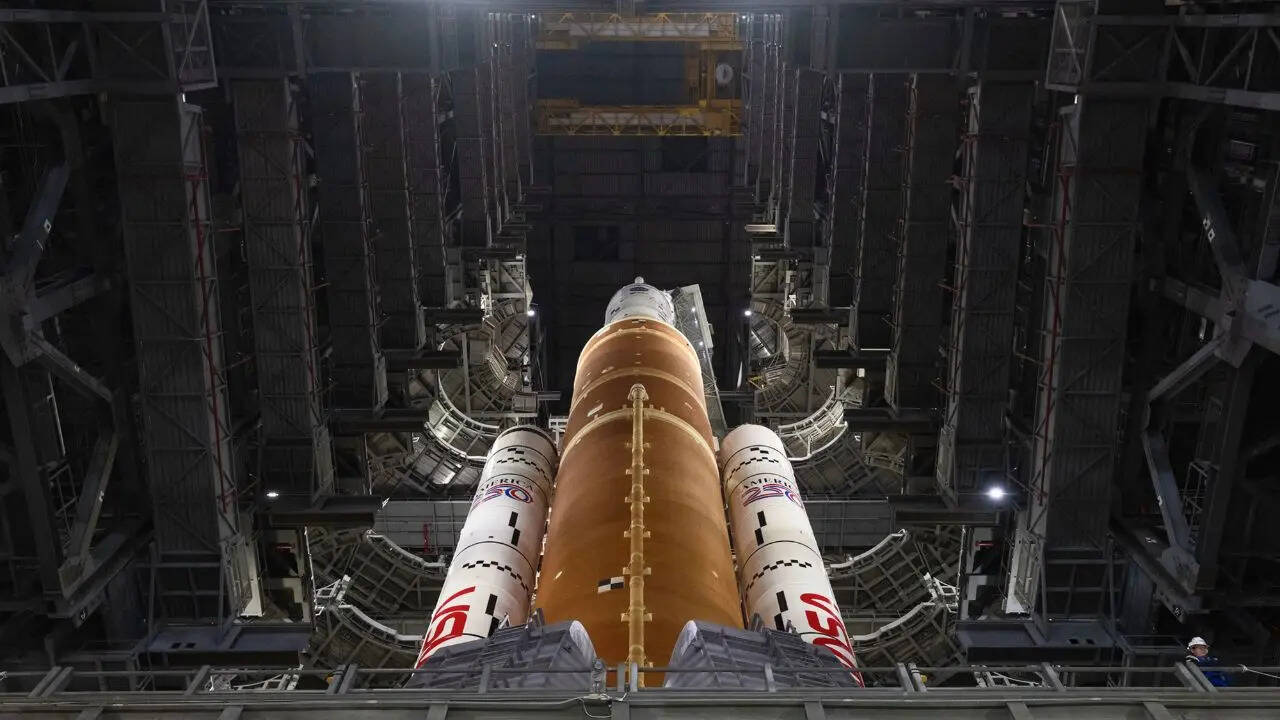
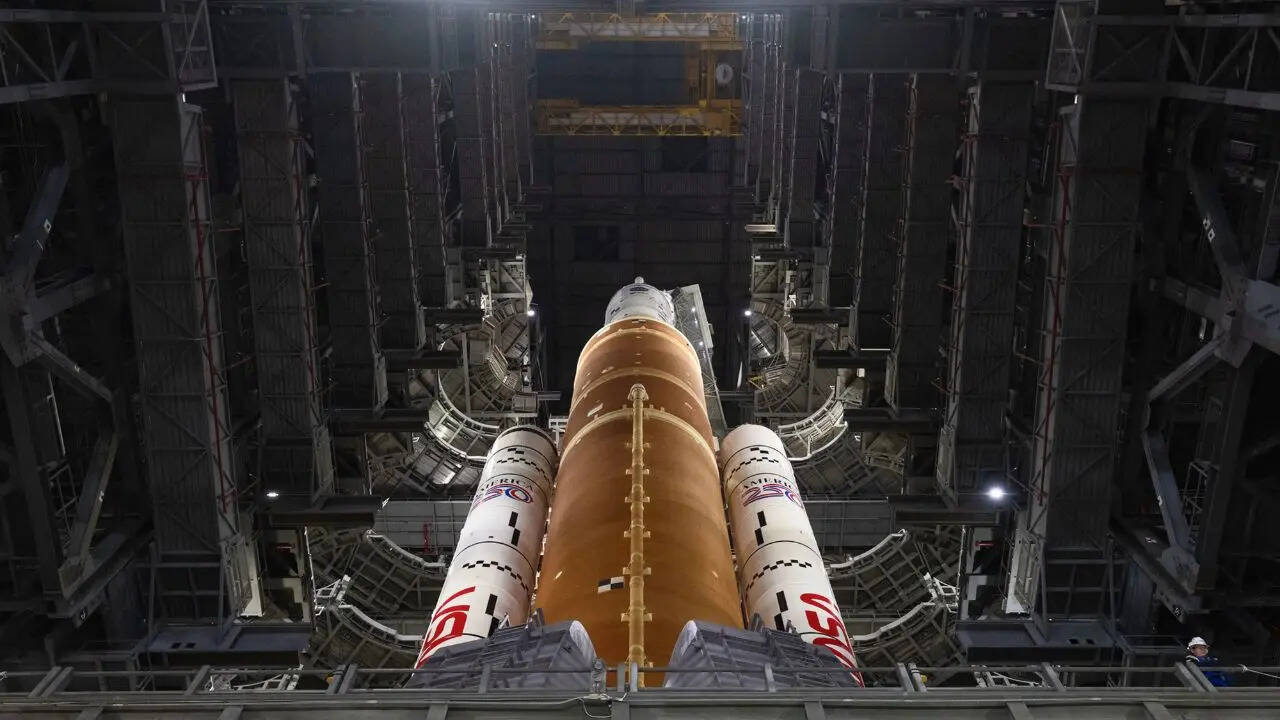
50 years after the last Apollo mission, NASA is now just 48 hours away from returning humans to the Moon with Artemis II. This historic 10-day mission marks the first crewed launch of the Space Launch System (SLS) rocket and Orion spacecraft as it carries four pioneer astronauts around the Moon.

In this photo story, we’ll look at how the crew and rocket got to this point of being ready to launch, looking at all the hard work and challenges that went on during the unmanned Artemis 1 foundation in 2022, through the crew’s high-pressure survival training and complex hardware integration. The images that follow show how the most powerful rocket in the world is being developed and how the diverse crew is preparing for the permanent presence of human beings on the Moon.

Source link