Breaking News
Queen Camilla believed Meghan had ‘brainwashed’ Harry; New royal book claims Duke of Sussex ignored old friends and changed his phone number

Queen Camilla believed Meghan had 'brainwashed' Harry; New royal book claims Duke of Sussex ignored old friends and changed his phone number

prince harry And meghan markle According to the first part of its serialization published by The Times, they were the subject of a new book by royal author Tom Bower. A Long Excerpt of Betrayal: Power, Deceit and the Battle for the Future of the Royal Family contains detailed claims about the Duke and Duchess of Sussex’s relationship with the royal family and how they have led life since leaving the Firm and moving to California.In the excerpt, Bower wrote that Queen Camilla told a friend that Meghan had “brainwashed” Harry because of changes in her behavior after the couple realized complaints about the royal family. Bower wrote: “Meghan had become a divisive agent. To please her, Harry was ignoring his old friends. He even changed his telephone number without telling his family.“A happy-go-lucky city boy becomes obsessed with revenge.” Gradually, her character started to resemble Meghan. Emotionally, he leaned toward extremes. Simple dislike became passionate hatred. Camilla told a friend, ‘Meghan has ruined Harry’s mind.’Bower also recalled a meeting after the couple returned from their honeymoon in 2018, when the Duke and Duchess of Sussex met with Prince William and Princess Kate at Kensington Palace for what she described as peace talks, the UK Mirror reports. Bower wrote: “William’s dislike of Meghan was made clear following her warning to Harry before their engagement. ‘It’s too soon,’ William said of the pace of Harry’s relationship with the ‘American actress’. William’s suspicions of Meghan were echoed by his wife.”According to the biography, during the conversation, Meghan taunted her brother-in-law, saying, “If you don’t mind, get your finger out of my face.”The excerpt says the book details how Harry was shocked by William’s reaction to the arrest of his uncle Andrew Mountbatten-Windsor, which he said heightened Harry’s concerns about his and Meghan’s royal future. It says William stood by his father King Charles and his decisions regarding Andrew, including kicking him out of the Royal Lodge and stripping him of his titles. It also said that the Prince of Wales issued a statement following Andrew’s arrest, saying that he and Princess Kate support the actions of the King, who declared that “the law must take its course”.Bower claimed that Harry became concerned that William might take drastic action if he came to the throne. The author wrote: “Correctly, Harry fears that future King William could strip all of Sussex’s titles and effectively exile him from the UK.“Whether Meghan understands the potential consequences of any deliberate disrespect to the Prince and Princess of Wales remains to be seen.”The excerpt also mentioned Harry and Meghan’s appearance in Los Angeles in January last year, when the city was being devastated by deadly wildfires. It said the couple met the victims and spent the afternoon helping by listening to people’s stories and handing out essentials at the soup kitchen. Bower wrote that the couple was ridiculed for the trip as some claimed they were taking advantage of the disaster for their own gain. Bower wrote: “After recording a video of her listening and hugging the victims, the footage was posted to Meghan’s 1.6 million Instagram followers by campaigners that day.“Instead of getting credit for her efforts, Meghan was mocked as an attention-seeking pseudo-royal.” Bower then quoted Hollywood film producer Justin Bateman, who said online at the time: “Meghan Markle and Harry are no better than ambulance chasers.“What a disgusting ‘photo op’ they got. They’re doing a ‘damage tour’? Are they politicians now? They don’t live here; they’re tourists. Disaster tourists.”Most of the pieces focused on the Invictus Games and included claims that the Duchess of Sussex had used the event for her personal gain, and that Harry and Meghan found it difficult to understand event organizers. Bower wrote: “Meghan needed a global platform for real adulation and raving fans. To her good fortune, Harry agreed she could star in the Invictus Games, which he was about to open in Canada. Just before flying to Vancouver in a private jet, she alerted her Instagram followers.“‘How should we address them?'” Canadian organizers asked. Nick Booth, chief executive of Games, replied: ‘Meghan insists on ‘ma’am’ and Harry should be called ‘sir’.’The piece also highlights alleged internal concerns, including concerns expressed by Dominic Reid, former head of the Invictus Foundation, that the sport and the contestants are being eclipsed and that the sport has turned into a “Harry and Meghan show”. It pointed to poor attendance at the program and alleged “padding” of the crowd for the benefit of the cameras, and suggested that contestants and their families were being influenced by carefully staged photo ops.With the 2027 Invictus Games taking place in Birmingham, the book claims Harry conspired to get his father, King Charles, to call the Games, saying it would dominate the media cycle and lead to a public announcement of reconciliation. However, Bower wrote that the games were probably not without opposition, making Charles’s potential attendance a huge gamble. The author wrote: “Considering all the reprehensible words and lies spoken and written by the Sussexes against the royal family since 2021, and taking into account the enormous damage done by the Sussexes’ exploitation of their royal titles, the chances of the King trotting out the Prince and Princess of Wales to appease the Sussexes in the spring of 2026 are extremely slim.”“For the king to publicly meet his son and his troublesome daughter-in-law, who are guilty of betraying the royal family, is a gamble with little upside. The feud embroiling them is far from resolved, and it remains to be seen what damage the 2027 Invictus Games will do to the already fragile family.”Within hours of the release of the first part of the episode, a spokesperson for the Duke and Duchess of Sussex released a statement condemning the allegations. The representative said: “Mr Bower’s comments have long crossed the line from criticism to fixation. This is a man who has publicly said, ‘The monarchy really depends on eliminating the Sussexes from our position of life,’ language that speaks for itself.“He has made a career out of creating ever more elaborate theories about people he doesn’t know and have never met. Those interested in the facts will look elsewhere; those looking for deranged conspiracy and melodrama know where to find them.”
Source link

Dubai Global Village: UAE News: Dubai Global Village cancels Eid Al Fitr fireworks, will remain closed until further notice. world News

UAE News: Dubai Global Village cancels Eid Al Fitr fireworks, will remain closed until further notice
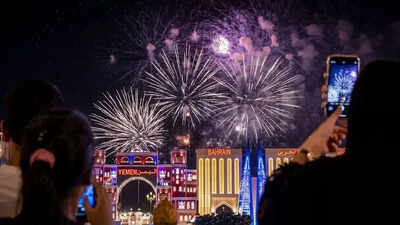
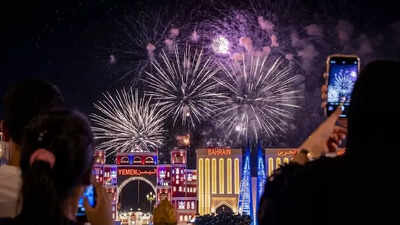
Dubai’s Global Village remained closed; Eid fireworks celebrations canceled / Image: File

Dubai’s popular cultural attraction Global Village will not host its traditional Eid Al Fitr fireworks celebration this year, as the destination will remain closed until further notice amid precautionary safety measures announced by the authorities.The announcement comes just days before the expected Eid holidays, disappointing many residents and tourists who usually gather at the venue for spectacular fireworks displays at the end of Ramadan. Officials said the decision follows nationwide government directives banning fireworks and drone shows as part of broader safety precautions.Global Village, one of Dubai’s most visited seasonal attractions, has been closed for more than two weeks and will remain closed until further notice as authorities continue to monitor the evolving regional situation.

Dubai Global Village Eid fireworks canceled for 2026

Organizers confirmed that all planned Eid Al Fitr fireworks and drone shows have been canceled this year. The popular open-air attraction usually hosts massive fireworks displays during major holidays, drawing thousands of visitors each evening.However, the venue said it was complying with official government guidelines that temporarily ban fireworks and drone entertainment across the country.The cancellation marks a significant change for the festive period, as fireworks have long been a highlight of Eid celebrations at the venue. Last season, colorful displays illuminated Dubai’s skyline while visitors enjoyed shopping, dining and live performances.

Why was Global Village closed for Ramadan 2026?

The extended closure is linked to heightened regional tensions in the Middle East, which have prompted authorities to take extra security precautions at major public places. The ongoing regional conflict involving the United States, Israel and Iran has prompted governments across the Gulf to reevaluate public events and gatherings as a precaution.Reports indicate that the UAE has recently intercepted several ballistic missiles and drones launched from Iran, highlighting the seriousness of the situation and the need for vigilance. As a result, several major attractions in the UAE, including Dubai Parks and Resorts and Ain Dubai, have also been temporarily closed while authorities evaluate security conditions.

What visitors should know

Eid Al Fitr in the UAE is expected to begin around March 19, 2026, depending on the sighting of the crescent moon.Less than a week before the holidays, officials advise residents and tourists to stay updated about announcements about reopening or changes to scheduled events through Global Village’s official website and social media channels.This popular attraction, known for its international pavilions, street food, shopping stalls and cultural performances representing over 90 countries, typically attracts millions of visitors every season.Although some Eid celebrations may be overshadowed by the cancellation of fireworks, officials say security remains a top priority given the ongoing geopolitical tensions in the region.

Source link

How a Ukraine trip revealed Banksy’s ‘true identity’ world News

How a trip to Ukraine exposed Banksy's 'true identity'

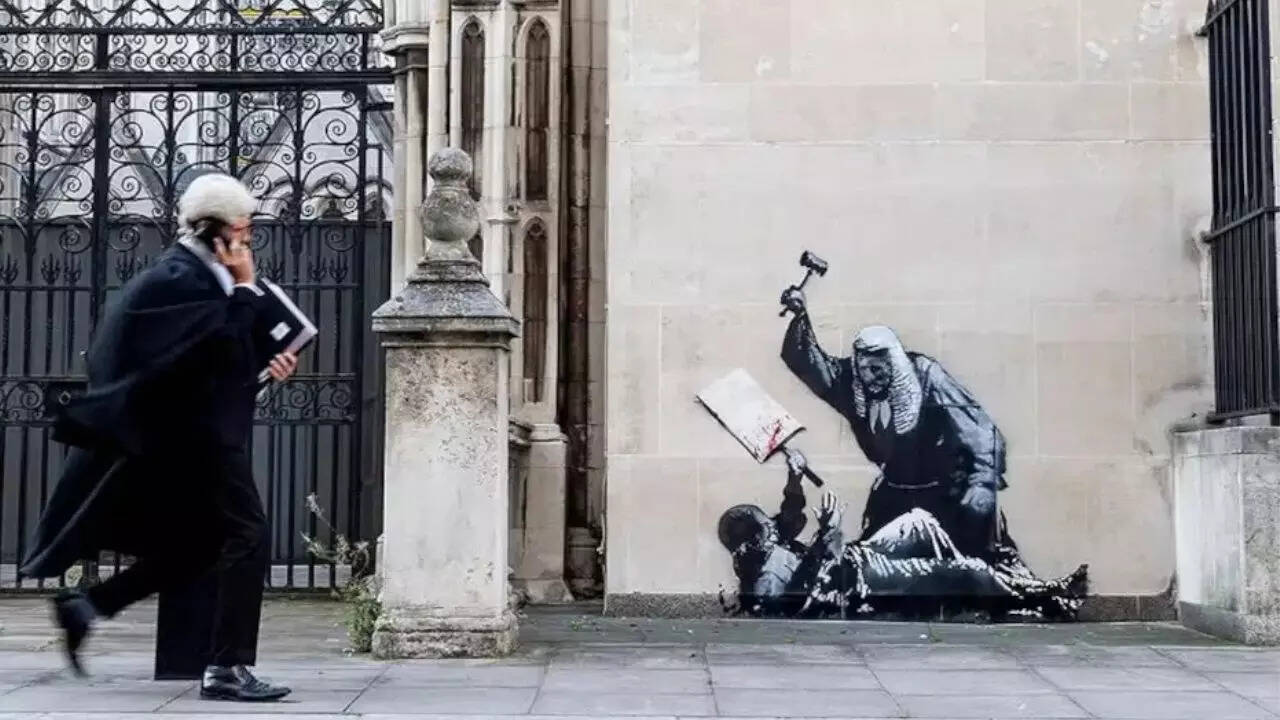
For nearly three decades the art world has been engaged in a strange cultural ritual. People stand in front of the walls, looking at them with unusual seriousness and trying to interpret a joke left by someone during the night. A mouse with a plank. One policeman hugging another policeman. A child is moving towards a red balloon which has already slipped. The name beneath the stencil is always the same: Banksy.No biography, no interviews, no public appearances. Just a pseudonym that became one of the most recognizable signatures in modern art.Banksy’s anonymity was not just a curiosity but a part of the work. Street art was always in tension with the law, and a guy who mocked governments and corporations with spray paint couldn’t easily step out into the light of day without losing that rebellious energy. Over time mystery became inseparable from art. The world wasn’t just looking at Banksy’s graffiti; It was also looking for the person who had painted them.

How a trip to Ukraine exposed Banksy's 'true identity'

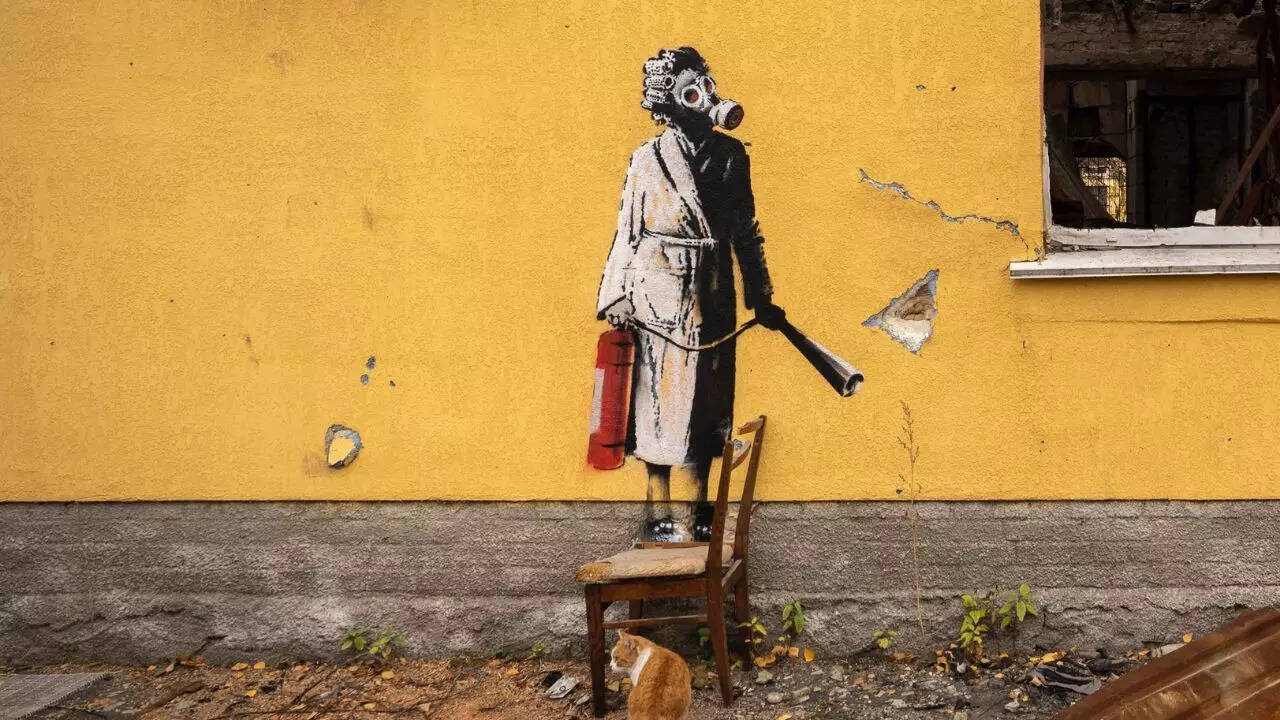
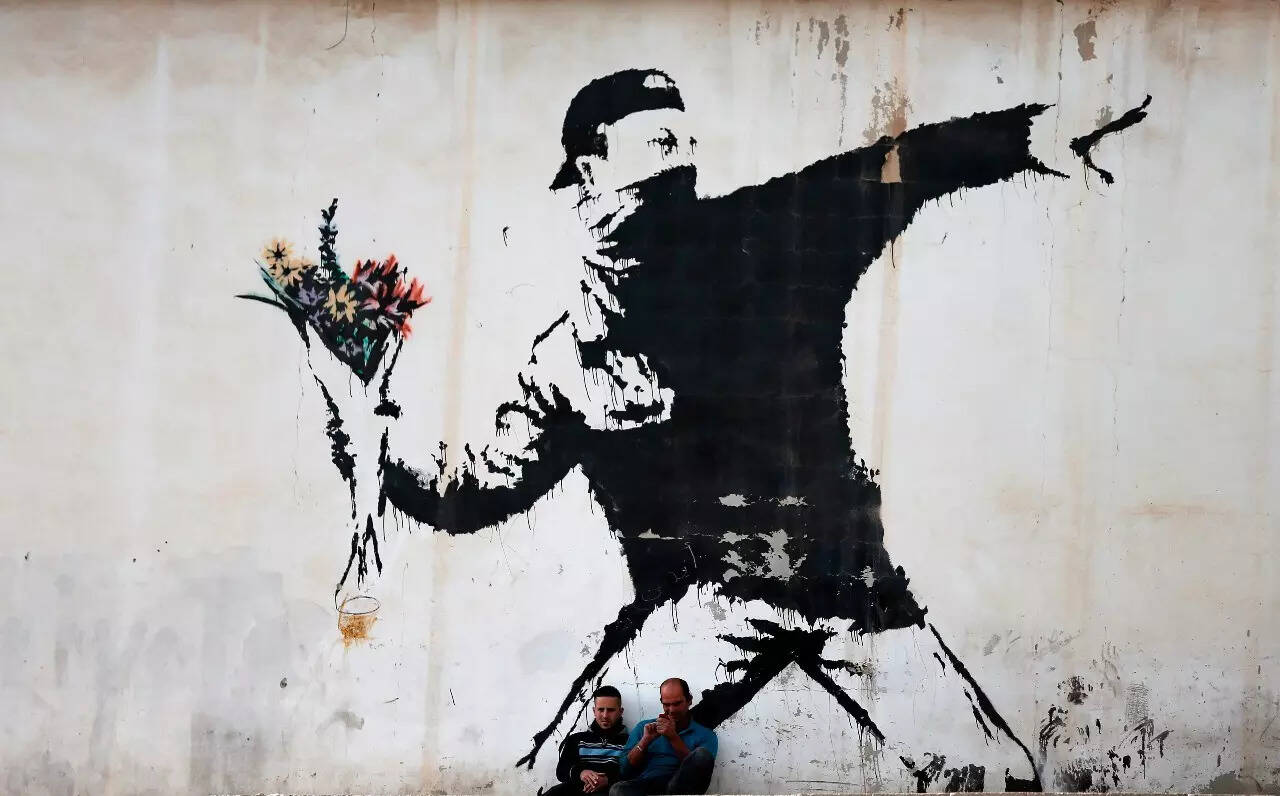
The answer, when it finally began to emerge, did not come in the form of any dramatic revelation or triumphant revelation. Instead it emerged gradually through patient reporting. The Reuters investigation traced clues scattered across continents and decades. The series moves from the graffiti culture of Bristol to the bombed-out buildings of Ukraine and finally to a forgotten police file in New York. What the journalists uncovered was less a dramatic display than a gradual dismantling of a myth that had been carefully maintained for years.The story begins in Bristol, a port city in southwest England, where a thriving underground scene of musicians, graffiti artists, and political activists developed at the turn of the twentieth century. Bristol in the 1990s was fertile ground for experimentation. Spray paint was cheap, public walls were abundant and authority provided a steady supply of targets for satire. In that environment a young graffiti artist began to develop the style that would later define Banksy’s work.A technical choice proved decisive. The artist began using stencils instead of painting freehand. The stencils allowed images to be applied quickly and repeatedly. They also allowed the artist to work at pace, which was necessary any time police patrols came into view. This method created the clean silhouettes and sharp outlines that later became synonymous with Banksy’s visual language.Topics emerged just as quickly. War, policing, capitalism, and consumer culture all appeared in early works, usually filtered through a mischievous sense of humor. Banksy’s characters often appeared simple but had a sharp political edge. Children confronted soldiers, animals mocked officials and everyday objects were transformed into cool acts of rebellion. One image in particular caught people’s imagination: a little girl moving toward a heart-shaped balloon floating in the sky. The work was emotionally simple, instantly recognizable, and quietly devastating.

How a trip to Ukraine exposed Banksy's 'true identity'

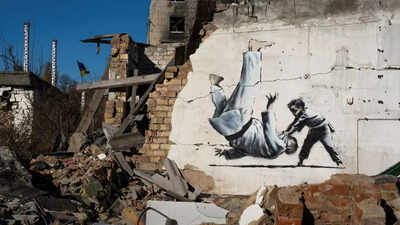
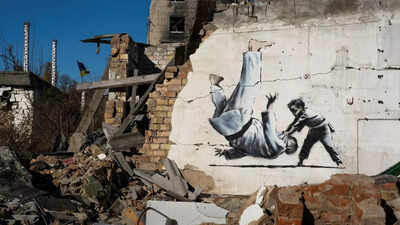
As Banksy’s murals began to appear in cities around the world, the mystery surrounding the artist deepened. Journalists and enthusiasts proposed several candidates for the identity behind the pseudonym. One of the most frequent names was Bristol artist Robin Gunningham, whose background matched the timeline of Banksy’s early career. The other was musician Robert Del Naja of the band Massive Attack, who himself had been part of the Bristol graffiti scene years earlier. Speculation developed into a small cultural industry, in which entire communities analyzed itineraries and stylistic similarities in an attempt to identify the elusive artist.Meanwhile Banksy continued to work. Murals appear in London, Paris, New York and the Middle East, often containing scathing comments about war, immigration and political power. Anonymity lasted so long that it seemed almost supernatural. Banksy seemed less like an individual artist and more like an invisible presence capable of appearing on any blank wall.The modern investigation of his identity began in an unexpected place. In 2022, during the war in Ukraine, several new Banksy murals appeared on damaged buildings near Kiev. Photos showed gymnasts balancing on debris and children confronting armed soldiers. The works quickly attracted international attention. He also raised a practical question. If Banksy had traveled to an active war zone to create them, someone would surely have seen him.Reporters began talking to residents of the villages where the murals appeared. Eyewitnesses reported that a small group was arriving in an ambulance. Two masked painters worked rapidly with stencils and spray paint while a third man accompanied them. The man was recognizable because he had artificial legs and an arm. He turned out to be a British war photographer who had previously worked with Banksy’s wide circle of artists and musicians. Details suggest that those involved in Ukrainian graffiti may have connections to the Bristol scene, from which Banksy originally emerged.

How a trip to Ukraine exposed Banksy's 'true identity'

The clues soon link back to one of the long-standing suspects. Robert del Naza traveled to Ukraine around the same time that the frescoes appeared. The discovery briefly revived the idea that the composer might be Banksy himself or at least be closely associated with the operations behind the artworks. Yet the investigation ultimately revealed that the real breakthrough was hidden elsewhere, in a piece of paperwork that had lain quietly in an American archive for more than two decades.In September 2000 a young British graffiti artist climbed onto the roof of a building in Manhattan during New York Fashion Week. A large billboard advertising Marc Jacobs clothing stood on the street there. The artist began making changes to the advertisement, adding exaggerated teeth and creating a speech bubble next to the model’s face. Even before the work was completed, the police officers caught him in the act.At the time the incident seemed like a routine case of vandalism. The charges were reduced, a small fine was paid and the man was released. Little did anyone realize that the man standing on that rooftop would soon become one of the most influential artists of the twenty-first century. Yet this case left behind an invaluable scar. Inside the police file was a handwritten confession signed by the person who had defaced the billboard. The signature read Robin Gunningham.The discovery provided the strongest evidence yet that Banksy and Gunningham were the same person. The name had been rumored for years, but police documents turned the speculation into something more concrete. The mysterious street artist whose work spread around the world appears to have started his career as a graffiti painter from Bristol, who was once arrested while vandalizing a billboard in New York.Even this conclusion did not completely resolve the story. After the mid-2000s the public record trace for Robin Gunningham almost completely disappears. Addresses, property documents and other bureaucratic traces disappeared. Former colleagues later suggested that the explanation was straightforward. The artist had changed his legal name. The new identity was intentionally generic, a name that could easily blend into everyday life without attracting attention.In the end Banksy’s story highlights a strange paradox about modern fame. The artist created some of the most widely recognized images in contemporary culture while remaining personally invisible. His works criticized power structures and commercial systems, while those same systems turned his paintings into highly valued commodities. The myth of Banksy became as powerful as the artworks themselves.The investigation which revealed his identity as Robin Gunningham does not completely dispel that myth. The graffiti is still visible throughout the night. Pictures still speak in the same mischievous voice. The artist still avoids public appearances and interviews. What has changed is only the knowledge that behind the legend stands a man who once walked the streets of Bristol with a stencil and a spray can, and discovered that invisibility could be the most powerful artistic tool of all.

Source link

Did Trump reject Putin’s Iran deal to end the war? What was the offer?

Did Trump reject Putin's Iran deal to end the war? What was the offer?
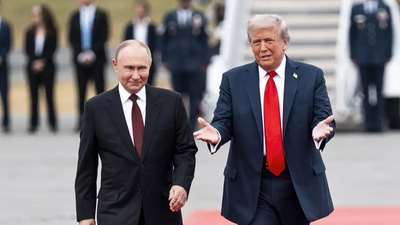
Vladimir Putin and Donald Trump (file photo)

Vladimir Putin Can’t you make an offer that Donald Trump won’t reject? During a phone call with Trump this week, Putin proposed that Russia take possession of Iran’s enriched uranium as part of a broader deal tied to ending the ongoing war, Axios reported.According to a scoop from Axios, Trump rejected the offer.The situation in the Middle East worsened after Donald Trump launched a brutal mission against the Tehran regime led by Ayatollah Ali Khamenei, who was later killed. Long frustrated by Iran’s nuclear ambitions, the US-Israeli military strike targeted key nuclear and military sites, leaving Iran weakened and angry and triggering a wave of retaliatory attacks across the Gulf region.Securing Iran’s 450 kilograms of 60%-enriched uranium, which can be converted into weapons-grade material in a matter of weeks and is enough for more than 10 nuclear bombs, remains one of the key objectives for the United States and Israel in the ongoing conflict.In theory, a proposal from Russian President Vladimir Putin could help remove Iran’s nuclear stockpile without the need for American or Israeli troops on the ground. The idea involves Russia taking possession of enriched uranium.Russia already has advanced nuclear capabilities and previously stored Iran’s low-enriched uranium under the 2015 nuclear deal, making it one of the few countries with the technical capacity to handle such material.Putin reportedly raised several ideas about ending the war between the United States and Iran during a phone call with US President Donald Trump on Monday. The uranium custody proposal was one of the suggestions.“This is not the first time this has been offered. It has not been accepted. The US position is that we need to secure the uranium,” a US official told Axios.Russia made similar proposals during US-Iran nuclear talks last May, before the United States and Israel attacked Iran’s nuclear facilities in June, and again in the weeks before the current war.During the last round of talks before the conflict began, Iran rejected the idea of ​​transferring uranium abroad. Instead, Tehran proposed to dilute the enriched uranium within its own facilities under the supervision of the International Atomic Energy Agency.It is not clear whether Iran would now be willing to accept such a proposal.The United States official said, “The President talks to everybody – Xi, Putin, the Europeans, and he is always ready to make a deal. But it has to be a good deal. The President doesn’t make bad deals.”Meanwhile, according to an earlier Axios report, the United States and Israel have also discussed the possibility of sending special forces to Iran in the later stages of the war to secure the nuclear stockpile.US Defense Secretary Pete Hegseth said at a press conference on Friday that the United States has “several options” for taking control of Iran’s highly enriched uranium.Hegseth said one possible option would be for Iran to voluntarily surrender the stockpiles, a move the United States “would welcome.”He said, “They were not willing to do that in negotiations. I would never tell this group or the world what we are willing to do or how far we are willing to go – but we certainly have options.”However, Trump suggested that securing enriched uranium is not currently a top priority. “We’re not focused on that, but at some point we may be,” he said.The US president also acknowledged for the first time that Russia could assist Iran during the conflict, following reports that Moscow had provided intelligence that could help target US forces.“I think [Putin] They might be getting a little help, yes. And he probably thinks we’re helping Ukraine, right?” Trump said in the Fox interview.“So he says this, and China will say the same thing. It’s like, hey, they do this and we do this, in all fairness.”

Source link

Cyber ​​threats: UAE News: Wiper malware risks rise as authorities warn of one of the ‘most devastating’ cyber threats | world News

UAE News: Viper malware threat grows as authorities warn of one of the 'most devastating' cyber threats
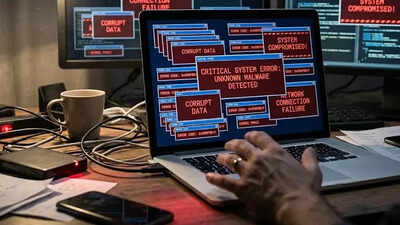
UAE residents urged to remain vigilant as authorities flag rising wiper malware attacks / Image: File

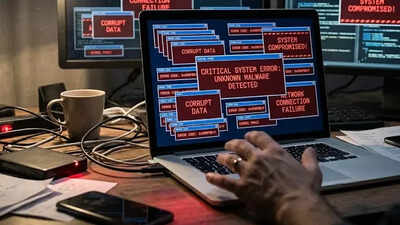
The UAE has issued a new cyber security alert, warning residents, businesses and organizations about the increased risk of “wiper malware”, one of the most destructive forms of malicious software capable of permanently deleting data and corrupting systems.The warning was issued by the UAE Cyber ​​Security Council, which urged users across the country to remain vigilant and strengthen basic digital security practices as cyber threats continue to evolve globally.Unlike many cyberattacks that aim to steal information or demand ransom payment, wiper malware is designed with a single goal: complete destruction of data and disruption of digital services.

Wiper Malware: ‘Delete All’ Virus

Cybersecurity experts describe wiper malware as highly destructive malicious software that intentionally erases files, damages systems, and disrupts operations. Instead of encrypting files and demanding money like ransomware, this malware destroys data completely, often leaving victims unable to recover the system unless they have a backup.Once it has infiltrated a device or network, malware can:

  • Delete or corrupt files
  • damage to the operating system
  • Disable system boot processes
  • Spread across the network and erase connected devices

In severe cases, damage can shut down entire organizations, as systems become unusable and critical data is permanently lost. Due to its destructive nature, experts say wiper malware is often used in cyber warfare, large-scale sabotage or politically motivated cyber attacks.

UAE issues alert for individuals and businesses

The UAE Cyber ​​Security Council stressed the importance of vigilance in protecting digital infrastructure and personal data, warning that the threat could target both individuals and organizations. Officials said awareness and preparedness are key to ensuring the resiliency of digital services and reducing the risk of large-scale cyber disruption.The alert comes as global cyber activity has intensified, with governments warning about increasingly sophisticated malware attacks targeting infrastructure, companies and digital platforms.

How can you protect your data?

To reduce the risk of becoming a victim of devastating cyber attacks, the Council shared several essential cyber security practices.Users and organizations are advised to:

  • Regularly update software and systems to fix vulnerabilities
  • Avoid clicking suspicious links or attachments in emails or messages
  • Securely backup important data and store backups separately
  • Fix security vulnerabilities quickly to prevent exploitation
  • Be alert for unusual system activity or unknown downloads

According to cybersecurity officials, these steps may seem simple but are considered the first line of defense against major cyber threats.

broader context

Cyber ​​threats are growing in scale and sophistication around the world, and the UAE has emphasized cyber security as a key national priority. Officials have already warned that the country faces hundreds of thousands of cyber breaches every day, targeting everything from businesses to critical infrastructure.Experts say destructive malware like Wiper represents a new level of cyber risk because recovery is often impossible without strong backup systems and quick response measures.For this reason, officials are urging organizations and residents to take cybersecurity as seriously as physical security, especially as more services and daily activities are moving online.

Source link

Saudi Arabia: Filipino domestic worker arrested in Medina after stabbing child to death at home. world News

Saudi Arabia: Filipino domestic worker arrested in Medina after stabbing child to death at home
Security patrol in Medina arrested a Filipino domestic worker for murder of a child/Representative Image

A tragic incident in the Medina area of ​​Saudi Arabia has led to a Filipino domestic worker being arrested for murdering a child inside her home. Authorities say the suspect was taken into custody immediately after the attack and the case has now been referred to the public prosecution for further legal action. According to Saudi Arabia’s Public Security, security patrols in the Medina area arrested a housemaid of Filipino nationality after she allegedly stabbed a child to death inside her home. The suspect was captured and taken into custody shortly after the incident, officials said. Officials confirmed that legal procedures were initiated against the woman following her arrest. The case has since been transferred to the Public Prosecution, which will investigate and handle legal proceedings related to the incident. Public Security also confirmed the development in a statement posted on social media platform X, adding that the suspect was detained by security patrols and referred to prosecutors as part of the legal process.

Source link

Jidji Ayokwe: France returns African talking drum: the sacred instrument that once ‘talked’ to entire villages and warned of danger. world News

France returns African talking drum: the sacred instrument that once 'talked' to entire villages and warned of danger

A sacred drum that once served as a powerful communication tool for communities in Ivory Coast has returned home, more than a century after it was confiscated during French colonial rule. This massive wooden instrument, known as the Jidji Ayokwe, was taken by French authorities in 1916 and later taken to France, where it remained in museum collections for decades. Its recent return is an important moment for cultural restitution and historical justice. For the Abri people, the drum is more than an artefact. It represents a living symbol of identity, tradition and authority, once capable of sending messages across entire communities through sound alone.

Return of the sacred talking drum

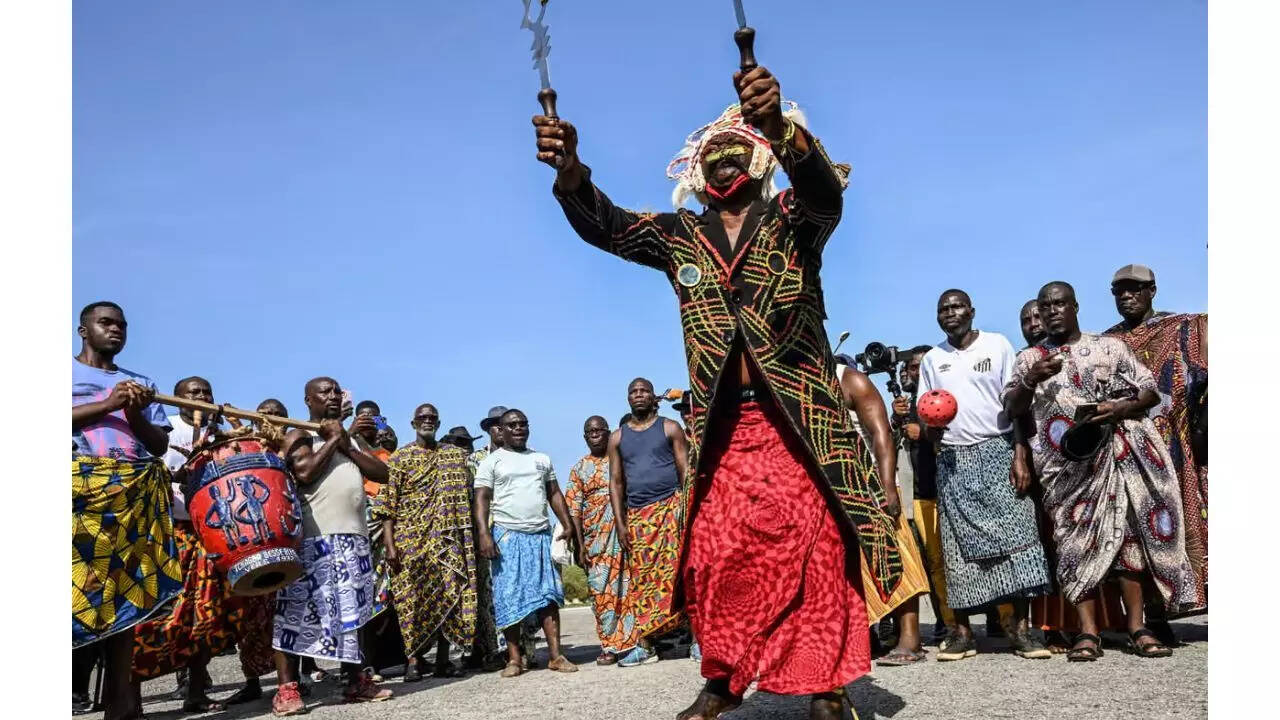
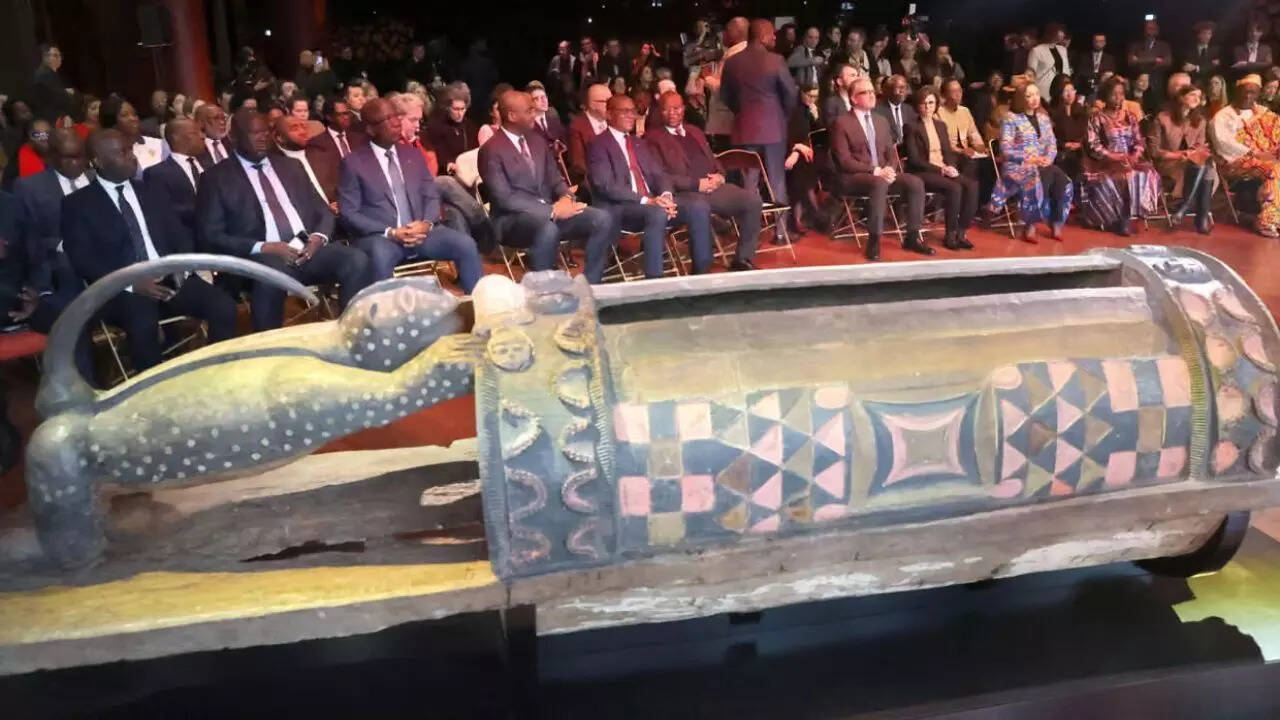
Djidji Ayokwe was officially returned to Ivory Coast after the French Parliament approved a special law allowing the removal of artifacts from France’s national collections. The sacred drum was displayed in Paris for decades, first in the former Trocadero Museum and later in the Musée du quai Branly.It arrived in Abidjan aboard a specially chartered plane and was welcomed by traditional dancers, local chiefs and cultural officials at Félix Houphouët-Boigny International Airport. The drum was placed inside a large wooden box marked “fragile” as part of careful efforts to protect the historic object during transportation.Ivory Coast’s Culture Minister François Remarque described the moment as extremely emotional and historically significant.“It’s a historic day with a lot of emotions,” he said. “We are living through a moment of justice and remembrance that ultimately marks the return of Jidji Ayokwe to his native land.”

A traditional dancer welcomes the return of Djidji Ayokwe in Abidjan.

A traditional dancer welcomes the return of Djidji Ayokwe in Abidjan.

What is Jidji Ayokwe Talking Drum?

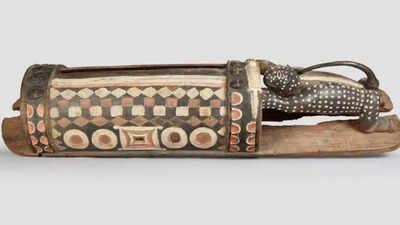
The Jidji Ayokwe, sometimes translated as “Panther Lion”, is a giant wooden speaking drum measuring over three meters in length and weighing approximately 430 kilograms. It is made from Iroko wood, a durable hardwood that is widely used in West African craftsmanship.Unlike the smaller talking drums used by musicians, this instrument was designed for long distance communication. Its powerful sound could travel across large areas of land, allowing messages to reach many villages.This drum belonged to the Abri people, an ethnic group historically based around the area that is now Abidjan, Ivory Coast’s largest city. The drum was considered sacred within Abri society and was closely associated with leadership and community authority.

Why is it called talking drum?

The name “talking drum” comes from the way the instrument can mimic the rhythm and intonation patterns of human speech.Many West African languages ​​are tonal, meaning that the pitch and rhythm of words can change their meaning. Skilled drummers learned how to reproduce these tonal patterns through carefully controlled beats. By adjusting rhythm, speed, and pitch, they can transmit recognizable phrases and signals.For communities living in forests and lagoons, the drum served as an early communication system.Through specific rhythmic patterns it can announce gatherings, broadcast important messages, warn of danger or summon people for gatherings and emergencies. Villagers familiar with the pattern could understand what the drum was saying even from a distance.

Ceremony marking the return of the Jidji Ayokwe Talking Drum.

Ceremony marking the return of the Jidji Ayokwe Talking Drum.

a drum that had authority

Beyond its practical use, the Jidji Ayokwe also has a deep symbolic meaning. It represented authority within the community and was closely associated with traditional leadership.Drums were generally used by designated drummers who were tasked with communicating important messages on behalf of chiefs and elders. Because of its sacred status, the instrument was not treated as an ordinary musical instrument but as a cultural object associated with identity and rule.Its presence in a village indicates unity and organization within the Abri community.

How were drums taken up during colonial rule?

The removal of the drums dates to 1916, during the period of French colonial administration in Ivory Coast. French authorities reportedly confiscated the device because they feared its ability to organize communities and spread messages rapidly.After being confiscated, the drum was eventually taken to France in 1929. There it became part of museum collections documenting African cultures during the colonial era.For decades Jidji Ayokwe remained away from the community that built it.

Part of a broader movement to return cultural artefacts

The return of the talking drums is part of a broader international debate about the restitution of cultural objects taken during colonial rule.In recent years France has begun returning many important artefacts to African countries. The process accelerated in 2017 after French President Emmanuel Macron announced that African heritage should be able to return to the continent.Ivory Coast has requested the return of more than a hundred cultural objects currently held in European museums. Jidji Ayokwe is the first of these artefacts to be repatriated.Similar returns have already happened elsewhere. France had previously returned royal treasures and a Senegalese leader’s historic saber from Abomey to Benin.

A new home for the sacred drum

Following its return, the Djidji Ayokwe will be displayed at the Museum of Civilization in Abidjan.According to museum director Francis Tagro, the instrument will remain in a central location in the institution’s galleries so that visitors can learn about its cultural significance.“We are extremely happy and proud to receive this sacred drum,” Tagro said. “It means a lot to us, and it will enhance the younger generation’s sense of culture.”For many Ivorians, the drum’s return represents much more than the recovery of a historical artifact. It restores a symbol of collective memory and reconnects a community with a piece of its cultural heritage that was absent for more than a century.

Source link

Dubai News: ‘Vacate the office?’ Standard Chartered reacts to viral rumors in UAE emirates amid Iran vs US-Israel war

Dubai News: 'Vacate the office?' Standard Chartered reacts to viral rumors in UAE emirates amid Iran vs US-Israel war
Have banks started leaving Dubai? Standard Chartered issues urgent statement amid Iran vs US-Israel war

The intensifying geopolitical conflict between Iran, the United States and Israel is beginning to roil global financial markets, prompting international banks to reevaluate operations in the Gulf. At the center of the latest developments is Standard Chartered, which has moved to clarify reports that it has furloughed staff from its offices in Dubai.The London-headquartered bank said reports of its Dubai offices being completely evacuated were false. Instead, the bank confirmed it had already extended work-from-home arrangements as a precautionary measure, stressing that its regional operations remain active and business continuity measures are working as normal.The clarification comes after several international media reports that several global financial institutions are vacating offices in the emirate amid growing security concerns linked to the Iran vs US-Israel war.

Rumors of withdrawals spread in Dubai’s banking sector amid Iran vs US-Israel war

Earlier reports indicated that some international banks had begun pulling their staff out of physical offices in Dubai after Iranian officials warned that economic and financial targets linked to the US and Israel could become potential targets in a conflict. The warnings came after an attack on a Tehran administrative building linked to Bank Sepah, one of Iran’s major state-owned banks historically linked to military networks.Iranian officials later warned that economic infrastructure linked to American and Israeli interests in the region could face retaliation. As a result, financial institutions operating in the Gulf began activating contingency plans designed to protect employee safety and maintain operations even if the security environment deteriorates.Many banks have reportedly advised employees to temporarily work remotely or avoid office buildings in major financial districts. However, Standard Chartered quickly moved to clarify that the measures were precautionary rather than an emergency evacuation.

Work from home extended amid Iran vs US-Israel war

According to the bank’s statement, employees in Dubai and wider middle east Work was already being carried out under the flexible remote-working framework introduced during the early stages of the regional crisis. The extension of the arrangement was therefore described as a security measure rather than a response to any specific threat to the Bank’s facilities.Standard Chartered also stressed that its operations in the Gulf are fully functional and the UAE remains a key market for the bank’s global strategy. The clarification is intended to reassure clients and investors that the institution’s regional presence remains stable despite the volatile geopolitical environment.

Why does Dubai matter to global banks?

Dubai has become one of the most important financial centers in the Middle East over the past two decades, attracting global banks, investment firms, hedge funds and wealth managers. Much of this growth has been driven by the rise of the Dubai International Financial Centre, often referred to as DIFC.Established in 2004, the DIFC has transformed Dubai into a regional financial powerhouse. By the end of 2025, there were more than 290 banks, more than 100 hedge funds, nearly 500 wealth management firms, and more than 1,200 family offices and related institutions in the district.For international lenders such as Standard Chartered, the UAE plays a strategic role in connecting markets in Asia, Africa and the Middle East. The bank generates a significant portion of its income from operations in the region and has appointed a number of senior executives to Dubai to oversee regional business expansion.

Widespread corporate precautions across the Gulf amid Iran vs. US-Israel war

Standard Chartered is not alone in implementing precautionary measures. Other international firms and financial institutions have also taken steps to protect employees as regional conflicts escalate. Some companies have directed employees to work remotely, while others have allowed employees to temporarily relocate outside the area.Meanwhile, many global banks have reviewed business continuity plans to ensure that even if physical offices become inaccessible, operations can still continue. In some cases, banks temporarily closed branches or limited on-site operations while shifting services to digital platforms. These measures highlight the increasing sensitivity of multinational corporations to geopolitical risk in the Middle East.The current crisis stems from the escalating confrontation between Iran and the US-Israel alliance, which has triggered missile attacks, drone strikes and military exchanges across the region. The conflict has already disrupted aviation routes, shipping lanes and energy markets. Financial institutions, especially those with large regional operations, are closely monitoring the situation to ensure the safety of employees and customers.Analysts say such precautionary measures are common during geopolitical instability and do not necessarily indicate an imminent return of investment. Nevertheless, the situation has raised concerns about how prolonged instability could affect Dubai’s reputation as a stable global financial centre.

Dubai’s safe haven status comes under scrutiny amid Iran vs US-Israel

For years, Dubai has marketed itself as one of the safest and most business-friendly environments in the Middle East. Its political stability, world-class infrastructure and international regulatory framework have attracted hundreds of multinational companies. However, regional conflict has sometimes tested that reputation.Reports suggest that global banks are emptying offices, sparking debate over whether geopolitical tensions could undermine the city’s position as a safe haven for global finance. Experts say that while short-term precautionary measures remain in place, the long-term fundamentals supporting Dubai’s financial ecosystem remain strong.As the Iran vs. US-Israel war escalates, multinational corporations operating across the Gulf are likely to step up security protocols. Remote work policies, contingency planning and employee relocation options are expected to remain part of corporate strategies until the geopolitical outlook stabilizes.For now, Standard Chartered’s clarification highlights an important difference: precautionary measures should not necessarily be interpreted as a corporate withdrawal from the sector. Instead, they reflect the careful balancing act that global companies must perform when operating in a region experiencing sudden geopolitical shocks. Despite the uncertainty, Dubai’s financial sector continues to operate and major institutions are committed to maintaining operations while prioritizing the safety of employees.

Source link

Why is the US sending attack ship USS Tripoli, thousands of Marines, to the Middle East and what does it mean for the Iran vs. Israel war?

Why is the US sending attack ship USS Tripoli, thousands of Marines, to the Middle East and what does it mean for the Iran vs. Israel war?
US expands military presence in Middle East amid Iran-Israel tension, USS Tripoli deploys marines

The United States is significantly expanding its military footprint middle eastThousands of marines and a powerful amphibious assault ship are being sent to the region as tensions rise with Iran. The deployment comes amid a rapidly escalating conflict between the United States, Israel and Iran, which has already led to missile attacks, drone strikes and regional instability across the Gulf.According to reports, the Pentagon has ordered the deployment of the amphibious assault ship USS Tripoli (LHA-7) and its Marine Expeditionary Unit to the region, bringing thousands of combat-ready troops and advanced military equipment closer to the conflict zone. The move signals that Washington is preparing for a broader confrontation, while also trying to protect strategic shipping lanes and US assets in the Middle East.

Rapid US military buildup amid Iran vs Israel war

The deployment reportedly includes approximately 2,000-2,500 Marines as well as additional Sailors and naval assets who will operate from the USS Tripoli and accompanying ships. A Marine expeditionary unit is designed to be a highly flexible force capable of conducting a wide variety of missions, including:

  • amphibious assault
  • evacuation of civilians
  • raid on enemy positions
  • manual operations
  • Securing strategic infrastructure.

Because these units operate from amphibious ships rather than land bases, they allow the U.S. military to respond quickly to crises without relying on host country permission. Officials say the deployment was requested by the United States Central Command, which oversees US military operations throughout the Middle East. The goal is to give commanders more options as tensions with Iran continue to rise.

Why is America sending marines now amid Iran vs Israel war?

The decision comes against the backdrop of a rapidly escalating regional conflict due to US-Israeli attacks on Iranian military and nuclear targets in late February 2026. Those attacks reportedly killed several senior Iranian leaders and damaged key military facilities, prompting Tehran to launch retaliatory missile and drone attacks on Israel and US bases across the Gulf. Since then, the conflict has spread on several fronts:

  • Iranian missiles and drones are targeting Israel and Gulf countries
  • Attacks on shipping routes near the Strait of Hormuz
  • Drone and militia attacks on US targets in Iraq and Syria
  • Rocket attacks by Iran-backed groups in Lebanon.

The deployment of the Marines is widely seen as a precautionary move to prevent Iranian escalation, while also ensuring the US can respond quickly if the conflict escalates.

Strategic importance of Strait of Hormuz between Iran vs US-Israel war

One of the main concerns over the deployment is the security of the Strait of Hormuz, one of the world’s most important energy chokepoints. About one-fifth of global oil shipments pass through this narrow waterway, making it a vital artery for the global economy.Recent Iranian actions in the area, including threats to shipping and increased naval activity, have raised fears that the strait could be disrupted or temporarily closed. Such a move would jolt global energy markets and could trigger a major international military response.The advent of amphibious ships and marines therefore serves two purposes:

  1. protecting commercial shipping routes
  2. Preparation for possible military increase

What USS Tripoli brings to the battlefield amid Iran vs US-Israel war

The USS Tripoli, an American-class amphibious assault ship, operates almost like a small aircraft carrier.It can take:

  • more than 1,600 marines
  • Helicopters and tilt-rotor aircraft
  • Advanced fighter aircraft like F-35B
  • Landing craft and armored vehicles.

This combination allows the ship to launch air strikes, amphibious landings and rapid-reaction missions from the sea. Since it does not require a nearby airbase, the ship allows US forces to operate in the Persian Gulf, Arabian Sea and surrounding areas. The Marine deployment is part of a broader U.S. military buildup in the Middle East that is expanding through the early 2026s. The buildup includes:

  • aircraft carrier strike group
  • Fighter aircraft like F-35s and F-22s
  • missile defense system
  • Additional naval warships.

Analysts say the scale of the deployment is the largest in the region since the Iraq War. The buildup reflects Washington’s growing concern that the conflict with Iran could escalate into a regional war involving multiple countries and armed groups.

Regional conflict is already escalating amid Iran vs. US-Israel war

The war between Iran and the US-Israel alliance has already had ramifications across the Middle East. According to reports:

  • Iranian retaliatory strikes have targeted US bases and regional allies
  • Hezbollah rockets have been launched from Lebanon
  • Shipping disruptions have raised fears of a global economic downturn.

Civilian casualties are also rising in many countries, while governments in the region fear even greater increases. Meanwhile, international leaders, including European and Middle Eastern governments, have called for de-escalation and diplomatic dialogue.

What will happen next between Iran vs US-Israel war?

Military analysts say the naval deployment does not mean a ground attack on Iran is imminent. Instead, the move offers the US several strategic options:

  • evacuation of civilians from conflict areas
  • Protecting key infrastructure and shipping routes
  • Launching limited raids or operations
  • Preventing Iranian attacks on US forces.

However, the presence of thousands of additional US troops also increases the threat dramatically. If Iran were to directly target U.S. forces or allies, the conflict could quickly escalate into a broader regional war.For now, the deployment underscores how volatile the Middle East has become in recent weeks. With missile exchanges, drone strikes and naval confrontations increasing across the region, the arrival of the USS Tripoli and its Marines signals that Washington is preparing for the possibility that the conflict could escalate.It remains to be seen whether this move acts as a deterrent or becomes a prelude to a broader war. However, one clear message is that the Middle East is once again at the center of a geopolitical crisis that could reshape global security and energy markets for years to come.

Source link

WH divided: Trump aides debate exit vs escalation

WH divided: Trump aides debate exit vs escalation

Washington: A complex tug of war inside the White House is troubling America. President Donald Trump’s changing public statements amid the Iran war have left allies debating when and how to declare victory as the conflict spreads across the Middle East.Some officials and advisers are warning Trump that rising gasoline prices could come at a political cost, while others are pressuring him to continue an aggressive stance against Iran, according to interviews with a Trump adviser and others familiar with the talks. His comments offer a previously untapped glimpse inside White House decision-making as it adjusts its approach to the largest US military operation since the 2003 Iraq War.Economic advisers and officials, including the Treasury Department and the National Economic Council, have warned Trump that oil shocks and rising prices could rapidly erode already weak domestic support for the war, the adviser said. Political advisers, including chief of staff Susie Wills and her deputy, James Blair, are making similar arguments, the sources said.More hawkish voices urging Trump to maintain military pressure on Iran include Republican lawmakers such as U.S. senators Lindsey Graham and Tom Cotton and media commentators such as Mark Levin, according to people familiar with the matter. They argue that the United States should prevent Iran from acquiring nuclear weapons and respond forcefully to attacks on American troops and shipping.The third force comes from Trump’s populist base and people like strategist Steve Bannon and television personality Tucker Carlson, who are publicly and privately pressuring him and his top aides to avoid getting drawn into another conflict.Asked for comment, White House press secretary Carolyn Leavitt said: “This story is based on gossip and speculation from unnamed sources who have not even been in the room for any discussion with President Trump.” reuters

Source link