
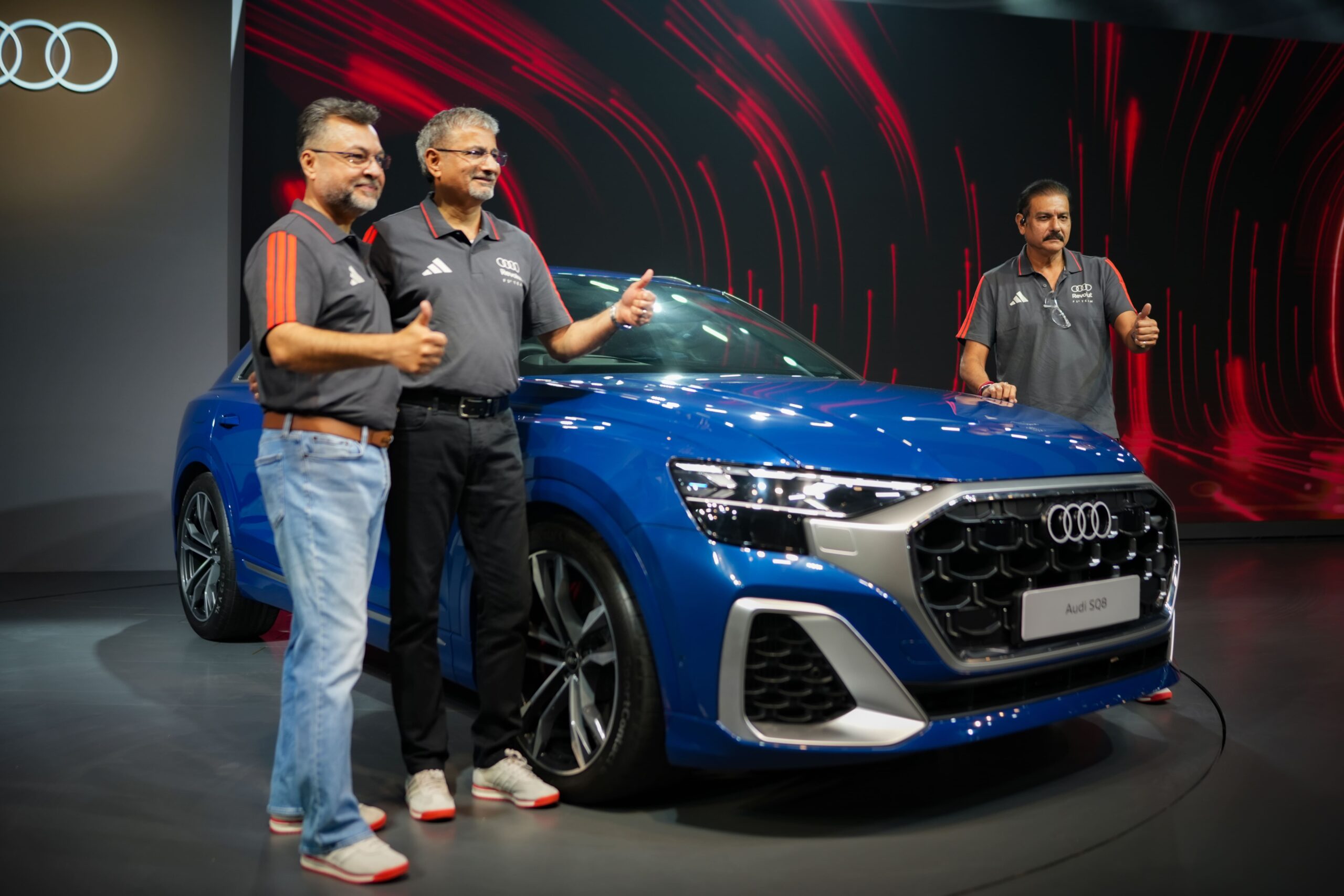

“Despite 25% price hike, fundamentals remain intact for future growth”: Audi’s Dhillon
India’s luxury car market should be in a pretty strong position by now. Wealth is rising, aspirations are deepening and premiumisation is visible across sectors. Nevertheless, volumes continue to remain in a tight range.
The segment is operating at 50,000-52,000 units annually and has a penetration of 1-1.5% in the overall passenger vehicle market. For a market of India’s size, this is disproportionately small.
For Audi India chief Balbir Singh Dhillon, the explanation lies in a fundamental reset. “If you look at the last five years, prices of luxury cars have increased by about 25%. This is unusual. The initial transaction price has become quite high,” he said.
That shift has pushed the average price of a luxury car up by more than ₹50-60 lakh, raising the entry barrier and, in turn, slowing the pace at which first-time buyers are moving into the segment.
One reason for this has been currency fluctuations. The rupee has seen a sharp 15-20% depreciation against the euro over the past 12-18 months, leading to significant increases in import and localization costs for luxury carmakers with euro-linked supply chains. Manufacturers have been able to pass on a significant portion of these increases to customers, supporting higher realizations, although not without a reduction in volume growth.
A more complex path to luxury
The effect is not a decline in demand, but a change in the way that demand grows.
What was once a relatively straightforward jump from mass market to luxury has become much more fluid. Buyers are increasingly settling on premium offerings of ₹25-40 lakh from mainstream manufacturers, which now offer higher levels of features and perceived luxury, effectively extending the upgrade cycle.
The competitive intensity at the top level is also growing. With the growing presence of EVs, entry and expansion of new players like MG Motor and BYD, the scope of choice within the broader premium and luxury space is expanding. This is likely to be further boosted by JSW’s upcoming automotive entry under its own brand, adding another layer of competition in the electrified and premium segments.
“Today, customers are evaluating more options before making that move. This is a natural evolution of the market,” Dhillon said. However, he sees a positive side to the growing appetite for premium-mainstream offerings. “Going from ₹15 lakh to ₹50 lakh is not easy. But if someone already has ₹30-35 lakh, we are expanding the base of future luxury buyers.”
High prices, strong feel
Although volumes have seen moderate expansion, or perhaps because of it, realizations per car have increased. Buyers are increasingly opting for higher trims, more personalization and feature-rich variants, as well as a clear shift towards top-end models within the luxury portfolio.
Therefore, the top end of the market continues to maintain strong growth momentum, indicating that demand at higher price points remains resilient, even as entry-level luxury is seeing a slower expansion.
Similarly, there has been no significant decline in loyalty. The luxury car market is sustained by existing customers upgrading within the ecosystem, rather than relying solely on first-time buyers. While the top of the funnel may expand more slowly, conversion and retention within the segment are strengthening, improving lifetime value per customer.
“Customer loyalty is at one of the highest rates we have seen today. This is a very important indicator for long-term growth,” he said. For Dhillon, one in three Audi buyers is a repeat customer. The company now sells one used car for every new car. “For every new car we sell, we’re also selling a pre-owned car. And once a customer enters luxury, 95% of them don’t leave it,” he said.
next development trigger
Still, Dhillon remains a firm believer in the larger story. Dhillon said, “Last year alone India added about 60 billionaires. In a country with about 360 billionaires, this shows how fast wealth is being created.”
He believes that macroeconomic changes, including trade agreements such as the India-EU Free Trade Agreement (FTA), will lead to a boost in wealth creation. Dhillon said, “For me, only 20% of the FTA story is about cars. The remaining 80% is about wealth creation.” “When wealth is created and money comes into the hands of people, luxury consumption will increase. That is the real trigger,” he said.
audi reset
Audi’s recent performance in India cannot be seen in isolation from its strategic choices. The brand, over the past few years, has slipped down the pecking order, exiting key segments like diesel and facing gaps in its EV portfolio, even as rivals have expanded aggressively in powertrains.
Dhillon rejected the idea of a poor performance. “We have to look at the segments in which we are participating. We continue to have a large presence in those segments,” he said.
The absence of diesel and the temporary gap in EV offerings has undoubtedly limited volumes, but Dhillon framed these as portfolio choices rather than structural weaknesses, pointing to the broader product reset underway globally.
He confirmed that 2026 will be a decisive year, in which new products will be introduced in a phased manner and a clear articulation of the strategy is expected in the coming months.
He said, “This is going to be a defining year for us. We will start bringing new products and share more information at the right time.” “Our effort will be to grow in line with the market, if not faster. The numbers will come as the right products come in,” he said.
For Audi, the path to a comeback is likely to be defined not by any one success, but by a measured rebuilding of portfolio depth and market relevance, aligned with a broader industry transformation that is still underway.