
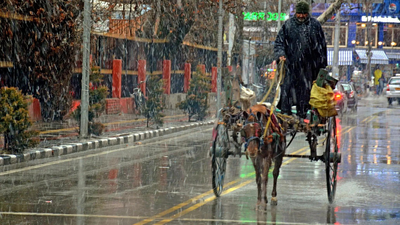

Jammu and Kashmir: The last tanga moved again in Srinagar, a 70 year old man kept the past alive. india news
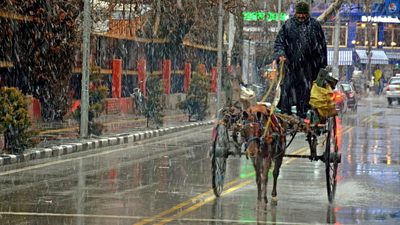
Srinagar: Clip-Clop. Hooves tap the asphalt. The engines fall silent as the horse-drawn carriage slips into traffic that has long been forgotten.Ghulam Rasool Kumar is roaming alone on his horse carriage in the old city of Srinagar amidst the crowd of horns and headlights. At 70, he is back on the streets he left behind once the horse-drawn carriages stopped paying.“I had a license of 1968. I was 12 years old,” he said, holding up a paper from another era – “Sadiq sahib’s time… what more do you want.” [late Ghulam Mohammad Sadiq, CM from 1965 to 1971]Kumar left the job in 1986. Returned last year. It became a curiosity overnight. Tourists climbed on it, influencers filmed reels, photojournalists chased it through the narrow streets. CM Omar Abdullah posted about him on X. For many young riders, it’s not transportation. It’s memory on wheels.Then the Pahalgam terrorist attack of April happened. The tourists disappeared. Earnings are over. Kumar stopped again.Earlier this month, he returned – a horse with a fine black coat brought from Sopore in north Kashmir, a carriage with a shiny canopy from Anantnag in south Kashmir – adding to a business that refuses to end quietly.He does not charge any fixed rent. “Pay whatever you want,” he tells riders.Tall, lean, wearing dark glasses, he looks younger than his age. He talks – about roads, traffic, loss. “This road was not a road, it was a stream called Nala Mar,” he said while guiding on the Bohri Kadal-Sekidafar road.Near Nava Kadal bridge, words slow. There is silence. “My two sons drowned in this river. The river has taken away both my sons.”He moves forward. The sound becomes stable. “There were cars then, but not like today. “Very few people had cars.”Drivers now drive slowly not out of irritation but out of curiosity. The tanga is magnificent in modern Srinagar. Kumar asks for one thing – patience. “No breaks,” he said. “People should be considerate.” they are. The horns soften around him.His favorite stories are from another time – when queues of horse-drawn carriages ran across the city, when the tourist reception center was bustling with horse-drawn carriages, when ministers enjoyed what he still calls “luxury”.In a city that moved forward, Kumar stayed. People shout “the last of the tangs” when the bells ring and the slow, steady beat of the hooves – this sound was from the 1930s to the 1960s when such carts ruled the streets of Srinagar. The traffic now swallows the echo, but for a few fleeting minutes, the city listens to its past.