

Sabarimala PIL was considered in 2006, but would have been rejected now: Supreme Court india news
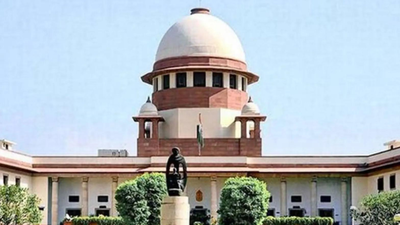
New Delhi: Acknowledging rampant misuse of PIL for ulterior motives or to further one’s preferred agenda, the Supreme Court on Wednesday said it would have dismissed a PIL had it been filed by a body of lawyers challenging the practice of currently barring entry of women of menstrual age to Sabarimala.The remarks came from a bench comprising CJI Surya Kant, Justices BV Nagarathna, MM Sundaresh, Ahsanuddin Amanullah, Arvind Kumar, AG Masih, PB Varale, R Mahadevan and Joymalya Bagchi after Solicitor General Tushar Mehta said the practice was not challenged by a Lord Ayyappa devotee and argued that the Supreme Court had struck down the ‘constitutional morality’ test by striking it down as unconstitutional. Had given. Juridically esoteric concept of faith, belief and religious practice.He said, the qualities of deity Ayyappa, whom the devotees at Sabarimala believe to be the qualities of a Gnostic celibate, cannot be examined on the basis of the Western imported concept of constitutional morality, which is applied to test the validity of the actions of the state or constitutional office holders.Justice Nagarathna agreed and said that even if the lawyers’ body filed a civil suit, it would be dismissed for lack of a cause of action. CJI Kant agreed but cautioned, saying that the PIL was considered two decades ago in 2006 and is a judgment of the court, “We have been entrusted with the task of determining the scope and ambit of judicial interference in religious matters,” he said.Mehta highlighted the corrupting influence of the Western mindset on the judgment in the Joseph Shine case, which decriminalized adultery on the grounds that the archaic provision violated the dignity, freedom and equality of women by constraining their sexual freedom and placing the burden of fidelity on them. The SG clarified that the provision could have been struck down on grounds of discrimination and he would have no objection to the outcome of the case. However, he said that fidelity in marriage applies equally to a man and a woman and the provision curbing extramarital affairs cannot be termed as shackles of sexual freedom. What is more worrying, he said, is that social norms have been termed as ‘mob morality’ and inexplicably the court has used constitutional morality to strike down the provision.Justice Nagarathna said, “What was considered immoral and obscene in the 1950s is no longer considered so. It is now considered narrow-minded and old-fashioned. This is the problem of India today. But public morality is not stable.”On the question whether a person who does not belong to any religious sect or religious group can question the practice of that religious sect or religious group by filing a PIL, Mehta said that PIL was devised by the SC in the Bandhua Mukti Morcha case in 1984 as a tool to raise the grievances of marginalized sections deprived of access to courts for the protection of their fundamental rights.It had adopted a liberal approach in testing the locus standi of the person filing the PIL, but now it has become a tool for any person unrelated to the issue to file a PIL in abuse of the strict locus standi provision. With major changes in access to justice, courts should insist on strict locus standi rule to prevent misuse of PILs, especially in cases related to religion, customs, faith and belief.The Center also argued in the hearing that the locus should not be defined liberally and the court agreed to do so. CJI Kant said, “Over the years, courts have started imposing strict jurisdictional rules on PILs. Constitutional courts are very cautious in entertaining PILs because people come with ulterior motives or to further their agenda.” The debate will continue on Thursday also.