
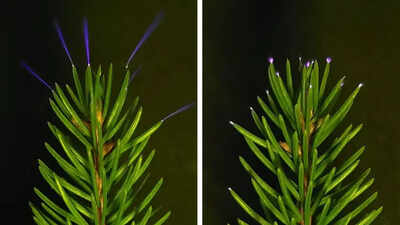

Scientists capture trees lit up by lightning during storm
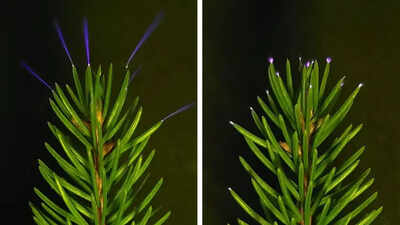
For the first time, scientists have filmed high-speed video of a phenomenon where trees release electrical flashes by generating sparks during a thunderstorm. The results of a study published in geophysical research paper show that tree branches can emit a faint blue light known as corona discharge, thanks to sensors and cameras deployed in the Blue Ridge Mountains. Corona is formed when a storm’s very strong electric field ionizes the air near the sharp edges of leaves on a tree. Sailors have been observing this glow on ship masts for hundreds of years. This observation is important for atmospheric scientists, as the findings indicate that forest areas may have a greater impact on Earth’s electrical balance and greenhouse gas composition than previously thought.
How do trees emit electrical flashes without catching fire?
The blue light at the tops of trees is the result of a phenomenon called corona discharge, which is different from a lightning strike or wildfire. The electric field of a storm is so large that it can strip electrons from air molecules. Due to this, electricity is emitted into the air in the form of plasma. Unlike lightning, which is extremely hot and large discharge, corona discharge is ‘cold’ lightning. according to science newsBecause this form of lightning is less strong and less widespread, it accumulates at the brightest points on a tree, such as the tips of pine needles and leaves, causing the tree to emit a faint glow. However, this lightning will not cause actual burning or any other type of damage to the tree.
Why do glowing trees matter for the climate?
Apart from looking beautiful with their bright blue glow, the electrical discharge from corona discharge around the tips of trees has a huge impact on air quality.According to research done by Penn State UniversityThe electrical discharge generated by corona discharge at the tips of trees also produces large amounts of free hydroxyl. Hydroxyl acts as the major cleaning agent for our atmosphere. Hydroxyl radicals are also very reactive and are used to decompose many pollutants and greenhouse gases, such as methane, which would otherwise contribute to global warming.
Why do some trees shine brighter than others?
After storms, different species are known to respond differently. According to a recent study conducted by scientists published in the journal Geophysical Research Letters. This research has confirmed that the relative size of the tree canopy is responsible for producing greater or lesser amounts of ‘ghost’ light as it ages. Evergreen trees participate most actively in generating this electrical phenomenon. The pointed, needle-like leaf-shaped tips of conifers make excellently efficient natural ‘conductors’, allowing upward-produced electric fields to become highly concentrated at the tip of their pointed vine and more easily (and many times more often) than upward-produced electric flashes, producing blue light.