

Strait of Hormuz: How Trump gave Iran a weapon more lethal than any nuke
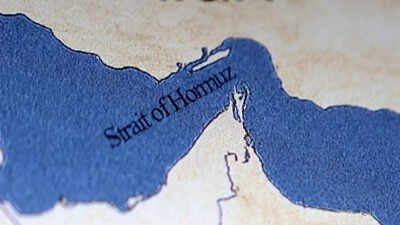
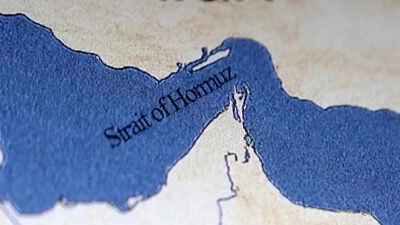
For decades, the US and its allies spent billions of dollars in cyber attacks, assassinations of scientists, economy-destroying sanctions and bruising diplomacy to stop Iran’s nuclear ambitions.Yet after a brutal month-long war with joint US-Israeli forces, Tehran may be getting something more deadly than any nuclear bomb from the president. donald trump: Dominance over the Strait of Hormuz.On Wednesday, the US and Iran reached a conditional two-week ceasefire, reopening a key chokepoint for Gulf oil and exports. Trump announced that he would “suspend bombings and attacks on Iran” if Tehran cleared shipping lanes through Hormuz.In a Truth Social post, he justified the stoppage because US forces had “already met and exceeded all military objectives”.It follows his earlier flamboyant threats to wipe out Iran “overnight”, warning that “the entire civilization will die tonight, never to be brought back” – threats that drew global condemnation from UN Secretary-General Antonio Guterres to Pope Leo XIV.How Iran choked the Strait of HormuzBefore the Iran–US war, about 138 ships passed through the Strait of Hormuz, carrying one-fifth of global oil and vital fertilizers for crops around the world.But as the conflict began, Iranian threats and attacks halted almost all traffic through the narrow chokepoint. Traffic fell below 100 vessels in March.At the beginning of the blockade, Trump tried to resolve it through diplomatic efforts and backchannel talks. After this strategy failed, he deployed a thousand more troops to the Middle East and turned his attention to possible US Navy escort for oil tankers.Frustration began to grow on him, evidenced by his profanity-laden Truth Social post on Easter Sunday:“Tuesday will be Power Plant Day and Bridge Day in Iran, all at the same time. Nothing like this will happen!!! Open the f****** straight, you crazy********, or you’ll live in Hell – just watch! Praise be to Allah. President Donald J. Trump,” he said.Yet Iran maintained an edge on this vital artery, taking advantage of cheap drones, sea mines, and its geography for asymmetric warfare.‘Fee for safe passage’According to reports, Iran is now attempting to formalize its control over the strait as part of a broader geopolitical strategy after several weeks of conflict.As part of its proposals for a potential long-term peace deal, Tehran wants authorities to charge transit fees for ships passing through the Strait of Hormuz. According to officials, these charges will not be fixed but may vary depending on the type of ship, the nature of its cargo and the prevailing conditions.Iran is also working on a framework that could require ships to obtain permits or licenses before being allowed to pass in coordination with regional mechanisms, which could also include Oman, Reuters reports.Despite the ceasefire, shipping activity in the Strait of Hormuz remains limited following the declaration. Analysts have warned that ships and insurers are unlikely to resume normal traffic until they receive sustained safety signals, CNN reports.“The ceasefire is a necessary first step, but it does not mean that commercial shipping through international traffic routes in the strait will immediately return to normal,” said Charlie Brown, senior advisor for Dark Fleet Tracking and a former US Navy officer.Shipowners are awaiting guidance from naval security channels, flag states and maritime war-risk insurers before sending the ships back to the strait. Since the beginning of the conflict, Iran has attacked at least 19 ships near the strait, disrupting supplies of crude oil to global markets.Iran’s foreign minister has said that “safe passage through the Strait of Hormuz will be possible through coordination with Iran’s armed forces.”Joint protocol with OmanIran’s deputy foreign minister, Kazem Gharibabadi, said last week that Tehran was drafting a protocol with Oman that would require ships to obtain permits and licenses to pass through the strait, adding that the move was aimed at facilitating rather than restricting transit.Iran claimed that the money collected from the ships would be used for post-war reconstruction, as the conflict has caused extensive damage to the country’s defense, administrative and civilian infrastructure.At the time, Oman said it had held talks with Iran on options to ensure smooth transit, but did not say whether an agreement had been reached.The fee will vary depending on the type of ship, its cargo and other unspecified existing conditions, the official said, without elaborating.Iran in its 10-point ceasefire proposal had included a provision to allow both Tehran and Muscat to levy transit fees on ships passing through the Strait of Hormuz.However, Oman rejected Iran’s demand and said, “No toll can be imposed for the Hormuz crossing.”According to Oman’s transport minister, the Sultanate has signed agreements guaranteeing that no fees will be imposed on ships transiting the Strait of Hormuz. The minister stressed Oman’s commitment to ensuring free and safe navigation at the strategic chokepoint.The 34-km stretch of water between Iran and Oman is considered an international waterway, on which no country has imposed tolls in the past. The narrow estuary of the Persian Gulf facilitates about one-fifth of global oil trade.Joint venture with America?Meanwhile, Trump said he was planning a “joint venture” with Iran to install tolls in the Strait of Hormuz after Washington and Tehran agreed to a two-week ceasefire deal.ABC News reporter Jonathan Karl asked Trump if he approved of Iran charging tolls on ships passing through the Strait of Hormuz, to which the Republican leader responded, “We’re thinking about doing it as a joint venture. This is a way to protect it – while also protecting it from many other people.”“It’s a beautiful thing,” Trump said.Therefore, the situation is not just one of a fragile ceasefire, but of a change of control at one of the world’s most important maritime chokepoints. What began as an effort to curb Iran’s nuclear ambitions has strengthened Tehran’s hand on the world’s locus of control.