
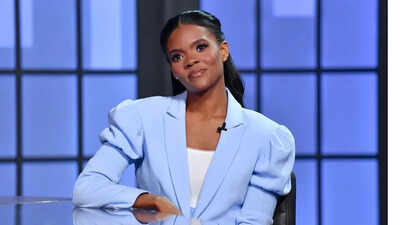

“The President killed Charlie”: Candace Owens sparks outrage with explosive claim about Charlie Kirk murder
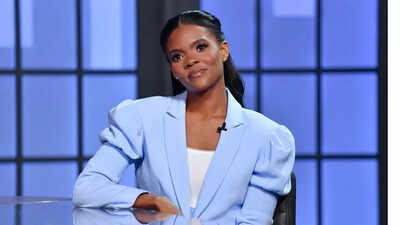
The war of words over rising US-Iran tensions has taken a sharp and personal turn. As the deadline on the Strait of Hormuz approaches, political rhetoric is no longer limited to official statements. Voices from outside government circles are emerging and some are going further than measured criticism. Among them, Candace Owens has sparked fresh controversy with comments directly aimed at donald trump.His comments come at a moment of high global concern. With Iran refusing to back down and threats increasing, the story is rapidly changing. Public figures are now shaping policy as well as perception. Owens’s statements have not only raised questions about leadership but also sparked broader debate about loyalty, influence and the costs of political decisions.
Backlash over Candace Owens’ comments as Donald Trump toughens Iran stance
Owens responded strongly to the evolving situation and drew strong comparisons between Iran’s leadership and Donald Trump’s approach. “The Iranian President tweets that he is willing to sacrifice his life for his people,” he wrote, citing statements by Iranian President Massoud Pezeshkian. He then compared his view of Trump’s priorities, saying, “Donald Trump was willing to sacrifice charlie kirk And is willing to sacrifice every American life and livelihood for Greater Israel,” before ending with the sharp question, “Who then is the beast?”The comments immediately caught fire and sparked sharp reactions across political parties. Trump’s supporters strongly objected, arguing that Owens’ claims lacked evidence and crossed a line. Among the most vocal critics was Laura Loomer, who accused Owens of being against American interests. Loomer wrote, “Candace Owens is defending the Iranian regime over the United States. She said with zero evidence that President Trump killed Charlie Kirk and said Trump is an animal,” while also raising concerns about possible foreign influence.This underlines the fragmented nature of conflict discourse. On the one hand, opponents are raising doubts about the dangers associated with an aggressive foreign policy. On the other hand, supporters are calling such criticism dangerous and misleading. As tensions in the Middle East continue to worsen, the volume of such accounts will continue to increase.So far, the political backlash continues to grow. What started as a geopolitical standoff is also becoming a war of perception and words are as powerful as actions.