Breaking News
अयोध्या में गैस सिलेंडर को लेकर सपा का प्रदर्शन, बीजेपी कार्यालय से ‘पर्ची’ पर वितरण का आरोप

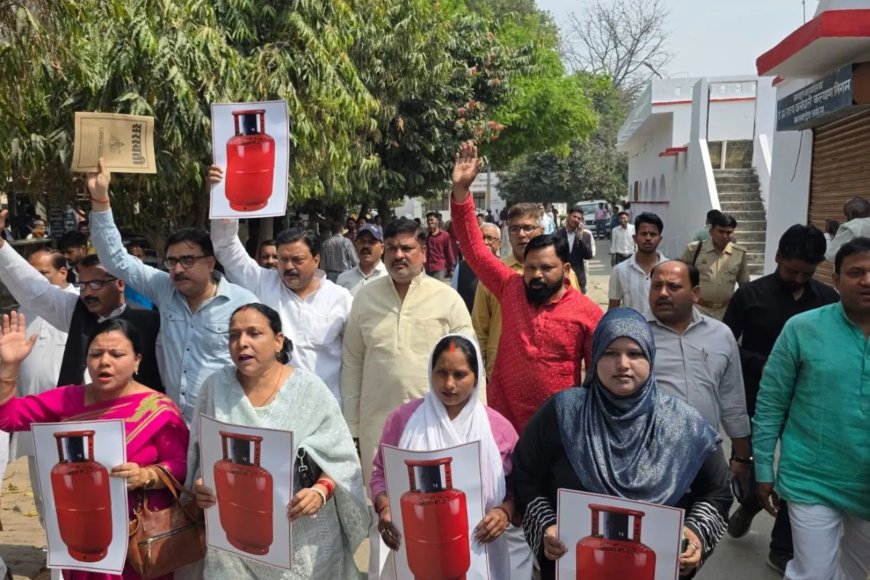
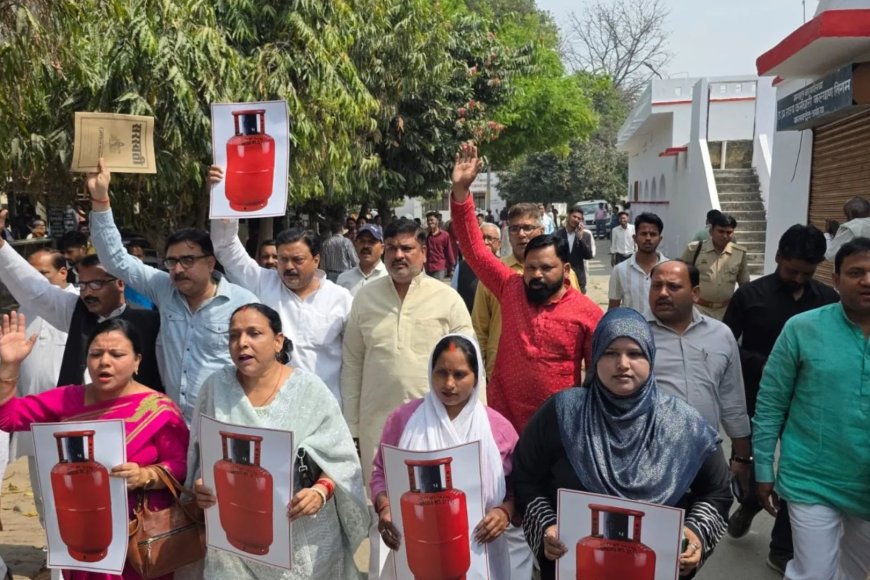
अयोध्या में घरेलू गैस सिलेंडर की कथित कमी को लेकर समाजवादी पार्टी ने जिला प्रशासन के खिलाफ जोरदार प्रदर्शन किया. सपा कार्यकर्ता सड़कों पर उतर आए और हाथों में गैस सिलेंडर की तस्वीरें लेकर विरोध प्रदर्शन किया. प्रदर्शन के दौरान कार्यकर्ताओं ने आरोप लगाया कि आम लोगों को गैस सिलेंडर नहीं मिल रहा है और इससे कई परिवार संकट में हैं. इस मुद्दे को लेकर सपा नेताओं ने प्रशासन से तत्काल समाधान की मांग की और सरकार पर आम लोगों की समस्याओं की अनदेखी करने का आरोप लगाया.

पूर्व मंत्री पवन पांडे ने लगाए गंभीर आरोप
इस प्रदर्शन का नेतृत्व सपा के पूर्व राज्य मंत्री पवन पांडे ने किया. उन्होंने आरोप लगाया कि भारतीय जनता पार्टी कार्यालय से पर्चियां जारी कर कुछ लोगों को गैस सिलेंडर उपलब्ध कराया जा रहा है। पवन पांडे ने कहा कि जिन परिवारों में शादी या भंडारा जैसे कार्यक्रम होने वाले हैं, उन्हें गैस सिलेंडर नहीं मिल पा रहा है. उन्होंने यह भी कहा कि रमजान के पवित्र महीने में भी कई लोगों को गैस सिलेंडर नहीं मिलने के कारण परेशानी का सामना करना पड़ रहा है, जो चिंता का विषय है.

महंगाई और रसोई पर बढ़ते बोझ का मुद्दा
प्रदर्शन में सपा नेता अपर्णा जयसवाल भी शामिल हुईं. उन्होंने कहा कि घरेलू गैस की बढ़ती कीमतों ने आम महिलाओं की रसोई पर भारी बोझ डाल दिया है. उन्होंने कहा कि महंगाई के कारण पहले ही परिवारों का बजट बिगड़ चुका है और अब गैस सिलेंडर की कमी की खबर लोगों की चिंता बढ़ा रही है. प्रदर्शन के बाद सपा नेताओं ने जिला प्रशासन को ज्ञापन सौंपकर सरकार से इस समस्या पर तत्काल ध्यान देने की मांग की.

जिला प्रशासन ने कहा कि आरोप गलत हैं
उधर, जिला प्रशासन ने एसपी के सभी आरोपों को सिरे से खारिज कर दिया है. प्रशासन की ओर से जारी बयान में कहा गया कि जिले में घरेलू गैस सिलेंडर की कोई कमी नहीं है. अधिकारियों का कहना है कि मांग के अनुरूप गैस सिलेंडर की आपूर्ति की जा रही है और लोगों को नियमित रूप से सिलेंडर मिल रहे हैं. प्रशासन ने यह भी स्पष्ट किया कि गैस वितरण प्रणाली सामान्य रूप से चल रही है और कोई अनियमितता की सूचना नहीं मिली है।

Source link

Cheap automatic variants of Kia Sonet available: price, details

Cheap automatic variants of Kia Sonet available: price, details

Kia India has expanded the automatic gearbox options on the Kia Sonet by introducing more affordable variants in its lineup. With the update, buyers can now opt for an automatic transmission from the lower trims, making the Sonet one of the most accessible automatic SUVs in its segment.On the diesel front, the Sonet now gets a new HTE(O) variant with a 6-speed torque converter automatic gearbox, priced at Rs 9.77 lakh, ex-showroom. The diesel engine is the familiar 1.5-litre unit that produces 116 hp of power and 250 Nm of torque. The diesel automatic version offers ARAI-rated fuel efficiency of 18.6 kmpl, while the manual diesel version claims 22.3 kmpl.For petrol buyers, Kia has introduced a new HTK(O) variant equipped with a 7-speed DCT, priced at Rs 9,89,900, ex-showroom. This variant is powered by a 1.0-litre turbo-petrol engine that produces 120 hp and 172 Nm of peak torque. The same gearbox is also available in the HTK+(O) trim. With this move, Sonet becomes the first model in its segment to offer a 7-speed DCT automatic transmission at a price under Rs 10 lakh.

New Kia Sonet facelift review: Buy Venue, Nexon rival or not | TOI Auto

Along with the change in variants, the company has also introduced a new ‘Magma Red’ color option for the compact SUV.The Sonet continues to be offered with three engine options. These include a 1.2-litre naturally aspirated petrol engine producing 83 hp and 115 Nm of torque, paired with a 5-speed manual gearbox. Meanwhile, the 1.0-litre turbo-petrol and 1.5-litre diesel engines are the only ones to offer automatic gearbox options.Currently, the Sonet is priced at Rs 7.30 lakh ex-showroom in India and it competes in the highly competitive sub-4 meter SUV segment with rivals like Mahindra XUV3XO, Hyundai Venue, Maruti Suzuki Brezza, Tata Nexon and Skoda Kailash.

Source link

Cheese Ritual: Inside the 660-year-old Dutch market where men dressed in white race with giant cheese wheels world News

Cheese ritual: Inside the 660-year-old Dutch market where men dressed in white race with giant cheese wheels

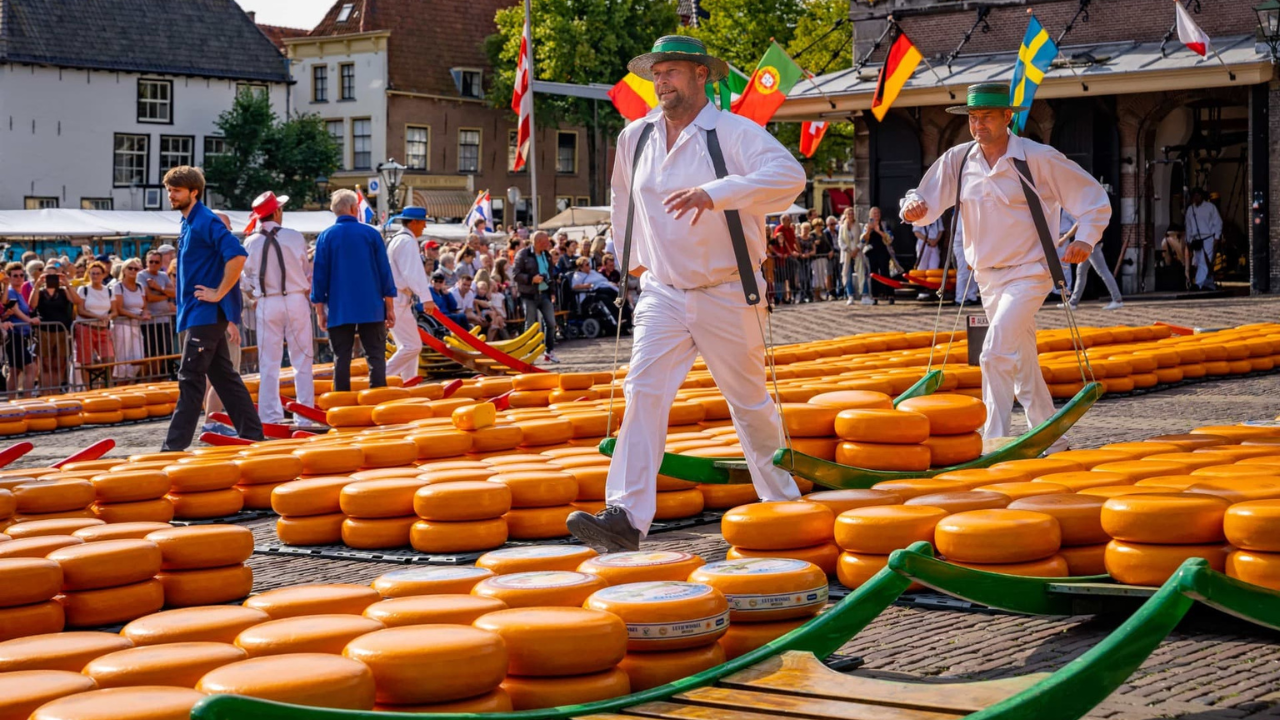
On a summer Friday in the Dutch city of Alkmaar, the air is filled with the smell of the old dairy and the rhythmic movement of wooden stretchers across the cobblestone square. exactly at 10 amA bell rings above the historic Wagplein and the show begins. Dozens of men wearing immaculate white uniforms and straw hats break into a fast, synchronized trot, balancing heavy stretchers filled with bright yellow wheels of cheese. It seems dramatic, almost surreal. Yet what unfolds each week is not a show staged for tourists, but the continuation of a business ritual that has persisted for centuries.For Alkmaar, cheese is more than food. It is identity and history. The city’s connection with the dairy trade dates back to 1365, when Alkmaar first gained the right to weigh cheese in the city. Over time, farmers, merchants and guild members turned the weekly market into one of the Netherlands’ most recognizable traditions. Every Friday from April to September the market relives the old rituals of bargaining, weighing and transporting cheese that have shaped the city for more than six centuries.

A medieval cheese market born of trade

Long before it became a famous cultural attraction, the Alkmaar Cheese Market was an essential center of commerce. Farmers from nearby villages brought their cheese to the city to sell to merchants who exported Dutch dairy throughout Europe. The appearance of an official weighing scale in 1365 allowed merchants to trade under the supervision of city officials, ensuring that all transactions were fair.By the beginning of the seventeenth century the cheese trade had become so large that Alkmaar operated several scales. The square known as Waagplein became the focal point of this bustling market. During the Dutch Golden Age, thousands of cheese wheels passed through Alkmaar each year as the Netherlands emerged as one of the leading trading nations of Europe. Cheese produced in the region was transported by traders and ships to markets throughout the continent.Today the market recreates these age-old practices. What visitors see on Friday morning is a carefully preserved reflection of how business once worked.

Association of Cheese Carriers

At the center of the ritual stands the historic Cheese Carriers’ Guild, known locally as Kasdragersgilde. Founded in 1593, the guild is responsible for the transportation of cheese to market. Membership is limited and the organization still follows a strict hierarchy that reflects its long history.The carriers wear white uniforms with straw hats decorated with colorful ribbons. The ribbons represent four traditional teams, each identified by its own color. Each team has its own foreman and they work together to move the heavy load across the square.The entire operation is overseen by the formal head of the guild, often called the Cheese Father. Every Friday before the market opens he calls the carriers together, confirms attendance and announces the start of the trading day. Only after this ritual the bell is rung and the market officially begins.The guild also enforces long-standing traditions of discipline. Carriers who arrive late or fail to properly maintain their uniforms may be fined. These rules help preserve the historical character of the event.

Association of Cheese Carriers

Famous Cheese Carriers Race

The most important moment in the market is the activity of the carriers themselves. Working in pairs, they lift wooden stretchers loaded with stacks of cheese wheels. Each stretcher can hold eight large cheeses and the total weight can reach approximately 160 kg.To transport the load, bearers move with fast, rhythmic movements across the square. This specific activity allows them to keep the stretcher balanced while moving through the busy market. This proposal is both practical and formal. This ensures that the cheese remains stable while also creating a spectacle that attracts visitors from all over the world.Watching the bearers move in perfect coordination gives the impression that time has briefly reversed and the square has returned to the rhythm of previous centuries.

The strange art of bargaining by clapping hands

Before any cheese can be taken to the crossroads it must first be sold. The traditional bargaining ritual used in Alkmaar is known as Handeklap, which roughly translates as hand clapping.During negotiations, buyers and sellers frequently clap together while quoting prices. Each clap represents a new proposal or counterproposal. The rhythm continues until both parties agree on a price, and the final clap seals the deal.This lively negotiation method once determined the price of large quantities of cheese each market day. Although trading today is largely symbolic, rituals are still performed to maintain the spirit of the historical market.

guardian of the weighing house and impartiality

Once the sale has been agreed, the cheese carriers take the wheels to the historic weigh house known as the Wag. This building dominates the Waagplein and for centuries served as the official location where cheese was weighed and recorded.The weigh master inside the building monitors the process to ensure that the correct weight is recorded. This step was necessary in previous centuries because merchants paid for cheese by weight. Therefore accuracy and honesty were important to maintain confidence in the market.Expert cheese inspectors also played an important role. Using metal tools they would remove small samples of the cheese to test its quality, texture and taste before confirming that it met commercial standards.

the thing that built a nation

The cheeses displayed at the market are classic Dutch varieties like Gouda and Edam. These cheeses became global symbols of Dutch food culture and helped build the country’s reputation as a center of dairy production.Over the centuries Dutch farmers improved the techniques of aging and preserving cheese, allowing it to be transported over long distances without spoiling. During the height of the Netherlands’ trading power, cheese from Dutch cities traveled throughout Europe and to foreign markets.Even today cheese remains deeply ingrained in the Dutch diet and culture. The country produces millions of tonnes of cheese every year and exports it around the world.

A tradition that has survived for centuries

Like many historical traditions, the Alkmaar cheese market has faced disruptions. During World War II the market was temporarily suspended due to wartime conditions and food shortages. It reopened after the war, restoring the tradition that had defined the city for generations.In modern times the market has evolved into a cultural event rather than a purely commercial event. Large crowds gather at the square each week to watch the carriers, the bargaining rituals, and the ceremonial weighing process.The city itself has become a vibrant community of over a million residents, yet the market remains a symbol of its historical roots.

more than a market

Today the Alkmaar Cheese Market is a living reminder of the Netherlands’ mercantile past. The uniforms, the hand-clapping, the movement of the carriers and the ringing of the bell that starts the market each Friday morning all preserve a tradition that has lasted for more than six hundred years.For visitors, the event offers much more than the opportunity to buy cheese. It offers a glimpse of a time when markets were the heart of European cities and when a simple wheel of cheese could represent the prosperity of an entire region.And every Friday morning, when the bells ring above the Wagplein and the bearers begin running across the square, Alkmaar returns for a while to the rhythm of the Middle Ages.

Source link

BAN vs PAK: All-round performance from Maaz Sadaqat helps Pakistan level series with 128-run win

Pakistan leveled the three-match ODI series with Bangladesh with a 128-run win in the second ODI at the Shere Bangla National Stadium in Dhaka on Friday, March 13. After being invited to bat first, Pakistan were all out for 274 in 47.3 overs as Rishad Hussain (3/56, 9.3 overs) and Mehdi Hasan Miraz (2/34) spoiled their batting line-up.

20-year-old Maaz Sadakat made the highest score for his team in his second ODI match by playing a stormy innings of 75 (46) runs with the help of six fours and five sixes. In reply, Bangladesh were bowled out for 114 in 23.3 overs while chasing a DLS-corrected target of 243 runs in 32 overs.

Sadaqat also performed brilliantly with the ball and took three wickets for 23 runs in his five overs, while captain Shaheen Afridi (2/22, 5 overs) also took two wickets. Bangladesh’s chase never materialized as Afridi and Mohammad Wasim Jr (1/22, 4 overs) dismantled their top order, reducing them to 15/3 in 4.3 overs.

BAN vs PAK 2nd ODI Update

The hosts’ score was 27/3 in 6.3 overs when rain arrived and the game was in danger of being abandoned. However, after some tireless efforts by the ground staff, the match restarted and Liton Das (41 off 33) and Tauheed Hridoy (28 off 38) added 58 runs off 48 balls for the fourth wicket.

However, just when it looked like Bangladesh were clawing their way back into the game, Maaz Sadakat broke their stand and set up the collapse.

Earlier, after a poor batting performance in the first ODI, Pakistan improved massively as openers Sahibzada Farhan (31 of 46) and Sadaqat got off to a great start, adding 103 runs for the first wicket off just 78 balls. After a solid start, both the openers returned to the pavilion while Shamil Hussain was dismissed cheaply leaving Pakistan’s score at 122/3 in 19.3 overs.

Salman Aga run out in controversial circumstances

After three quick innings, Salman Aga (64 off 62) came to the crease with Mohammad Rizwan (44 off 59) and the duo stitched a huge partnership of 109 off 115 balls to put their team in a strong position. However, Some sneaky work at the non-striker end by Mehdi Hasan Miraz led to Agha’s controversial dismissal In the 39th over.

The dismissal led to another collapse, with Pakistan losing their last seven wickets for 43 runs. However, despite this, they managed to post enough on the board to survive the three-match series with a resounding win with one match remaining in the rubber.

– ends

published by:

Kingshuk Kusari

Published on:

March 13, 2026 22:47 IST

Source link

From April, the price of FASTag annual pass will be Rs 3,075. india news

FASTag annual pass will cost Rs 3,075 from April

New Delhi: The cost of FASTag annual pass for private vehicles will increase by 2.5% to Rs 3,075 from April 1. Currently, the annual pass costs Rs 3,000, which allows cars to cross 200 toll plazas without stopping. The pass can be recharged multiple times in a year.Officials said the provision for annual revision in price was mentioned when the Fastag annual pass was notified by the road transport ministry. The pass has been extremely successful and since August 15, more than 52 lakh highway car users have subscribed to the annual pass.“This increase is in line with the formula for revising highway toll across the country, which happens every year. Those who recharge by this month can buy it by paying Rs 3,000,” an official said.

Source link

अपहरण, जबरन शादी और तीन तलाक…अब बच्चों के खतना का दबाव, गाजीपुर में महिला आयोग के सामने बयां हुआ हिंदू महिला का दर्द

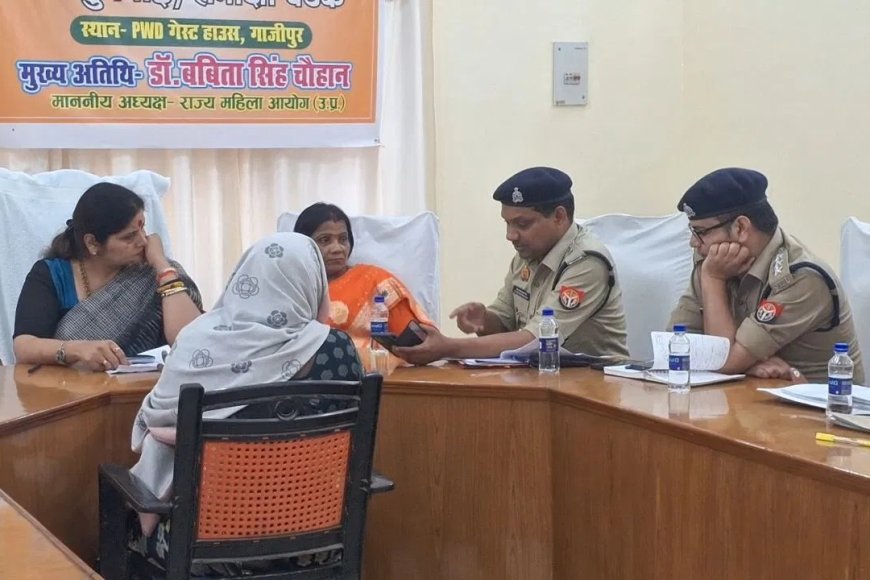
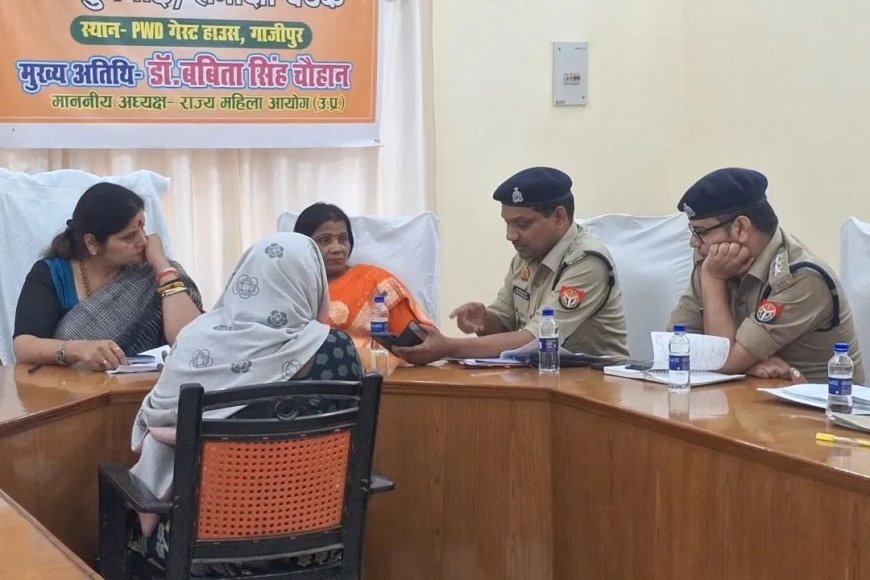
उत्तर प्रदेश समाचार: उत्तर प्रदेश के गाजीपुर जिले में राज्य महिला आयोग की जनसुनवाई के दौरान एक बेहद गंभीर और दिल दहला देने वाला मामला सामने आया है. मोहम्मदाबाद क्षेत्र निवासी एक हिंदू महिला ने अपने पति अफसर हुसैन पर कई सनसनीखेज आरोप लगाए हैं। महिला का कहना है कि उसका अपहरण किया गया, फिर जबरन शादी की गई और अब उसके बच्चों पर धर्म परिवर्तन के लिए दबाव डाला जा रहा है. महिला ने पुलिस पर भी गंभीर आरोप लगाए हैं. उन्होंने कहा कि पुलिस मामले में निष्पक्ष कार्रवाई करने के बजाय आरोपी का समर्थन कर रही है और उसके चरित्र पर सवाल उठा रही है. इस मामले को सुनकर महिला आयोग की टीम भी हैरान रह गई.

2009 में अपहरण कर लिया और तीन साल तक बंधक बनाकर रखा
पीड़िता के मुताबिक, उसकी परेशानियां साल 2009 में शुरू हुईं. उसने बताया कि मुस्लिम बहुल गांव के रहने वाले अफसर हुसैन ने उसका अपहरण कर लिया था. इसके बाद उन्हें करीब तीन साल तक महाराष्ट्र के एक गांव में बंधक बनाकर रखा गया. महिला का आरोप है कि जब वह 2012 में गांव लौटी तो गांव के लोगों के दबाव में उसकी जबरन शादी अफसर हुसैन से करा दी गई. इस शादी से महिला के दो बच्चे हैं, जिनमें 14 साल की बेटी और 8 साल का बेटा शामिल है।

तीन तलाक के बाद भी दबाव जारी है
महिला का कहना है कि साल 2018 में अफसर हुसैन ने उसे तीन तलाक दे दिया था. इसके बावजूद वह उसे नहीं छोड़ रहा है। पीड़िता का आरोप है कि अब वह बच्चों का जबरन धर्म परिवर्तन कराना चाहता है. खासकर 8 साल के बेटे का खतना कराने का दबाव बनाया जा रहा है. महिला ने बताया कि जब उसने विरोध किया तो उसे जान से मारने की धमकी दी गई. इसी डर के कारण वह अपना घर छोड़कर कहीं और छिपकर रहने को मजबूर हैं।

पुलिस पर भी गंभीर आरोप लगाए गए
जनसुनवाई के दौरान महिला ने राज्य महिला आयोग की अध्यक्ष बबीता सिंह चौहान को अपने सिर के घाव भी दिखाए. उन्होंने बताया कि करीब 10 दिन पहले उन पर चाकू से हमला किया गया था. लेकिन पुलिस ने उचित कार्रवाई करने के बजाय गलत मेडिकल रिपोर्ट तैयार कर दी, ताकि मामला हल्का हो जाए. महिला ने भावुक होकर कहा कि अब पुलिस उसके चरित्र पर सवाल उठा रही है. उन्होंने कहा कि अगर उनका चरित्र इतना खराब है तो उन्हें सर्टिफिकेट दिया जाना चाहिए ताकि वह शांति से रह सकें.

महिला आयोग ने पुलिस को लगाई फटकार
महिला की पूरी कहानी सुनने के बाद राज्य महिला आयोग की अध्यक्ष बबीता सिंह चौहान ने मौके पर मौजूद अतिरिक्त पुलिस अधीक्षक (शहर) को जमकर फटकार लगाई. उन्होंने निर्देश दिया कि महिला को तुरंत निष्पक्ष चिकित्सा दी जाए और आरोपियों के खिलाफ सख्त धाराओं के तहत कार्रवाई की जाए. आयोग ने यह भी कहा कि मामले की निष्पक्ष जांच होनी चाहिए ताकि पीड़िता को न्याय मिल सके.

Source link