
Can isobutanol solve the mystery of dirty diesel emissions?
The automotive industry’s quest to decarbonize heavy-duty trucking continually hits a wall: the stubborn efficiency of diesel engines. While light-duty vehicles are moving toward electrification, the weight and range requirements of 19-ton trucks and long-haul freight traffic make batteries a difficult sell. Amid this struggle, isobutanol, a higher-order alcohol, is being welcomed by industry insiders as a diesel-blend alternative that can bridge the gap, yet it is conspicuously absent from commercial markets.
Isobutanol is produced using the same organic feedstocks as ethanol, rather than being a derivative of ethanol. These include grains, especially maize or broken rice. Industry experts have proposed using sugarcane molasses-based feedstock for pilot isobutanol plants to utilize excess byproducts of the sugar industry.
This development seems important in view of the diesel blending programme. The initiative, governed by India’s National Policy on Biofuels (NPB), was originally established in 2018 and later revised to 2022. Its primary objective is to reduce the country’s heavy dependence on imported crude oil and reduce emissions in the heavy duty transportation sector. The program has set an indicative target of achieving 5% biodiesel blending in diesel by 2030. However, unlike the ethanol blending program for gasoline, which reached its 20% goal ahead of schedule, the biodiesel program has struggled. The current admixture level is estimated at only 1% to 2%. The target has often been missed due to infrastructure and feedstock challenges, which include unused cooking oils, non-edible oilseeds and fats, oils and greases.
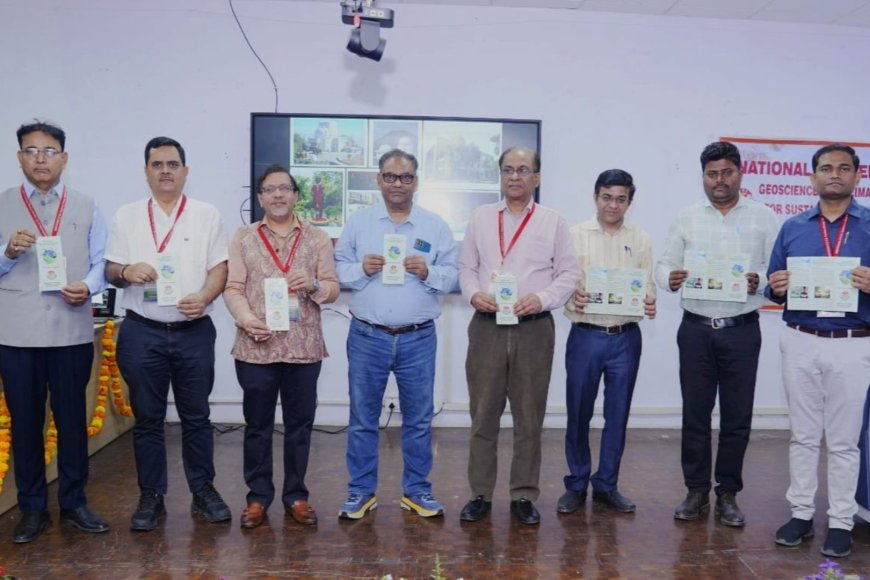
The India Energy Week 2026 held recently in Goa witnessed an intense debate on issues related to isobutanol adoption.
emission engine
Unlike ethanol, which is primarily blended into gasoline, isobutanol offers a chemical profile much closer to petroleum diesel. Recent tests show that when mixed with an emulsifier, isobutanol can significantly reduce emissions in heavy engines as well as increase fuel efficiency. This makes it a prime candidate for a “drop-in” fuel, which does not require a massive overhaul of existing supply chains.
However, the path from test to tank is full of obstacles. Bharti Balaji, director of All India Distillers Association (AIDA), says that although the potential is high, the market is still in its infancy. “Apparently, if you mix isobutanol with the emulsifier… there is a huge reduction in emissions and increased engine efficiency,” Balaji said, although cautioned that “it is too early to tell” regarding commercial timelines.
Swedish paradox
The secret of isobutanol lies in its successful, yet isolated pilot model. Sweden has long served as the global laboratory for isobutanol blending, proving its technical feasibility in real-world conditions. Despite these successful northern models, there is not a single full-scale commercial isobutanol plant operating globally.
This lack of scale is often attributed to the “wait and see” approach of both governments and investors. While the technology has been proven in the laboratory and pilot stages, making the leap to a commercial-scale facility requires significant capital that has not yet been ushered in by firm orders.
Restoring the Myth
It is a common misconception that ethanol is converted to isobutanol; In fact, isobutanol cannot be made from ethanol. Instead, the production process is adjusted to produce isobutanol directly from the original raw material.
A central debate within the automotive fuel sector is whether existing ethanol distilleries, often called 1G plants (first generation refineries that process corn or sugarcane), can be converted to produce isobutanol. Skeptics have called this a myth, citing fundamental biochemical differences between ethanol and isobutanol fermentation.
However, the reality may be in a mixed approach. Some energy majors are exploring the possibility of retrofitting existing 1G facilities to produce both products simultaneously. Anshul Gupta, senior manager, BPCL, highlighted that his teams have found that “if the 1G plant can be retrofitted correctly… one tonne of feed can potentially produce some percentage of ethanol and some percentage [isobutanol]This dual-track production could solve the problem by using the same feedstock to target both gasoline and diesel markets.
BPCL has been working on isobutanol for the last two years. He recently conducted successful three-month trials using isobutanol in stationary engines (specifically referring to Cummins engines), which yielded clear results. To further prove the feasibility of the fuel, BPCL has partnered with IIT and IIP (Indian Institute of Petroleum) for data validation. They are committing significant funding to test the fuel in 33 different types of vehicles in India to monitor performance and blend stability. However, while technological advances are being made, oil marketing companies (OMCs) like BPCL cannot blend isobutanol more than certain limits without a government order.
Even if the production issues are resolved, the automotive industry faces a “chicken-and-egg” scenario. Manufacturers are hesitant to mass produce isobutanol-compatible engines without a guaranteed fuel supply, while fuel producers will not mass produce without confirmed demand. Without the mandate of oil marketing companies to ensure availability of fuel at the point of consumption, even market-ready technologies remain idle.
Support for research and piloting on the cards?
The Government of India has indicated to the industry that if they can demonstrate the technical and commercial feasibility of producing isobutanol through minor modifications and investment in existing ethanol plants, a formal policy framework, including possible subsidies, will be pursued. The International Energy Agency (IEA) has recommended that India provide financial support for continued research, testing and piloting of isobutanol to help meet diesel blending targets.
Although not yet specific to isobutanol, several existing plans for the ethanol industry are viewed as potential mediums for isobutanol production. The scheme for increasing ethanol distillation capacity provides interest subvention (6% per annum or 50% of the bank rate) for retrofitting of existing facilities. Since isobutanol can be produced by retrofitting first generation (1G) ethanol plants, industry leaders are exploring it as a way to produce both fuels simultaneously.
Similarly, the Pradhan Mantri G-One Yojana program provides financial assistance for demonstration-scale and commercial-scale projects for new ethanol production pathways. Industry discussions suggest that higher-order alcohols such as isobutanol could eventually fall under such innovation-focused funding if they leverage similar feedstock and supply chains.
way forward
The future of isobutanol as a diesel saver depends on the delicate trifecta of regulatory certainty, technological intelligence and infrastructure scaling. While successful pilots in Sweden and emerging retrofitting concepts in India suggest that the problems surrounding isobutanol production are gradually being eliminated, the lack of a commercial scale plant remains a glaring void in the green energy transition.
For the automotive industry, isobutanol offers a rare opportunity to clean the dirtiest areas of transportation without leaving the internal combustion engine. However, unless governments provide the stringent mandates needed to unlock project financing, isobutanol will likely remain a phantom in the fuel tank – a high-capacity solution that everyone talks about, but no one can buy.