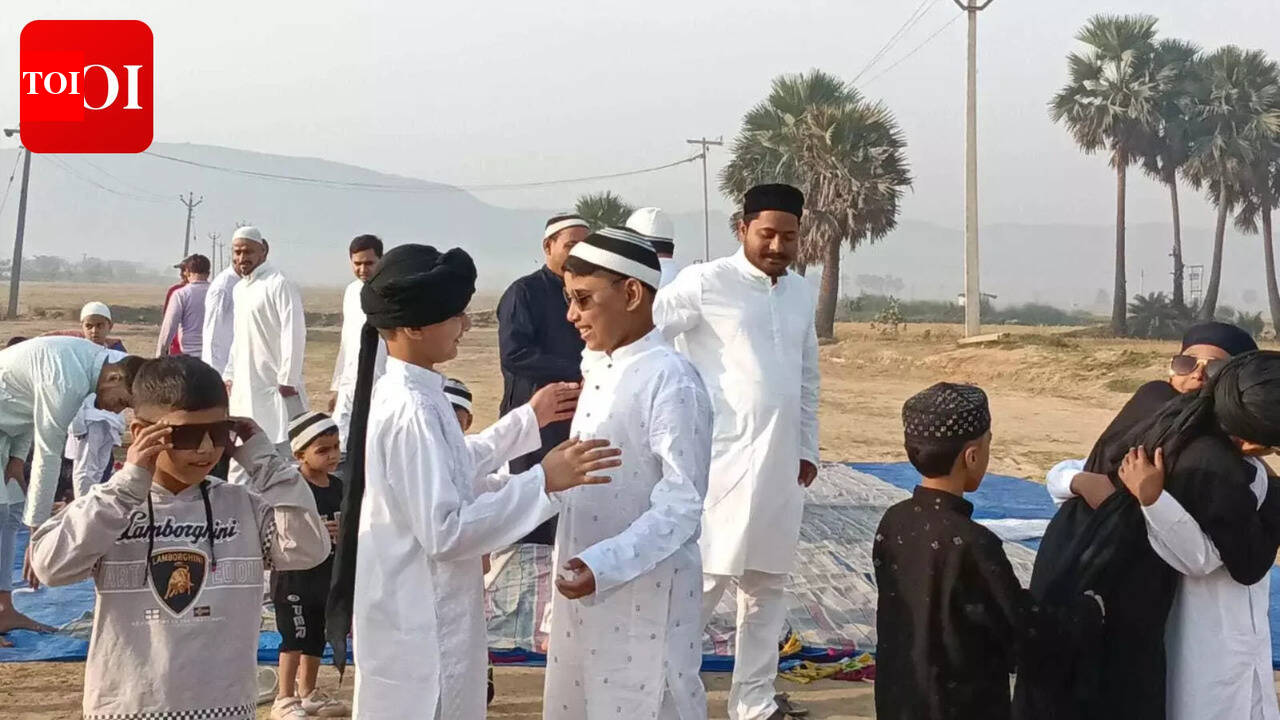
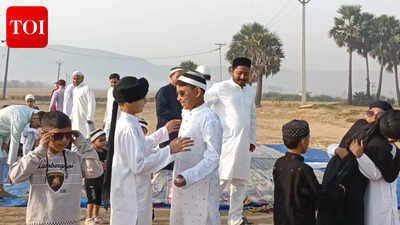
The crescent moon was sighted in Mecca on the evening of 19 March and by midnight messages had started arriving. From palace communications offices and City Hall press rooms, from foreign ministries and mosque pulpits, the words came out in Arabic and English and Turkish and Urdu: Eid Mubarak. Blessed festival. The month is over.This year Ramzan started from 19th February. Nine days later, on February 28, American and Israeli forces launched strikes on Iranian territory, killing Supreme Leader Ali Khamenei and sparking a significant military escalation throughout the Middle East. For the remaining three weeks of the holy month, more than a billion Muslims around the world fast throughout the day and follow the news throughout the night. The war and the fast went on simultaneously, in parallel, neither stopping for the other.Now, on the morning of Eid-ul-Fitr, the fast has ended. Prayers are being made. And from New York to London to Riyadh to Tehran, those leading nations and cities are finding their own ways to celebrate the day this year, under circumstances unlike any recent Eid.
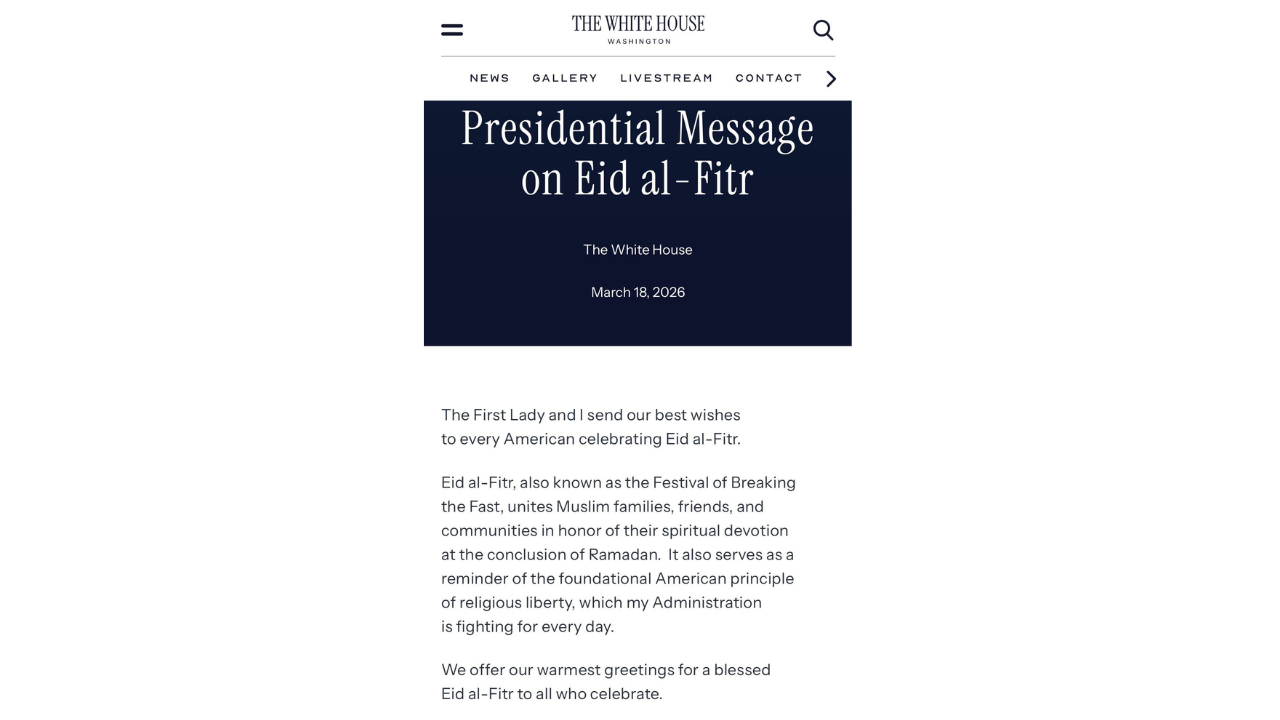
Washington: Best wishes from the White House
The statement came a day or two before the holiday, as has been the practice in prior US administrations. President Donald Trump and First Lady Melania Trump extended greetings to all Americans celebrating Eid al-Fitr and called the occasion a reflection of the country’s founding commitment to religious freedom.The message followed the general format of prior White House Eid greetings, being brief, warm, focused on home values. It did not address the ongoing conflict with Iran.Across the United States, from mosques in Dearborn to Houston to the outskirts of New York, communities gathered for early morning Eid prayers. Many had spent Ramadan following developments in the region with particular closeness. The White House’s message reached them through news alerts and social media feeds, read on the same phones that had been capturing images of the conflict throughout the month.
New York: Thirty-four iftars and one mayor
Zohran Mamdani became the first Muslim mayor of New York City on January 1 this year. By the last days of Ramadan, he had attended 17 iftars in five cities, one of his most public events during the month.Settings varied widely. He broke the fast with those held at Rikers Island. He sat down with taxi drivers in an organization called the New York Taxi Workers Alliance, where he fasted for fifteen days in solidarity with cab drivers fighting the medallion loan crisis early in his career. He hosted the hospital workers. They attended community iftars in the neighborhood where families from many different countries gathered for an evening meal, all observing the same fast.“There have been Muslim New Yorkers almost as long as there has been New York City,” he said at a rally in March.His public appearances during Ramadan generated both support and criticism. An Alabama senator posted a comment on social media making a connection to the September 11 attacks. A radio commentator made comments that drew a public reaction. On at least one occasion, protesters gathered outside his home. Mamdani continued his schedule throughout, signing executive orders and attending iftars for the remainder of his calendar.On the morning of Eid, he attended prayers in a mosque in the city. Elsewhere in New York, the day began like Eid in the city, with families in new clothes heading to mosques in Jackson Heights and Bay Ridge and Hollis, the smell of cooking wafting through apartment buildings before the sun had fully risen.
London: Prayer in the Square
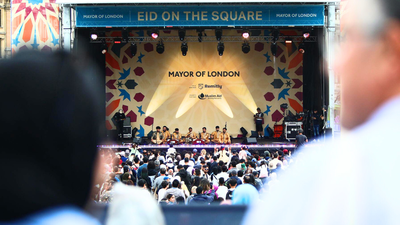
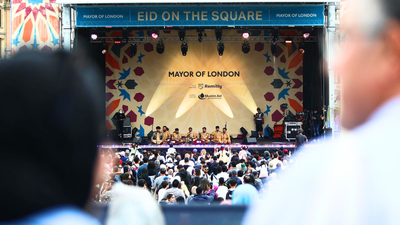
In London, the morning broke at Trafalgar Square, where thousands of devotees gathered to offer Eid prayers in the open air. Families, dressed in shalwar kameez and abaya, suits and headscarves, spread out in rows on the cobbled plain, stretching towards the National Gallery.The Mayor of London Sadiq Khan attended, as he has in previous years.In the days leading up to the meeting, the prayers had become a subject of public debate. A Conservative MP had commented that mass outdoor Muslim prayers in public places were uncalled for. Prime Minister Keir Starmer, responding to Prime Minister’s Questions, listed religious gatherings of various religions in Trafalgar Square and described them as part of the social fabric of the country.By Friday morning the intersection was packed. The queues of worshipers were spread across the grounds. The sound of the prayer spread to the water of the fountain. Visitors who did not know that prayers were taking place stood on the banks and watched.Starmer had also reiterated Britain’s position not to take part in military action against Iran in the days before Eid. At a press conference on March 16, he said: “I have been attacked by some people over my decision not to engage in an aggressive campaign against Iran. But at every step, I have stuck to my principles, the same principles I stuck to when it came to the debate over the Iraq War in 2003.”
Riyadh and the Gulf: inside the mosques
In Mecca, Eid prayers at the Masjid al-Haram attract large congregations every year who gather, systematically, through the architecture of the mosque in the morning light. King Salman bin Abdulaziz marked the occasion with a message to Muslims around the world, calling for peace and security and asking God to protect “our brave heroes and soldiers deployed at our borders”.This year in UAE, Eid prayers were completely limited to mosques. Outdoor mass prayers were banned for security reasons, a departure from the usual practice of families gathering in parks and open spaces in the cool of the morning. The decision had been announced in advance and prayers were being held indoors without incident.In Dubai, malls had been decorated for weeks with crescent moons and Eid greetings on digital displays. On the morning of the holiday, the roads were quieter than a normal Friday. The families moved between the mosque and the home early in the morning and the normal pattern of meeting and eating during the day began.
Ankara: at the crossroads
In Türkiye, President Recep Tayyip Erdogan gave his Eid message in the morning. It referenced the conflicts in Gaza, Lebanon and Iran and called for compassion and dialogue between nations. Their foreign ministers have been present at meetings in Riyadh and Doha in recent weeks, where regional governments are discussing the broader situation.Türkiye holds membership in NATO, maintaining long-term relations with the Muslim world and with many parties to the current conflict. Erdogan marked the day, offering his good wishes and continuing the program of calls with regional leaders that has taken up much of his recent calendar.
Tehran: A quiet Eid
Eid prayers were offered in mosques across the country in Iran. State television broadcast morning prayers from Tehran. The hall was packed.Supreme leader Mojtaba Khamenei, who was appointed after his father was assassinated in the February 28 attacks, has not appeared in public. His Eid message was delivered through state media, read by an anchor and accompanied by a photograph. No public appearances have been confirmed since his appointment.In displacement camps established in the west and north of the country after the attacks, families who left their homes during the conflict celebrated Eid with available resources. Aid organizations reported that in many places, volunteers had arranged small celebrations, sweets and donated clothing for children, signs that the holiday symbolizes this to young observers. Fasts were observed throughout Ramzan in those camps. Namaz was offered on the morning of Eid.
the day itself
By midnight on March 20, prayers had been said on every continent. Tables were being set. In New York, the family gathered in Jackson Heights and Bay Ridge and Hollis’s apartments. In London, people were making their way between Whitechapel and homes in Wembley and Croydon. In Istanbul, boats crossing the Bosphorus were filled with people traveling to visit relatives on the other bank.