“There are legends of people… who were born with the gift of making music so true… it could pierce the veil between life and death, conjuring the spirits of the past and the future.”In ryan cooglerIn ‘The Sinners’ Annie speaks these words as a warning, because somewhere in the Mississippi Delta, a young man has taken up playing blues guitar with such raw, such devastating reality that it simply does not entertain. It calls out. It opens a path between what is alive and what is not. And what comes is not always light.Go back far enough and you will find that every great civilization built its first altar not to a king or a conqueror, but to a sound.The Vedic priests of ancient India understood that the universe itself was born of vibration, Naada Brahma, that the world was sound.Ancient Egyptian priests sang death songs for their dead.The Biblical King David was a renowned musician, poet and songwriter. He was famous for playing the harp (or harp) and is credited with writing more than half of the 150 psalms in the Bible. His musical skills were used to calm the troubled soul of King Saul and bring worship to the Hebrew nation. The Romans not only worshiped their gods, they also sang for them. Every victory, sacrifice and coronation was turned to music. It was the medium through which the ordinary world reached that which it could not name.And then there were the heroes.When Alexander the Great cried because there were no more worlds left to conquer, his grief was not recorded in silence. His campaigns turned to battle hymns and victory ballads, songs by court poets who understood that this extraordinary king needed music to control himself, as the common language was not so great.Samudragupta, the great Gupta emperor of ancient India, warrior, conqueror, poet, played the veena so skillfully that his coins bore the inscription not on his sword but on his musical instrument. Here was a man who held an empire in one hand and music in the other, as if he understood that true power extended beyond the land to the deep, invisible regions of the human soul.In every civilization, music played a singular role, it became the language for the people and moments too vast for common expression. Gods. Kings. Heroes. And then, most interestingly, those who existed somewhere in between.Mystic. Celebrities who came into history without any clear explanation and went without.Which could not be fully understood, could only be felt.Annie names three traditions of this gift, Irish Phillies, Choctaw Firekeepers, West African Griots. In each, the pattern persists. The gift is real. This is extraordinary. It connects the living to something deeper, ancient and beyond.
Watch
“It also attracts evil.” | Opening scene The Sinner (2025)
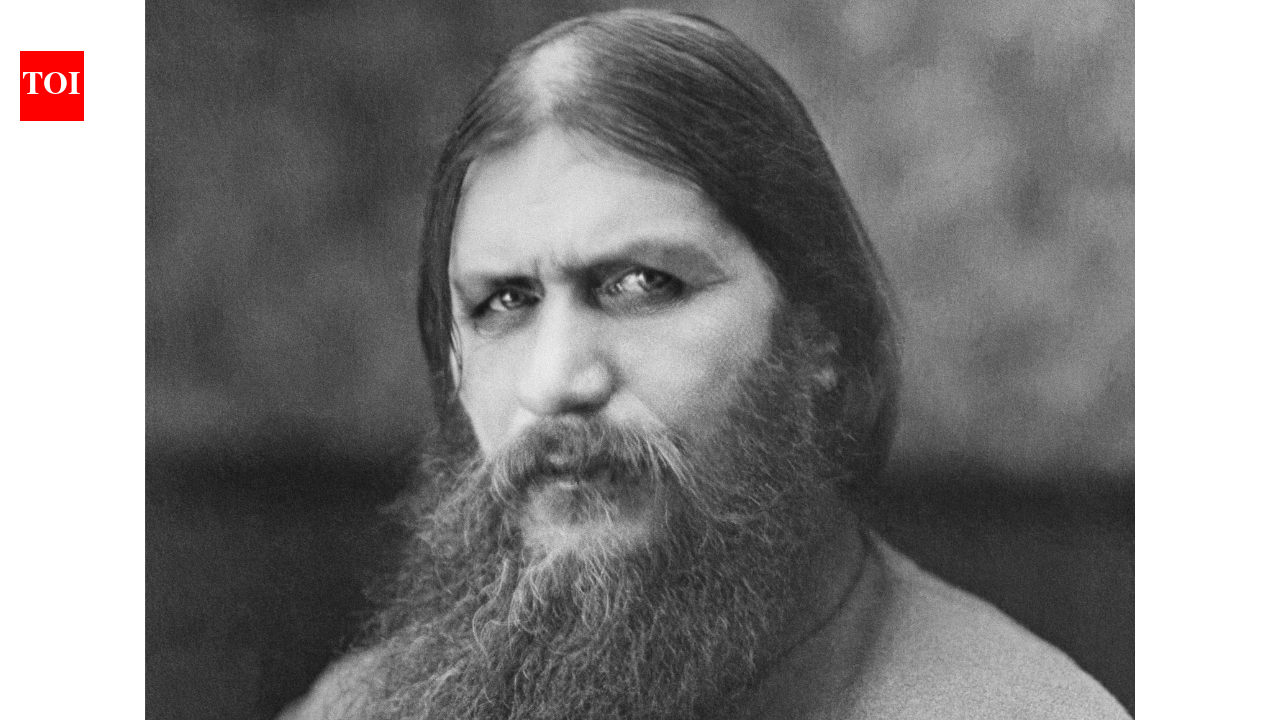
Every culture that celebrated this gift also feared it, because the same medium that allows something to become sacred also allows other things to come. The veil, once pierced, does not discriminate.Which brings us, across centuries and civilizations, to a frozen river in Russia.And to Boney M.When Boney M released Rasputin in 1978, magically adapted by Aditya Dhar in the latest Bollywood bombshell Dhurandhar, the world heard it as a dramatic disco song about a scandalous Russian mystic. Attractive, dramatic, unique. The kind of song that fills the dancefloor and becomes an earworm proves to have the potential to go viral on Instagram Reels.But listen more carefully and something else emerges beneath the groove.You’ll hear Annie’s warning over the music.Because Rasputin is not just a song about a controversial historical figure. At its core, it’s the story of a man who was born with a gift so true that it pierced the veil between life and death, and the song itself is a testament to that piercing. A century after his death, his name still echoes over speakers, still compels people to stop and listen, still holds that inexpressible charge.He was stabbed in the stomach. he survived. He was poisoned. he survived. He was shot several times. he survived. He was tied up and thrown into a hole in a frozen river. Then at last he stopped. And even that, the world never believed.Grigory Rasputin was the Griot of Russia. Firekeeper of Siberia. The Frozen Empire’s answer to ancient Philly, that rare, unstable category of human that not only inhabits the world but exists on its edge. He was a farmer who moved into a palace. A sinner who healed the sick. A man to whom the normal rules of mortality did not apply.And as Anne warns us about every figure, her gift did not come alone, her death foreshadowed the fall of the royal family.Similarly, in Dhurandhar, the same song comes precisely in the middle of the fall.Ra Ra Rasputin.
Watch
Boney M. – Rasputin (Sopot Festival 1979)
Rasputin never had formal power, yet he remained close to those who did.He was born in 1869 in the remote Siberian village of Pokrovskoye, far from the centers of power. They had no formal theological training, no institutional support, and no clear path to influence. His early years were filled with restlessness and directionless wandering.His path changed during a period at the Verkhoturye Monastery, although he never became a priest. He began traveling throughout Russia, the Caucasus, and eventually the Holy Land. Stories began to follow him along the way. Some talked about treatment. Others of prayer. Many simply spoke of presence.By the time he reached St. Petersburg, his reputation had already preceded him.Through members of the clergy and nobility, he was introduced to the imperial court, where he met Tsar Nicholas II, Empress Alexandra, and their son, Alexei Nikolayevich.Alexei, the heir to the Russian Empire, suffered from hemophilia, a condition where even minor injuries could be fatal. Medical treatments at the time were limited and often harmful.Rasputin was called during one such crisis, when the boy’s bleeding had become uncontrolled. After his intervention the bleeding reduced. Alexey stood still. he survived.Rasputin was called again. And then again.
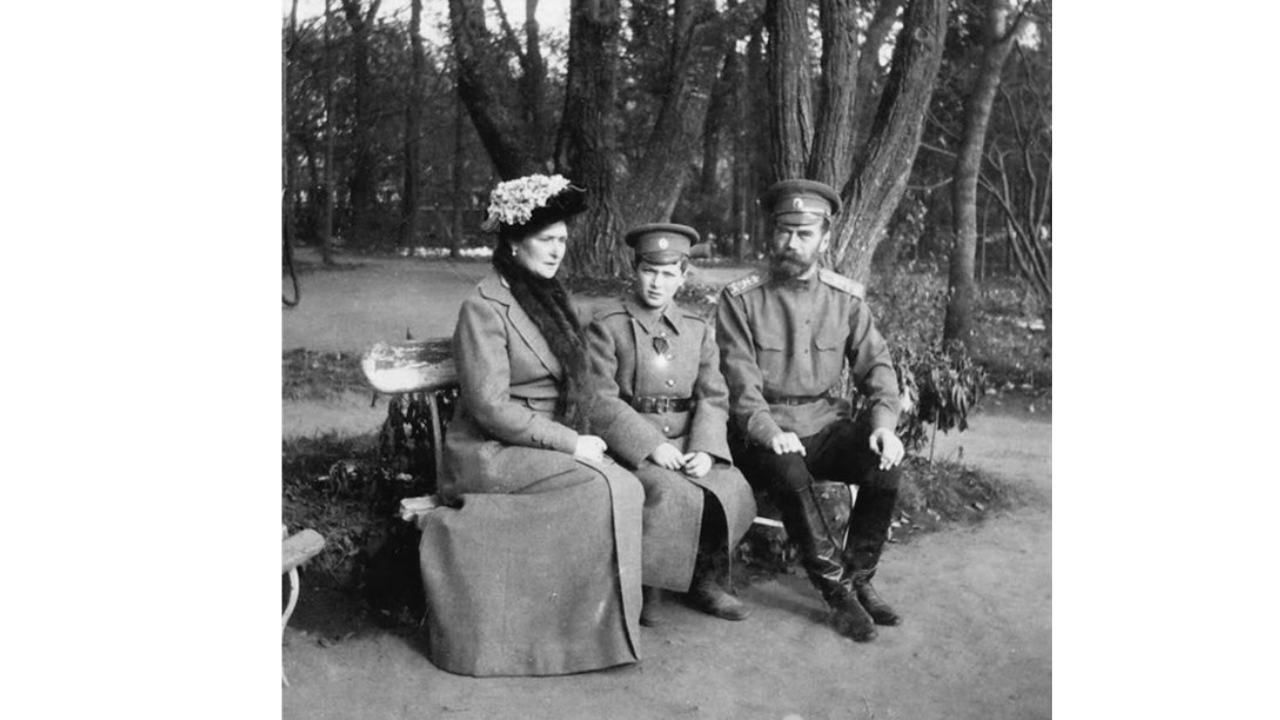
Empress Alexandra Feodorovna, Tsarevich Alexei Nikolayevich and Emperor Nicholas II in Tsarskoye Selo
Empress Alexandra came to rely on him not only for her son’s health but also for reassurance in moments of uncertainty. In that dependence, Rasputin’s role went from healer to something more dangerous.As political tensions increased in the empire, Rasputin’s influence began to worry the Russian elite. Ministers were appointed and dismissed in ways that reflected his recommendations. Bureaucratic authority blurred with personal reach. To many within the administration, he represented instability rather than faith, with a man without office making decisions at the highest levels of government.Accounts from the time describe his presence, his gaze, his voice, the way conversations around him were unsettling.“I am not a saint. I am a sinner.”Hamza Ali Mazari in Dhurandhar enters a similar system.It doesn’t start with authority. During an armed encounter, Rehman, the dacoit’s son, is caught in the heavy crossfire. Hamza intervenes and brings him out alive.He is kept close, called upon again, and his role expanded through necessity rather than position. Over time, his presence begins to shape the outcomes. Other people react to him differently, and his place within the structure becomes hard to ignore.A similar sentiment is echoed in Aari Aari:“If I kill for my people, it does not make me a sinner.”Both figures work within systems that do not fully trust them, yet cannot function without them.Rasputin survived several attempts on his life, poisoning, stabbing, and shooting, before ultimately being killed. Each failed attempt deepened the myth surrounding him.Hamza faces repeated threats from Rehman Dacoit, SP Chaudhary and Iqbal, and he survives, continuing to move forward in the same unstable system.This is where Annie’s warning takes its final form:“This gift can bring healing to their communities… but it also attracts evil.”Rasputin heals a dying heir and becomes embroiled in the political collapse of an empire already on the brink.Hamza saves a life and steps into a system that begins to change around him and eventually collapses.