

Inside Lanzarote: The island of 100 volcanoes, where heat still radiates from the ground, and white villages glitter on black lava. world News
Lanzarote, one of the Canary Islands, seems a little surreal as soon as you arrive. The landscape is shaped by fire, yet softens over time. Black volcanic fields stretch across the land, broken up by bright white villages that almost glow under the Atlantic sun. This contradiction is immediate and a little disorienting. Nothing here feels overly polished or rushed. Life moves slowly, almost cautiously. Tourists reportedly expect beaches and sunshine, but what they often miss is something deeper. silence. space. And a strange, raw beauty that lingers long after they’re gone. The island of Lanzarote in the Canary Islands appears simple at first, but gradually it reveals layers of history, nature and art that feel closely connected to this land.
Lanzarote in Spain: land of volcanoes where fire shaped a timeless island landscape
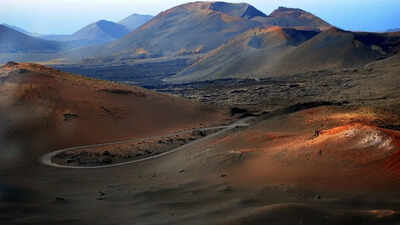
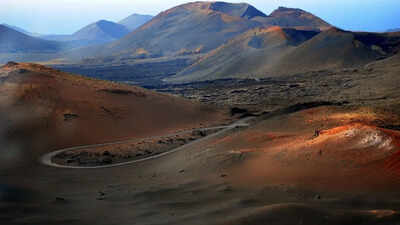
Lanzarote is often described as the land of volcanoes, and that description is no exaggeration. More than 100 volcanic formations shape its surface. The land looks cracked and ancient, with fields of pitch black lava covering wide areas. In some places, the soil turns red or brown, depending on how the lava cooled centuries ago.Timanfaya National Park is the most vivid example of this volcanic past. The land there feels frozen in time. Great craters rise from the earth, and the surface still holds heat beneath it. Experts suggest that the last major eruptions in the 18th century completely changed the geography of the island. That violent history is still visible in almost every direction.Still, life has adapted. Small plants move through rocky ground. Dry bushes survive where technically they shouldn’t. It seems almost impossible, yet it continues.
artistic heritage of cesar manrique in lanzarote
One of the most important figures in the modern story of Lanzarote is César Manrique. He was a painter, sculptor and architect, but his influence went beyond mere art. They appear to have shaped how the island looks and feels today.Manrique believed that the natural landscape of Lanzarote should not be affected by modern construction. Instead, buildings should blend into the environment. This idea is visible throughout the island. His work includes sites such as the Jameos del Agua, Los Verdes Cave and the Mirador del Río, a viewpoint overlooking the island of La Graciosa. These spaces don’t feel forced or artificial. It seems that they are from the ground only. Locals often say that without Manrique, Lanzarote might have developed very differently, possibly losing much of its quiet charm.
From golden coves to black sand: Lanzarote’s beaches
Lanzarote’s beaches are diverse and surprisingly quiet compared to many other tourist destinations. Papagayo beach is often described as one of the most beautiful, with soft golden sand and sheltered coves. The water here varies between dark blue and clear green depending on the sunlight.Famara Beach offers a completely different experience. It is wide, winding and open. Surfers and windsurfers are often attracted to it, but even when people are present, it doesn’t feel crowded. The space itself creates a feeling of peace. There are also beaches with black volcanic sand, shaped directly by ancient eruptions. Each coastline feels different, yet they all share a common feeling of openness. The horizon never feels closer. It stretches endlessly across the Atlantic Ocean.
Lanzarote’s volcanic heat and unique wine landscape
Timanfaya National Park is one of the most visited areas on the island. The landscape there looks almost lunar. Deep lava fields, sharp rocks and silent craters dominate the scene. In some exhibits, guides show how heat still rises from just below the surface. The ground may become warm enough to cook food naturally.There is also a restaurant called El Diablo where food is prepared using this geothermal heat. It sounds unusual, but it is real and widely known among visitors. Nearby is La Geria, a wine-growing region that seems almost impossible at first glance. Grapes are grown in small pits dug in volcanic ash, with semicircular stone walls that protect each plant from the wind. This method seems simple, even improvised, yet it produces wines as distinctive as Malvasia. Experts say the volcanic soil gives the wine a unique character.
Lanzarote Island in the Canary Islands: a peaceful escape shaped by fire and sea
Lanzarote does not suffer from noise or excess. Instead, it provides space, peace, and contrast. White villages like Teguise sit peacefully against dark volcanic landscapes. The art blends into the natural rock formations. The beaches remain open and crowd-free even during peak hours.It feels like time behaves differently here. It slows down almost without permission. Some passengers leave early, while others stay longer than planned, reportedly unable to explain why.