
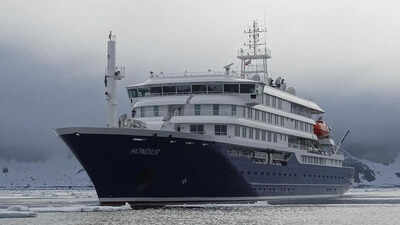

3 people died due to fear of deadly Hantavirus on Atlantic cruise ship, British passenger is in critical condition. world News
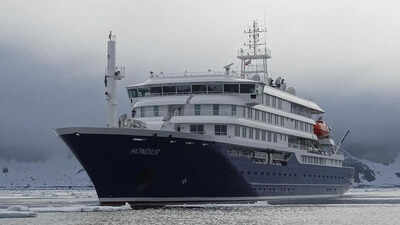
A luxury expedition cruise traveling across the Atlantic has been hit by an outbreak of suspected hantavirus, which has already killed three people and left several others seriously ill, prompting an international health response involving South African and Dutch authorities.According to the BBC, the outbreak surfaced on the MV Hondius, an expedition cruise ship sailing from Argentina to Cape Verde. World Health Organization (WHO) confirmed that one case of hantavirus has been found to be positive, while several additional suspected infections are under investigation.Authorities said the first victim was a 70-year-old Dutch traveler who became seriously ill during the trip. He later died when the ship approached the island of St. Helena in the South Atlantic. South African health officials confirmed that his remains were awaiting repatriation to the Netherlands.Shortly afterwards his 69-year-old wife also fell ill and later died in a Johannesburg hospital after being evacuated from the ship. BBC reports have identified the couple as Dutch citizens who traveled together on the expedition.A third death has also been linked to the outbreak, while a 69-year-old British traveler remains in intensive care in Johannesburg. Two crew members reportedly require immediate medical treatment as authorities continue to monitor passengers and staff on board the ship.
What is Hantavirus?
Hantavirus is a rare but potentially fatal disease that is usually spread by contact with infected rodents, particularly through contact with rodent urine, feces, or saliva. Humans can inhale contaminated particles from the air, causing serious respiratory illness and organ complications.This virus is uncommon but feared because symptoms can progress rapidly. Initial symptoms are often flu-like, including fever, muscle aches, fatigue, and headache. In severe cases, patients may develop life-threatening breathing difficulties and internal complications.Online discussions around the outbreak have focused particularly on the possibility of the Andes strain of hantavirus, a variant previously associated with limited person-to-person transmission in South America. However, officials have not publicly confirmed the exact strain associated with the cruise ship incident.The fact that the virus originated in Argentina has raised further concern among infectious disease experts because South America has historically recorded cases involving the Andes virus strain.
Officials are trying to stop the crisis
Health officials in several countries are now coordinating efforts to prevent further spread and evacuate affected passengers.Dutch authorities are reportedly arranging the repatriation of symptomatic travelers and the transfer of bodies linked to the outbreak. Meanwhile, South African medical teams are handling emergency treatment and monitoring cases of possible exposure linked to the ship.The outbreak has also rekindled fears about the health risks of cruise ships, with social media users comparing the incident to previous onboard disease scares that spread rapidly in different marine environments. Online discussions ranged from concerns over medical preparedness onboard ships to criticism of long-haul cruise operations in remote waters.Despite the increased attention, officials have stressed that the investigation is ongoing and many suspected cases have not yet been confirmed.
global context
The incident is quickly becoming one of the deadliest cruise-related health concerns of the year, due to both the death toll and the rare nature of the virus.Cruise ships are designed to operate as self-contained floating communities, but infectious disease outbreaks can be especially difficult to manage when ships are far from major medical facilities. The remote Atlantic route taken by the MV Hondius reportedly complicated emergency response efforts and patient transfers.Public health experts are expected to monitor the situation closely in the coming days as laboratory testing continues. Authorities have not yet confirmed whether additional passengers were exposed before the sick passengers were evacuated.WHO and national health agencies are expected to issue further updates as the investigation evolves.