Breaking News
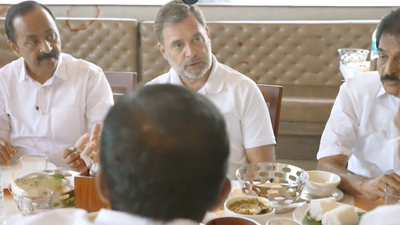
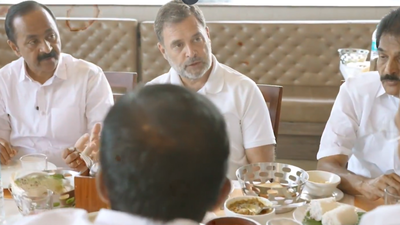
Watch: Rahul Gandhi enjoys ‘Appam and Omelette’ with UDF leaders ahead of Kerala Assembly elections. india news

Watch: Rahul Gandhi enjoys 'Appam and omelette' with UDF leaders ahead of Kerala Assembly elections

New Delhi: Congress MP and opposition leader Rahul Gandhi On Friday, he shared a video on social media in which he is seen having breakfast with leaders of the United Democratic Front (UDF) in Kerala ahead of the 2026 assembly elections.In the video, Gandhi is seen enjoying local delicacies like appam, puttu and omelette while interacting with UDF leaders on the ground reality of the upcoming elections.In a post on UDF is the new hope for the people of Kerala – our team is strong, united and ready to lead.The ruling Left Democratic Front (LDF) is expected to face a tough challenge from the opposition United Democratic Front (UDF). Indian National Congress. Meanwhile, the Bharatiya Janata Party (BJP)-led National Democratic Alliance (NDA) is also trying to expand its presence in the state, aiming to turn the contest into a triangular fight.The 2026 Kerala Assembly elections will be held in a single phase on 9 April, as announced by the Election Commission of India on 15 March. The counting of votes is scheduled to take place on May 4, while the tenure of the current assembly is scheduled to end on May 23.

Source link

‘He should resign first’: Mamata targets PM Modi over voter list controversy in Bengal elections. india news

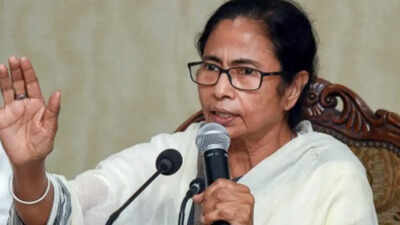
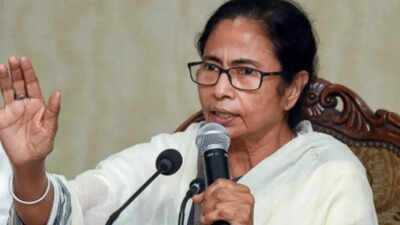
'He should resign first': Mamata targets PM Modi over voter list controversy in Bengal elections

New Delhi: Chief Minister of West Bengal Mamata Banerjee made a scathing attack on the Prime Minister on Friday Narendra ModiHe alleged that if the names of infiltrators are in the voter list then they should first resign.Speaking at a rally in South Dinajpur, he said, “If there are names of infiltrators in the voter list, Modi had won with their votes earlier also, so he should resign first.”

Watch

After Supreme Court verdict on Malda hostage row, Mamata Banerjee claimed BJP wants President’s rule in Bengal

He questioned the allegations against the voter list and asked why the same voter lists used in the 2024 general elections were now being challenged ahead of the assembly elections.The Chief Minister also addressed the recent incident in Malda district, where judicial officers were surrounded for several hours. He blamed All India Majlis-e-Ittehadul Muslimeen (AIMIM) and Indian Secular Front (ISF) for the incident, while accusing Congress and BJP of instigation.Giving details, Banerjee said that the main accused in the case has been arrested.Addressing a rally in Harirampur, she alleged, “BJP loaned him (the accused) from AIMIM and brought him here.”He further said, “ISF is with them; Congress and BJP have also instigated.”Banerjee said the Criminal Investigation Department (CID) arrested the main accused, lawyer Mofakkarul Islam, from the Bagdogra airport when he was trying to flee.“These are the people who conspired to commit violence in Mothabari, Malda,” he said.Banerjee also raised concerns over the conduct of the elections and alleged that officials were transferred to facilitate the movement of outsiders into the state.He also claimed irregularities involving security forces.“Money is being brought in using CRPF vehicles. I have records of these activities and will expose them at the appropriate time,” she alleged. Trinamool Congress The chief also hit out at Home Minister Amit Shah, who has announced plans to stay in West Bengal during the election period.Banerjee claimed that his presence would not give any electoral advantage to BJP. He said Shah’s prolonged stay in the state during the elections would reduce the party’s vote share.

Source link

Soft PR, ‘Samosa’ swipe: How Arvind Kejriwal’s ‘cops’ justified Raghav Chadha’s ‘demotion’ in Rajya Sabha. india news

Soft PR, 'Samosa' swipe: How Arvind Kejriwal's 'cops' justified Raghav Chadha's 'demotion' in Rajya Sabha
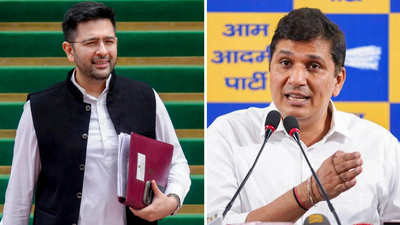
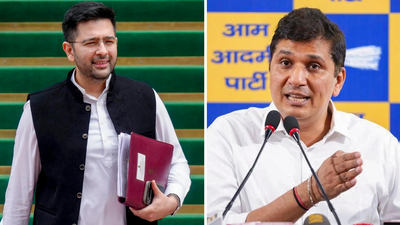
Raghav Chadha and Saurabh Bhardwaj (right) (file ph

New Delhi: Aam Aadmi Party’s internal discord came into public view on Friday when MP Raghav Chadha reacted to his removal as the party’s deputy leader in the Rajya Sabha, drawing sharp retorts from senior colleagues.Leaders including Delhi AAP chief Saurabh Bhardwaj and IT cell chief Anurag Dhanda, who call themselves “Arvind Kejriwal’s soldiers”, defended the leadership’s decision and justified Chadha’s ‘demotion’ in the Upper House.Read this also- Split openly in AAP: Raghav Chadha attacks leadership; The party hit backBhardwaj launched a scathing attack, accusing Chadha of indulging in “soft PR” instead of taking on the PM Narendra Modi-led government. Taking a dig at Chadha over a parliamentary intervention, he said, “A small party gets very limited time there, and instead of talking about samosas, it is more important to raise the real issues of the country.”He said, “Whenever there is an issue and the opposition walks out, you do not join the walkout. For the last several years, I have not seen you raising any issue in Parliament, where you have questioned the Prime Minister or the BJP government. How can the politics of fear work like this?”Questioning Chadha’s role as a Rajya Sabha member from Punjab, Bhardwaj said, “You have been elected from Punjab, and you hesitate to even raise Punjab issues. Recently in Gujarat, around 160 party workers were booked under false cases and many were arrested, yet you remained silent on that too.”Increasing the criticism further, he mentioned an old incident related to the party leadership. “When many of our leaders were in jail and Arvind Kejriwal ji as Chief Minister was arrested in a false case, at that time you were not even in the country, you had gone somewhere and stayed away.”Party’s IT cell chief Anurag Dhanda also launched a scathing attack, accusing Raghav Chadha of failing to discharge his responsibilities in the interest of the party. Taking aim at the nature of the issues raised by Chadha in Parliament, he said, “In Parliament, the party gets just a little time to speak – in such a situation, we can either fight to save the country or bargain to make samosas cheaper in airport canteens.”Dhanda increased his criticism by questioning Chaddha’s political stance and resolve. “If someone is afraid of Modi, will he fight for the country?” He alleged that Chadha has avoided taking a strong stand on major national issues. He pointed to several examples in support of his allegation, including alleged silence on the arrest of party workers in Gujarat, inaction on voting rights concerns in West Bengal and his refusal to support a resolution against the Chief Election Commissioner.He accused Chadha of not staying in the House during the party’s walkout and said, “For the last few years you have been scared, Raghav. You hesitate to speak against Modi. You hesitate to speak on the real issues of the country,” before ending with a sharp remark: “He who is scared…”

Source link

85% candidates final, 15% pending: Congress to approve Tamil Nadu list in CEC meeting today. india news

85% candidates final, 15% pending: Congress to approve Tamil Nadu list in CEC meeting today

New Delhi: The Indian National Congress The Central Election Committee (CEC) meeting in Delhi is set to finalize its candidates for the upcoming Tamil Nadu Assembly elections, with 85 per cent of the names already finalised, according to state unit chief K Selvaperunthagai.Selvaperunthagai said discussions with senior leaders including Mallikarjun Kharge and Rahul Gandhi have been largely completed, with only a small portion of seats remaining to be finalised.“All India Congress president Mallikarjun Kharge, opposition leader Rahul Gandhi and senior leaders discussed the candidates. 85% have been decided, 15% are pending. Today we are going to decide,” he said.The Congress will contest elections in 28 constituencies as part of the alliance led by Dravida Munnetra Kazhagam, which heads the Secular Progressive Alliance (SPA). DMK has retained its majority by deciding to contest 164 seats out of 234, while allotting the remaining 70 seats to its allies. Apart from the Congress, the major allies include the Communist Party of India (CPI) and the Communist Party of India (Marxist) (CPI-M) with five seats each, the Viduthalai Chiruthigal Katchi (VCK) with eight seats and the Marumalarchi Dravida Munnetra Kazhagam (MDMK) with four seats.Other alliance partners include smaller regional players Desiya Murpokku Dravida Kazhagam (DMDK) with 10 seats and Indian Union Muslim League (IUML) with two seats.Tamil Nadu Chief Minister and DMK President mk stalin Candidates for several key constituencies have already been announced.Stalin will contest from Kolathur, while Deputy Chief Minister Udhayanidhi Stalin has been fielded from Chepauk-Thiruvallikeni.Other prominent candidates include Mahesh from Kanyakumari, Appavu from Radhapuram, Wahab from Palayamkottai, Kalaikthiravan from Tenkasi and KKSSR Ramachandran from Aruppukottai. Additional names include Velu from Mylapore and Ma Subramaniam from Saidapet.The main contest in the state is expected to be between the DMK-led SPA and the All India Anna Dravida Munnetra Kazhagam-led NDA, which includes the BJP and the PMK.A recent survey by polling agency Lok Poll has predicted a strong performance for the DMK alliance, projecting it to get 181 to 189 seats with a vote share of 40.1 per cent. The AIADMK-led alliance was projected to get 38 to 42 seats.Tamil Nadu will go to polls in a single phase on April 23 and counting of votes will take place on May 4.The last date for filing nominations is April 6, scrutiny will take place on April 7 and candidates can withdraw nominations till April 9.With the list of candidates complete and alliances finalised, political parties are entering the final phase of preparations for what is expected to be a closely watched electoral contest in the state.

Source link

Delhi Chief Minister Rekha Gupta celebrated Hanuman Jayanti: Inspiration for nation building with her ideals. india news

भगवान हनुमान के आदर्श राष्ट्र निर्माण के लिए प्रेरित करते रहेंगे: दिल्ली की मुख्यमंत्री रेखा गुप्ता

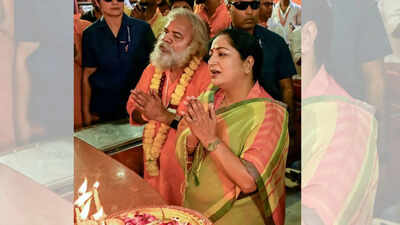
Delhi Chief Minister Rekha Gupta offering prayers on the occasion of Hanuman Janmotsav at Jhandewalan Hanuman Temple in New Delhi on Thursday. (ANI photo)

New Delhi: Chief Minister of Delhi Rekha Gupta on Thursday offered prayers at Sankat Mochan Dham in Karol Bagh, where there is a 108-foot statue of Lord Hanuman. Hanuman Jayanti.Gupta said Lord Hanuman, who is a symbol of service and courage, has been an inspiration for nation building and prayed for the well-being, peace and prosperity of the people of Delhi while reciting Hanuman Chalisa along with other devotees.His ideals continue to inspire us to serve the society and the nation selflessly, the Chief Minister said. He said that sacred occasions like Hanuman Jayanti promote positive energy, unity and spiritual awareness in the society.

Source link

‘Deep cooperation for regional peace’: Upendra Dwivedi meets Bangladesh High Commissioner Riyaz Hamidullah. india news

'Deep cooperation for regional peace': Upendra Dwivedi meets Bangladesh High Commissioner Riyaz Hamidullah

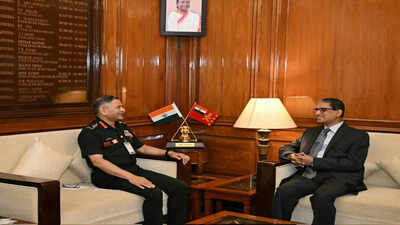
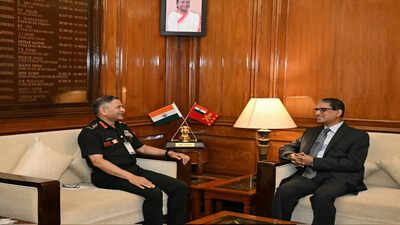
New Delhi: Bangladesh High Commissioner to India Riyaz Hamidullah met Army Chief Upendra Dwivedi in New Delhi to discuss defense ties between the two countries. The meeting focused on ways to strengthen bilateral defense cooperation, including joint training initiatives and deeper coordination. In a post on Twitter, the Indian Army’s Additional Directorate General of Public Information said, “High Commissioner of Bangladesh to India, His Excellency Shri M Hamidullah met COAS General Upendra Dwivedi. During the talks, they discussed enhancing bilateral defense cooperation, including joint training initiatives. They also explored opportunities for deeper cooperation aimed at promoting regional peace and security.” Hamidullah also shared details of the meeting, saying, “Pleased to meet Chief of Army Staff (Indian Army) General Upendra Dwivedi at South Block; and discussed Bangladesh-India relations including defense cooperation.” The meeting followed recent comments by Union Minister of State for External Affairs Kirti Vardhan Singh, who highlighted the strength of India-Bangladesh relations. Speaking at an event to mark Bangladesh’s Independence Day at the High Commission in New Delhi, he described the partnership as strategic, flexible and people-centric. Singh said that Bangladesh’s Independence Day is a testament to the spirit of self-determination and extraordinary resilience of its people. He also referred to the shared legacy of the 1971 liberation war and said these ties will continue to shape cooperation between the two countries. “These deep bonds of solidarity strengthen our bilateral partnership, which is based on trust, shared values ​​and a common commitment to peace, stability and prosperity in our region,” he said.

Source link

Will Brand Pinarayi survive the election cycle in Kerala? | india news

Will Brand Pinarayi survive the election cycle in Kerala?
Kerala CM Pinarayi Vijayan

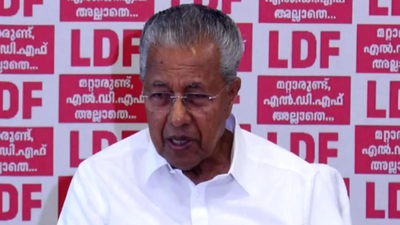
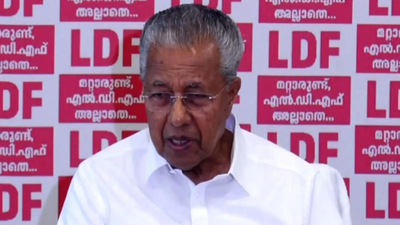
Growing voter restlessness, fiscal stress and rift in the CPM will test whether their governance model is good enough to challenge the state’s alternative pattern.The road to the 2026 Kerala Assembly elections is shaping up to be a defining political moment not only for the ruling Left Democratic Front (LDF) but, more importantly, for the Chief Minister. Pinarayi Vijayan. There is more at stake than electoral victory; It is a referendum on whether the “Pinarai brand” of governance can withstand the anti-incumbency wave and deliver an unprecedented third consecutive term in a state historically known for political change.Kerala’s electoral history has long been marked by cyclical altercations between the LDF and the United Democratic Front (UDF). The LDF’s return to office in 2021 broke this pattern, raising expectations and intensifying scrutiny. As the 2026 elections approach, the central question is whether that disruption was an exception born of extraordinary circumstances or the beginning of a new political trajectory.

Anti-incumbency wave: undercurrent or wave?

The debate around anti-incumbency remains complex and, as many observers say, inherently difficult to quantify. Political commentator Roy Mathew describes it as an “undercurrent”, which may not always be visible but appears decisively during elections. Nevertheless, current indicators suggest that the anti-incumbency wave is no longer mere speculation and has begun to take more pronounced form, he says.The LDF’s failures in the 2024 Lok Sabha elections and 2025 local body elections should serve as an early warning signal. While they are not definitive predictors, they point to growing restlessness among voters, driven less by ideological shifts than by governance concerns such as the economic crisis, delays in welfare delivery and administrative fatigue, he added.

Leadership vs Government: A Dual Challenge

What is different in the current political climate is the apparent shift from a general anti-incumbency sentiment against the government to more personal criticism of Vijayan himself. Increasing incidents of dissent within the CPM, including rebel candidates and internal dissent, point to friction within the party ranks.Critics argue that the perception of centralized decision making, an assertive leadership style, and accusations of political arrogance have contributed to this sentiment. This raises a serious question: is the anti-incumbency wave in 2026 primarily focused on leadership, or does it extend more broadly to government performance?

financial stress, welfare pressure

Kerala’s fiscal stress has emerged as a major factor when it comes to voter sentiments. Welfare politics have traditionally been the cornerstone of the LDF’s legitimacy, and disruptions, particularly delays in pension distribution, directly hit its core support base. Moreover, agrarian distress and unemployment have begun to undermine the perception of administrative efficiency.Political analyst and election expert Dr J Prabhash says the LDF is now burdened with a decade in office, adding that the lack of a strong anti-incumbency wave in 2021 was largely due to the extraordinary context of the pandemic. In contrast, the current environment reflects broader and more pronounced discontent among social groups.

perception gap

Repeated allegations of corruption and governance-related controversies have further fueled the narrative of disconnect between the ruling establishment and public sentiments. While no single issue may decisively influence voters, their cumulative effect has reinforced the perception of stress and fatigue within the system, Prabhash says.

counter story

Despite these challenges, Vijayan has continued to display confidence, and has sought to redefine the political discourse around governance and development. His administration highlights achievements in infrastructure, public health and education as evidence of performance-based legitimacy.Another political commentator, Jacob George, argues that the ‘Pinarai brand’ remains intact. He cites projects like the completion of the GAIL pipeline and the progress of the Vizhinjam port as examples of strong leadership. This narrative attempts to strengthen voter confidence by emphasizing continuity and administrative capacity.

a high stakes battle

The 2026 Kerala Assembly elections are unlikely to be decided directly on anti-incumbency wave alone. Instead, it is evolving into a more nuanced contest in which leadership perceptions, governance outcomes, internal party cohesion and opposition mobilization will all play decisive roles.The challenge for the LDF and Vijayan is to maintain credibility amid economic pressure and political discontent. For the opposition, the task is to transform emerging discontent into a cohesive electoral alternative.Ultimately, whether the election turns out to be a confirmation of the ‘Pinarai Model’ or a confirmation of Kerala’s traditional anti-incumbency cycle, will define not only the immediate political future, but also the evolving nature of leadership and voter behavior in the state.

Source link

37 year old student politics, banned on Karnataka campus. india news

37 years of student politics banned in Karnataka campus!

On a weekday afternoon at a government college in central Karnataka, the student notice board is filled with circulars on examinations, scholarships and cultural programmes. What is missing, however, are the printed campaign posters and hand-written appeals to vote or calls for debate that once defined campus life in the state. It has now been almost four decades since the college corridors in Karnataka have gone silent, and stopped resonating with the passionate chants of protests or rallies on various issues from the student community. Student union elections are banned in Karnataka’s colleges and universities, which some would argue has left the campuses politically weaker than in previous decades.Restrictions and ‘talent crisis’That long silence is now about to end – after almost 37 years, the Congress government in Karnataka has announced its plans to restart student union elections in the state’s colleges and universities, reopening the chapter that was abruptly closed in 1989. Faced with concerns over violence, politicization and academic disruption, it was the Congress government led by Chief Minister Virendra Patil that ended campus politics. When CM Patil announced the ban, it was a temporary measure, but it continued. Soon, nominated or advisory student councils replaced ‘politically’ elected unions. Although students can still raise issues related to fees, hostels and examination delays, formal representation has weakened over time.But the ban and its aftermath have kept alive the debate on democracy, discipline and the role of educational institutions in shaping future political leadership. He has also focused on the political calculations surrounding the state’s once vibrant student movements, their decline and possible resurgence.The current Congress government’s announcement of reviving campus politics, which came as a surprise to many, was made at the behest of Rahul Gandhi, the leader of the opposition in the Lok Sabha. Deputy CM DK Shivakumar says, “We need to find young political talent. This is possible through campus elections.An EVM for campus electionsFor many in Karnataka, the government’s efforts to revive campus politics have revived memories of a time when campuses were vibrant spaces of democratic practice. In 1982, students of MES College in Bengaluru stood in queue to vote in a student union election, which later became incorporated into the state’s electoral process – electronic voting machines, then a novelty, were tested in the college elections on a pilot basis. A year later, EVMs were introduced in assembly elections.At that time, universities were more than just a place for lectures and examinations. Institutions such as the University of Mysore, Karnataka University at Dharwad and Bangalore University were known for intense debates on land reforms, linguistic identity, social justice and reservation policies. The students’ union functioned as a representative body elected through regular elections, negotiating with the administration on hostels, scholarships, transport facilities and examination reforms.“Campus elections were our first lesson in democracy,” says Salim Ahmed, a former student leader who later entered mainstream politics as MLC and government chief whip in the Legislative Council. “We learned how to campaign without money, how to talk to people and how to accept defeat.”1970s and 1980sStudent politics in Karnataka during the 1960s and 1970s often reflected broader social movements. While political parties maintained informal ties with student groups, independent groups focused on academic and welfare issues were also seen on campuses. For students from marginalized communities, unions provided an institutional platform to express concerns that might otherwise go unheard.However, in the late 1970s and early 1980s, the nature of campus politics began to change. Student organizations affiliated with mainstream political parties grew stronger and elections increasingly reflected state-level rivalries. Allegations of money power, outside interference and involvement of non-students became common. Ideological and caste-based divisions intensified, sometimes turning into violence.rising through the ranksFor some of the biggest names in contemporary politics, the campuses were launchpads. Long before DK Shivakumar became Deputy CM and Karnataka Pradesh Congress Committee President, his political education began not in party offices or election war rooms, but in college corridors. At Sri Jagadguru Renukacharya College in the early 1980s, Shivakumar emerged as a visible student leader affiliated with the National Students Union of India (NSUI), at a time when campuses were active arenas of debate, mobilization and electoral competition. He has repeatedly said that that experience gave him his first lessons in leadership, organization, and public engagement.A few kilometers away, and a decade earlier, BK Hariprasad, now a former AICC general secretary and MLC, began his political journey as a student activist at MES College, Bengaluru in 1972. Rising through the ranks of student and youth organisations, Hariprasad served as vice-president of the All India Youth Congress, AICC general president and a four-time Rajya Sabha member. His work among the backward classes and grassroots networks earned him recognition from senior Congress leaders including Indira Gandhi and Sanjay Gandhi.Transport Minister Ramalinga Reddy, an eight-time MLA, also emerged from student activism as secretary of the student union at the Government Science College, Bengaluru. He was also a member of the student council at Bangalore University. In 1977, he became president of the students’ union at the university.His trajectory – from student politics to the highest levels of party and government – ​​is now at the center of a renewed policy debate in Karnataka. Shivakumar says, “I myself have come through campus politics. Being a student leader helped me in my political career.” “Student elections are necessary to hone young political talent.”Feasibility and other questionsTo examine the modalities, feasibility and implications of resuming campus elections, the government has constituted a high-level 11-member committee. Medical Education Minister Sharanprakash Patil has been appointed convenor. The panel includes Higher Education Minister Dr MC Sudhakar, MLAs Rizwan Arshad and B Shivanna, MLCs Salim Ahmed, Basanagouda Badarli and Puttanna, Karnataka Youth Congress president HS Manjunath and NSUI president Kirti Ganesh.The committee has been asked to submit its report within 15 days, Shivakumar said in a letter dated December 27. The question before it is whether student elections should be held under a political party banner or in a non-political format, and whether reservation should be extended to women, OBC, SC/ST and disabled students.Retired academic Bandu Upadhya, who served as college principal during some of the tumultuous years of campus politics, vividly remembers the atmosphere at that time. “Candidates were openly sponsored by political parties. There were sharp divisions among the students, frequent arguments and sometimes clashes. Anti-social elements also entered the campuses,” he says.Academic calendars were often disrupted, police presence during campus elections became routine, and administrators struggled to maintain order. In 1989, under the Congress government led by then CM Virendra Patil, student union elections were banned across Karnataka.Debate in favor and against the banWhat was initially described as a temporary measure became a strong policy. Elected student bodies were abolished and replaced by nominated or advisory councils. Over time, students’ participation in institutional governance became largely symbolic. Generations of students passed through colleges without voting for a class representative, let alone a union president.Supporters of the ban argue that it has brought stability. “After the ban, there were less disruptions and academic programs became predictable,” says a former university administrator.Critics say there was a price to be paid for the silence. Ravindra Reshme, political commentator and former president of the Federation of Karnataka University and College Teachers Association, says, “Banning student elections reflects the lack of confidence in our youth.” “This deprives students of practical democratic training.”Despite the ban, political engagement did not end on campuses. Students continued to organize protests over issues such as fee hike, delay in examinations, hostel facilities and reservation policies. Political parties maintain informal networks among students, especially during state and national elections. But these activities lacked the structure, accountability and continuity of elected unions.In some private and autonomous institutions, limited forms of student councils were allowed, largely confined to cultural activities and kept formally non-political.Student organizations are divided on this issue. “Campus elections are many students’ first exposure to democracy,” says Adarsh ​​M, an NSUI functionary at Bengaluru University. “Elections help identify leaders early and train them in accountability, debate and organisation.”AISF activist Srinath Rao says elected unions have provided a legitimate platform to students from marginalized backgrounds. “Without elections, representation becomes symbolic and nominations dominate,” he said.Campus Front member Mohammad Sajid argues that student elections are about participation beyond party politics. He says, “Even non-party students benefit when the administration is forced to listen to elected representatives.”ABVP expresses some objections. “The campuses exist primarily for academics,” explains Mahendra K, an ABVP functionary. “We have already seen that in the past, elections have often led to disruption, violence and outside interference. Reviving them without strict security measures will harm the academic interests of students.”SFI leader Bharat Krishna expressed concern about political influence. Calling for strict enforcement of expenditure limits and preventing outside interference, he warned, “There is a danger that campus elections will become an extension of ruling party politics.”Political observers say that the Congress government’s move is also inspired by organizational considerations. “Unlike the BJP, which has the RSS as its pipeline, the Congress lacks the institutional channels to build a grassroots leadership,” says political strategist Vishwas Shetty. “Campus elections offer one such avenue.”Political analyst MN Patil points to a brighter side of campus politics. “Student leaders learn to organize, strategize, and question authority. In their absence, democracy becomes transactional,” he says.Opposition parties have reacted cautiously. BJP leaders have warned against politicizing educational institutions. Senior BJP MLA and deputy opposition leader in the assembly Arvind Bellad said, “Colleges should focus on academics.” “If elections resume, there must be strict security measures.” Meanwhile, the JD(S) has adopted a more nuanced approach. When contacted, a party functionary said, “Student movements have shaped leaders in all parties, but campuses should not become battlegrounds.”

Source link

Surapur Painting: A 400-year-old heritage of North Karnataka. india news

Surapur Painting: A 400-year-old heritage of North Karnataka

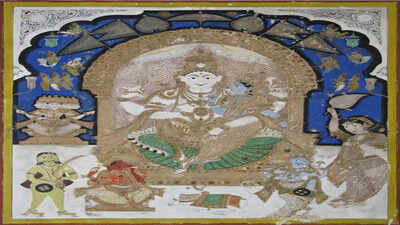
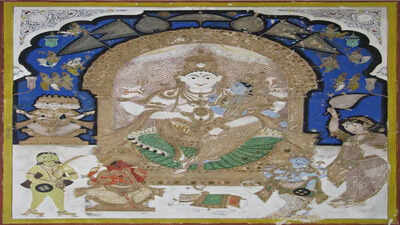
The Surapur style of painting is a unique artistic tradition of the Kalyana Karnataka region, which comprises seven districts in the northeastern part of Karnataka. Artist and history lover Rahman Patel says, its history is about 400 years old. “It emerged during the reign of Bedar Nayak, who ruled the Surapur kingdom between 1636 and 1858. From the founding king Gaddi Pidda Nayak to the Surapur kings and their successors such as Hasrangi Pamanayaka, Immadi, Venkatappa Nayak and Mummadi Devendra Venkatappa Nayak encouraged the art in their courts,” he says.He says this tradition was at its peak during the reign of King Nalawadi Venkatappa Nayaka, who ruled the state between 1843 and 1858. He further said, “After 1858 this art lost its patronage.” The roots of original Surapur (or Shorapur) painting are a fascinating blend of survival, royal patronage, and a unique “hybrid” aesthetic. Shorpur or Surpura is a historically important town in Yadgir district, known for its role in resisting British rule. Surapur painting did not emerge in a vacuum, but was probably the result of artists fleeing the crumbling empire to find a new home in northern Karnataka.“These paintings are believed to have gained popularity in the region when a group of painters moved there after the disintegration of the Vijayanagara Empire following the Battle of Talikota in 1565,” says the online encyclopedia managed by the Bengaluru-based Museum of Art and Photography (MAP). According to the MAP website, the painting style is very similar to the Mysore and Tanjore styles, including the use of gesso, bright colors and embellishments such as gold leaf and semi-precious stones. The convergence of styles may have occurred in the turbulent years following the Battle of Talikota. When the Vijayanagara Empire declined, its leading artists dispersed and sought new courts to support their art. It is possible that Mysore welcomed some, Tanjore welcomed some, and a significant contingent eventually reached Surapur.Surpur paintings were initially created as murals or miniatures on white paper, wood and other surfaces. “Natural colours, stones, leaves and clay were used to make the miniatures. These were brought from Rajasthan. Now this is also done on canvas, usually in 6×8 size, using acrylic paints,” says Rahman. He further said, although the heroes gave priority to paintings of themselves and the gods, scenes from the Ramayana and Mahabharata also received priority in the works of his time.Banaiya Garudadri, considered to be the master of Surapur painting, was a prominent artist in the court of King Venkatappa Nayaka. His works are displayed in various museums. Rahman explains, “Scholar Jaya Appaswami has recognized his legacy in his works. The Surapur style shaped by Garudadri blends Deccani, Mughal and South Indian aesthetics, distinguishing itself from the Mysore and Thanjavur traditions through its spiritual depth and distinctive visual language.”The second Banaiya Garudadri was posthumously awarded the National Award for Master Craftsmen by the President of India in 1967.Artist Vinod Raghuveer says that Surpur art was studied by veteran artists like Vijay Hagargundagi for decades. “Despite its limitation of being practiced by only a few artists, Surapur painting can be seen hanging in the Salar Jung Museum of Hyderabad, the Jaganmohan Palace of Mysore and the National Crafts Museum of Delhi.”The office of the Development Commissioner (Handicrafts) brought out a coffee-table book on Surpur paintings in 2025.

Source link

Smoky Coffee Liberica is here. Have you tasted it yet? | india news

Smoky Coffee Liberica is here. Have you tasted it yet?

Coffee loving couple, Anjan Babu and Sanjana Sudarshan brew Liberica coffee at home, usually sourcing beans from roasters like Blue Tokai or Drip and Drop Coffee. Sanjana says the couple had their first Liberica coffee at Ground Up Café. She says, “We fell in love with it the first time we ate it. We got a packet of Liberica beans for home and we’ve been enjoying it ever since. It has a jackfruit flavor.”Bharat Raghavan, a product manager, started his journey in coffee 10 years ago. He started researching filter coffee, a popular type in Bengaluru, before exploring other coffees and beans from his friend, who runs Dialogues Café, a barista. Bharat sources beans from different parts of India and the world during his travels. He says Liberica is a little less known in Bengaluru’s coffee scene. He says, “I would say less than 5% of the beans available are Liberica. It is very rare to find these in India. I first encountered Liberica at Araku Estate.”‘Smoky’ CoffeeLiberica is the kind that polarizes interest. Bharat says there are a few things he likes about it – Liberica has a slightly smoky flavor and more body, which is very typical of it. “I like my coffee to be rich, jammy, and spicy, so I started looking for coffee at that spot.”Some of her friends, who have similar interests, like Liberica because of her body. “Other people dislike it because the smoke is too much for them. For Liberica, I personally use an origami dripper and a pour-over method on the Hario V60. I’ve found this gives me the best results for my palate. The body of Liberica is so heavy, you need a more sophisticated brewing method. I tried using a French press, but since that method adds more texture, it ended up being too thick and tough for my palate. “An over-and-over was more sophisticated and worked really well,” says Bharat. “I think Liberica will be popular in Bengaluru as people who appreciate 100% Arabica are now beginning to understand different brewing and grinding methods,” he says. Changes in temperature and grind size play a big role with Liberica as it is a sensitive bean. He adds that, unlike robusta, where you can generally get a good cup, the profile of liberica varies greatly depending on the temperature and the press you use. A green coffee wave?Talking about the growing trend of green coffee, Khayyum Khan, Sales Head, Benki Brewing Tools, says, “Compared to Arabica and Robusta, Liberica is cleaner and has its own unique characteristics. When you consume or grind Liberica, it exudes a spicy flavour. We’re not used to drinking it, so when I give you something very different, people grab it as a personal trend. In this way Liberica and Excelsa started trending.Adi Savla, senior manager of coffee communities at Blue Tokai, says many people know about ‘climate-resilient Excelsa’. Sunalini Menon, president, CoffeeLab, Bengaluru, says Liberica and Excelsa have been cultivated not only in countries like the Philippines or Malaysia, but also in Sierra Leone, where it was first discovered. She says, “It has been around in India for decades too. It’s just that we were cultivating it not as coffee, but as a plant to separate the boundaries of one field from another.”Komal Sable, founder of South Indian Coffee Company (SICC), says that although Arabica and Robusta are the main crops for any grower in India at present, the demand for Excelsa is gradually increasing. “We definitely get requests from specialty coffee roasters who are looking at climate-resistant varieties. “As you may know, there are 133 different species of coffee.” Excelsa has a fruity profile in the cup. “It has naturally low acidity and is quite sweet, making it a great entry point for people who don’t typically enjoy very acidic coffee,” she says.Khayyum Khan says Benkey Brewing is considering closing the sale of Liberica. “The problem with Liberica is that it changes very quickly. For us, the sweet spot for a regular café is between 30 to 45 days. For coffees like Liberica, we store it in a cool environment in a single serving, but they still change every day. For a commercial setup, it is often very difficult to change recipes and train staff,” he says.

Source link