Breaking News
Smoky Coffee Liberica is here. Have you tasted it yet? | india news

Smoky Coffee Liberica is here. Have you tasted it yet?

Coffee loving couple, Anjan Babu and Sanjana Sudarshan brew Liberica coffee at home, usually sourcing beans from roasters like Blue Tokai or Drip and Drop Coffee. Sanjana says the couple had their first Liberica coffee at Ground Up Café. She says, “We fell in love with it the first time we ate it. We got a packet of Liberica beans for home and we’ve been enjoying it ever since. It has a jackfruit flavor.”Bharat Raghavan, a product manager, started his journey in coffee 10 years ago. He started researching filter coffee, a popular type in Bengaluru, before exploring other coffees and beans from his friend, who runs Dialogues Café, a barista. Bharat sources beans from different parts of India and the world during his travels. He says Liberica is a little less known in Bengaluru’s coffee scene. He says, “I would say less than 5% of the beans available are Liberica. It is very rare to find these in India. I first encountered Liberica at Araku Estate.”‘Smoky’ CoffeeLiberica is the kind that polarizes interest. Bharat says there are a few things he likes about it – Liberica has a slightly smoky flavor and more body, which is very typical of it. “I like my coffee to be rich, jammy, and spicy, so I started looking for coffee at that spot.”Some of her friends, who have similar interests, like Liberica because of her body. “Other people dislike it because the smoke is too much for them. For Liberica, I personally use an origami dripper and a pour-over method on the Hario V60. I’ve found this gives me the best results for my palate. The body of Liberica is so heavy, you need a more sophisticated brewing method. I tried using a French press, but since that method adds more texture, it ended up being too thick and tough for my palate. “An over-and-over was more sophisticated and worked really well,” says Bharat. “I think Liberica will be popular in Bengaluru as people who appreciate 100% Arabica are now beginning to understand different brewing and grinding methods,” he says. Changes in temperature and grind size play a big role with Liberica as it is a sensitive bean. He adds that, unlike robusta, where you can generally get a good cup, the profile of liberica varies greatly depending on the temperature and the press you use. A green coffee wave?Talking about the growing trend of green coffee, Khayyum Khan, Sales Head, Benki Brewing Tools, says, “Compared to Arabica and Robusta, Liberica is cleaner and has its own unique characteristics. When you consume or grind Liberica, it exudes a spicy flavour. We’re not used to drinking it, so when I give you something very different, people grab it as a personal trend. In this way Liberica and Excelsa started trending.Adi Savla, senior manager of coffee communities at Blue Tokai, says many people know about ‘climate-resilient Excelsa’. Sunalini Menon, president, CoffeeLab, Bengaluru, says Liberica and Excelsa have been cultivated not only in countries like the Philippines or Malaysia, but also in Sierra Leone, where it was first discovered. She says, “It has been around in India for decades too. It’s just that we were cultivating it not as coffee, but as a plant to separate the boundaries of one field from another.”Komal Sable, founder of South Indian Coffee Company (SICC), says that although Arabica and Robusta are the main crops for any grower in India at present, the demand for Excelsa is gradually increasing. “We definitely get requests from specialty coffee roasters who are looking at climate-resistant varieties. “As you may know, there are 133 different species of coffee.” Excelsa has a fruity profile in the cup. “It has naturally low acidity and is quite sweet, making it a great entry point for people who don’t typically enjoy very acidic coffee,” she says.Khayyum Khan says Benkey Brewing is considering closing the sale of Liberica. “The problem with Liberica is that it changes very quickly. For us, the sweet spot for a regular café is between 30 to 45 days. For coffees like Liberica, we store it in a cool environment in a single serving, but they still change every day. For a commercial setup, it is often very difficult to change recipes and train staff,” he says.
Source link

Opposition claims, time to change women’s quota bill to take political advantage, government rejects allegation. india news

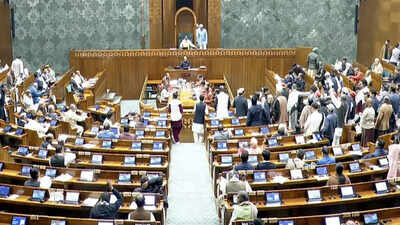
विपक्ष का दावा है कि महिला कोटा विधेयक में बदलाव का समय राजनीतिक लाभ लेना है, सरकार ने आरोप खारिज कियाImmediately after the question hour on Thursday, a war of words started between the ruling party and the opposition parties on this issue. Congress MP Jairam Ramesh said, “When the Nari Shakti Vandan Act was passed in this House on September 23, 2023, the LOP and opposition members had urged the government to implement it from the 2024 Lok Sabha elections. At that time the government said that we cannot do this; We have to do a census; We have to delimit.…For 30 months they slept, and suddenly they realized that we don’t need a census; We do not need delimitation because we have a challenge in West Bengal, Tamil Nadu. This is all politics…”Earlier, LoP Mallikarjun Kharge said that he all support women’s reservation, but the government should not “play games on when and how to bring the bill”, Rijiju responded by saying that the government is bound to fulfill its promises made to the women of the country. “The important thing is that we have a duty, a commitment that the Parliament of India has given to the women of this country. It has nothing to do with specific state elections. We should take it forward because we have some limitations when we look at the time scale…we should not get into politics on this important issue,” the minister said.
Source link

Omar Abdullah: After family dispute, CM Omar demands investigation into Ganderbal ‘encounter’ ‘terrorist’ claim | india news

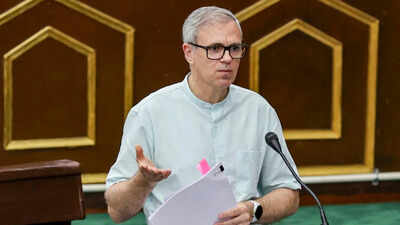
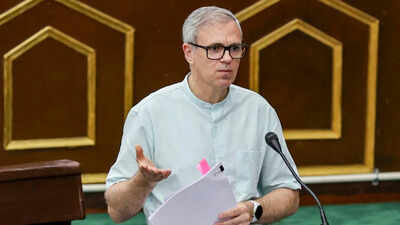
परिवार के 'आतंकवादी' दावे पर विवाद के बाद सीएम उमर ने गांदरबल 'मुठभेड़' की जांच की मांग कीOmar Abdullah On Thursday, a family from his constituency Ganderbal claimed that a man killed in an alleged encounter by the Army on March 31 had no links to terrorism, demanding a “transparent and time-bound investigation”, and filed a police complaint demanding an FIR and investigation.Omar said the family’s claim should not be rejected. “At the very least, this encounter requires a transparent and timely (sic) investigation with the facts made public. Any attempt to obscure or delay the announcement of the investigation will only damage credibility and is not in anyone’s interest,” he wrote on X. On Wednesday morning, the Army had said that a terrorist was killed during a joint operation with Jammu and Kashmir Police in Arahama area of ​​Ganderbal last night. However, Ajaz Ahmed Mughal, brother of deceased Rashid Ahmed Mughal (28), claimed that he had no involvement in terrorist activities.Ajaz said his brother left home on the morning of March 31 and did not return. At around 10 am on April 1, the SHO of Lar police station informed him that his brother had met with an accident, and brought him to the police control room in Srinagar, where he was asked to identify the body.Ajaz claimed that the police told him that the body was that of a foreign terrorist. “I told them he is my brother,” he said, adding that the bullets had damaged his brother’s skull.After identifying his brother, Ajaz said the police asked him to accompany them to Kupwara in north Kashmir, where he was buried in a graveyard. Since 2019, bodies of local militants killed in encounters are not handed over to families, and are buried in Kupwara and Uri to prevent mass gatherings.Ajaz said everyone in Chauntwaliwar village and Ganderbal district knows his brother and can prove that he was not involved in terrorism, but he helped people get Aadhaar and domicile certificates. “He was preparing to join the army,” Ajaz said.The police have not issued any statement on the operation. The Srinagar-based defense PRO declined to comment on the family’s allegations and said police would investigate the background of the slain man and details would emerge in a few days.Srinagar-Ganderbal MP Aga Ruhullah Mehdi described the allegations as serious, saying “the silence of Jammu and Kashmir Police is unacceptable”.Former CM Mehbooba Mufti also alleged that it was a fake encounter. “He was an orphan and was running an NGO,” he said while talking to media persons.
Source link

$20 million Everest rescue scam puts Nepal’s climbing season at risk

$20 million Everest rescue scam puts Nepal's climbing season at risk
Trekkers were fed food that caused nausea, weakened them so much that they could no longer proceed on foot, and required emergency flights.

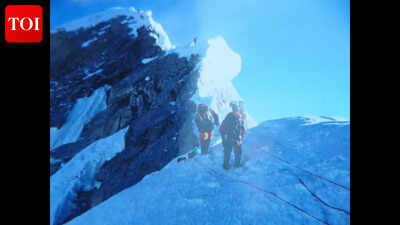
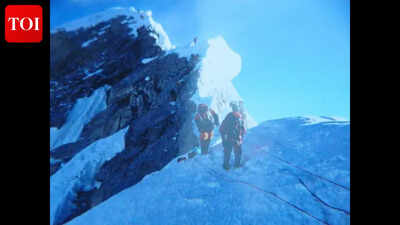
Nepal’s spring Everest climbing season began this week amid a police investigation into an alleged insurance fraud worth nearly $20 million, in which guides, helicopter operators, hospital staff and agents have been accused of creating or exacerbating medical emergencies to trigger costly helicopter evacuations and fraudulent insurance claims. Police said the methods included mixing baking soda into food to cause nausea and swelling, giving excessive Diamox – a drug that helps acclimatization to high altitude – forcing them with excessive hydration to mimic the symptoms of high altitude cerebral edema, and in some cases using laxatives to weaken trekkers to such an extent that they could no longer continue walking. Fake flight manifests, load sheets, invoices and hospital records were allegedly used to support the claims. “Hospitals, helicopter operators and guides are also involved in this chain; we are investigating it,” said Shiv Kumar Shrestha, spokesman for Nepal Police’s Central Bureau of Investigation.Operators said abuse of rescue flights has increased in recent years and has begun to impact the availability of helicopters for genuine emergencies. Mingma Sherpa, owner of Seven Summit Treks based in Kathmandu, said times of India The fallout could extend beyond the current case if international insurers lose confidence in Nepal’s rescue chain. Lukas Furtenbach, Austrian head of Furtenbach Adventures, said the allegations, particularly those related to tampering with food and hospital records, threatened confidence in Nepal’s rescue system. “The level of organized crime here is staggering. We’re talking about millions of dollars being siphoned off through hospitals that provide fraudulent discharge summaries for patients who were never even sick,” he said.Investigators said the racket ran between 2022 and 2025, involved more than 300 fake rescues, and in some cases allegedly deliberately sickened trekkers before flying them to Kathmandu and billed foreign insurers through forged or manipulated records.Police have charged 32 people with offenses linked to organized crime and have expanded the investigation to also include the owners of Mountain Rescue Service, Nepal Charter Service and Shriddhi Hospital. Nine of the accused are in custody while 23 are absconding. “In our preliminary investigation, we found that these companies were involved in around 300 fake rescue operations,” Shrestha said.Investigators said one of the main methods was to load multiple trekkers onto the same helicopter and bill multiple insurers as if each person had been flown on a separate private charter. They also alleged that exhausted trackers were pressured to exaggerate symptoms and, in some cases, deliberately pushed into crisis so that evacuation appeared to be the only option.Central Bureau of Investigation chief Manoj Kumar KC said, “We have strong evidence of companies and individuals involved in the fake hedge scam. All of them will be prosecuted…”Garrett Madison, an expedition leader with US-based Madison Mountaineering who has climbed Everest 10 times, said, “We see it every season: helicopters flying in circles for people who just have a headache or are a little tired from walking. It has transformed a life-saving device into a mountain taxi service. My concern is for the person who actually has HACE or a broken limb – will the helicopter be available to them…?”The investigation also examined how commissions were allegedly run through the system. “My hospital has also paid commission from its earnings to tracking companies and rescue companies to boost business,” Dr Girvan Raj Timilsina of Shriddhi Hospital said in a recorded statement.Nepal Tourism Board chief executive Deepak Raj Joshi said corrective action could help restore confidence.

Stay updated with our live blog for minute-by-minute coverage israel iran war Including breaking news, missile attacks and the latest updates on the Middle East crisis

Source link

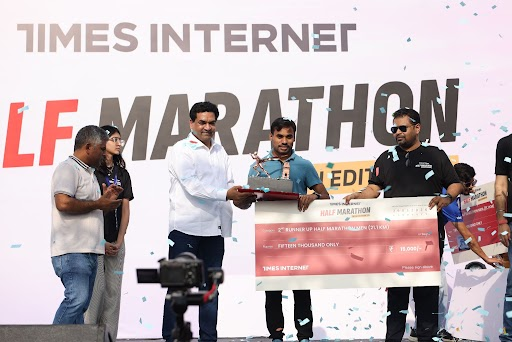
Times Internet Half Marathon: Women stay strong in 21K india news

Times Internet Half Marathon: Women remain strong in 21K

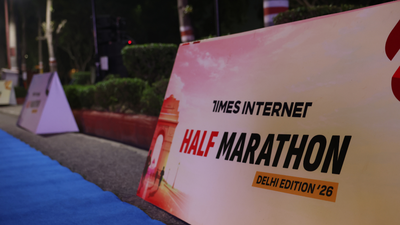
In the calm of the morning at India Gate, the city caught its breath before the surge. At exactly 5.30pm, the 21K race of the Times Internet Half Marathon 2026 was flagged off, bringing 2,639 runners to one of the most exciting stretches of the capital.The first kilometers were steady and controlled. Runners steadied their pace, saving energy for later stages. As Delhi slowly awakens, its wide roads and historic surroundings set the stage for a race that will soon become a true test of endurance.Because the half-marathon never reveals itself at the beginning.The 21K route passes through the formal heart of the capital, with wide, tree-lined boulevards connecting the major centers of governance. Long, open stretches tested speed, while gentle turns required control – making it a course that challenged not only endurance, but composure at every step.

Arpita Saini: front restraint

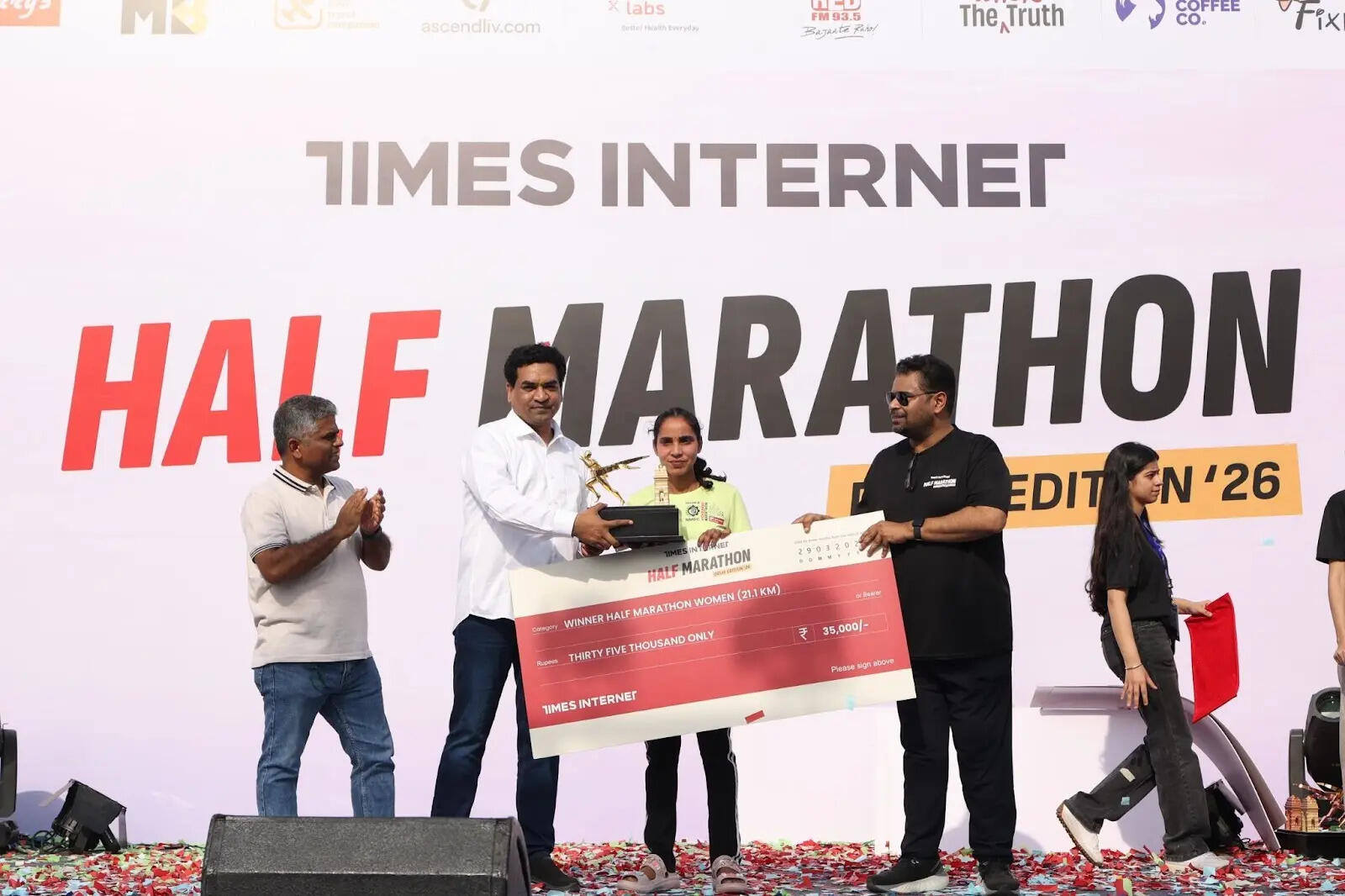
Arpita Saini delivered a race based on control and clarity to claim the top position with a chip time of 01:25:01.At 30, his journey into running had begun just a few years earlier, inspired by a simple yet powerful image – young aspirants in his village preparing to join the Army. What started as curiosity soon turned into commitment. Initial hesitation at home gradually transformed into confidence, as her persistence reshaped perceptions.There was no excess on race day, no rush. She settled quickly, maintained her rhythm in the middle stages and when the race demanded flexibility, she responded with authority. In the final stages, he did not chase the race – he took charge of it.

.

Rukhsana:Precision through discipline

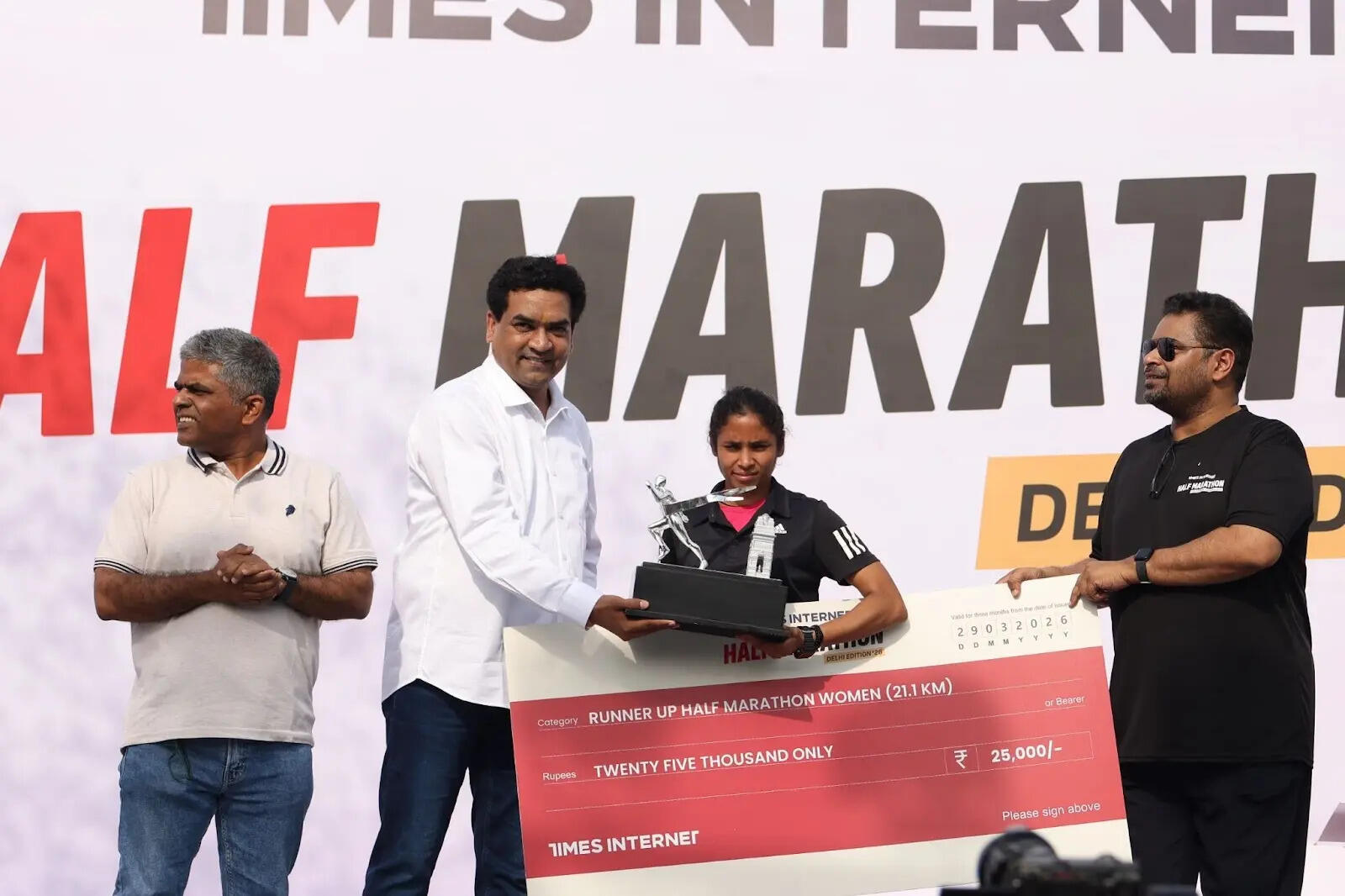
Ruksana’s performance, finishing second with a chip time of 01:27:38, was a study in structure and consistency.A national level distance runner and Khelo India Games medalist, she continues to balance the rigors of competitive sports with education as a second-year college student. His foundation is based on discipline, having received training under the careful guidance of his father, a PT teacher.His preparation reflects this systematic approach. On race day, this translated intuitively – controlled early kilometers, a steady build, and an unwavering grip through the tough final stages. There was no direct conflict, only quiet execution.

.

.

land negi: strength in progress

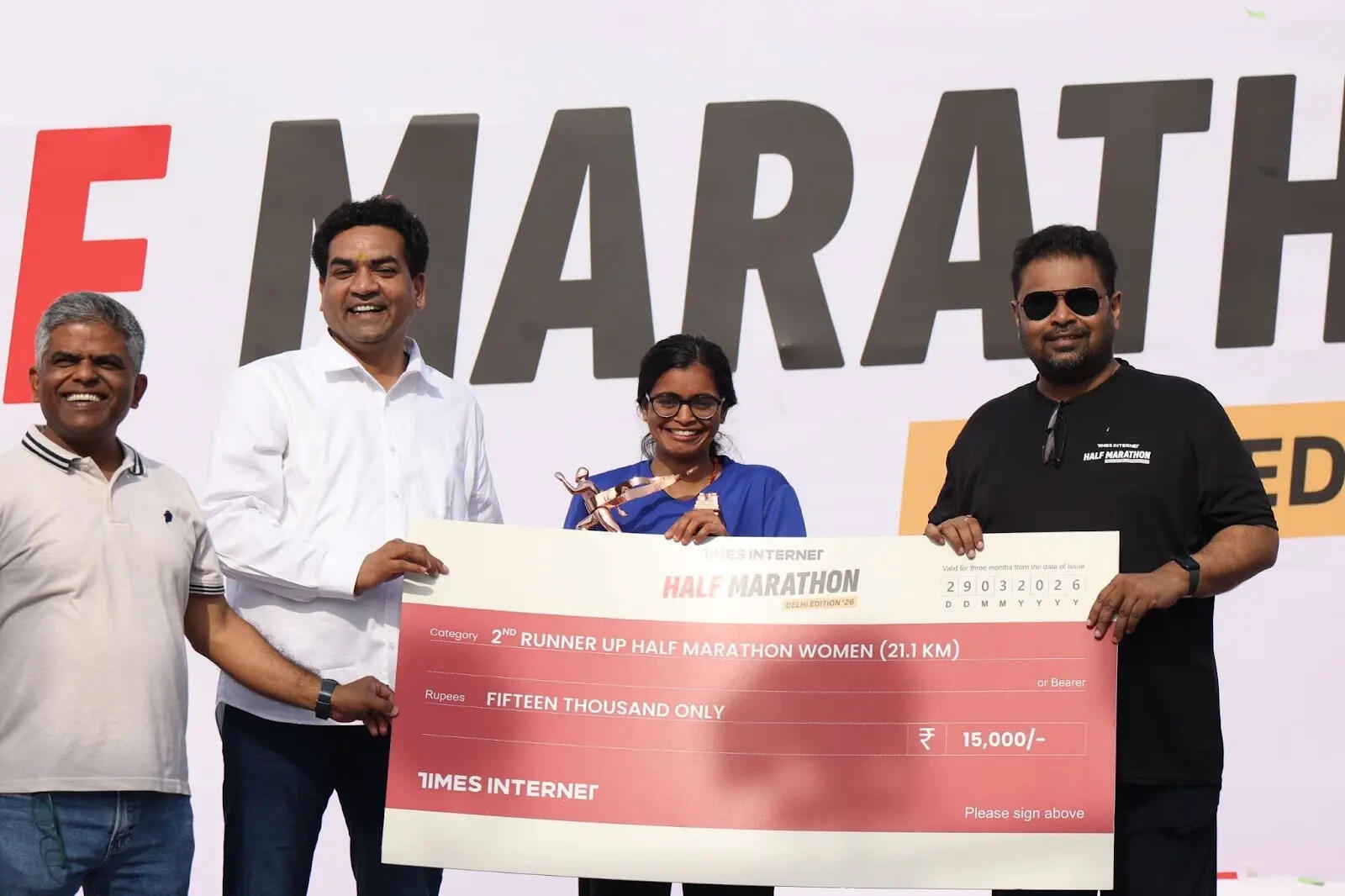
Bhumi Negi finished third with a chip time of 01:34:33, completing the podium with a performance that underlined patience and progress.Having started his running journey at a young age, he steadily transitioned from short distance to long distance running and gained recognition at both the national and international levels. Her growth has been incremental, but assured.His caste reflected that development. Conservative in the beginning, calculating in the middle, and flexible when the race took hold. As fatigue grew across the field, he found another gear – one driven not by urgency, but by experience.

.

.

where races are won

After the 17th kilometer, the race got really tough. Runners began to feel fatigued and each step required more effort. This is where true strength is seen – not in how fast you run, but in your ability to keep going.Arpita Saini, Ruksana and Bhumi Negi put in much more effort than just crossing these last kilometres.He defined them.In a field of thousands, on a course that tested both body and mind, these women not only completed the 21K – they raised it, setting a benchmark not only for performance, but for enduring, adapting, and ultimately conquering.

Source link

Chaos in West Bengal elections: Villagers hold SIR officials ‘hostage’, Election Commission asks NIA to investigate the matter. india news

Chaos in West Bengal elections: Villagers hold SIR officials 'hostage', Election Commission asks NIA to investigate the matter

The Election Commission on Thursday shifted the investigation into the siege of judicial officers dealing with cases related to Special Intensive Review (SIR) in Malda, West Bengal. National Investigation Agency (NIA).A spokesperson for the election body said the NIA team is expected to reach the poll-bound state on Friday to begin investigation.

Watch

After Supreme Court verdict on Malda hostage row, Mamata Banerjee claimed BJP wants President’s rule in Bengal

The Election Commission told the NIA DG through a letter, “…in this regard, I am directed to request that necessary inquiry/investigation into the matter be conducted and a preliminary investigation report be submitted directly to the Honorable Court as per the above instructions.” The Supreme Court on Thursday criticized the West Bengal administration for its “complete failure” and inaction over the “deplorable” siege and attack on seven judicial officers in Malda district during the voter list revision drive.The court directed that the incident be investigated by the CBI or NIA and also ordered the deployment of central forces in the state.The strong reaction came after reports that officials, including three women, were detained in Malda by a group of voters whose names were removed from the voter list.The court said it is up to the Mamata Banerjee-led state government to inform the Election Commission and sought deployment of central forces to ensure the security of judicial officers. It also allowed the Election Commission to request a CBI or NIA investigation into the incident.The incident occurred during the ongoing Special Intensive Revision (SIR) of voter lists. Seven judicial officers, including three women, were surrounded by protesters and held hostage for several hours.Officials said the protest outside the Kaliachak II Block Development Office began when a group of people demanded a meeting with officials. After being denied entry, the mob started protesting around 4 pm and later blocked the premises, with the protests continuing till late night.After the incident, West Bengal CM Mamata Banerjee Accused Bharatiya Janata Party of trying to cancel West Bengal elections and impose President’s rule in the state.Addressing a rally in Sagardighi, he also criticized the Election Commission for failing to maintain law and order.Voting for the 294-member West Bengal Assembly will be held in two phases on April 23 and April 29, while counting of votes will take place on May 4.In the 2021 assembly elections held in eight phases, Trinamool Congress won 213 seats in a decisive victory over the BJP, which secured 77 seats. Congress and Left Front did not get any seats in that election.

Source link

Times Internet Half Marathon 2026: The men who defined 21K with power and precision india news

Times Internet Half Marathon 2026: The men who defined 21K with power and precision

The Times Internet Half Marathon 2026 brought Delhi alive with a spectacular display of grit, discipline and collective energy as over 15,000 runners gathered to test their limits on one of the city’s most iconic routes.The build-up began on March 27 and 28 at the Marathon Expo – a vibrant confluence of athletes, enthusiasts and the fitness communities. The venue was buzzing with anticipation, conversation and a shared commitment to the race. It was more than a pre-race ritual; This was the flashpoint of a movement that would soon take over the city.On the morning of March 29, as the first light fell on India Gate, that anticipation turned into action. Thousands of runners lined up, each with a personal goal, a story, and a reason for running. The early kilometers were marked by energy and speed, but as the race progressed, the true nature of the half marathon revealed itself. The 21K isn’t just a test of speed – it’s a measure of flexibility, speed and mental strength. As fatigue increased and the distance began to challenge even the most prepared, the race separated the determined from the extraordinary. Amidst it all, three runners rose above the rest – not just as winners, but as defining figures of the race.

Mukesh Kumar: experiences that led from the front

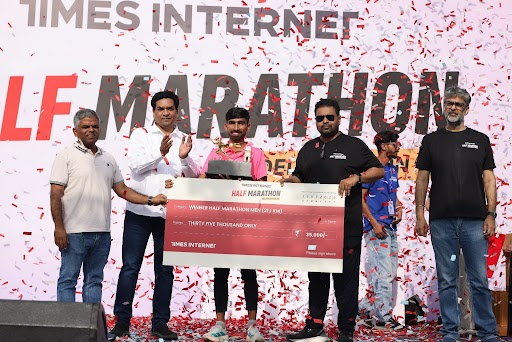
Mukesh Kumar’s race was a masterclass in control and restraint. From the start, he demonstrated the calm assurance of a seasoned athlete, maintaining a steady pace while others charged forward with initial enthusiasm.As the race entered its tough middle phase, Mukesh started asserting his presence. With calculated precision, he increased his pace, taking advantage of the increasing fatigue in the field. There was no urgency in sight – just confidence, experience and a deep understanding of long-distance racing.He crossed the finish line in 1:07:24, taking first place by right and reinforcing the value of patience and strategy in a race defined by endurance.

Mukesh Kumar

Vishnu Kumar: the rise of a new power

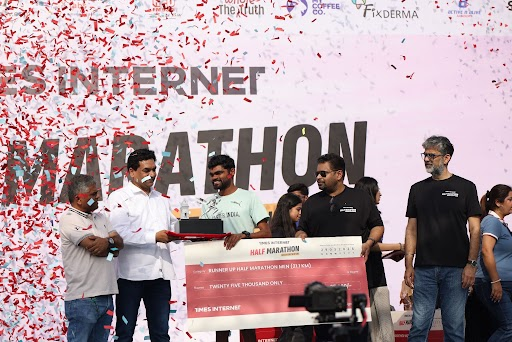
In a field dominated by experienced runners, Vishnu Kumar produced a performance that signaled the arrival of a promising new contender.Running with discipline and intent, he remained well clear of the lead pack in the early and middle stages of the race. His approach reflects maturity – measured pace, controlled breathing, and a clear focus on maintaining momentum.As the race intensified into its final stages, Vishnu held his position with remarkable composure, refusing to buckle under the pressure. He finished second with a time of 1:08:26, which was a significant moment in his running journey.More than a podium finish, it was a statement of potential – one that establishes her as a sprinter to watch in the coming season.

Vishnu Kumar

Shivam: Accuracy, patience and a perfect finale

Shivam’s run was defined by strategy – a calculated approach that paid off when it mattered most.Choosing the opening kilometre, he resisted the temptation to match the early pace of the leaders. Instead, he conserved energy, focusing on maintaining rhythm and efficiency.That decision proved decisive in the latter stages of the race. As fatigue began to take its toll on the others, Shivam picked up the pace with purpose. His late lead saw him overtake several runners, turning patience into performance.He finished third with a time of 1:08:59, highlighting the importance of timing, discipline and tactical awareness in long distance running.

Shivam

More than a race, a benchmark of excellence

The Times Internet Half Marathon 2026 was not just about crossing the finish line – it was about pushing the limits, accepting challenges and redefining what is possible.In a race that saw thousands of people take part, Mukesh Kumar, Vishnu Kumar and Shivam stood out – not just for their times, but also for the stories they told from their race. Stories of preparation, perseverance and the constant pursuit of excellence.He didn’t win the race just like that.He set the standards.

Source link

The politics of giving: How Tamil Nadu laid the blueprint for India’s free stuff race india news

The politics of giving: How Tamil Nadu laid the blueprint for India's free stuff race

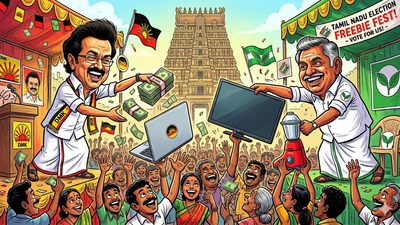
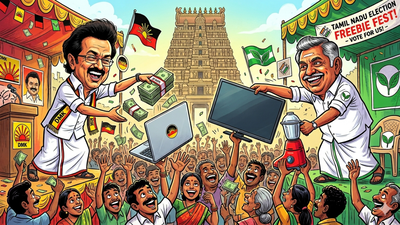
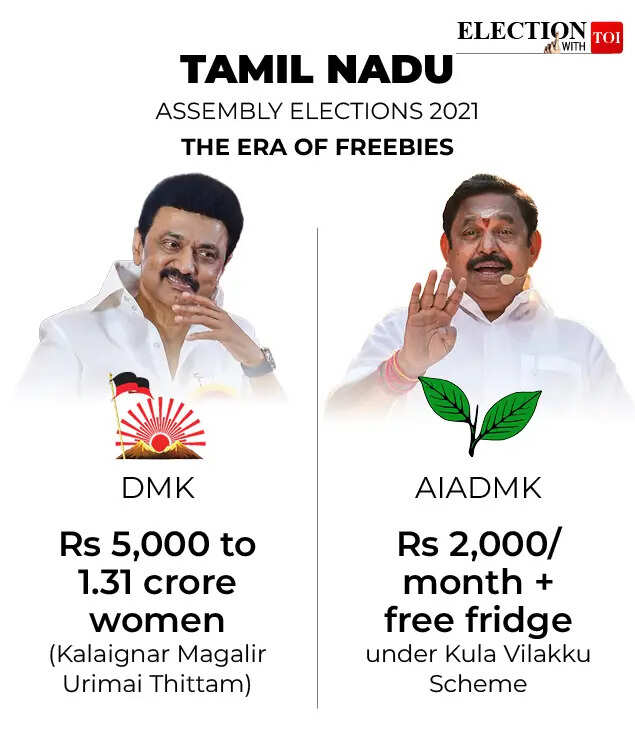
New Delhi: It seems that politics in India is in the era of freebies, where every party gives cash or concessions before the elections. Last year, the NDA offered Rs 10,000 to over 75 lakh women in Bihar just before the elections, helping the alliance win a massive majority.Riding on this trend, AIADMK and DMK have also raised their stakes ahead of the upcoming assembly elections. In what the DMK calls the biggest financial assistance given to women in the state’s history, the government last month gave Rs 5,000 to 1.31 crore women under ‘Kalaignar Magalir Urimai Thittam’.

.

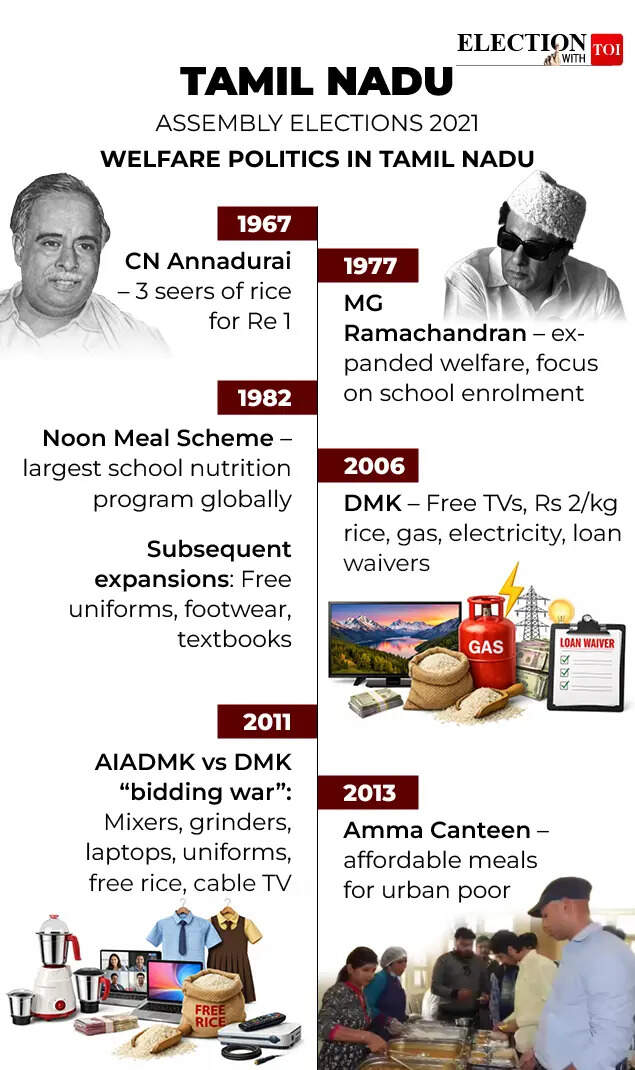
Meanwhile, the AIADMK manifesto promises to deposit Rs 2,000 per month directly into the bank accounts of women heads of families under the ‘Kul Vilakku Scheme’ for all ration card holders. The party also promised a “free refrigerator” for every rice ration-card holder if returned to power.Interestingly, this is not the first time that parties have tried to woo voters with pre-poll gifts. Welfare politics in Tamil Nadu dates back to the Dravidian movement, which established the state as an active instrument of social justice.

Tamil Nadu Elections 2026: MK Stalin vs AIADMK – Will victory be the X-factor?

Congress Chief Minister K Kamaraj can be seen as the originator of populist schemes in the state. He also started free school uniform as well as mid-day meal scheme for the students.The scheme – designed to address malnutrition and encourage low-income families to send their children to school – has led to a significant increase in school enrollment and attendance, thereby reducing dropout rates.three pounds of rice for one rupeeIn 1967, CN Annadurai had promised to provide three seers of rice at Re 1 through the state public distribution system (PDS). However the scheme proved costly and difficult for the government to maintain.After winning the elections, Annadurai became the Chief Minister and implemented the scheme in some areas for some time, but later canceled it due to financial burden. However, this move established welfare as a political tool that is still used today.lunch plan experimentAIADMK founder MG Ramachandran became Chief Minister in 1977 and increased welfare measures to improve school participation. The landmark 1982 midday meal scheme, which later expanded, became one of the largest programs globally, leading to significant increases in enrollment among children from poor families.Subsequent governments led by M Karunanidhi and J Jayalalithaa built on this model, adding benefits such as free uniforms, shoes and educational assistance.

.

By the late 1980s and 1990s, welfare schemes also included consumer goods, reaching a turning point in 2006 when the DMK promised free color TVs, Rs 2 per kg rice, cooking gas connections, free electricity and loan waivers for farmers and weavers. The TV scheme alone cost about Rs 3,600 crore and reached about 45 lakh homes.Jayalalitha’s Amma Canteen SchemeIn 2011, the promises turned into a bidding war. DMK offered mixer or grinder, AIADMK promised both; When free laptops were offered to college students, Jayalalitha extended it to high school students as well. Additional offerings included uniforms, shoes, 20 kg of free rice per month and free cable TV.After returning to power, Jayalalitha further expanded welfare, distributing mixers, grinders, fans, laptops, textbooks, goats and cows, gold for mangalsutras, subsidized scooters and free electricity up to a specified limit to rural families.Jayalalitha’s government also launched the Amma Canteen Scheme in 2013. These canteens were designed to provide nutritious, hygienic food to the urban poor, daily wage laborers and students at deeply subsidized prices. Despite political changes in the state, canteens have continued to operate on a large scale due to their immense popularity and the essential service they provide to the working class.By 2016, the DMK promised Rs 7 per liter milk, while the AIADMK promised farm loan waiver, 100 units of free electricity, two-wheeler subsidy for women and gold for would-be brides.Development of social service schemesNow, social justice schemes seem to be shifting towards cash transfers and universal benefits. DMK’s free bus travel for women, launched in 2021, saw 4-5 crore trips monthly, improving mobility for low-income women.The AIADMK has now proposed to extend such benefits to men as well and give Rs 2,000 per month to female household heads.However, the fiscal question cannot be ignored. Tamil Nadu is not a poor state, but it cannot do fiscal magic. The state has long touted borrowing as productive and linked to development – ​​an argument that can more easily support schemes like subsidized breakfast and bus travel than promises like a refrigerator for every ration-card holder.Such plans have substantial fiscal implications. Reportedly, monthly cash transfers alone could cost around Rs 36,000 crore annually, while Tamil Nadu’s total welfare expenditure is already between Rs 45,000-50,000 crore per year. The state’s outstanding debt is over Rs 8 lakh crore, of which the annual interest payment is around Rs 40,000 crore.Voting for all 234 constituencies in Tamil Nadu will be held in a single phase on April 23, with counting taking place on May 4.

Source link

Evil eye emoji: Raghav Chadha’s cryptic tweet after being sidelined by AAP, posts video of issues raised by him in Rajya Sabha india news

Evil eye emoji: Raghav Chadha's cryptic tweet after being sidelined by AAP, posts video of issues raised by him in Rajya Sabha
Raghav Chaddha (file photo)

New Delhi: AAP leader Raghav Chadha After being removed from the post of Deputy Leader in Rajya Sabha on Thursday, he gave a mysterious statement.Sharing a video of his speeches in the Upper House, Chadha responded with “Nazar (evil) amulet” on X. He hasn’t said anything else on social media or shared any words publicly on the matterThis comes as rumors of an internal rift between Raghav Chadha and the AAP high command surfaced after the party on Thursday appointed Ashok Mittal as its deputy leader in the Rajya Sabha in his place. In a letter to the Rajya Sabha Secretariat, AAP requested that Chadha not be allotted speaking time from the party’s quota in the Upper House.

Watch

Zero penalty on joint tax filing: AAP MP Raghav Chadha gives big relief to common Indians

According to reports, Chadha was sidelined for alleged indiscipline and not strictly following the party line. Notably, Chadha remained silent after the recent acquittal of Arvind Kejriwal and Manish Sisodia in a money laundering case linked to the liquor excise policy. Later, when Kejriwal addressed a press conference, he was also absent from the party office.Read more: Raghav has gone to the shore? Market of rumors heats up due to AAP’s reshuffle in Rajya Sabha; what went wrongEarlier, during Kejriwal’s arrest in the liquor policy case ahead of the 2024 Lok Sabha elections, Chadha had not issued any statement citing his recovery from eye surgery in the UK.Meanwhile, new deputy leader in Rajya Sabha Ashok Mittal termed Chadha’s removal as a normal party process and said there was no specific reason behind it.

Source link