Karnataka CM tussle: Report says Siddaramaiah offered Rajya Sabha member and central role to make way for DKS India News

Karnataka CM tussle: Report says Siddaramaiah offered Rajya Sabha member and central role to make way for DKS

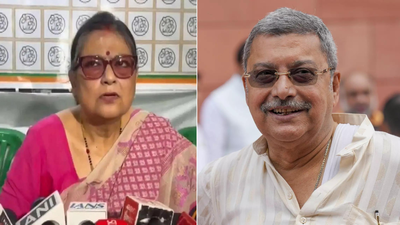
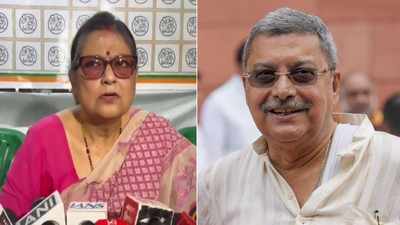
New Delhi: Despite marathon meetings with the high command, the tussle between Karnataka Chief Minister Siddaramaiah and his deputy DK Shiv Kumar over the state’s top post does not seem to be ending any time soon.As Congress president Mallikarjun Kharge met the two leaders in Delhi to decide the party’s candidates for the upcoming Rajya Sabha elections, the issue of interest remained the long-running leadership struggle.News agency PTI, quoting sources, has reported that the Shivakumar camp is pressurizing Siddaramaiah to leave the top post and has been offered a formula to accommodate him in the central role, which he has not accepted. After the party meeting, Siddaramaiah once again held discussions in the evening with some ministers considered close to him.This comes after the Congress high command held several hours of deliberations with Siddaramaiah and DKS at the Indira Bhawan headquarters.After the meeting, Congress leader KC Venugopal, while talking to reporters, emphasized that there was no discussion on the issue of change of leadership in the meeting attended by Congress President Kharge and Leader of Opposition in Lok Sabha Rahul Gandhi.Venugopal, who was accompanied by Siddaramaiah and Shivakumar, said, “Today, the entire discussion was focused only on the upcoming Rajya Sabha elections and the (Legislative) Council elections of Karnataka.”Venugopal told the media after the meeting, “Whatever speculations you people are making are only speculations, there is no reality. Today we discussed about Rajya Sabha seats and Legislative Council seats of Karnataka. This is what we have decided today, and nothing else was discussed.” The meetings took place against the backdrop of persistent tension between the Siddaramaiah and Shivakumar camps, almost three years after the Congress returned to power in Karnataka.Before leaving for Delhi from Bengaluru, Siddaramaiah said that he was not aware of the agenda of the meeting.“I have been invited to Delhi. There is a meeting tomorrow (May 26). I don’t know the topic of the meeting. They have called the meeting at 11 am.” Siddaramaiah said, AICC general secretary and MP KC Venugopal called me, told me about the meeting and invited me to attend it.The Congress leadership has intervened several times to manage tensions between the two leaders since the formation of the Karnataka government in 2023. Shivakumar’s supporters have repeatedly claimed that a rotational chief ministerial arrangement was agreed upon when the government was formed, although the Congress high command has never publicly confirmed such a formula.

Source link

‘These old people in RWAs…’: Tech expert warns young couples, bachelors against living in high-rise buildings india news

'These old people in RWAs...': Tech expert warns young couples, bachelors against living in high-rise buildings

A software engineer’s viral social media post criticizing life in large gated communities has triggered a widespread online debate on resident welfare associations (RWAs), housing society rules and generational differences in urban living.Shravan Venkataraman, in a thread posted on“At the slightest discomfort in their worldview caused by any person or any family in the society, they start imposing their views on how one should live in the house they are renting/in that society – who can come to visit, who can’t, who can complain, who can’t, etc. And these old people who are also in charge of power – in RWAs or society unions, whenever anyone challenges them on any real issue they go on a power trip,” he wrote.According to Venkataraman, young residents are often better off living in smaller G+3 or G+4 buildings with fewer than 25 apartments, where rules are less intrusive and community interaction is more relaxed.Sharing a personal experience from his housing society in Hyderabad, Venkataraman said there was a theft at his house and when he requested CCTV footage through a residents’ WhatsApp group, he was informed that the cameras were not working. Concerned about security, he advised residents to install personal security cameras.According to him, instead of addressing the security lapse, senior RWA members called him to the club house and reprimanded him for raising the issue publicly.“The next day the RWA president and vice-president called me to the club house. I went there thinking they would solve my problem and they found who had stolen the stuff. Instead they call me and start yelling at me how can I post such complaints on a group of residents and how can I post that there is no safety here and one should take care of oneself – that I am ruining the morale in the society,” he wrote.He further alleged that a committee member sarcastically dismissed the complaint, following which he left the residents’ WhatsApp group.“I mean what do these old people think in their minds? That they can order everyone around with arbitrary rules as per their convenience and everyone must follow it, and especially the tenants?” He added.His post resonated with many netizens, who shared similar experiences of excessive surveillance and micromanagement in the gated society. Many users complained about restrictions on visitors, screening of bachelors, moral policing, and profiling of guests by security guards. One user said that elderly residents of his society also objected to children playing outside, while some others dismissed Venkatraman’s post as merely a complaint against the apartment rules.One user wrote, “Exactly. It’s not just about rules or old ones, high rise clusters have high monthly maintenance, leading to severe water scarcity and severe traffic congestion and pollution. Why does the government encourage high rise clusters when we can develop horizontally.”

Source link

Iran’s Khamenei warns US will lose ‘safe haven’ in Gulf; Amit Shah forms panel on illegal immigration, demographic changes and more. india news

Iran's Khamenei warns US will lose 'safe haven' in Gulf; Amit Shah forms panel on demographic changes and others related to illegal immigration
  • Iran’s supreme leader Mojtaba Khamenei warned that Gulf countries would no longer protect US military bases or provide Washington with “safe haven” in the region.
  • Amit Shah announced a high-level committee to study the demographic changes in India due to illegal immigration and other “unnatural causes”.
  • Pakistan refused to join the Abraham Accords, saying it would not recognize Israel without the creation of a Palestinian state.
  • Amid speculations over power sharing agreement in Karnataka, CM Siddaramaiah and DK Shivakumar met the Congress high command in Delhi.
  • Madhya Pradesh Police arrested a couple accused of duping families in a fake marriage racket by using photographs of women taken from social media.

Here are today’s top 5 stories:

‘There will be a lack of safe haven for military bases in the region’: Mojtaba Khamenei issues new warning to America

Iran’s Supreme Leader Ayatollah Mojtaba Khamenei said Gulf countries would no longer serve as a shield for US military bases, warning that Washington would no longer have a “safe haven” in the region. In a statement marking the Hajj pilgrimage, Khamenei said the region would “not return to the previous situation” and declared that anti-US and anti-Israel slogans would continue to unify the Islamic world, especially younger generations. Read the full story

Amit Shah announces panel to study demographic changes due to illegal immigration

Union Home Minister Amit Shah said the Center has formed a high-level committee to examine the demographic changes taking place in the country due to “illegal immigration and other unnatural causes”. Shah said the committee was formed following PM Modi’s announcement to set up a panel on demographic change on August 15, 2025. Read the full story

‘Conflicts with our fundamental ideologies’: Pakistan refuses to join Abraham Accords after pressure from Trump

Pakistan refused to join the Abraham Accords after US President Donald Trump urged several Muslim-majority countries, including Pakistan, to normalize ties with Israel as part of a broader regional accord negotiated with Iran. Defense Minister Khawaja Asif said Islamabad would not support any agreement that goes against Pakistan’s “fundamental ideologies” and reiterated that the country would not recognize Israel without the creation of a Palestinian state. Read the full story

Karnataka power struggle: Siddaramaiah, DK Shivakumar meet Congress high command in Delhi

Karnataka CM Siddaramaiah and Deputy CM DK Shivakumar met the party high command in Delhi. The two leaders held discussions with Congress president Mallikarjun Kharge, Congress MP Rahul Gandhi and AICC general secretary KC Venugopal at Indira Bhavan, as the party tried to curb speculation over the power-sharing arrangement in Karnataka. Read the full story

MP Police busts fake marriage scam, couple arrested for duping 42 families

Madhya Pradesh Police has arrested a couple accused of running a fake marriage racket by allegedly duping families by promising to bring a bride from an orphanage. Police said the accused used photographs of the women downloaded from social media and presented them as prospective brides to unsuspecting families. Families were reportedly charged between Rs 10,000 and Rs 25,000 for arranging marriages through the mass marriage programme. Read the full story

Source link

AI and you: AI vs UPSC- Three chatbots attempt India’s toughest exam india news

AI and you: AI vs UPSC- Three chatbots attempt India's toughest exam

Every year, more than 10 lakh candidates spend years of their lives preparing for India’s toughest examination. UPSC Civil Services Preliminary. The cutoff in 2025 was 92.66 points out of 200, meaning even one wrong guess can derail a dream. So when AI tools like ChatGPT, GeminiAnd as the cloud began to be used as a study companion by millions of students, a natural question emerged: could these AIs actually sit exams on their own?We decided to find out. Not with cherry-picked questions or imaginary prompts, but with the real thing, the actual UPSC CSE Prelims GS Paper 1 of 2025 (May 25, 2025) and 2024 (June 16, 2024), official answer keys in hand. We fed all 100 questions of each paper to each AI model individually, recorded each answer, and scored them according to the official answer key.Models tested: ChatGPT (GPT-5, May 2026), Gemini (2.5 Pro), and Cloud (Sonnet 4.5). Everyone was given questions in plain text, with no prompts, no coaching, no prior context.Each AI model was given the same prompt for each question: the question stem was with all options labeled from (A) to (D) and was asked to identify the single correct answer with one-line reasoning. No web search was enabled. No system prompt priming was used. The only advantage any AI had was that whatever it assimilated during training was the same knowledge that a well-prepared human candidate would take to the examination hall.Scoring: UPSC actual marking scheme has been applied: +2 for correct, -0.67 for incorrect, 0 for not attempted. All three AIs attempted all 100 questions.

About 2025 paper

2025 GS Paper 1 was widely described as moderate to difficult. Economics dominated with 18 questions, followed by Environment and Ecology (15), Politics (14), History and Culture (15), and Science and Technology (12). The paper relied heavily on multiple-statement verification questions, the dreaded “How many of the following statements are correct?” format, which penalizes guessing more than simple factual recall. The official general category cutoff was 92.66 points, the highest since 2020.

Final Scorecard: UPSC Prelims 2025

Social class ChatGPT (GPT-5) Gemini (2.5 Pro) Claude (Sonnet 4.5) 2025 cutoff
GS Paper 1 Score (Expected) ~118 points ~122 points ~112 points 92.66
Question correct (out of 100) ~73 ~76 ~68 ~46 (cutoff equivalent)
accuracy % 73% 76% 68% N/A
Will prelims be cleared? Yes Yes Yes
History/Culture (15 questions) 80% 87% 80% N/A
Science and Technology (12 questions) 75% 67% 67% N/A
Economy (18 questions) 72% 72% 67% N/A
Environment (15 questions) 67% 73% 60% N/A
Politics (14 questions) 79% 79% 79% N/A
Current Affairs (14 questions) 57% 64% 57% N/A
Geography (12 questions) 75% 75% 67% N/A

All three AIs crossed the 2025 cutoff of 92.66 points. But margin and subject-wise analysis reveals huge differences in capacity.

Sample Question: How each AI responded

Here is a representative sample of how the three models answered specific questions from the 2025 paper with official correct answers.

Why# Question (short) chatgpt Gemini cloud key Result
1 Alternative Powertrain Vehicles (EV, H2, Hybrid) C (correct) C (correct) C (correct) C all correct
2 UAV Capabilities (Vertical Landing, Hover, Power) B (correct) D (wrong) D (wrong) b split results
6 CL-20, HMX, LLM-105 General Specification B (wrong) C (correct) B (wrong) C mithun won
8 Monoclonal Antibodies – Three Statements D (correct) Mistake) Mistake) D split results
9 Virus Statement – Ocean, Bacteria, Transcription D (correct) D (correct) D (correct) D all correct
12 India and COP28 Health Declaration D (correct) C (wrong) D (correct) D split results
15 Nature Solutions Finance Hub (ADB vs AIIB) Mistake) B (correct) Mistake) b mithun won
16 Direct Air Capture Technology Applications C (wrong) B (correct) C (wrong) b mithun won
17 Peacock Tarantula (Gooty) Habitat and Types D (wrong) B (correct) D (wrong) b mithun won
22 components of non-cooperation program B (wrong) A (correct) B (wrong) A mithun won
24 inebriated, eccentric, meritorious titles A (correct) A (correct) A (correct) A all correct
25 During whose reign did Fa Hien visit India? B (correct) B (correct) B (correct) b all correct
26 military campaign against srivijaya C (correct) C (correct) C (correct) C all correct
27 Ancient Mahajanapadas were connected with rivers C (correct) C (correct) B (wrong) C cloud wrong
28 Gandharva Mahavidyalaya established by Paluskar D (correct) D (correct) D (correct) D all correct

How each AI performed: analysis

Gemini 2.5 Pro: Leading (76/100, ~122 points)

Gemini had the strongest performance overall, driven primarily by better management of current affairs and environmental questions. On the question about the Nature Solutions Finance Hub for Asia and the Pacific (which the AIIB plans to launch in late 2024), Gemini correctly identified the AIIB, while both ChatGPT and Cloud incorrectly identified the ADB, suggesting that Gemini remembered more recent institutional events. Gemini also outperformed rivals on the Gooty Tarantula question, direct air capture application and non-cooperation program details. Where Gemini went wrong was in science and technology, showing that it sometimes overgeneralizes in technical areas.Best Subject: History and Culture (87%). Worst subject: Science and Technology (67%).

ChatGPT GPT-5: Persistent but cautious (73/100, ~118 points)

ChatGPT delivered solid, consistent performance across all subjects. Its strengths were politics and history, subjects where years of UPSC-specific training data give it a strong base. Its notable weaknesses were in the environment and current affairs. On the CL-20/HMX/LLM-105 question, ChatGPT chose explosives rather than the more specific cruise missile fuel answer, reflecting his tendency toward broader, more familiar categories rather than precise technical distinctions.Best subject: Polity (79%). Worst subject: Current Affairs (57%).

Cloud Sonnet 4.5: Reliable reasoner, gaps in specs (68/100, ~112 points)

Claude passed the cutoff but with the smallest margin of the three. Its strongest performance came in the structured reasoning questions, Statement I/Statement II format that has become the hallmark of UPSC. On questions requiring logical assessment of causal relationships between statements, Claude was particularly more careful. However, Cloud struggled with specific current affairs and environment related questions and was the only AI to get the Mahajanapada-Rivers pair wrong, a staple of UPSC History preparation.Best subjects: Politics and reasoning questions (79%). Worst subject: Environment (60%).

Topic-wise analysis: Where AI wins and loses

History and Culture: Revision, Zero Sleep, Full Score All three AIs scored 80% or higher on the history questions. Questions about Fa Hien, Rajendra I, Araghatta irrigation and Ashoka administration were handled with confidence. These are textbook questions where the training data is rich and clear.Current Affairs and Environment: Accuracy DeclinesThis is where the test separates humans from machines. Questions about which institution launched a specific fund in late 2024, or about the exact habitat status of the obscure Indian spider, depend on highly specific or very recent knowledge. ChatGPT and Cloud scored only 57% on current affairs. The irony is sharp: the AI ​​models, which millions of aspirants use to follow current affairs, themselves get frustrated by current affairs in the exam.Science and Technology: Tough on Technical DetailsThis section produced the most surprising failures. Questions about the CL-20, HMX, and LLM-105 affected all three AIs to varying degrees. Direct air capture technology applications also created confusion. AI models handle broad conceptual science and technical questions well but stumble over precise technical distinctions in specific domains.

2024 Paper: benchmark Compare

UPSC Prelims 2024 was a little easier with a cutoff of 88 marks. When tested on a 30-question sample from 2024, all three AIs performed 2-5 percentage points better. An important real-world data point: In 2024, an IIT-founded AI app called PadAI, trained exclusively on UPSC data and dynamically updated with current affairs, scored between 170 to 185 points at the exam venue. Meanwhile, generic ChatGPT scored only 75 marks in the same exam and failed to cross the cutoff. By 2025-26, the gap has narrowed dramatically. GPT-5 and Gemini 2.5 Pro now pass the preliminary exam without any UPSC-specific training.

So can AI really crack UPSC?

Clearing prelims is table stakes. UPSC has three stages: Preliminary, Main (Descriptive), and Personality Test (Interview). In Mains, candidates are asked to write analytical answers of 200 words demonstrating original thinking, policy awareness and ability to link historical precedent with contemporary governance. No AI can currently sit the mains exam, not because of lack of knowledge, but because the assessment itself is fundamentally different.Personality test is a structured interview before senior IAS officers in which character, leadership abilities and decision making under ambiguity are assessed. This is not the case in any language model.What AI has done is raised the floor. Any candidate who uses these tools wisely for concept clarity, answer-writing practice and faster revision walks into the examination hall better prepared than the generation before him.

What does this mean for candidates

Questions where all three AIs failed, specific recent events, precise wildlife conservation details, nuanced institutional knowledge, these are exactly the questions that set the toppers apart from the rest. An AI that scored 76% in the preliminary exam could be a powerful study partner. But the remaining 24% requires human discipline i.e. following the news daily, reading the environment section of the newspaper and remembering the specific year when a convention came into force. There are no shortcuts there, AI or otherwise.UPSC examinees are aware of this scenario. In 2025, around 22 to 28 per cent of questions in GS Paper 1 can be classified as current affairs-adjacent, based on events and institutional developments of the last 12 to 18 months. For AI models with training cutoffs, this is a structural blind spot. For candidates relying heavily on AI for current affairs preparation, this is a warning.

final call

Sample estimated score Passed the preliminary exam? exceptional quality
ChatGPT (GPT-5) ~118 points Yes consistent across all subjects
gemini 2.5 pro ~122 points Yes Best on current affairs
cloud sonnet 4.5 ~112 points Yes best logical argument

Yes, AI can crack UPSC Prelims in 2026. All three major models pass above the cutoff by a reasonable margin. But clearing Prelims is not cracking UPSC. The exam is designed to test the qualities that are hardest to automate: sustained multi-year preparation, real-time current awareness, analytical writing, and human judgment under pressure. The performance of AI on this paper is an honest picture of that reality.

Source link

Red Fort car blast: Key accused used fake identity online to buy explosive material, set up lab in Al Falah. india news

Red Fort car blast: Key accused used fake identity online to procure explosive material, set up lab in Al Falah
Omar un Nabi, the main accused in the Red Fort car blast

New Delhi: The National Investigation AgencyThe (NIA) investigation into the deadly car blast at Delhi’s Red Fort revealed how the key accused had allegedly used fake identities and a makeshift laboratory in Faridabad to procure chemicals and experiment with explosive material, official sources said on Tuesday.The agency had recently filed a 7,500-page chargesheet against 10 accused in connection with the high-intensity vehicle-borne IED blast that occurred in the national capital on November 10 last year, in which 11 people were killed and several others were injured.According to the investigation, the main accused Dr. Umar Un Nabi, who was driving a car loaded with explosives and died in the blast, had researched offline and online resources related to various chemicals. Umar used a fake identity under the name “Mr. Rahul Bhatt” on the IndiaMart commercial platform to purchase materials required for the experiments. Under the account, they listed their “products of interest as fertilizer bags, acetone solvent, anodes and chemicals, etc.”He had also set up a makeshift laboratory in his flat at Al Falah University, Faridabad, where he conducted experiments aimed at manufacturing prototype explosive materials, investigators quoted by PTI said.Investigators said Umar contacted a Mumbai-based businessman in August 2024 and paid Rs 25,000 through digital payment platform PhonePe for a customized mixed metal oxide (MMO)-coated titanium anode, a special electrode used in the electrolysis process.During the investigation, NIA sleuths recovered a delivery challan dated September 25, 2024, from the businessman, which helped them trace the supply chain used to procure the explosive-making material.The challan revealed that although Umer had purchased the anode, the name and mobile number of the buyer mentioned in the document belonged to someone else. According to the charge sheet, the businessman later sent the anode through a courier company to a location outside Al Falah University, from where Omar collected it.According to revelations made during the interrogation, an electrolysis process was conducted in Omar’s flat to produce chlorates and perchlorates from common salt solutions, a technique he had learned through his research.Chlorates and perchlorates are explosive substances commonly used in fireworks.Using the same fake identity, Omar later negotiated for 10 more anodes, but the deal did not fall through after the alleged Ansar Ghazwat-ul-Hind (AGUH) interim terror module linked to al-Qaeda in the Indian Subcontinent (AQIS) was busted, the investigation revealed.The investigation also found that Umar and co-accused Dr Muzammil Shakeel had traveled to Ahmedabad, Gujarat on April 12 last year to purchase chemicals to make explosives. After praying at a nearby mosque, they returned to Al Falah the next day.According to officials, the accused followed radical Jihadi literature while carrying out these experiments. Later during investigation, material was recovered from their mobile devices.

Source link

‘Clear violation’: In letter to PM Modi, Tamil Nadu CM Vijay urges to stop Karnataka’s Mekedatu Dam project. india news

'Clear violation': Tamil Nadu CM Vijay in letter to PM Modi urges to stop Karnataka's Mekedatu Dam project

New Delhi: Tamil Nadu Chief Minister Vijay on Tuesday wrote to Prime Minister Narendra Modi urging the Center not to allow the construction of Mekedatu Dam by the Karnataka government.This comes days after the Congress-led Karnataka government proposed to build the Mekedatu Dam project on the Cauvery river.In the letter, Vijay said the project proposed by Karnataka is a “clear violation” of the Supreme Court judgement. He also expressed concern over the remarks of Karnataka Deputy Chief Minister DK Shivakumar.Earlier on Monday, Vijay chaired a meeting to uphold “state rights” and protect the welfare of farmers.“Taking into account the details of the Supreme Court judgment and detailed legal advice, CM Vijay advised that immediate follow-up legal measures should be taken expeditiously,” a statement issued by the Tamil Nadu government said.The statement further said that since the proposed Mekedatu Dam is contrary to the Supreme Court judgment, the then Tamil Nadu government had filed petitions in the apex court on November 30, 2018 and June 7, 2022, opposing the project.It further said that during the hearing held on November 13, 2025, the Supreme Court had not given permission for the Mekedatu Dam and had observed that the project is in the initial stage. The court also said that only the expert body, the Central Water Commission, can determine whether the project falls within the scope of its earlier decision or not, and accordingly ordered closure of the cases.Vijay’s meeting came after Shivakumar said that the detailed project report (DPR) for Mekedatu would be submitted to the Center soon, adding that the foundation stone ceremony would be planned after getting the central government’s approval.Shivakumar told reporters, “The DPR for the Mekedatu project has been prepared, and a project office has been opened. We are identifying alternative land to compensate for the forest area that is going to be submerged. The DPR will be submitted to the Center soon. After getting the Centre’s approval, we will conduct the bhoomi puja for the project.”Tamil Nadu, Karnataka, Kerala and the Union Territory of Puducherry have long been in dispute over the waters of the Kaveri River, with the issue being particularly sensitive in Tamil Nadu and Karnataka and sometimes triggering violent protests.

Source link

Aiadmk Crisis: AIADMK Political Crisis: Speaker accepts resignation of fourth MLA, latest shock; The strength of the party reduced to 43. india news

AIADMK political crisis: Speaker accepts resignation of fourth MLA; Party strength reduced to 43
AIADMK political crisis: Speaker accepts resignation of fourth MLA, latest blow

New Delhi: Tamil Nadu Assembly Speaker JCD Prabhakar on Tuesday accepted the resignation of Ambasamudram AIADMK MLA Esakki Subaya, further escalating the political turmoil within the opposition party.The Speaker had initially rejected Subaya’s resignation and asked him to submit a handwritten copy.According to news agency PTI, Subaya immediately withdrew the typed letter and submitted a hand-written resignation letter, which was later accepted by the Speaker.With Subaya’s exit, the total number of resignations from the AIADMK camp in two days has increased to four, reducing the party’s strength to 43 MLAs in the 234-member Tamil Nadu Assembly.

The crisis within AIADMK deepens

The latest resignation comes a day after AIADMK MLAs Maragatham Kumaravel, P Satyabhama and S Jayakumar resigned from the Assembly and later joined the ruling Tamilaga Vetri Kazhagam (TVK) led by Chief Minister C Joseph Vijay.According to news agency ANI, 27 AIADMK MLAs are currently supporting the party general secretary. Edappadi K PalaniswamiWhile 16 MLAs are associated with senior leaders SP Velumani and C Ve Shanmugam.Subaya also belongs to the rebel camp and voted in favor of the TVK government during the May 13 confidence motion.He is also expected to join the ruling party.

AIADMK urges Speaker to reject resignation

Earlier, senior AIADMK leaders met Speaker Prabhakar and filed a petition urging him not to accept the resignations of the rebel MLAs, arguing that anti-defection proceedings were already pending against them.AIADMK leader IS Inabadurai said the resignations violated the anti-defection law. “The speaker should not accept the resignation as it is against the anti-defection law,” he told reporters.The AIADMK had earlier sought disqualification of 25 rebel MLAs for allegedly disobeying Palaniswami’s instructions and supporting the TVK government during the floor test.AIADMK leader Thalavai N Sundaram warned that the party would move court if the Speaker failed to properly investigate the resignations. He said, “If no solution is found from the Speaker, we will go to court.”Responding to the criticism, Speaker Prabhakar said he was working strictly within the legal framework. “My job is to see if the letters are appropriate and to work within the legal framework to get it accepted,” he said.

The issue of ‘horse-trading’ has intensified

The resignations have led to allegations of “horse-trading” on both AIADMK and DMK.On Monday, DMK chief MK Stalin accused the ruling TVK of orchestrating the defections at “horse speed”, while Palaniswami termed the developments as a “pre-planned conspiracy”.Congress MP S Jothimani criticized the developments and said the Congress could not support “horse-trading” in Tamil Nadu while opposing it elsewhere.The number of vacant assembly constituencies in Tamil Nadu has now increased to five, including Tiruchirappalli East, which was earlier vacant after Vijay won by two seats. By-elections are expected to be held in all the vacant constituencies.

Source link

Heat wave warning in many parts of India: Where red, orange and yellow warnings are in force. india news

Heat wave warning in many parts of India: Where red, orange and yellow warnings are in place

New Delhi: The India Meteorological Department (IMD) has warned that heatwave to severe heatwave conditions are likely to persist over large parts of central and northwest India during the next 4-5 days and over eastern and adjoining peninsular India during the next 3-4 days, although maximum temperatures are likely to decline gradually from May 29 over most areas except parts of Rajasthan.In its press release issued at 1450 hrs IST on May 25, the IMD placed several areas under red, orange and yellow heat alerts, indicating varying degrees of heat-related risk.

.

Source: IMD

red alert area

The IMD said there is a possibility of severe heat wave in Punjab, Haryana, Chandigarh and some areas of Delhi, Uttar Pradesh, West Rajasthan, East Madhya Pradesh and Vidarbha during this period.Under the red alert, the department warned of a very high probability of heat illness and heat stroke in all age groups, calling for extreme caution, especially for vulnerable populations.

Orange alert areas

Areas under orange alert include Rajasthan, Madhya Pradesh, Vidarbha, Chhattisgarh, Odisha, Jharkhand, Telangana and parts of coastal Andhra Pradesh and Yanam, where heat wave is expected.The IMD said the orange alert indicates high temperatures, increasing the likelihood of heat-related illness, especially for people exposed to heat for prolonged periods or engaged in heavy outdoor work. It advised people to avoid heat exposure, stay hydrated and take preventive measures.

yellow alert area

Yellow alerts have been issued for other areas where temperatures are expected to remain above normal, causing moderate health concerns, especially for infants, the elderly and people with chronic diseases. The IMD advised the public to remain vigilant, avoid unnecessary heat exposure and follow basic heat-safety precautions.

current temperature conditions

On May 24, the maximum temperature was recorded between 43°C and 47°C over northwest India, central India, adjoining Uttar Pradesh and parts of east and north Peninsular India, while most other areas except Northeast India, western Himalayan region and parts of west south Peninsular India remained between 40°C and 43°C.Brahmapuri in Vidarbha recorded the highest temperature of 47.2 degrees Celsius. Night temperatures were recorded well above normal in many areas, leading to warm nights in isolated areas of Uttar Pradesh, Vidarbha, Madhya Pradesh and Odisha.

Forecast and relief outlook

The IMD said no significant change in maximum temperatures is likely over many parts of northwest and central India till May 28, followed by a gradual decline of 6-8 degrees Celsius over northwest India and 2-4 degrees Celsius over central and eastern India between May 29 and May 31.However, heat wave conditions are expected to persist in some parts of Rajasthan, while temperatures will drop elsewhere.

Rain and severe weather warnings

The IMD has also predicted heavy to extremely heavy rainfall at isolated places over Northeast India during the next six to seven days, with extremely heavy rainfall at isolated places over Assam and Meghalaya on May 25.Heavy rain is also likely over Kerala and Mahe, Tamil Nadu, Puducherry and Karaikal during the next few days, along with thunderstorms, lightning and gusty winds reaching 40-60 kmph, with gusty winds reaching 70-80 kmph in some areas.Hail activity has been predicted at isolated places over Jammu and Kashmir, Himachal Pradesh, Punjab, Haryana, Chandigarh, Delhi, Uttarakhand, Uttar Pradesh and North Interior Karnataka.The IMD said conditions are favorable for further advance of Southwest Monsoon into remaining parts of southwest and southeast Arabian Sea, Comorin area, Bay of Bengal and Andaman Sea during the next two to three days.

According to you, what is the main reason for rising temperature?

Counseling

The department has advised people to avoid prolonged exposure to heat, wear light cotton clothes, stay hydrated and follow local advisories. It also issued agro-meteorological advisories, warning of potential stress on crops and livestock due to heat, heavy rainfall and strong winds.Fishermen have been advised not to venture into specified areas of the Arabian Sea and Bay of Bengal during the forecast period due to adverse sea conditions.The IMD said it would continue to monitor the situation and update warnings as necessary.

Source link

Esakki Subbaiah’s resignation: After initial rejection, Tamil Nadu Speaker accepts Esakki Subbaiah’s resignation. india news

AIADMK has suffered a major setback due to the resignation of three MLAs of Shanmugam-Velumani faction in Tamil Nadu.

CHENNAI: Assembly Speaker JCD Prabhakar on Tuesday accepted the handwritten resignation letter of former minister and sitting Ambasamudram MLA Esakki Subbiah, after initially rejecting the typed version.Subbaiah is expected to join the ruling Tamilaga Vetri Kazhagam (TVK). This follows the resignation on Monday of three MLAs from the rebel camp led by former AIADMK ministers C Ve Shanmugam and SP Velumani – Madurantakam (Reserved) MLA Maragatham Kumaravel, Dharapuram (Reserved) MLA P Sathyabama, and Perundurai MLA S Jayakumar. Due to this, the number of MLAs in the rebel camp reduced from 25 to 16.After accepting Subbaiah’s resignation, Prabhakar told reporters that he would accept the resignation letters only if they were presented by the MLAs in person and in the proper format. Prabhakar said, “My decision on accepting the resignation letters of the MLAs is final. No time limit can be set for me to take a decision on this issue.” He said that he is working as per legal provisions.Earlier in the day, a delegation led by former ministers Agri SS Krishnamurthy and OS Manian submitted a representation on behalf of party general secretary Edappadi K Palaniswami, urging the Speaker not to accept resignations from the rebel camp. He also appealed to the Speaker to cancel the government order declaring Madurantakam (reserved), Dharapuram (reserved) and Perundurai constituencies vacant after the recent resignations.“Accepting these resignations is encouraging horse-trading by the ruling TVK,” Agri Krishnamurthy told reporters after meeting the speaker. “The TVK government is horse-trading at an alarming pace. Referring to the drama that took place at the secretariat on Monday, he said, “The MLAs who have resigned are included in the TVK and membership cards are issued within five minutes.”The delegation also argued that accepting resignations from MLAs facing anti-defection proceedings is a violation of the Constitution. AIADMK RS MP IS Imbadurai said, “When the representation of the party leader (EPS) is pending before the Speaker, the resignation of MLAs facing legal action should not be considered.”Meanwhile, former Speaker M Appavu expressed surprise at the need for the current Speaker to show so much promptness on the resignation letters of newly elected MLAs.

Source link

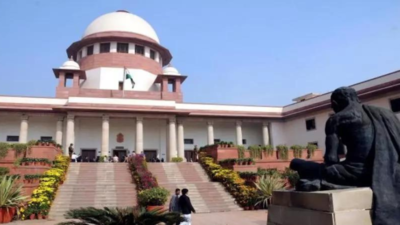
“Very serious matter”, says CJI; Girls are forced to work in massage parlors: PIL india news

“Very serious matter”, says CJI; Girls are forced to work in massage parlors: PIL

New Delhi: The Supreme Court on Monday termed as “very serious” the forced recruitment of minor girls in orchestras mainly in Bihar and West Bengal and massage parlors in Delhi and Rajasthan and their subsequent sexual exploitation and trafficking and sought a comprehensive response from governments on steps for their safety.Senior advocate HS Phulka, appearing for NGO ‘Just Rights for Children Alliance’, told a bench of CJI Surya Kant, Justices Joymalya Bagchi and Vipul M Pancholi that girls aged 10-16 years are forcibly employed in orchestras, spas and massage parlors to repay the debts of their parents and subsequently under the Child and Adolescent Labor (Prohibition and Regulation) Act, They are sexually exploited and trafficked in clear violation of the 1986 Act, which bans their employment. Hazardous industries.To get around the law, Phulka said, many sectors – orchestras, dance bars, dance troupes, gimmick performances, massage parlours, spas and salons, which are not listed in the hazardous category – have evolved over the years to become organized industries of child trafficking, sexual exploitation and abuse. The bench also issued notice to NCPR and NHRC.The NGO said that in the March-December period last year, more than 200 minors were rescued from orchestras, dance troupes and nautanki groups from various places in Bihar and West Bengal, while more than a dozen were rescued from massage parlors and spas in Delhi and Rajasthan.“Children often aged between 10 and 16 are lured and recruited from poor, tribal and marginalized communities through deception and promises of employment, glamour, dance training, marriage or economic upliftment,” it said.“These children are trafficked across districts, states and international borders, confined in overcrowded and unsanitary conditions, deprived of education and freedom of movement, and forced into forced labour, explicit sexual performance and commercial sexual exploitation, in gross and flagrant violation of their constitutional and fundamental rights.”The NGO said orchestras and gimmick groups, which were originally conceived as indigenous cultural entertainment at weddings and social gatherings, now operate in an almost complete regulatory vacuum, enabling organized criminal networks to flourish with effective impunity.“Minor girls, mainly from poor, migrant, tribal and marginalized communities, are systematically deceived and lured through false promises of employment, glamour, artistic performance or marriage,” it said. In many cases, the families themselves are duped or financially forced to surrender their children in conditions of severe economic distress and insecurity.”“As a result, girls under the age of 12 are trafficked, bought for nominal sums, transported across district and state borders, and sold to orchestra conductors, generating substantial criminal profits for traffickers and conductors alike,” it said.Describing the plight of the trapped girls, the NGO said these minors are forced to perform in sexually provocative attire, are forced to dance to obscene music in front of an intoxicated audience, and face extreme violence including molestation, rape, threats and sometimes violence using weapons.

Source link