Breaking News
Delhi HC rejects Lalu Yadav’s plea in land-for-jobs case, calls it ‘devoid of merit’ india news

Delhi HC rejects Lalu Yadav's plea in land-for-jobs case, calls it 'meritless'

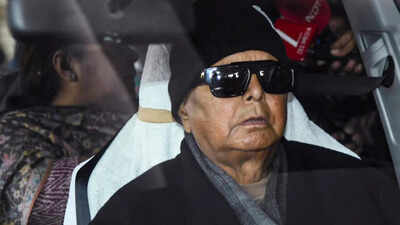
New Delhi: The Delhi High Court on Tuesday rejected RJD chief and former Railway Minister Lalu Prasad Yadav’s plea seeking quashing of the CBI FIR in the alleged land-for-jobs case, saying the plea was “devoid of merit”. The order was passed by Justice Ravinder Dudeja, allowing the investigation and related proceedings to effectively continue.The petition challenged the FIR registered on May 18, 2022, three chargesheets filed in 2022, 2023 and 2024 and the orders through which cognizance was taken. However, the court rejected all the grounds raised by Yadav and concluded that there was no legal basis to intervene at this stage.Yadav had argued that the entire proceedings were invalid due to lack of prior approval under Section 17A of the Prevention of Corruption Act. Appearing on his behalf, senior advocate Kapil Sibal argued that the alleged acts took place during Yadav’s tenure as Railway Minister between 2004 and 2009 and hence were part of his official duties, making prior approval mandatory before any investigation.Opposing the plea, Additional Solicitor General SV Raju, appearing for CBI, argued that no such approval was required. He said that decisions regarding appointments are taken by General Managers rather than directly by the Minister, and thus protection under Section 17A would not apply.The HC had earlier heard detailed arguments from both the sides and allowed time for written arguments before delivering its verdict.The case pertains to alleged irregular appointments to Group D posts in the West Central Zone of the Indian Railways based at Jabalpur, Madhya Pradesh. The CBI has alleged that Yadav’s family members or associates were given jobs in return for transferred land parcels.The FIR names several accused, including Yadav, his wife, two daughters, unidentified public officials and private individuals.In his petition, Yadav also cited a significant delay, noting that the FIR was filed almost 14 years after the alleged incidents, while the earlier investigation was closed with a report submitted before a competent court. He argued that reopening the case without disclosing these closure reports is an abuse of process.The petition further claimed that the investigation was politically motivated and his right to a fair investigation was violated, reiterating that the absence of approval under Section 17A made the proceedings void ab initio.Rejecting these arguments, the High Court held that the petition lacked merit, clearing the way for the case to proceed further.

Source link

Center calls all-party meeting amid rising tension in West Asia. india news

Center calls all-party meeting amid rising tension in West Asia
Symbolic image (ANI file photo)

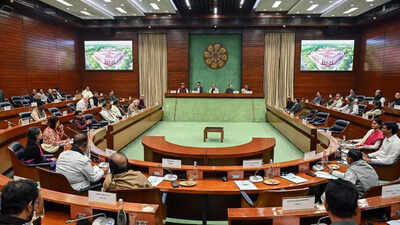
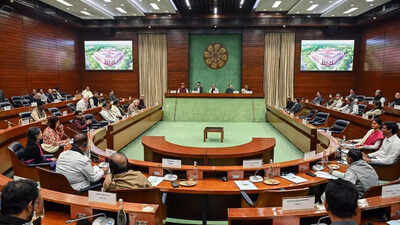
The central government called an all-party meeting on Wednesday to discuss the growing crisis in West Asia. The move comes amid reports of volatile market conditions due to the LPG crisis and tensions in the sector.Opposition leaders are attacking the government’s handling of the situation and putting pressure on it to call an all-party meeting as soon as possible. On Tuesday, Congress leader Jairam Ramesh criticized the government’s handling of the ongoing conflict in West Asia.Meanwhile, CPI(M) MP in Rajya Sabha John Brittas cited a 2003 parliamentary resolution condemning the Iraq war and urged the government to take a similar stance on Iran. Congress MP Vijay Vasant also moved an adjournment motion in the Lok Sabha over the shortage of LPG cylinders and alleged irregularities in pricing.Prime Minister Narendra Modi Spoke in the Rajya Sabha on Tuesday on India’s energy security and the wider impact of the West Asia conflict.PM Modi said, “About 1 crore Indians live and work in the Gulf countries. Protecting their lives and livelihoods is a matter of great concern for India. Many ships are stranded in the Strait of Hormuz. A large number of Indian crew members are stranded on those ships. This is also a cause of great concern for India. In such a difficult situation, it is important that the Upper House of India raises the united voice of peace and dialogue.”Meanwhile, Defense Minister Rajnath Singh on Tuesday chaired a review meeting with top military officials, including CDS General Anil Chauhan, Air Chief Marshal Amar Preet Singh and DRDO Chairman Sameer Kamat, to assess India’s defense preparedness amid global and regional security challenges.

Source link

No Scheduled Caste status for adopting religions other than Hinduism, Sikhism or Buddhism: Supreme Court. india news

No SC status on conversion to religions other than Hinduism, Sikhism or Buddhism: Supreme Court

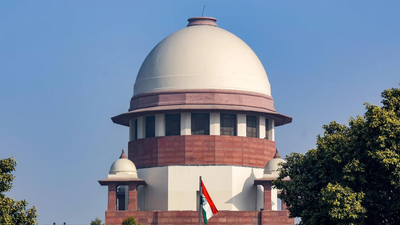
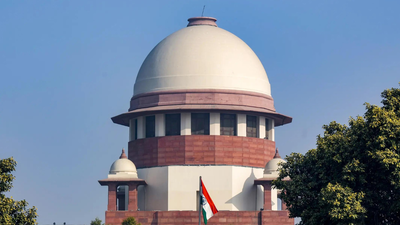
New Delhi: The Supreme Court on Tuesday said a person who follows any religion other than Hinduism, Sikhism or Buddhism cannot be recognized as a member of a Scheduled Caste. The top court said that conversion to another religion results in loss of such status.A bench of Justices PK Mishra and NV Anjaria upheld the order of the Andhra Pradesh High Court, which had ruled that persons who convert to Christianity and actively practice the faith cannot retain their Scheduled Caste (SC) status. The top court said the position is clearly laid down in the Constitution (Scheduled Castes) Order, 1950 and the bar on recognition is absolute.The court said that any person who does not profess any of the religions specified under clause 3 of the 1950 order ceases to be a member of a Scheduled Caste, regardless of birth. It states that such persons cannot, in accordance with live law, claim any statutory benefit, protection, reservation or right available to the Scheduled Castes under the Constitution or any law enacted by the Parliament or the State Legislatures. Emphasizing the scope of the law, the bench said a person cannot simultaneously practice a religion not listed in the 1950 order and claim Scheduled Caste status. “No statutory benefit, protection or reservation or entitlement under the Constitution or an Act of Parliament or a State legislature can be claimed or extended by a person who, by the operation of section 3, is not deemed to be a member of a Scheduled Caste. This prohibition is absolute and admits of no exceptions. A person cannot simultaneously profess or practice any religion other than the religion specified in section 3 and claim membership of a Scheduled Caste.”The decision came in a case involving a man who had converted to Christianity and was working as a priest but had filed a complaint under the Scheduled Castes and Scheduled Tribes (Prevention of Atrocities) Act alleging assault and caste-based ill-treatment. The accused challenged the case, arguing that the complainant is no longer entitled to protection under the Act after converting to religion.The apex body found that evidence showed that the complainant had continued to practice Christianity for more than a decade and was holding regular prayer meetings at the time of the alleged incident.It said that there is no claim or evidence of re-conversion to their original religion or re-acceptance into their caste community.Agreeing with the High Court, the top court held that the caste system is separate from Christianity and, therefore, a person professing the religion cannot invoke the provisions of the SC/ST Act. It also clarified that mere possession or non-cancellation of a caste certificate does not entitle a person to claim Scheduled Caste benefits after conversion, adding that such issues should be dealt with by the competent authority under the relevant law.

Source link

‘Adverse effect on overall merit’: Supreme Court criticizes bias in evaluation of women officers for permanent commission. india news

'Adverse impact on overall merit': Supreme Court criticizes bias in evaluation of women officers for permanent commission
Supreme Court (file photo)

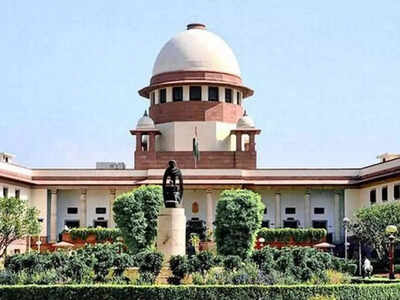
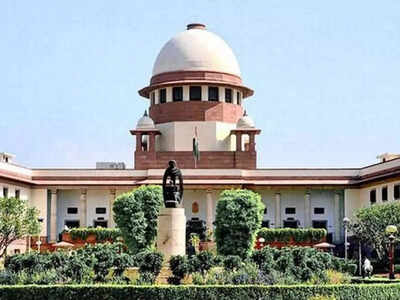
New Delhi: The Supreme Court on Tuesday observed that the denial of Permanent Commission (PC) to women Short Service Commission (SSC) officers in the armed forces stems from a flawed and discriminatory evaluation system, especially the way their performance was evaluated.While delivering its verdict, a bench comprising Chief Justice of India Surya Kant and Justices Ujjal Bhuyan and N Kotiswar Singh said that the Annual Confidential Reports (ACRs) of women officers were often evaluated carelessly, thereby reducing their chances of securing PC.According to Live Law, the bench said, “The ACR of the appellants was written with the presumption that they would not make career progress. The overall merit was adversely affected.”The bench further said, “The model was rational, non-discriminatory and was implemented as a one-time measure. The failure of the respondents to disclose the evaluation criteria etc. has adversely affected the authorities.”The decision comes after a protracted legal battle in which women officers had challenged the criteria used to evaluate them, arguing that it puts them at a disadvantage compared to their male counterparts.During the last hearing, the Center had denied the allegations of bias. It also submitted that after the 2022 approval, women officers are now being inducted through the National Defense Academy, and those who complete the training will be directly awarded PCs.Earlier reserving its judgment, a bench led by Chief Justice Surya Kant was informed by Additional Solicitor General Aishwarya Bhati that structural changes have already been initiated to address gender disparities in the forces.However, the court remained critical of the evaluation process. During the hearing, it raised questions as to why women and men were assessed differently despite undergoing similar training and work.“How can there be two criteria based on gender? Is there a different format for evaluation of SSC women officers and male officers? Is the format different for SSC officers and those in the Permanent Commission?” The bench had asked.Senior advocate Maneka Guruswamy, appearing for 13 women officers, argued that their ACRs were carelessly classified and, in some cases, frozen before they were eligible for PC in 2020. In contrast, male officers continued to be evaluated with PC in mind.He pointed to the service records of officers like Lt Col Vanita Padhi, Lt Col Chandni Mishra and Lt Col Geeta Sharma, who had served in UN missions, high altitude areas and counter-insurgency operations. Despite holding key operational roles, including ‘criteria appointments’ in difficult areas, their contribution was not fully recognized in their appraisal reports, unlike similar postings held by male officers.The court said that such differential treatment could violate the constitutional guarantee of equality under Articles 14 and 15, and reflect entrenched biases within the system. Guruswamy also said that many women officers were denied pension and medical benefits proportionate to their service conditions.The petitioners relied on a 2020 Supreme Court judgment that had directed the Army to grant PC to women officers and held that excluding them from command roles was unfair and hindered career progression.Since then, the court has passed several orders expanding the scope of PC for women in the Army, Navy, Air Force and Coast Guard.The case also included arguments from serving and retired officers, as the court examined similar concerns across different branches of the armed forces.

Source link

Government tightens surveillance on weight loss GLP-1 drugs amid concerns over unauthorized sales India News

Government tightens surveillance on weight loss GLP-1 drugs amid concerns over unauthorized sales

New Delhi: The Ministry of Health and Family Welfare on Tuesday said the Drug Controller of India is intensifying its regulatory surveillance against illegal sale and promotion of weight loss drugs (GLP-1).According to the ministry, the move is aimed at ensuring ethical pharmaceutical practices in the drug supply chain.“With the recent introduction of several generic variants of GLP-1-based weight loss drugs in the Indian market, concerns have emerged about their on-demand availability through retail pharmacies, online platforms, wholesalers and wellness clinics. These drugs, when used without proper medical supervision, may have serious adverse effects and associated health risks,” the ministry said in an official statement.“Taking cognizance of the situation, the Drug Controller of India, in collaboration with state regulators, has initiated a series of targeted actions to prevent potential malpractices in the pharmaceutical supply chain and prevent unauthorized sale and use,” it said.The Ministry reminded that on March 10, a blanket advisory was issued to all manufacturers, clearly banning surrogate advertisements and any form of indirect promotion that could mislead consumers or encourage off-label use.The statement further said that enforcement activity has increased significantly in recent weeks, with audits and inspections conducted at 49 entities across a range of sectors. These included online pharmacy warehouses, drug wholesalers, retailers, and wellness and slimming clinics.The Health Ministry said, “Misuse of weight loss drugs without medical supervision can lead to serious health complications. Citizens are advised to use such drugs only under the guidance of qualified medical practitioners.”This drug has been approved in India with the condition that it will be prescribed only by endocrinologists and internal medicine specialists and by cardiologists for certain indications.

Source link

Economist Geeta Gopinath believes geopolitics is an enduring force in global policy India News

'India should first put its house in order: Geeta Gopinath's big warning to Modi government amid Iran war'

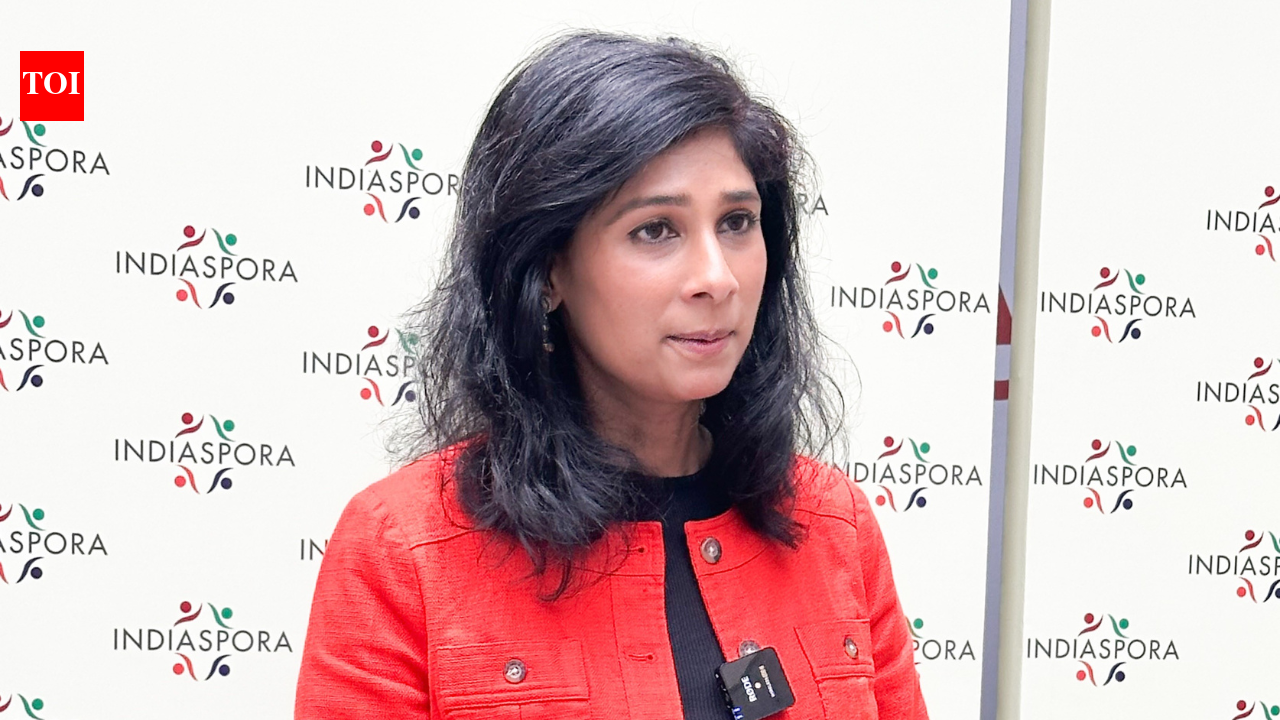
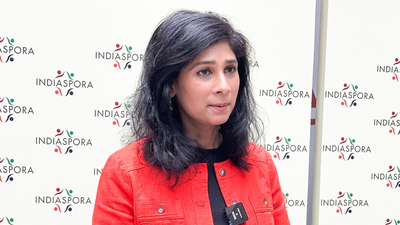
Speaking on the sidelines of the Indiaspora Forum 2026 in Bengaluru on Monday, the Harvard economics professor and former International Monetary Fund First Deputy Managing Director Geeta Gopinath warned that geopolitics is now a permanent, transformative force in global policy. Gopinath said the world is moving away from the post-Cold War era towards a scenario defined by ‘de-risking’ and defence.“Countries are rapidly building defense capabilities and securing supply chains to source essential inputs such as semiconductors and rare earths,” Gopinath said, citing the Iran conflict as the primary catalyst. “It’s a paradigm shift; it’s no longer the world we’re used to.”

Watch

‘India should first put its house in order: Geeta Gopinath’s big warning to Modi government amid Iran war’

Gopinath, who is a leading global voice on trade and investment, felt that some change was about to happen and there would be no going back. “There has been some dissatisfaction with the global trading system for some time now. There is dissatisfaction with what happened during the pandemic to countries that could not get supplies while being dependent on imports. All this has naturally brought us to where we are,” he said.And now he feels it is important to take a hard look at international organizations and see what needs to change in the context of global trade. He said, “There are people who complain about job losses at home because of trade, and also the fact that it is not a level playing field. It is time to look at what a better rules-based order might look like.” But in his opinion whether this will happen or not is not decided yet.

Source link

Days after TN order, doctors demand similar rules across the country as hair transplant boom raises safety alarm India News

Days after TN's order, doctors are demanding similar rules across the country as surge in hair transplants raises safety alarm bells

New Delhi: Days after the Tamil Nadu government issued an order to regulate beauty, cosmetology and hair transplant clinics, mandating their registration under the Tamil Nadu Clinical Establishments Act and bringing them under formal rules, doctors have called for implementation of similar rules across the country amid a rise in social media-driven procedures.The Indian Association of Dermatologists, Venereologists and Leprologists (IADVL) has urged the government to curb quackery and implement comprehensive national guidelines to protect patients and strictly enforce existing rules, warning that the fast-growing sector is going beyond oversight.Experts say complications from cosmetic procedures such as hair transplants, Botox and laser treatments are emerging more frequently, as young Indians seek quick fixes and aesthetic improvements are promoted online.The Tamil Nadu order states that hair transplants should be performed only by registered medical practitioners – preferably dermatologists or plastic surgeons – and clinics are required to have proper infrastructure, including monitoring systems, emergency equipment and anesthesia support.Concerns have grown after reports of poor procedures, including the death of two engineers in Kanpur, prompting a police investigation. The issue has also drawn judicial attention. In 2022, the Delhi High Court gave the green light to salons offering hair transplants without medical supervision, warning that such procedures performed by unqualified individuals could be dangerous and even fatal.Experts emphasize that hair transplant surgery requires knowledge of skin biology, hair disorders, infection control and management of complications, and should be performed only by specialized registered doctors.“Aesthetic procedures require specialized training beyond an MBBS degree,” said Dr Vinay Singh, Chairman, IADVL. He said dermatologists have to undergo three years of postgraduate training in procedural skills as well as skin and hair disorders.“Many cases of hair loss can be treated medically and do not require surgery,” said Dr Kabir Sardana, Ram Manohar Lohia Hospital, emphasizing the need for proper diagnosis before opting for transplantation. He said the growing demand is being fueled by the influence of social media and rising disposable income.Highlighting the scale of the problem, the IADVL said its anti-quackery committee has identified more than 100 alleged unqualified practitioners offering such procedures this year and shared a list with the Directorate General of Health Services (DGHS) for action.The debate over who is eligible to perform hair transplants has intensified ever since the Dental Council of India allowed oral and maxillofacial surgeons to train in aesthetic procedures including hair restoration, creating a regulatory gray area.The IADVL also urges patients to verify the doctor’s qualifications and registration with the state medical council before any skin, hair or cosmetic treatment and ensure that the registration number is clearly mentioned on the prescription. The public has been advised to remain vigilant and avoid falling prey to misleading advertisements or treatments offered by unlicensed practitioners.

Source link

India, Nepal and the changing security scenario. india news

India, Nepal and the changing security scenario

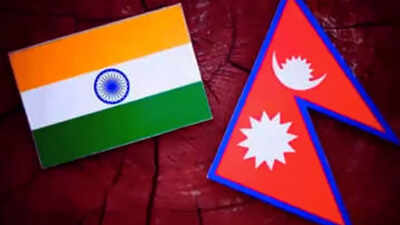
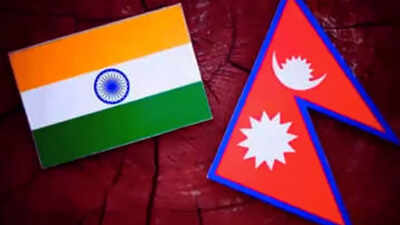
Nepal has always been more than a neighbor of India. It has been a shoulder on our northern end – where no danger was feared, whose people mixed with us freely, in whose temples we prayed with enthusiasm, whose Gurkhas themselves defined valor. A long-standing story of roti-beti – sharing bread and blood – explains how India understood and managed its relations with Nepal. Open borders, nurtured on the basis of cultural similarity and civilizational kinship, were seen less as a policy option and more as a state of nature. For decades, this faith-based narrative persisted.Since then it has suffered several rapid mutations. And India has been slow to adjust and recalibrate. The same open border that was a symbol of trust became a corridor for threats that India could not ignore. ISI-backed networks systematically exploited the border – Lashkar-e-Taiba and Jaish-e-Mohammed modules used Nepal as a staging and transit area. Radicalism, quietly funded through foreign channels, created the institutional base. Counterfeit currency, narcotics and human trafficking created organized syndicates that operated with impunity. Bad money was also used for election funding.India’s response evolved over time – civilian police, then Central Armed Police, and finally smart border management. This step was necessary. But this brought bitterness in the relationship. The warm story of shared identity gave rise to a cold question: How close should one be?While India was tightening its border position, China was making strategic investments in Nepal’s human and physical territory. Chinese study centers sowed the seeds of cultural influence. Infrastructure investment specifically targeted development-dry regions, where India promised much and delivered little – projects were announced with fanfare, then delayed due to poorly defined timelines and long-term delivery deficits.China built roads and connectivity. India sent goodwill and adjournments, films and fanfare.The result was predictable. The political scenario of Nepal was badly broken. The monarchy faced complete disintegration. Maoists came to power. Political instability became a permanent condition of governance in Kathmandu. Meanwhile, India continued to work through the backroom management of Nepali power groups – a habit that reflects a deep strategic miscalculation. China cannot be balanced at the level of a small country situated between two larger countries. China should be balanced on China’s level.India ignored this basic truth for too long. Until 2015, that changed everything. About 80% of Nepal’s population lives on 20% of its land – the southern Terai belt along the Indian border. This demographic and geographical reality has always made the relationship structurally sensitive. After the devastating earthquake of 2015, Nepal was at its most vulnerable. That’s when the Madhesi community – Nepali citizens of the southern Terai belt, who share deep ethnic and cultural ties with Indian cross-border communities – launched a trade blockade against Kathmandu, protesting what they saw as their marginalization in Nepal’s newly drafted constitution. The blockade blocked the flow of essential supplies into the already crisis-hit country. India found itself indifferent to Nepal’s suffering by putting insufficient pressure on Madhesi groups to take it up. Whether that assumption was justified or not is difficult to conclude either way. What is clear is that India was branded non-humanitarian at the very moment when the humanitarian stance mattered most. It was an image that India has struggled to recover.This episode exposed a deeper problem: India had invested in a narrative of belonging based on civilizational solidarity, while ignoring the material conditions that give the narratives their credibility. We fostered corruption in our own soil, engaged in only patchwork aid, and allowed distribution deficits to grow – while China smartly invested in infrastructure, mobility, and connectivity. We remained stuck in faith-based narratives for a long time, even after the landfall.An explosion of Gen-Z aspirations was witnessed, first in Bangladesh and then in Nepal. The demand was consistent: corruption-free, transparent, accountable governance. The pressures driving it were equally consistent – ​​stress in the agricultural sector, lack of jobs, lack of growth opportunities, unplanned and disrupted urbanization, and the challenges of climate change. Overall, it stifled a generation that is both globally well-connected and locally disillusioned.India missed this change. The religious-civilization narrative, which once served as a soft anchor in Nepal, has been rejected outright by this group. We also missed the time-tested wisdom: When the son grows up to stand equal to the father, the right response is to give him respect, space, and freedom to choose his own path. Imposing old stories on a changed generation creates resentment, not intimacy.Amidst China’s debt-trap diplomacy and this new generational call, India continues to argue from premises that no longer match the reality on the ground.The geopolitical environment is highly dynamic, filled with multiple conflicts and increasingly non-normal patterns of statecraft. New narratives have emerged globally – cognitive control, balance of power through balance of payments, mixed pressure zones. China has become a deep-state actor in Nepal, bringing Pakistan and Bangladesh closer to its orbit through multi-mode mobility, digital cordon and high-tech surveillance. The siege of India’s neighborhood is real.Against this backdrop, a fundamental principle reasserts itself: all wars ultimately end in peace. Wise nations have always chosen diplomacy and negotiation rather than protracted turmoil. Cooperation and mutually respectful arrangements are the only lasting basis for long-term relationships. Even claimants to the Buddha’s tradition have deviated from this middle path – but the principle remains sound.India should now act promptly. The 1950 treaty between India and Nepal needs revision – reached through close, trusted negotiations across the table, not through public release of antiquated base maps that harden the situation and invite conflict rather than resolve it.The new Prime Minister of Nepal has the mandate of corruption-free, transparent and accountable governance. This is a real start, and India must meet it with honesty and commitment – ​​not manipulation, not patchwork assistance, not backroom management of power groups.At the grassroots level, this means vibrant border village programs, avenues for mutual development, diverse institutional linkages, startup connections and fostering industrial clusters that create the right environment for practical relationships to take root. When Vasudhaiva Kutumbakam is put into action – beyond fear psychosis and religious rigidity – and when unquestioning democratic governance backs up the words, strong, tacit communication flows naturally.If we draw bigger lines before other stakeholders in the system, they will also adjust their stance. The task is not to match what China is doing. It is to be transcended – in honesty, in delivery, and in respect for the neighbor whose sovereignty and dignity cannot be compromised.The wind is changing. The question is whether India will read it in time?(The author is a former DG, CRPF)

Source link

114 Rafale, 60 MTA aircraft, AEW&C deals to be concluded in 2026-27: Defense Ministry Paarl panel | india news

114 Rafale, 60 MTA aircraft, AEW&C deals to be concluded in 2026-27: Defense Ministry tells parliamentary panel

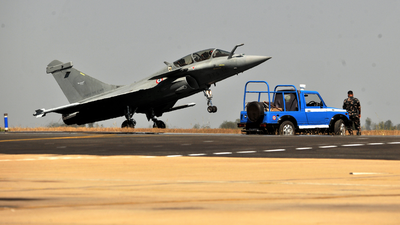
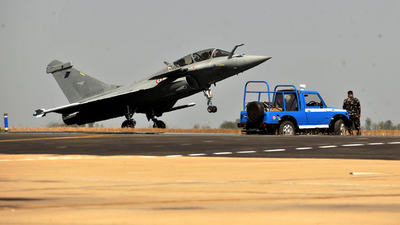
New Delhi: To enhance the strength of the Indian Air Force, India is set to sign several major contracts in the financial year 2026-27, including the deal to procure 114 aircraft. rafale fighter planeThe Defense Ministry has told a parliamentary panel that 60 medium transport aircraft (MTAs) and additional airborne early warning and control (AEW&C) systems are involved.“The capital budget of the IAF has increased by 37.03% compared to the Budget Estimates for 2025-26. The allocated funds are planned to be used for some major new schemes such as multi-role combat aircraft (a reference to the proposed Rafale deal), combat enablers (AEW&C, Tejas MK1A), medium transport aircraft (MTA) and medium-altitude long-endurance RPA (remotely piloted aircraft). Ongoing Committed liabilities,” the ministry told the Parliamentary Standing Committee on Defence, which presented its latest report in the Lok Sabha last week.In February this year, the Defense Acquisition Council (DAC) approved the purchase of 114 Rafale jets under the Multi-Role Fighter Aircraft (MRFA) programme; The proposed deal for jets along with military hardware is expected to cost around Rs 3.25 lakh crore. Under the MRFA model, the new Rafales will be built in India by French company Dassault Aviation in collaboration with an Indian partner. “Keeping in mind the modernization of the armed forces, especially in the current geopolitical scenario, the Committee urges the Air Force to beneficially utilize the funds allocated for modernization and technological upgradation in armament and procurement of other critical platforms,” the report said.The Defense Acquisition Board has recently approved a plan to procure 60 Medium Transport Aircraft (MTAs) for the Indian Air Force, at an estimated cost of Rs 1 lakh crore. The program aims to replace the aging An-32 fleet, requiring 12 aircraft to be in flying condition and 48 to be manufactured locally. Top contenders include the Embraer C-390 Millennium, Lockheed Martin C-130J Super Hercules and European Airbus Defense and Space with its A-400M.The ministry informed the committee, “Critical combat enablers such as AEWACs, flight refuelers and specialized electronic intelligence and surveillance platforms are critical… These systems not only enhance our intelligence gathering and battlefield transmission but also provide commanders with information on the electronic sequence of modern warfare. All these combat intelligence systems are highly effective platforms to enhance the combat capability of the three services.”The Committee was also informed that the Indian Air Force is committed to self-reliance and is providing full support to the national objectives. “To promote innovation and indigenization, the IAF has created a new directorate, namely Aerospace Design Directorate (DAD). This directorate actively interacts with industries, R&D institutes and academia to explore specific technologies in the aerospace domain and convert them into tactical and strategic war fighting solutions using indigenous resources,” the report said.

Source link

Petition challenging gender discrimination in Parsi interfaith marriages in SC. india news

Petition in SC challenges gender discrimination in Parsi interfaith marriages

New Delhi: The Supreme Court on Monday sought the response of the Nagpur Parsi Panchayat on a plea by a Parsi woman challenging the constitutional validity of the religious custom that ostracized her for marrying a non-Parsi man. She described the practice as gender discriminatory because the rule does not apply to a Parsi man marrying a non-Parsi woman.Appearing for Dina Budhraja, senior advocate Shyam Divan told the Supreme Court that Rule 5(2) of the Nagpur Parsi Panchayat Constitution violated Articles 21, 21 and 25 of the Constitution as it discriminates against women, subjecting them to exclusion, denial of religious access and loss of identity if they marry a non-Parsi, while Parsi men have no such disability. The bench comprised Chief Justice Surya Kant and Justices Joymalya Bagchi and Vipul M Pancholi. Issued notice to Nagpur Parsi Panchayat, Central Government and Ministry of Minority Affairs and said it will examine what interim relief can be granted to the petitioner.The 43-year-old petitioner said that the discriminatory practice under Rules 5(2) and 5(3) is clear. “A Parsi man who marries a non-Parsi woman retains his identity and access to religious institutions, while a Parsi woman is stripped of both. The classification is based solely on gender and fails the test of fair classification under Article 14,” she said in her petition.Budhraja, who married a Hindu man in 2009 and has a son and daughter, said she has not given up her religion. “Despite professing and continuing to practice the Zoroastrian religion, the petitioner has not been deemed to be a Parsi by virtue of her marriage with a Hindu man, merely by virtue of Rule 5(2),” her petition said. “Many other Parsi Panchayats, including those in Delhi and Kolkata, do not subscribe to such discriminatory practices and treat men and women equally. Therefore, the practice followed by the Nagpur Parsi Panchayat is neither uniform nor essential to the Zoroastrian religion,” Budhraja said in his petition.

Source link