BSF fired ‘in self defence’, killed 2 Bangladeshis on Tripura border. india news

BSF fired 'in self defence', 2 Bangladeshis killed on Tripura border

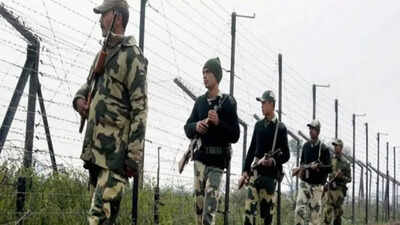
Agartala: When two suspected Bangladeshi smugglers were killed bsf On Friday night, soldiers opened fire on them in self-defense on the India-Bangladesh border in Sepahijala, Tripura. The incident took place near Kamalasagar border post, an area known for smuggling activities allegedly facilitated by villagers from both sides of the border. According to sources, a BSF patrol spotted a group of 10-15 people transferring goods to their Indian counterparts across the border fence under the cover of darkness. When challenged, the smugglers reportedly started pelting stones at the soldiers, who opened fire. Both the persons were injured and fell on the ground. They were identified as Nabeen Hussain (20) and Mohammad Moorslin (40). He was taken to the hospital, where he was declared dead on arrival. Police said the injured admitted being from Bangladesh and being involved in smuggling. Police said their bodies were handed over to the BGB after post-mortem.

Source link

BJP says it will not support any party to form government in Tamil Nadu India News

BJP says it will not support any party to form government in Tamil Nadu

Chennai: BJP state president Nainar Nagenthran on Friday said the BJP will not be involved in any efforts to form government in Tamil Nadu after the assembly election results. In a statement, he said the party had fought the elections with the aim of welfare and progress of the people of Tamil Nadu, but the voters have accepted the verdict. “We believe that the people have not given any chance or mandate to the BJP to form the government in Tamil Nadu in this election,” Nagenthran said.“We also want to tell the people that we will not vote in support of any party involved in the efforts to form the government,” he said.

Source link

TVK government formation: Evening News Wrap: VCK, IUML support Vijay’s TVK government formation; India successfully tests advanced Agni missile with MIRV capability and more india news

शाम का समाचार रैप: वीसीके, आईयूएमएल ने विजय की टीवीके सरकार के गठन का समर्थन किया; भारत ने एमआईआरवी क्षमता और अधिक क्षमता वाली उन्नत अग्नि मिसाइल का सफलतापूर्वक परीक्षण किया
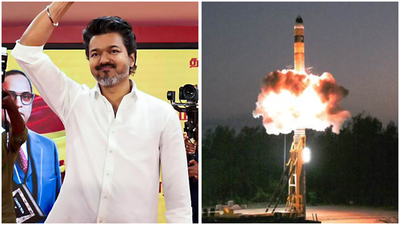
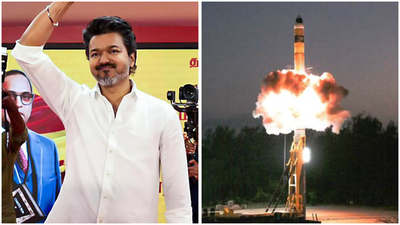
  • The VCK and IUML supported Vijay’s TVK, helping the party cross the majority mark to form the Tamil Nadu government.
  • India successfully test-fires advanced Agni missile with MIRV capability.
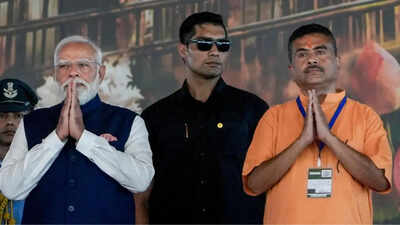
  • PM Modi bows to Bengal as Suvendu Adhikari takes oath as the first BJP Chief Minister of the state.
  • After TMC’s defeat, Mamata Banerjee updated her bio.
  • ED arrested Punjab Minister Sanjeev Arora in alleged money laundering and fake GST billing case.

Here are the top stories of the day:

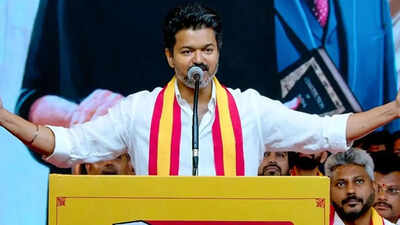
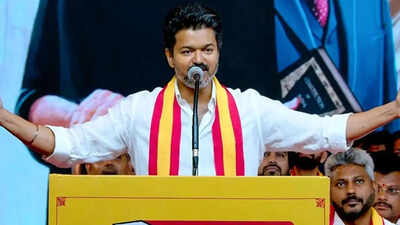
Tamil Nadu: TVK crosses majority mark with support of VK, IUML

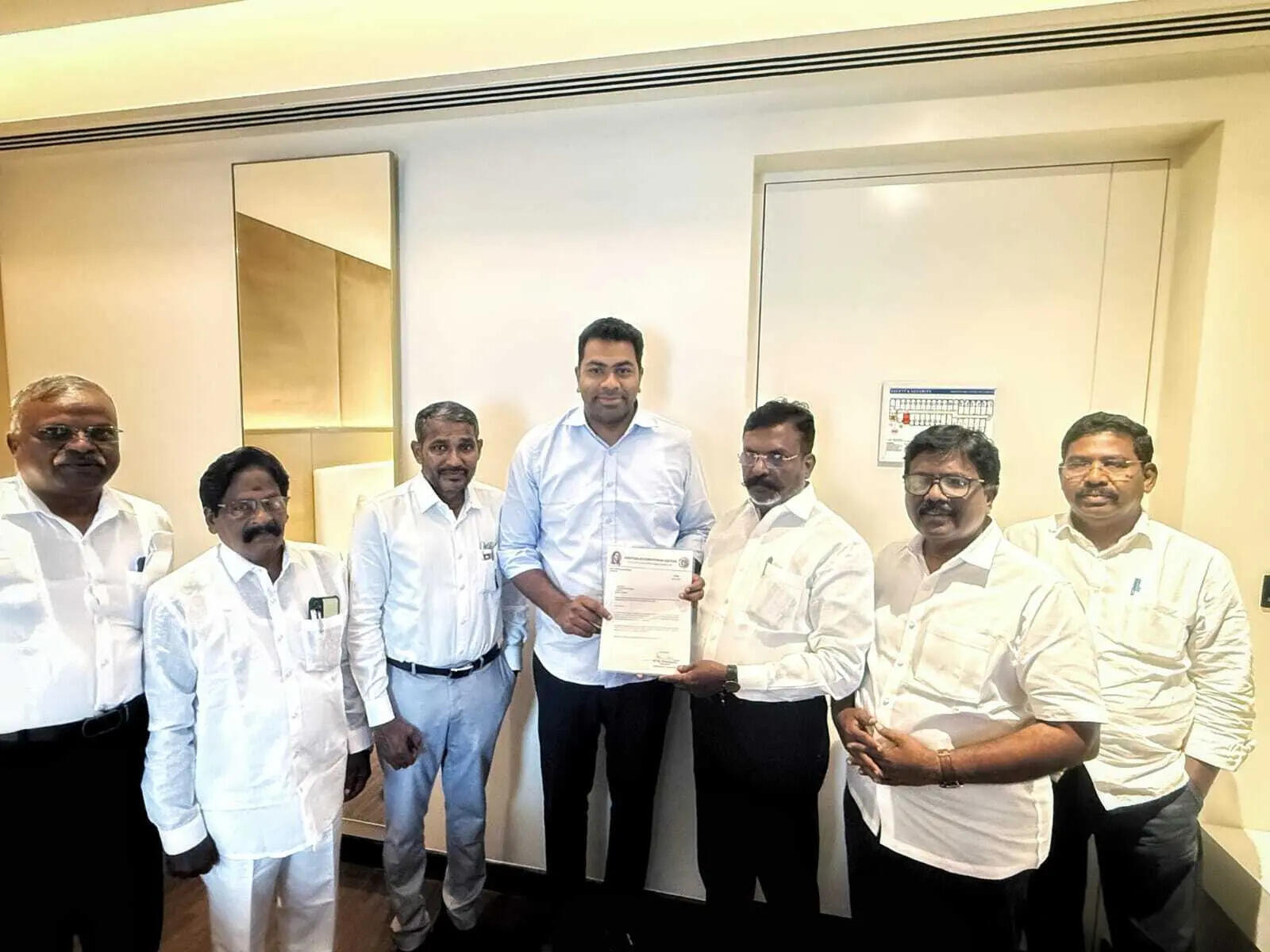
Tamilaga Vetri Kazhagam (TVK) crossed the majority mark in the Tamil Nadu Assembly after VCK and IUML extended support to the Vijay-led party to form the government. VCK chief Thol Thirumavalavan formally submitted a letter of support, taking TVK’s tally to 119, before IUML’s support took it to 120 MLAs. Meanwhile, DMK chief MK Stalin congratulated the incoming government. Follow live updates

Watch

TVK comes close to forming government in Tamil Nadu, VCK supports Vijay. Watch

India successfully tests advanced Agni missile with MIRV capability

India announced the successful flight test of the advanced Agni missile equipped with Multiple Independently Targeted Re-entry Vehicle (MIRV) technology, significantly enhancing the country’s strategic strike capability. Operated from Dr APJ Abdul Kalam Island off the Odisha coast, the missile carried multiple payloads targeting different targets in the Indian Ocean region. Read the full story

PM Modi salutes Bengal as Suvendu Adhikari takes oath as first BJP CM

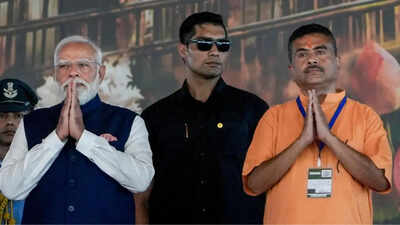
Prime Minister Narendra Modi bowed with folded hands before the people of West Bengal during the swearing-in ceremony of Suvendu Adhikari as the first BJP Chief Minister of the state. The event, held at the Brigade Parade Ground in Kolkata, marked the end of Trinamool Congress’s 15-year rule after the BJP won 207 seats in the 2026 assembly elections. Read the full story

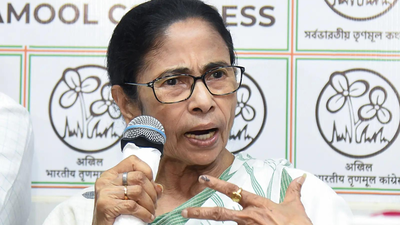
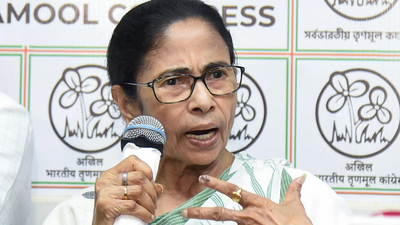
Mamata changed her bio after BJP’s victory, signaling the end of TMC rule in Bengal.

Days after refusing to resign following Trinamool Congress’ defeat in the West Bengal Assembly elections, Mamata Banerjee has accepted the end of her government by updating her bio to list herself as the former chief minister of the 15th, 16th and 17th assemblies. The move comes after BJP leader Suvendu Adhikari took oath as the first BJP Chief Minister of Bengal. Read the full story

ED arrests Punjab minister Sanjeev Arora in money laundering case

The Enforcement Directorate arrested Punjab Industries Minister and AAP leader Sanjeev Arora in a money laundering case after raids in Delhi, Gurugram and Chandigarh. The agency alleged that Arora and his associated entities used fake mobile phone purchase bills through shell companies to claim fraudulent GST benefits and later routed the funds through Dubai. Read the full story

Source link

Delhi on high alert: Intel agencies warn of terror attacks; Security increased at BJP headquarters. india news

Delhi on high alert: Intel agencies warn of terror attacks; Security has been increased at BJP headquarters

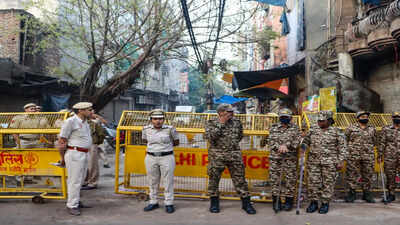
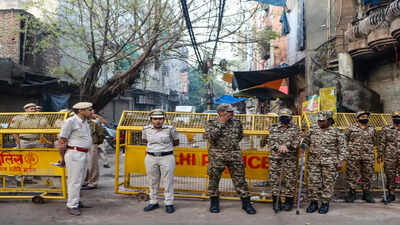
New Delhi: Delhi has been put on high alert following intelligence inputs indicating a possible terror threat, forcing Delhi Police and other security agencies to increase surveillance at several sensitive locations.“Police have been directed to keep a strict vigil on suspicious activities, abandoned objects and vehicles parked in sensitive areas,” PTI quoted an officer as saying.According to officials, security agencies have received alerts about possible attempts to target key offices and crowded areas in central Delhi through suicide attacks, vehicle-borne improvised explosive devices (IEDs), firing and coordinated attacks.Security has been tightened around the ruling Bharatiya Janata Party (BJP) headquarters and nearby government establishments on Deen Dayal Upadhyay (DDU) Marg, with additional deployment of armed personnel, barricading and increased checking of vehicles.Also read: Delhi Police arrests suspects linked to criminal gangs in India, PakistanAnti-sabotage inspections are underway at major government buildings, political offices, markets, transport hubs and other crowded places across the city.Bomb disposal squads, sniffer dog units and quick response teams along with the Delhi Fire Service have also been put on alert.Security measures have been additionally strengthened in settlements and areas considered sensitive from a law and order perspective, while local police are carrying out random checking operations and verification exercises.Senior officials are closely monitoring the situation and reviewing the security arrangements across the city.On November 10 last year, at least 15 people were killed and more than 20 were injured in a blast inside a car near the Red Fort. The incident is the first terrorist attack in the national capital since 2011.

Source link

‘Do your work like Mughal rulers’: BJP targets Kejriwal after AAP chief compares PM Modi with Aurangzeb. india news

'मुगल शासकों की तरह अपना काम': आप प्रमुख द्वारा पीएम मोदी की तुलना औरंगजेब से करने पर बीजेपी ने केजरीवाल पर निशाना साधा

BJP targets Kejriwal after AAP chief compares PM Modi with Aurangzeb

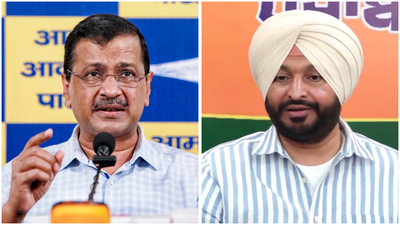
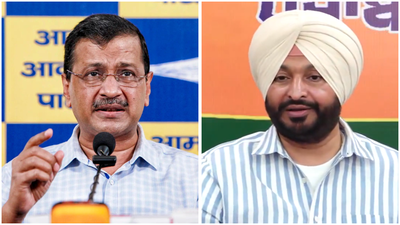
New Delhi: The BJP on Saturday launched a scathing attack on Arvind Kejriwal after the AAP chief compared Prime Minister Narendra Modi to Mughal emperor Aurangzeb over the Enforcement Directorate (ED) action against Punjab minister Sanjiv Arora, with Union minister Ravneet Singh Bittu calling Kejriwal “Ahmed Shah Abdali”.A political war of words broke out after the ED conducted fresh searches against Punjab Industries Minister Sanjeev Arora and others associated with him in the money laundering probe. Arora was later arrested by the agency.Reacting to Kejriwal’s remarks, Bittu alleged that the AAP leadership remembers the Mughal rulers because “their own work is like theirs”.Accusing the AAP government of “looting and looting” in Punjab, Bittu told reporters, “Punjab has seen Ahmed Shah Abdali again and Ahmed Shah Abdali is Kejriwal.”

Kejriwal compared PM Modi with Aurangzeb

Earlier in the day, Kejriwal alleged that the BJP was using central agencies to pressure opposition leaders to join the saffron party.Addressing a press conference in Delhi, the former Chief Minister compared PM Modi with Aurangzeb and accused him of targeting Punjab through ED raids.Kejriwal said, “Punjab is the land of gurus. Several hundred years ago, Aurangzeb had captured many parts of the country through crime and oppression. Modiji has also captured many parts of the country through deceit.”He further alleged that Punjabis were being “mistreated” and claimed that the raids against Arora were politically motivated as the minister had refused to join the BJP.The AAP national convenor also claimed that agencies like ED and CBI are no longer working independently.“Under Modi’s rule, they are working to scare, intimidate and break the opposition leaders and force them to join the BJP. The raid against Arora is an action in that direction,” Kejriwal said.“Either join BJP or get arrested,” Kejriwal alleged, referring to the ED action.

BJP says AAP has been stunned by corruption cases

BJP leaders rejected Kejriwal’s allegations and said the ED action was related to corruption allegations and not political vendetta.Delhi BJP chief Virendra Sachdeva claimed that Kejriwal seemed nervous as he knew the investigation could eventually reach him too.According to the report of news agency PTI, Sachdeva alleged, “Arvind Kejriwal himself seems to be the mastermind behind this entire extortion conspiracy.”BJP spokesperson RP Singh said it is Kejriwal, not PM Modi, who is behaving “like Aurangzeb” in Punjab.Accusing the Punjab government of being steeped in corruption, Singh said, “This action should not be seen against AAP but against corrupt people.”Punjab BJP chief Sunil Jakhar also defended the ED raids, saying the action was related to corruption and corrupt practices.

Political tension has increased in Punjab

The ED raid comes amid increasing political unrest in Punjab and the recent joining of several AAP Rajya Sabha MPs into the BJP.Kejriwal alleged that former AAP MP Ashok Mittal joined the BJP after facing ED raids and claimed that similar pressure was being put on Arora.Meanwhile, according to PTI, former AAP colleague and Rajya Sabha MP Raghav Chadha accused the AAP government of betraying Punjab and pushing the state towards financial ruin.He alleged that the documents revealed after the ED action point to “round-tripping” of funds through entities in the UAE, Canada and Australia.

Source link

‘Sacrifice marked in BJP’s journey’: PM Modi, Amit Shah pay tribute to party workers killed in West Bengal. india news

'Sacrifice marked in BJP's journey': PM Modi, Amit Shah pay tribute to party workers killed in West Bengal
PM Modi with West Bengal Chief Minister Suvendu Adhikari (PTI photo)

New Delhi: Prime Minister Narendra Modi and Union Home Minister Amit Shah on Saturday paid tribute to BJP workers who were allegedly killed in the violence after the 2021 West Bengal Assembly elections, saying that their sacrifice will continue to inspire generations of party workers.A temporary memorial in honor of the slain BJP workers was built near the stage at the Brigade Parade Ground in Kolkata, where Suvendu Adhikari and his council of ministers took oath earlier in the day.The memorial displayed the names of the “martyrs” as well as their districts.Posting a photo of the memorial on Instagram, PM Modi said, “Tribute to the courageous BJP workers! Even amid the celebrations at the Brigade Parade Ground in Kolkata today on the formation of the first BJP government in West Bengal, we remembered all those BJP workers who laid down their lives in the service of an ideal greater than themselves.”His sacrifice is permanently imprinted in the BJP’s journey and his courage will remain a source of strength for all of us, Modi said.Shah also shared a video of the memorial and said it evoked “deep emotions” among the party workers present at the swearing-in site.“This memorial is evoking deep emotions in the hearts of every worker present at the swearing-in site,” Shah wrote on Twitter.“The sacrifice, struggle and martyrdom of those great souls is finally being fulfilled today,” he said.Shah said, “Salute to all those martyrs who dedicated everything for the country and the organization.”BJP West Bengal president Samik Bhattacharya alleged that more than 300 BJP workers were killed by “TMC goons” in the violence that broke out after the 2021 election results.Bhattacharya, who is also a Rajya Sabha MP, said, “He was killed for daring to dream of bringing change in Bengal. We cannot forget his sacrifice on this day.” PM Modi also shared photos of his meeting with Makhanlal Sarkar, one of the senior most BJP workers in the state, calling him an “inspirational person” and saying he keeps inspiring people from all walks of life to join the party.Prime Minister Narendra Modi took blessings from Makhanlal Sarkar, one of the senior-most BJP workers in the state, at the swearing-in ceremony of Suvendu Adhikari as the ninth Chief Minister of West Bengal. He greeted Makhanlal Sarkar, presented him a shawl and took his blessings.At the age of 98, Makhanlal Sarkar is one of the earliest grassroots figures associated with the nationalist movement in post-independence India.In a post on Twitter, PM Modi said, “Today, when the BJP government has been sworn in for the first time in West Bengal, it is natural for all of us to remember Dr. Syama Prasad Mukherjee and his everlasting contribution to the nation and especially to West Bengal. No stone will be left unturned to fulfill his dream.”He said, “During the swearing-in ceremony in Kolkata, I had the opportunity to meet Shri Makhanlal Sarkarji. A staunch nationalist, he worked with Dr. Mukherjee and was also arrested in Jammu and Kashmir while staying with him. He dedicated his life to our party, expanding its base across West Bengal, inspiring people from all walks of life to join the party.”

Source link

From 107 to 120: Internal political turmoil that kept Vijay away from the post of Tamil Nadu CM for 5 days. india news

From 107 to 120: Internal political turmoil that kept Vijay away from the post of Tamil Nadu CM for 5 days

The victory march to Fort St George finally crossed the halfway mark, but only after five days of intense backroom talks, political instability and a long wait for letters of support, which left the Tamilaga Vetri Kazhagam (TVK) hanging just below the majority line.The Viduthalai Chiruthigal Katchi (VCK) finally supported its two MLAs, taking the tally of the TVK-led alliance to 119.However effectively it is 118 as Vijay contested from two constituencies and as per the rules he will have to vacate one, bringing the TVK count to 107.

Watch

Vijay’s attempt to form Tamil Nadu government in trouble, VCK and allies are keeping TVK waiting

Soon after VCK supported TVK, two Indian Union Muslim League (IUML) parties also supported Vijay’s party.With this, TVK (107) now has the support of Congress (5), CPI (2), CPM (2) and VCK (2), IUML (2), taking its tally to 120, crossing the majority mark of 118.

WhatsApp Image on 2026-05-09 16.33.31.

TVK leader Aadhav Arjun met VCK chief Thirumavalavan in Chennai on Saturday.

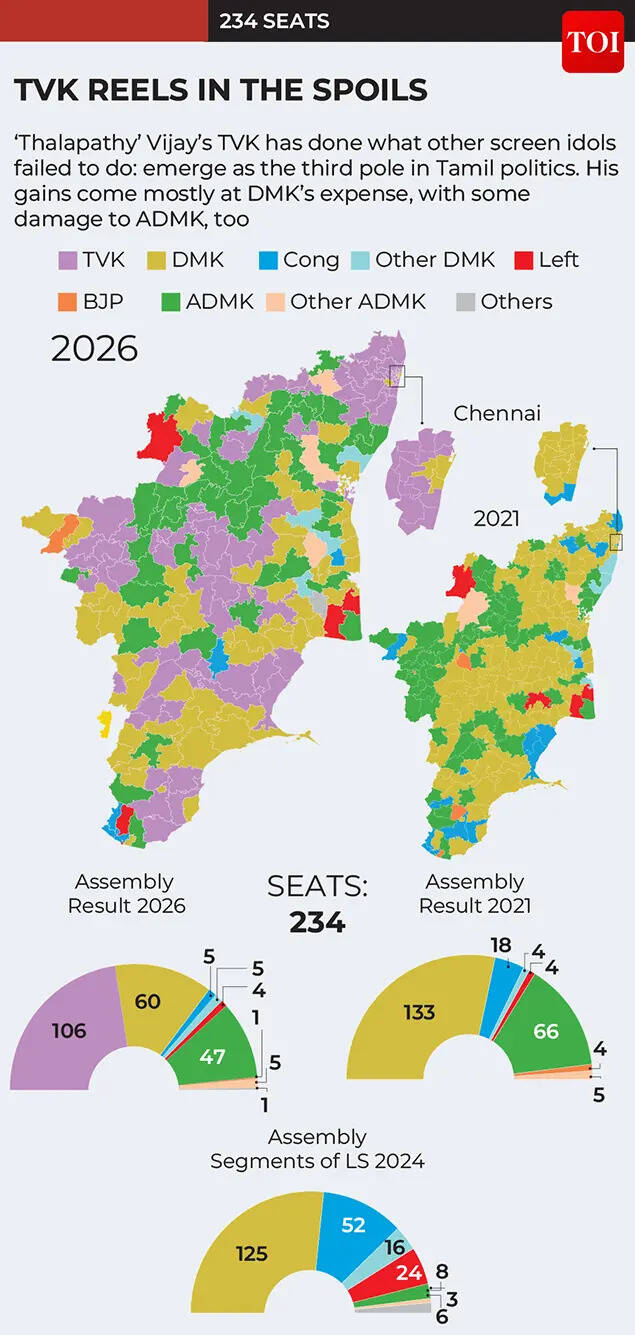
For actor-turned-politician C. Joseph Vijay, the days after the Tamil Nadu Assembly election results on May 4 were less about celebration and more about the arithmetic of survival.TVK emerged as the largest party with 108 seats in the 234-member assembly, leaving Vijay far away from the Chief Minister’s chair, but still 10 seats short of the majority mark of 118.What followed was a high-voltage political showdown involving the DMK, AIADMK, Left parties, Congress, VCK and even a late-night visit to the Raj Bhavan.

Tamil Nadu Assembly Election 2026 GFX-01

TVK is immersed in loot

At the center of the uncertainty stood Viduthalai Chiruthigal Katchi (VCK) chief Thol Thirumavalavan.While the Congress immediately supported the TVK with five MLAs, the VCK adopted a cautious wait-and-see approach, repeatedly delaying a formal announcement despite intense speculation that it would ultimately support Vijay. That hesitation kept TVK in suspense for nearly five days and forced Vijay’s camp to keep communication channels open with multiple political players simultaneously.

parallel power game

The uncertainty deepened as parallel power games began across Chennai.Soon after the results were declared, senior AIADMK leaders SP Velumani and C Ve Shanmugam reportedly explored the possibility of engineering support for Vijay by attempting to bring in enough AIADMK MLAs to cross the two-thirds threshold under anti-defection provisions.The proposal reportedly included a demand for seven ministerial posts and one deputy chief ministerial post in a potential TVK-led government.At the same time, another political axis was taking shape.

series of twists

AIADMK general secretary Edappadi K Palaniswami (EPS) reportedly held talks with the DMK leadership to explore the possibility of stopping Vijay from assuming office.The proposal reportedly involved a DMK-backed AIADMK government, an idea that triggered intense backchannel discussions inside the Dravidian ecosystem.As speculations intensified, Palaniswami took immediate steps to prevent any rebellion within his party. AIADMK MLAs were shifted to resorts in Puducherry and cut off from communication in scenes reminiscent of Tamil Nadu’s earlier resort-politics era. The party publicly refused to support TVK “under any circumstances”.Meanwhile, Vijay’s camp remained engaged in continuous talks.Between May 4 and May 6, TVK leaders Busi Anand, Aadhav Arjun and strategist John Arokiasamy reportedly held several rounds of discussions with the Velumani-Shanmugam group. Yet negotiations never came to fruition, especially since Congress had already submitted a letter of support to TVK.However, the real suspense revolved around the DMK alliance partners.

Left supports Vijay

While CPI and CPM gradually moved towards supporting Vijay, the VCK refused to make an immediate commitment. Even as the Left parties on Friday publicly supported TVK, which the CPM described as “backdoor entry to the BJP” through Governor’s rule, Thirumavalavan continued to withhold formal support. That hesitation made Vijay very short.

a big difference

As of Friday night, TVK had the support of 117 MLAs, just one short of the majority mark. Rumors spread that the Indian Union Muslim League would bridge the gap and pave the way for the swearing-in ceremony on Saturday. But IUML initially refused to support TVK, adding new uncertainty to an already volatile situation with late-night drama.Later, AMMK chief TTV Dhinakaran met Governor RV Arlekar and sought to invite Palaniswami to form the government. He also alleged that his only MLA was not contacted and accused TVK of horse-trading and later claimed that panic had been spread by forged support letters.Throughout all this, the VCK maintained strategic ambiguity.Even after CPI and CPM came out in favor of Vijay, Thirumavalavan met outgoing Chief Minister MK Stalin at his residence on Friday night, and reportedly discussed an “amicable separation” from the DMK-led alliance. Yet no formal commitment immediately emerged from the VCK camp. However, the deadlock was finally broken on Saturday.Thirumavalavan declared “unconditional support” to TVK, taking Vijay’s tally to a critical 118 points. Soon after, the Tamil Nadu unit of IUML also extended support to the party, effectively ending days of uncertainty over whether Vijay would actually manage to muster enough numbers to stake a claim to form the government.For Vijay, the episode was a formative lesson in coalition-era politics. The actor, who took Tamil Nadu politics by storm with a massive electoral debut, learned that emerging as the largest party was only half the battle.

Source link

After defeat in West Bengal elections, Mamata Banerjee urges opposition unity, calls for ‘joint platform’ against BJP. india news

Mamata Banerjee urges opposition unity after West Bengal election defeat, calls for 'joint platform' against BJP

New Delhi: East Chief Minister of West Bengal And All India Trinamool Congress Supremo Mamata Banerjee on Saturday appealed to opposition parties and student unions in the state to unite against BJP The saffron party formed its first government in West Bengal after its decisive victory in the recently concluded assembly elections.She was addressing a small gathering outside her Kalighat residence on the birth anniversary of Rabindranath TagoreThe former chief minister called for the formation of a “joint platform” against the BJP and urged student unions and NGOs opposing the party to come together, news agency PTI reported.

Watch

How BJP won Bengal: 10 steps that ended Mamata’s era

“I call on all opposition parties, including the Left and ultra-Left, to come together to form a joint platform against the BJP,” Banerjee said. He also invited national parties to join this initiative.The All India Trinamool Congress chief said he was willing to hold talks with any political party interested in discussing the matter. He said, “This is not the time to think that the enemy of the enemy is my friend, our first enemy is the BJP.”Banerjee also alleged that TMC workers and supporters were facing attacks in various parts of the state after the election results were declared.He claimed, “Hooliganism is going on everywhere, bad elements have entered their (BJP) camps.” He said that after coming to power in 2011, his government did not allow atrocities against anyone.In the 294-member West Bengal Assembly, BJP won 207 seats, while TMC won 80 seats.Earlier in the day, Suvendu Adhikari and five BJP MLAs took oath at the Brigade Parade Ground in Kolkata in the presence of Prime Minister Narendra Modi, Union Home Minister Amit Shah, senior BJP leaders and chief ministers of NDA-ruled states.

Source link

ED arrests Punjab minister Sanjeev Arora in investigation of Rs 100 crore money laundering case. india news

ED arrests Punjab minister Sanjeev Arora in probe into Rs 100 crore money laundering case
AAP leader Sanjeev Arora (file photo)

New Delhi: The Enforcement Directorate The (ED) on Saturday arrested Punjab Minister Sanjeev Arora in connection with the ongoing money laundering probe of Rs 100 crore linked to alleged fraudulent Goods and Services Tax (GST) transactions, officials said.Read this also ED raids Punjab Minister Sanjeev Arora’s house in money laundering caseOfficials said Arora has been arrested under the Prevention of Money Laundering Act (PMLA).The Punjab Industries Minister was taken into custody hours after the ED conducted raids at five locations in Delhi, Gurugram and Chandigarh, including his official residence in Chandigarh as well as premises linked to his associates and companies.Arora also faced ED action just days after a similar raid was conducted against then AAP Rajya Sabha MP Ashok Kumar Mittal in April. Shortly after, Mittal joined the BJP along with six other Rajya Sabha MPs from the party, including Raghav Chadha.Read this also ‘I am happy where I am’: Minister Sanjiv Arora refuses to leave AAP after ED raidsAccording to the ED, Arora and his associated entities prepared fake purchase bills for mobile phones through non-existent firms operating out of Delhi. Investigators suspect that these transactions were used to fraudulently claim input tax credit (ITC), GST refunds and export-related benefits.The central agency further alleged that the proceeds from the transactions were routed through exports and later “round-tripped” from Dubai to India in an attempt to launder the illicit funds.The 62-year-old leader is an MLA from Ludhiana West and a former Rajya Sabha member. His arrest comes less than a year before Punjab holds assembly elections in February 2027.AAP leaders have linked the action to the upcoming elections and accused the BJP-led Center of waging a campaign of political vendetta through central investigative agencies.“By conducting the ED raid, their aim is not to find any black money or illegal documents. Their aim is to send a message to the person being raided that if they join the BJP, everything will be forgiven,” Punjab Chief Minister Bhagwat Mann told reporters in Sangrur.Read this also ‘This is Punjab, not afraid of threats’: Bhagwant Mann after ED raid on ministerAAP national convenor Arvind Kejriwal also attacked the BJP and claimed that the party would face political backlash in Punjab.“Modi ji, go ahead and do four more ED raids – BJP will lose bail on all its seats. The leaders you arrest may come out in four days, but BJP will not be able to set foot in Punjab for the next twenty years,” Kejriwal posted on Twitter.

Source link

Sleepless planet: Why nights are warming faster than days india news

Sleepless Planet: Why are nights getting warmer faster than days?

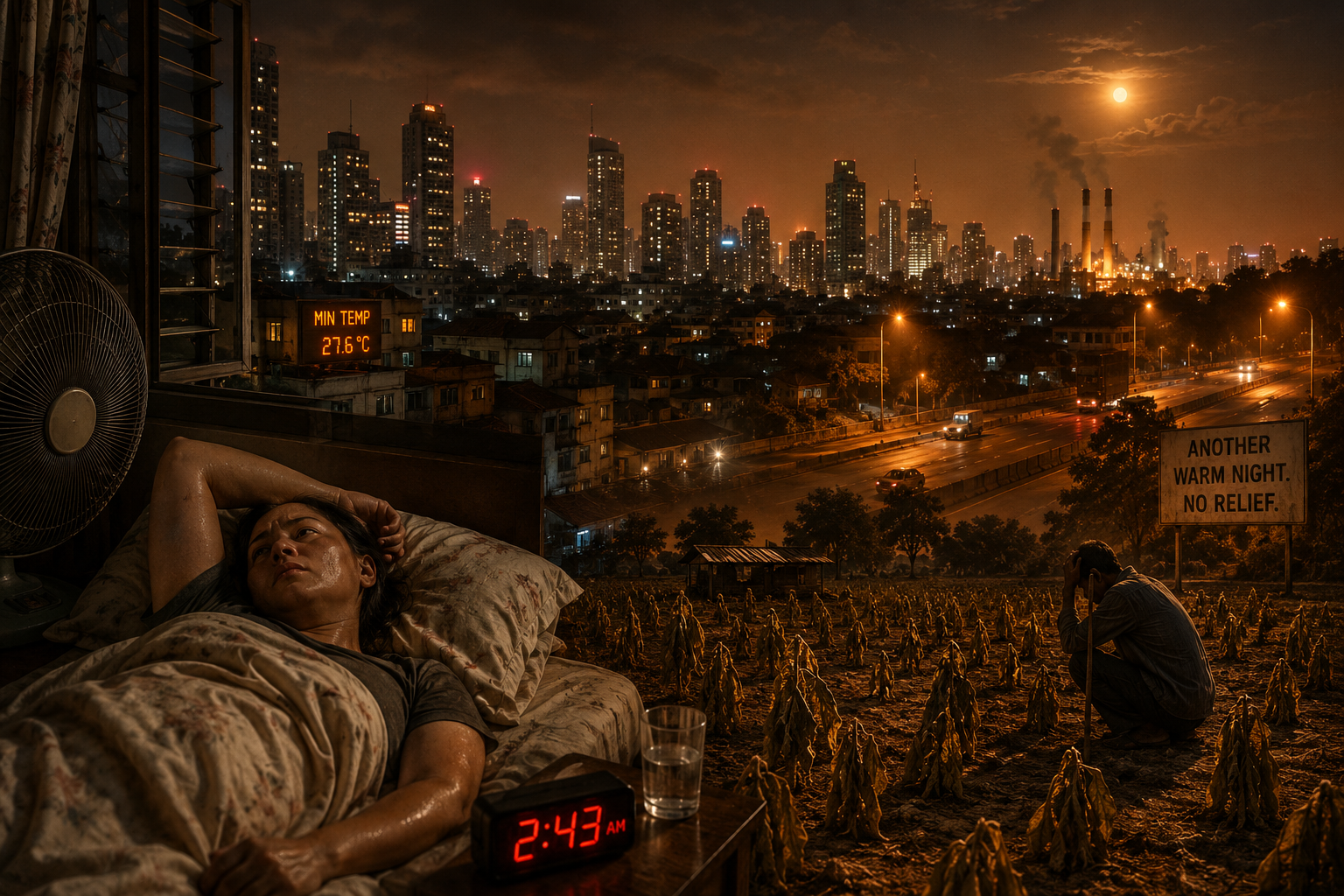
There was a time when nightfall meant relief. After the glare of a long summer day, with the promise of a cool breeze through an open window in the hours after sunset, the temperature had dropped enough that a light blanket had been pulled up, sleep coming easily. That time, for much of the world, is quietly disappearing.Across all continents and climates, nights are getting warmer, and they are warming faster than our days. While record daytime temperatures dominate the headlines and heatwave warnings dominate our phones, a subtle, arguably more consequential change is taking place in the dark. The minimum temperature, which is the lowest point a thermometer reaches in a 24-hour cycle, almost always occurs in the dark of night, exceeding the rise in daytime temperatures in many parts of the world. Scientists are observing this disparity with increasing concern.The results are not abstract. Farmers depend on cool nights to help their crops recover from the stress of the daytime heat. Ecosystems run on temperature rhythms that have been calibrated over millennia.
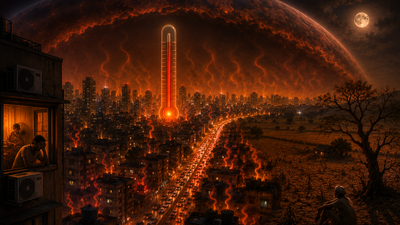
AI generated image

AI generated image

The human body uses the nighttime drop in temperature as a biological signal to repair cells, strengthen memory, regulate hormones, and prepare for the next day. When that decline doesn’t occur, everything from crop yields to heart health begins to suffer.There are many factors driving warming nights, including greenhouse gas accumulation, urban expansion, changing cloud patterns and a planet that has absorbed more heat than it can handle. Each factor feeds off the others in ways that are still being mapped by researchers.

The urban heat island effect: how cities trap the heat of the day

Go out into any major city at midnight in July, and you’ll feel it, a thick, lingering heat that makes no sense. The sun had set hours ago, yet the heat radiated through the streets as if the day had never ended. This is the urban heat island effect, and it is one of the most important and most overlooked factors in hot nights.The criminal is hiding in plain sight: in the city itself.Concrete, asphalt, brick, and steel are the primary building blocks of modern urban life, and they are remarkably efficient heat trappers. Unlike soil or vegetation, which reflect sunlight and release moisture through evaporation, these dense materials behave like thermal sponges. They aggressively absorb solar radiation throughout the day, store it deep within their mass, and then slowly release that stored heat throughout the night. A sun-warmed street or rooftop can remain hot even after midnight, effectively turning entire city blocks into low-grade radiators.Lack of trees in cities is further increasing the problem. Green cover provides shade that keeps surfaces from overheating in the first place, and through transpiration, trees release moisture that cools the surrounding air, nature’s own air conditioning. As cities have expanded, green spaces have replaced parking lots, towers and roads, destroying this natural buffer and sending urban temperatures out of control.Then there’s the heat that cities actively generate. Every car engine idling in traffic, every air conditioning unit pushing hot exhaust onto the street, every industrial process humming at night adds thermal energy directly to the urban environment. In dense metropolitan areas, this anthropogenic heat, heat generated by human activity, can spike local temperatures, especially after dark when natural cooling processes are already diminished by heat-saturated infrastructure.The result is that such cities never really get cold, and for the millions of people who live in them, they don’t get cold either.“Nighttime temperatures are rising fastest in already hot and densely populated areas such as South Asia, the Middle East, Africa and other rapidly urbanizing tropical regions. The World Meteorological Organization has confirmed that 2024 was the hottest year on record, about 1.55 degrees Celsius above pre-industrial levels, the previous decade was the hottest ever. “This global trend is clearly visible in India, where CEEW’s analysis shows that more than 70% of districts have experienced at least five additional very hot nights every year over the past decade compared to the 1982-2011 baseline,” said Dr Vishwas Chitale, Fellow at the Council on Energy, Environment and Water (CEEW).

Greenhouse gases and the blanket of night: why the atmosphere no longer lets heat out

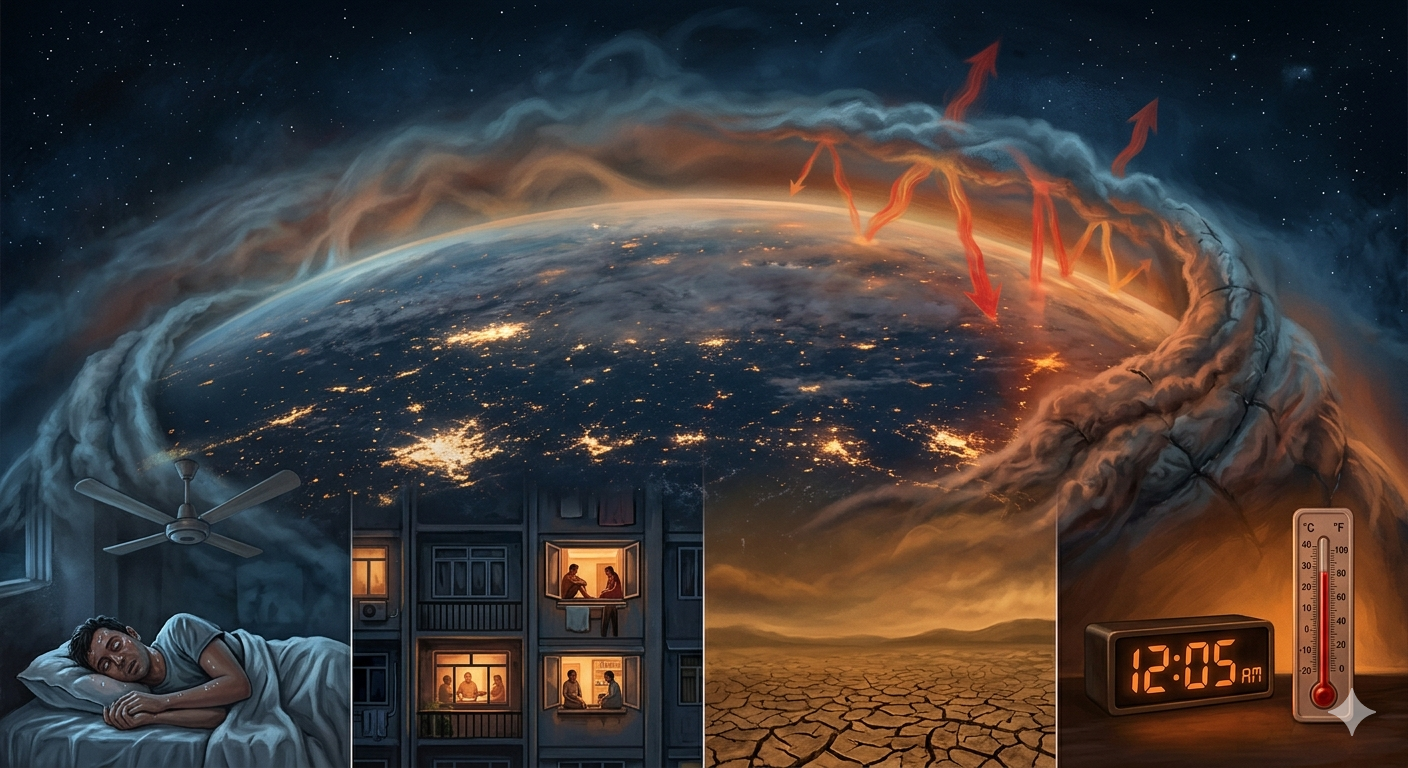
Think of the atmosphere as a blanket wrapped around the Earth. During the day, sunlight passes through it and warms the ground. At night, Earth tries to release that heat back into space, but the blanket is getting thicker, and less heat is getting out.
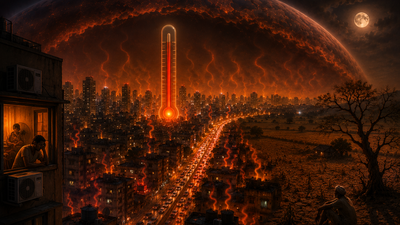
AI generated image

AI generated image

That thick blanket is made up of greenhouse gases, primarily carbon dioxide, methane and water vapor. These gases absorb heat rising from the Earth’s surface and push it back down, warming the lower atmosphere instead of letting it escape into space. The more of these gases there are, the more heat will be trapped and the warmer our nights will become.Since the Industrial Revolution, CO₂ levels in the atmosphere have increased from 280 parts per million to more than 400, driven primarily by the burning of fossil fuels, and methane and nitrous oxide levels have also increased rapidly. Each additional molecule of these gases adds another layer to that blanket. This matters most at night. During the day, the sun keeps the temperature up regardless. But after sunset, the Earth relies entirely on releasing heat into the atmosphere to cool down. When greenhouse gases prevent that release, nighttime temperatures remain elevated after dark, and the natural cool of night never fully recedes.The numbers testify to this. Over the past 50 years, nighttime temperatures globally have increased about 40 percent faster than daytime temperatures. On the world’s land surface, almost twice as much heat is observed at night as during the day. It’s a quiet but impactful change. The same mechanism that warms our days is warming our nights, doing its most damaging work in the dark, when the planet has no sun to blame and no place left for the heat to hide.“Summer is no longer just about hot afternoons – India is now seeing very hot days, very hot nights and a combined increase in humidity, even in traditionally dry regions, making heat more persistent, more humid and harder for both people and infrastructure to deal with,” Dr Chitale said.

Asymmetric warming: Why are scientists more concerned about night temperatures than day temperatures?

when climate scientists talk global warmingThe public imagines scorching afternoons and record-breaking summer days. But among researchers, it is that night that causes deep concern. Not because the heat of the day is harmless, it’s not, but because what happens after sunset tells a more honest story about the state of the planet.This concept is called asymmetric warming. Day and night are not warming at the same pace. Over most of the world’s land surface, nighttime minimum temperatures are rising faster than daytime maximum temperatures. It’s a distinction that may seem technical, but it is of great importance to climate scientists.Minimum temperatures are difficult to manipulate. They are less affected by short-term weather events, urban activity, or seasonal fluctuations. They reflect the baseline, the bottom of the climate system, and when that bottom keeps rising, it signals that something deep and structural is changing.A hot day can be explained by a passing heat wave, dry weather or summer sunshine. But one hot night, and then another, and then a decade of them – all that points to is that the atmosphere is behaving fundamentally differently. After dark the heat of the planet is decreasing. The insulating effect of accumulated greenhouse gases is not a day’s story; This is going on around the clock, and nights are where it is most clearly visible.This is why minimum temperature trends have become one of the key indicators that climate researchers watch most closely. They act like a vital sign, a pulse check on the planet’s ability to cool itself. And right now, that pulse is heating up night after night, giving the natural world less and less room to recover before the next day begins.

Source link