Breaking News
Tamil Nadu Elections: Why Annamalai was not given ticket, Tejasvi Surya told. india news

Tamil Nadu Elections: Why Annamalai was not given ticket, explains Tejasvi Surya

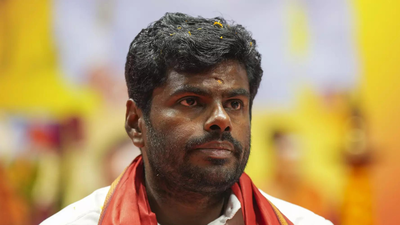
New Delhi: Hours after the Bharatiya Janata Party dropped K Annamalai from the list of candidates for the upcoming elections, the party MP from Karnataka stunning surya on Friday described the former Tamil Nadu BJP chief as the “most popular leader” and claimed that the party has made him responsible for campaigning for all the candidates.Campaigning for the BJP in poll-bound Kerala, Surya said, “Annamalai is the most popular leader of the BJP, he has huge supporters not only in Tamil Nadu, but across the country. He has been given the responsibility to campaign for all the candidates in Tamil Nadu.”“Even today, he is in Keralam where he has a huge following. He is also campaigning in Puducherry, where people are crazy about him. I am confident that Annamalai’s popularity across Tamil Nadu and her campaign will translate into victory for BJP candidates across the state.”Earlier in the day, the BJP released its list of 27 candidates for the upcoming Tamil Nadu Assembly elections after talks within the NDA alliance.While Tamilisai Sundararajan (Mylapore), Vanathi Srinivasan (Coimbatore North), and Union Minister L. While senior leaders like Murugan (Avinashi) have been fielded, Annamalai’s name is nowhere in the list.However, K Annamalai termed it his “responsibility” and said that he would continue to campaign for the upcoming assembly elections despite being absent from the party’s list of candidates in Tamil Nadu.Speaking to media persons after a public meeting in Kannur, Kerala, Annamalai described campaigning in Puducherry, Kerala and Tamil Nadu as his “role” for the BJP in the upcoming elections.He said, “In this election, my role is to campaign for the candidates all over Tamil Nadu. Right now, the party has given me the responsibility to campaign in Puducherry and Kerala till the 7th (April). From the 7th to the 23rd, I have to campaign for all the BJP and NDA candidates across Tamil Nadu. The party has given me this responsibility. I will fulfill that responsibility.”It is noteworthy that former IPS officer Annamalai is a key figure in the party’s aggressive expansion strategy in South India. He is often seen as a direct representative of Prime Minister Narendra Modi’s vision, often appearing with him at major rallies.A total of 234 constituencies in the state will go to polls in a single phase on April 23 in Tamil Nadu. Counting of votes is to take place on May 4.

Source link

‘Wanted a boy’: Telangana man drowns pregnant wife, two daughters in swimming pool india news

'Wanted a boy': Telangana man drowns pregnant wife, two daughters in swimming pool

New Delhi: “He wanted the baby to be a boy, but when he came to know that it was a girl, he tried to get an abortion, which his wife opposed. He then planned to kill his wife and took his two daughters with him to a swimming pool and threw them into the water.” We have registered the case and are investigating. Special teams are searching for the accused.”The horrific details, shared by a police officer, outline Azharuddin’s alleged actions in Hanamkonda, Telangana, where he is accused of murdering his pregnant wife and two young daughters. The accused is still absconding, police teams are searching for him.According to investigators, Azharuddin, who had a love marriage, was upset after learning that the child in his womb was a girl. Police said he had earlier attempted a forced abortion, but his wife objected. Authorities believe this led to the alleged crime, in which he took his family to a swimming pool and pushed them into the water.The case has been registered and investigation is ongoing.

Source link

Ravikant Kisan talks about privilege and inconvenient truths. india news

Ravikant Kisan talks about privilege and inconvenient truths

Why: : wCap made you Write meet the upper castes? A: : To some extent, this also comes from my life experiences because I did not grow up in an upper caste family. I come from an inter-caste marriage between a Scheduled Caste mother and an OBC father. And neither of those sides of the family had a tradition of intergenerational literacy and what you would call high culture. But he was an immigrant from Punjab. They were raising their children in Kolkata. So I was exposed to a world that was not native to me. And as I grew up, I realized that there was a world that was all around me, but I didn’t have access to it. And that world always seemed much bigger than my own world. It seemed full of very interesting people talking about books, culture, art, the ‘higher orders of things’. When I looked at my family and the people around me, the concerns were very mundane, very existential. And as a young person…, I really wanted to escape that world orbit. And over time I began to realize that much of that world revolved around politics and the display of caste. This was the world of the upper castes. It was a world where they decided what was legitimate, what was worth talking about, what was authentic and what was fake. And no matter how hard I tried, I couldn’t fit into that world… Eventually I moved into academia and got into cultural studies and studied a fair amount of cultural anthropology as a method. I understood that when it comes to caste, sociology and anthropology departments in India are full of these books and theses that center Dalit communities, tribal communities, even OBC communities. A lot of interesting work has been done on that. But the world of the upper castes...Not much anthropological work has been done there. And one reason for this is that it is very inaccessible. For example, it is easy to go to a city slum and do research, do field work there, and interview people. You can’t try to do this by going to a gated community in Gurgaon or Bangalore…. But more importantly, it was like this academic blind spot where you have all the great writers, thinkers, intellectuals in civil society, in media, in academia, and they are all writing about caste, but they are not writing about their own castes and communities. And it’s almost as if their gaze is always outward, never inward. And I think it’s the culmination of these different aspects that brought me to this place where I started writing and theorizing about the upper castes. And it started with articles for various digital media platforms, where I was trying to create a series called ‘Like a Savarna’… and one of the articles there, ‘Dating Like a Savarna’, I felt I had written a very non-controversial article. This is just a little bit about how race, dating, and intimacy overlap. And I got an overwhelming response. A tremendous campaign was run on social media. I was called different names. And it affected my professional life, my university where I was working. I also had to suffer some consequences for this. And part of that response also made me realize that this is actually a very engaged conversation. It made me a little more determined to write it. Why: : Yyou are Now I am taking this book around Your domain location. How do you navigate it? A: : This is very challenging. The book begins very close to a memoir because I was focusing myself and my eyes on the book. As you go deeper into it, it becomes more social. This is not just a book about caste. It is also a book about this period of time… from the late 90s, early 2000s to Covid, 2020, 2022, because this was the period where the broad consensus was that India was doing well as a story, that we were on the rise, that this was our rise to superstar superpowerdom. And it was almost everywhere that you couldn’t say anything negative or you couldn’t say that the emperor had no clothes. Because then they will yell at you and say that you are being disagreeable. I’ve tried to theorize about this through the idea of ​​the glass floor in the book. So if I am under the glass floor and what you are calling the story of shining India is happening above the glass floor in the upper caste world, then that world looks very different to us… But there is almost a cost involved. My career as an academic has suffered a setback. It’s almost as if you’re always carrying a target on your back. Any right-wing reactionary group can take the title of the book and create all kinds of discussions around it. So it certainly comes with a challenging, loaded responsibility… I also want to say that a lot of understanding and love has been received from the upper castes also. A lot of people have read the book and then come back to me, not out of anger or bitterness, but through some kind of idea that, OK, I’m going to do some soul-searching now and I’m looking at myself. Why: : Iit Great moment in history that you catch From modern India, but you too make visible a young and modern audience using their penises. A: : When I was in college in the early 2000s, we were told that the 21st century was the century of Asia, India and China… There were jobs, the tech sector was booming, real estate was booming. Hollywood was paying attention to us. By every conceivable popular narrative. It seemed as if we were moving. And we had to achieve superpower status by 2020, because that is what APJ Abdul Kalam told us. Now that date has been shifted back to 2047... When 2020 comes, forget about being a superpower, it is going to be one of the most challenging years for the republic. It opens with the Shaheen Bagh protests, it goes into Covid. That positivity has completely disintegrated. And on the other hand, it seems like we have emerged and we are starting to ask ourselves where did we go wrong? And I think the mistake we made was that over this 20-25 year period, the steering wheel of this story was put in the hands of a very specific group of elites who don’t even understand their own blind spots very much. So what I am trying to explain through this book is why the Indian story does not work, why while creating this system it has replicated these pocket enclaves of extreme privilege, where our cities are not livable, our policies are impractical, there is a political and existential crisis, there is a climate change crisis, all these things have intensified and all the fruits of this great success story that we thought we would get, we have not got. And I have tried to answer some of those questions, without saying ‘this is the way it is in India.’ The system is broken. Many times the analysis is hidden behind these sweeping statements – ‘everything is broken, everything is corrupt’. No, what does broken mean? who is in charge? Who are the people who are benefiting from these types of systems? What is his politics? What is their social and cultural inner life? And I think in this book I have tried to connect both of these things. This is not just a description of the upper castes, this is not just a book on caste. It’s about both of those things and also how they connect with policymaking and the larger trajectory of this moment that we had in India and it seems like we’ve kind of wasted it. So in many ways it’s also a book about the tragedy of a post-colonial state that had it all covered and promised itself it was going to transcend itself and reach higher levels and couldn’t do it. Why: : Teais here so a lot is being said which Needed be told in classes, In drawing room conversation, In fragments of public opinion. A: : In these places wherever knowledge is produced and wherever knowledge is distributed, there is almost an absence of any kind of ethnic diversity. As a result, what has happened is that the structure has become unaware of itself. Many well-intentioned upper caste intellectuals, thinkers, progressives often misdiagnose and misunderstand what they themselves are presenting. So then the criticism just becomes right versus left, progressive versus conservative. Whereas if you look at it from the caste structure, in many of these cases, conservatives and progressives are often people from the same family WhatsApp group… The way we think about caste is fundamentally through stories of oppression, through the idea of ​​suffering and exclusion. And don’t get me wrong, these need to be documented and talked about again and again endlessly. But the system through which it mediates, through which it operates, is the upper caste system. And there is a kind of compassion in that. There’s a kind of absurdity to it… one way to deal with the pitifulness and tragedy of caste and the absurdity of it is to resort to a little bit of humor because otherwise it becomes too heavy and too intense and you can’t deal with it. So it is also a symbol of a certain dysfunction in society. This is the code that has gone wrong on which the system operates. And you see all these efforts to write it and get it right and make it work right in xyz, but the code is somewhere else. The system is working at a different level… and my effort in writing this book is to hopefully make the upper castes look at themselves a little, meet themselves a little, so that they can understand themselves a little and so they can understand the systems that they have created a little better.

Source link

West Bengal elections: TMC woos voters with ‘Mache-Bhaate Bengali’, disappoints BJP. india news

West Bengal elections: TMC woos voters with 'Mache-Bhaate Bengali', disappoints BJP
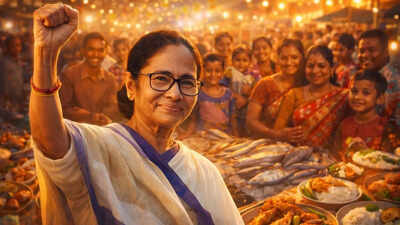
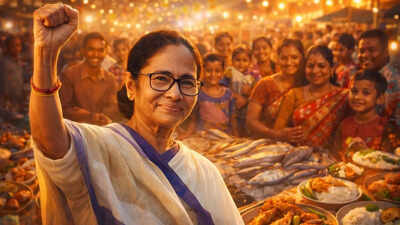
This image is used for representation purpose only (AI-generated)

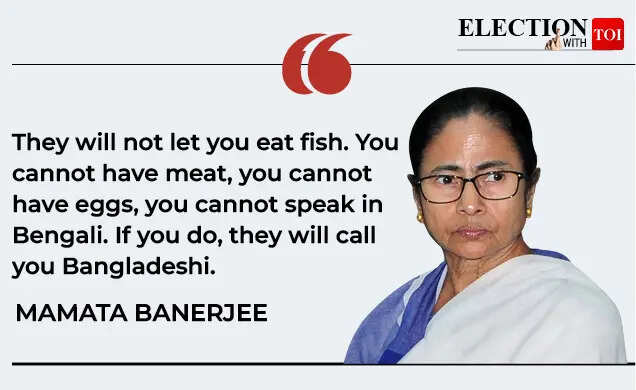
New Delhi: As West Bengal gears up for the 2026 assembly elections, ‘Mache Bhate Bengali’, a common phrase that used to dominate every Bengali’s household, has now moved into the political arena.With this, it has become a symbol of identity, culture and pride, shaping the narrative of the high-stakes electoral battle. Chief Minister Mamata Banerjee enhanced this sentiment by taking aim at a rally in Purulia. BJP. He said, “They won’t let you eat fish. You can’t eat meat, can’t eat eggs, you can’t talk in Bengali. If you do that they will call you Bangladeshi.”
.

.

Fish, long considered the lifeline of West Bengal, is now at the center of this story. It is a staple of almost every Bengali’s thali, but now it has gone beyond cuisine and become a symbol of cultural connection.The phrase ‘Mache Bhate Bangla’ which means Bengali is defined by fish and rice, has crossed over from the kitchen to the political arena, showing how everyday traditions are now shaping the state’s election campaign framework.

fish on promotional menu

In the election season of West Bengal, the fish has gone from the dinner plate to the center of the political web.Trinamool Congress (TMC) is using it to tap into Bengali pride, while the BJP is struggling not to get caught on the wrong side of the ‘Machhale Bhate Bengali’ sentiment.From Katla fish being prominent in road shows to Ilish, Pabda and Chingri getting a prominent place in speeches, fish has emerged as a powerful metaphor. It is now a symbol of identity, culture and the question of who actually represents the “real” Bengali.The TMC has weaponized this sentiment, arguing that the BJP, associated with the Hindi-speaking, vegetarian-first politics of North India, is culturally alien to Bengal.
.

.

Mamata Banerjee made this point at a rally: “If BJP comes to power, they will ban meat and fish in Bengal. I saw the Deputy CM of Bihar saying that fish and meat cannot be sold in open markets. Only those who have a license can sell meat indoors. So, will everyone sell meat and fish in shopping malls? Only a few have the economic strength to do so. Most fish sellers sell fresh fish on the streets here. They sell it and earn their living from this. I condemn this politics.”By building the campaign around Bengali identity, TMC has shifted its focus towards cultural nationalism. Thus, fish is no longer just a dish served in every household; It is a symbol of Bengali pride.

Pak nationalism and social media

TMC’s social media has amplified this narrative by posting pictures of Ilish Bhapa, Pabda Jhal, Chingri Malai Curry, Kosha Mangsho and other dishes.Ahead of Union Home Minister Amit Shah’s 15-day visit to Bengal, the party tweeted: “Bengal welcomes tourists. Don’t miss our dishes. We highly recommend: Muri Ghonto, Pabda Macher Jhal, Ilish Bhapa, Chingri Malai Curry, Bhetki Paturi, Kosha Mangsho. Have a pleasant stay!”Political analyst Maidul Islam said, “Within that Bengali project, eating fish is an important element. When fish markets elsewhere are attacked, or Hindi-speaking leaders turn up their noses at fish, it becomes a campaign issue. TMC is saying that it is an organic party of Bengalis and hence it is associated with Bengali food habits.

Fish as culture, ritual and identity

In West Bengal, fish is more than food. It marks life events: from a child’s first eating of rice, to gifts at weddings, to meals after bereavement.According to PTI, World Bank data shows that West Bengal consumes 8.36 lakh tonnes of fish annually, almost double the national average and fish and meat together account for about one-fifth of household food expenditure.For many, attempts to impose vegetarian or homophobic food habits from outside the state raise fears of cultural invasion.A Kolkata-based Indologist said, “For Bengalis, fish is not just food. It is memory, ritual and identity. To challenge it is to make West Bengal look foreign.”Kaushik Maiti of Bengali nationalist organization Bangla Pokkho said: “Fish is part of the Bengali identity. But the BJP wants to impose the vegetarian food culture of North India, we oppose it.”

BJP’s fish dilemma

BJP says that TMC is creating fear. Leaders say there is no proposal to ban fish or meat in West Bengal. Nevertheless, the perception is quite strong that BJP candidates are now campaigning with fish in hand.Bidhannagar BJP candidate Sharadwat Mukherjee walked around the neighborhood carrying five kilos of Katla fish with him and assured voters that the BJP would never interfere in Bengali food habits.In Pandaveshwar, BJP candidate Jitendra Nath Tiwari filed nomination papers with a “fish procession”, with supporters walking with baskets while they held bigger baskets in their hands. He said, “If promoting the culture of West Bengal is a drama, then I am proud of this drama.”Political analyst Suman Bhattacharya said, “The perception that the BJP is against fish and non-vegetarian food has become so strong that party leaders now have to eat fish in public and campaign with it. This shows how their vegetarian politics did not work elsewhere in West Bengal.”State BJP president Samik Bhattacharya stressed: “There is no question of banning fishing. Bengalis will eat fish and Biharis will eat mutton. If anyone tries to stop me, I will protest.”TMC’s story gets strengthened by incidents in BJP ruled states. Earlier, Bihar Deputy CM’s comment Vijay Kumar Sinha Bans on meat near schools and places of worship and prior controversies over meat shops and fish markets add to fears that a North Indian vegetarian-first cultural model may be imposed in Bengal.In January, a vendor was allegedly attacked for selling chicken patties near a religious congregation in Kolkata. The controversy deepened due to this incident.

voting

What is the thing that influences voters the most in elections?

Elections as a cultural battle

As the elections are heating up, the West Bengal Assembly elections are not just about seats, governance or development, they are also about identity, culture and cuisine.The simple fish, a culinary staple, has emerged as a political symbol, showing that in Bengal, thali and politics are inextricably linked.As TMC spokesperson Tanmay Ghosh said: “Meat and fish eaters can be Nobel laureates, scholars, entrepreneurs and rebels who change history with the pen, not violence… Linking eating habits to ‘violent tendencies’ is a moral imposition. India’s strength lies in pluralism, diversity and constitutional freedoms – not in controlling plates.”Elections for 294 seats in West Bengal will be held in two phases: April 23 (152 constituencies) and April 29 (142), and the results will be declared on May 4.

Source link

Evening News Wrap: AAP defends Raghav Chadha’s ouster from Rajya Sabha role; India-bound Iran oil tanker diverted to China and more india news

Evening News Wrap: AAP defends Raghav Chadha's ouster from Rajya Sabha role; India-bound Iran oil tanker diverted to China and more

Quick information for today

  • Bhagwant Maan defended Raghav ChaddhaCalled his removal a routine decision of the party and accused him of going against AAP’s line.
  • An Iranian crude tanker bound for India turned back to China amid payment and clearance challenges.
  • A French ship transited Hormuz, signaling a possible change in Iran-France dynamics after the nationality was flagged.
  • BJP announced candidates for TN Assembly elections, but interestingly, K Annamalai was not included in it.
  • Yuvraj Singh Distanced himself from his father Yograj Singh’s comments and apologized to Kapil Dev and MS Dhoni.

Here are the top five stories of the evening

Bhagwant Mann supported the removal of Raghav Chadha from Rajya Sabha post.

Punjab Chief Minister Bhagwant Mann defended the removal of Raghav Chadha from the post of AAP’s deputy leader in Rajya Sabha, calling it part of the party’s regular internal functioning. He also alleged that Chadha had become “compromising” and had acted against the party whip. His comments came a day after Chadha said he had been “silenced, not defeated” after his removal.Read the full story

Why did the Iranian crude tanker bound to India have to go towards China again?

A US-sanctioned tanker carrying Iranian crude oil, originally destined for India, was diverted to China due to tight payment terms, reflecting continuing disruptions to Iranian oil trade despite a temporary US waiver.Read the full story

France no longer an enemy nation? After Macron condemned Trump, Iran allowed the ship to pass through Hormuz

A French-owned container ship, the Kribi, successfully transited the Strait of Hormuz, with its destination changed to indicate French ownership – potentially reflecting a change in Iran’s stance towards France after President Emmanuel Macron criticized US policy and ruled out military intervention in favor of negotiations.Read the full story

Tamil Nadu elections: BJP releases list of candidates, removes Annamalai amid seat dispute

The BJP released its list of candidates for the 2026 Tamil Nadu Assembly elections, excluding former state chief K Annamalai, while fielding prominent leaders like Tamilisai Soundararajan and Vanathi Srinivasan in important constituencies, indicating a well-thought-out election strategy.Read the full story

Yuvraj Singh apologizes to Kapil Dev, MS Dhoni on father Yograj’s remarks

Former India all-rounder Yuvraj Singh publicly apologized to Kapil Dev and MS Dhoni, distancing himself from the controversial comments made by his father Yograj Singh. Speaking on a podcast, Yuvraj made it clear that he did not agree with the comments. He said, “I would like to apologize to Kapil Dev and MS Dhoni for these comments.” Yuvraj also said that he had spoken to his father on the issue and said that he feels uncomfortable listening to Yograj’s interviews.Read the full story

Source link

As part of the challenge set by the Delhi government, 33 potential air pollution solutions are progressing into the testing phase. india news

33 potential air pollution solutions progressing to testing stage as part of challenge set by Delhi government

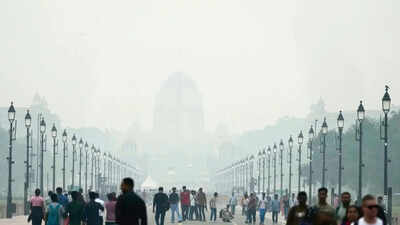
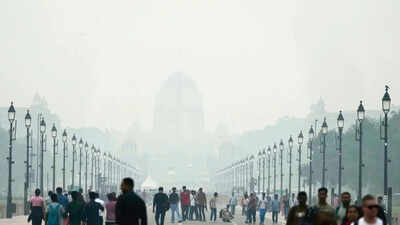
New Delhi: Around 33 prototypes have been shortlisted under the Delhi government’s ‘Innovation Challenge’ to find solutions for wind. pollution According to officials familiar with the matter, the issue is set to enter the second phase of the trial.These include models for solar-powered pole-mounted dust traps, filterless smoke and dust carbon-capturing devices, electrostatic mist sprayers, smart dust-suppression and monitoring systems, and retrofitting vehicle-mounted air purifiers to improve the emission quality of cars.

Watch

Delhi pollution: China shares playbook on how to fix air quality amid politics over accountability

These innovations – shortlisted from a huge pool of applications – were showcased as a part of an exhibition at the Indian Institute of Technology (IIT) Delhi in January this year. The challenge, launched by the Delhi government, aims to find practical solutions to tackle air pollution in the city.“The innovation challenge is now ready to enter the second phase, where trials will begin, and the government will provide all the necessary infrastructure required for the trials,” an official said. The official said the trials are expected to begin by the first week of May and are likely to be completed within the next three months.An eight-member expert committee headed by IIT Professor Sagnik Dey will review the proposals to identify the most practical and cost-effective solutions to air pollution. Subsequently, the finalized innovations will be adopted by the Delhi Government for operationalization.Another official told PTI that a meeting will be held on Monday to finalize the outline of the testing process and what kind of arrangements will be required for it.“The plan as of now is to move ahead with testing all 33 innovations. As we move forward, we will start shortlisting the most efficient technologies,” the official said.The winning projects will also be eligible for incentives from the Delhi Pollution Control Committee, including up to Rs 5 lakh after successful expert committee assessment and up to Rs 50 lakh for solutions verified by National Physical Laboratory-equivalent laboratories and recommended for adoption by the government as per the guidelines.

Source link

Why did the Iranian crude tanker going to India have to go towards China again? india news

Why did the Iranian crude tanker bound to India have to go towards China again?

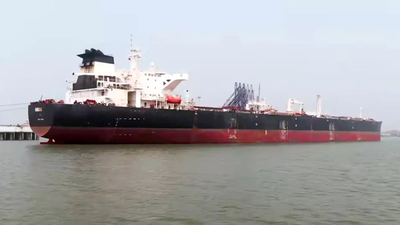
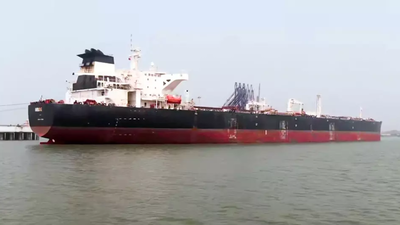
New Delhi: A US-sanctioned tanker is carrying iranian crude oil Payment issues appear to be the main reason behind the change in declared destination.The Aframax tanker Ping Shun, built in 2002 and sanctioned by the US in 2025, had earlier indicated Vadinar in Gujarat as its destination. If the cargo had reached India, it would have been the country’s first purchase of Iranian crude in nearly seven years.

Watch

Russian oil tanker bound for China takes U-turn towards India as Delhi increases imports amid Iran war

According to ship-tracking firm Kpler, the ship is now signaling Dongying in China instead of Vadinar.There is no confirmation that the destination shown on the ship’s Automatic Identification System (AIS) transponder is final, and it may still change during transit.“An Iranian crude ship ‘Ping Shun’, which was en route to Vadinar, India in the last three days, has dropped India as its declared destination near arrival and is now indicating China,” said Sumit Ritolia, lead research analyst, refining and modeling at commodity market analytical firm Kpler.According to Retolia, the redirection appears to be linked to a tightening of payment terms.“The change in the destination of Ping Shun appears to be related to payments, with sellers tightening terms, moving from the earlier 30-60 day credit window to upfront or near-term settlements.”It was not clear who were the actual sellers and buyers of crude oil.The development comes at a time when Indian refiners are exploring opportunities to buy some cargoes of Iranian oil at sea after the US waived sanctions on such purchases for 30 days last month.That waiver window ends April 19.While the waivers allow countries to already buy Iranian oil by sea, the main challenge remains payment.Iran remains out of SWIFT (Society for Worldwide Interbank Financial Telecommunication), the global banking messaging system used by financial institutions to securely send and receive transaction information.Earlier purchases from Iran were made in euros through Turkish banks, but now that option no longer exists.Iran was cut off from the SWIFT system in March 2012 following EU sanctions over its nuclear programme. Further disruption came after the US reimposed sanctions in 2018, sharply restricting Tehran’s ability to receive oil payments, conduct international trade and access foreign exchange reserves.The Ping Shun is estimated to be carrying about 600,000 barrels of crude oil, which was loaded off Kharg Island around March 4. According to Kepler, its announced ETA for Vadinar was April 4.Vadinar is home to Rosneft-backed Nayara Energy’s 20 million tonne per annum refinery.If delivered, the cargo would have been the first Iranian crude shipment to India since 2019.India was once a major buyer of Iranian oil, importing significant quantities of Iran’s light and Iran’s heavy grades due to strong refinery offtake and favorable commercial terms.But after sanctions were tightened in 2018, imports stopped from May 2019, replaced by crude from the Middle East, the US and other sources.At its peak, Iranian crude oil accounted for 11.5 percent of India’s total oil imports.India imported about 518,000 barrels per day of Iranian oil in 2018. It fell to 268,000 barrels a day between January and May 2019, when the US granted waivers to some buyers. There has been no import since then.India’s oil ministry has so far maintained that any decision on resuming purchases of Iranian crude will depend on techno-commercial feasibility.According to estimates, about 95 million barrels of Iranian oil is currently on ships at sea. Of this, about 51 million barrels can be sold to India, while the rest is considered more suitable for buyers in China and Southeast Asia.Ritolia said the latest redirection shows how financial terms are becoming central to the movement of Iranian crude.“While such mid-journey destination changes are not unprecedented with Iranian crude, they highlight the increased sensitivity of trade flows to financial conditions and counterparty risk,” he said.“If payment issues are resolved, cargo could still make its way to an Indian refinery. However, the episode underlines that commercial terms are becoming as important as logistics in determining the flow of Iranian crude to countries other than China.”

Source link

Watch: Rahul Gandhi enjoys ‘Appam and Omelette’ with UDF leaders ahead of Kerala Assembly elections. india news

Watch: Rahul Gandhi enjoys 'Appam and omelette' with UDF leaders ahead of Kerala Assembly elections

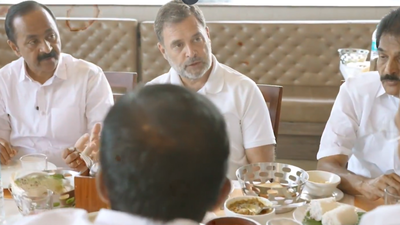
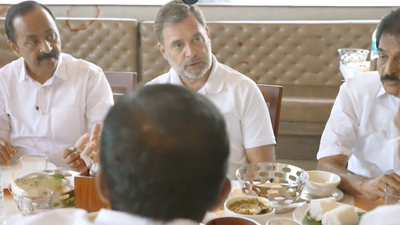
New Delhi: Congress MP and opposition leader Rahul Gandhi On Friday, he shared a video on social media in which he is seen having breakfast with leaders of the United Democratic Front (UDF) in Kerala ahead of the 2026 assembly elections.In the video, Gandhi is seen enjoying local delicacies like appam, puttu and omelette while interacting with UDF leaders on the ground reality of the upcoming elections.In a post on UDF is the new hope for the people of Kerala – our team is strong, united and ready to lead.The ruling Left Democratic Front (LDF) is expected to face a tough challenge from the opposition United Democratic Front (UDF). Indian National Congress. Meanwhile, the Bharatiya Janata Party (BJP)-led National Democratic Alliance (NDA) is also trying to expand its presence in the state, aiming to turn the contest into a triangular fight.The 2026 Kerala Assembly elections will be held in a single phase on 9 April, as announced by the Election Commission of India on 15 March. The counting of votes is scheduled to take place on May 4, while the tenure of the current assembly is scheduled to end on May 23.

Source link

‘He should resign first’: Mamata targets PM Modi over voter list controversy in Bengal elections. india news

'He should resign first': Mamata targets PM Modi over voter list controversy in Bengal elections

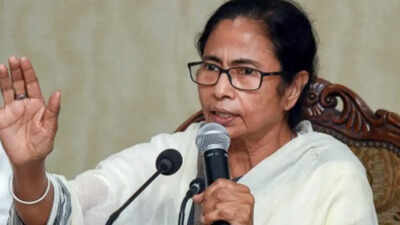
New Delhi: Chief Minister of West Bengal Mamata Banerjee made a scathing attack on the Prime Minister on Friday Narendra ModiHe alleged that if the names of infiltrators are in the voter list then they should first resign.Speaking at a rally in South Dinajpur, he said, “If there are names of infiltrators in the voter list, Modi had won with their votes earlier also, so he should resign first.”

Watch

After Supreme Court verdict on Malda hostage row, Mamata Banerjee claimed BJP wants President’s rule in Bengal

He questioned the allegations against the voter list and asked why the same voter lists used in the 2024 general elections were now being challenged ahead of the assembly elections.The Chief Minister also addressed the recent incident in Malda district, where judicial officers were surrounded for several hours. He blamed All India Majlis-e-Ittehadul Muslimeen (AIMIM) and Indian Secular Front (ISF) for the incident, while accusing Congress and BJP of instigation.Giving details, Banerjee said that the main accused in the case has been arrested.Addressing a rally in Harirampur, she alleged, “BJP loaned him (the accused) from AIMIM and brought him here.”He further said, “ISF is with them; Congress and BJP have also instigated.”Banerjee said the Criminal Investigation Department (CID) arrested the main accused, lawyer Mofakkarul Islam, from the Bagdogra airport when he was trying to flee.“These are the people who conspired to commit violence in Mothabari, Malda,” he said.Banerjee also raised concerns over the conduct of the elections and alleged that officials were transferred to facilitate the movement of outsiders into the state.He also claimed irregularities involving security forces.“Money is being brought in using CRPF vehicles. I have records of these activities and will expose them at the appropriate time,” she alleged. Trinamool Congress The chief also hit out at Home Minister Amit Shah, who has announced plans to stay in West Bengal during the election period.Banerjee claimed that his presence would not give any electoral advantage to BJP. He said Shah’s prolonged stay in the state during the elections would reduce the party’s vote share.

Source link

Soft PR, ‘Samosa’ swipe: How Arvind Kejriwal’s ‘cops’ justified Raghav Chadha’s ‘demotion’ in Rajya Sabha. india news

Soft PR, 'Samosa' swipe: How Arvind Kejriwal's 'cops' justified Raghav Chadha's 'demotion' in Rajya Sabha
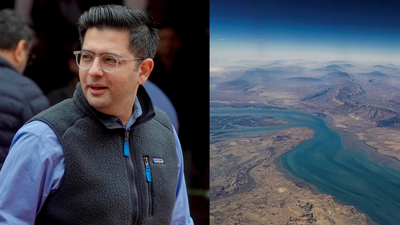
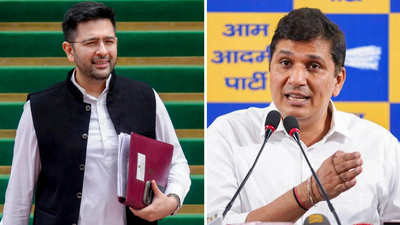
Raghav Chadha and Saurabh Bhardwaj (right) (file ph

New Delhi: Aam Aadmi Party’s internal discord came into public view on Friday when MP Raghav Chadha reacted to his removal as the party’s deputy leader in the Rajya Sabha, drawing sharp retorts from senior colleagues.Leaders including Delhi AAP chief Saurabh Bhardwaj and IT cell chief Anurag Dhanda, who call themselves “Arvind Kejriwal’s soldiers”, defended the leadership’s decision and justified Chadha’s ‘demotion’ in the Upper House.Read this also- Split openly in AAP: Raghav Chadha attacks leadership; The party hit backBhardwaj launched a scathing attack, accusing Chadha of indulging in “soft PR” instead of taking on the PM Narendra Modi-led government. Taking a dig at Chadha over a parliamentary intervention, he said, “A small party gets very limited time there, and instead of talking about samosas, it is more important to raise the real issues of the country.”He said, “Whenever there is an issue and the opposition walks out, you do not join the walkout. For the last several years, I have not seen you raising any issue in Parliament, where you have questioned the Prime Minister or the BJP government. How can the politics of fear work like this?”Questioning Chadha’s role as a Rajya Sabha member from Punjab, Bhardwaj said, “You have been elected from Punjab, and you hesitate to even raise Punjab issues. Recently in Gujarat, around 160 party workers were booked under false cases and many were arrested, yet you remained silent on that too.”Increasing the criticism further, he mentioned an old incident related to the party leadership. “When many of our leaders were in jail and Arvind Kejriwal ji as Chief Minister was arrested in a false case, at that time you were not even in the country, you had gone somewhere and stayed away.”Party’s IT cell chief Anurag Dhanda also launched a scathing attack, accusing Raghav Chadha of failing to discharge his responsibilities in the interest of the party. Taking aim at the nature of the issues raised by Chadha in Parliament, he said, “In Parliament, the party gets just a little time to speak – in such a situation, we can either fight to save the country or bargain to make samosas cheaper in airport canteens.”Dhanda increased his criticism by questioning Chaddha’s political stance and resolve. “If someone is afraid of Modi, will he fight for the country?” He alleged that Chadha has avoided taking a strong stand on major national issues. He pointed to several examples in support of his allegation, including alleged silence on the arrest of party workers in Gujarat, inaction on voting rights concerns in West Bengal and his refusal to support a resolution against the Chief Election Commissioner.He accused Chadha of not staying in the House during the party’s walkout and said, “For the last few years you have been scared, Raghav. You hesitate to speak against Modi. You hesitate to speak on the real issues of the country,” before ending with a sharp remark: “He who is scared…”

Source link