

BJP claims new Kerala CM will be ‘remote controlled’ by IUML
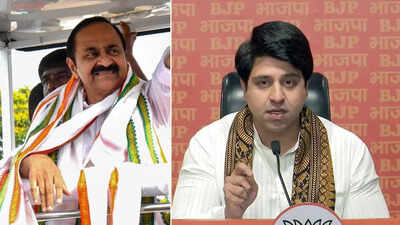
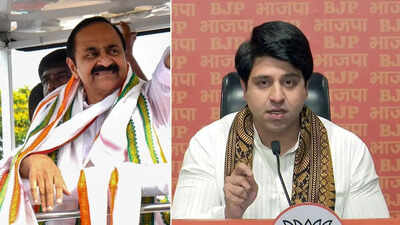
VD Satheesan and Shehzad Poonawala (Image/PTI)
New Delhi: A few hours later Congress VD Satheesan declared the next Chief Minister of Kerala BJP Launching a scathing attack on the party, it alleged that the decision was influenced by the Indian Union Muslim League and accused the Congress of surrendering to its alliance partner.Soon after the announcement, BJP national spokesperson Shehzad Poonawalla shared a post targeting the Congress leadership and the new Kerala government.Poonawala wrote on Twitter, “The people’s mandate and the MLA’s election have gone in vain.”“The new Chief Minister of Kerala will be remotely controlled by the IUML. The high command is the Jamaat. The Jamaat and IUML put pressure on the Congress and he was selected as the Chief Minister,” he alleged.The Kerala unit of the BJP also stepped up its criticism, targeting both the Congress and the IUML leadership.In another post shared by BJP Kerala quoting senior leader MT Ramesh, the party claimed: “It has been proved once again that the lackeys of the Congress high command are the Muslim League and Ponnani. In deciding the Chief Minister, the Congress high command surrendered to the League leadership.”The Kerala unit of the BJP further alleged that the Congress leadership had no option but to bow before the IUML due to its political dependence in the state.BJP Kerala handle posted, “11 days after Keralam election results were declared on May 4, Congress has finally declared VD Satheesan as the next CM of Keralam.”“Rahul Gandhi and Priyanka Gandhi know that the Congress cannot survive in Keralam or protect Wayanad without the Indian Union Muslim League. Satheesan becoming CM is a clear sign that the Congress and the Gandhi family have finally bowed to the IUML,” the post said.The BJP also circulated several memes through its official social media pages. In one such picture, IUML state president Syed Sadiq Ali Shihab Thangal was shown sitting at the centre, while Rahul Gandhi and Kharge were shown bowing before him and Satheesan was shown fanning him.The post was widely circulated with the hashtag ‘CongressPoliticsofAppealation’.

Top maternal voices unite for integrated, equitable maternal care across India

Representative Image (AI-Generated)
With nearly 25 million births annually in the country, when it comes to maternal health, the discussion has moved from mere survival to creating healthy generations. The recent Times Future of Maternity 2026 summit held in New Delhi brought this change into sharp focus. Organized by Times Internet and Pregatips, the event brought together over 250 people, including policymakers, practitioners, public health experts and families, to examine how integrated, evidence-based and equitable care can shape the country’s demographic future.Setting the context for the show, former Minister of State for External Affairs and Culture Meenakshi Lekhi in her special address directly linked motherhood to national progress.“The future of motherhood is the future of a nation and it is also the future of humanity,” she said. Emphasizing that no country can call itself developed unless its women and children are taken care of, the former Minister of State argued that care should start from the mother.She also highlighted the cultural strength of India that provides continued support to experienced women even in poor homes, and cautioned against making pregnancy a source of fear through excessive medicalization.This broad approach flowed naturally into the first clinical discussions on “advancing evidence-driven maternal and newborn care.” Panelists examined why proven protocols often fail to deliver consistent results despite decades of global and national evidence.Professor (Dr) Aarti Maria, former Dean, ABVIMS and Dr Ram Manohar Lohia Hospital, emphasized that mother and newborn are inseparable and called for greater family awareness as well as zero separation after birth.Professor (Dr.) Jyotsna Suri, Consultant and Unit Head, Incharge Obstetric Critical Care, VMMC and Safdarjung Hospital highlighted the rapid decline in maternal mortality in India compared to the global decline, yet emphasized that postpartum haemorrhage, infection and hypertension are among the major preventable causes, hence the need for vigilant action at this crucial golden time.Dr Madhu Goyal, Director, Obstetrics & Gynaecology, Fortis La Fame, emphasized the fact that approximately 50 per cent of pregnancies in India are currently high risk, making early risk stratification and preventive strategies rather than purely medical responses as major game changers. Dr. Trupti Sharan, Director- Obstetrics and Gynecology; On the other hand, Head – High Risk Pregnancy, BLK Max Hospital emphasized that systematic screening, monitoring and early detection is the most effective intervention.score.The panel said that while the knowledge exists, the larger issue remains around standardizing practices and filling gaps in execution across multiple settings, from high-volume public hospitals to various private facilities.A standalone session on “Postpartum Nutrition and Recovery” by Saloni Arora, nutritionist and Founder of Femly, highlighted that recovery after delivery is not optional. According to Arora, eating the right diet helps regain strength and nutrient reserves, guided activity restores physical function, while mental health is known to aidFeelings of anxiety and fatigue. When addressed together, these elements enable mothers to provide more sustainable care for themselves and their babies. The panel on “How to strengthen antenatal, postnatal, breastfeeding and mental support systems” focused on the often neglected phase after delivery. Deepti Arora, Founder, Ever Bliss; Maternal; The FW leader described breastfeeding failures as system failures due to inadequate guidance rather than lack of knowledge.Dr Helai Gupta, Senior Consultant, Obstetrics and Gynaecology, Rosewalk Hospital, called postpartum care the most under-medicalized phase in a woman’s life, pointing to overlooked aspects such as hydration, mobility and sleep.Dr Juhi Rachel Baluja, consultant psychiatrist at St Stephen’s Hospital, said 15-20 per cent of mothers experience anxiety, and if left unchecked, the symptoms sometimes turn into depression. Dr. Rashmi Bawa, Founding Director of WellMom, focuses on structured prenatal education as a high-impact but low-cost intervention that prepares families and helps deal with anxiety. The conversations called for continuity of care, family involvement, and moving from child-centered to parent-centered support.A fiery conversation with Rahul Dutta, Group COO, Ankura Hospitals, highlights what true comprehensive care should include from pregnancy through paediatrics. This was followed by a “conversation” session on “India’s fertility transition: What it means for maternal care”, which examined declining fertility rates, delayed parenthood and rising fertility rates.Challenges of pregnancy and their impact on maternal health services. The speakers at the session were Dr. Rajni Mittal, senior gynecologist, Hindu Rao Hospital, and Dr. Urvashi Prasad, senior fellow, Pahal India Foundation and former director of NITI Aayog.The next session on “Affordable, Accessible, Accountable: Reimagining Maternal Care Finance” highlighted structural gaps in the ecosystem. Aviral Srivastava, Founder and CEO, MomKidCare, highlighted that government schemes cover delivery programs, but not the entire care journey. Dr. Vandana Prasad, Founding Secretary; Principal Technical Advisor, Public Health Resource Society (PHRS) discussed the realities like high teenage pregnancies in tribal areas and maternal deaths without proper audit.Professor (Dr) Indranil Mukhopadhyay, School of Government and Public Policy, OP Jindal Global University, highlighted stagnant National Health Mission funding and wide disparities in cesarean rates, primarily due to insurance incentives. Professor (Dr) Sunita Reddy, Center of Social Medicine and Community Health, JNU stressed the need to strengthen public systems that serve the majority. The panel described maternal care financing as a question of policy design as well as political will.After lunch, a masterclass on “Matrisense: The Missing Lens in Modern Maternity Care” by Natasha Uppal, Founder, Matrisense reframed motherhood as a profound developmental change rather than simply a medical event, urging both parents and providers to recognize its emotional and psychological dimensions.The first post-lunch panel, “Maternal Health Care Journeys: Stories of Strength and Hope,” brought grassroots perspectives. Dr. Monica Banerjee, Head- Monitoring, Evaluation, Accountability and Teaching, Mobile Creche; Pro. (Dr.) Nemthiangai Guite, Center for Social Medicine and Community Health, JNU; Richa S Sethi, a teacher and mother of a specially-abled child, and Stuti Srivastava, a mother of a one-year-old child and a legal professional, shared real-life experiences of challenges and community solutions, moderated by Dr. Urvashi Prasad.Following the session, a short talk by Gurpreet Kaur Sanyal, Founder of Momentum, discussed the hidden impact of grief on fertility, pregnancy and postpartum health.The final jury session on “Evaluation of Impact in Maternity Care” comprised Professor (Dr) Dinesh Kumar Yadav, Professor and Head, Department of Pediatrics, ABVIMS and Dr RML Hospital; Dr. Madhu Goyal, Director, Obstetrics and Gynecology, Fortis La Fame; Professor (Dr) Manju Puri, Senior Professor, Obstetrics and Gynecology, SGT University; and Professor (Dr) Surveen Ghuman Sindhu, Senior Director and Head, Center for IVF and Reproductive Medicine, Max Group of Hospitals.Jurors participated deeply in the extensive process involved in selecting winners for the awards, which included not only numbers, but also key aspects of respectful communication, family involvement, outcomes and the quality of care the patient received even when complications occurred. The Times Future of Maternity Awards 2026 recognized excellence in the maternity ecosystem with 22 winners across 13 categories.Ankura Hospitals received the Gold Medal for Best Mother and Child Hospital for comprehensive care. Other notable gold winners include Ajanta Hospital & IVF Center (Fertility and Reproductive Medicine), Femly’s Saloni Arora (Nutritionist of the Year), R for Rabbit and Himalaya Wellness (baby care brand), MSD for Mothers (Policy Impact), and Grogether (Innovation in Baby Gear).The summit was supported by nutrition partner Famly, supporting partners R for Rabbit and Ankura Hospitals, and exhibition partners Radcliffe Labs and GrowGather.
Bar Council of India has sought information from West Bengal Bar Council about the practice status of the former CM.
 “MS. Mamata Banerjee Served as the Chief Minister of West Bengal from 2011 to 2026. “Having regard to the constitutional public office held by him during the said period, and without expressing any opinion on the permissibility or otherwise of such presence at this stage, the Bar Council of India requires the factual position of his enrolment, practice, suspension, if any, and resumption, to be verified from your records,” the BCI said in a statement.It listed 9 indicators to be submitted to the State Bar Council by May 16, 2016. The details sought were I. If he is enrolled with the West Bengal State Bar Council, his enrollment number. II. The date of his enrollment in the State Bar Council of West Bengal. iii. Whether his name currently continues in the State List of Advocates maintained by the West Bengal State Bar Council. iv. Whether he had given any notice of voluntary suspension/suspension of practice/ceasing of practice at any time during his tenure as Chief Minister of West Bengal. If any such notice was given, the date when it was received by the State Bar Council, along with a copy of the relevant application/notice and order/noting, if any. vi. Whether any application/information was subsequently submitted by him for resumption of practice. Seventh. If so, the date of such application/information for resumption of practice, and whether it was accepted/taken on record by the State Bar Council. viii. Whether any certificate of practice/relevant practice-status record in his/her favor is available with the State Bar Council, and whether he/she is presently valid, active, suspended or otherwise. nine. Whether any other record, information, communication, order or entry exists regarding his authority to practice during or after his tenure as Chief Minister.The Bar Council of India further directed that the information given should be based on “contemporaneous official records” maintained by the West Bengal State Bar Council, including enrollment registers, state roll records, practice certificate documents, inward registers, records relating to suspension or cessation of practice, resumption records and relevant file notings or orders. It also sought certified copies of all relevant documents duly certified by the Secretary of the State Bar Council as well as details regarding page references, entry dates, internal diary numbers and custody of original records. The BCI asked the State Bar Council to provide certified copies of all supporting documents, correspondence files, inward registers and any other relevant records available with it relating to enrollment, suspension, discontinuance or resumption of practice. Furthermore, the Secretary is directed to certify that the copies furnished are “true copies of the original records made in the ordinary course of official business” and that the original documents have been preserved for inspection, if necessary. Pending the filing of the reply, the BCI also ordered that all original records relating to the case be preserved “in their present form” and no “alteration, correction, overwriting, interpolation or reconstruction” shall be made except in accordance with law and under intimation to the Bar Council of India. The State Bar Council has been asked to give its reply within two days of receiving the letter.
Mamta in lawyer’s garb
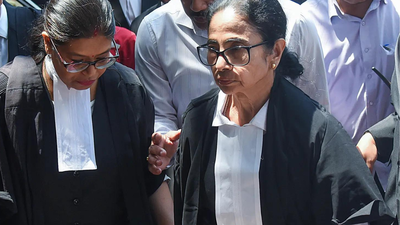
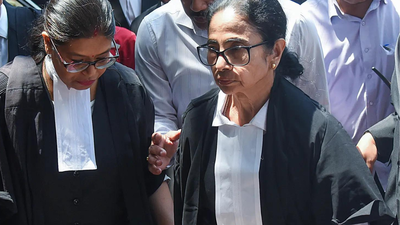
Mamata Banerjee on Thursday appeared in the Calcutta High Court in full lawyer attire, wearing a black lawyer’s coat and a white band over her trademark white saree with a blue border, to argue a PIL related to alleged post-poll violence in the state following the recently concluded assembly elections.She appeared before a division bench of Chief Justice Sujoy Paul and Justice Partha Sarathi Sen and presented photographs and a list of those allegedly killed in the violence. During the hearing, he urged the court to “protect the people of Bengal” and accused the authorities of failing to act against the attacks, looting and alleged intimidation taking place in various parts of the state.Heavy sloganeering broke out inside the court premises amid heightened political tension following his appearance in the High Court. Trinamool CongressBJP got defeated in the assembly elections. This PIL was filed by lawyer Sirsanya Banerjee, son of senior Trinamool Congress leader and lawyer Kalyan Banerjee.
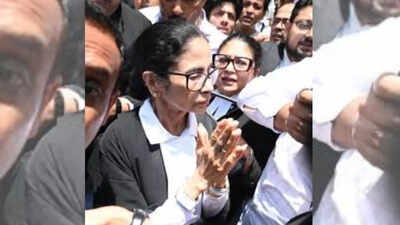
Video: Mamata Banerjee in lawyer’s gown faces sloganeering in Calcutta High Court during hearing of post-poll violence case. india news
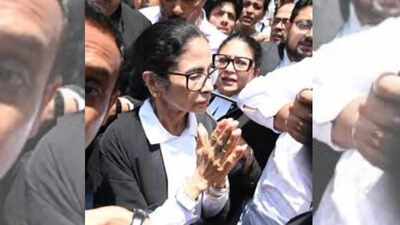
New Delhi: Former Chief Minister of Bengal Mamata Banerjee She faced heavy sloganeering in the Calcutta High Court on Thursday when she appeared as a lawyer in a public interest litigation (PIL) related to alleged post-poll violence following the recently concluded assembly elections in the state.Wearing the traditional black advocate jacket and white collar-band over her signature white saree with blue border, Banerjee appeared before a division bench of Chief Justice Sujoy Paul and Justice Partha Sarathi Sen to argue the case.The PIL was filed by Sirsanya Banerjee, son of a high court lawyer and senior advocate and four-time advocate Trinamool Congress MP Kalyan Banerjee. Sirsanya Banerjee recently contested the assembly elections from Uttarpara in Hooghly district on a Trinamool Congress ticket, but she lost to BJP candidate and former NSG commandant Dipanjan Chakraborty by over 10,000 votes.As Banerjee walked through the court complex dressed in lawyers’ attire, slogans were raised against her amid heightened political tension following the assembly election results in which the Trinamool Congress lost power. Bharatiya Janata Party.During the hearing, Banerjee reportedly presented photographs before the bench and alleged that “even children and women are not spared”. He also submitted a list of ten people who were allegedly killed in the post-poll violence.He said before the court, “My humble request is that please protect the people of Bengal. This is not a bulldozer state.”He further alleged that houses and offices were being occupied and looted in front of the police and claimed that the authorities had failed to intervene. “Everything is being done in the presence of police,” he said. He said people are entitled to have their voices heard, even if you are demolishing an unauthorized structure.Banerjee urged law enforcement agencies to step up action against those involved in the violence, arguing, “Once something happens, they won’t investigate? There is no police.”Reacting to her court appearance, the Trinamool Congress, in a post on Twitter, said Banerjee had “once again shown what really sets her apart”.“She never abandons the people of Bengal in their time of need. She never stops fighting for truth, justice and constitutional values. And time and again, she rises above the politics of hate with unparalleled compassion, courage and conviction,” the party said.The party further said, “Whether confronting the injustice of SIR or standing strong against the uncontrolled conduct of the BJP, she continues to prove that there is no leader like her in the country today.”Earlier this year, Banerjee had also appeared in the Supreme Court during the hearing related to the Special Intensive Review (SIR) case in West Bengal, where she briefly addressed the bench headed by Chief Justice of India Surya Kant, although she did not appear as a lawyer in that case.In the recently concluded assembly elections, Banerjee was defeated by current Chief Minister Suvendu Adhikari from Bhawanipur assembly constituency by a margin of over 15,000 votes. Following the defeat, Governor RN Ravi dissolved the previous assembly, thereby ending the Banerjee-led cabinet.
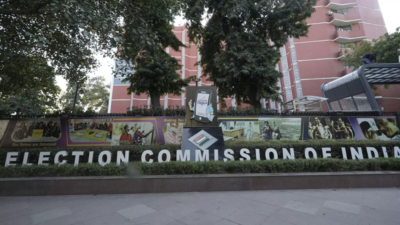
EC announces Phase 3 of SIR: 16 states, 3 UTs to be covered – see list india news
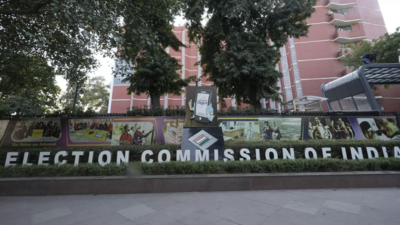
New Delhi: The Election Commission on Thursday announced the conduct of the third phase of Special Intensive Review (SIR) covering 16 states and 3 Union Territories. The Election Commission said that Himachal Pradesh, Jammu and Kashmir and Ladakh will not be included in this.“The Election Commission of India has directed to conduct Special Intensive Review (SIR) in 16 states and 3 Union Territories (UTs),” it said in a statement.“With this, the SIR of the electoral roll will cover the entire country except Himachal Pradesh, Jammu and Kashmir and Ladakh in the third phase. The SIR schedule for these three States/UTs will be announced later, after the completion of the second phase of census in these three States/UTs and due consideration of the weather in the upper reaches/snow covered areas.”It further said, “Approximately 59 million voters were covered in the first two phases of SIR in 13 States/UTs as on the date of order of SIR in the respective States/UTs, over 6.3 lakh BLOs and over 9.2 lakh BLAs appointed by political parties were covered in various stages of the SIR process.”The election body informed that during the third phase of SIR, more than 3.94 lakh Booth Level Officers (BLOs) with the support of 3.42 lakh Booth Level Agents (BLAs) nominated by political parties, will conduct door-to-door visits to reach out to 36.73 crore voters during the counting phase.

Iran’s Araghchi in India for BRICS meet; His plane has a clear message: ‘MINB168’ india news

New Delhi: Iran’s Foreign Minister Abbas Araghchi reached New Delhi on Wednesday. BRIC Foreign ministers meeting on a plane carrying a clear message from Tehran: Minab168. The inscription on the plane is a reference to the 168 schoolchildren Iran says were killed in a US strike on a school in Minab on February 28, underscoring the human toll of the war, even as diplomatic engagement continues.The #Minab168 markings are prominently visible on the fuselage in photographs of Araghchi boarding a plane in Tehran.Araghchi’s visit comes at a fraught moment for West Asia, with the ongoing conflict involving Iran and the US-Israel axis expected to dominate the discussion at the BRICS foreign ministers’ meeting in Delhi. He is also expected to hold bilateral talks with External Affairs Minister S Jaishankar, in which energy security, regional stability and connectivity are likely to be on the agenda.The reference to Araghchi’s plane points to one of the deadliest and most emotional events of the ongoing conflict in Iran.
What happened in Minab?
On February 28, the first day of the US-Israeli military campaign against Iran, Shajareh Tayyebeh Elementary School in Minab, a city in Iran’s southern Hormozgan province near the Strait of Hormuz, was attacked in an attack that Iranian officials say killed 168 schoolchildren. The attack quickly became a defining symbol of civilian loss in the war. UNICEF said the victims included children aged 7 to 12, calling it a stark reminder of the conflict’s cost on civilians.The location of Minab further increased the controversy. The school was located close to an Islamic Revolutionary Guard Corps (IRGC) facility, raising questions about whether it was caught in an attack targeting nearby military infrastructure. The Pentagon later launched a high-level investigation into the incident after initial findings suggested the US military may have been responsible, with the report indicating the possibility of faulty or outdated intelligence.
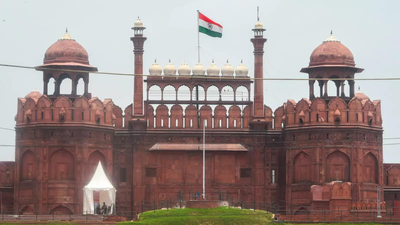
Red Fort blast case: NIA files 7,500-page chargesheet in terrorist conspiracy, names 10 accused. india news
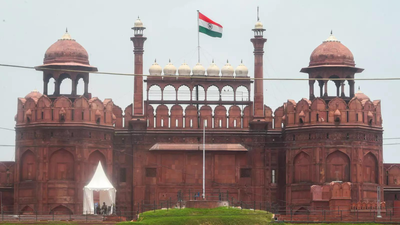
New Delhi: The National Investigation Agency (NIA) on Thursday filed a massive 7,500-page chargesheet against 10 persons linked to the Red Fort car bomb blast. The high-intensity blast that occurred on November 10, 2025, involved a vehicle-borne improvised explosive device (VBIED), killing 11 people, injuring several others and causing massive property damage.The document filed before the NIA special court at Patiala House names 10 accused linked to Ansar Ghazwat-ul-Hind (AGUH), the branch of al-Qaeda in the Indian Subcontinent (AQIS). The chargesheet, supported by 588 oral testimonies, 395 documents and over 200 material exhibits, details how the group procured specialized laboratory equipment such as MMO anodes and electronic circuits from both online and offline sources. The accusers also include the alleged mastermind, Dr Umar Un Nabi, a former assistant professor of medicine at Al-Falah University in Faridabad. While Nabi is now dead – his identity has been confirmed through DNA fingerprinting – the charges against him are proposed to be dropped, while proceedings against Aamir Rashid Mir, Jasir Bilal Wani, Dr Muzamil Shakeel, Dr Adeel Ahmed Rather, Dr Shaheen Saeed, Mufti Irfan Ahmed Wage, Soyeb, Dr Bilal Naseer Malla and Yasir Ahmed Dar continue.The NIA’s detailed investigation, spanning Jammu and Kashmir, Haryana, Uttar Pradesh, Maharashtra, Gujarat and Delhi NCR, paints a chilling picture of a conspiracy involving radical medical professionals. According to the agency, after a failed attempt to migrate to Afghanistan via Turkey, the accused met secretly in Srinagar to form “AGUH Interim” in 2022. Under this banner, he launched “Operation Heavenly Hind”, aimed at overthrowing the Indian government to impose Sharia rule. The investigation revealed that the group manufactured triacetone triperoxide (TATP) explosives using commercially available chemicals and conducted experiments to perfect the mixture. Evidence suggests the module was also experimenting with advanced weaponry, including rockets and drone-mounted IEDs, aimed at targeting security installations across India.Apart from the explosives, the NIA found that the accused had illegally stored banned weapons, including AK-47 and Krynkov rifles. Searches conducted at Al-Falah University and various locations in Jammu and Kashmir provided forensic and voice analysis data that strengthened the case. While 11 people have been arrested in connection with case RC-21/2025/NIA/DLI, the NIA confirmed that efforts to track the remaining fugitives are still on. The accused face multiple charges under the UA(P) Act, Indian Justice Code, Explosive Substances Act, Arms Act and Prevention of Damage to Public Property Act.
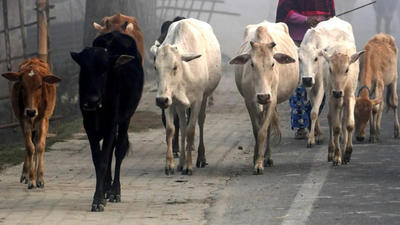
New Bengal government bans public slaughter of cattle and buffaloes, makes official fitness certificate mandatory. india news
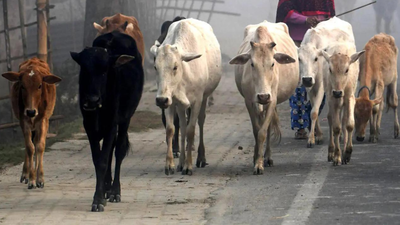
New Delhi: The newly elected BJP government in West Bengal has issued an amended public notice under the West Bengal Animal Slaughter Control Act, 1950, to strictly enforce cattle slaughter rules, reiterating that no cattle or buffalo can be slaughtered without mandatory official certification declaring the animal fit for slaughter.The notice also clarifies that no slaughter can take place in open public places, animals are allowed to be slaughtered only at municipal slaughterhouses or specially designated facilities by the local administration.Under the rules, a fitness certificate will be issued only when the Chairman of the Municipality or the Chairman of the Panchayat Samiti, jointly with the Government Veterinary Officer, certifies in writing that the animal is either above 14 years of age and no longer fit for work or breeding, or has become permanently disabled due to old age, injury, deformity or any incurable disease.If an application for certification is rejected, the applicant may appeal to the State Government within 15 days of receiving the rejection.Violation of the West Bengal Control of Slaughter of Animals Act, 1950 is punishable with imprisonment up to six months, fine up to Rs 1,000, or both.The move cites provisions of the 1950 law as well as a 2018 Calcutta High Court order, effectively strengthening existing legal restrictions rather than introducing an entirely new law.The development comes days after the BJP’s landslide victory in the West Bengal Assembly elections, marking the end of Trinamool Congress’s 15-year rule. Mamata Banerjee. The BJP won 206 seats in the 294-member assembly, much higher than its previous tally of 77, while the TMC was reduced to 80 seats.The revised notice is one of the first major administrative measures announced by the new government under Chief Minister Suvendu Adhikari.
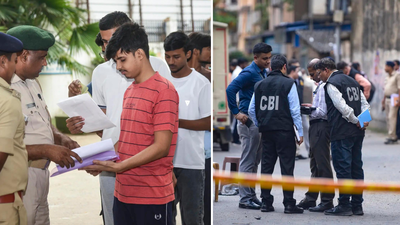
NEET-UG leak: Question paper handwritten, scanned and distributed; Students paid lakhs, CBI probe finds. india news
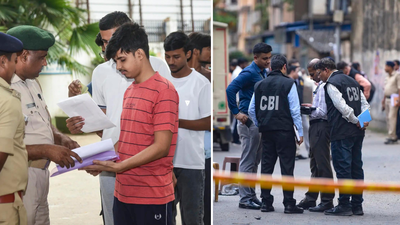
New Delhi: According to preliminary CBI investigation findings cited by sources in news agency ANI, a handwritten copy of the NEET UG 2026 question paper was scanned and converted into PDF files by the father of a candidate in Rajasthan.This development comes after the National Testing Agency (NTA) canceled the NEET exam held on May 3, a move that has affected lakhs of medical aspirants across the country.Preliminary investigation findings revealed that the question paper was first accessed and then circulated through Yash Yadav, who allegedly delivered it to Rajasthan. Investigators say Yash knew Vikas Biwal, whose father Dinesh Biwal is accused of scanning the handwritten paper and converting it into digital format.Officials alleged that the scanned paper was shared with students at coaching centers in Sikar, Rajasthan.Sources also said that Yash himself has not cleared the exam and is a Bachelor of Ayurvedic Medical Sciences student.CBI has interrogated the employees and owners of the coaching institute as part of the investigation. According to ANI, some students have told investigators that they paid between Rs 2 lakh and Rs 5 lakh to access the leaked material.One of the accused, Shubham Khairnar, has denied being the mastermind behind the leak. The agency is also trying to trace the original source of the question paper.Statements of students and accused persons are being recorded, while officials are also verifying the money transactions related to the case.
Delhi HC orders Google and Apple to remove porn apps. india news
New Delhi: Social media intermediaries should also exercise due diligence while uploading apps. Delhi High Court The push came on Wednesday as it asked Google and Apple to remove mobile applications hosted on their online platforms that disseminate pornographic material.The court said, “We cannot allow an entire generation of the country to go to waste. We understand all types of freedoms under Article 19 but that does not mean that we allow (dissemination of obscene material).” The court reminded the intermediaries that their role is not limited to blocking content on receipt of a complaint.A bench of Chief Justice DK Upadhyay and Justice Tejas Karia said social media intermediaries should play the “most important role” by taking action against such apps even at the time of uploading.Hearing a PIL by Rubika Thapa against the hosting of mobile applications offering obscene and pornographic content on platforms run by Google and Apple, it also asked the Centre’s Indian Computer Emergency Response Team to investigate the spread of such content. The next hearing of the case will be on July 17.