Breaking News
Rajnath lays foundation stone for 3 new centers in R&R, new infrastructure at base hospital. india news

Rajnath lays foundation stone for 3 new centers in R&R, new infrastructure at base hospital

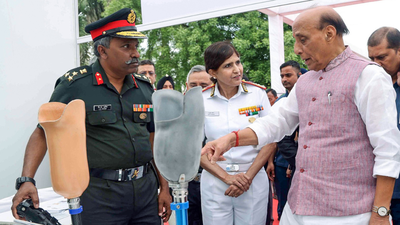
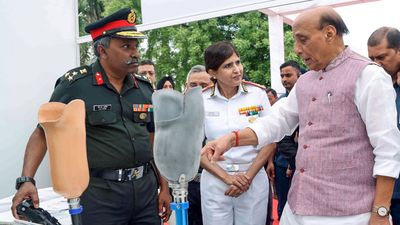
New Delhi: Defense Minister -Rajnath Singh On Monday laid the foundation stone of new infrastructure for ophthalmology, oncology and joint replacement centers at Army Hospital (Research and Referral) and Base Hospital, Delhi Cantonment.Speaking at the 262nd Army Medical Corps Raising Day ceremony, Rajnath said, “Military medical services within the country and neighboring countries have emerged as a powerful testament to India’s soft power.” Encouraging the Army Medical Corps, he said, “Innovation, capacity building and integration of advanced technology is necessary to meet the emerging military medical challenges.”The state-of-the-art facilities at the Army Hospital (Research and Referral) will aim to significantly enhance the tertiary care capabilities of the Armed Forces Medical Services (AFMS), especially in the area of ​​advanced eye care, cancer treatment and complex joint replacement surgeries, while new infrastructure is being developed at the Base Hospital to create a bed capacity of 998 beds with an additional 100 crisis extension beds to meet the routine and emergency health care needs of Defense Forces personnel.Rajnath said, “In today’s world, security is not just about protecting the borders; health security is equally important. Strong medical support plays a vital role in the success of major operations like Operation Sindoor. When soldiers are assured that they will have access to quality medical facilities in every situation, they can confidently accomplish their missions.”

Source link

Judiciary corruption chapter: 3 academics move Supreme Court against NCERT association ban. india news

Judiciary corruption chapter: 3 academics move Supreme Court against NCERT association ban

New Delhi: NCERT has roped in three academicians as experts – Professor Michel Danino, Suparna Diwakar and Alok Prasanna Kumar – who Supreme Court Banned for life for “presenting a negative image of the judiciary” by mentioning about corruption in the judiciary in a Class 8 textbook, the apex court was approached on Monday for review of the order. Counsel for the petitioners said, “The textbooks of Class 6 and Class 7 deal with the issues faced by the legislature, the Election Commission and the executive… We want to show the procedures that have been followed… These are academics with great credibility.”

Judiciary corruption chapter: 3 academics approach Supreme Court against NCERT association ban

Senior advocates Arvind Datar, Gopal Shankaranarayanan and Sai Deepak, appearing for the trio, told the bench that blacklisting the academics has serious implications and requested a bench of CJI Surya Kant and Justice Joymalya Bagchi to hear these applications urgently.CJI Kant asked, “Are you defending your actions?” Sankaranarayanan responded by saying, “We are giving a reference (to what was written in the Class VIII book). I was present when the newspaper article was mentioned before the court and told how the judiciary is being targeted (over the prevalence of corruption).”“The court can consider his detailed explanation,” Datar said for Danino. “It was a collective effort and no one person had the final say,” Deepak said.SC directed the registry to list the application for hearing. It says that no one else will be allowed to interfere in this matter.Additional Solicitor General KM Nataraj, appearing for the Education Ministry, told the bench about the formation of two committees to examine the existing curriculum and suggest a framework in consultation with the National Judicial Academy to eliminate uncontrolled reference to the judiciary in school textbooks.

Source link

Election Commission seeks report on BJP leader’s ‘love jihad’ comment. india news

Election Commission seeks report on BJP leader's 'love jihad' comment

T’Puram: The Election Commission on Monday sought a report from the Thiruvananthapuram district collector on the controversial speech of BJP’s Kattakada candidate PK Krishnadas in which he had said an LDF or UDF victory would ‘give a boost’love jihad‘In Kerala. EC has also sought legal advice on this matter.At an election rally inaugurated by Union Home Minister Amit Shah, Krishnadas alleged that the LDF and UDF are in collusion with the Social Democratic Party of India and Jamaat-e-Islami, and voting in favor of either front will lead to widespread incidents of ‘love jihad’. He further alleged that if UDF or LDF comes to power then JEI or SDPI will control the government.Krishnadas alleged that pro-Pakistan extremist organizations will actively promote ‘love jihad’. He said, “Hindu and Christian girls will be lured into ‘love jihad’. These elements will then use them for anti-national activities.”insisting on it cpm And Congress is the same, he said, adding, “Votes cast in favor of Congress or CPM will lead to ‘Love Jihad’. Such a situation is likely to emerge in Kerala.”BJP state chief Rajiv Chandrashekhar sought to distance the BJP from the remarks, saying the party did not agree with the apprehensions expressed by Krishnadas.

Source link

Japanese tourist molested near Jaigarh Fort in Jaipur, FIR registered but no arrest yet. india news

Japanese tourist molested near Jaigarh Fort in Jaipur, FIR registered but no arrest yet
representative file photo

Jaipur: Five youths have been accused of sexually assaulting a Japanese tourist after stopping him at a secluded place near Jaigarh Fort in Jaipur’s Amer area.DCP (North) Karan Sharma, citing the woman’s complaint, said on Monday that the youth pushed the woman, held her hands and tried to kiss her, following which an FIR has been lodged. No arrests have been made yet.Police said that the incident took place on Sunday when the tourist had gone to visit Jaigarh Fort and its surrounding hills. After being molested, she raised an alarm and ran towards the security guard posted nearby. Seeing the guard coming, the youth ran away. The guard informed the police.

Source link

Jammu and Kashmir Lakes: Since 1967, 315 lakes have been destroyed in Jammu and Kashmir. india news

315 lakes have been destroyed in Jammu and Kashmir since 1967.

Srinagar: Nearly 3,000 hectares of lakes have been destroyed in Jammu and Kashmir since 1967. A report by the Comptroller and Auditor General of India said this decline contributed to the devastating Kashmir floods of 2014.In 1967, there were 367 lakes in Jammu and 330 in Kashmir. But by 2020, 259 lakes in Jammu disappeared, resulting in a loss of 297 hectares. A report presented in the Jammu and Kashmir Legislative Assembly last week said that by 2014, 56 lakes in Kashmir had been lost and the loss in terms of area was much higher, i.e. 1,537 hectares.Overall, 315 lakes in Jammu and Kashmir were destroyed, about 45% of which were recorded in 1967. Worse, the area of ​​the remaining lakes decreased by 1,314 hectares.State and national level research links land use changes in lake areas to increased flood risks. “The disappearance and shrinkage of wetlands has degraded ecosystems, disrupted water and nutrient cycles and increased climate vulnerability,” the CAG report said.Lakes act as natural flood barriers. In 2014, Kashmir suffered devastating floods that completely submerged Srinagar, forcing then CM Omar Abdullah to work from Hari Niwas, the palace of Maharaja Hari Singh in the foothills of the Zabarwan mountains.A Home Ministry report on the 2014 floods, released in 2023, said the carrying capacity of the Jhelum in Srinagar was 35,000 cusecs, but on September 6 the discharge increased to 135,000 cusecs.

Source link

Ward of Flowers: Tulip Garden Tour for Young Cancer Fighters india news

Flowers for the Ward: Tulip Garden Tour for Young Cancer Fighters

Srinagar: Flowers of hope bloomed in the Tulip Garden of Srinagar. Some children suffering from cancer have just returned with rich food.The children were brought to the garden on the banks of Dal Lake from the Sher-e-Kashmir Institute of Medical Sciences (SKIMS) on Monday as part of the hospital’s immunotherapy efforts – strengthening the immune system with hope, optimism and positivity. The number of children was about a dozen. The eldest was 18 years old and the youngest was only four years old.The change was rapid. When the SKIMS bus carrying the children left the hospital, the atmosphere inside was calm. Many people wore masks. His attendants remained sitting silently. By the time they reached the garden, the atmosphere inside the bus had changed. The children’s faces lit up at the sight of the tulips, and many seemed to feel more relaxed as the tour progressed.In photos released later, the group were smiling together, capturing a rare moment of relaxation away from grim hospital wards. “The human body’s intrinsic immunity not only fights bacterial and viral infections, but can also fight cancer cells and kill them. Exposing these children was part of the immunotherapy treatment. We are trying to boost the immunity of these children, which can help make our treatment more effective,” said M. Ashraf Ghani, director of SKIMS. times of India.Feedback from the doctors who accompanied the children showed that their mood had improved significantly compared to when they were in the hospital. Gainey said, “The kids were very happy. It gave both kids and their families reassurance that this is not something they can’t fight.”This was the first such SKIMS initiative and the hospital had been preparing for almost a month. “We planned to go out as per the children’s chemotherapy schedule so that no dose is missed. Doctors accompanied him the entire time and all precautions were taken,” Ghani said, adding that food was also arranged for the children and attendants during the visit.The hospital plans to formally assess the impact of the initiative through questionnaire-based feedback from children and their attendants. “The findings will help determine whether similar programs could be conducted in the future as part of a holistic approach to pediatric cancer care,” Gainey said.

Source link

Chhattisgarh Chief Minister to meet PM Modi, Amit Shah; Focus on roadmap for post-Maoism development. india news

Chhattisgarh Chief Minister to meet PM Modi, Amit Shah; Roadmap for post-Maoism development comes into focus
File photo (Chhattisgarh CM Vishnudev Sai with PM Modi)

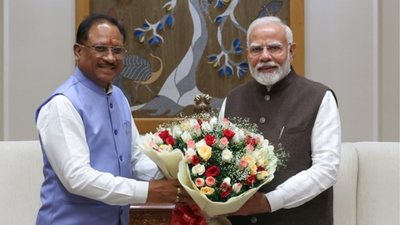
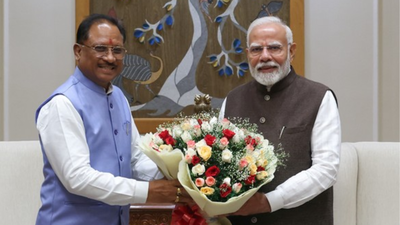
New Delhi: With Chhattisgarh’s Bastar division now free from Maoist occupation, state Chief Minister Vishnu Dev Sai will meet Prime Minister Narendra Modi and Home Minister Amit Shah here on Tuesday to discuss the roadmap to boost development and infrastructure in the region in the coming months. State government sources told TOI that SAI’s visit – the first on the other side of the March 31, 2026 deadline to eradicate Naxalism – is being considered crucial for shaping the future of Bastar. “The main focus of the Chief Minister’s meetings with the Prime Minister and the Home Minister will be on the post-Maoist scenario, with detailed discussions on expansion of infrastructure, promotion of industries and investment, large-scale employment generation for local youth and inclusive development of tribal areas,” an official said.The development of Bastar is now emerging as a national priority, not just for Chhattisgarh, because it has suffered the brunt of Naxalism for decades. Large parts of the region were ruled by Maoists, restricting administrative access and denying the tribals living there the benefits of governance, development and welfare initiatives.However, with significant progress on the security front in the last year ensuring that no significant Maoist leaders are active in Bastar, the focus has now shifted towards rapidly integrating the region into the mainstream.

Source link

Center has proposed rules for management of environmentally hazardous tar balls, space technology will be used to monitor and detect oil spills. india news

Center proposes rules for management of environmentally hazardous tar balls, space technology to be used to monitor and detect oil spills

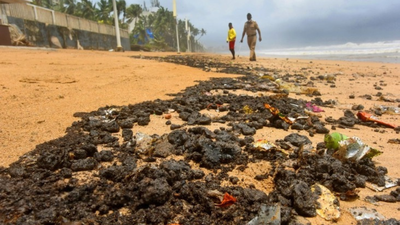
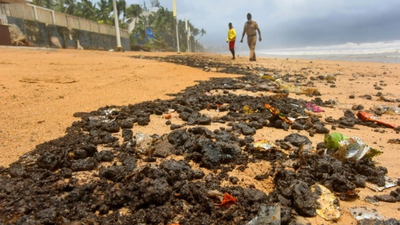
New Delhi: The Centre, for the first time, has come up with dedicated rules for the management of tar balls – the weathered product of oil spills causing marine pollution due to offshore oil exploration activities, oil tanker/ship/vessel accidents or pipeline leakages – and proposed mandatory provisions for owners of oil facilities for its collection, transportation and disposal in an environmentally safe manner.Tar balls cause marine pollution both offshore and offshore, threatening the survival of shorebirds, sea turtles and marine life. Tar balls always affect the beaches in Maharashtra, Goa, Gujarat and Karnataka as they get washed ashore due to strong winds and currents especially during monsoon.The Environment Ministry had last week notified a draft rule in this regard, which also provided for penalty (environment compensation) for defaulter ‘oil facility owners’ on the polluter pays principle, and assigned specific responsibilities to state governments, Ministry of Petroleum and Natural Gas, CPCB and Ministry of Defense (Indian Coast Guard) for eco-friendly management of tar balls.The rules describe ‘oil facility owners’ as persons or companies who own or control or operate a facility/ship/vessel where oil (crude or fuel or both) is extracted, explored, used, transported or handled.Notifying the draft rules titled Tar-Balls Management Rules, 2026, the ministry sought comments/suggestions of stakeholders on the proposal within the next sixty days. Final rules will be notified after examining the suggestions, if any. “They (rules) will come into force after one year from the date of publication of the final notification in the Official Gazette,” the ministry said in its draft proposal.Outlining the penalty provisions, it says, “Where any oil facility owner fails to manage oil in an environmentally sound manner and causes any oil spillage which causes harm, damage or injury to the environment or public health, including the formation of tar balls, he shall be liable to pay environmental compensation equal to the amount of such harm, damage or injury and the expenditure incurred or to be incurred by the district administration for the management of the tar balls Could.Assigning responsibilities to the Indian Coast Guard, the rules state that the Defense Ministry body will implement the National Oil Spill Disaster Contingency Plan (NOS-DCP) to effectively manage oil spill management and tar balls formation.“The Indian Coast Guard will conduct regular aerial and surface surveillance for oil spills in the Indian EEZ and inform relevant stakeholders for necessary preparedness and response measures,” the draft rules said.In addition, the National Remote Sensing Agency will monitor and detect oil spill incidents and tar ball hot-spots through satellite, aerial, drones, sensor equipped buoys or any other means and support the combat agencies.As per the rules, the Ministry of Petroleum and Natural Gas will have to provide quarterly oil spill or spill incident reports of each installation (up to 500 metres) through its offshore establishments to the Indian Coast Guard, nearby coastal state governments, respective State Pollution Control Boards and CPCB.“The Ministry of Petroleum and Natural Gas shall take all preventive steps to control oil leakage from offshore oil exploration establishments/facilities,” the draft notification said.

Source link

‘A proud moment’: PM Modi hails India’s ‘decisive step’ in civil nuclear journey as Kalpakkam Fast Breeder Reactor becomes important | india news

'गर्व का क्षण': कलपक्कम फास्ट ब्रीडर रिएक्टर के महत्वपूर्ण होने पर पीएम मोदी ने असैन्य परमाणु यात्रा में भारत के 'निर्णायक कदम' की सराहना की

File photo: PM Modi (Photo credit: ANI)

New Delhi: Prime Minister Narendra Modi on Monday said India has taken a “decisive step” in its civil nuclear journey after the prototype fast breeder reactor (PFBR) at Kalpakkam went critical, marking a major milestone in the country’s nuclear power programme.In a post on X, PM Modi Said indigenously designed and built reactor represents progress in the second phase of India’s three-stage nuclear program and underlines the country’s long-term goal of exploiting its large thorium reserves.PM Modi wrote, “Today, India is taking a decisive step in its civil nuclear journey, taking forward the second phase of its nuclear programme.”“The indigenously designed and built prototype fast breeder reactor at Kalpakkam has achieved criticality,” he said.

PM said the reactor showcases India’s scientific and engineering strength

The Prime Minister said the advanced reactor is capable of producing more fuel than it consumes, calling it a major technological achievement for India’s nuclear sector.PM Modi said, “This advanced reactor capable of producing more fuel than it consumes reflects the depth of our scientific capability and the strength of our engineering enterprise.”He said the development was “a decisive step towards exploiting our vast thorium reserves in the third phase of the programme.”

PM congratulated scientists and engineers

Calling the achievement a “proud moment for India”, PM Modi congratulated the scientists and engineers involved in the project.“Proud moment for India. Congratulations to our scientists and engineers,” he said in the post.The announcement marks a significant moment for India’s indigenous nuclear power capabilities, with the Kalpakkam reactor expected to play a key role in strengthening the country’s strategic and civil nuclear ambitions.

Source link

Rajya Sabha Chairman rejected the impeachment motion against Election Commission chief Gyanesh Kumar. india news

Rajya Sabha Chairman rejects impeachment motion against Election Commission chief Gyanesh Kumar
CEC Gyanesh Kumar (file photo)

New Delhi: Rajya Sabha Chairman CP Radhakrishnan on Monday rejected the impeachment motion against Chief Election Commissioner (CEC) Gyanesh Kumar, who is facing heat from the opposition over the all-India special intensive review (SIR) and “conduct” of the recent assembly elections.This was the first time that any notice was given to remove the election body chief, with 130 Lok Sabha MPs and 63 Rajya Sabha members signing the motion.In the 10 page long notice, chargesheet has been written in seven cases. The allegations ranged from partisan conduct of the CEC to large-scale disenfranchisement of voters.The opposition had also raised the issue of how the CEC handled SIR in previous elections in states like Bihar and upcoming elections in states like West Bengal; his “proven misconduct”; His partial conduct towards a political party are also issues which have been mentioned in the notice.Notice of removal of CEC, operated by TMCThis came after growing allegations from opposition parties against Gyanesh Kumar.He accused the CEC of bias and arbitrarily carrying out the ongoing Special Intensive Review (SIR) exercise for assistance. BJP.Chief Minister of West Bengal Mamata Banerjee She is leading the protest against the SIR process in her state. Other opposition parties are also attacking the CEC, with Rahul Gandhi running a “vote stealing” campaign.Reacting to the rejection of the notice, the TMC Rajya Sabha member said, ‘BJP keeps making fun of our great Parliament.’BJP leaders had criticized the opposition’s proposal, arguing that political parties should focus on electoral contests rather than targeting the Election Commission.As per parliamentary provisions, the motion, which has been rejected, is required to be passed by a special majority in the Parliament.

Source link