Officer leading ED probe against Nirav Modi, Vijay Mallya takes VRS. india news

Vijay Mallya, the officer who led the ED investigation against Nirav Modi, took VRS

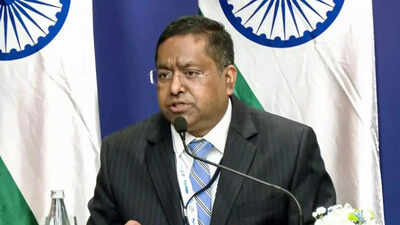
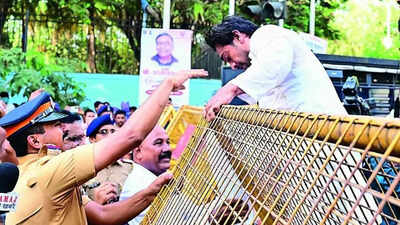
New Delhi: Satyabrata Kumar, East Enforcement Directorate Special Director and Principal Investigator involved in several high-profile money laundering cases against (ED) Nirav Modi, vijay mallya And Mahadev online betting app has taken Voluntary Retirement (VRS) from service.Kumar, a 2004-batch Indian Revenue Service (IRS) officer of the Customs and Indirect Taxes cadre, was posted as Commissioner (Appeals) in Siliguri, West Bengal, after being sent back from the ED a year ago.He served in the ED for almost 12 years, making him one of the longest serving officers on deputation to the agency.According to officials, the 48-year-old officer was given approval by the central government to proceed on VRS in April and formal orders were issued earlier this month.Officials said the officer, who was due to retire in 2037, had about 11 years of service left before attaining the superannuation age of 60.Sources told PTI that Kumar left government service for personal interests.Kumar led the investigation conducted by the ED’s Mumbai-based Western Regional Office, which included the alleged US $2 billion bank fraud case against diamond traders Nirav Modi and Mehul Choksi, the bank loan fraud case against liquor baron Vijay Mallya and several cases involving politicians from Maharashtra.He was instrumental in the attachment of several foreign-based assets worth crores of rupees identified as proceeds of crime in the PNB fraud case.The ED’s Western Regional Office, led by Kumar, also investigated the Mahadev betting app case, which revealed links to various Chhattisgarh-based politicians and businessmen.This is the second time in less than a year that an officer has resigned from government service soon after leaving the ED.In July 2025, former ED joint director Kapil Raj, who oversaw the arrest of Hemant Soren and Arvind Kejriwal in separate money laundering cases, resigned from the service, 15 years before his scheduled retirement.Raj was from the 2009 batch of IRS (Customs and Indirect Taxes) and had worked in the ED for eight years.He resigned while holding the post of Additional Commissioner in the GST Intelligence Wing in Delhi.

Source link

US President Donald Trump’s daughter Tiffany visited Sonar Fort in Jaisalmer. india news

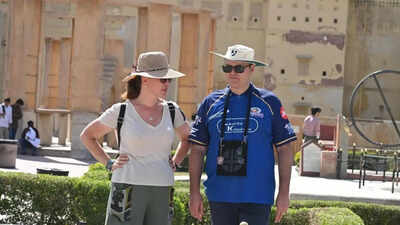
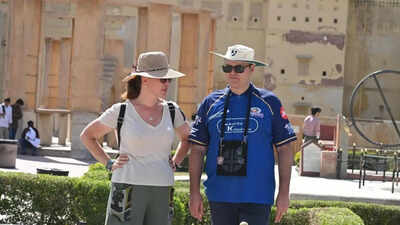
US President Donald Trump's daughter Tiffany visits Jaisalmer's Sonar Fort
US Ambassador to India Sergio Gore with Tiffany Trump and her son-in-law Michael Boulosam during their visit to Sonar Fort

New Delhi: tiffany trumpUS President’s daughter donald trumpShe visited the historic Sonar Fort in Rajasthan’s Jaisalmer on Sunday evening during a trip to the desert city with her husband Michael Boulos, officials said.The couple arrived at Jaisalmer Civil Airport from Delhi in a special flight early in the day and were given a traditional Rajasthani welcome on arrival. Those who welcomed him included US Ambassador to India Sergio Gore, District Collector Anupama Jorwal, Superintendent of Police Abhishek Shivhare and officials from the police, administration and tourism departments.In the evening, the couple toured Sonar Fort in a golf cart and visited the fort museum, where they were introduced to the rich art, culture and history of the area.Officials said local heritage expert Vijay Ballani briefed them about the historical importance, architecture and cultural heritage of the fort.Special arrangements have been made for their stay at a luxury hotel on Sam Road, with multi-layered security deployed across the city. Local police, Indian security agencies and US Secret Service personnel are part of the security detail.The district administration and security agencies are on high alert due to this visit. In view of Jaisalmer’s proximity to the India-Pakistan border and the movement of a high-profile foreign guest, security measures have been beefed up at major tourist attractions and other key locations across the city. Tight security arrangements were also maintained during the tour of the fort, while the entry of media inside the complex was restricted.During their stay, the couple is expected to visit several major tourist attractions of Jaisalmer, including the Patav Ki Haveli and Gadisar Lake. Officials said he is expected to return to Delhi on Monday.

Source link

Punjab celebrates historic No. 1 education ranking with Mega PTM across over 19,000 government schools india news

Punjab celebrates historic No. 1 education ranking with Mega PTM across over 19,000 government schools

The Punjab government, led by Chief Minister Bhagwant Singh Mann, on Saturday organized simultaneous mega parent-teacher meetings (PTMs) in over 19,000 government schools across the state to celebrate Punjab securing the top position in the NITI Aayog’s School Education Quality Report 2026.Sharing details of the event titled ‘Sikhiya Da Maha Jashn’, Punjab Education Minister S Harjot Singh Bains said Punjab achieved the No. 1 ranking in the national report, leaving Kerala behind on key foundational learning metrics.Describing the achievement as a milestone for the ‘Punjab Sikh Revolution’, S Harjot Singh Bains said, “This No. 1 rank does not belong to the government alone. It belongs to every parent who chose to believe, every student who worked hard, and every teacher who went beyond the textbook.” We changed government schools from the last option to the first choice. For decades people were told that quality education was not possible in government schools. Today Punjab has proved them wrong. This rank is a revolution created in our classrooms.”Highlighting the role of parents in maintaining this success, the Education Minister said that more than 20 lakh parents participated in the Mega PTM and Parent Workshop. The program focused on continuity of summer learning, vacation homework management, and creating positive routines to support children’s learning during summer vacation.As part of the ceremony, teachers and non-teaching staff were honored for their dedicated efforts, while outstanding students including board exam toppers, English Edge Program achievers and JEE qualifiers were awarded special recognition and certificates.To ensure smooth and effective implementation of the programme, all teachers and school heads were trained through a live YouTube session. Trained facilitators and active school management committees also supported parent activation, coordination and grassroots implementation of activities across the state.

Source link

Evening News Wrap: Main accused in Ghaziabad teen murder case killed in encounter; TMC’s Kalyan Banerjee ‘attacked’ in Hooghly incident and more. india news

Kalyan Banerjee alleges attack near Chanditala police station, TMC-BJP clash intensifies in West Bengal

  • murder of ghaziabad teenager Accused Asad killed, constable injured in police encounter during arrest operation.
  • TMC MP Kalyan Banerjee alleges that he was attacked by BJP supporters near Chanditala police station in Hooghly.
  • Congress has started the search for a new KPCC chief as Shivakumar prepares to take oath as Karnataka Chief Minister on June 3.
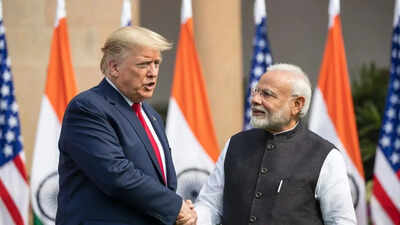
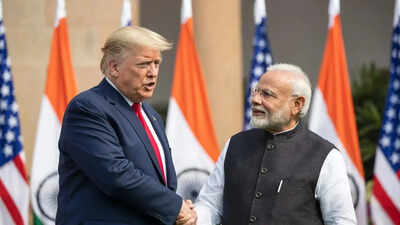
  • India and the US resumed talks in Delhi on an interim trade agreement covering tariffs, investment and market access.
  • Rajat Patidar takes RCB from underdogs to champions, now one win away from a rare title defence.

Here are the top stories of the day:

Ghaziabad teen murder accused carrying reward of Rs 50,000 killed in police encounter

A 17-year-old murder accused carrying a reward of Rs 50,000 was killed in a police encounter in Khoda Colony, Ghaziabad. Asad, the prime accused in the stabbing death of a teenager earlier this week, opened fire while trying to evade arrest during a checking operation, police said. A constable sustained bullet injuries in the shootout, while another suspect managed to escape. Read the full story

Kalyan Banerjee accused of attack on BJP workers outside Bengal police station

Trinamool Congress MP Kalyan Banerjee alleged that he was attacked by BJP supporters near Chanditala police station in West Bengal’s Hooghly district. He said the attacks occurred while presenting a delegation on post-election violence. TMC called the incident an attack on democracy, while BJP rejected the allegations, saying that local residents were protesting against post-poll violence. Read the full story

Congress looks for next KPCC chief as Shivakumar prepares to take oath as Karnataka Chief Minister

As DK Shivakumar prepares to take oath as Karnataka Chief Minister on June 3, Congress President Mallikarjun Kharge said the party is in the process of identifying the next Karnataka Pradesh Congress Committee (KPCC) chief. He said the organization needed a leader who could work “quickly and collectively” to strengthen the party before the next assembly elections. Read the full story

India-US trade talks gain momentum as officials meet in Delhi to push interim deal

Trade talks between India and the US resumed as senior officials from both sides began a four-day meeting in New Delhi on Monday to finalize an interim trade agreement. The US delegation is led by chief negotiator Brendan Lynch, while India is represented by Darpan Jain. The discussions will focus on market access, tariffs, investment, customs facilities and economic security under the BTA framework.Read the full story

From ‘Ee Saala Cup Namde’ to ‘Kap Namdu’: Rajat Patidar writes the story of RCB’s unexpected rise

For almost two decades, Royal Challengers Bengaluru (RCB) has been living with the burden of unfulfilled promises, with “ee saala cup namde” being a frequent reminder of missed IPL glory. He eventually shifted under the leadership of an unlikely leader in the form of Rajat Patidar. From injury replacement to title-winning captain, Patidar’s rise has been remarkable, as he is now one win away from defending the IPL crown. Read the full story

Source link

Two rupees for cancer: India’s smokeless tobacco epidemic that no one is stopping. india news

Two rupees for cancer: The smokeless tobacco epidemic inside India that no one is stopping

None of us is unaware of the fact that nicotine is bad. In India you cannot even go to a cinema without tobacco awareness advertisements playing. Your cigarette boxes and tobacco pouches have the most frightening graphics to discourage you from buying them. But you still do it.The cycle of addiction has never been something you should fear.Add to this how superficial these efforts are when you compare the buzzy commercial of a man coughing on his deathbed to the most stylish character in movies casually smoking a cigarette. You start the movie knowing that smoking causes deaths. You spend the next two hours seeing that it doesn’t kill – instead, seeing it makes someone look “hot” or “powerful.” The biggest names in our entertainment industry are quick to enhance their image by signing tobacco brand deals, almost equating it to a luxury lifestyle.A message plays before the film. This is the second film only.Asking people to quit tobacco in a country where more than 2 in 10 are dependent on it is an extreme virtue signaler. And another issue unique to the South Asian subcontinent is that of smokeless tobacco.About 20 crore Indians consume smokeless tobacco every day. Smokeless tobacco comes in small plastic pouches which are sold at every corner shop for a few rupees. Gutkha. Khaini. Jarda. It’s sitting quietly on the shelf next to the biscuits and candy. One of the most carcinogenic products ever available for retail sale can be purchased for Rs.2. “More than 28 types of carcinogens have been isolated from these products,” says Dr Madhurima Nandi, an academic research associate at the University of Edinburgh.India is home to more than 80% of the world’s smokeless tobacco users. This is not a global problem. This is our problem. And yet, while cigarettes have graphic warnings on packets and face higher taxes, smokeless tobacco remains cheap, widely available, and less-regulated.While the rest of the world is struggling with vapes creating a new market for young tobacco users, something India has covered, at least legally. The biggest concern for our country is that countless people are “painting it red” every day.

-

Enough to fill 211 Olympic-sized pools each year. Similarly, Indians spit after chewing gutkha and other smokeless tobacco. Indian Railways spends approximately ₹1,200 crore annually to clean these stains from trains and stations. Due to this, the pillars of Howrah Bridge have started rusting.But the problem did not start from yesterday.Tobacco cultivation began in India in 1605. The Portuguese introduced it in Kaira and Mehsana districts of Gujarat. What started as a colonial crop became a cultural fixture. Over the centuries, it has embedded itself in daily life, betel leaf after meals, tobacco distributed among laborers, a quiet addiction that demands little money and provides relief for a short period of time.Then came Gutka. A man named Mansukhbhai Kothari from Gujarat figured out how to make betel powder and sell it in small, cheap packets. Five rupees. Two rupees. Sometimes less. It was cheap in a way that cigarettes never were. And it became an instant hit. Gutka delivers nicotine into the bloodstream faster than cigarettes. It’s about three times more addictive. Even the process behind consumption is more instantaneous than smoking cessation.Which brings us to the sociological divide. Smoking and smokeless tobacco use are not the same problem in India. They do not affect the same people equally.Cigarette smoking in India is concentrated among the wealthier, urban population. A survey by the International Institute for Population Sciences found that daily smokers are wealthier and more educated than non-smokers. The poorest households have the lowest smoking rates. It’s no secret, cigarettes are expensive. Heavy taxes are imposed on them. The price of one packet is as much as a laborer can earn in a day.Smokeless tobacco is the opposite. It is cheap and easily available. According to Dr. Nandy, the main determinants of SLT use in India are clear: “gender (males more than females), educational level (illiterate more than literates), urban-rural residence (rural more than urban), socio-economic status (low than high), and low taxes on SLT products.” She adds that “peer pressure, parental use and limited knowledge about harmful effects” are also major factors.

-

For a daily wage laborer tired after a hard day of physical labour, a ₹2 packet of gutkha is the most affordable option. When there is no money for food, it works to satisfy hunger. Nicotine releases dopamine and makes you feel full. This is the reason why even beggar children in India prefer to take small amounts of money instead of packets of biscuits. This small change allows them to eat Gutkha and keep themselves full and doped up for much longer than a single biscuit.said a poor child begging in the area next to Nehru Place metro station. “Biscuit doesn’t fill the stomach. Gutkha reduces hunger a bit. If you want to give money then give me this, don’t want the rest of the cheese.”The poorest households in rural India spend about 4% of their total expenditure on tobacco and drugs. They spend only 2.5% on education. Every year, an estimated 18.4 million Indians are pushed into extreme poverty due to tobacco-related disease and death. They not only lose their savings but also their main earner. The family remains poor.

-

The tobacco industry is not the cause of poverty in India, but the profits it makes.In relation to the smokeless tobacco epidemic, the level of Indian culture of ‘Jugaad’ has gone beyond what is necessary. Commenting on the misuse of these drugs by young children, an auto driver near Hauz Khas said, “You can make as many laws as you want. But there is always a jugaad (loophole).” He blamed not only the system but also the parents for the misuse of SLT. He said that drugs make you so happy that you forget the difficulties and that is why many children born in poverty are introduced to these drugs by their parents very early.While calling for a complete ban at this stage is impractical, we have seen how functional it has been with vapes. When you ban something you immediately create a profitable black market for it. The best way forward is to make the product less accessible, less attractive and less affordable.The 2011 gutkha ban was a good intention that became a case study in failure. Manufacturers did not stop selling their products. They simply divide the contents into two separate pouches – tobacco in one, flavorings in the other – sold side by side. The customer buys both and mixes them at home. Technically, no laws are violated because none of the bags alone contain a prohibited combination. This is Jugaad on an industrial scale and has made a mockery of the ban.Close this loophole. If a product is consumed as Gutkha, it should be regulated as Gutkha. Different sachets that are sold together and intended to be mixed should be considered a single product under the law.Then fix the packaging. When plastic ban was imposed in 2011 Supreme Court Banned plastic pouches for gutkha, tobacco and pan masala. Walk into any corner store today and you’ll still find them in plastic. Enforce restrictions. Impose fine on manufacturers. Seize the products. Make compliance visible. A law that is not enforced is not a law at all. This is just a suggestion.Next, look at the price. Gutka packet worth Rs 2 is not a product. This is a trap. Kids can afford it. Daily wage laborers buy this instead of food. Set a minimum pack size and make the cheapest legal pack price at least Rs 20 or Rs 30. Poor people will not stop using tobacco overnight, but few will. And many children will never start.Then control who can sell it. Today anyone can sell tobacco in India. No licensing is required, no training is mandatory, and there are no consequences for violations. Retail license required. Cancel it if it sells to minors or violates packaging laws. Himachal Pradesh has already done this. Punjab and Patna are moving in that direction. The rest of the country can follow suit.Increase the legal age. The current minimum age for purchasing tobacco in India is eighteen years, but this is not enforced. Increase it to 21. Sri Lanka has done so, and seven other countries have followed suit. Research shows that delaying the age of first use dramatically reduces the likelihood of lifetime addiction.Increase taxes. WHO recommends that taxes account for at least 75% of the retail price of tobacco products. India is nowhere near smokeless tobacco. Cigarettes are heavily taxed, but not smokeless tobacco. This is not an accident. This is a policy option that prioritizes revenue over public health. Higher prices reduce consumption, and a 10% price increase leads to an 11% decline in demand among low-income households. These are the people who need security the most.Dr. Nandy argues that “there is an urgent need to address these determinants with strict government policies on taxation and tobacco control. Mass media campaigns more directed at predefined populations and clear risk labeling of products can significantly help reduce use.”The child near Nehru Place metro station does not need any other awareness advertisement. He’s seen the graphic on the pouch and knows it’s bad for him. He buys it anyway because it is cheaper than two rupees worth of food. As long as the government does not make smokeless tobacco unobtainable, unavailable or distasteful, he will continue to buy it. The industry will keep selling it. Railways will keep getting it cleaned. And 18.4 million Indians will continue to fall into poverty every year.

Source link

‘We are united’: Abhishek Banerjee thanks Rahul Gandhi for support after attack, says India Bloc will continue fight against BJP | india news

'We are united': Abhishek Banerjee thanks Rahul Gandhi for support after attack, says India Bloc will continue fight against BJP

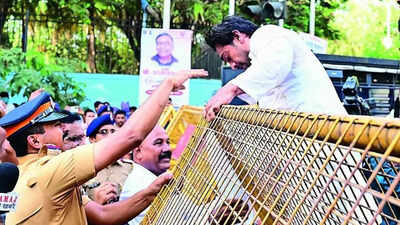
New Delhi: TMC MP Abhishek Banerjee Thanked the leader of the opposition in the Lok Sabha on Sunday Rahul Gandhi To extend support after he was attacked by a mob in Sonarpur, West Bengal.Responding to Rahul’s post on Twitter, Abhishek described himself as a “victim of state-sponsored terrorism” and alleged BJP Using political violence and intimidation against one’s opponents.The TMC MP said, “Thank you for your concern and continued support, Rahul ji. We remain united and determined in our fight to protect the soul of India, protect its democratic institutions and uphold the values ​​enshrined in our Constitution. Last year, I traveled to five countries representing India as part of an all-party delegation for Operation Sindoor. I defended my country and stood united against terrorism.”He said, “Today, I am a victim of political violence and state-sponsored terrorism spread by those who claim to be guardians of nationalism. This is the reality of today’s BJP. If you support them, you are a patriot. If you question them, you become a target. If you stand with them, you are celebrated. If you stand against them, they try to silence you.”Furthermore, the Diamond Harbor MP said he would “prefer to face intimidation while protecting democracy rather than enjoy the comfort of surrendering our principles”.He said, “Power is temporary. The will of the people is permanent. I will bow only before the people, never before those in power.”The TMC leader said, “We will continue our fight against those who want to weaken democracy and divide our country. India is united and we will ensure that the politics of fear, hatred, violence and intimidation is defeated and the voice of the people prevails.”Earlier on Saturday, Rahul Gandhi condemned the attack on the TMC leader and said it was a “disgusting expression” of the BJP’s “politics of vengeance”.Rahul said, “The attack on MP Abhishek Banerjee in Sonarpur is completely condemnable. An attack on an MP is not just an attack on an individual – it is an attack on the people who elected him, and an attack on the democracy that is our shared heritage.”“This is the ugly face of BJP’s vendetta politics. Political differences can never justify violence. The Central Government and the West Bengal Government should take immediate action against the culprits and ensure that no public representative, irrespective of party affiliation, has to worry about his safety.” Abhishek ji, my condolences are with you and your family. Wishing you a speedy recovery.”Meanwhile, former West Bengal Chief Minister Mamata Banerjee said that many opposition leaders, including Rahul Gandhi, reached out to her after the attack.She said, “Rahul Gandhi called me and said that if anything is needed, I can tell him and he can take Abhishek Banerjee to Hyderabad or somewhere else for treatment.”TMC national general secretary and MP Abhishek Banerjee was manhandled in South 24 Parganas district on Saturday as he went to meet the family of Sanju Karmakar, whom the party alleged was killed by “BJP-backed miscreants” in the post-poll violence.According to the police, unidentified people threw stones, shoes and eggs at them and allegedly tried to attack them while raising slogans.The Diamond Harbor MP was later seen being taken out of the area wearing a police helmet and his shirt torn.The incident sparked sharp political reactions, with opposition parties raising concerns over the law and order situation in the state and the continuing cycle of post-poll violence.Meanwhile, the BJP said the public welcome of the TMC MP reflected deep resentment among local residents against the governance policies of the ruling government, which it alleged had led to large-scale displacement and distress across the state.

Source link

‘Allegation of being Pakistani’: Kharge claims, Center is targeting students raising concerns over CBSE evaluation controversy. india news

'Alleged of being Pakistani': Kharge claims Center is targeting students raising concerns in CBSE evaluation row
Congress President Mallikarjun Kharge

congress president Mallikarjun Kharge CBSE on Sunday hit out at the Center over the evaluation process controversy and its treatment of students who have raised concerns, claiming they are being branded as “Pakistani”. The issue gained widespread attention when a student alleged that the answer sheet uploaded by the Central Board of Secondary Education (CBSE) under his roll number was not his. The board later admitted that an incorrect Physics answer sheet was uploaded under Vedanta’s roll number and later provided him with the correct answer sheet.In a post on Twitter, Kharge said that both CBSE students and NEET aspirants have become victims of the government’s failures in the education sector.Kharge said, “They planned to create ‘Pariksha Yodha’ but instead branded them ‘deep state agents’ and ‘Pakistanis’. Be it 17-year-old CBSE aspirants or NEET aspirants, the Modi government has trapped the youth of the country in its web of corruption by conspiring to destroy the country’s education system.”The Congress chief also alleged that institutions which once played a vital role in nurturing talent are now in decline under the BJP-led government.Kharge said, “There was a time when IITs, IIMs, central universities and national institutes used to produce the talent of the country. Now, because of BJP’s loot, we are not able to conduct even a single board exam properly. They have brought us to such a situation.”He further accused the government of weakening educational institutions and suppressing the voice of students.Kharge said, “Look at any institution – they ruined the UGC; started vendetta politics in JNU and central universities; erased history from NCERT textbooks; suppressed the voice of students in universities and crushed their movements; ideologically hijacked the appointment of vice-chancellors; closed more than 90,000 government schools; and cut the education budget year after year.”The comments came on a day when Leader of Opposition in Lok Sabha Rahul Gandhi met CBSE Class 12 students who were branded “anti-nationals”, “Pakistani” and “Soros agents” on social media after raising concerns over wrong answer sheets.Continuing his attack on the government, Kharge alleged that youth who raise their voices are regularly targeted and denied justice. They also renovated congress partyDemand for resignation of Union Education Minister Dharmendra Pradhan.“Whenever the youth take to the streets, whenever Gen Z raises their voices… every time, their voices have been suppressed, baseless allegations have been made against them, and they have been put behind bars! The BJP did not give jobs, they filled their pockets through recruitment exams, and completely ruined the education system!!”Kharge said, “I am repeating once again – demand the resignation of Union Minister Dharmendra Pradhan… Only then, Modi, the youth will get real justice.”

Source link

Who will replace DK Shivkumar as state president? Kharge says that Congress is looking for the right leader. india news

Who will replace DK Shivkumar as state president? Kharge says Congress is looking for the right leader
Congress President Mallikarjun Kharge

New Delhi: As a Congress leader DK Shivakumar The party president is preparing to take oath as the Chief Minister of Karnataka on June 3. Mallikarjun Kharge Sunday said she was still looking for the right person to replace her as the next Karnataka Pradesh Congress Committee (KPCC) president.Speaking to reporters at Kalaburagi airport, Kharge said the party is carefully considering its options and is looking for a leader who can strengthen the organization before the next assembly elections.Kharge said, “Naturally, after these people leave, someone else has to come. We are all searching. We have to look at good people and look at the combination and do it with a view to taking the party forward.”Elaborating on the qualities the party is looking for, he said the next state president should be able to work efficiently while keeping the organization united.He said, “Since now we have only 24 months, we have to find a leader who will work very fast and who will be collective and take everyone along. There should also be people who will support him. It is only after considering all this that we are doing this.”

Cabinet composition has not been finalized yet

Kharge also said that discussions on the composition of the new Karnataka Cabinet are still ongoing and no final proposal has been received regarding the number of ministers or deputy chief ministers.His comments come amid speculations over the composition of the new government after Shivakumar was unanimously elected leader of the Congress Legislature Party following the resignation of former Chief Minister Siddaramaiah.“We will have to wait and see, no proposal has come yet. Once the proposal comes, how many ministers should be made, how many DCMs should be made, or if important, the Speaker should also be made along with it…” All these discussions have taken place. This will be known after June 3,” Kharge said.He also indicated that cabinet expansion may happen in phases.He said, “The proposal has not come yet. The idea is to take the remaining cabinet members in the next 15 days or a month. But what the Chief Minister thinks is not known yet.”Kharge’s comments come a day after DK Shivakumar formally informed Thaawarchand Gehlot of his unanimous election as CLP leader.The Governor accepted Siddaramaiah’s resignation and asked him to continue in office till the new government is sworn in.The swearing-in ceremony of the new government of Karnataka is scheduled to take place in Bengaluru on June 3.(With inputs from ANI)

Source link

UP Chief Minister Yogi Adityanath launches Hindi version of ‘The Red Book of Emergencies – Life Saving Tips’ India News

UP CM Yogi Adityanath launches Hindi version of 'The Red Book of Emergencies - Life Saving Tips'

New Delhi: Chief Minister of Uttar Pradesh Yogi Adityanath The Hindi version of ‘The Red Book of Emergencies – Life Saving Tips’ was unveiled, which aims to improve public awareness about medical emergencies and life-saving interventions.Written by Dr. Lokendra Gupta and co-authored by Dr. Utsav Anand Mani, this book strives to help people recognize the warning signs of medical emergencies and take timely action during the critical ‘golden hour’ before professional medical care becomes available.The Hindi version was launched in Lucknow in the presence of the Chief Minister. According to the authors, the book has been written in simple language to make emergency-related information accessible to a wide audience, including people in rural and urban areas.Speaking on the occasion, Dr. Gupta said that his experience of working in emergency medicine for over two decades has shown that many patients reach hospitals too late because families fail to recognize the seriousness of the emergency or delay in seeking appropriate treatment.He said the book aims to provide practical and evidence-based guidance on identifying emergencies and taking immediate steps before reaching hospital.The publication includes information on recognizing important warning signs, reacting to heart attack, stroke, stroke, burns, poisoning, serious infections and other life-threatening conditions. It also addresses common misconceptions related to medical emergencies and includes QR codes linking readers to educational videos and awareness materials.During the program, CM Yogi highlighted the importance of public awareness about medical emergencies and discussed the possibility of providing such educational material through schools and colleges.The book is published by Jaypee Brothers Medical Publishers and developed under the banner of SACTEM Foundation, a non-profit organization focused on emergency care awareness and training.According to the organizers, the initiative aims to improve emergency preparedness among citizens and encourage early identification of life-threatening medical conditions.

Source link

Motivational quotes of PM Modi on community service and health precautions in Mann Ki Baat. india news

From heat protection to community service: PM Modi's top quotes in Mann Ki Baat
134th episode of Mann Ki Baat (Image credit: ANI).

Prime Minister Narendra Modi Many topics were discussed during the 134th episode on Sunday mind matterInspiring stories of social service, water conservation, sports achievements, summer health precautions and India’s love for mango were highlighted.The Prime Minister used the monthly radio program to encourage citizen participation, celebrate grassroots initiatives and recognize achievements in various fields.‘Recognize them‘I am doing good work for the society’Calling on people to learn from individuals who are making a positive impact, PM Modi said citizens should appreciate and support social causes.“Recognize those people who are doing good work for the society, appreciate them, learn from them and if possible, be a part of some good work yourself.”The Prime Minister said that stories of selfless service can inspire others to contribute to society and nation building.Prime Minister’s tribute to India’s mango growersWith summer in full swing, PM Modi also talked about India’s diverse mango varieties and praised the farmers involved in mango cultivation.“As soon as summer comes, another discussion starts in every house – that is about mango… Maharashtra and Konkan have Hapus, Alphonso, Gujarat’s Kesar is the soul of mangoes. UP has Dussehri and my Kashi has Langra… Mango’s journey is now reaching the global market from villages…”Praising mango growers, he said, “I would like to praise my farmer friends involved in mango cultivation. For the agricultural economy of the country, you are not an ordinary farmer but a special farmer…”Prime Minister urges caution amid heat waveAddressing the ongoing heat wave situation affecting several parts of the country, PM Modi urged citizens to exercise caution and follow official advisories.“At present, most parts of the country are in the grip of extreme heat… It is very important to take care of yourself in this season – keep drinking water, be careful while going out in the sun. Don’t forget the guidelines issued by various departments of the government…”The Prime Minister stressed the importance of staying hydrated and protecting oneself from extreme temperatures.Traditional summer drinks reflect India’s diversityPM Modi also highlighted traditional summer beverages from different regions of the country and described them as symbols of India’s cultural diversity.“You are also familiar with the traditional drink. In Northern India, you will find Aam Panna… In Punjab and Haryana, Lassi is found in large glasses, in Rajasthan and Gujarat, buttermilk becomes a part of every meal and in Bihar and Jharkhand and Eastern UP, Sattu Sharbat is unmatched as it fills the stomach and also gives energy. Kokum Sharbat, Sol Kadhi are consumed in Konkan and Goa, in Southern India you find Panakam, Neer Mor and Sambharam and Bella Panna will be found in Odisha...”“They also reflect the spirit of ‘One India, Best India’… You too will enjoy such traditional drinks in summers…”Water conservation efforts appreciatedThe Prime Minister also appreciated the efforts to restore rivers, ponds and wells across the country.“Saving and reviving a river, pond or well that holds childhood memories brings a special joy and sense of satisfaction.”He said community-led conservation efforts are helping conserve water resources while strengthening local participation.spotlight on india emerging athletesPM Modi recently congratulated athletes who set new national records and highlighted India’s growing sporting achievements.“A few days ago, the National Senior Athletics Federation competition was held in Ranchi, Jharkhand… During this, 4 national records were broken in 4 different events. Gurinderveer Singh, Vishal TK, Tejaswin Shankar, Dev Meena and Kuldeep Kumar created new records in different categories. I congratulate him wholeheartedly…”He also praised sprinters Gurindervir Singh and Animesh Kujur for their performance in the 100 meters race.Through stories ranging from community service and environmental conservation to agriculture and sports, the Prime Minister’s address focused on celebrating ordinary Indians who have made extraordinary contributions.The episode highlighted the themes of public participation, social responsibility, cultural pride and collective efforts towards nation building.

Source link