Breaking News
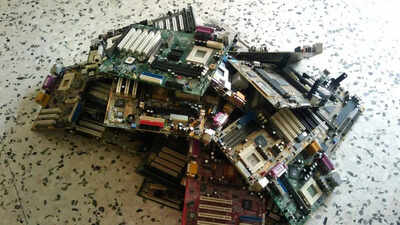
Swiss scientists say that this electronic device which we all throw away, has 450 mg of 22 carat gold hidden in it.
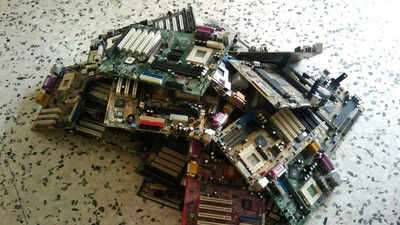
Swiss scientists say that we all throw away this electronic device in which 450 mg of 22 carat gold is hidden.

These days there is a belief all over the world that one should buy gold for future investment. All big investors will suggest buying gold as the best way to invest money. but scientist ETH Zurich (Swiss Federal Institute of Technology) have developed a sustainable method to restore 22 karat gold from electronic waste using proteins made from whey, a byproduct of the dairy industry. Swiss researchers successfully recovered 450 mg of 22 karat gold from 20 discarded computer motherboards. This special research conducted by scientists at ETH Zurich has been published in the journal advanced Materials.

How 20 discarded motherboards are hiding 22 carat gold!

According to a joint report by the United Nations Institute for Training and Research (UNITAR) International Telecommunication Union (ITU)The world will generate a record 62 million tonnes of e-waste in 2022. There is literally a mine of gold in these scraps. Electronic devices such as motherboards usually sell more expensive because of the use of gold in their connectors and circuit paths due to its superior conductivity and corrosion resistance. Researchers at ETH Zurich have confirmed in their study that by processing just 20 old computer motherboards, they can recover 450 mg of high purity, 22 karat gold. The number could be larger if the amount of discarded motherboards is high.

Whey to Wealth: Using Dairy Byproducts to Extract Precious Metals

The most incredible part of the Swiss research is the use of whey, a common liquid byproduct of the cheese making industry. Whey protein, traditionally considered a waste product, has been transformed by scientists into a highly efficient ‘protein sponge’ capable of extracting gold from discarded electronic scrap like motherboards.As cited by ETH Zurich (Swiss Federal Institute of Technology), researchers denatured whey proteins under high temperatures and acid to create tiny fibers, called amyloid fibrils. These nanometer sized fibers were freeze dried to make sponges. When this sponge is placed in a solution of a dismantled computer motherboard, it acts like a molecular magnet.

Profitable and green future e-waste recycling

The success story of Swiss researchers on the protein-sponge method signals a change in the way we look at global waste streams. By solving the extraction principle that high-purity gold can be recovered using organic materials instead of toxic chemicals, researchers have laid the foundation for a truly green and profitable circular economy. This study transforms e-waste from a growing environmental liability to a beneficial resource.

How is this discovery of 22 carat gold a win for the global economy?

According to an economic analysis provided by ETH Zurich, the value of the 450 mg of 22 karat gold recovered far exceeds the costs associated with its extraction. Furthermore, the cost of energy and raw materials is approximately 50 times less than the market value of the gold obtained. This profit-to-cost margin makes the technology highly attractive to scale up commercially, as it provides a faster and cheaper way to extract gold from deep earth ores.
Source link

NASA astronauts use AI and augmented reality for health and spacewalk on ISS Expedition 74

NASA astronauts use AI and augmented reality for health and spacewalk on ISS Expedition 74

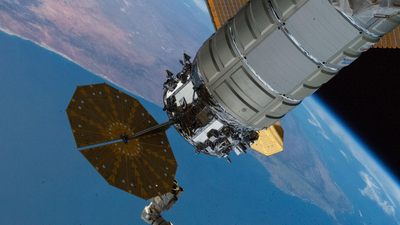
The 74 expedition members aboard the International Space Station (ISS) are preparing for an important spacewalk to advance microgravity research. NASA Flight engineers Jessica Meyer and Chris Williams prepared spacesuits in the Quest airlock, cleaned cooling loops and reviewed procedures for the March 18 extravehicular activity (EVA). They will perform kit modifications and install route cables for the seventh roll-out solar array, increasing ISS power capacity. Meanwhile, Jack Hathaway and ESA’s Sophie Adenot test EchoFinder-2, an AI-augmented reality ultrasound device in the Columbus module that autonomously scans organs to reduce reliance on Earth for distant missions. NASA further reported that Roscosmos astronauts Sergei Kud-Sverchkov and Sergei Mikaev monitored vascular health with sensors, while Andrey Fadeyev maintained the oxygen generator and water systems. Northrop Grumman’s Cygnus XL opens for re-entry into the Pacific via Canadarm2 on March 12, after delivering 11,000 pounds of cargo through September 2025. These efforts are a mix of maintenance and science, fueling the president’s deep space ambitions as part of the Artemis push. Live coverage across all NASA platforms begins at 6:45 a.m. EDT.

Spacewalk preparations on the international space station

NASA flight engineers Jessica Meir and Chris Williams are leading the charge for the upcoming spacewalk on March 18. Inside the Quest airlock, the two carefully cleaned the cooling loops on their spacesuits, refilled water components, and inspected the helmets to ensure everything worked flawlessly during the six-and-a-half-hour extravehicular activity (EVA). Their mission? To install a modification kit and route cables on the port side of the ISS for a future roll-out solar array, the seventh such array to boost the station’s power output. As posted on their This spacewalk highlights the ongoing upgrades keeping the ISS operational amid its aging infrastructure.Veteran astronaut Jessica Meyer, with her experience from previous EVAs, pairs seamlessly with Chris Williams, who has been adapting to station life since November. Their teamwork at the Quest Airlock not only prepared the hardware but also reviewed critical emergency procedures for the harsh vacuum of space. Augmented reality and AI in space health screeningInnovation is not just outside the station, it is thriving inside as well. Flight engineer Jack Hathaway of NASA and Sophie Adenot of the European Space Agency (ESA) conducted an augmented-reality-guided ultrasound scan using the EchoFinder-2 device in the Columbus laboratory module. They took pictures of each other’s abdomens and vascular systems, with AI analyzing the data to automatically identify the organs. An ESA report on the technology explains, “EcoFinder-2 opens the door to autonomous ultrasound using minimal training and low-tech hardware for space missions, reducing the reliance on Earth-based experts critical for future Mars trips where signal delays stretch up to 20 minutes. Adenote, on his first mission since February 2026, and Hathaway, a U.S. Navy captain with more than 2,500 flight hours, swapped roles to test the system’s reliability in weightlessness. Meanwhile, NASA’s blog further reports that Roscosmos astronauts Sergei Kud-Sverchkov and Sergei Mikaev monitored circulatory health with blood pressure cuffs and sensors on the forehead, fingers and toes. Data sent to the laptop helps doctors track microgravity’s effects on vascular systems, from fluid changes to possible clots. Flight engineer Andrey Fadeyev kept life support running, servicing the electron oxygen generator in the Zvezda module and purifying water tanks to protect the crew’s supplies.

Cygnus cargo spacecraft departing from the ISS

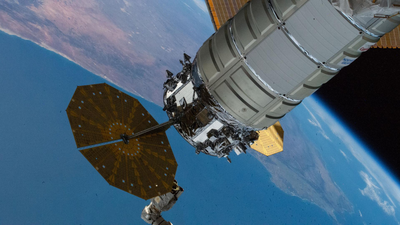
Northrop Grumman’s Cygnus XL cargo spacecraft is expected to undock on March 12, after a six-month stay beginning September 18, 2025. Loaded with trash and experiments, it will be grabbed by the Canadarm2 robotic arm from the Unity module and released for a fiery reentry over the South Pacific. The mission delivered more than 11,000 pounds of supplies, hardware and science payload under NASA’s Commercial Replenishment Service program. “Cygnus XL, operated by Northrop Grumman, is scheduled to depart the ISS on Thursday, March 12,” Space Coast Daily confirms, with live coverage beginning at 6:45 a.m. EDT on NASA+.Sophie Adenot will oversee Cygnus’ systems post-release, ensuring a smooth exit. This departure clears the docking port for future missions, maintaining the ISS’s role as a springboard for deep space ambitions.

Expedition 74 Crew: Pioneering Spacewalk

Expedition 74, running from December 2025, combines NASA, ESA and Roscosmos expertise for research in biology, physics and human physiology. From solar array upgrades powering the outposts of tomorrow to AI diagnostics paving the way for autonomous medicine, these activities captivate global audiences.As President Trump’s administration sets its sights on Artemis and beyond, the ISS remains Earth’s orbiting laboratory, where changes like turning on today’s solar arrays provide sustainable power for an expanded human presence in space. Watch the action live and witness history happening 400km above us.

Source link

‘To not offend anti-Hindu haters’: Indian-origin brand removes Lakshmi idol from packaging, faces heavy criticism online | world News

'To not offend anti-Hindu haters': Indian-origin brand removes Lakshmi idol from packaging, faces heavy criticism online

A New York-based Indian-origin food brand has come under fire online after users noticed that the Goddess Lakshmi idol had been removed from its packaging.The controversy began after a post on Ax went viral, where Indian-American, an account known for highlighting issues related to Hindu Americans, called out the brand for a sudden change.The account criticized the brand for changing its longtime logo featuring the deity, calling it a “meaningless, confusing depiction.” “Did you remove it to get buyers who think Lakshmi offends them?! Bring her back!” This was the conclusion. The account has 44.2K followers on X and its callout quickly gained prominence on the app, sparking debate over the reasons behind the sudden change. The post quickly gained popularity online, sparking widespread debate about religious depictions on consumer packaging.The account, which has 44.2K followers on X, helped push the discussion into a viral trend, with users offering sharply divided opinions.Some users admitted that the presence of a deity on the packaging had made them uncomfortable in the past. One customer explained, “I don’t know man. I actually didn’t buy this brand because of the god on packaging. It was almost impossible to throw the empty packaging in the trash.” However, he also reflected on whether the brand should make changes to open itself up to more demographics, because “at the end of the day it’s about money.The author of the post replied, “I think they removed it to not offend anti-Hindu haters.”Others expressed similar concerns about the disposal of packaging containing religious depictions. “Buying things with our gods on the packaging is always a dilemma for me. What to do with the package after using the contents? Don’t feel like throwing in the trash. It is precisely for this reason that I avoided purchasing any Agarbatti brand. “I’m kind of relieved,” another wrote. “Yes, this brand has become extremely bad for “South Asians,” one user said. “Oh my god, that’s too bad. I even trusted this brand,” supported another. Interestingly, most of the users in the comments seemed satisfied with the move, with some even demanding a bigger initiative to ban the use of God and Goddess idols on packaging, which are ultimately rejected. Amid the debate, one user pointed out that the change in packaging is not recent. They revamped the brand several years ago and this was done as per customer feedback as they were unable to throw away the packaging but also faced difficulty in collecting it. “They did this years ago and surprised you now realize they did this based on customer feedback because they can’t throw away and can’t even collect,” he wrote. According to a video shared on the brand youtube The logo of the channel, packaging was changed in 2020. “Your favorite food brand Lakshmi now has a new logo,” it says in the clip revealing the new logo of the lotus, a flower primarily associated with the goddess in Hindu mythology and held dear. The brand, which sells a variety of South Asian products including spices and food items, was founded in 1972 in Jackson Heights, New York by GL Soni and his brother KL Soni under their business, House of Spices. It has several stores in the US and caters to a largely South-Asian consumer base.

Source link

A ‘lake’ so huge that it is bigger than Japan and touches five countries

At first glance, the Caspian Sea appears as an ocean that stretches endlessly to the horizon, touching the shores of five countries. Yet scientists classify it not as a sea, but as Earth’s largest lake, a vast inland lake covering some 371,000 square kilometers, larger than Japan in size. Spread across Europe and Asia, it is bordered by Russia, Azerbaijan, Kazakhstan, Turkmenistan and Iran. Its vast expanse, distinctive chemistry and geopolitical importance make it one of the planet’s most captivating geographical wonders. From ancient Silk Road commerce to contemporary oil pipelines, the Caspian has deeply influenced the historical, economic, and ecological narrative of the region. Despite this, little is known to the world about its hybrid lake-sea status, lucrative caviar trade and important role in global energy politics.
Credit: Canva

Source link

UAE weather forecast: Expect rain, dust and cold temperatures till March 15 world News

UAE weather forecast: Rain, dust and cold temperatures expected till March 15
Rain, dust and cold temperatures are expected till March 15.

According to the National Meteorological Centre, weather conditions in the UAE are set to remain unstable from Wednesday to March 15, with rain, dusty winds and cold temperatures expected in many areas before conditions gradually improve towards the end of the week. The National Center of Meteorology (NCM) said partly cloudy sky is expected across the country on Wednesday. Dusty conditions may occur at times, while rainfall may occur over some western and coastal areas. The temperature is also expected to decrease gradually during the day. Northeasterly winds will be active during the day, at times becoming strong enough to kick dust and sand into the air. Wind speed is expected to be between 15 to 30 km/h, with gusts reaching 50 km/h at some places. Winds are likely to reduce by afternoon. Sea conditions in both the Arabian Gulf and Oman Sea will start rough, then become moderate to light during the day. Humidity levels may increase in the morning in some inland areas on Thursday. There is also a possibility of light fog towards western areas in the beginning of the day. As the day progresses, the sky will remain partly cloudy and rain may still occur at isolated places. Winds will continue to blow from the north-east, generally light to moderate, but may be gusty at times and kick up dust. Wind speeds are expected to range between 15 to 25 km/h, reaching up to 35 km/h at times. Moderate to light waves will occur in the Arabian Gulf, while waves will remain light in the Oman Sea. By Friday, the country may again experience muggy conditions in the morning, with the possibility of light fog over some western areas. The sky will be partly cloudy during the day and light rain may occur over some western, coastal and island areas. It is expected that the temperature will start rising gradually. North-easterly winds will be light to moderate, becoming strong at times and blowing dust. Winds are expected to range from 15 to 25 km/h, with gusts reaching 35 km/h. Sea conditions will be light to moderate in the Arabian Gulf and light to moderate in the Oman Sea. On Saturday, humid conditions are expected again in the early morning, with fog or mist also likely over some coastal areas. The rest of the day will remain mild to partly cloudy across the UAE. Winds from the north-east will be light to moderate, reaching speeds between 10 to 20 km/h, at times reaching speeds of 30 km/h. Sea will be light in both Arabian Gulf and Oman Sea. By Sunday, moisture may once again bring morning fog in some coastal areas. After this the weather will become clear and partly cloudy, while the temperature is expected to rise further. North-easterly winds will continue at 10 to 20 km/h, occasionally reaching 30 km/h, sea conditions will remain mild in both the Arabian Gulf and Oman Sea.

Source link

UAE confirms six months’ stock of essential commodities, assures no shortage amid market collapse | world News

UAE confirms six months' stock of essential commodities, assures no shortage amid market downturn
The UAE has confirmed six months of strategic reserves of essential commodities as authorities intensified market inspections nationwide/Representative Image

The UAE Ministry of Economy and Tourism has stepped up inspections in markets to ensure stable prices and availability of essential commodities, assuring residents that the country has strategic reserves of key commodities that can meet demand for up to six months.The ministry said inspection teams are conducting daily checks at shops and retail outlets across the country. These inspections are being conducted in coordination with economic development departments in all emirates through a joint national monitoring team. The objective of this effort is to prevent unreasonable price increases, prevent unfair commercial practices and maintain close surveillance on market activity.Officials said retailers must follow consumer protection rules, especially those governing pricing of essential goods. Under the current policy, traders cannot raise prices of certain basic commodities without prior permission from the ministry and the national committee responsible for monitoring price changes.This rule applies to nine essential goods: cooking oil, eggs, dairy products, rice, sugar, poultry, legumes, bread and wheat.The ministry also discussed the recent increase in prices of onion and tomato in the last two days. Officials said the increase is temporary and linked to the impact of the regional crisis. Additional supplies of these vegetables have already been delivered to the markets in large quantities to stabilize availability.Officials stressed that essential goods should be available in sufficient quantities and consumers should have access to a variety of options. Officials said prices are expected to return to normal levels soon due to increased supply.The ministry said the UAE maintains a strategic stockpile of essential commodities capable of meeting market demand for six months. These reserves are distributed to different regions of the country through a system designed to strengthen supply chains and allow authorities to respond quickly to market needs during emergencies.Officials also confirmed that shipping and supply operations through the country’s entry points are continuing normally. Supply chains remain efficient and goods are reaching local markets without any interruption.The UAE also relies on an extensive network of international partner markets that supply imports of a variety of goods. This allows authorities to quickly secure alternative sources if a disruption occurs.Since the beginning of the regional crisis, the Ministry of Economy and Tourism and local economic development departments have conducted about 7,105 inspection visits to markets across the country. These inspections resulted in 567 violations, the majority of which were related to unfair price increases.Authorities issued 449 warnings to traders, suppliers and retail outlets and imposed financial penalties totaling AED207,250.The ministry said that surveillance operations will continue in the future to ensure market stability and protect consumers.Residents are encouraged to report price gouging or violations through official channels. Complaints can be submitted through the website of the Ministry of Economy and Tourism www.moet.gov.aeBy calling 8001222 or sending a WhatsApp message, or emailing info@moet.gov.ae.Officials also urged consumers to buy goods as per their needs and avoid hoarding or excessive purchasing so that products remain available to all.

Source link

‘Dropped 2,000 pounds of bombs’: US launches B-2 bombers to destroy Iran’s missile production capabilities

'Dropped 2,000 pounds of bombs': US launches B-2 bombers to destroy Iran's missile production capabilities
The US is stepping up its campaign against Iran’s missile capabilities, with B-2 bombers reportedly striking deeply buried missile sites. The move signals a direct effort to end Iran’s missile production, a program Washington has long viewed with suspicion. These attacks highlight the US’s ability to target hard infrastructure, even underground facilities.

The war between the US, Israel and Iran has entered its 12th day with no signs of stopping and is becoming more intense. The White House said on Wednesday that the US military is moving to destroy Iran’s missile production capabilities. He further said that American B2 bombers have attacked missile sites buried deep in the country.White House press secretary Carolyn Leavitt said during a briefing that B-2 bombers “dropped 2,000-pound bombs” on underground missile facilities in Iran.“The United States military is now moving to eliminate Iran’s missile production,” Leavitt said. He said B-2 bombers “recently dropped 2,000-pound bombs on missile sites buried deep in Iran.”The comments came as Washington signaled a more direct effort to target elements of Iran’s missile program. Details regarding the timing of the attacks, the specific locations targeted or the extent of the damage were not immediately disclosed. The long-range stealth bomber used in the operation, the B-2 Spirit, is designed to deliver precision strikes against heavily fortified or underground targets.

B-2 bomber

Iran’s missile program has long been a point of contention between the United States and Iran, with Washington repeatedly raising concerns that the program could be used to deliver nuclear weapons, a charge Tehran has repeatedly denied.

What are B2 bombers?

B2 bombers can carry GBU-57 bunker busters, designed to penetrate deep underground before detonating. The bomb was specifically developed to destroy hardened nuclear facilities and deeply buried command centers.

B-2 Bomber - Specifications and Features

The B-2 is one of the most advanced aircraft ever built. Its flying-wing design and special materials significantly reduce its radar signature, allowing it to penetrate heavily defended airspace.This capability makes the aircraft uniquely suited to attack hardened underground facilities. In fact, the B-2 is currently the only aircraft capable of carrying the GBU-57 bunker-buster bomb.Last June, in Operation Midnight Hammer, seven B-2 bombers reportedly dropped fourteen of these warheads on Iranian nuclear facilities at Fordow, Natanz, and Isfahan. This attack marked the first operational use of the weapon. These attacks demonstrated the United States’ ability to destroy hardened infrastructure even when buried in mountains or under reinforced bunkers.

Source link

WATCH: US destroys several Iranian mines in the Strait of Hormuz

WATCH: US destroys several Iranian mines in the Strait of Hormuz

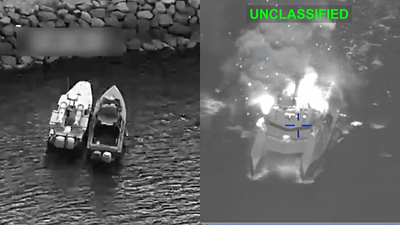
The United States military has destroyed several Iranian ships believed to be capable of laying naval mines near the strategic Strait of Hormuz, according to US Central Command, as concerns grow over Tehran’s effort to disrupt shipping in the vital waterway.In a post on Twitter, the United States Central Command (CENTCOM) said US forces targeted and destroyed several Iranian naval vessels on Tuesday.

Iran says ’10 US radar systems destroyed’ as war escalates Trump issued new threat

“US forces destroyed multiple Iranian naval vessels on March 10, including 16 mines near the Strait of Hormuz,” the command said, sharing a video showing some of the strikes.The claim followed comments by US President Donald Trump, who earlier said US forces had attacked Iranian ships capable of laying mines in the area. But interestingly, according to Trump, 10 ships were destroyed, which is contrary to the military’s claim of 16 ships. In a post on Truth Social, Trump wrote: “I am pleased to report that within the last few hours, we have attacked 10 disabled mine-laying boats and/or ships, and completely destroyed them, with more on the way!”

.

The US president also warned Tehran against deploying naval mines in the key shipping corridor. “If Iran has placed any mines in the Strait of Hormuz, and we have no reports of them doing so, we want them removed immediately!” He has written.Trump said failure to remove such mines could lead to a strong military response. “If for any reason the mines are placed and are not immediately removed, the military consequences for Iran would be on a level never seen before,” he said. He said removing any equipment would help reduce stress. “If, on the other hand, they remove what has been kept, that would be a huge step in the right direction.”

.

The warning comes after a CBS News report citing US officials said Iran may be preparing to deploy naval mines in the strait. People familiar with US intelligence told CNN that a small number of mines may already have been placed in the waterway. The Strait of Hormuz, located between Iran and Oman, is one of the world’s most important energy chokepoints, with about 20 percent of global trade oil passing through it every day.Control of the waterway is shared by Iran’s navy and the Islamic Revolutionary Guard Corps (IRGC), who have warned that ships passing through the channel could be targeted.Since the war escalated, officials have described the strait as an increasingly risky transit area for commercial shipping.

Source link

$1 million for Bhadreshkumar Patel: FBI increases reward for ‘most wanted’ Indian man accused of murdering wife in 2015

$1 million for Bhadreshkumar Patel: FBI increases reward for 'most wanted' Indian man accused of murdering wife in 2015

The Federal Bureau of Investigation (FBI) has increased the reward for information leading to the arrest of fugitive Bhadreshkumar Chetanbhai Patel, who is on the list of ten most wanted fugitives, to $ 1,000,000. Patel is an Indian citizen and was included in the FBI’s most wanted list after he allegedly murdered his 21-year-old wife on 18 April 2017. Palak PatelAt a Dunkin’ Donuts store in Hanover, Maryland on April 12, 2015. He was 24 years old at the time, and his wife was 21 years old. The couple were both working night shifts at the shop when the attack took place.According to the FBI, Patel stabbed Palak multiple times in the back room of the store just before midnight. Soon after he fled from the scene.After leaving the donut shop, Patel went to the apartment where he lived with his wife, took some personal items and cash and then took a taxi. The driver took him to a hotel near Newark Liberty International Airport in New Jersey. She checked in early in the morning, wearing only the clothes she had.Later that morning, Patel left the hotel and was seen at Newark Penn Station. This is his last confirmed sighting and there have been no confirmed sightings since then.The FBI said Patel should be considered armed and extremely dangerous. Investigators believe he may have ties to Canada, India or several US states, including New Jersey, Georgia, Illinois and Kentucky.Jimmy Paul, Special Agent in Charge of FBI Baltimore, said, “We hope this $1 million reward will draw more attention to our tireless search for Bhadreshkumar Patel and provide the tips we need to bring Palak Patel to justice.”The agent said: “The increased reward reflects the seriousness of Patel’s crime and that he is on the FBI’s Ten Most Wanted Fugitives list.”The FBI’s Ten Most Wanted Fugitives list is a long-running law enforcement initiative designed to seek the public’s help in locating dangerous fugitives. Since its creation in 1950, many fugitives have been captured due to tips from citizens.Anyone with information about Patel’s whereabouts should contact the FBI through its tip line or its official website. Authorities have asked the public not to attempt to catch him themselves.Bhadreshkumar Patel was born on 15 May 1990 in Kontrodi Ta Viramgam, Gujarat, India. He is an Indian national with brown hair and brown eyes, stands 5’9″ tall and weighs approximately 165 pounds. Patel worked at a donut shop before becoming a fugitive.

Source link

Did Sakura Shimako move on with Kik streamer Drago after her breakup with JasonDween? Viral yacht kiss clip leaves fans confused

Did Sakura Shimako move on with Kik streamer Drago after her breakup with JasonDween? Viral yacht kiss clip leaves fans confused
Did Sakura Shimako move on with Kik streamer Drago after her breakup with JasonDween? Viral yacht kiss clip leaves fans confused (Image via Getty)

Sakura Shimako suddenly became a big topic online this week when a video of a small boat began spreading on social media. The clip showed a couple kissing on a boat at night, with the bright lights of the city in the background. Many viewers immediately assumed that the woman in the video was Sakura Shimeko, the younger sister of popular streamer Kyede. Due to that speculation, people started claiming that she had already started dating Kik streamer Drago. Time made the rumor even stronger. Sakura recently ended her relationship with FaZe streamer JasonDween, whose real name is Jason Nguyen. Their relationship was widely discussed online during the “Streamer Prom” storyline in 2026 earlier this year.So when the Nauka video premiered around March 9 and March 10 and began garnering millions of views on X, many viewers believed they were seeing Sakura kiss Drago shortly after their breakup. But as more people took a closer look at the clip, the situation turned out to be very different from what the Internet had first thought.

Sakura Shimeko, Drago and Jason Dween Rumor Explained Here’s How viral boat kiss video turned out to be a lookalike

The rumor began when the short video began circulating widely in streamer communities on X. The clip featured a man and a woman kissing on a yacht while filming content at night. Since the woman had similar hair and facial features, many users believed she was Sakura Shimako.The post sharing the video claimed that she was with Kik streamer Drago during the livestream. Some captions also suggested that the moment happened just weeks after Sakura’s breakup with Jason Nguyen, also known online as jasonthevin.However, people in the streaming community quickly began to correct the claim. Several community accounts pointed out that the woman in the clip was not Sakura Shimako at all. Instead, she was someone who looked exactly like him and had previously appeared in videos with people from Drago’s friend group.Due to the resemblance, some viewers jokingly call the woman “Temu Sakura,” “Budget Sakura,” or “Off Brand Sakura.” These nicknames simply refer to the fact that she looks similar to Sakura, which led to confusion.Community notes on one of the viral posts also clarified the situation. The note explained that the woman had already been identified as a lookalike and that the post claiming she was Sakura was spreading false information about the engagement.Many users responded directly to the post and demanded its removal. “Remove this. Not actually Sakura nor does she look like her,” one person wrote on X. Another user commented, “It’s literally not even hers.”Some viewers also pointed out that Sakura Shimeko has many people online who look like her, which makes mistaken identity easier during increasingly viral moments. One reply said, “I swear Sakura has a lot of lookalikes.”So far, Sakura Shimko has not addressed the rumor publicly. Her social media pages have been silent about the video, Drago, or any possible relationship.Drago and those associated with his content have also continued to post normally and have never suggested that the woman in the clip was Sakura. At the moment, there is no confirmed connection between Sakura Shimako and Drago beyond the mistaken identity that started the rumor.

Source link