WH divided: Trump aides debate exit vs escalation

WH divided: Trump aides debate exit vs escalation

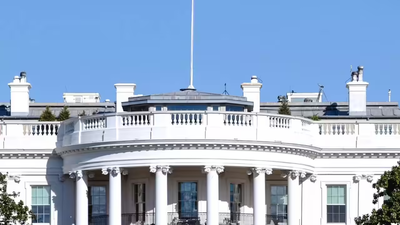
Washington: A complex tug of war inside the White House is troubling America. President Donald Trump’s changing public statements amid the Iran war have left allies debating when and how to declare victory as the conflict spreads across the Middle East.Some officials and advisers are warning Trump that rising gasoline prices could come at a political cost, while others are pressuring him to continue an aggressive stance against Iran, according to interviews with a Trump adviser and others familiar with the talks. His comments offer a previously untapped glimpse inside White House decision-making as it adjusts its approach to the largest US military operation since the 2003 Iraq War.Economic advisers and officials, including the Treasury Department and the National Economic Council, have warned Trump that oil shocks and rising prices could rapidly erode already weak domestic support for the war, the adviser said. Political advisers, including chief of staff Susie Wills and her deputy, James Blair, are making similar arguments, the sources said.More hawkish voices urging Trump to maintain military pressure on Iran include Republican lawmakers such as U.S. senators Lindsey Graham and Tom Cotton and media commentators such as Mark Levin, according to people familiar with the matter. They argue that the United States should prevent Iran from acquiring nuclear weapons and respond forcefully to attacks on American troops and shipping.The third force comes from Trump’s populist base and people like strategist Steve Bannon and television personality Tucker Carlson, who are publicly and privately pressuring him and his top aides to avoid getting drawn into another conflict.Asked for comment, White House press secretary Carolyn Leavitt said: “This story is based on gossip and speculation from unnamed sources who have not even been in the room for any discussion with President Trump.” reuters

Source link

Cheese Ritual: Inside the 660-year-old Dutch market where men dressed in white race with giant cheese wheels world News

Cheese ritual: Inside the 660-year-old Dutch market where men dressed in white race with giant cheese wheels

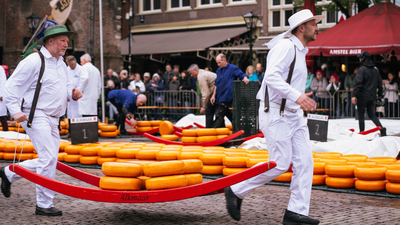
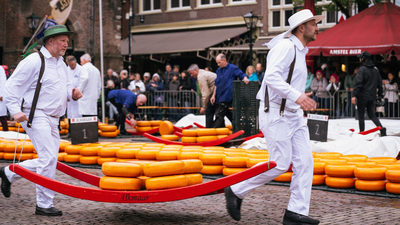
On a summer Friday in the Dutch city of Alkmaar, the air is filled with the smell of the old dairy and the rhythmic movement of wooden stretchers across the cobblestone square. exactly at 10 amA bell rings above the historic Wagplein and the show begins. Dozens of men wearing immaculate white uniforms and straw hats break into a fast, synchronized trot, balancing heavy stretchers filled with bright yellow wheels of cheese. It seems dramatic, almost surreal. Yet what unfolds each week is not a show staged for tourists, but the continuation of a business ritual that has persisted for centuries.For Alkmaar, cheese is more than food. It is identity and history. The city’s connection with the dairy trade dates back to 1365, when Alkmaar first gained the right to weigh cheese in the city. Over time, farmers, merchants and guild members turned the weekly market into one of the Netherlands’ most recognizable traditions. Every Friday from April to September the market relives the old rituals of bargaining, weighing and transporting cheese that have shaped the city for more than six centuries.

A medieval cheese market born of trade

Long before it became a famous cultural attraction, the Alkmaar Cheese Market was an essential center of commerce. Farmers from nearby villages brought their cheese to the city to sell to merchants who exported Dutch dairy throughout Europe. The appearance of an official weighing scale in 1365 allowed merchants to trade under the supervision of city officials, ensuring that all transactions were fair.By the beginning of the seventeenth century the cheese trade had become so large that Alkmaar operated several scales. The square known as Waagplein became the focal point of this bustling market. During the Dutch Golden Age, thousands of cheese wheels passed through Alkmaar each year as the Netherlands emerged as one of the leading trading nations of Europe. Cheese produced in the region was transported by traders and ships to markets throughout the continent.Today the market recreates these age-old practices. What visitors see on Friday morning is a carefully preserved reflection of how business once worked.

Association of Cheese Carriers

At the center of the ritual stands the historic Cheese Carriers’ Guild, known locally as Kasdragersgilde. Founded in 1593, the guild is responsible for the transportation of cheese to market. Membership is limited and the organization still follows a strict hierarchy that reflects its long history.The carriers wear white uniforms with straw hats decorated with colorful ribbons. The ribbons represent four traditional teams, each identified by its own color. Each team has its own foreman and they work together to move the heavy load across the square.The entire operation is overseen by the formal head of the guild, often called the Cheese Father. Every Friday before the market opens he calls the carriers together, confirms attendance and announces the start of the trading day. Only after this ritual the bell is rung and the market officially begins.The guild also enforces long-standing traditions of discipline. Carriers who arrive late or fail to properly maintain their uniforms may be fined. These rules help preserve the historical character of the event.

Association of Cheese Carriers

Famous Cheese Carriers Race

The most important moment in the market is the activity of the carriers themselves. Working in pairs, they lift wooden stretchers loaded with stacks of cheese wheels. Each stretcher can hold eight large cheeses and the total weight can reach approximately 160 kg.To transport the load, bearers move with fast, rhythmic movements across the square. This specific activity allows them to keep the stretcher balanced while moving through the busy market. This proposal is both practical and formal. This ensures that the cheese remains stable while also creating a spectacle that attracts visitors from all over the world.Watching the bearers move in perfect coordination gives the impression that time has briefly reversed and the square has returned to the rhythm of previous centuries.

The strange art of bargaining by clapping hands

Before any cheese can be taken to the crossroads it must first be sold. The traditional bargaining ritual used in Alkmaar is known as Handeklap, which roughly translates as hand clapping.During negotiations, buyers and sellers frequently clap together while quoting prices. Each clap represents a new proposal or counterproposal. The rhythm continues until both parties agree on a price, and the final clap seals the deal.This lively negotiation method once determined the price of large quantities of cheese each market day. Although trading today is largely symbolic, rituals are still performed to maintain the spirit of the historical market.

guardian of the weighing house and impartiality

Once the sale has been agreed, the cheese carriers take the wheels to the historic weigh house known as the Wag. This building dominates the Waagplein and for centuries served as the official location where cheese was weighed and recorded.The weigh master inside the building monitors the process to ensure that the correct weight is recorded. This step was necessary in previous centuries because merchants paid for cheese by weight. Therefore accuracy and honesty were important to maintain confidence in the market.Expert cheese inspectors also played an important role. Using metal tools they would remove small samples of the cheese to test its quality, texture and taste before confirming that it met commercial standards.

the thing that built a nation

The cheeses displayed at the market are classic Dutch varieties like Gouda and Edam. These cheeses became global symbols of Dutch food culture and helped build the country’s reputation as a center of dairy production.Over the centuries Dutch farmers improved the techniques of aging and preserving cheese, allowing it to be transported over long distances without spoiling. During the height of the Netherlands’ trading power, cheese from Dutch cities traveled throughout Europe and to foreign markets.Even today cheese remains deeply ingrained in the Dutch diet and culture. The country produces millions of tonnes of cheese every year and exports it around the world.

A tradition that has survived for centuries

Like many historical traditions, the Alkmaar cheese market has faced disruptions. During World War II the market was temporarily suspended due to wartime conditions and food shortages. It reopened after the war, restoring the tradition that had defined the city for generations.In modern times the market has evolved into a cultural event rather than a purely commercial event. Large crowds gather at the square each week to watch the carriers, the bargaining rituals, and the ceremonial weighing process.The city itself has become a vibrant community of over a million residents, yet the market remains a symbol of its historical roots.

more than a market

Today the Alkmaar Cheese Market is a living reminder of the Netherlands’ mercantile past. The uniforms, the hand-clapping, the movement of the carriers and the ringing of the bell that starts the market each Friday morning all preserve a tradition that has lasted for more than six hundred years.For visitors, the event offers much more than the opportunity to buy cheese. It offers a glimpse of a time when markets were the heart of European cities and when a simple wheel of cheese could represent the prosperity of an entire region.And every Friday morning, when the bells ring above the Wagplein and the bearers begin running across the square, Alkmaar returns for a while to the rhythm of the Middle Ages.

Source link

‘Putin can help them’: Trump hints Russia could help Iran

'Putin can help them': Trump hints Russia could help Iran

chairman donald trump On Friday he said he had confidence in the Russian leader Vladimir Putin The United States was helping Iran in its war against Israel.Trump’s comments came in a radio interview with Fox News host Brian Kilmeade, and one week after the president criticized Fox News reporter Peter Doocy for asking at the White House about reports that Russia is aiding Iran.Kilmeade asked Trump on Friday, “Do you think Putin is helping him?”Trump responded, “I think he might be helping them a little bit, yes.”“I think, and he probably thinks we’re helping Ukraine, right?” Trump continued.“Yes, we are helping them too,” Trump said, referring to Ukraine, which has been at war with Russia since its invasion in early 2022.“So he [Putin] Says it, and China will say the same thing, you know,” Trump told Kilmeade.“It’s like, ‘Hey, they do this, and we do this,’ in all fairness,” Trump said. “They do this, and we do this.”Trump spoke to Putin on Monday.During that call, “the Russians said they were not sharing intelligence with Iran,” US special envoy Steve Witkoff told CNBC in an interview on Tuesday.“So, you know, we can take their word for it,” Witkoff said that day. “Let’s hope they’re not sharing.”

Source link

£150 fine for feeding pigeons? Woman shocked by penalty in Manchester Park

£150 fine for feeding pigeons? Woman shocked by penalty in Manchester Park

A woman has spoken about the “shocking” moment she was fined £150 after feeding a small tortilla wrap to a pigeon.Sam Elkin, 23, from Southport, was in Manchester with her partner to celebrate her birthday on March 9 when she was fined for “littering” in the city’s Piccadilly Gardens, the BBC reports.Sam told BBC Manchester that she was eating a McDonald’s wrap while sitting with her partner. He tore off a piece and placed it on the floor for a visiting pigeon and was almost immediately fined £150 by a council enforcement officer.“The food was literally gone – the pigeons ate it and went away – before it actually got to us,” Sam said. “It was shocking; I got really upset.”Sam said he had no idea it was a crime when he fed the pigeons in the city center on Monday. Sam said that she is feeling very unsafe due to this incident that happened on Monday.“It was quite scary, to be honest, because I’m only short and the guy who came up to me was 6 feet tall – and my partner was in a wheelchair, so I felt quite vulnerable in that moment,” she said.She said she “didn’t think twice” about tearing off a piece of its cover for the bird because she did not know it was a crime.Sam said, “I tried to explain to the officer that it was our first time out in the city properly – and I didn’t know it was an offense to feed a bird.”“I didn’t think twice about it because I always fed the birds in Southport.”Sam also said he did not think the fine was fair, as by the time officers reached him, the offending “trash” had disappeared, having been eaten by pigeons.“A little bit of the tortilla was actually gone,” she said. “I pointed it out to him and said, ‘Look at the floor, that discarded food you’re talking about has already disappeared.’Sam said he didn’t know he was being fined when he gave the officer his ID.“I thought he said he would just warn us and then he asked for my ID and obviously I gave it to him without thinking, but then as soon as he got my details, that was it – and it was a £150 fine.”Sam said he and his partner, who is disabled, were living on a “low budget” after recently moving to a new house in Huddersfield.“We recently moved – like, we still haven’t got our furniture – this kind of fine would be fined, especially for something as simple as feeding a bird…” she said.“I mean, there are big things going on in the world.”

Source link

British man went to gym after killing his wife, held mysterious voices responsible for the murder. world News

In Britain, a man went to the gym after killing his wife, held mysterious voices responsible for the murder

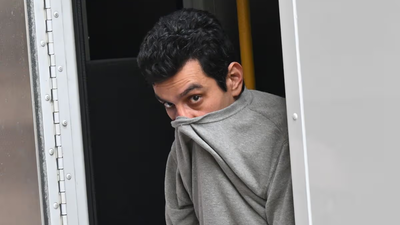
A man in Britain murdered his estranged wife before she went to take a shower at a leisure center and later claimed mysterious voices in his head had ordered the murder, a court has heard. The victim, 37-year-old Pariya Vessey, was stabbed multiple times at her husband Alireza Askari’s home in Cardiff after the couple had separated and she had moved out less than two weeks earlier. Prosecutors said the attack appeared to have been planned, with Askari having purchased kitchen knives earlier that day. After the murder, she allegedly attempted to conceal the crime with the help of a relative, burying Vesey’s body in a makeshift grave in the garden and sending messages from her phone to make it appear that she had left the country.Cardiff Crown Court heard that Vesey went to Askari’s home on Foster Drive in Penylan on April 12, 2025, following a phone call between the pair. Soon after her arrival, Ascari stabbed her multiple times in the neck and upper chest inside the home’s conservatory, prosecutors said.A witness sitting in a car outside the property at the time told investigators that they heard a scream that sounded “like something out of a horror movie.” Prosecutors believe Vesey screamed at the moment she was attacked.Vessey, originally from Iran, had recently left home and started renting a new property in Cardiff while working as a hairdresser at a salon in Canton.Instead of immediately reporting the incident, the court heard Askari left the property immediately after the attack and headed towards the David Lloyd leisure center in Cardiff. There, he reportedly took a bath while a man who was with him earlier waited nearby.During that time, Askari also called a woman in Iran who prosecutors believe was his girlfriend. The unusual sequence of events, including going to the gym immediately after the murder, became a key detail in the prosecution’s case.Prosecutors said Askari then contacted his aunt, Mary Delawari, who flew from London to Cardiff to help him clean the house and dispose of the body.The pair used bleach and cleaning materials to remove blood from the conservatory floor before digging a hole in the backyard garden. Vesey’s body was buried in a makeshift grave in an area that was previously a pond. Soil, concrete patio slabs, and newly purchased flowers were placed over the burial site to conceal it.To create the impression that Vessey had gone voluntarily, Askari reportedly sent messages from his phone claiming that he had traveled to Iran for medical reasons. His car was also removed from its usual place.Concerned friends eventually reported Vesey missing, prompting a police investigation. Officers later searched the Foster Drive property and found her body buried in the garden.Askari was arrested while returning from a trip to Birmingham, where he had purchased caustic soda, a highly corrosive chemical prosecutors say he planned to use to destroy the remains.Delawari was arrested separately in London for his role in helping to conceal the crime.During police interrogation, Askari claimed to suffer from schizophrenia and said that voices in his head had told him what actions to take. He also told investigators that an unknown person named “Hassan” had instructed him to take steps that would conceal the crime.Prosecutors rejected the explanation, arguing that the evidence showed planning and deliberate efforts to conceal the murder.Ascari later admitted to murdering Vesey, while DeLavery pleaded guilty to perverting the course of justice. It is expected that the court will pronounce the sentence after hearing further arguments.

Source link

Michigan synagogue shooter Ayman Mohammed Ghazali shared photos of relatives killed in Israeli attacks before carrying out the attack

Michigan synagogue shooter Ayman Mohammed Ghazali shared photos of relatives killed in Israeli attacks before carrying out the attack

A man who attacked a synagogue in Michigan was shot after the incident. Investigators said he had shared photos of children killed in Israeli air strikes moments before the attack.The attacker was identified as Ayman Mohammed Ghazali, who drove a vehicle into the grounds of Temple Israel on Thursday. When he attempted to carry out the attack, security personnel at the synagogue confronted him and opened fire. Ghazali died on the spot.Officials said there is a preschool on the synagogue complex and there were about 140 children and staff members inside the building at the time. No child was injured during the incident.Investigators later examined Ghazali’s phone and online activity and found that he had shared photos of children killed in Israeli attacks shortly before the attack. The post was shared widely on messaging platforms and referenced casualties in recent Israeli military operations in the Middle East.Ayman Mohammed Ghazali was from Mashghara, a town in the Beqaa Valley of Lebanon. The official said his two adult brothers, as well as his niece and nephew, were killed in the Israeli strikes, Sky News reported.Law enforcement officials also said that Ghazali had recently lost several of his relatives in an Israeli airstrike in Lebanon. According to investigators, those deaths may have contributed to his actions, although officials said the full motive is still under investigation.Police secured the synagogue complex after the incident and searched Ghazali’s residence as part of the investigation.Following the attack, security was increased at Jewish institutions in parts of Michigan. The presence of security personnel at the venue prevented the situation from becoming more serious.Ghazali was a naturalized American citizen born in Lebanon who entered the United States on May 20, 2011, on an IR‑1 immigrant visa as the spouse of an American citizen. He applied for citizenship in October 2015 and was granted citizenship in February 2016. Ghazali lived in Dearborn Heights, Michigan and worked locally, including in the restaurant industry.

Source link

Iran war enters 14th day: Two weeks into conflict, what we know so far – Tehran blasts, Israel strikes, US plane crash

Iran war enters 14th day: Two weeks into conflict, what we know so far - Tehran blasts, Israel strikes, US plane crash
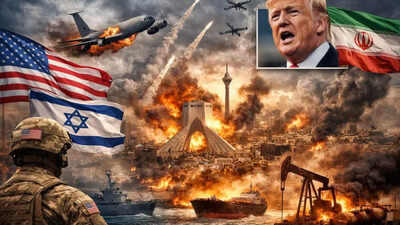
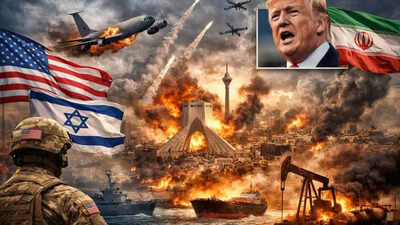
Representative Image (AI-Generated)

The war between the United States, Israel and Iran is about to enter its third week and tensions show no signs of easing as missile attacks, drone strikes and airstrikes continue across the Middle East.US President Donald Trump claimed in a virtual meeting that Iran “is about to surrender”, news agency Reuters reported, quoting Axios. He further told the leaders of the Group of Seven that the conflict is moving in Washington’s favor. Despite his comments, the war has escalated on multiple fronts, with casualties rising and global markets reacting to increased volatility.Nearly two weeks after the conflict began, oil prices have soared, shipping through the Strait of Hormuz has been disrupted and regional powers have joined the fighting. Missile exchanges between Israel and Iran continue, while allied groups and regional states are increasingly becoming part of the conflict.

Week 1: War begins with assassination of Iran’s supreme leader

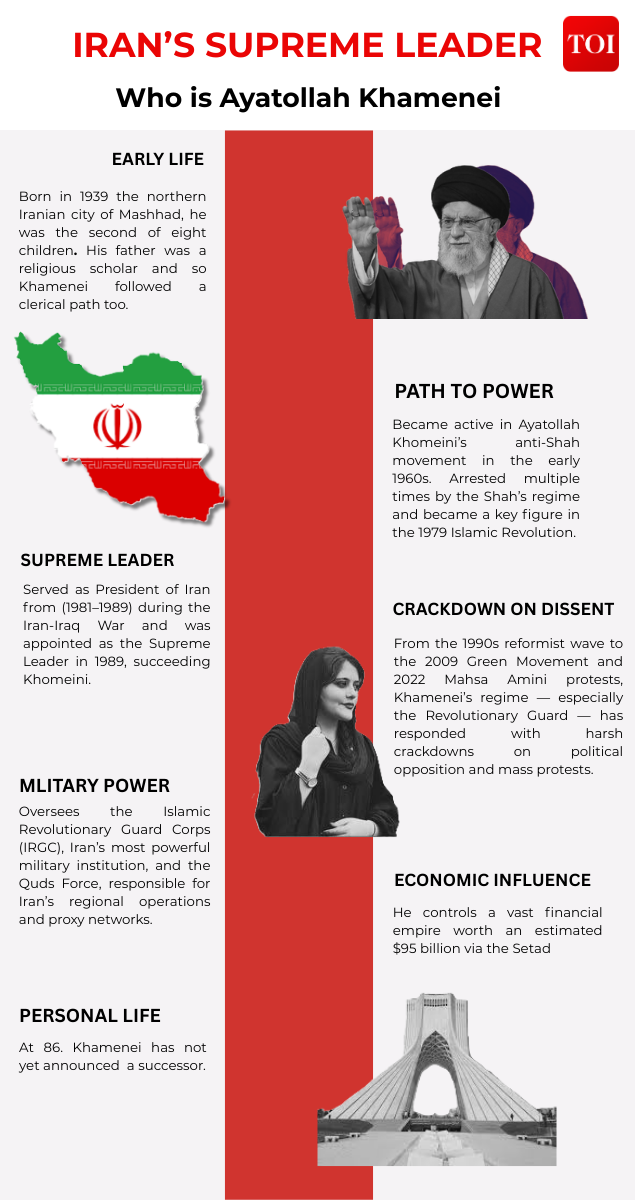
The war began on 28 February when the United States and Israel launched coordinated attacks inside Iran under ‘Operation Epic Fury’, targeting military infrastructure and missile systems.The initial attack killed several senior commanders, including Iran’s supreme leader Ali Khamenei, prompting immediate retaliation from Tehran.
.

.

Iranian forces launched missiles and drones toward Israel and US military facilities across the region, marking the beginning of a rapidly escalating conflict.

Day 2: Iran launches major retaliation

On the second day of the conflict, Iran responded with a large number of ballistic missiles and drones targeting Israeli cities and military infrastructure. At the same time, the US military expanded its air campaign against Iranian missile launch sites and Revolutionary Guard facilities. Iran also began directing attacks on US bases and allied states in the Middle East, indicating that the conflict would not be limited to Iranian and Israeli territory.

Day 3: Hezbollah opens northern front

Lebanese militant group Hezbollah joins the conflict by firing rockets into northern Israel. Israel retaliated by attacking Hezbollah targets in the southern suburbs of Beirut and other parts of Lebanon.Among the deadliest attacks were overnight airstrikes on the eastern city of Nabi Chit, where at least 16 people were killed and 35 wounded, according to Lebanon’s Public Health Ministry. Officials warned that the death toll could rise as rescue efforts continued.

Day 4: bay stress increases

Missiles and drones began appearing over Gulf countries that host US military bases, including Kuwait, Bahrain, Qatar and the United Arab Emirates. The attacks near the Strait of Hormuz disrupted maritime traffic and raised fears of a global energy crisis. Oil markets reacted sharply as traders worried the conflict could significantly impact global supply.

Day 5: Gulf countries increasingly joining in

Iranian drones and missiles targeted several countries in the region. Air defense in the United Arab Emirates intercepted projectiles near Dubai’s international airport and coastal areas.In Bahrain, a missile struck a government oil refinery, causing a fire, officials later said. Saudi Arabia also prevented drones near key energy infrastructure.

Day 6: Mass strike campaign intensifies

The United States and Israel expanded their attacks inside Iran, attacking hundreds of targets over several days. Officials said the strikes destroyed large parts of Iran’s air defense network and missile systems. Israeli officials claim to have destroyed about 80 percent of Iran’s air-defense systems. Iranian officials said the death toll from the attacks across the country has risen to more than 1,300. Many cities reported heavy damage to buildings and infrastructure, including government facilities, hospitals, and residential areas.

Day 7: War spreads across the region

The clashes spread across multiple fronts, including Lebanon, Iraq and the Gulf. Explosions were reported in Dubai and Bahrain as air defense systems intercepted incoming projectiles. Shipping through the Strait of Hormuz slowed, affecting global trade routes.Trump ruled out immediate talks and demanded Iran’s “unconditional surrender”, signaling that the war could continue to expand across the region.

Week 2: Conflict escalates across the Middle East

Day 8: Heavy bombing and regional attacks

A week after the war, there were intense airstrikes on Tehran, while Iranian missiles targeted Israel and the Gulf countries. Saudi Arabia, Qatar and the UAE reported intercepting drones and missiles.As casualties increased rapidly, Western countries began to consolidate military assets in the region. At least 1,332 people are reported killed in US-Israeli strikes as a new wave of deadly bombings hits Tehran, according to Al-Jazeera.

Day 9: Attacks spread to the Gulf and Iraq

Missile and drone attacks were reported in Saudi Arabia, Bahrain, Kuwait and Iraq. A missile fell inside the US Embassy compound in Baghdad, although no casualties were reported. Israel also attacked fuel storage facilities in Tehran, causing major fires.Trump said that despite the ongoing hostilities with Iran, Washington has no interest in negotiating with it. “We’re not looking to compromise,” Trump told reporters aboard Air Force One. “They would like to compromise. We don’t want to compromise.”Trump claimed that the United States and Israel have severely weakened Iran’s military capabilities, including its navy, air force, and missile infrastructure.

Day 10: Iran announces new supreme leader

Iran appointed Mojtaba Khamenei as the country’s new supreme leader following the death of his father. The cleric, known to have close ties to the Islamic Revolutionary Guard Corps, took over leadership as Iran continued missile and drone attacks across the region.Saudi Arabia said it intercepted a drone targeting the Shaybah oil field and warned Iran it would suffer “the greatest harm” if attacks continued. The United States also began withdrawing non-essential diplomatic staff and families from Saudi Arabia and other Gulf countries due to increasing security threats.

Day 11: Intensified bombings and protests

Heavy airstrikes continued across Iran, with explosions reported in Tehran and other cities.Thousands of Iranians rallied in support of Mojtaba Khamenei as the government vowed to continue the fight. Iranian forces also launched drone strikes targeting Israeli infrastructure, including energy facilities in Haifa.Iran’s Foreign Minister Abbas Araghchi said Tehran would continue fighting as long as necessary, casting doubt on Trump’s insistence that the conflict would end “soon.”

Day 12: The largest wave of US attacks

US Defense Secretary Pete Hegseth said the attacks were the largest the US military has carried out since the war began. Tehran reported heavy bombing across the capital, while thousands of civilians fled major cities.The United States also destroyed several Iranian naval vessels near the Strait of Hormuz amid fears that Tehran might attempt to block the shipping route.

Day 13: War disrupts global energy markets

The conflict rapidly strained global energy supplies. The International Energy Agency announced the release of 400 million barrels from emergency reserves to stabilize markets, as tanker traffic through the Strait of Hormuz came to a near halt.Missile attacks and drone strikes continued across the Gulf while Israel expanded its campaign against Hezbollah targets in Lebanon.Casualties have increased across the region. Iranian officials say more than 1,200 people have been killed in Iran, while hundreds have been killed in Lebanon and dozens in Israel and other countries.The United Nations estimates that hundreds of thousands of people have been displaced, particularly in Lebanon, where persistent bombing has forced residents to flee their homes.Children have been worst affected, with humanitarian agencies warning that thousands have been injured or killed since the war began.

Day 14: Explosion in Tehran as war nears third week; Tension increased due to American plane crash

Heavy explosions were reported across Tehran as the war entered its 14th day, according to Iranian state media. The blasts were heard near a major pro-government demonstration in Tehran’s central square, where large crowds had gathered to mark Quds Day, an annual event held on the last Friday of Ramadan in support of the Palestinian cause.That day also saw a major aviation incident in Iraq. A Boeing KC-135 Stratotanker operated by the United States Air Force crashed in western Iraq during the afternoon. United States Central Command confirmed that four of the six crew members on board died, while rescue operations continued for the remaining personnel.

Global economic impact and energy crisis

The conflict has caused major disruptions in global energy markets. Oil prices rose above $100 a barrel amid fears that shipping through the Strait of Hormuz could be blocked.The waterway typically carries about one-fifth of the world’s oil supply, making it one of the most important energy corridors globally.Many Gulf countries have also reduced oil production as storage facilities filled due to shipping disruptions. World leaders have held emergency talks to stabilize markets and prevent a wider economic shock.

Source link

Afghanistan Pakistan conflict: Afghanistan carried out drone attack on Pakistan’s Kohat military fort in retaliation

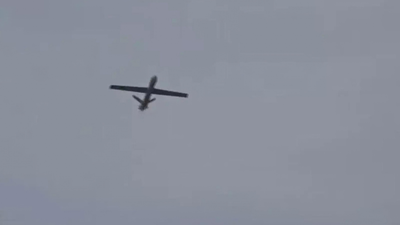
In retaliation, Afghanistan carried out a drone attack on Pakistan's Kohat military fort.

Afghanistan responded strongly to Pakistani attacks on Friday that targeted the country’s two largest cities, the capital Kabul and Kandahar, killing six people, as claimed by Taliban officials. The escalation comes amid renewed tensions between the two Islamic neighbours, which Islamabad described as an “open war” a few weeks ago.Taliban-ruled Afghan authorities reportedly targeted strategic military centers and installations of their nuclear-armed neighbor in response.

‘Gross violation…’: India criticizes Pakistan at UNSC over air strikes in Afghanistan

A handle on X, identified as Afghanistan’s Ministry of National Defence, claimed that Pakistan’s “night-time” violation on the Durand Line, the disputed border between the two countries, was appropriately responded to by Afghan forces.“In response to the night-time violation of the Durand Line by the Pakistani military regime, the Afghan Air Force this morning targeted strategic military centers and Pakistani military installations in the Kohat region of Khyber Pakhtunkhwa,” the handle wrote.

voting

Should the international community intervene to mediate conflict?

It further claimed, “In the strikes, Kohat Military Fort was destroyed and near the same fort, within two kilometres, the command center for the Durand Line conflict and the office of the Commander of the Military Fort were also precisely targeted.”Earlier, Pakistan had launched attacks on Afghanistan targeting Kabul and Kandahar. The Islamabad strikes also targeted homes in the Afghan capital and destroyed a fuel depot at Kandahar airport.

Source link

Japan still haunted: 80% fear another disaster, 15 years after deadly 2011 earthquake world News

Japan still haunted: 80% fear another disaster 15 years after deadly 2011 earthquake

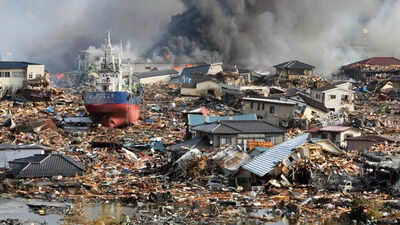
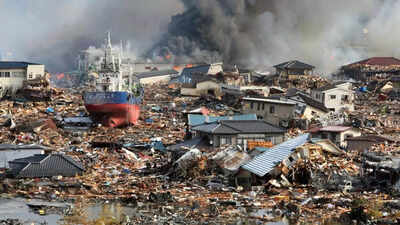
More than a decade after one of the worst natural disasters of our time, people in Japan are still living under the threat of another such disaster hitting their country. A recent survey shows that the memories of the Great East Japan Earthquake of 2011 are still alive in the minds of the people of this country.A recent survey conducted by the Japanese Red Cross Society showed that more than 80% of respondents believe that such a disaster, which occurred in 2011, could happen again in the near future. On the other hand, about 70% of these respondents admitted that they had not done enough to prepare for such a disaster.

The disaster that changed Japan

On March 11, 2011, a major earthquake measuring 9.0 on the Richter scale struck off the northeastern coast of Japan. The earthquake caused a massive tsunami, causing widespread devastation in coastal cities in the Tohoku region of Japan. This natural disaster resulted in widespread destruction in the Iwate, Miyagi and Fukushima prefectures of Japan. It resulted in approximately 20,000 deaths or disappearances and forced hundreds of thousands of people to flee their homes.The intensity of the tsunami was extremely high in parts of Japan, destroying cities and infrastructure. This natural disaster also led to the nuclear accident at Fukushima Daiichi, which has become a major environmental and social challenge for Japan. UNESCO’s Intergovernmental Oceanographic Commission States that the 2011 disaster has become the most significant reminder in modern history that communities along the coast are vulnerable to earthquakes and tsunamis. This natural disaster has forced governments and organizations around the world to improve the effectiveness of tsunami warning systems, disaster education and preparedness.

Survey reveals widespread concern about future disasters

In the lead up to the 15th anniversary of the 2011 disaster, the Japanese Red Cross Society conducted a national survey to determine how people view the threat of disasters today.The results of an online survey of 1,200 people aged 10 and older in Japan showed that 80.3% believed that a serious disaster such as the Great East Japan Earthquake would happen again in the near future.The country is located on the Pacific Ring of Fire, an area of ​​the Earth’s surface that is vulnerable to earthquakes.Earthquakes are common in Japan. Scientists have been saying for years that serious earthquakes are possible.

The gap in preparedness remains a major concern

Despite the high level of awareness about disaster risks in the country, the survey found that a large number of people are unprepared to face a disaster. “About 70 percent of the respondents said they had not taken adequate measures to prepare for a large-scale disaster. Such measures may include the preparation of supplies needed during an emergency or the acquisition of skills needed to respond to a disaster.This is not a problem unique to Japan. Experts have described how people often underestimate how quickly a disaster will strike or think they will have time to respond if needed. However, earthquakes and tsunamis can occur without warning.

Why does remembering past disasters matter?

Another important conclusion that can be drawn from the survey is the need to remember past disasters. The survey revealed that more than 80% of people believe that the lessons of the 2011 earthquake should not be forgotten when discussing disaster preparedness. It is at this point that public awareness campaigns and memorial services become relevant.The younger generation may not be aware of the events that occurred in 2011. They need to be aware of the events that occurred in 2011 so that they can be prepared for future disasters. Japan has invested significantly in disaster education. Practices and measures exist to reduce the effects of earthquakes.

Living with the reality of natural disasters

The earthquake and tsunami experience in Japan has created a culture that prides itself on being resilient and prepared. Yet such surveys show that such a situation can be achieved only with sustained efforts.Natural disasters are difficult to predict. Still, the effects can be minimized with planning and awareness.It has been fifteen years since the Great East Japan Earthquake. The memories of that day are a poignant reminder of the strength and weakness of those who experienced it.The message for many in Japan is that the next disaster will not be one that can be prevented. Still, being prepared for it can make a big difference.

Source link

‘We are completely destroying the terrorist regime’: Trump issues ‘watch what happens today’ warning

'We are completely destroying the terrorist regime': Trump issues 'watch what happens today' warning
US President Donald Trump gave a big warning to the Iran regime (AP Photo)

Amid Middle East chaos, US President donald trump On Friday he took another tough tone against the hostile Iran regime and issued an almost declaratory warning against what he called “deranged scoundrels.” Referring to the US military’s massive campaign against the Islamic Republic, he said Washington was carrying out strikes military, economic and otherwise to “destroy Iran’s terrorist regime”, while also taking a dig at The New York Times’ “failed” reports on the war.While professing confidence in the “unparalleled” power of the US military and boasting of widespread success in the campaign against Tehran’s establishment, Donald Trump took to Truth Social to deliver a characteristically blunt message. In the post, he declared: “We are completely destroying Iran’s terrorist regime militarily, economically and otherwise, yet, if you read the failing New York Times, you would be mistaken to think we are not winning.” Taking a dig at the New York Times, he said Iran’s “navy is gone, their air force is no more,” while its missiles, drones and other capabilities are being continuously “destroyed,” with key leaders “wiped off the face of the earth.”

‘Trump is screwing America’: Chuck Schumer’s speech against Iran war rocks US Senate | Watch

voting

Do you support President Trump’s tough stance against Iran?

Trump, in a triumphant tone praising the US military, also issued a stern warning to Iran’s power centers, hinting at possible further action under the country’s new Khamenei leadership. He wrote, “We have unparalleled firepower, unlimited ammunition and ample time – see what happens to these deranged scoundrels today.” He said: “They have been killing innocent people all over the world for 47 years, and now I, as the 47th President of the United States, am killing them. What an honor it is to do that!”Meanwhile, reports emerging from the ongoing conflict in the Middle East suggest that Iran may have attempted to attack the US aircraft carrier USS Abraham Lincoln. Tehran has also claimed responsibility for shooting down another US jet during a refueling mission, although Washington has described the incident as an accident. Trump, who has long maintained a tough stance against Iran, used the moment to double down on his warning to the Islamic republic’s leadership.

Source link