Meet Jessica Watson: the 16-year-old sailor who survived alone in the brutal oceans for 210 days after a devastating cargo ship collision. world News

Meet Jessica Watson: the 16-year-old sailor who survived alone in the brutal oceans for 210 days after a horrific cargo ship collision

Before Jessica Watson became one of the most recognizable teenage sailors in the world, her dream almost collapsed in the middle of the ocean. During the first night of sea trials before their historic voyage officially began, their 34-foot yacht, the Pink Lady of Ella, collided with a 63,000-ton heavy cargo ship, The National Geographic reports. Due to this collision the mast of the boat was destroyed and the boat was badly damaged. Many believed that the accident proved what critics had been saying for months, that the young Australian was too inexperienced and too small to attempt such a dangerous challenge. Questions were also raised about his parents and the growing trend of teenage sailors attempting world records. Yet instead of turning away, Watson quietly repaired his boat and got ready to set sail again. What happened next quickly became one of the most celebrated sailing stories in modern history.

That horrific accident almost stopped Jessica Watson’s journey before it even started

The collision involving Ella’s Pink Lady occurred before Watson officially began her solo trip around the world. The sea trials will help her prepare for the tough conditions she will face during the voyage. Instead, the night quickly turned into a nightmare. The large bulk carrier ran over the small pink yacht, and the accident caused serious damage. Reports at the time revealed that the yacht’s mast had been destroyed, leading many to believe that the expedition should be immediately cancelled. Critics argued that the accident exposed the dangers of allowing a 16-year-old to attempt circumnavigation of the globe alone.At the time, the public debate over Watson was already intense. Some sailing experts questioned whether such a young person could mentally handle months of complete isolation at sea. Others were concerned about the unpredictable weather conditions and the physical exhaustion of sailing alone for so long.Rather than react emotionally to the criticism, she returned to port and concentrated on repairing her damaged yacht. In later thoughts, she admitted that surviving the accident actually strengthened her confidence. She wrote that any doubts about her ability to cope mentally disappeared after the collision. The experience reportedly made him stronger and even more determined to complete the journey.

How Jessica Watson prepared for months alone at sea

Reportedly, when Watson finally departed Sydney in October 2009, the challenge ahead seemed too great. She planned to travel around the world alone, non-stop and unassisted, before she turned 17. This meant that there would be no stops at ports for help and no outside assistance during the entire journey.His path will eventually take him across four oceans and some of the harshest waters on Earth. The Southern Ocean alone is known for violent storms, cold temperatures and huge waves, cautioning even experienced sailors. For many observers, it was difficult to imagine a teenager facing those circumstances completely alone.Yet Watson spent much of his childhood around boats and sailing culture. She reportedly grew up on boats and appeared much calmer than many people expected. During the trip, she remained connected to the public through blog updates and satellite communications, which soon attracted a large number of followers. His blog posts often describe the realities of life at sea, including bad weather, loneliness, equipment problems, and moments of quiet beauty in the middle of the ocean. Watson once joked that she could write about a fly landing on Ella’s Pink Lady and someone would still find it interesting. The comment showed how closely people were following his progress.Hundreds of supportive comments reportedly appeared beneath many of her posts as strangers from around the world encouraged her to move forward.

Jessica Watson’s emotional return after being alone at sea for 210 days

After spending 210 days alone at sea, Watson finally returned to Sydney Harbor on May 15, 2010. His arrival became one of the most emotional public moments in Australia that year.Thousands of people gathered around the port to welcome him as he arrived home, while millions watched the event live on television. The sight of the smiling 16-year-old sailing her bright pink yacht in Sydney created an unforgettable image for many Australians. During the journey, many supporters genuinely feared for their safety, especially when they encountered severe storms in remote parts of the ocean. Her safe return felt like a successful end to a story that people had followed emotionally for months.At that time, Watson became the youngest person to circumnavigate the globe solo, non-stop, unassisted. Nevertheless, controversy still follows the achievement. Some critics argued that his route did not go far enough into the Northern Hemisphere to meet some traditional sailing standards.The debate continued for some time, but for most people watching his comeback, the technical arguments were much less important than the scale he achieved.

How Jessica Watson quietly proved her critics wrong

Even years later, Jessica Watson remains an inspirational figure for many people around the world. His story is not just about sailing records or extreme adventure. It is also about resilience, discipline and dealing with public skepticism at a very young age.One of the reasons his journey still resonates today is because of how he handled criticism throughout the process. She rarely seemed interested in publicly debating with critics. Instead, he focused almost entirely on travel.
Source link

Heathrow affected by Iran war: Passenger traffic fell 5% in April, Middle East traffic fell more than 50%

ईरान युद्ध से प्रभावित हीथ्रो: अप्रैल में यात्री यातायात 5% गिरा, मध्य पूर्व यातायात 50% से अधिक गिरा

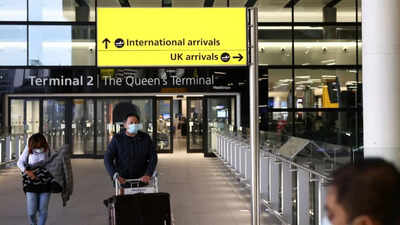
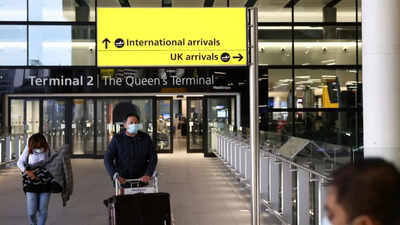
Britain’s Heathrow Airport

London’s Heathrow Airport saw a sharp decline in passenger traffic in April, as the ongoing conflict with Iran caused disruption to the global aviation network.The UK’s busiest airport said about 6.7 million passengers traveled through its terminals during the month – a 5 percent decline from the same period last year, Reuters reports.Traffic bound to the Middle East was hardest hit, falling by more than 50 percent as airlines grappled with airspace closures, cancellations and longer flight routes amid the regional crisis. Heathrow said the decline reflected “short-term adjustments to travel plans” due to geopolitical tensions.

Transit traffic increases as passengers re-enter via London

Despite the overall slowdown, Heathrow saw a 10 percent increase in transfer passengers, with many passengers re-routed through London for onward flights to Asia and Oceania. The airport benefited as passengers avoided major Gulf transit hubs such as Dubai and Doha due to disruptions in the region.Airport officials noted that Heathrow has met some displaced travel demand, even as the conflict continues to impact international aviation.

Pressure on airlines has increased due to fear of fuel crisis

The conflict has also raised concerns over jet fuel supplies after disrupting the movement of tankers through the Strait of Hormuz, a vital global oil shipping route.Jet fuel prices have nearly doubled from last year’s levels, according to industry data, raising fears of rising airfares and possible fuel shortages during the peak summer season.Last week, British Airways owner IAG indicated it may try to offset the steep rise in fuel costs through fare hikes and other cost-management measures. At the same time, some airlines are reportedly cutting ticket prices on select European summer routes to avoid weak bookings.

Heathrow to review forecast for 2026

Heathrow Chief Executive Thomas Waldby described the situation as a “short-term disruption”, stressing that underlying travel demand remains strong despite the volatility. He said April was Heathrow’s busiest month so far this year.However, the airport said it would re-evaluate and update its passenger forecast for 2026 next month as uncertainty remains over the conflict and the global travel outlook.

Watch

Iran targets UAE, Kuwait after attack on US ship near Qatar, increasing tensions in Gulf

Source link

Hantavirus: US passenger evacuated from Hantavirus-hit cruise tests positive but asymptomatic | world News

हंतावायरस से प्रभावित क्रूज से निकाले गए अमेरिकी यात्री का परीक्षण सकारात्मक, कोई लक्षण नहीं दिखा

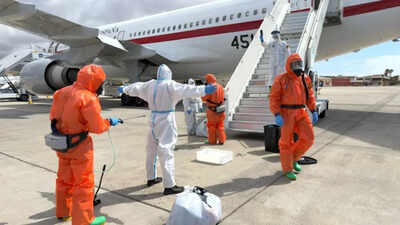
A Spanish passenger is sprayed with disinfectant by Spanish government officials before boarding a plane after disembarking from the hantavirus-stricken cruise ship MV Hondius at the airport in Tenerife, Canary Islands (Photo credit: AP)

An American passenger evacuated from a hantavirus-hit cruise ship has tested positive for the virus, US health officials confirmed on Sunday, with an update that he has not yet shown any symptoms.With the spread of this virus, many countries have started quarantining and monitoring the passengers returning by ship.The infected American, one of 17 US citizens evacuated from the ship, is showing no symptoms and will be transferred to a Nebraska biocontainment unit upon arrival in Omaha. Other passengers will also undergo assessment and monitoring at the National Quarantine Unit for precautionary purposes.The development came hours after French Prime Minister Sébastien Lecornu announced that one in five French passengers developed symptoms during the flight and that flights to Paris had been reinstated. All five passengers were immediately placed in strict isolation testing.The MV Hondius—the hantavirus-hit cruise ship—docked off Spain’s Canary Islands, Canary Islands, on Sunday, after a deadly hantavirus outbreak linked to the ship killed three people and infected at least five more passengers. More than 140 passengers from more than 20 countries were present during the emergency evacuation.The World Health Organization reassured that the outbreak does not pose a major threat to the public.“This is not another Covid,” WHO Director-General Tedros Adhanom said. “The risk to the public is low. People should not panic.”Health experts say Hantavirus is spread primarily through contact with contaminated rodent feces and is not easily transmitted between humans. But in rare cases, the Andes strain found in this outbreak (a specific type of hantavirus found primarily in South America) can spread between people in rare cases. Further symptoms may appear anywhere between one and eight weeks after exposure.WHO epidemiologist Maria Van Kerkhove said countries receiving travelers have been advised to take active daily health surveillance and quarantine measures. Many countries have already imposed strict isolation protocols lasting up to six weeks

Source link

North Korea prepared nuclear dead man switch

North Korea prepared nuclear dead man switch

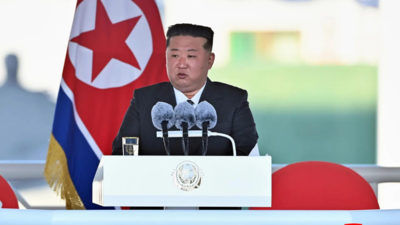
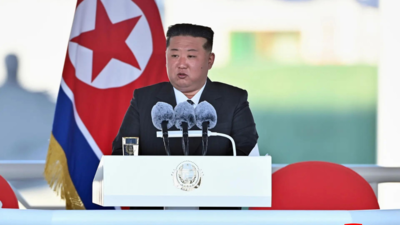
North Korea has amended its constitution to require the military to launch a retaliatory nuclear strike if leader Kim Jong-un is assassinated or incapacitated by a foreign adversary.The constitutional change comes after Iran’s Supreme Leader Ali Khamenei and several of his close advisers were reportedly killed in strikes during the initial phase of the joint US-Israeli attacks on Tehran.The amendment was adopted during the first session of the 15th Supreme People’s Assembly, which began in Pyongyang on March 22. The changes were revealed on Thursday during a briefing by South Korea’s National Intelligence Service (NIS) for senior government officials, The Telegraph reports.According to the NIS briefing, Kim retains command over North Korea’s nuclear forces, but a constitutional amendment formally defines procedures for retaliation if killed or rendered incapable of leading.The amended Article 3 of the Nuclear Policy Law states: “If the command-and-control system over the nuclear forces of a State is endangered by attacks by hostile forces… a nuclear strike shall be automatically and immediately initiated.”Professor Andrei Lankov, a Russian-born professor of history and international relations at Kookmin University in Seoul, said the change reflected growing concerns in Pyongyang following recent developments in Iran.“This may have been the policy earlier, but now it has been included in the Constitution and emphasized,” he said.“Iran was a wake-up call. North Korea saw the remarkable efficiency of US-Israeli decapitation attacks, which instantly eliminated large portions of the Iranian leadership, and they should now be horrified.”Experts believe that carrying out a similar operation in North Korea would be much more difficult than in Iran due to the country’s isolation and tight security controls. North Korea’s borders are largely sealed and foreign diplomats, aid workers and businessmen visiting the country are closely monitored, limiting opportunities for intelligence gathering.Reports have suggested that Israeli intelligence tracked Iranian leaders through hacked traffic cameras in Tehran, but such a strategy would be difficult in Pyongyang due to the limited CCTV network and tightly controlled intranet system.Kim Jong-un is also known for maintaining tight personal security. He is constantly accompanied by bodyguards, avoids air travel and usually travels by heavily armored train.Prof Lankov said Pyongyang’s main concern was likely to be satellite surveillance technology.He said, “Their biggest fear is the information they can get from satellite technology. And, overall, their concerns are not unfounded because removing the leadership at the beginning of any conflict is likely to be decisive.”He said North Korea’s military is loyal to its leadership and would likely retaliate in the event of an attack.“I don’t see any possibility of an attack from South Korea, so any retaliation would be aimed at the United States,” Prof Lankov said.Meanwhile, North Korea is also preparing to deploy a new type of artillery system near its border with South Korea, according to state media reports released on Friday.The official Korean Central News Agency (KCNA) reported that Kim recently visited a munitions factory to inspect the production of a ‘new type of 155-millimeter self-propelled gun-howitzer’.The KCNA said the artillery system has a range of more than 37 miles and will be deployed to long-range artillery units deployed along the border with South Korea this year.The new weapon could put central Seoul, about 35 miles from the border, within striking distance of much of Gyeonggi province, South Korea’s most populous region and a major industrial hub.

voting

What is your opinion on North Korea’s military stance towards South Korea?

The howitzer will provide significant changes and benefits to our military’s ground operations, KCNA quoted Kim as saying.Despite recent peace efforts by the South Korean government, North Korea continues to describe Seoul as its main rival and recently removed long-standing references to Korean unification from its constitution.North and South Korea are technically at war because the 1950–1953 Korean War ended in an armistice rather than a formal peace treaty.

Source link

Trump calls Iran draft resolution ‘completely unacceptable’: What was in it?

Trump calls Iran draft resolution 'completely unacceptable': What was in it?
US President Donald Trump rejected Iran’s draft ceasefire proposal. (AP Photo)

Iran’s latest response to the US-backed ceasefire proposal demanded Washington make sweeping political, military and economic concessions – including sanctions relief, compensation for war damage, the withdrawal of US forces from the region and recognition of Tehran’s authority over the Strait of Hormuz – terms swiftly rejected by President Donald Trump.Tehran’s response came after Washington presented a 14-point proposal aimed at ending the 10-week conflict that has disrupted global oil supplies and raised tensions across the Middle East, according to reports by Iranian state media and Al Jazeera.Although neither side publicly released the full text of the resolutions, key disagreements highlighted deep divisions over Iran’s nuclear program, regional influence and control of vital shipping routes.Iran’s proposal reportedly called for the United States to lift sanctions, end the naval blockade of Iranian ports, and lift restrictions on Iranian oil exports as part of any ceasefire arrangement.

compensation for damage

Tehran also demanded the lifting of the seizure of approximately $20 billion in Iranian assets and compensation of approximately $270 billion for damages caused by US and Israeli attacks during the conflict.

control over the strait of hormuz

A major sticking point emerged over the Strait of Hormuz, the narrow waterway through which about a fifth of the world’s oil supply passed before the conflict escalated. Iran reportedly demanded formal recognition of its control over shipping through the strait, including the right to levy transit fees, while demanding an end to the US blockade of Iranian ports.However, Washington has insisted that the blockade will continue until a comprehensive agreement is reached.

nuclear control

Another major issue of controversy involved Iran’s nuclear program. The US proposal reportedly demands that Tehran completely halt its nuclear activities and hand over its stockpile of approximately 400 kilograms of highly enriched uranium to US custody.Iran rejected both demands, arguing that any restrictions on its nuclear program could only be temporary and refusing to surrender its uranium reserves.

US military withdrawal

The Iranian response also linked any ceasefire to broader regional issues. Tehran reportedly demanded the withdrawal of US forces from the region and a halt to all hostilities, including Israel’s military campaign against Hezbollah in Lebanon.Meanwhile, the US has sought to curb Iran’s support for regional allies such as Hezbollah and Hamas, while also pushing for limits on Tehran’s ballistic missile program.

Trump called the proposal unacceptable

Within hours of the Iranian response becoming public, Trump rejected it outright.“I just read the response from the so-called “representatives” of Iran. I don’t like it – completely unacceptable! Thank you for your attention to this matter,” Trump wrote on Truth Social, without specifying which parts of the resolution Washington found unacceptable.The rejection immediately roiled global energy markets, sending oil prices rising nearly $3 a barrel amid fears the standoff would prolong the disruption in the Strait of Hormuz.The ongoing tensions have also highlighted growing international concern over the economic consequences of the conflict. NATO allies have reportedly resisted US calls to send naval forces to reopen the strait without a comprehensive peace agreement and an internationally mandated mission.Trump is expected to discuss Iran with the Chinese president Xi Jinping During his upcoming visit to Beijing, Washington wants Beijing’s help in pressuring Tehran for a deal.israeli prime minister benjamin netanyahu Said that the war is not over and stressed that more work remains to dismantle Iran’s enrichment capabilities, ballistic missile program and regional proxy networks.Iranian President Massoud Pezeshkian responded by saying that Iran would “never bow to the enemy” and would continue to defend its national interests “with force.”Despite diplomatic efforts, tension remains in the entire region. The United Arab Emirates said it intercepted two drones launched from Iran on Sunday, while Qatar condemned a drone attack on a cargo ship in its territorial waters. Kuwait also reported the entry of hostile drones into its airspace.Meanwhile, clashes between Israel and Iran-backed Hezbollah continue in southern Lebanon despite an earlier US-brokered ceasefire.

Source link

Three people of Indian origin convicted in the murder of an elderly couple in Canada; Husband suffocated with duct tape, wife beaten with a hammer

कनाडा में बुजुर्ग दंपत्ति की हत्या के मामले में भारतीय मूल के तीन लोगों को दोषी ठहराया गया; पति का डक्ट टेप से दम घोंट दिया गया, पत्नी को हथौड़े से पीटा गया

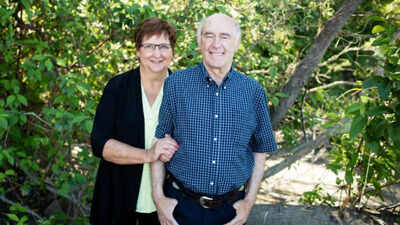
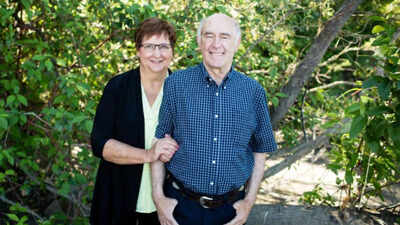
Joan and Arnold de Jong in 2022

Three Indian-origin men in Canada have been found guilty of first-degree murder in the killing of an elderly couple inside their home in Abbotsford, British Columbia. According to CBC News report, it has been almost four days since this crime took place.BC Supreme Court Justice Brenda Brown ruled Friday that Gurkaran Singh, Abhijeet Singh and Khushveer Toor were all guilty in the deaths of Arnold and Joanne de Jong, who were found dead in their Abbotsford home on May 9, 2022.The judge agreed with prosecutors that the murders were planned in advance and carried out for money.The courtroom was packed with relatives and friends of the de Jong family.Arnold, 77, and Joan de Jong, 76, were found dead in separate bedrooms of their home on Arcadian Way in East Abbotsford. Disturbing details of the murders emerged in court proceedings.Joan was found in a pool of blood on her bed. A pathologist determined that she died from a knife wound to the neck and blunt-force injuries to the head, believed to have been caused by a screwdriver and hammer.Arnold was found in another bedroom with his hands and feet bound. His head and face were tightly wrapped with duct tape. The court heard he died of asphyxiation.All three accused knew the couple before the murder. Abhijeet Singh was the owner of a cleaning company and the other two men worked for him. The business had worked on the De Jong residence on several occasions before the murders.The trio planned a home invasion to rob the couple and then murder them. They later used the victims’ stolen credit cards, checks and identities to make purchases, withdraw funds and repay loans.DNA evidence also linked all three men to the crime. Investigators found DNA at the home, on the rope used to tie Arnold de Jong, and on a metal baseball bat recovered from the suspects’ vehicle.Some internet searches were also conducted by Abhijeet Singh after the news of the deaths became public. The findings were “extraordinarily damaging”, including questions about how murderers are punished in Canada.Defense attorneys argued throughout the trial that the murders were not planned and that the incident was a robbery that got out of control. He claimed there was no direct evidence that his client intended to kill the couple.Justice Brown rejected that argument.The judge said that the accused knew that the De Jongs could recognize them because they had worked at the house before and that was the reason the couple were not released alive.Following the verdict, family members expressed relief but said the pain of losing their parents still lingered.“[It] I felt like my heart was going to come out of my chest,” daughter Sandra Barthel said after hearing the verdict.She added: “I think there was joy in that, knowing that the judge saw it for what it was and she was able to process it.”Another daughter, Kimberly Coleman, said: “They were people who could never be replaced… There were so many things about them that were so special to us that we miss every day.”The sentencing of Gurkaran Singh, Abhijeet Singh and Khushveer Toor has been fixed for May 28. Under Canadian law, a conviction for first-degree murder carries an automatic life sentence with no possibility of parole for 25 years.

Source link

Who is Amos Yee? Controversial Singapore YouTuber attacked by Yuji Itadori cosplayer outside anime convention

Who is Amos Yee? Controversial Singapore YouTuber attacked by Yuji Itadori cosplayer outside anime convention
Controversial Singaporean YouTuber Amos Yee was allegedly attacked by an 18-year-old man dressed like Yuji Itadori outside the Doujima anime convention in Singapore. Online videos showed the cosplayer punching and kicking Yi during the fight. The incident occurred after conference organizers banned Yi from entering the event. Following the attack, Yee blamed organizers for escalating tensions and denied rumors alleging inappropriate behavior at the venue.

Amos Yee is again in the headlines and once again controversy has followed him. The 27-year-old Singaporean content creator was allegedly attacked outside the Doujima anime convention at the Suntec Singapore Convention and Exhibition Center on May 9. Video circulating online showing a teenager dressed like Yuji Itadori from the anime series Jujutsu Kaisen punching and kicking Yi during a chaotic confrontation quickly spread on social media.The incident reignited debate over Yi’s long and deeply divisive public image. While some online users condemned the physical attack, others pointed to the years of scandals that have surrounded the former child actor turned blogger and YouTuber. The clash outside the conference has now become one of the most talked-about streamer-related controversies in Singapore this week.

Amos Yee’s controversial history continues to haunt him

Before becoming a viral internet personality, Amos Yee worked as a child actor in Singapore. He later gained an online following through provocative political and religious commentary. His criticism of former Singapore Prime Minister Lee Kuan Yew and his videos mocking religion led to several arrests in Singapore in the mid-2010s.In 2017, Yi moved to the United States and was granted political asylum. However, his situation worsened years later when authorities in Illinois charged him with grooming-related crimes, solicitation and possession of explicit material involving minors. He was sentenced to prison in 2021 before allegedly violating parole conditions and was later released on parole. After being deported to Singapore in March 2026, he faced additional legal Investigations related to national service obligations.That background heavily shaped the public reaction to his attempt to attend the Doujima conference. The organizers had already announced this Instagram that a “known problematic influencer” would not be allowed entry and said they were working to ban him from future events.

Amos Yee blames Doujima organizers after Singapore attack

Despite the ban, Yi still appeared near the conference venue and shared photos from outside the event. One post was captioned:“Protect your children.”After the attack, Yee posted photos of his injuries online and blamed organizers for increasing tension around his appearance. He wrote: “Honestly, if the organizers hadn’t banned me. I probably would have gone in, browsed the shops, had people come over to take selfies, many would have been disgusted to see me, but fuck them. And it’s a nice, happy day. Instead you banned me, causing people to get angry and cause my attack”He also denied rumors circulating online, saying:“Mao, there are stupid rumors being spread around that I attacked the first attacker or that I was taking pictures of an upskirt girl. There were ten thousand people there, and many of them were videoing me and following me. If I had done those things, there would have been evidence. Where is the evidence?”According to reports, the 18-year-old cosplayer involved in the attack was later arrested on charges of creating a public nuisance.

Source link

‘Trying to Ruin Erica’s Life’: Laura Loomer Accuses Candace Owens of ‘Bankrupt’ Lying While Harassing Erica Kirk

"Efforts are being made to ruin Erica's life.": Laura Loomer on Candace Owens harassing Erica Kirk
Candace Owens and Laura Loomer reignited their public feud on Ax with a series of intensely personal accusations. Loomer accused Owens of living a lavish lifestyle while falsely claiming to have financial struggles, while Owens responded with harsh comments about Loomer’s mental health and public reputation. The debate later escalated when Loomer brought Erica Kirk into the controversy and accused Owens of targeting her and spreading lies about others online.

The bitter online feud between Candace Owens and Laura Loomer took another ugly turn this weekend when both women exchanged deeply personal accusations across the Ax. What began as criticism over finances and influence soon turned into a public meltdown involving mental health claims, luxury lifestyle allegations, and fresh references to Erica Kirk.Within hours, the exchange attracted massive attention online. Screenshots of the back-and-forth went viral as users analyzed each allegation. Loomer accused Owens of pretending to be broke while living a lavish lifestyle, and Owens responded with harsh words about Loomer’s mental health and social status.

Candace Owens and Laura Loomer clash over money and “bankruptcy” claims

The feud intensified after Laura Loomer publicly questioned Candace Owens’s financial complaints. In a lengthy response posted on X, Loomer wrote:“You wear at least $2,000 in almost every episode of your show and you have two multi-million dollar homes worth at least $12 million in trust. As I exposed, you and your husband have a car collection worth $800,000 to $1 million. How are you almost “bankrupt”?You have to stop lying. You live a very luxurious life.Do I even need to know how many nannies and maids you have so people can see once again how much you lie??You also wear a $70,000 ring.The only person that can bankrupt you is your own mouth with the defamatory lies you speak about others.”The post quickly gained popularity online, garnering thousands of reposts and reactions from both supporters and critics. Many users focused on the increasingly personal nature of the attacks rather than the substantive political disagreement between the two conservative commentators.

Laura Loomer drags Erica Kirk into escalating Candace Owens feud

Candace Owens did not hold back from giving her reaction. he answered:“It’s getting boring Laura and you know it. You tried it and the public didn’t cut it. I’m sorry that people constantly take advantage of your various documented mental disorders. They see you as insects who will do their bidding, while they never have to invite you into their social circle for the same reason. Deep down you know it’s true and I’m sorry about that. You are neither accepted by anyone nor Is believed.”Loomer then reignited the controversy by accusing Owens of targeting Erica Kirk. she wrote:“What is becoming boring is your constant harassing @MrsEikaKirk and the way you lie about people (including me) because you enjoy lying about others because you are not satisfied with your life and many of the things you have.Even now you lie in your answers. You need to get help for your disorders. In my opinion you clearly have narcissistic personality disorder, you behave like someone who has postpartum psychosis and I have no desire to be part of your social circle. I live a fulfilling life with the people I love. You should be doing what you enjoy so much every day instead of trying to ruin @MrsEikaKirk’s life even more than it already is by murdering her husband and the father of her children.

Source link

What was hidden inside the Great Wall for 400 years: Secrets buried under centuries of silence revealed. world News

What was hidden inside the Great Wall for 400 years: Secrets buried under centuries of silence revealed

For centuries, the Great Wall of China has stood like a silent trail across mountains and deserts, carrying stories most people have never heard. Tourists see stone paths and steep towers. Historians look at dynasties, wars, and empires. But inside a rugged section near Beijing, archaeologists have now discovered something that brings the wall’s military past back into focus.The discovery reportedly occurred during restoration work on the Jiankou section of the wall, an area famous for its dramatic cliffs and crumbling towers. What researchers found there was much more than loose bricks or damaged stone. Hidden within the ancient structure were weapons, turquoise artifacts, traces of food, and even emotional messages left by workers centuries ago. The extraordinary find, experts say, was a giant Ming Dynasty cannon that weighed about 247 pounds.And, strangely, it may also explain how China and Europe once exchanged military technology, long before globalization became the norm.

Iron cannon from 1632 found on the Great Wall could rewrite China’s military history

The largest discovery was a large iron cannon, believed to date from 1632, during the late Ming dynasty. Archaeologists found it while excavating three watch towers and nearby wall sections in the Jiankou area, The Global Times reports.As reported, the weapon is approximately 35 inches long and reportedly bears an inscription reading “Chongzhen Year 5”, which corresponds to 1632 CE. Experts at the Beijing Institute of Archeology say the cannon was unusually well preserved.Researchers noted similarities between the cannon and European “red-coat” cannons used around the same period. The barrel shape and overall structure appear surprisingly close to European artillery designs. Archaeologists now suspect that there may have been some exchange of military knowledge between China and Western powers in the late Ming era. This shows that the Great Wall was not just a defensive barrier. It may also have been part of a much larger network of trade, influence and technological experimentation.

Inside the Watchtower: Everyday life written in the foundation of the Great Wall

Apart from weapons, many other things were revealed in the excavation. Inside Watchtower 118, archaeologists have reportedly discovered the remains of heated brick beds and stoves used by soldiers stationed along the wall. It gives a short but vivid glimpse of daily life during the Ming dynasty. A watchtower in 1573 B.C. There was also an immigration monument, which helped experts better understand when parts of the wall were built and occupied.Two different bricks had inscriptions relating to weight specifications. Researchers say this could reshape previous assumptions about the operation of Ming-era brick kilns. This wall was apparently built with much tighter organization than many historians believe. Another brick contained something more human. The inscription roughly translates as: “Nothing but wine or worry; three years of hard work turned my hair grey.”It feels surprisingly modern in a strange way. Tiredness, stress, disappointment. Some things apparently never change.

Ancient crops, medicines and animal remains

Excavations of the Great Wall also revealed traces of crops and medicinal plants that were used by the people who lived or worked there centuries ago.Experts suggest that these remains could help researchers better understand the diet and medical knowledge of Ming Dynasty soldiers. Investigators reportedly found evidence of both cultivated crops and herbal materials. Animal bones were also scattered in parts of the site.Some belonged to pets. Others appear to be associated with wild species hunted nearby. The researchers also found signs of butchering activity, indicating that food preparation took place directly inside or near the towers. The discoveries make the site feel less like a cold military structure and more like a living settlement.

Archaeologists uncover shards of turquoise revealing hidden Ming Dynasty trade routes

One of the quieter discoveries may actually turn out to be one of the most important later. Archaeologists found 28 turquoise artifacts during excavations. Preliminary analysis reportedly suggests that the stones may have originated from quarries in Hubei, Henan and Shaanxi provinces. It matters because it points to trade routes extending into northern China.The Great Wall was built for defense, yet the objects found inside it indicate the constant movement, exchange and cultural contact that took place around it. Experts say the turquoise shards may offer more evidence of the regional trade networks that operated during the Ming dynasty.

The Great Wall still has secrets

The Jiankou section of the Great Wall of China has long been considered one of the wildest and least restored areas near Beijing. The steep peaks and dangerous terrain have helped to preserve parts of it naturally over time. Perhaps that’s why the discoveries there feel unusually untouched.Researchers believe that more excavations could reveal additional military equipment, trade goods or personal artifacts hidden inside the ancient structure. Experts involved in the project say the surrounding landscape has barely changed over the centuries, making the area ideal for “time-travel-style” archaeological research.

Source link

Non-binary Indian on student visa elected to Scottish Parliament

Non-binary Indian on student visa elected to Scottish Parliament

A Tamil Nadu-born non-binary transgender Indian and former PhD student has become the first person to be elected as a Member of the Scottish Parliament (MSP) despite being a foreign national who does not have a permanent visa to reside in the UK.Indian national Q Manivannan on Friday won the Edinburgh and Lothians East seat for the Scottish Greens, also becoming one of the first two transgender MSPs elected to Holyrood. She told supporters: “My name is Dr. Q. Manivannan, I am a transgender Tamil immigrant, my pronouns are they/them.”His election has given rise to controversy. “Dr Q Manivannan, an Indian migrant who arrived in Britain on a student visa, is now a politician in Scotland pushing for the partition of Britain,” Migration Watch said.Despite not having the right to work full-time, Manivannan will now receive an annual salary of £77k (Rs 99 lakh). MSP is crowdfunding £2,089 to raise money for a graduate visa which will allow them to stay for the next three years. Manivannan said he came from a lower caste background in Tamil Nadu and compared Tamil Nadu’s “strong resistance voice” to that of Scotland. He said he joined the Greens because of its support for Palestine. According to the Daily Telegraph, he unfollowed Auschwitz on social media and defended the defacement of posters of Israeli hostages.They are now on student visas which allow part-time work. Last year, the SNP government introduced legislation to allow non-UK citizens to stand for Parliament if they have any type of leave, including short-term study visas. Earlier ILR was required.He studied liberal arts and humanities at OP Jindal Global University in Delhi, before moving to Scotland in September 2021 to study at the University of St Andrews. A spokesperson for the Scottish Greens said: “Q is on a valid visa with the right to work and live in Scotland, and is a Commonwealth citizen.”

Source link