
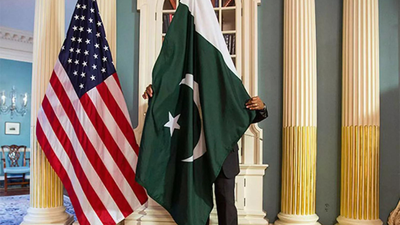

US closes Peshawar Consulate despite soft talks on Pakistan
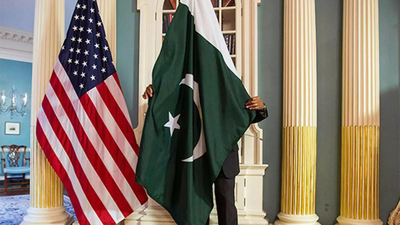
TOI correspondent from Washington: The US State Department on Monday announced the closure of its embassy in Peshawar, a move that underscores a surprising contradiction in the Trump administration’s Pakistan policy: warm rhetoric and praise at the top, but a steady decline in diplomatic infrastructure on the ground.The decision, framed by officials as a matter of “security” and “efficient resource management,” would transfer responsibility for the engagement in Pakistan’s Khyber Pakhtunkhwa province to the U.S. Embassy in Islamabad, about 114 miles away. The closing comes as Trump has publicly praised Pakistan’s leadership, paying unusual praise to the country’s “field marshal” (sic), whom Trump has liked for his help as a mediator with Tehran. The State Department has offered a familiar quartet of justifications for closing the Peshawar Consulate: cost savings, restructuring, changes in logistical needs, and security concerns. Officials also point to the post’s diminished strategic role since the US withdrawal from Afghanistan, when Peshawar served as a major logistics hub. Security concerns have also been cited, with recent unrest in the area increasing the risk to personnel. The Peshawar shutdown is the first permanent closure of a foreign US diplomatic mission in Trump’s second term. In the Middle East and South Asia, several US consulates have temporarily suspended operations amid regional tensions, particularly military tensions involving Iran, and following a “worldwide caution” advisory issued earlier this year. Meanwhile, visa services have been cut at many posts under the extended restrictions and “extreme scrutiny” policies.Behind these operational changes lies a more profound change: the systematic downsizing of America’s diplomatic corps. More than 200 career diplomats, including about 246 foreign service officers, were laid off on Monday, in the latest phase of sweeping “reductions in force”. The cuts have disproportionately targeted refugee, human rights, and democracy promotion bureaus. The administration justified this by openly arguing that such offices were “prone to ideological capture”, indicating a deliberate move away from the traditional pillars of American diplomacy.Adding to the turmoil has been the dismantling of the United States Agency for International Development (USAID), long a cornerstone of American soft power. With its functions cut or absorbed, many of the State Department’s roles have been deemed redundant.Employees reportedly arrived at work in recent days under instructions to bring passports and government equipment, preparing them to surrender at short notice – a process that created what one insider called “an atmosphere of quiet panic”.The downsizing coincides with a significant shift in the way the administration conducts high-level diplomacy. Rather than relying primarily on career diplomats and subject-matter experts, major negotiations—particularly those involving Iran’s nuclear program—are increasingly being handled by political loyalists and unofficial messengers, including Steve Witkoff and Jared Kushner.Neither has formal diplomatic training or deep technical expertise in nuclear nonproliferation, an area that typically requires years of specialized experience.At the top of the diplomatic hierarchy, Marco Rubio is managing an unusually broad portfolio. In addition to serving as Secretary of State, she has been tasked with multiple overlapping roles in national security and policy coordination, raising questions about the administration’s bandwidth and strategic coherence. On Tuesday, he stood in for White House spokeswoman Carolyn Levitt, who is on maternity leave. In a raucous briefing, there was no pregnant interruption. “This is chaos, folks,” Rubio said at one point while speaking to the noisy press.