
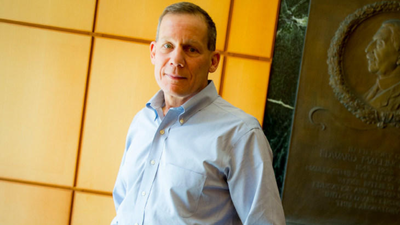

Who is Charles Lieber? Convicted Harvard scientists are now leading China’s research into connecting the brain to computers.
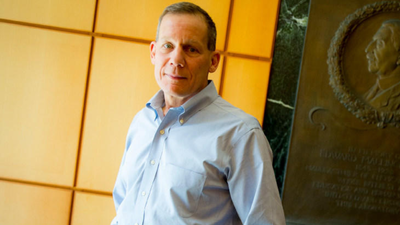
Charles Lieber is one of the most famous names in nanoscience, but his career took a dramatic turn after a federal conviction in the United States. Lieber, once a leading Harvard chemistry professor, was convicted in 2021 of making false statements to federal officials and tax crimes related to payments from China. Today, he is back in the laboratory in Shenzhen, where he is leading state-supported brain-computer interface research at i-Brain, part of the Shenzhen Medical Academy of Research and Translation. This area is medically promising but also strategically sensitive, which is why their move to China has attracted attention.
Charles Lieber’s path from Harvard prominence to federal conviction
Lieber had a long and influential career at Harvard University, joining the faculty in 1991 and later serving as chair of the Department of Chemistry and Chemical Biology from 2015 to 2020. He received the prestigious Joshua and Beth Friedman University Professorship, one of Harvard’s highest academic honors. Over three decades, he became a leading figure in nanoscience, publishing hundreds of peer-reviewed papers and holding dozens of patents. His research focused on nanoscale materials and nanoelectronics, particularly on devices capable of interfacing with biological systems, including early work related to neural interfaces and brain-computer technologies. In December 2021, a federal jury convicted him of making false statements to federal officials, filing false tax returns, and failing to disclose foreign bank accounts. In April 2023, he was sentenced to time served, six months of home confinement, a $50,000 fine, and restitution to the Internal Revenue Service. The case involved undeclared participation in China’s Thousand Talents Scheme and payments from a Chinese university.
Charles Lieber is now leading this research in China
Lieber’s move to Shenzhen marked a new chapter in a career already defined by high-stakes science. In April 2025, he arrived in the city and took charge of i-BRAIN, the Institute for Brain Research, Advanced Interfaces and Neurotechnologies, which operates under the Shenzhen Medical Academy of Research and Translation (SMART). There, he serves as the founding director and chair professor. His laboratory reportedly has access to advanced nanofabrication tools and primate research facilities, giving him resources that were not similarly available at Harvard. For a scientist long involved with nanoscale electronics, the setting is unusually suitable for the next phase of his work.The field he is now helping to pioneer is brain-computer interfaces, or BCI, which aims to translate brain activity into signals that computers can read and use. That technology already has therapeutic promise. Researchers are exploring it for people with ALS, paralysis and speech impairments, and recent advances have shown that nerve signals can be converted into speech or used to control devices in limited ways. This field is rapidly moving from laboratory experiments to clinical applications.China has made BCI a priority sector. In 2026, it approved a commercial BCI medical device designed to help people with quadriplegia regain the ability to hold hands, and this technology has been identified as a future industry in the national plan. That policy support helps explain why Libor’s presence matters. He has deep experience in nanofabrication, neural interfaces and advanced materials, the kind of expertise that can accelerate the research field with both humanitarian and strategic value.That’s why his new role remains controversial. Lieber is not the only scientist starting out in a new country. He is a researcher who was convicted in the United States of making false statements involving payments and affiliations related to China, and he is now working inside a state-supported Chinese research system that is investing heavily in emerging technologies. His story sits at the point where science, geopolitics and technological competition meet, making him one of the most-watched figures in the global race to connect brains to machines.